Alpine coltsfoot
About
Alpine coltsfoot is a modest yet very characteristic plant of the Carpathians. In Ukraine, it grows only here and is often found: in subalpine meadows, on mountain slopes, in mountain forests, and along stream banks. Overall, the species inhabits the mountains of Southern Central Europe at altitudes of approximately 500–3000 m and prefers moist, humus-rich, mossy soils of coniferous forests, shrubs, and shrubland clearings.
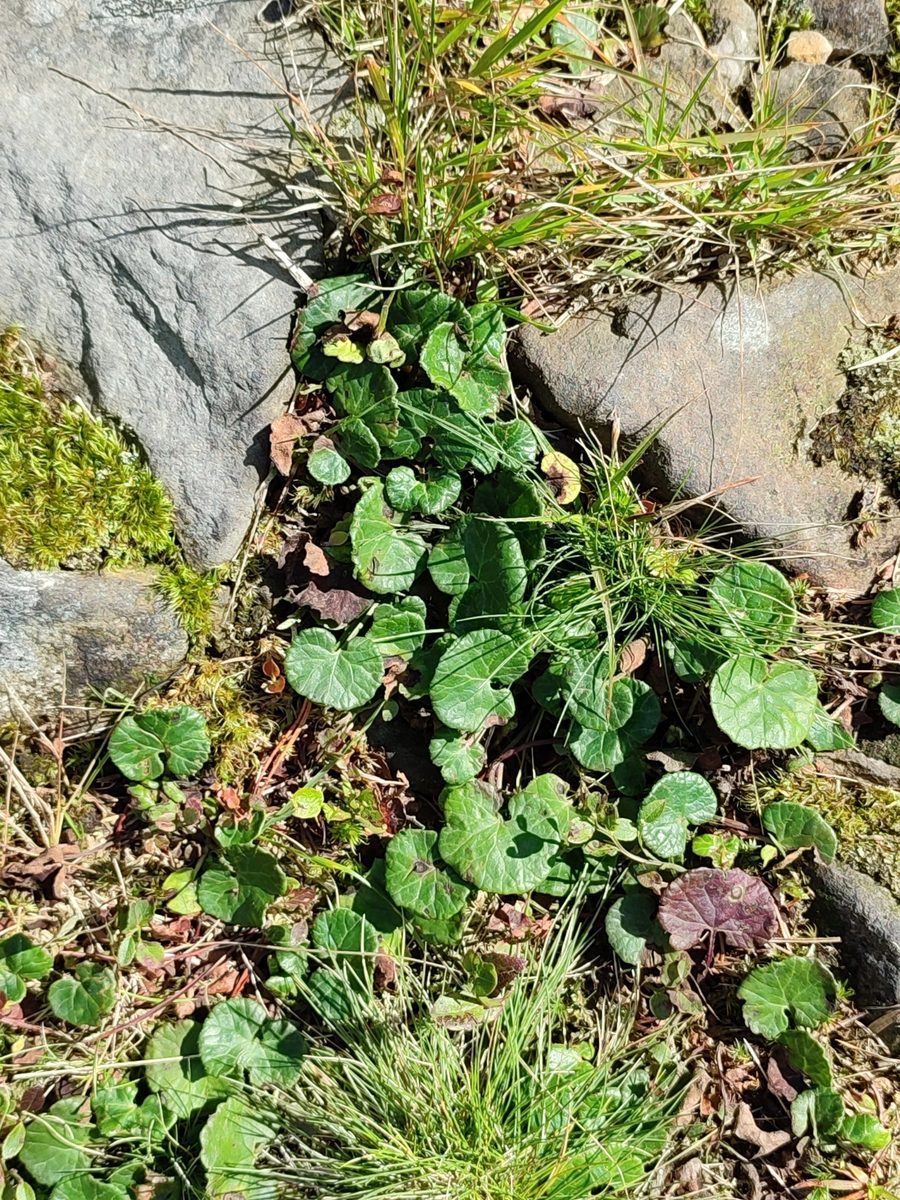
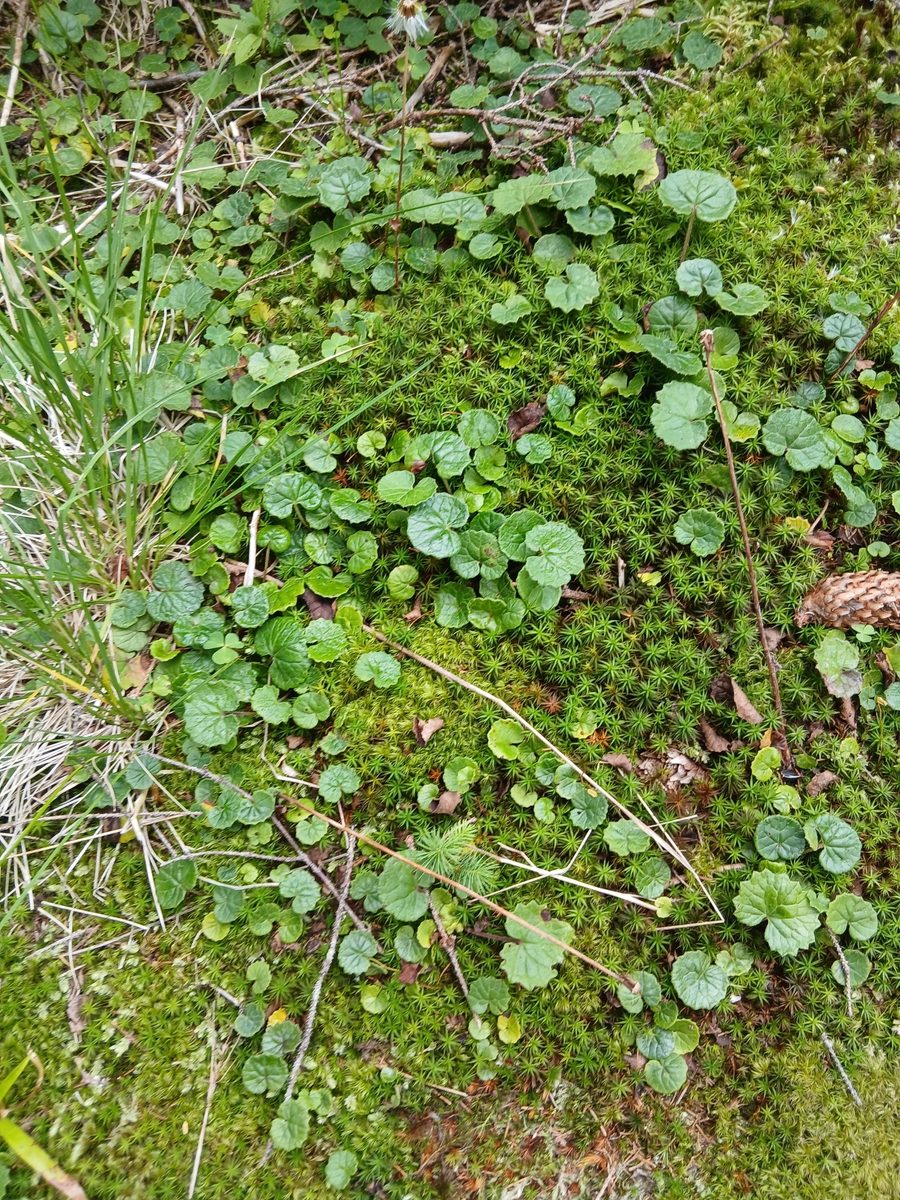
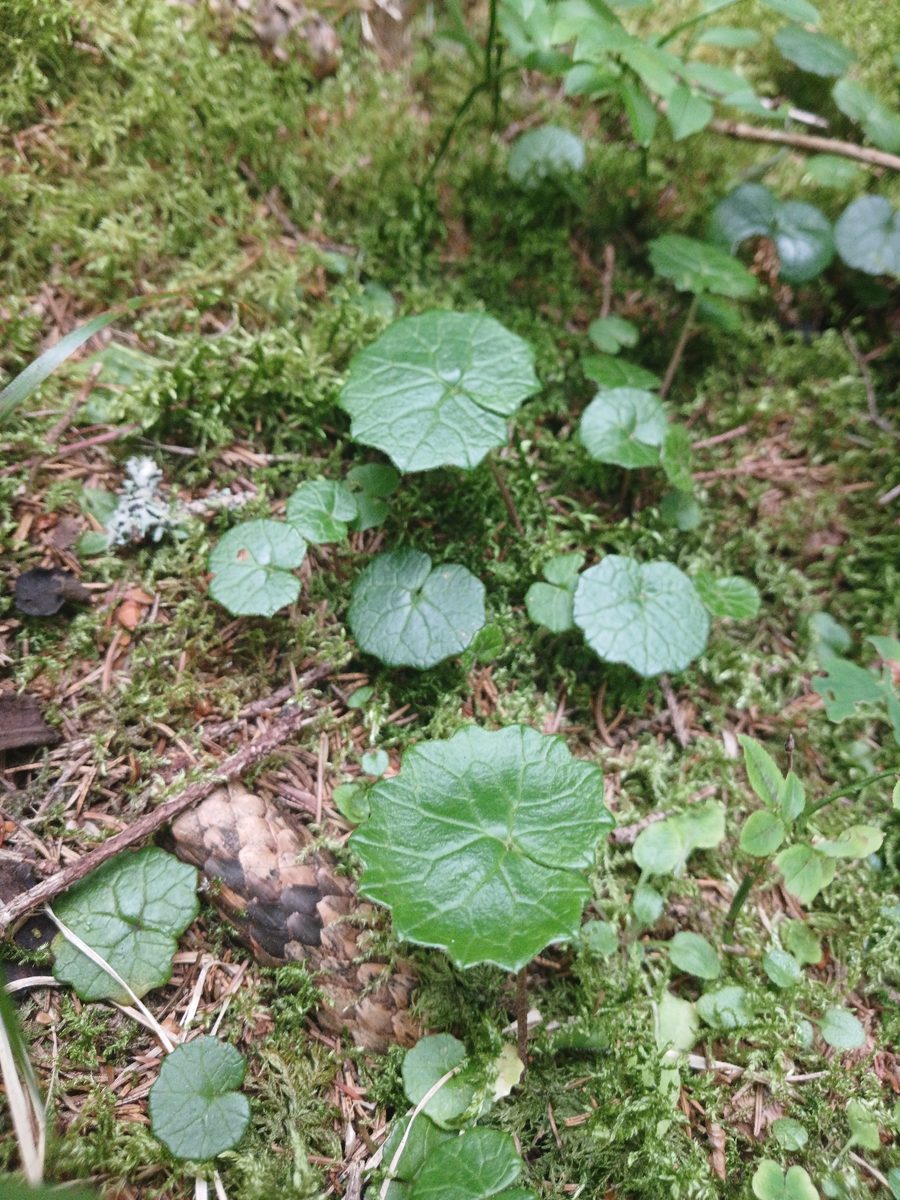
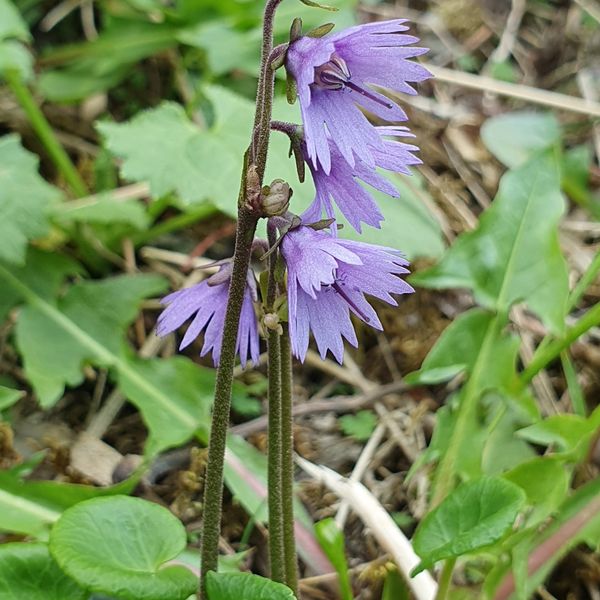
This perennial herb is 10–40 cm tall with a creeping rhizome. The basal leaves are gathered in a rosette and winter under the snow. They are on long petioles, rounded-kidney-shaped, with notched teeth along the edge, small — up to 4 cm in diameter, glabrous and shiny dark green on top, and lighter and hairy underneath. The straight, unbranched hairy stem, often reddish-brown, has several small scales and ends with a single flower head up to 15 mm in diameter with purple flowers. The bracts at the base are hairy and brownish-red.
Alpine coltsfoot blooms shortly after the snow melts: in the Carpathians, it is photographed in bloom in late spring to early summer. As an ornamental plant, it is sometimes grown in alpine gardens.
The name 'coltsfoot' is reminiscent of mother-and-stepmother (Tussilago farfara): both plants belong to the Asteraceae family. However, alpine coltsfoot is much smaller, and its leaves are small, dense, and shiny. The species is not protected, but in the polonynas, as everywhere in national parks, it is better not to pick the plants.
Where in the Carpathians

The map shows where naturalists recorded the species (GBIF, CC0 and CC BY records), not every place it lives. The Ukrainian Carpathians are less studied, so a blank area does not mean the species is absent.
- Countries
- Slovakia · Ukraine · Poland · Romania · Czechia
- Mountain ranges
- Western Tatras, High Tatras, Low Tatras, Lesser Fatra, Greater Fatra, Żywiec Beskids, Belianske Tatras, Slovak Ore Mountains, Bieszczady, Skorušina Mountains
- Altitude belts
- Beech forests (600–1200 m) · Conifer forests (1200–1600 m) · Subalpine belt (1600–1900 m) · Alpine belt (above 1900 m)
When to see it
| Jan | Feb | Mar | Apr | May | Jun | Jul | Aug | Sep | Oct | Nov | Dec | |
|---|---|---|---|---|---|---|---|---|---|---|---|---|
| Flowering | ||||||||||||
| Fruit |
From naturalists’ observations in the Carpathians (iNaturalist, research grade): the darker the cell, the more often the species is seen that month.
Look-alikes — how to tell them apart
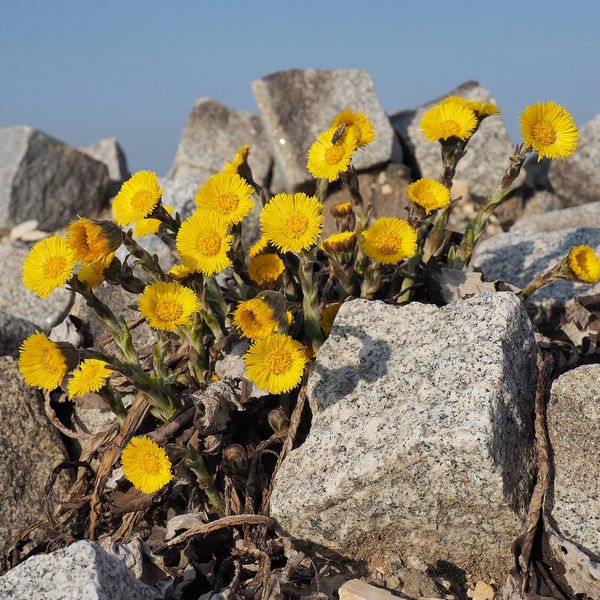
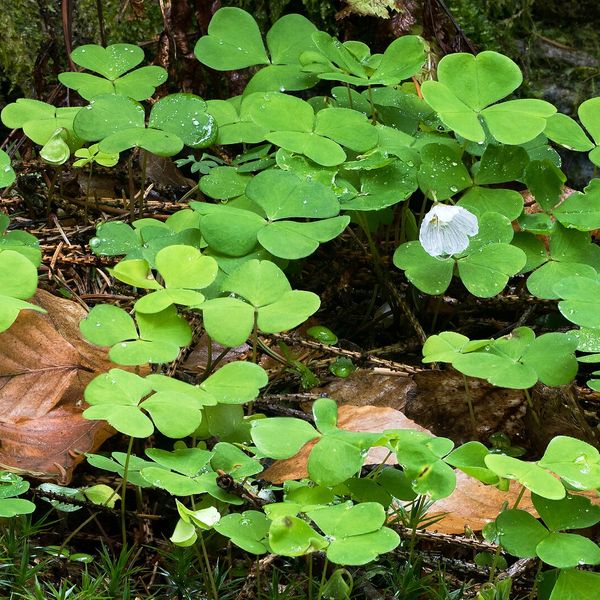
Flowers are bright yellow and appear before the leaves; leaves are large, 10–25 cm, with white woolly undersides; grows on clay slopes lower in the mountains.
Protection and rules
Not protected. In reserves and protected areas of national parks, picking plants is prohibited.
FAQ
What plant with small shiny round leaves grows near the polonynas?
Most likely, it is alpine coltsfoot: a rosette of kidney-shaped leaves up to 4 cm and a stem with a single purple flower head. It is often found in subalpine meadows and mountain forests.
Where does alpine coltsfoot grow in Ukraine?
Only in the Carpathians, where it is common: in subalpine meadows, on mountain slopes, in mountain forests, and along stream banks.
Similar species
Where to meet it
Peaks and meadows
 Mountain meadow1 260 mPolonyna LazokNadvirna districtThe Lazok meadow near the city of Yaremche is quite popular among tourists.
 Mountain meadowMount Liutianska HolytsiaLiutaaltitude 1 375 m9 trails to the topLiutianska Holytsia (also known as Lautanska Holytsia and Liutanska Holytsia) is a 1375-meter peak in the Ukrainian...
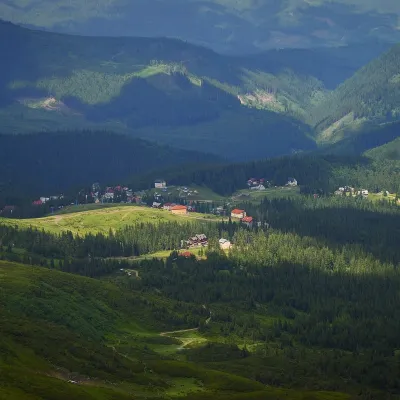 Mountain meadow1 350 mPolonyna DrahobratYasinyaDrahobrat is a high polonyna (mountain pasture) on the northern slopes of the Svydovets massif in the Rakhiv district...
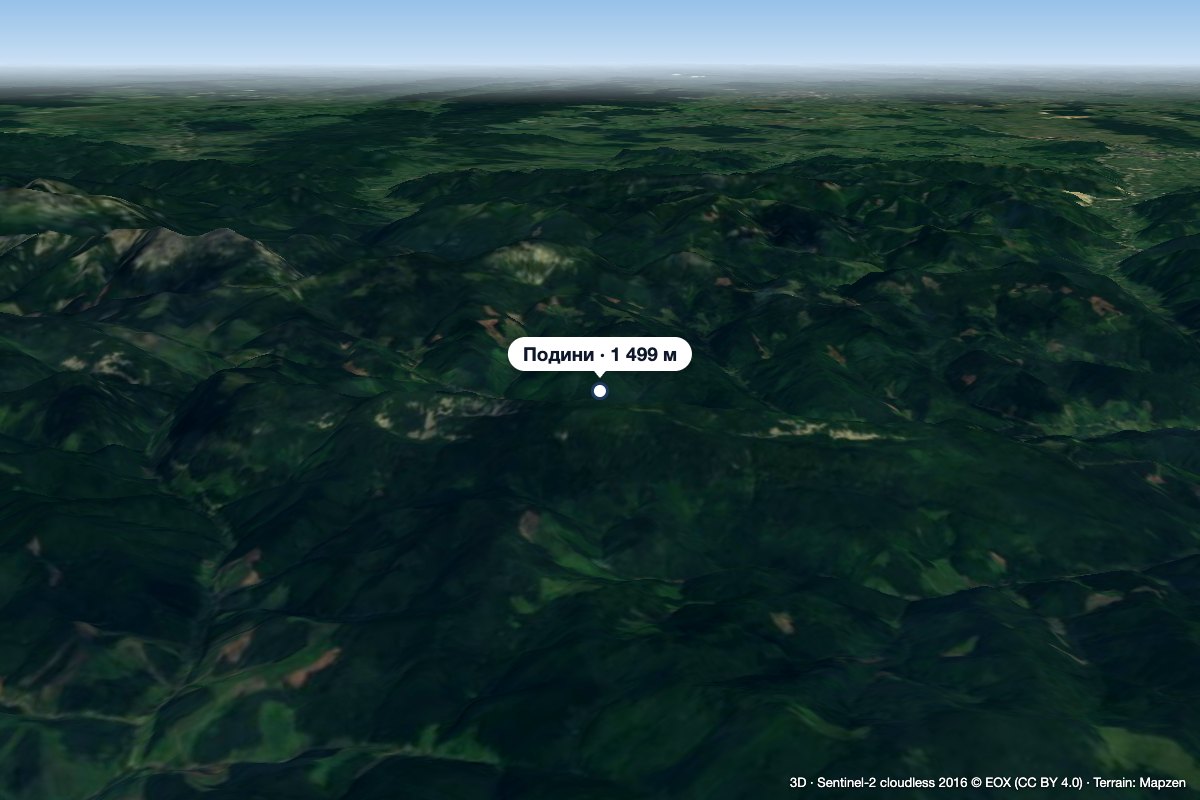 PeakMount PodynyBystrytsiaaltitude 1 499 m · Gorgany rangeMount Podyny (about 1499 m) is the highest summit of the Tavpyshyrka ridge in the Gorgany.
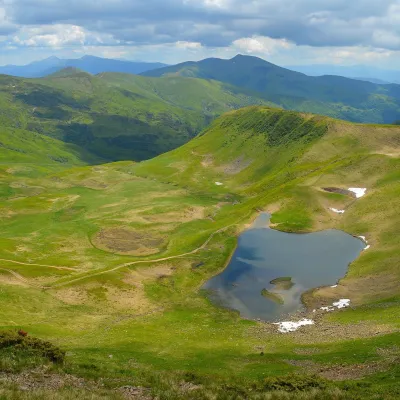 Mountain meadow1 600 mPolonyna HeryshaskaYasinyaPolonyna Heryshaska (also Hereshaska or Herashaska) is a high mountain meadow in the central part of the Svydovets...
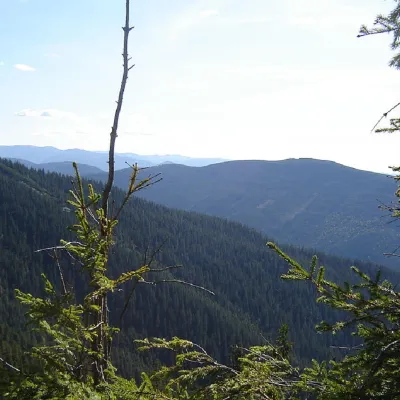 PeakMount Kinets HorhanuOsmolodaaltitude 1 599 m · Gorgany range2 trails to the topThe End of Horgan is a 1599-meter mountain of the Ukrainian Carpathians, which is located on the Horgan Ridge (its...
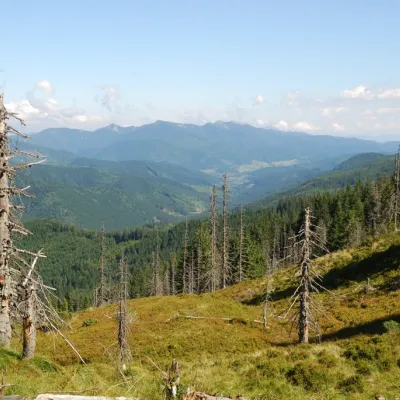 PeakMount TavpyshBystrytsiaaltitude 1 450 m · Gorgany rangeTavpysh is a 1,450 m summit of the Tavpyshyrka ridge in the central Gorgany, in the Nadvirna district of Ivano...
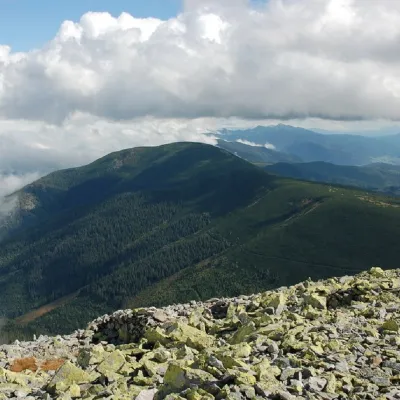 PeakMount NegrovaStara Hutaaltitude 1 604 m · Gorgany range11 trails to the topNegrova is a peak in the central part of the Gorgan mountain range(Ukrainian Carpathians).
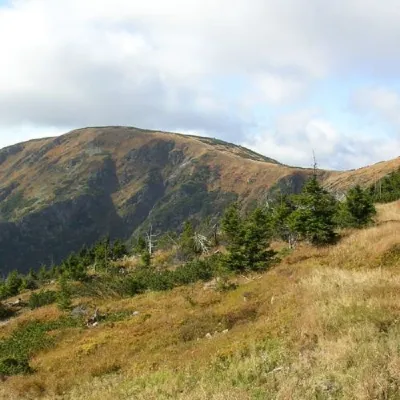 PeakMount Velykyi KotelYasinyaaltitude 1 771 m · Svydovets range39 trails to the topMount Velykyi Kotel is the peak of the Ukrainian Carpathians, which lies within the Svydovets mountain range.
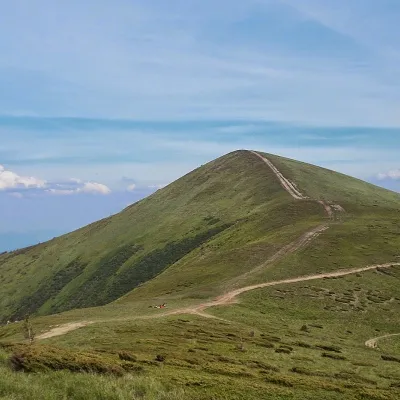 PeakMount Stih (Dragobrat)Yasinyaaltitude 1 704 m · Svydovets range43 trails to the topStih (1704 m; locals say "Stuh") is a peak in the north-eastern part of Svydovets, right above the Drahobrat resort.
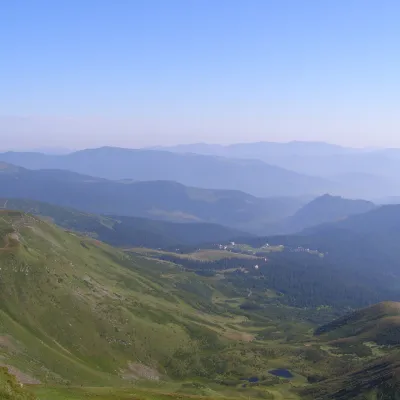 PeakMount Drahobrat (Zhandarm)Drahobrataltitude 1 763 m · Svydovets rangeDrahobrat, also called the First Zhandarm, is a 1,763 m mountain on the Urdu-Flavantuch ridge in the eastern part of...
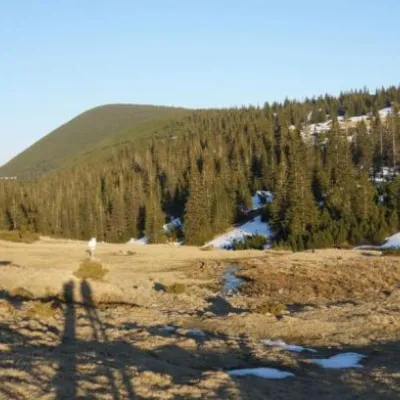 Mountain meadow1 409 mPolonyna RuschynaOsmolodaRuschyna meadow is famous for its panoramic views of the mountains that surround it from all sides and the diversity...
Waters and waterfalls
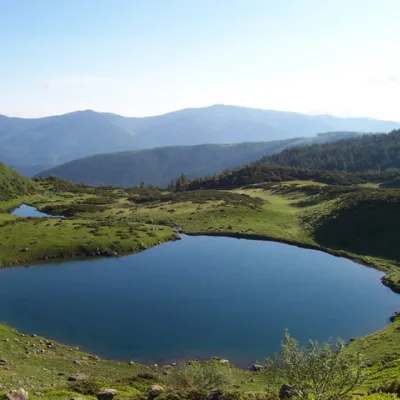 LakeLake VorozheskayaChorna TysaThe real pearl of the Carpathians - Lake Vorozheska (other names - Vorozheska, Triton ) - is a hydrological natural...
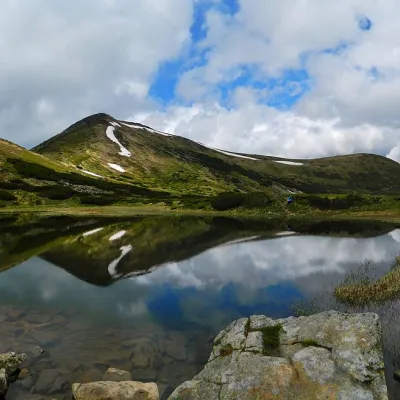 LakeHigh-mountainous Lake Nesamovite (1750 m.a.s.l., Chornohora ridge)VorokhtaNesamovyte is one of the highest lakes in the Ukrainian Carpathians (1750 m above sea level).
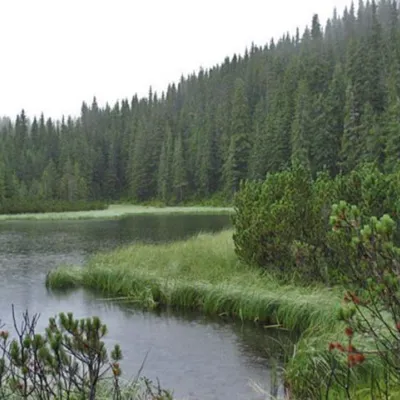 LakeLake MaricheykaYavirnyk (Shybene)Lake Maricheyka is one of the most picturesque high-altitude glacial lakes in the Carpathians, located on the...
Mountain ranges: Bieszczady. In other countries: 🇸🇰 Western Tatras, 🇸🇰 High Tatras, 🇸🇰 Low Tatras, 🇸🇰 Lesser Fatra, 🇸🇰 Greater Fatra, 🇵🇱 Żywiec Beskids, 🇸🇰 Belianske Tatras, 🇸🇰 Slovak Ore Mountains, 🇸🇰 Skorušina Mountains, 🇸🇰 Spiš Magura, 🇸🇰 Volovec Mountains, 🇸🇰 Slovak Paradise, 🇸🇰 Čergov Mountains
Trails and peaks near which naturalists recorded the species (GBIF, iNaturalist), matched by altitude and habitat. Sightings are not guaranteed.
Sources
- Вікіпедія: Підбілик альпійський
- Wikipedia (en): Homogyne alpina
- iNaturalist: Homogyne alpina (спостереження в Карпатах)
GBIF · iNaturalist · Wikidata · Distribution data: GBIF.org (CC0 and CC BY records), iNaturalist; names and identifiers: Wikidata (CC0). Text: Karpaty.rocks, checked 09.11.2026.
