Barn swallow

About
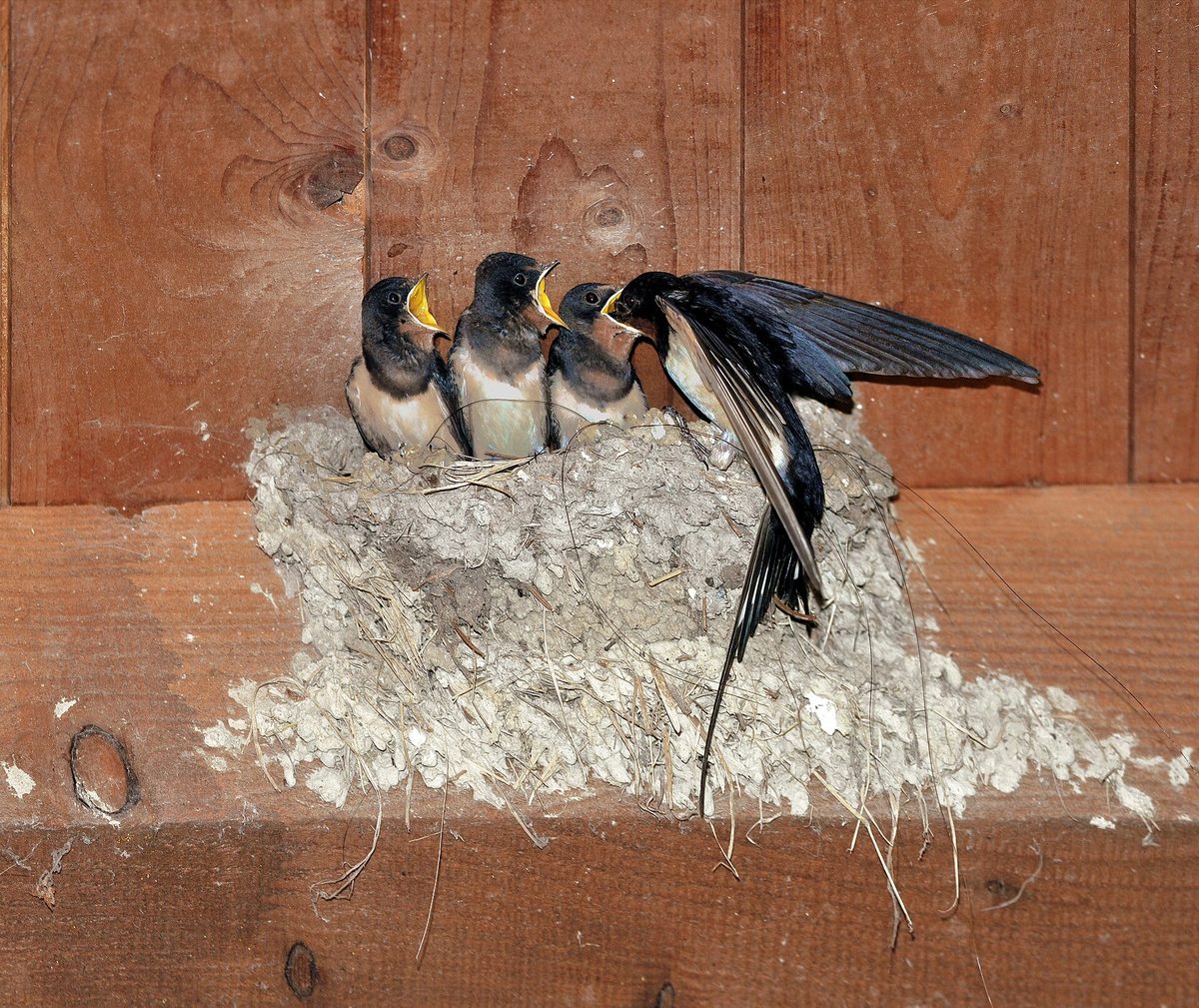
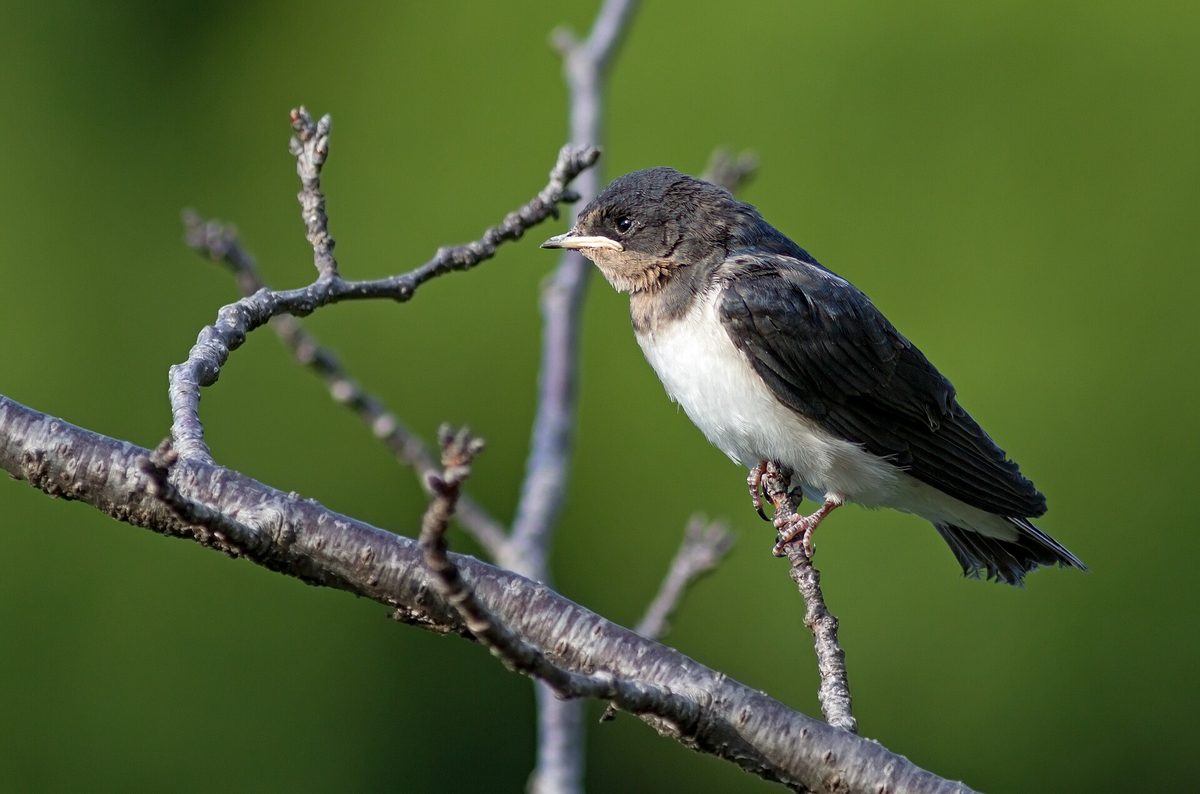
The Barn swallow is a bird 17–19 cm long including the tail. The upper body is blue-black with a metallic sheen, the forehead and throat are brick-red, and the belly is light. The tail is deeply forked, with two long, thin outer feathers—these are longer in males.
Almost its entire life, the Barn swallow is spent in the air: it catches flies, mosquitoes, and wasps on the wing and drinks while flying, skimming its beak across the water. Before rain, insects stay low to the ground, and the swallows follow them down—hence the folk saying.
In the Carpathians, the Barn swallow lives everywhere there are villages, hamlets, and livestock, hunting over meadows, pastures, and water. The nest is an open cup made of clumps of wet earth, bound with saliva and grass, built inside structures: in stables, barns, under awnings, and on beams. The birds return to the same nest year after year.
The House swallow often lives nearby. It is easy to distinguish: it has a white throat, white underparts, and a short tail, and it builds its nest outside, under the eaves, which is closed with a small entrance hole.
Swallows arrive in April and gather in flocks on wires in September before migrating for the winter to Africa south of the Sahara.
Where in the Carpathians

Teal — roughly where the species can occur, by elevation and habitat; orange — where naturalists recorded it (GBIF, CC0/CC BY).
Range: elevation belt and the countries where it is known — our model (AWS Terrain Tiles)
- Countries
- Ukraine · Czechia · Slovakia · Poland · Romania · Hungary · Serbia · Austria · BG
- Mountain ranges
- nearly all Carpathian ranges, within its elevation belt
- Altitude belts
- Foothills (below 600 m)
When to see it
| Jan | Feb | Mar | Apr | May | Jun | Jul | Aug | Sep | Oct | Nov | Dec | |
|---|---|---|---|---|---|---|---|---|---|---|---|---|
| Sightings |
From naturalists’ observations in the Carpathians (iNaturalist, research grade): the darker the cell, the more often the species is seen that month.
Protection and rules
Not listed in the Red Book of Ukraine. It is prohibited to destroy nests.
FAQ
How to distinguish the Barn swallow from the House swallow?
The Barn swallow has a reddish throat and long 'streamers' on its tail, with an open nest inside buildings. The House swallow has a white throat and underparts, a short tail, and a closed nest outside under the eaves.
When do swallows leave the Carpathians?
In September. Before migration, they gather in large flocks on wires and roofs.
Comments
Travellers’ experience: reports, tips, questions.
No one has written here yet. Be the first — your experience helps others.
Similar species
Where to meet it
Trails
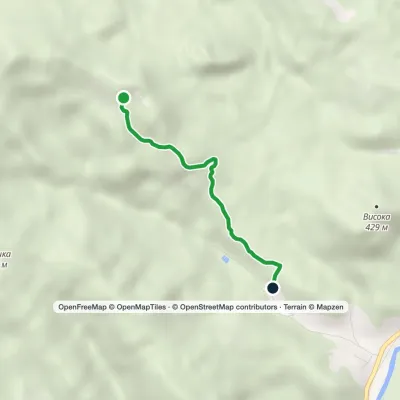 EasyOne-dayMarkedGreen marker (Babaiovo Poliana Yaseni)Elevation profile251–605 m3.1 km≈ 45 min walking
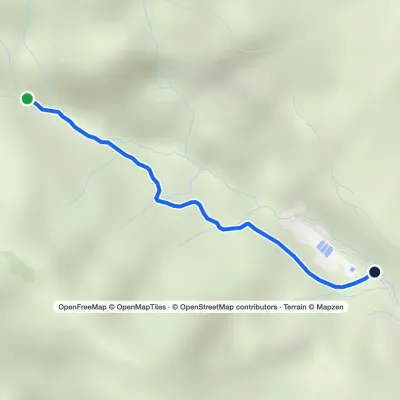 EasyOne-dayMarkedPerechyn Plishka WaterfallElevation profile241–416 m2 kmascent 9 m≈ 30 min walking
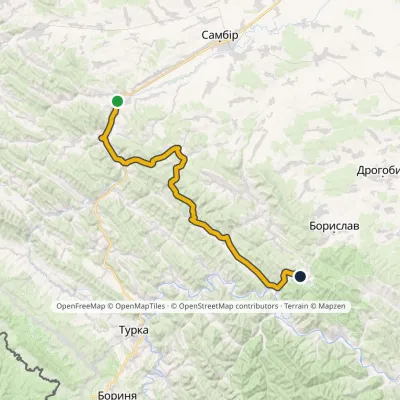 HardTwo-dayMarkedNo. 503-1 Staryi Sambir SkhidnytsiaElevation profile340–826 m57 kmascent 1 054 m
 ModerateOne-dayYarok village to Vorochovo villagevia Antalovetska PolianaElevation profile141–968 m16 kmascent 743 m≈ 5 h walking
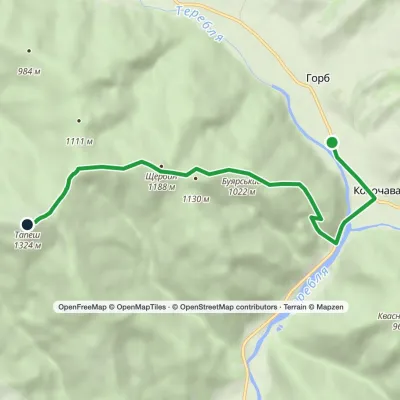 ModerateOne-dayMarkedKolochava TapeshElevation profile544–1 324 m6.7 kmascent 837 m≈ 3 h walking
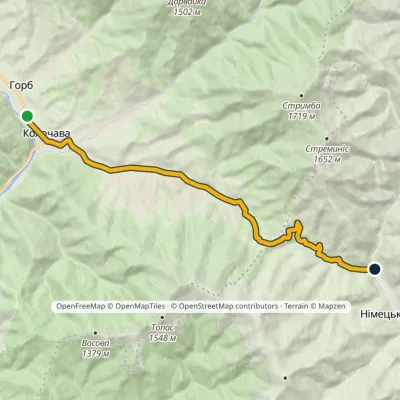 ModerateOne-dayMarkedHorb village sparkling mineral springElevation profile550–926 m14 kmascent 378 m≈ 4 h walking
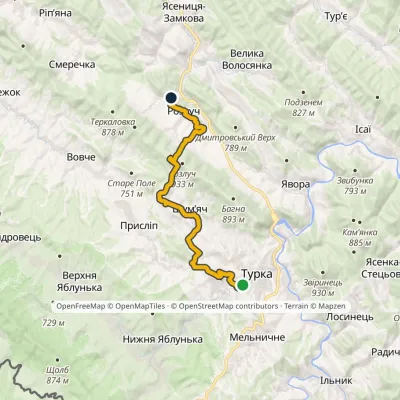 ModerateOne-dayMarkedNo. 5001-1 Turka Rozluchvia source of the DniesterElevation profile539–907 m19 kmascent 568 m≈ 5.5 h walking
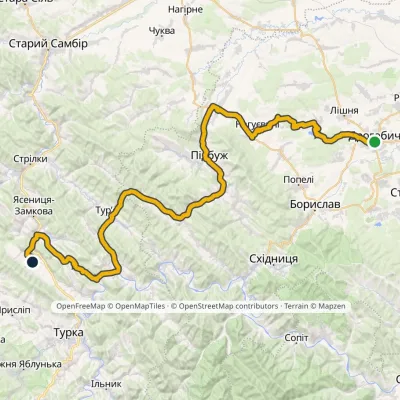 HardMulti-dayMarkedNo. 502-1 Drohobych RozluchElevation profile292–733 m78.1 kmascent 921 m
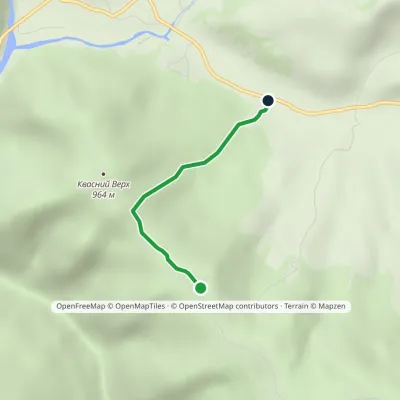 EasyOne-dayMarkedTo Mount Kvasnyi VerkhElevation profile582–984 m2.2 kmascent 402 m≈ 1 h walking
 HardMulti-dayMarkedKolochava village to Yasiniavia Krasna ridge, Ust-Chorna village +1Elevation profile528–1 762 m81.4 kmascent 3 385 m
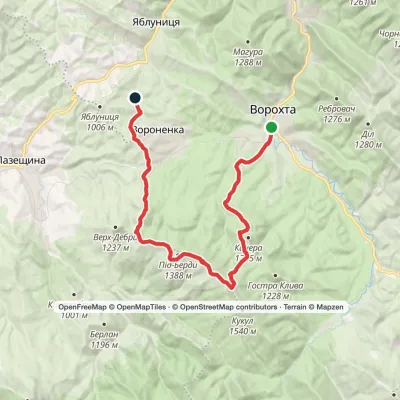 HardOne-dayMarkedVorokhta to Yablunytsia villagevia Mount KukulElevation profile740–1 455 m24.6 kmascent 876 m≈ 7.5 h walking
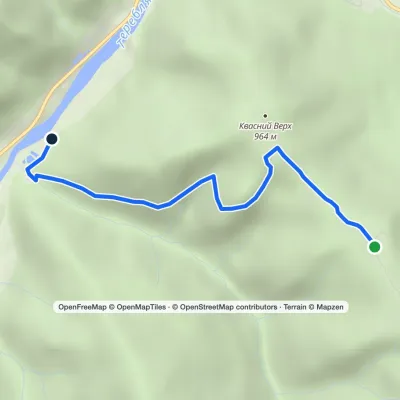 EasyOne-dayMarkedKolochava eco-trailElevation profile544–985 m3.5 kmascent 16 m≈ 60 min walking
Peaks and meadows
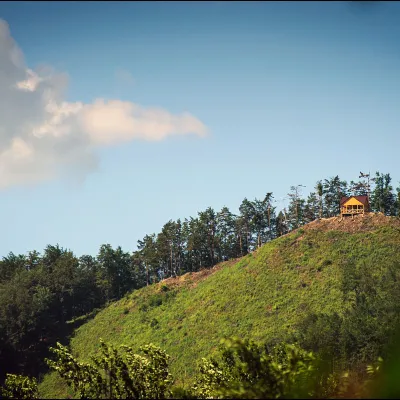 PeakMount Ostry (Ostra)Kosivaltitude 584 m2 trails to the topThe mountain offers wonderful views of the entire Kosiv. The descent is steep, and autumn is magical here.
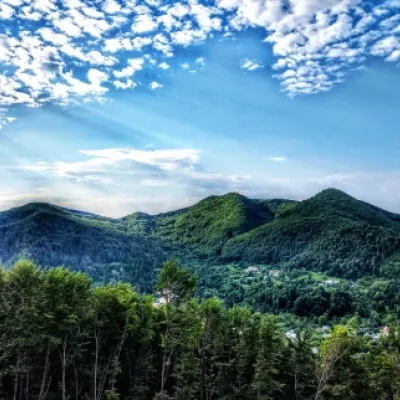 PeakMount Sopka (Stizhky, Zinyakov top).Kosivaltitude 620 m2 trails to the topStizhki (620 meters) offers a panoramic view of the city of Kosiv. The mountain is covered with forests - beech,...
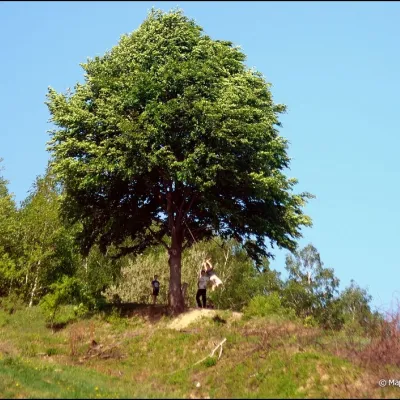 PeakMount KicheraKosivaltitude 567 mThe march to Kichera is an easy walk that all tourists can do. The small length of the march allows you to take your...
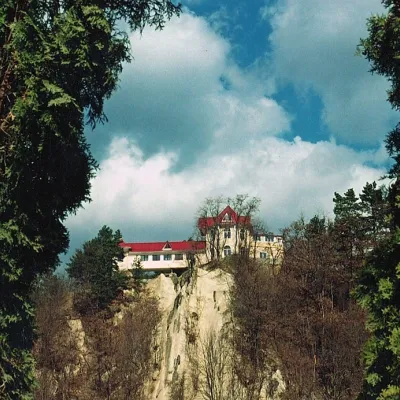 PeakCastle Hill (City)Kosivaltitude 450 mThe top offers a panoramic view of the city. The mountain is home to unique black alpine pines, as well as deciduous...
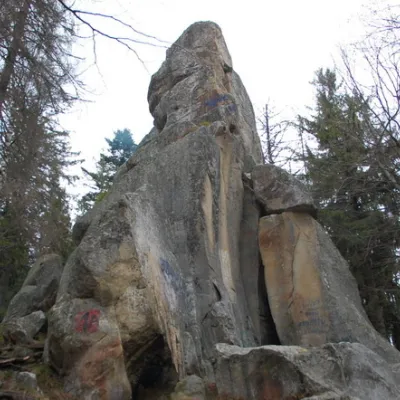 PeakWhite Stone RockDoraaltitude 538 m7 trails to the topThe White Stone Rock is located in the village of Dora in the Carpathians and is one of the most prominent natural...
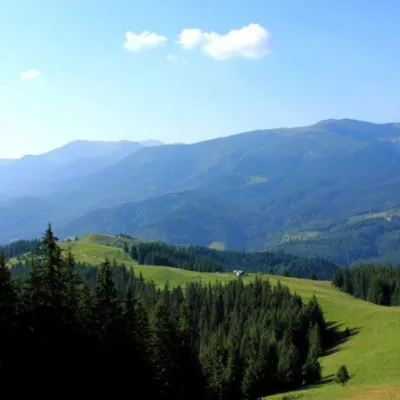 Mountain meadowPolonyna Psarivka, BystretsVerkhovynaUkrainians, for example, call such meadows polonyny. Today we will talk about the Psarivka meadow.
Waters and waterfalls
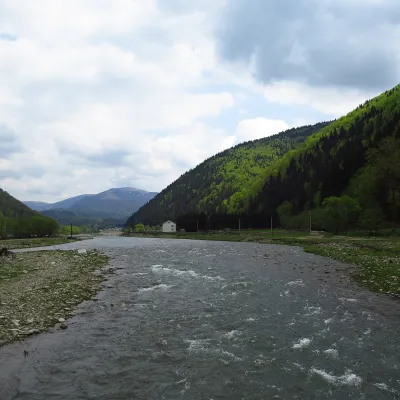 RiverTereblia RiverKolochavaThe Tereblia begins in the Inner Gorgany, where the Roztoka and Sloboda streams meet, and flows through Synevyrska...
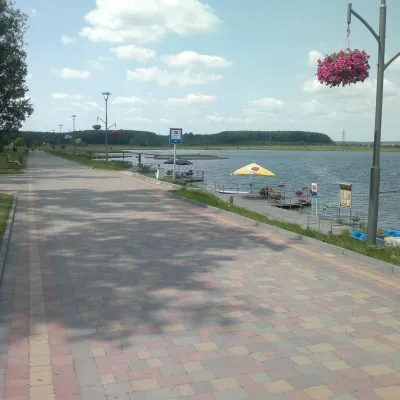 LakeUniatychi ReservoirUniatychiUniatychi Reservoir lies by the village of Uniatychi in Drohobych district, not far from Drohobych.
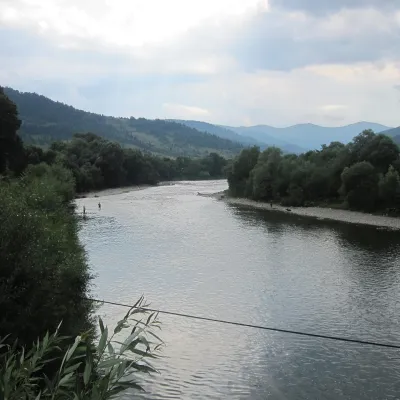 RiverStryi RiverTurkaThe Stryi is one of the largest Carpathian tributaries of the Dniester: 232 km from its source between Mount Yavirnyk...
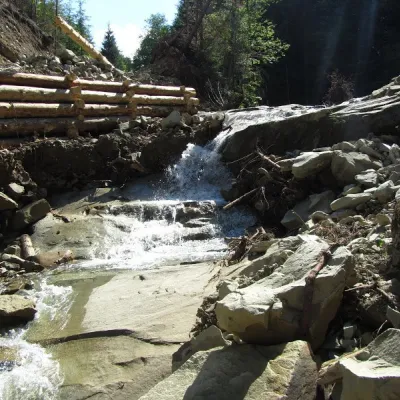 WaterfallSiruchok waterfallTovarnytsiaSiruchok is a waterfall located in the Putyla district of the Chernivtsi region of Ukraine. its height reaches about...
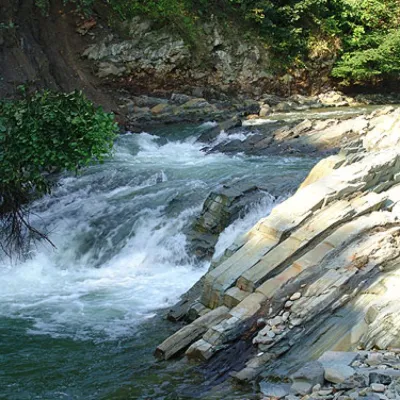 WaterfallKosivskyi Huk WaterfallKosivKosivskyi Huk - one of the most beautiful waterfalls in the Ukrainian Carpathians (in the Pokuttya-Bukovyna...
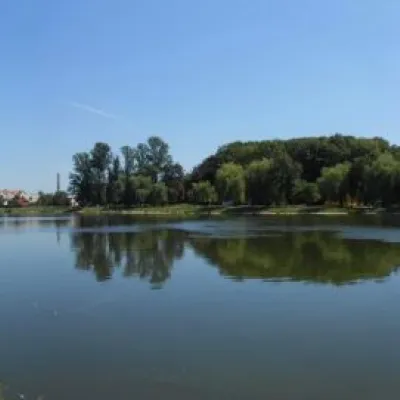 LakeCity lake in KolomyiaKolomyiaAfter touring the city, it's a good idea to relax and unwind by the water.
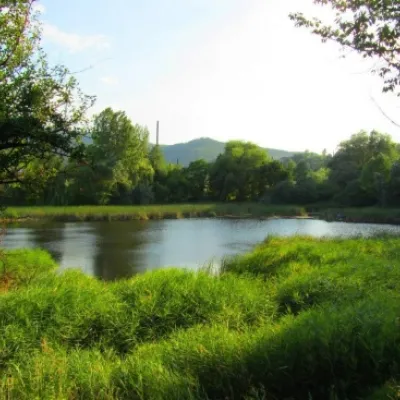 LakeCity Banske Lake (Kosiv)KosivThere are lakes of technogenic origin in the Hutsul mountains. One such lake is Banske Lake (near the former factory ...
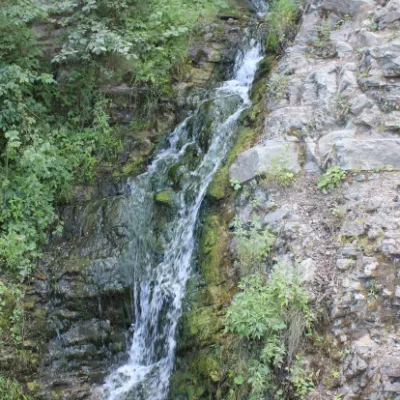 WaterfallSykavka waterfallVelykyi RozhynSykavka Waterfall is a waterfall located near the Sokilsky Rocks, also between the villages of Tyudiv and Velykyi...
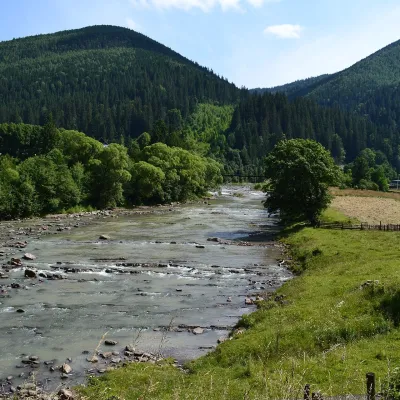 RiverChorna Tysa RiverYasinyaThe Chorna Tysa is a mountain river in eastern Zakarpattia. It rises on the northern spurs of the Svydovets massif...
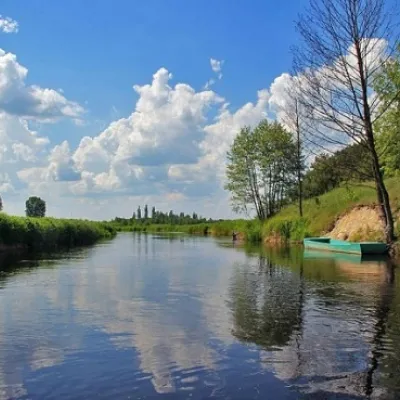 RiverTuria RiverTuri RemetyThe Turia is a small mountain river in western Zakarpattia and a right tributary of the Uzh.
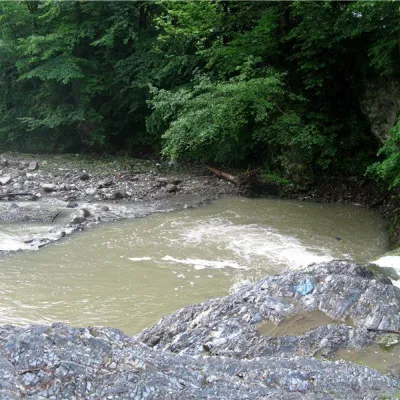 RiverVyzhenka RiverVyzhenkaTheriver Vyzhenka is located in the village of the same name in the Chernivtsi region.
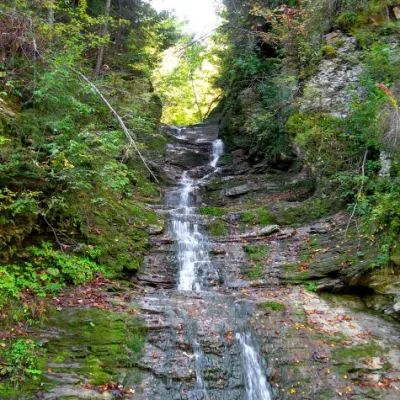 WaterfallBukovinian (Smugar) waterfallsRoztokyA picturesque chain of waterfalls, up to two kilometers long, stretches along the Smuhariv River in Bukovyna, in the...
Mountain ranges: Bieszczady, Gorgany, Pokuttia-Bukovina Carpathians. In other countries: 🇨🇿 Moravian-Silesian Beskids, 🇸🇰 Slovak Ore Mountains, 🇭🇺 Bükk, 🇸🇰 Western Tatras, 🇷🇴 Piatra Craiului, 🇵🇱 Żywiec Beskids, 🇷🇴 Bucegi Mountains, 🇷🇸 Kučaj Mountains and Beljanica, 🇭🇺 Zemplén Mountains, 🇷🇴 Trascău and Metaliferi Mountains, 🇷🇸 Đerdap and Miroč
Trails and peaks near which naturalists recorded the species (GBIF, iNaturalist), matched by altitude and habitat. Sightings are not guaranteed.
Sources
- Вікіпедія: Ластівка сільська
- Wikipedia (en): Barn swallow
- iNaturalist: Hirundo rustica (спостереження в Карпатах)
GBIF · iNaturalist · Wikidata · Distribution data: GBIF.org (CC0 and CC BY records), iNaturalist; names and identifiers: Wikidata (CC0). Text: Karpaty.rocks, checked 11.11.2026.
