Vyzhenka River
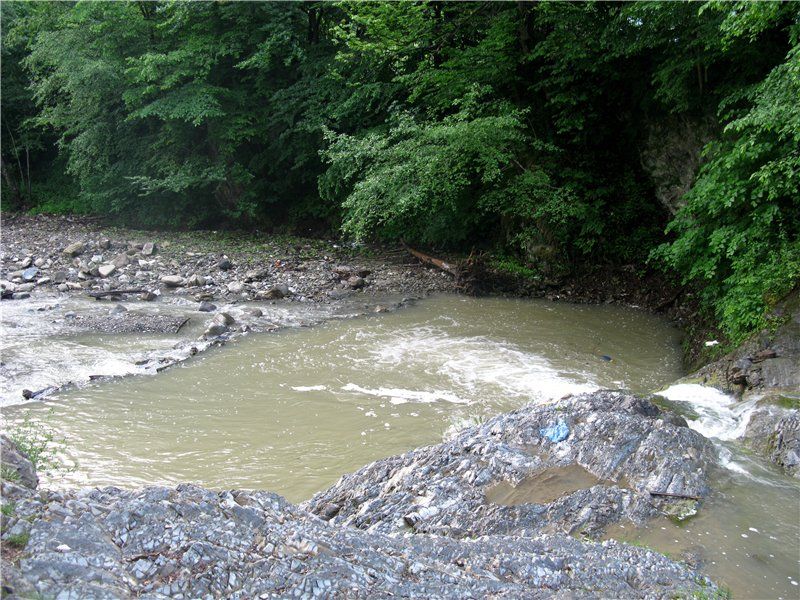
Theriver Vyzhenka is located in the village of the same name in the Chernivtsi region. The famous Mikva (Mikva) waterfall is located on the Vyzhenka River. The quiet flow of the river is interrupted by a small cliff from which the water falls down, forming a natural bowl-the only place where you can not only dive but also swim; there is a suspension bridge over the waterfall.
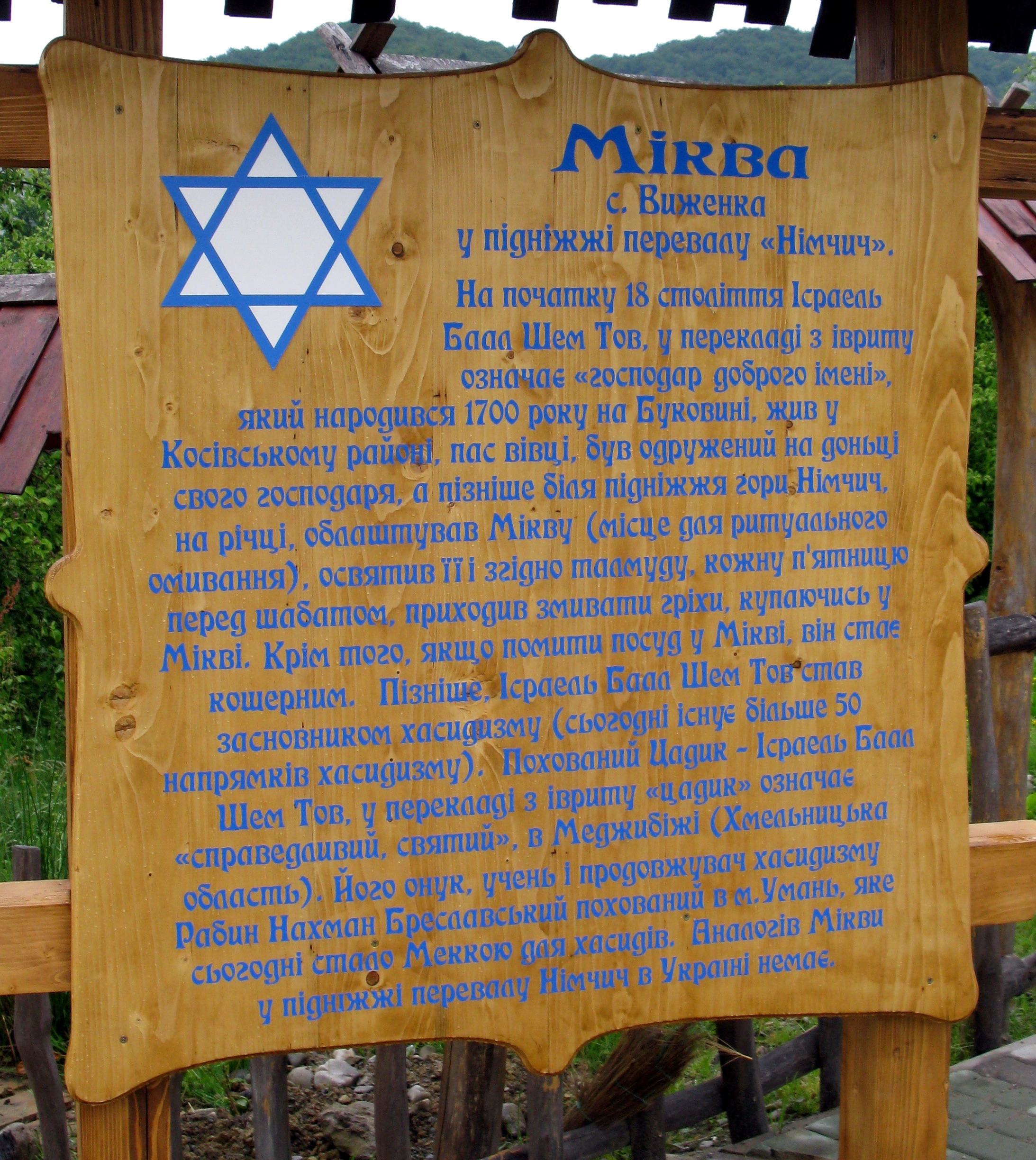
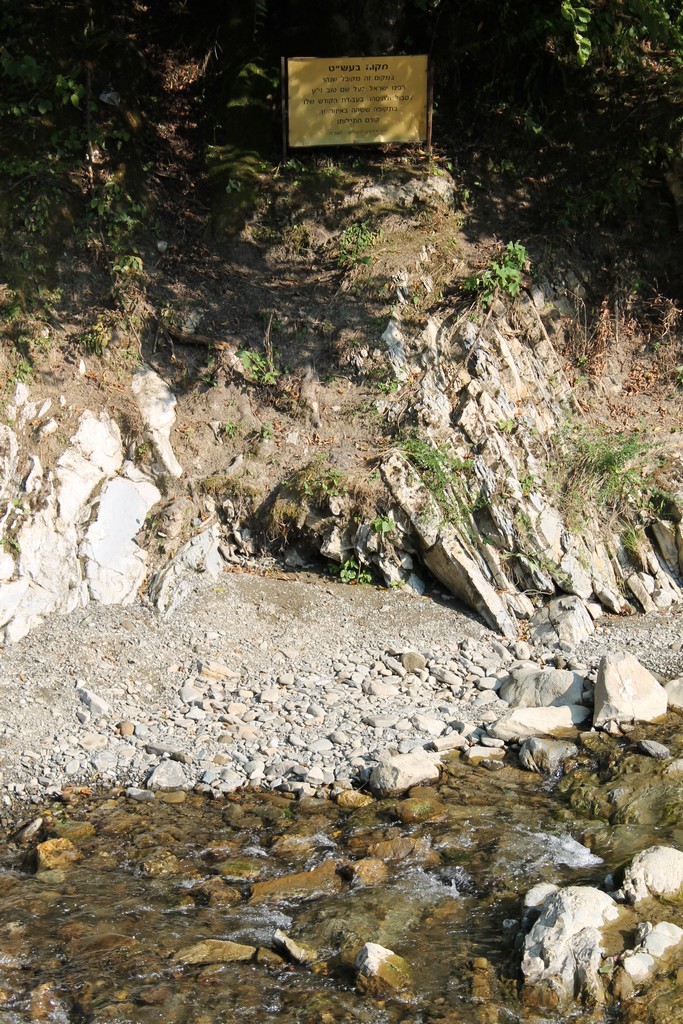
At the beginning of the eighteenth century, Yisrael Baal Shem Tov, which means "the owner of a good name" in Hebrew, was born in 1700 in Bukovyna, lived in the Kosiv district, herded sheep, and was married to his master's daughter, and later, at the foot of Mount Nimchych, on the river, he built a Mikvah (a place for ritual washing), consecrated it, and according to the Talmud, every Friday before Shabbat he came to wash away his sins by bathing in the Mikvah. In addition, if you wash dishes in the Mikvah, they become kosher. Later, Yisrael Baal Shem Tov became the founder of Hasidism (today there are more than 50 branches of Hasidism). The Tzadik (translated from Hebrew, "tzadik" means "just, holy") is buried in Medzhybizh (Khmelnytsky region). His grandson, student, and successor of Hasidism, Rabbi Nachman Breslavsky, is buried in the city of Uman, which today has become a Mecca for Hasidim. There is no analogous Mikvah at the foot of the Nimchych Pass in Ukraine.
According to legend, these waters have healing properties, but in order to experience the healing features of the water, you need to swim in this reservoir naked. In order to get here, you need to walk down the path to the Vyzhenka River and a little further along its course. There, the flow is interrupted by a small cliff, from which the water falls down. There is an old suspension bridge above the waterfall. It was not far from Vyzhnytsia that the founder of Hasidism, who spent about seven years as a hermit here, discovered the constant presence of God in nature, now this place is called Mikva (a place for ritual washing), according to legend, to experience the wonderful properties of water and receive a blessing, one must bathe in the reservoir naked.
The waterfall in Vyzhenka is one of the natural monuments of Ukraine.
Thevillage of Vyzhenka is one of the main tourist settlements of the Vyzhnytsia district and the center of green tourism in Bukovyna. Population (according to the last census): 1380 people. Distance to the city of Chernivtsi: 80 km. The community is proud of the Burkut spring - sulfate-iron-aluminum water.
It has been known since the XVIII century as Verkhnia Vyzhnytsia. The village is on the way to the Nimchych (Turkish Vershad) Pass (586.3 m).
From 1859 until the First World War Vyzhenka was an Austro-Hungarian resort. Around 1860, after the division of the family's inheritance, Mieczysław Rey became the owner of an estate in Vyzhenka (also Vyzhnytsia, Babnia, Chornohuzy, Rivne) in Bukovyna. The village's pride is the single-domed wooden church of Ivan Suchavskyi (1792) in the Hutsul style, the chapel in honor of the abolition of serfdom in Bukovyna in 1848 (located next to the church of St. Nicholas), and St. Nicholas Church (1920s, wooden, covered with tin).
In the late nineteenth and early twentieth centuries, Vyzhenka was visited by prominent cultural figures: Yuri Fedkovych, Olena Kobylianska, Lesia Ukrainka, Ivan Franko, Vasyl Stefanyk, and Marko Cheremshyna. In 1902, Opanas Shevchukevych, a famous Ukrainian sculptor, doctor, and writer, was born here.The poetic beauty of the Prykarpattia region, the availability of high-quality raw materials, and the natural abilities of the craftsmen contributed to the development of folk art in Vyzhenka. Traditional folk crafts include wood carving, woodworking, Easter egg making, and embroidery.St. Nicholas Church in the village of Vyzhenka, Chernivtsi region, near the town of Vyzhnytsia, was built in 1921-1925 according to the canons of the Hutsul school of folk architecture characteristic of this area and is located in the southern part of the village on a hill, near a steep bend in the road. The church of St. Paraskeva in the village of Ust-Putyla is similar.The wooden church of St. Nicholas is cruciform in plan, three-story, with almost identical octagonal tops over all three parts of the building. The nave has large extensions on both sides, crowned with cupolas, which creates the illusion of a five-story Galician church. Today, the church is almost completely covered with tin (except for the lowest part of the log cabins, which is painted green). The church is surrounded by a large free space, so it is good to see it from different sides. Only on the northeastern side, from the road, are there a few trees. On the north and west sides, a cemetery stretches at some distance.Not far away is a stone bell tower, which is somewhat similar to the bell tower of the neighboring church of St. John of Suceava in the same village. The bell tower is of the wall type and consists of five columns. By the road, near St. Nicholas Church, there is a stone chapel covered with a shingle roof. According to historians, it was built in 1848 in honor of the abolition of serfdom in the Austrian Empire. Numerous inscriptions on the chapel testify to the wanderings of the peasants on the serfdom, to the heavy obligatory duties, illnesses, and all the hardships of the locals that fell to their lot in the nineteenth century. These inscriptions are popular with travelers and travelers, because the village of Vyzhenka is one of the centers of green tourism in Bukovyna.
Accommodation around Vyzhenka River:


Which trails pass by Vyzhenka River?
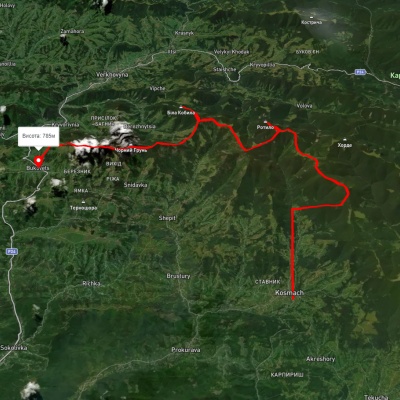
We suggest these hiking trails through or near Vyzhenka River: Nimchych Pass – Protiate Kaminnia, Smuharski Waterfalls, Bukovets village – Pysanyi Kamin – Bukovets village, Pysanyi Kamin – Bukovets village, Kosmach village, via Mount Rotylo, Mount Hrehit and Mount Bila Kobyla to Bukovets village, Sheshory – Rosokhata

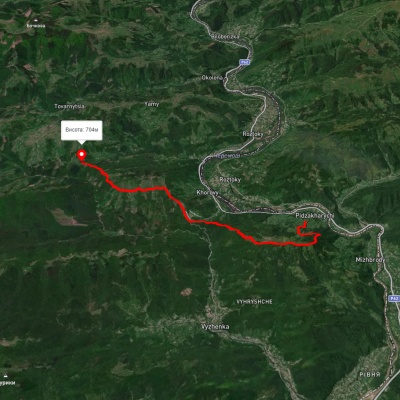
Nimchych Pass – Protiate Kaminnia
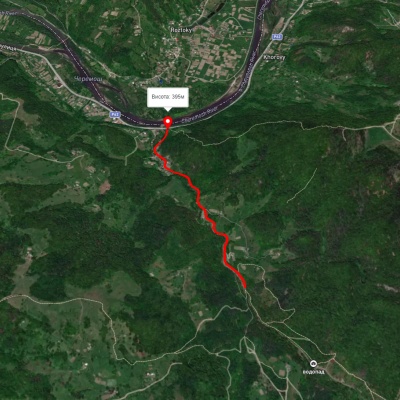
Smuharski Waterfalls
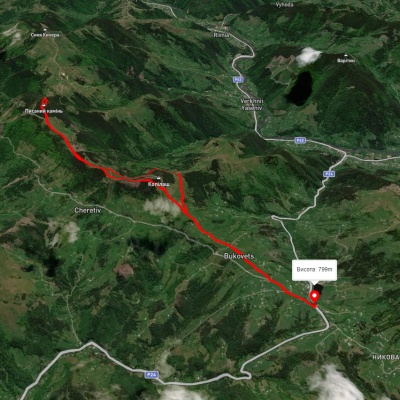
Bukovets village – Pysanyi Kamin – Bukovets village
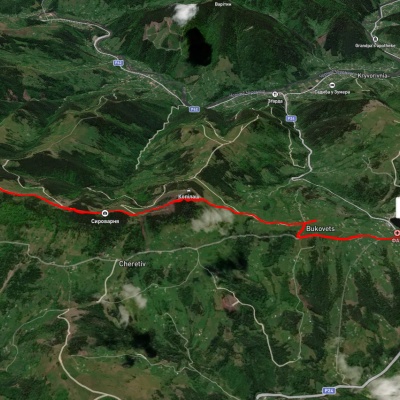
Pysanyi Kamin – Bukovets village