Scorzonera rosea
About
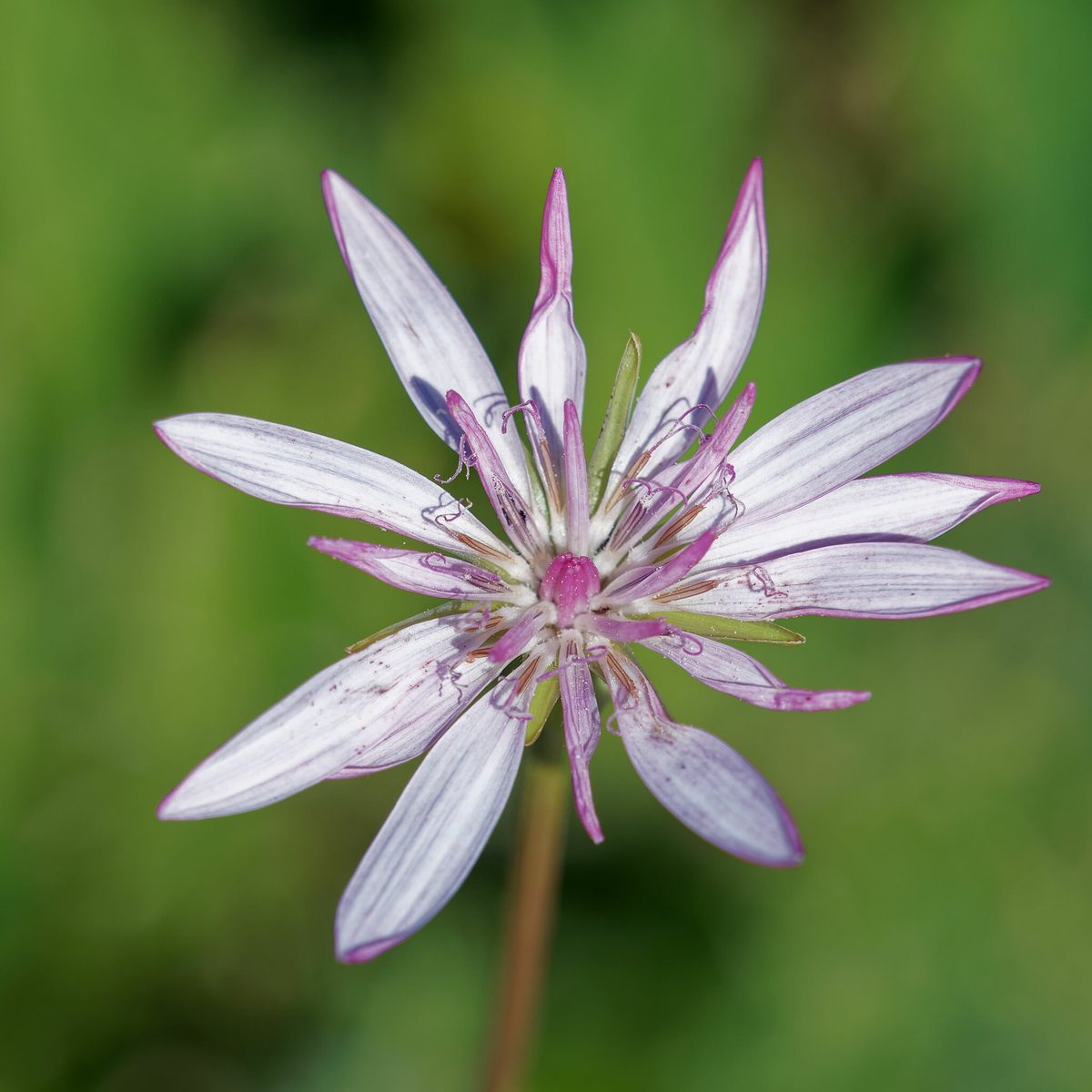
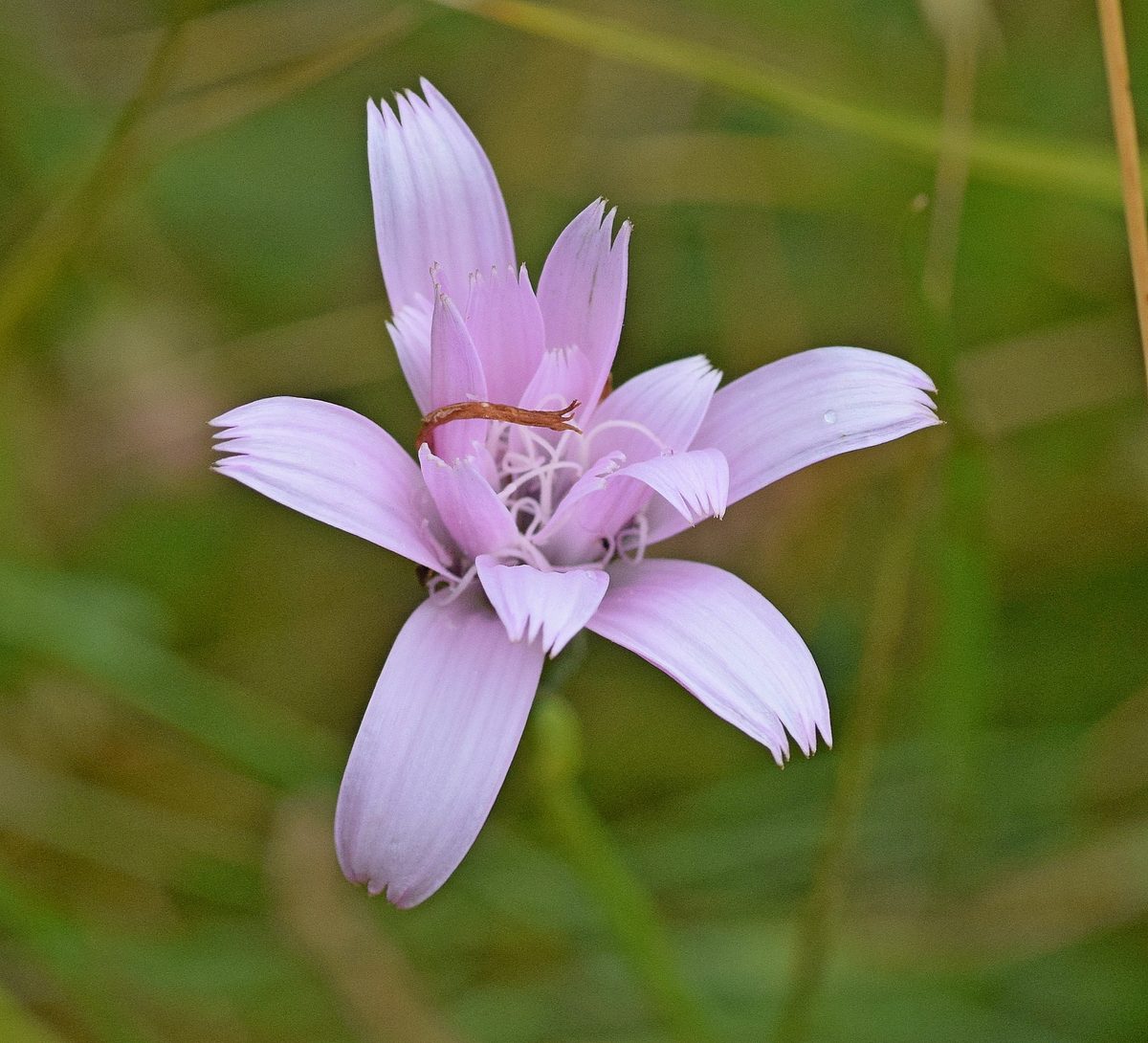
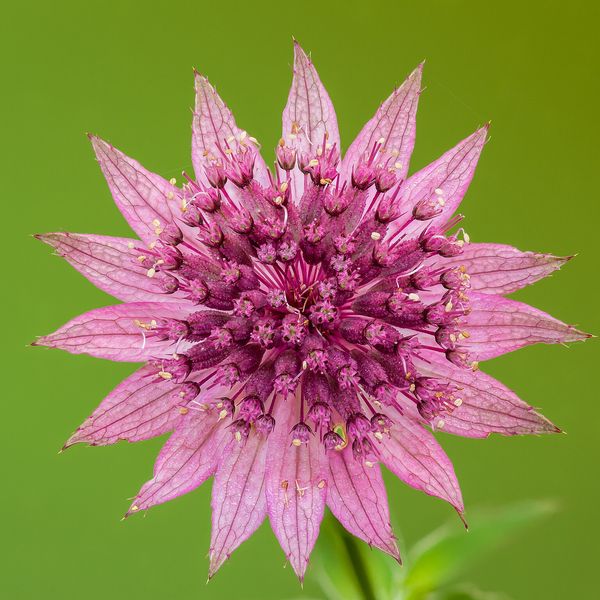
Scorzonera rosea is one of the most beautiful flowers of the mountain meadows of the Eastern Carpathians. This plant is found in the mountains of southeastern Europe: besides the Carpathians, it is also known in the Balkans, where some botanists consider it a subspecies of Scorzonera purpurea. In the Ukrainian Carpathians, Scorzonera rosea occurs in mountain meadows and polonynas, as well as in the high mountain meadows of Chornohora, particularly in the area of Mount Pip Ivan, where it is considered one of the characteristic plants of local communities. Observations have also been made in the meadows of the middle mountains, approximately from 1000 m.
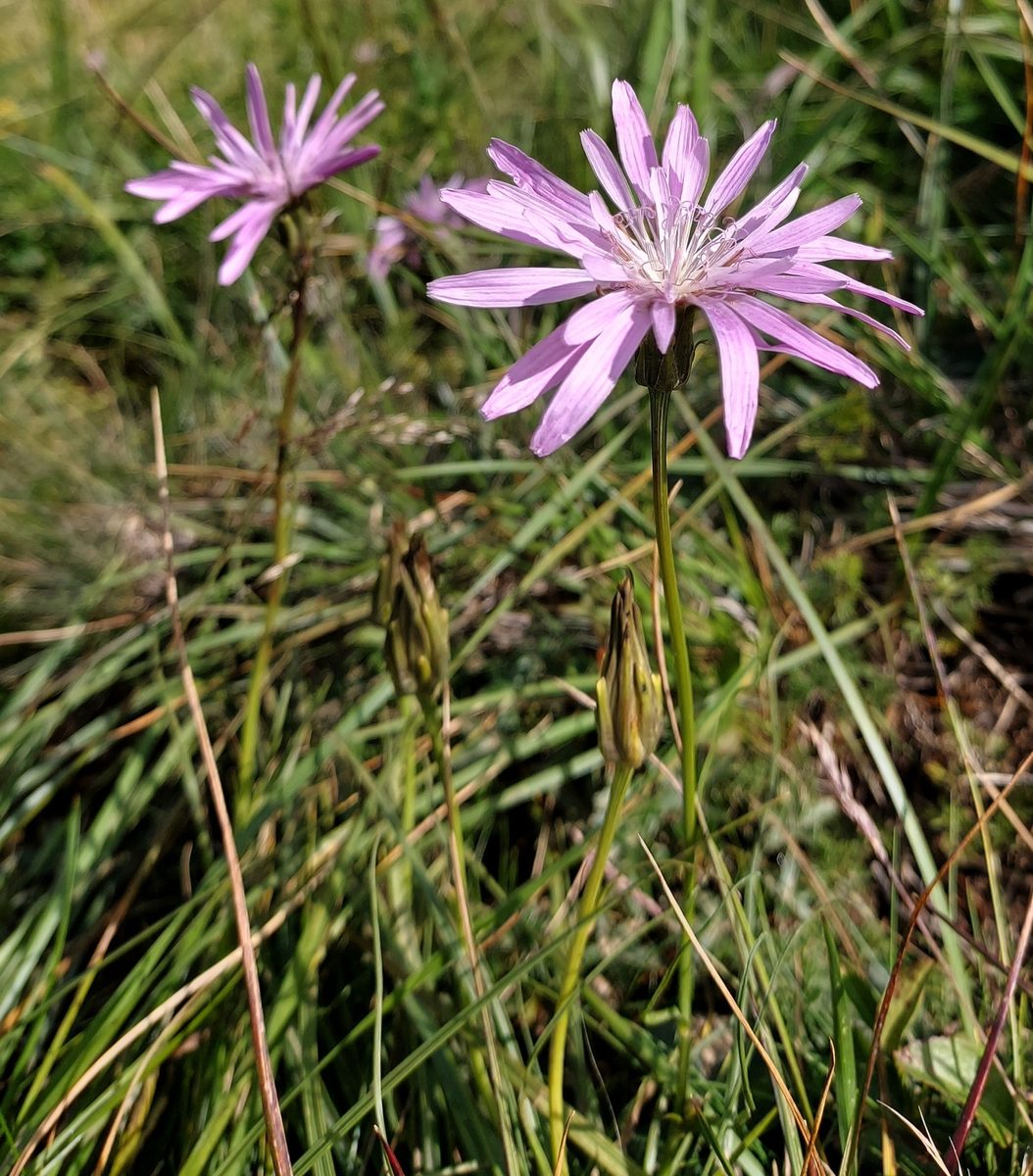
The plant is perennial, about 40 cm tall. The basal leaves are linear or lanceolate, sessile, often nearly the same length as the stem, so the rosette resembles a tuft of grass. The stem leaves are significantly shorter. At the top of the stem is a basket of ligulate flowers, pink or purple-pink, which extend nearly twice beyond the involucre. It is mostly photographed in bloom in June - July, rarely in August.
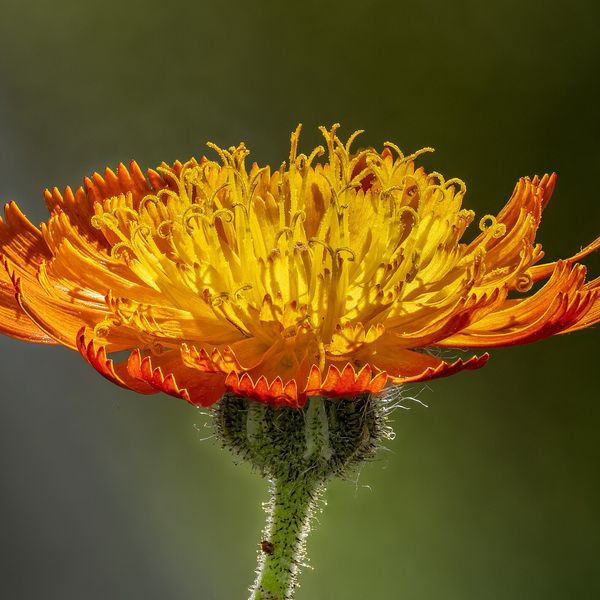
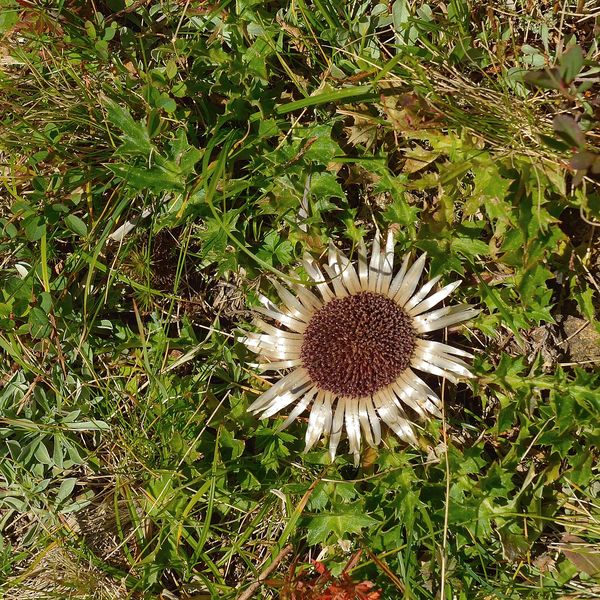
Scorzonera rosea can easily be confused with other pink aster-like flowers, but it is distinguished by the combination of narrow grass-like leaves and solitary pink baskets on almost leafless stems. Pilosella aurantiaca has orange baskets, grouped in clusters, and broad leaves covered with dark hairs.
Scorzonera rosea is not listed in the Red Book of Ukraine. Its pink baskets are a decoration of summer polonynas, so simply admire it along the route: picking plants in reserves and national parks is prohibited.
Where in the Carpathians

The map shows where naturalists recorded the species (GBIF, CC0 and CC BY records), not every place it lives. The Ukrainian Carpathians are less studied, so a blank area does not mean the species is absent.
- Countries
- Ukraine · Romania · Poland · Slovakia · Hungary
- Mountain ranges
- Krasna Polonyna, Skole Beskids, Borzhava, Pokuttia-Bukovina Carpathians, Chornohora, Bieszczady, Gorgany, Rivna Polonyna, Svydovets, Hryniava Mountains
- Altitude belts
- Foothills (below 600 m) · Beech forests (600–1200 m) · Conifer forests (1200–1600 m)
When to see it
| Jan | Feb | Mar | Apr | May | Jun | Jul | Aug | Sep | Oct | Nov | Dec | |
|---|---|---|---|---|---|---|---|---|---|---|---|---|
| Flowering | ||||||||||||
| Fruit |
From naturalists’ observations in the Carpathians (iNaturalist, research grade): the darker the cell, the more often the species is seen that month.
Look-alikes — how to tell them apart
Baskets are orange-red, grouped at the top of the stem; leaves are broader, with dark hairs.
Protection and rules
Not protected. Picking plants in reserves and protected areas of national parks is prohibited.
FAQ
What are the pink flowers with narrow leaves blooming in the polonynas?
One of the most likely is Scorzonera rosea: solitary pink baskets on stems above a tuft of narrow grass-like leaves. It blooms in June - July.
Where does Scorzonera rosea grow?
In the mountains of southeastern Europe — in the Carpathians and the Balkans. In Ukraine — in the mountain meadows and polonynas of the Carpathians.
Similar species
Where to meet it
Trails
 HardMulti-dayMarkedVovchyi village to Mizhhiriavia Mount Stiy, Mount Hemba +2Elevation profile334–1 681 m45.1 kmascent 2 377 m
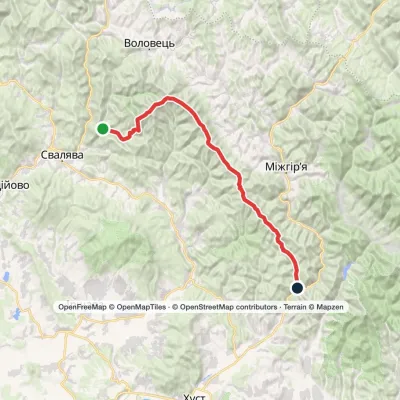 HardMulti-dayVovchyi village to Nyzhnii Bystryi villagevia Mount Stiy, Mount Zhyd-Mahura +4Elevation profile285–1 681 m60.7 kmascent 2 763 m
 HardMulti-dayMarked1662 km railway station to Mizhhiriavia Mount Stiy, Mount Hemba +1Elevation profile368–1 681 m54.2 kmascent 2 489 m
 HardMulti-dayMarkedMizhhiria to Volovets villagevia Mount Zhyd-Mahura, Mount Hemba +2Elevation profile427–1 681 m56.4 kmascent 2 812 m
 HardMulti-dayMarkedKolochava village to Ust-Chorna villagevia Mount Syhlianskyi, Mount Klymova +1Elevation profile520–1 568 m29.4 kmascent 1 675 m≈ 10.5 h walking
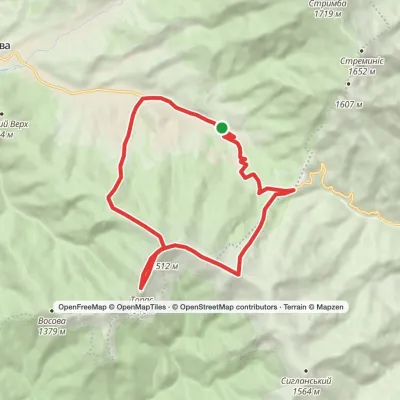 ModerateTwo-dayKolochava village loopvia Mount TopasElevation profile632–1 548 m16.2 kmascent 1 030 m≈ 6 h walking
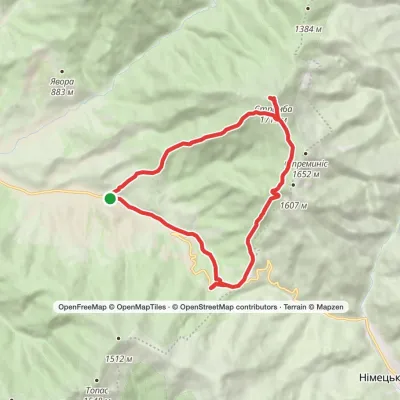 ModerateTwo-dayMarkedKolochava village loopvia Mount StrymbaElevation profile637–1 719 m16.2 kmascent 1 086 m≈ 6 h walking
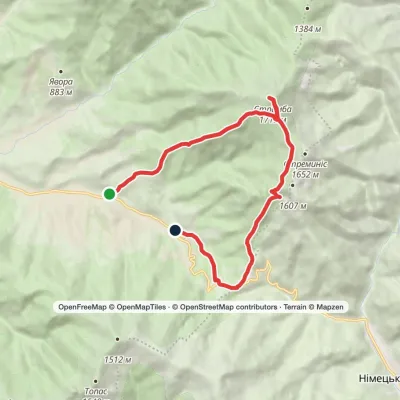 ModerateOne-dayMarkedKolochava village loopvia Mount Strymba, Pryslip PassElevation profile643–1 719 m13.6 kmascent 1 076 m≈ 5.5 h walking
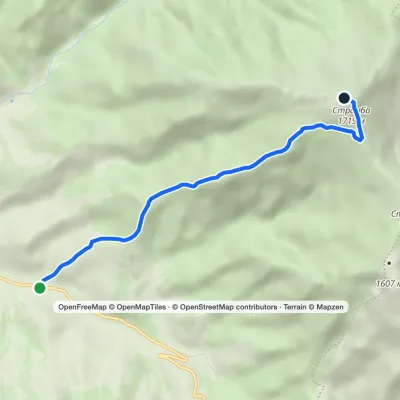 ModerateOne-dayMarkedTo Mount StrymbaElevation profile637–1 719 m5.5 kmascent 1 082 m≈ 3.5 h walking
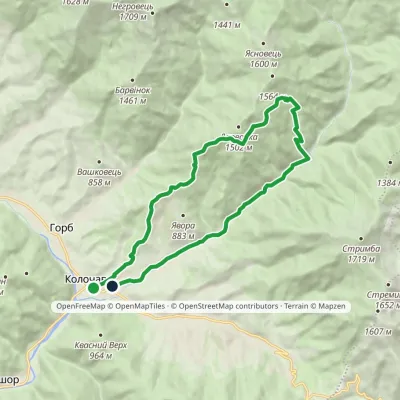 ModerateTwo-dayMarkedKolochava village loopvia Mount DarvaikaElevation profile558–1 383 m18.5 kmascent 838 m≈ 6.5 h walking
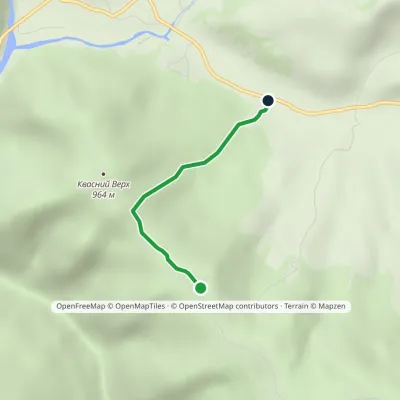 EasyOne-dayMarkedTo Mount Kvasnyi VerkhElevation profile582–984 m2.2 kmascent 402 m≈ 1.5 h walking
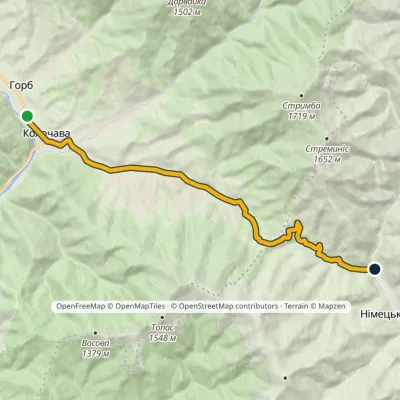 ModerateOne-dayMarkedHorb village sparkling mineral springElevation profile550–926 m14 kmascent 378 m≈ 4.5 h walking
Peaks and meadows
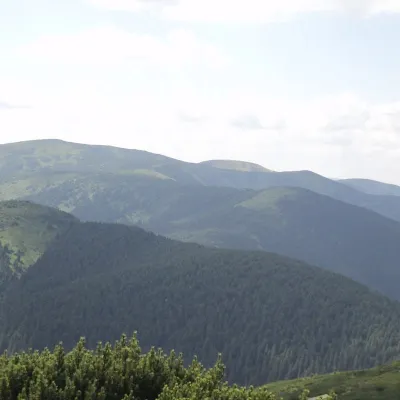 PeakBerlyaska MountainLopukhivaltitude 1 555 m · Svydovets rangeBerlyaska is a 1,555-meter peak of the Ukrainian Carpathians, which is located within the Svydovets mountain range ...
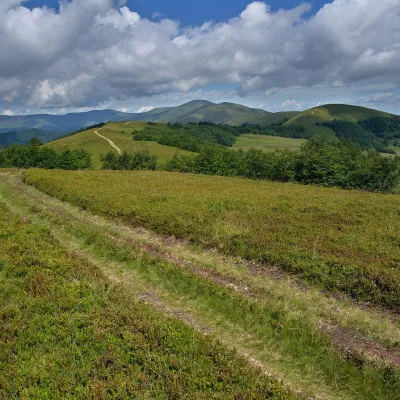 PeakMount Kychera (Mizhhiria)Potikaltitude 1 257 m · Borzhava rangeKychera is a 1,257 m summit (other sources give 1,241 m; it is also described as Kichera-Kruhlan) on the main crest...
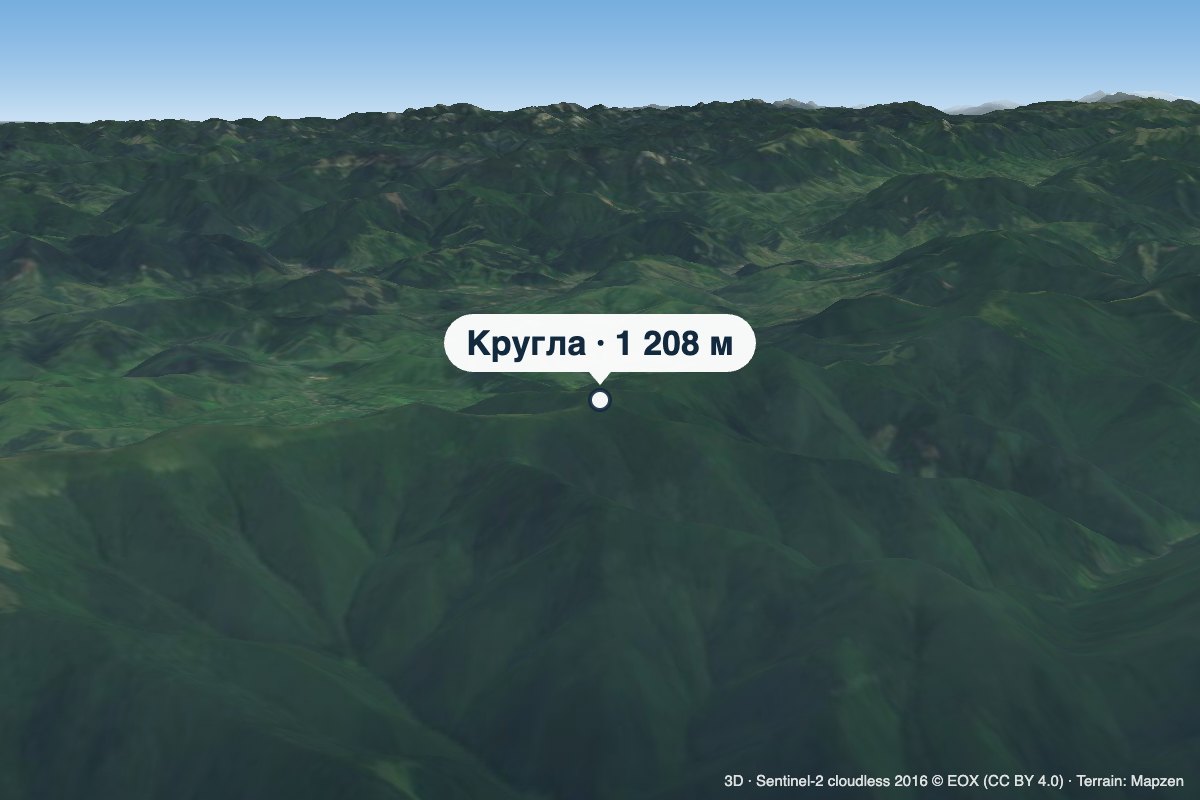 PeakMount KruhlaPotikaltitude 1 208 m · Borzhava rangeKruhla is a 1,208 m summit on the main crest of Polonyna Borzhava in Zakarpattia Oblast, in its south-eastern part...
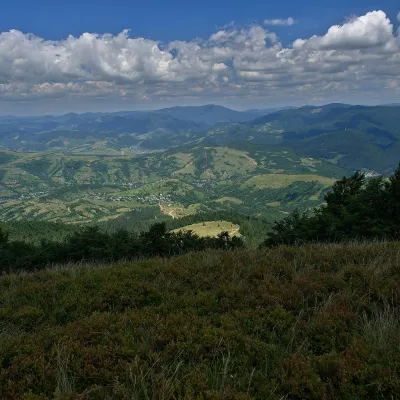 PeakMount Menchul (Mizhhiria)Sopkyaltitude 1 247 m · Borzhava rangeMenchul is a 1,247 m summit in the south-eastern part of the Polonyna Borzhava massif in Zakarpattia Oblast.
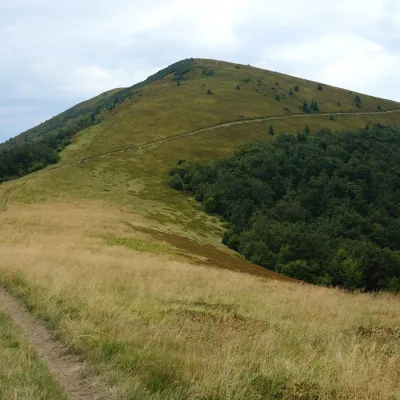 PeakMount KukLysychovoaltitude 1 361 m · Borzhava rangeKuk is a mountain in the south-eastern part of the Polonyna Borzhava massif in Zakarpattia Oblast.
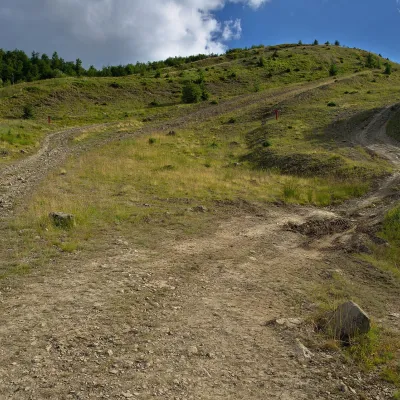 PeakMount KaminnaSopkyaltitude 1 127 m · Borzhava rangeKaminna (sometimes called Kamiana) is a 1,127 m summit in the south-eastern part of the Polonyna Borzhava massif in...
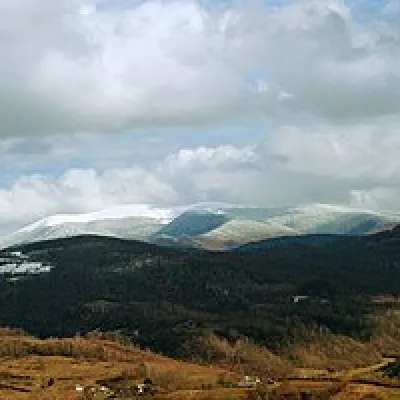 Mountain meadow1 189 mPolonyna-KukMizhhiriaVery beautiful scenery, there is a spring and places to spend the night with a tent down the road to Mount Cook.
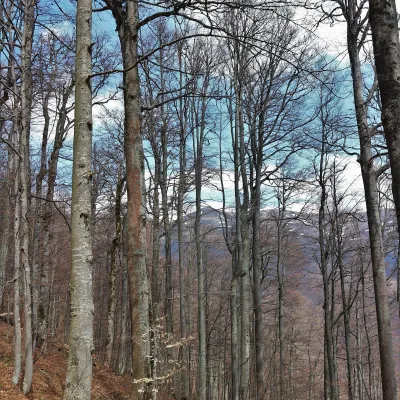 PeakMount KinskaVovchyialtitude 1 255 m · Borzhava rangeKinska is a 1,255 m summit in the Polonyna Borzhava massif in Zakarpattia Oblast.
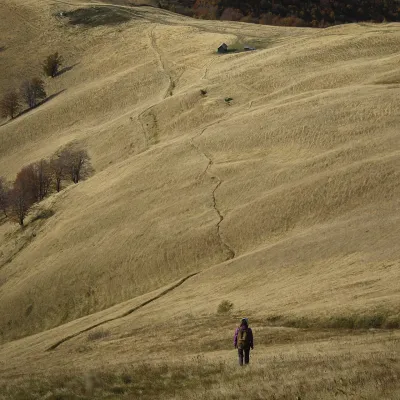 PeakMount TopasKolochavaaltitude 1 548 m · Svydovets rangeTopas is a mountain in the Ukrainian Carpathians, in the Polonyna Krasna massif, Tiachiv district of Zakarpattia Oblast.
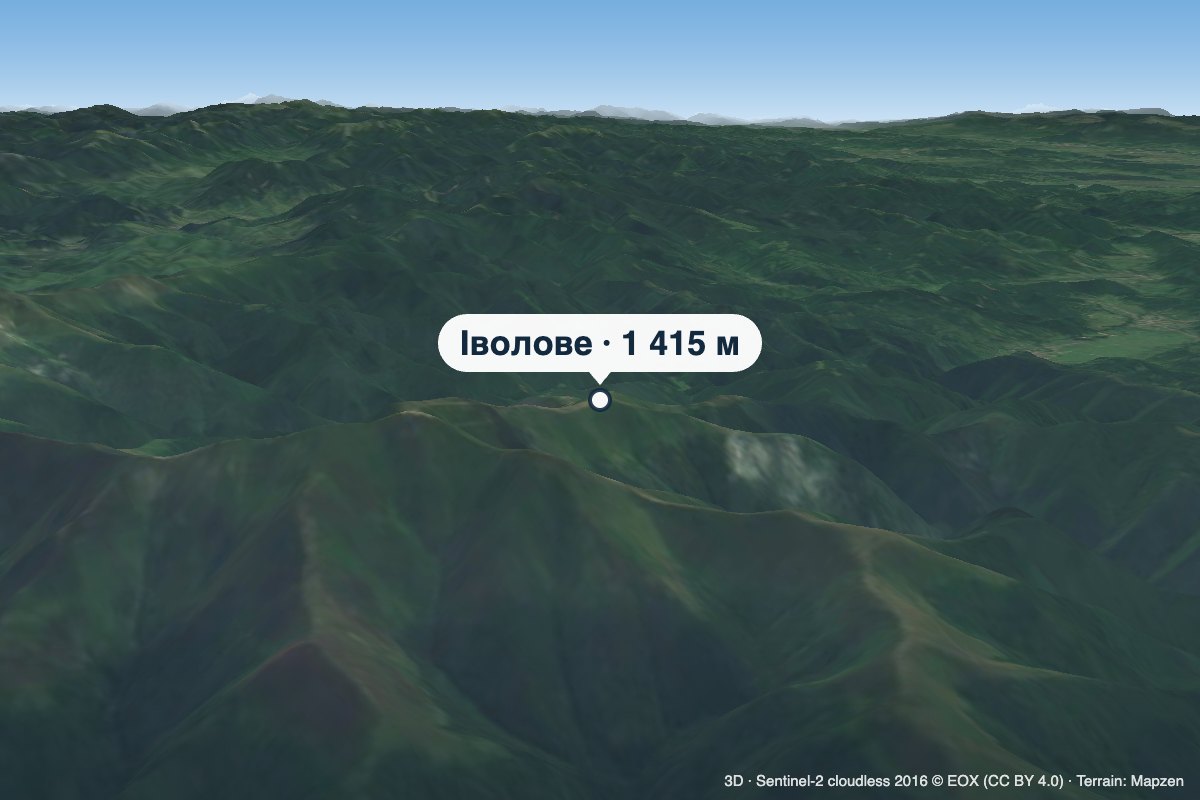 PeakMount IvoloveVovchyialtitude 1 415 m · Borzhava rangeIvolove (sometimes spelled Ivolovo) is a 1,415 m summit in the Polonyna Borzhava massif in Zakarpattia Oblast.
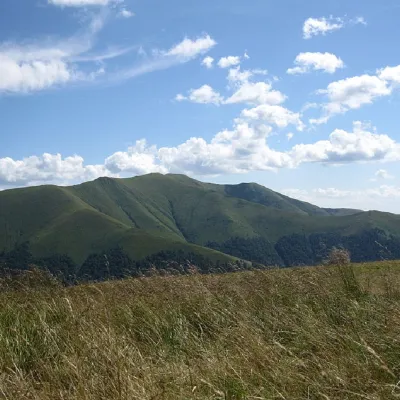 PeakMount StiiVovchyialtitude 1 681 m · Borzhava range28 trails to the topStiy (also known as Stoy) is the highest peak of the Polonyna Borzhava mountain range on the Polonyna ridge (Polonyna...
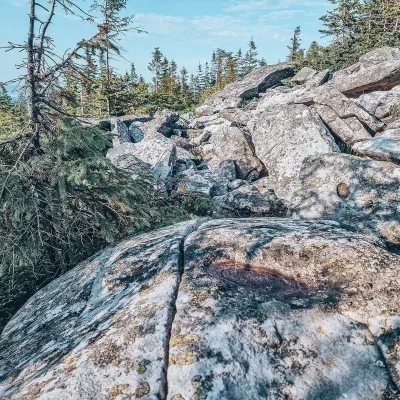 PeakMount Lysyna KosmatskaKosmachaltitude 1 465 m · Pokuttia-Bukovyna Carpathians rangeLysyna Kosmatska is a 1,465 m mountain (1,466 m by other data) in the Pokuttia-Bukovyna Carpathians.
Waters and waterfalls
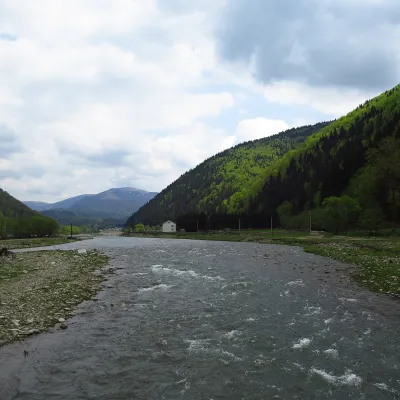 RiverTereblia RiverKolochavaThe Tereblia begins in the Inner Gorgany, where the Roztoka and Sloboda streams meet, and flows through Synevyrska...
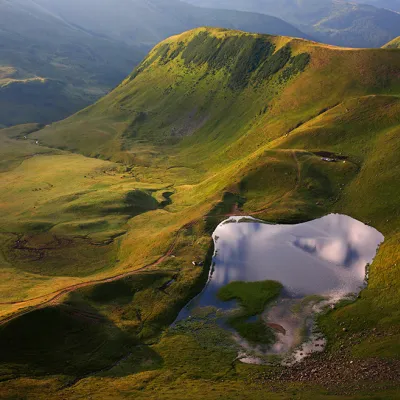 LakeLake Gereshaska (Dogyaska)YasinyaGerashaska (another name - Dogyaska ) is a high-mountain lake in the Ukrainian Carpathians, within the Rakhiv...
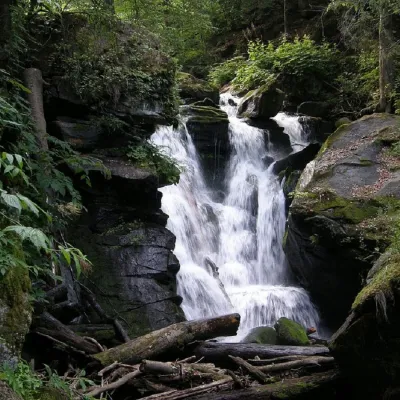 WaterfallVojvodyn waterfallPolianska HutaThe Voyevodyn Waterfall is located on the stream of the same name near the village of Zhdeniyevo in Zakarpattia...
Mountain ranges: Krasna Polonyna, Skole Beskids, Borzhava, Pokuttia-Bukovina Carpathians, Chornohora, Bieszczady, Gorgany, Rivna Polonyna, Svydovets, Hryniava Mountains, Maramureș Mountains. In other countries: 🇷🇴 Bucegi Mountains, 🇷🇴 Retezat Mountains, 🇷🇴 Hășmaș Mountains
Trails and peaks near which naturalists recorded the species (GBIF, iNaturalist), matched by altitude and habitat. Sightings are not guaranteed.
Sources
- PhytoKeys (Plazi): Scorzonera purpurea clade — опис S. rosea
- FloraVeg.EU: Scorzonera rosea — висота й життєва форма
- Živa: Alpínská vegetace v karech Popa Ivana (характерні види, зокрема Scorzonera rosea)
- Greek biodiversity habitats: Scorzonera purpurea ssp. rosea
- iNaturalist: Scorzonera rosea (спостереження в Карпатах)
GBIF · iNaturalist · Distribution data: GBIF.org (CC0 and CC BY records), iNaturalist; names and identifiers: Wikidata (CC0). Text: Karpaty.rocks, checked 09.11.2026.
