Carpathian newt
About
The Carpathian newt is a true endemic: it lives only in the Carpathians. Its range includes Ukraine, Poland, Slovakia, Romania, and eastern Czech Republic, and in Ukraine, it can be found in Zakarpattia, Lviv, Ivano-Frankivsk, and Chernivtsi regions. More than eight out of every ten global findings of this species, collected in the GBIF database, are from the Carpathians.
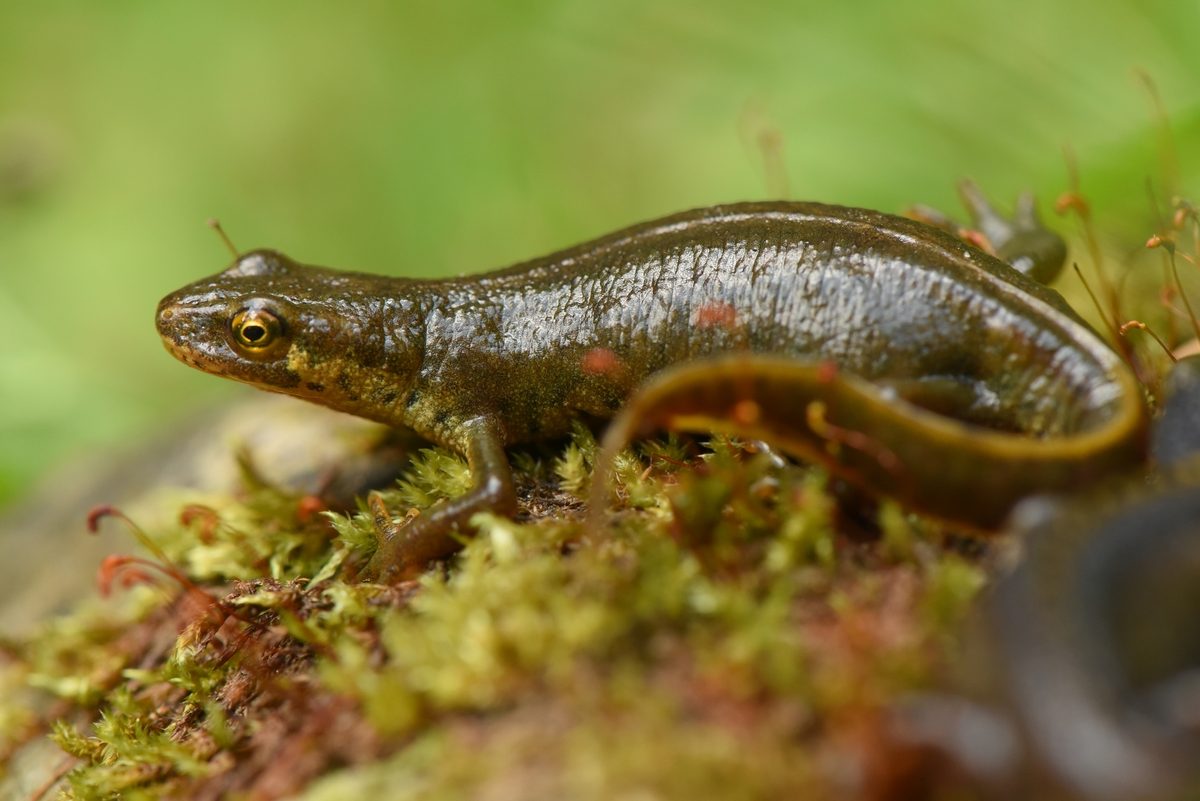
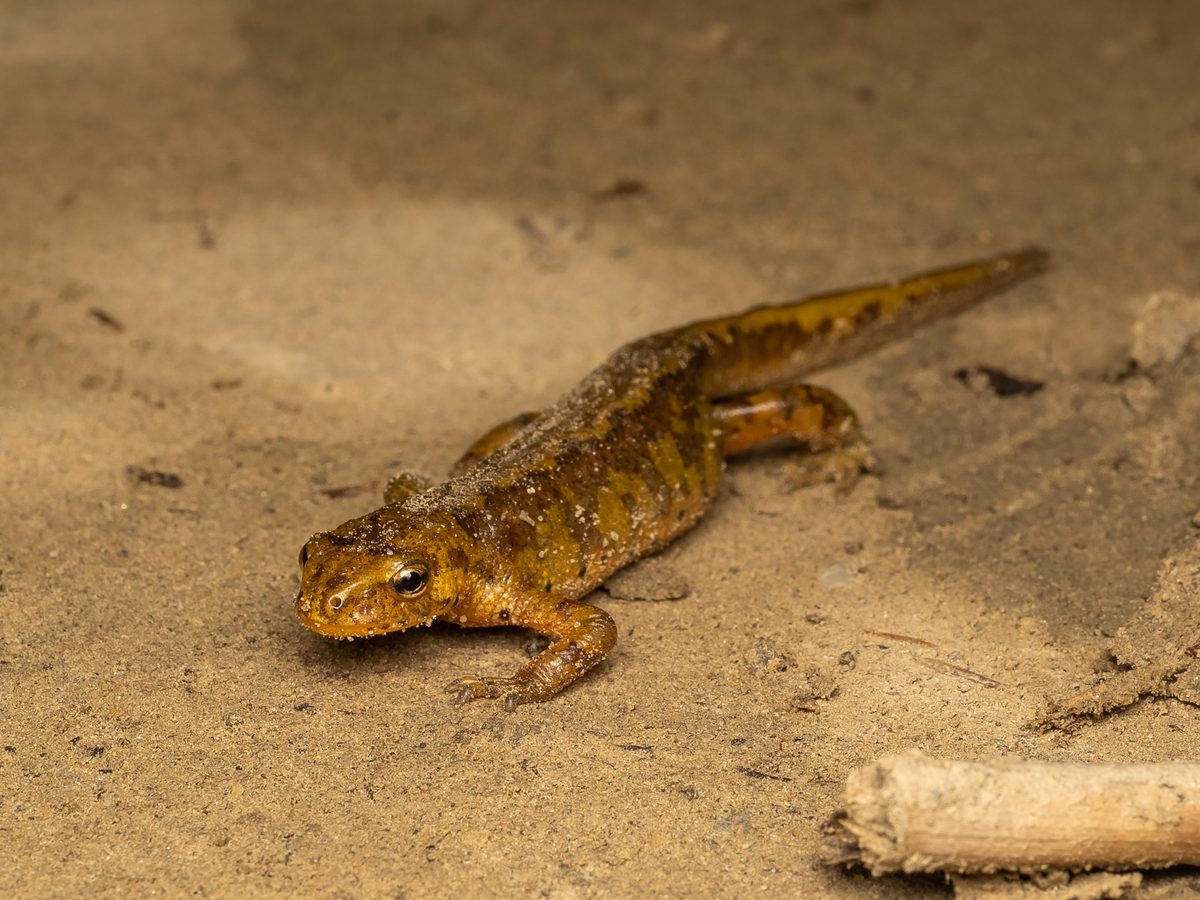
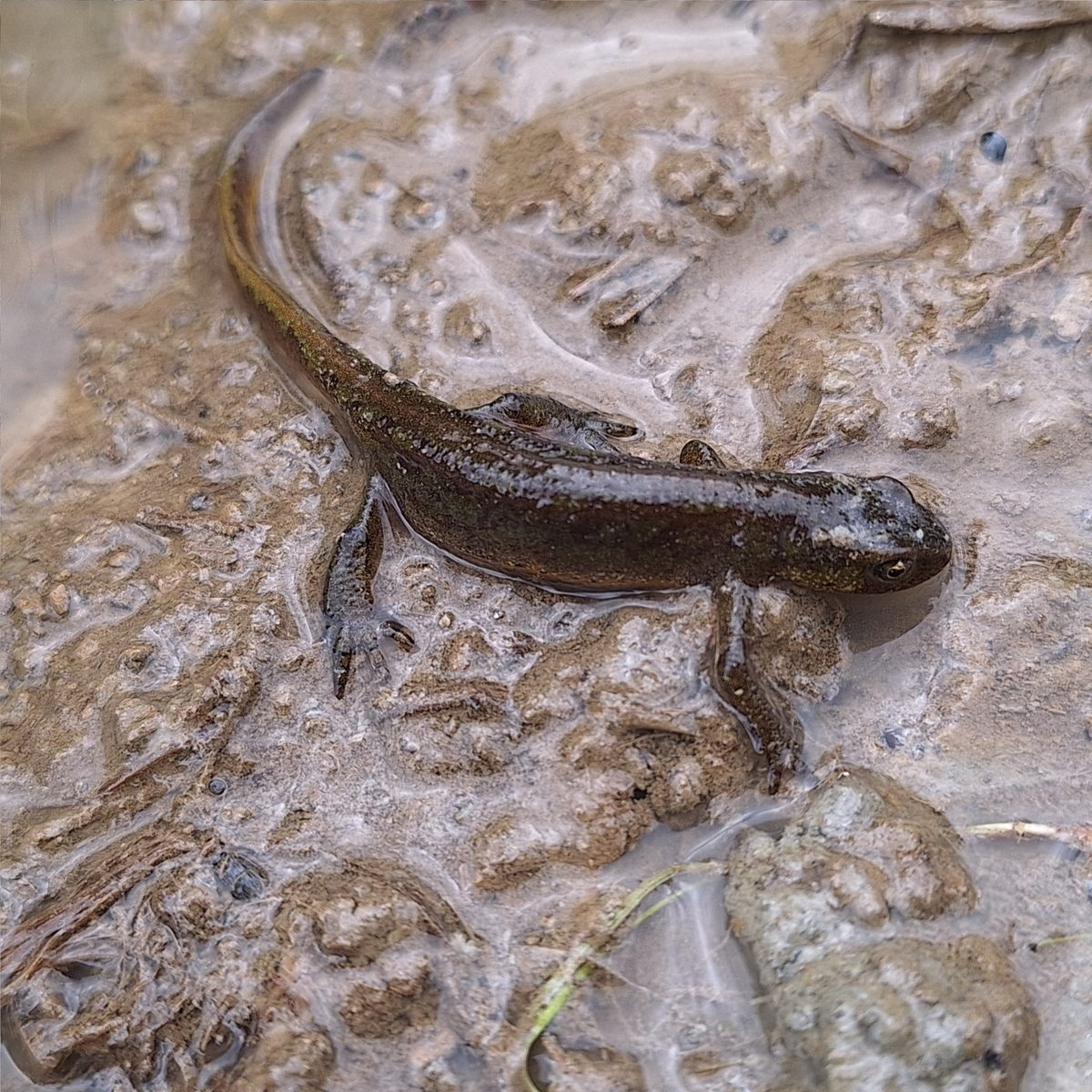
This is a small newt: males are about 7.5 cm long including the tail, while females are about 8 cm. It has no dorsal crest, which is a good sign. The back is yellowish-olive or brown-orange with a light stripe, the sides have dark spots, and the belly is bright yellow or orange-red, without any spots. During the breeding season, a thin thread grows at the end of the male's tail, measuring 5–8 mm long.
The newt usually lives at altitudes of 350–900 m, but it can also be found lower in valleys and higher in subalpine meadows; on the polonyna under Petros, it has been found at an altitude of about 1900 m.
In spring, from March to April in the valleys and from May to early June in the mountains, newts go into the water to breed. They prefer very small bodies of water: puddles in forest road ruts, ditches, floodplains of mountain streams, small swamps, and high-altitude lakes. The female attaches 30–100 eggs in clusters to the leaves of aquatic plants. The development of the eggs lasts from two weeks in warm water to a month in cold water. The larvae live in the water for up to three months, and some even overwinter there; newts become adults in their third year. By June to early August, adults come out onto land and hide under logs, in moss, and in forest litter, where they hibernate, sometimes in groups of up to 250 individuals.
The main threats are vehicle wheels and logging machinery that destroy puddles along with the newts, eggs, and larvae, as well as sudden spring frosts. Scientists report that in certain parts of the Carpathians, the number of Carpathian newts has decreased by about half since the mid-20th century. The Carpathian newt is listed in the Red Book of Ukraine as a vulnerable species, and in the European Union, it is protected as a species under Annexes II and IV of the Habitats Directive. If you notice newts in the ruts of a forest road, do not catch them or move them to other bodies of water.
Where in the Carpathians

The map shows where naturalists recorded the species (GBIF, CC0 and CC BY records), not every place it lives. The Ukrainian Carpathians are less studied, so a blank area does not mean the species is absent.
- Countries
- Ukraine · Slovakia · Romania · Poland
- Mountain ranges
- Pokuttia-Bukovina Carpathians, Gorgany, Maramureș Mountains, Chornohora, Skole Beskids, Watershed Ridge, Bieszczady, Krasna Polonyna, Rivna Polonyna, Chyvchyn Mountains
- Altitude belts
- Foothills (below 600 m) · Beech forests (600–1200 m) · Conifer forests (1200–1600 m)
When to see it
| Jan | Feb | Mar | Apr | May | Jun | Jul | Aug | Sep | Oct | Nov | Dec | |
|---|---|---|---|---|---|---|---|---|---|---|---|---|
| Sightings |
From naturalists’ observations in the Carpathians (iNaturalist, research grade): the darker the cell, the more often the species is seen that month.
Look-alikes — how to tell them apart
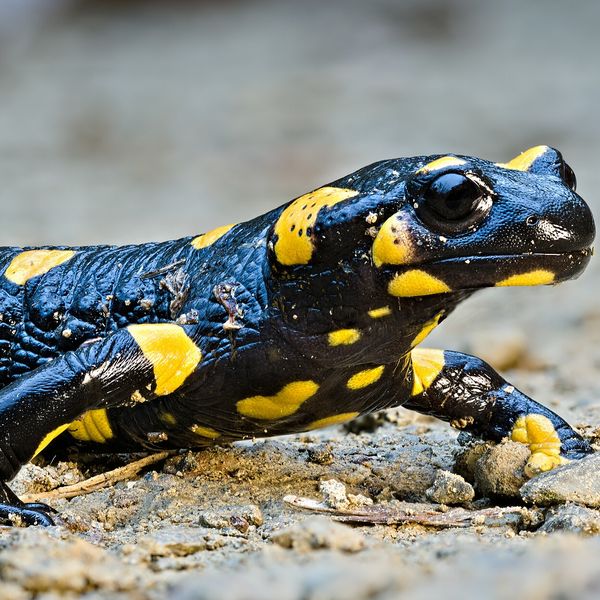
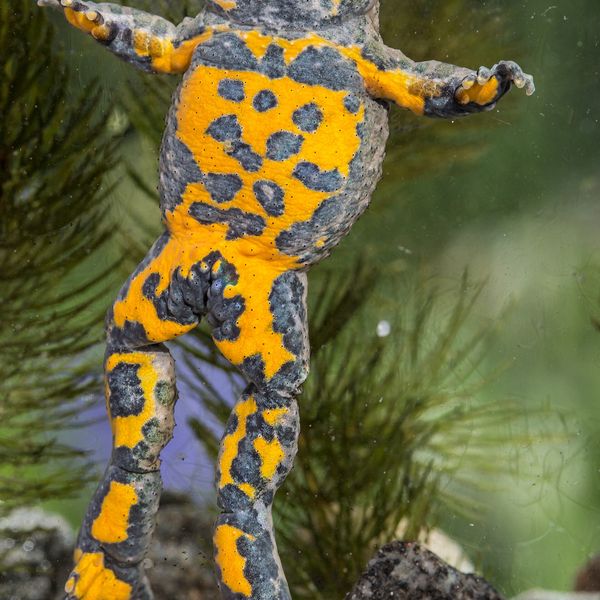
The male common newt has a high wavy crest in spring, and its belly has dark spots; the Carpathian newt has no crest and a uniform belly.
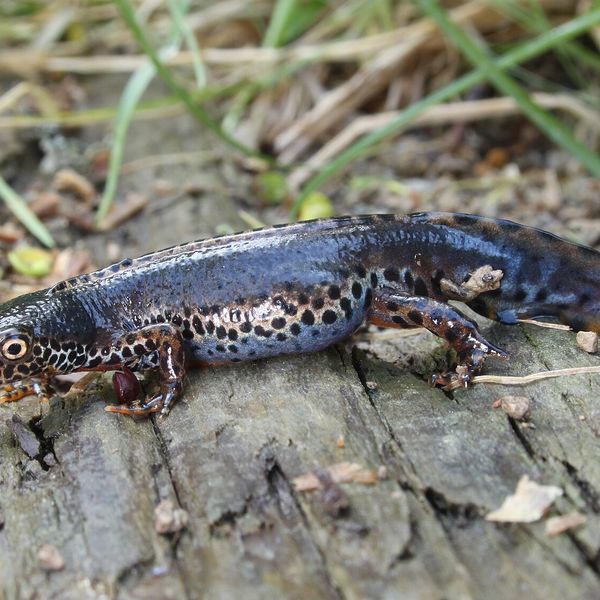
The alpine newt is larger, with slate-blue backs in males and also a uniform orange belly; it lacks a light stripe along the back.
Protection and rules
Catching and keeping newts is prohibited: the species is listed in the Red Book of Ukraine.
FAQ
Where does the Carpathian newt live?
Only in the Carpathians — in Ukraine, Poland, Slovakia, Romania, and eastern Czech Republic. In Ukraine, it is found in Zakarpattia, Lviv, Ivano-Frankivsk, and Chernivtsi regions, most often at altitudes of 350–900 m.
Is the Carpathian newt listed in the Red Book of Ukraine?
Yes, as a vulnerable species. It is prohibited to catch it and move it to other bodies of water.
How can you distinguish the Carpathian newt from the common newt?
The Carpathian newt has no dorsal crest, and its orange belly is uniform and without spots; the male common newt has a high crest and a spotted belly in spring.
Similar species
Where to meet it
Trails
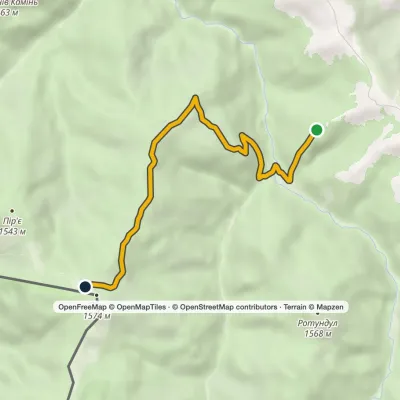 EasyOne-dayMarkedPirye Paukivkavia CheremoshElevation profile1 232–1 575 m6.3 kmascent 345 m≈ 2.5 h walking
 HardMulti-dayMarkedShepit village to Shybene villagevia Mount Yarovytsia, Mount Pnivie +1Elevation profile849–1 599 m73.4 kmascent 2 319 m
 HardMulti-dayMarkedShepit village to Probiinivka villagevia Mount Yarovytsia, Mount Pnivie +1Elevation profile797–1 599 m59.4 kmascent 1 949 m
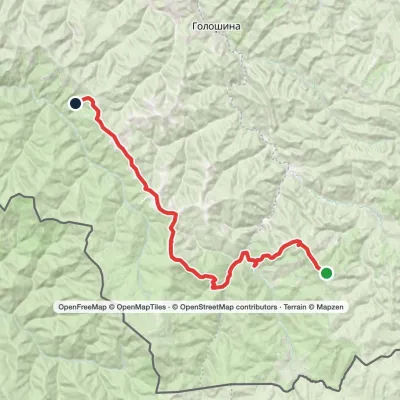 HardMulti-dayMarkedMount Yarovytsia to the Holy Trinity Monasteryvia the Pryluchnyi ridge, Mount PnivieElevation profile955–1 599 m32.5 kmascent 1 068 m≈ 10.5 h walking
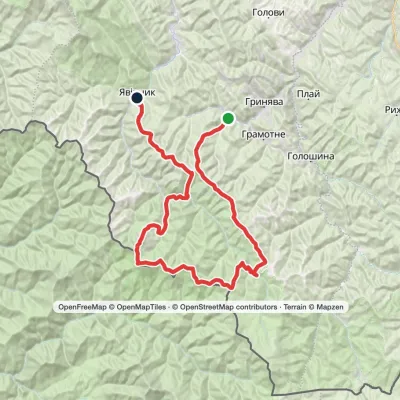 HardMulti-dayProbiinivka village to Shybene villagevia Mount Tarnytsia, Mount Pnivie +1Elevation profile797–1 766 m68.4 kmascent 2 793 m
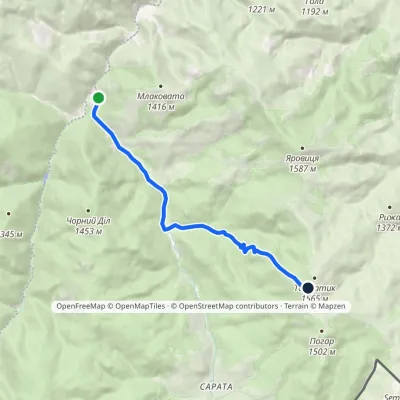 ModerateOne-dayMarkedPerkalaba Mount TomnatykElevation profile957–1 542 m8.7 kmascent 594 m≈ 3.5 h walking
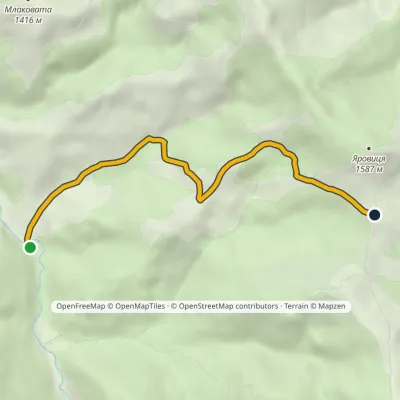 EasyOne-dayMarkedVereshchykha Mount YarovytsiaElevation profile1 001–1 416 m5.3 kmascent 426 m≈ 2 h walking
 HardMulti-dayNyzhnii Yalovets village to Shypit villagevia Mount YarovytsiaElevation profile863–1 574 m24.7 kmascent 993 m≈ 8 h walking
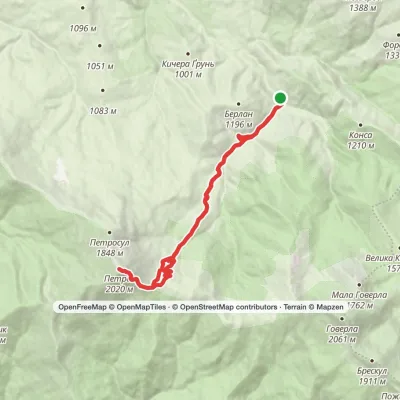 ModerateTwo-dayMarkedKozmeshchyk to Mount Petrosvia Holovcheska polonynaElevation profile864–2 020 m17.7 kmascent 1 176 m≈ 7 h walking
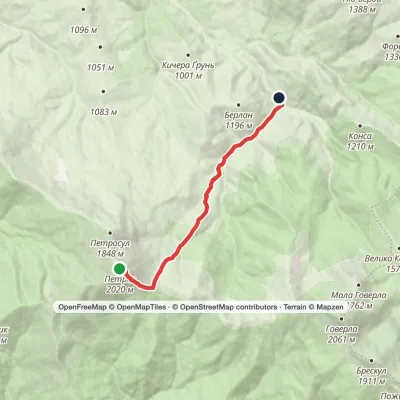 EasyOne-dayMarkedMount Petros KozmeshchykElevation profile864–2 020 m8.5 kmascent 2 m≈ 2 h walking
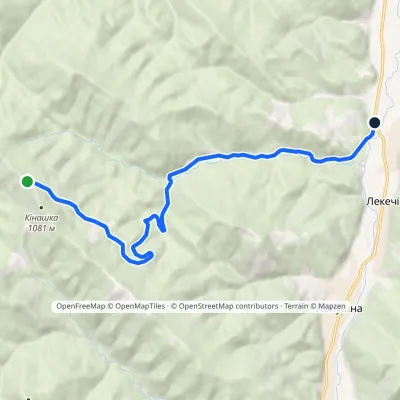 EasyOne-dayMarkedMount Kinashka Lekechi villageElevation profile521–1 043 m9.5 kmascent 4 m≈ 2.5 h walking
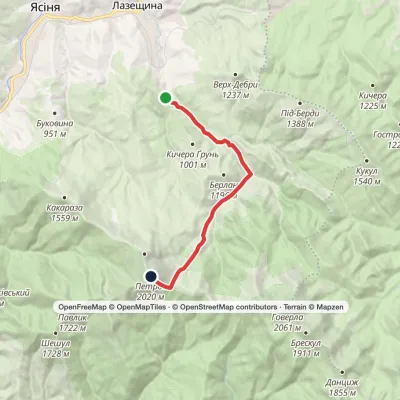 ModerateOne-dayMarkedKozmeshchyk Mount PetrosElevation profile751–2 020 m12.5 kmascent 1 276 m≈ 5.5 h walking
Waters and waterfalls
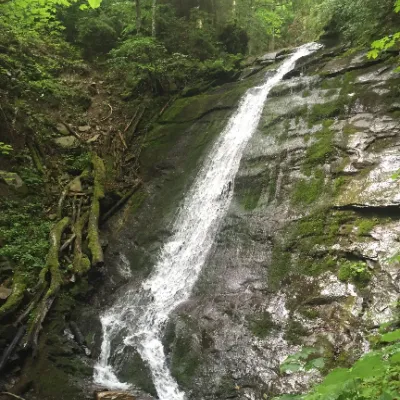 WaterfallNarinetskyi waterfall, MykulychynMykulychynNarinetskyi Waterfall is a waterfall in the Ukrainian Carpathians, on the Noretskyi Stream (a left tributary of the...
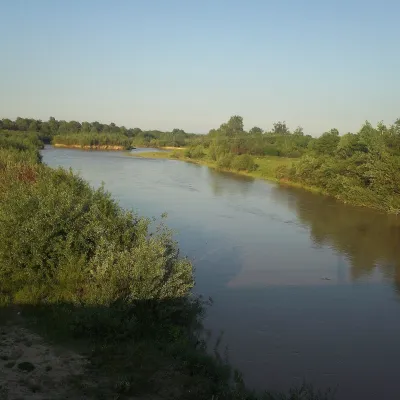 RiverSiret RiverBerehometThe Siret is a major Danube tributary 682 km long, but only its first 123 km lie in Ukraine.
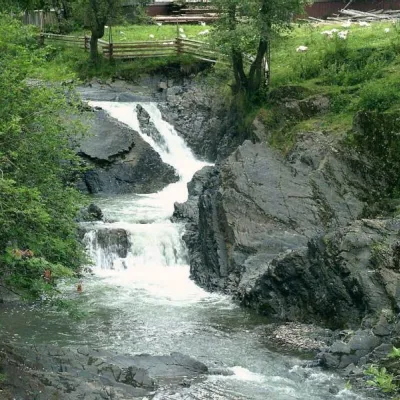 WaterfallCascading waterfall "Suceava Hook"Dolishnii ShepitThe cascade of waterfalls "Suceava Hook" is a unique natural monument of the Chernivtsi region.
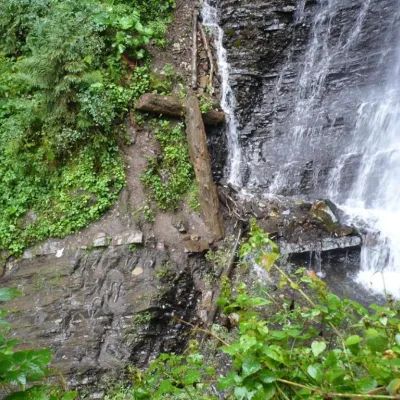 WaterfallZhenetsky Hook waterfallMykulychynZhenetskyi Huk is one of the most convenient Carpathian waterfalls for tourists, as it is accessible by a direct,...
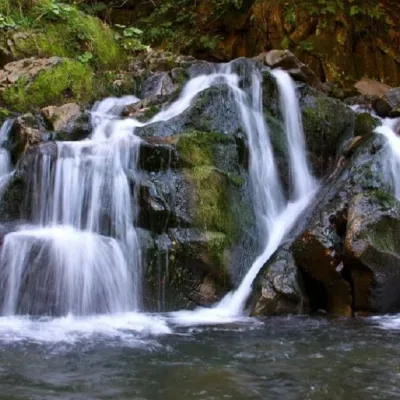 WaterfallKamianka waterfallDubyna"Kamianka Waterfall or Kamianka Waterfall is the most famous waterfall located on the mountain river of the same name...
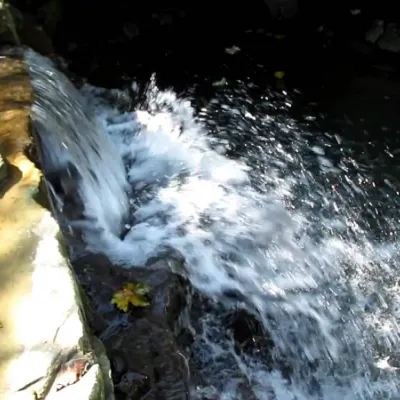 WaterfallBagrovetsky waterfallYaremcheBagrovetsky Waterfall is one of the most famous waterfalls in the Yaremche region, located in the city of Yaremche.
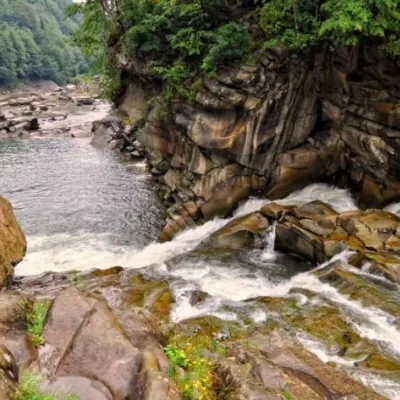 WaterfallProbiy waterfall, YaremcheYaremcheProbiy Waterfall is located in the heart of the Carpathian Mountains, in the city of Yaremche.
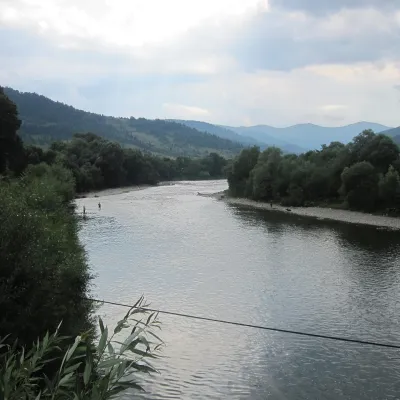 RiverStryi RiverTurkaThe Stryi is one of the largest Carpathian tributaries of the Dniester: 232 km from its source between Mount Yavirnyk...
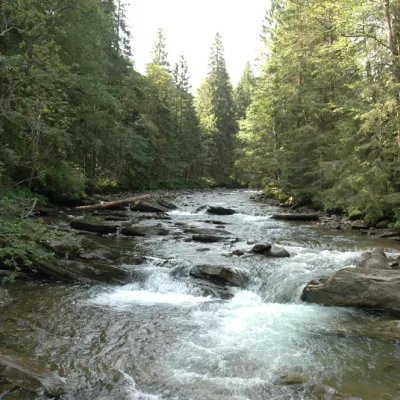 RiverPrutKryvopilliaThe Prut River is a river that connects several countries and is of great natural, historical and cultural importance.
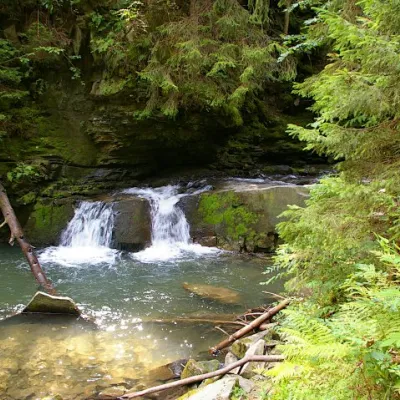 WaterfallWaterfall Maiden's Tears, YaremcheYaremcheMaiden's Tears is a waterfall in the Ukrainian Carpathians (Gorgany massif).
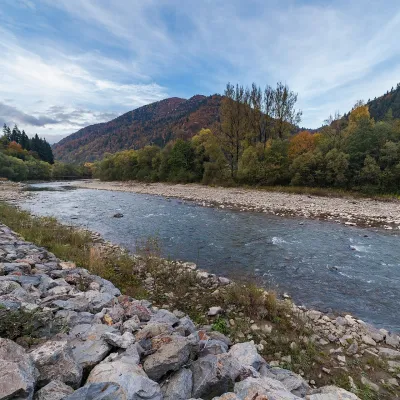 RiverTeresva RiverUst-ChornaThe Teresva forms in Ust-Chorna, where the Mokrianka and Brusturianka meet, and flows south through Dubove, Kalyny,...
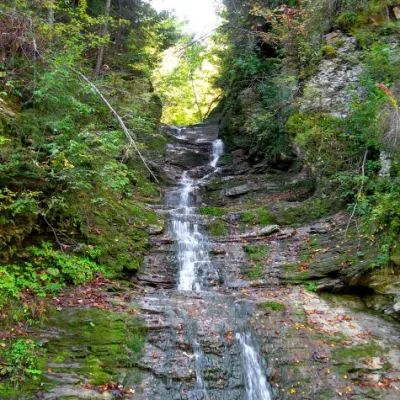 WaterfallBukovinian (Smugar) waterfallsRoztokyA picturesque chain of waterfalls, up to two kilometers long, stretches along the Smuhariv River in Bukovyna, in the...
Mountain ranges: Pokuttia-Bukovina Carpathians, Gorgany, Maramureș Mountains, Chornohora, Skole Beskids, Watershed Ridge, Bieszczady, Krasna Polonyna, Rivna Polonyna, Chyvchyn Mountains, Hryniava Mountains, Vihorlat-Gutin Volcanic Ridge, Polonynian Ridge, Svydovets
Trails and peaks near which naturalists recorded the species (GBIF, iNaturalist), matched by altitude and habitat. Sightings are not guaranteed.
Sources
- Вікіпедія: Тритон карпатський
- Wikipedia (en): Carpathian newt
- Дослідження «Флора і фауна Карпат», §1.4: частка записів GBIF у Карпатах (2 339 з 2 766)
- Перелік видів тварин, що заносяться до Червоної книги України (наказ Міндовкілля від 19.01.2021 № 29, зареєстровано в Мін'юсті 01.03.2021 за № 260/35882)
- Міндовкілля: текст переліку видів тварин Червоної книги України (PDF)
- GBIF: таксон і категорія МСОП
- Директива Ради 92/43/ЄЕС про збереження природних оселищ (консолідована редакція)
GBIF · iNaturalist · Wikidata · Distribution data: GBIF.org (CC0 and CC BY records), iNaturalist; names and identifiers: Wikidata (CC0). Text: Karpaty.rocks, checked 09.11.2026.
