Fire salamander
About
The Fire salamander is one of the most vibrant animals of the Carpathian forest. In Ukraine, it lives only in the Carpathians — in the Zakarpattia, Ivano-Frankivsk, Chernivtsi, and Lviv regions. Its home is in moist beech and fir-spruce forests with clean shady streams; the salamander ascends to the upper forest boundary and can even be found among crooked trees and on mountain meadows. It also lives in Poland (Bieszczady and other Beskids), Slovakia, and Romania.
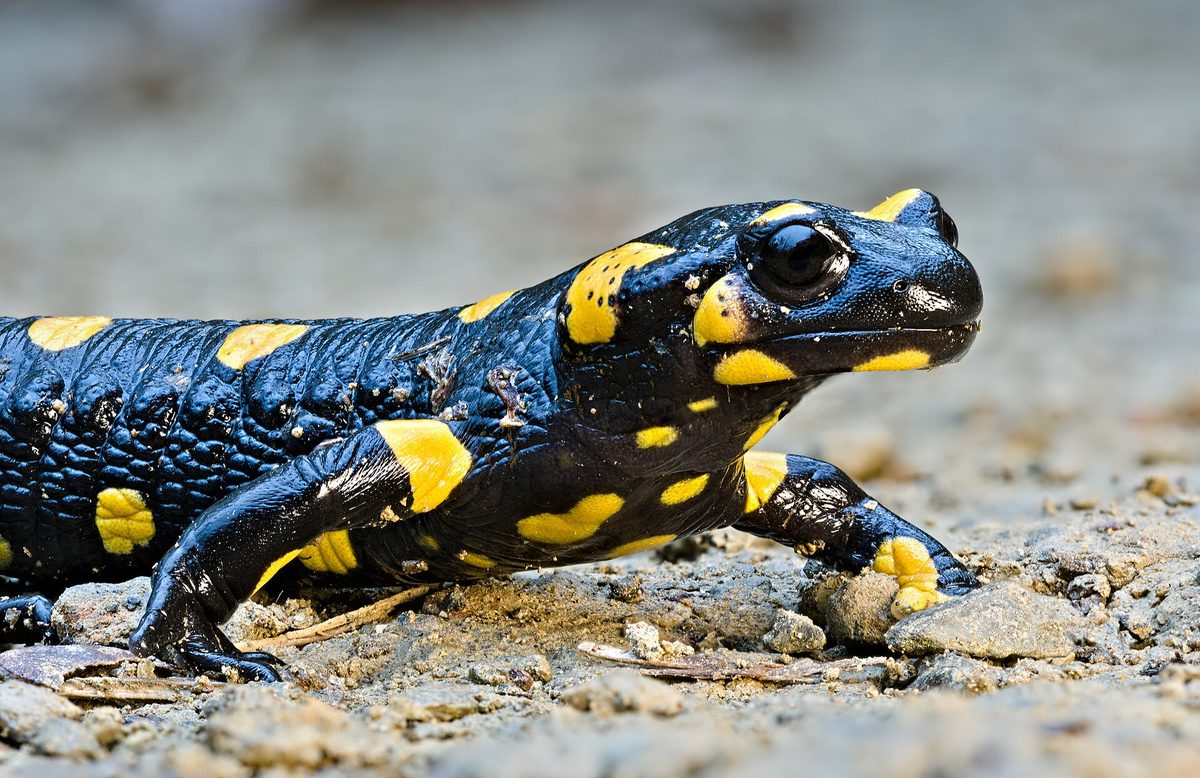
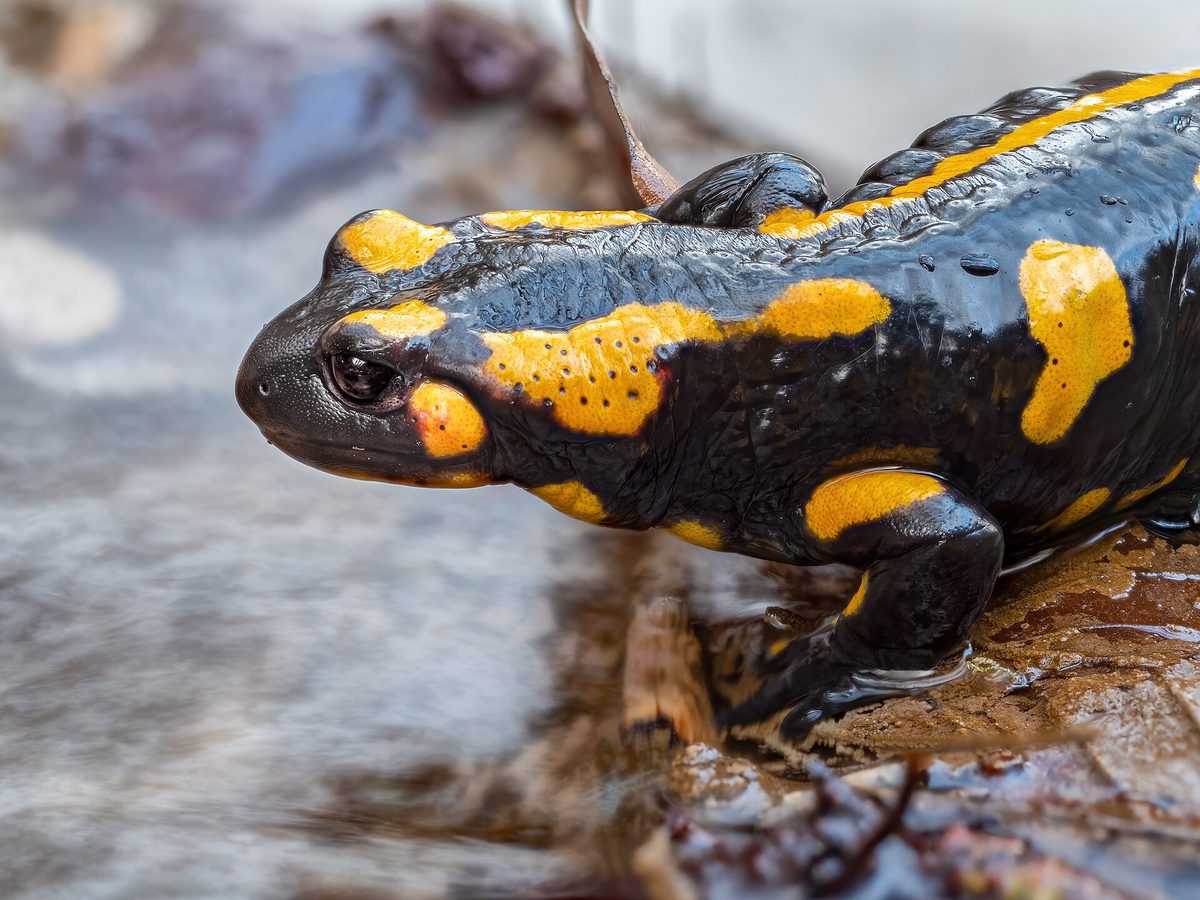
This amphibian measures 15–25 cm in length. Its skin is glossy, black, with bright yellow, sometimes orange spots or stripes; each individual has a unique pattern, like a fingerprint. Large bulging glands are visible behind the eyes.
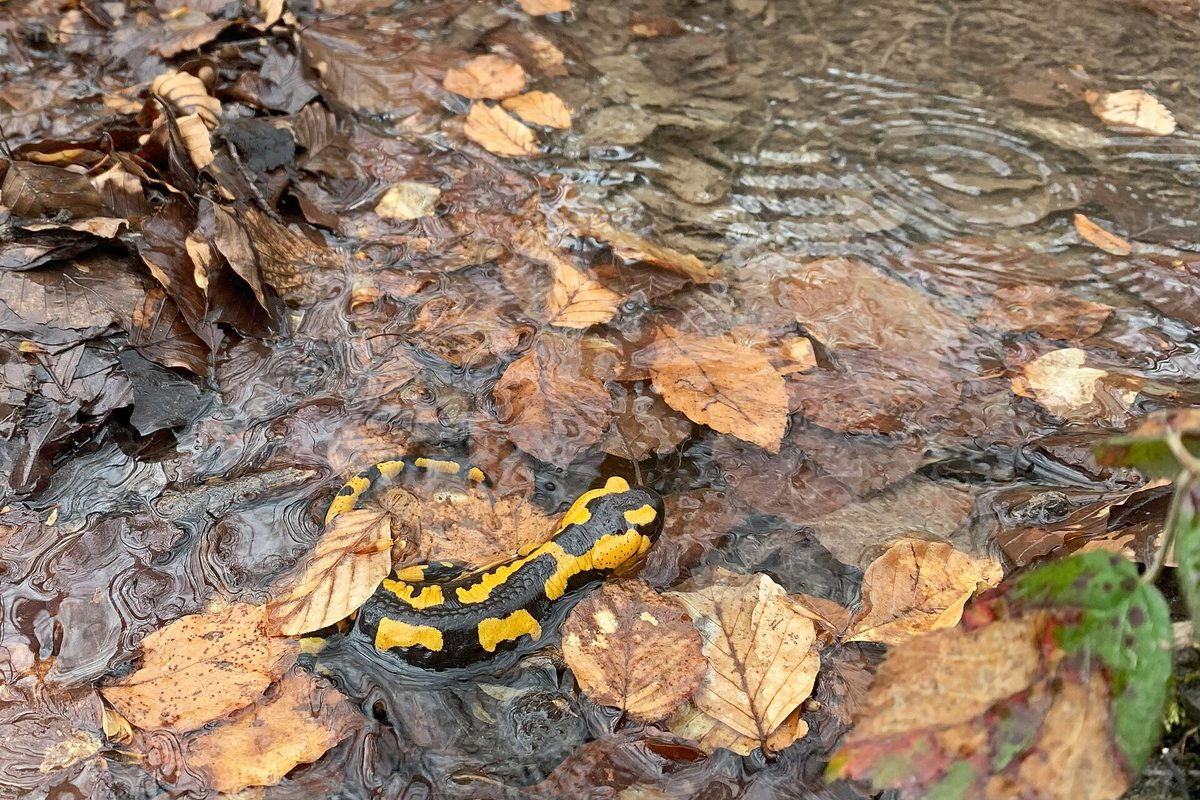
The salamander is mainly active at dusk and at night, but in gloomy and rainy weather, it is often seen during the day — that is when it comes out onto forest paths. It awakens in March–April and goes into hibernation in September–November, hiding in groups in burrows, under roots and stones, or in basements. It feeds on slugs and snails, earthworms, insects, and spiders, which it searches for in the forest litter.
The salamander does not lay eggs: in spring, around April, the female gives birth to fully formed larvae with gills in the stream over several days. In the high mountains, this occurs every two years, while in the foothills — annually. The salamander becomes adult at 3–4 years. The larvae can be easily distinguished from newt larvae: they have a light yellowish spot at the base of each limb. In the high mountains, the larvae are larger, up to 4.5 cm, while in the foothills — about 3 cm. In some cave populations, adult salamanders are active even all year round.
The bright coloration serves as a warning: skin glands secrete a toxic secretion that affects the nervous system. For humans, contact is usually not dangerous, but the mucus irritates mucous membranes and eyes. Therefore, the salamander should not be handled, and if touched — wash your hands and do not touch your face. The Fire salamander is listed in the Red Data Book of Ukraine as a vulnerable species, and in the global IUCN Red List, it is categorized as 'vulnerable' (VU). Do not take salamanders home or move them to other places: this spreads dangerous amphibian diseases.
Where in the Carpathians

The map shows where naturalists recorded the species (GBIF, CC0 and CC BY records), not every place it lives. The Ukrainian Carpathians are less studied, so a blank area does not mean the species is absent.
- Countries
- Ukraine · Hungary · Slovakia · Romania · Poland · Czechia · Serbia
- Mountain ranges
- Gorgany, Pokuttia-Bukovina Carpathians, Chornohora, Rivna Polonyna, Polonynian Ridge, Maramureș Mountains, Vihorlat-Gutin Volcanic Ridge, Skole Beskids, Bieszczady, Krasna Polonyna
- Altitude belts
- Foothills (below 600 m) · Beech forests (600–1200 m)
When to see it
| Jan | Feb | Mar | Apr | May | Jun | Jul | Aug | Sep | Oct | Nov | Dec | |
|---|---|---|---|---|---|---|---|---|---|---|---|---|
| Sightings |
From naturalists’ observations in the Carpathians (iNaturalist, research grade): the darker the cell, the more often the species is seen that month.
Safety
Do not handle the salamander: the skin secretion is toxic and irritates mucous membranes and eyes. If touched — wash your hands with soap and do not rub your eyes. Do not let dogs play with it.
Protection and rules
Catching, keeping, and selling salamanders is prohibited: the species is listed in the Red Data Book of Ukraine.
FAQ
Is the Fire salamander poisonous?
Its skin glands secrete a toxic secretion. For humans, contact is usually not dangerous, but the mucus irritates mucous membranes and eyes — it is better not to handle the salamander, and wash your hands after contact.
Where does the salamander live in the Carpathians?
In Ukraine — only in the Carpathians: in moist beech and spruce forests near clean streams of the Zakarpattia, Ivano-Frankivsk, Chernivtsi, and Lviv regions. It is most often seen on paths after rain.
Is the salamander listed in the Red Data Book of Ukraine?
Yes, as a vulnerable species; catching and keeping it is prohibited.
Recorded nearby
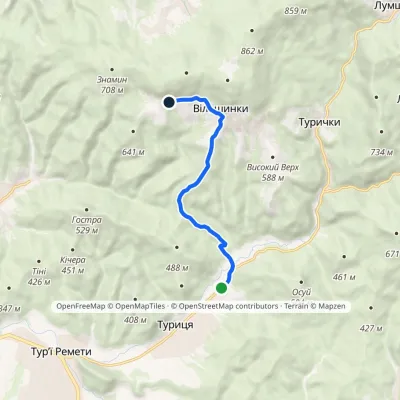 EasyOne-dayMarkedTurytsia village Vilshynky villageElevation profile224–652 m7.5 kmascent 431 m≈ 2.5 h walking
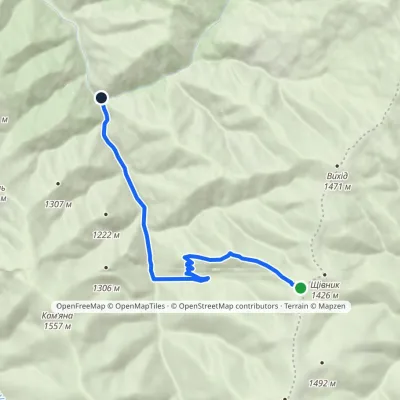 EasyOne-dayMarkedMount Shchivnyk Lemskyi Lis tractElevation profile772–1 407 m8.3 kmascent 15 m≈ 2 h walking
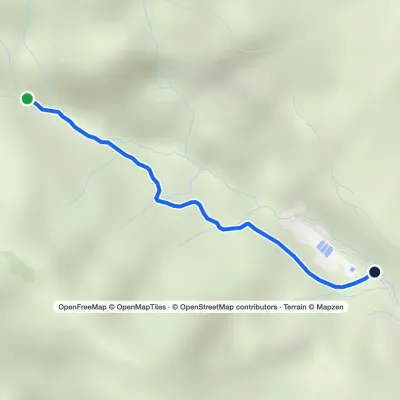 EasyOne-dayMarkedPerechyn Plishka WaterfallElevation profile241–416 m2 kmascent 9 m≈ 30 min walking
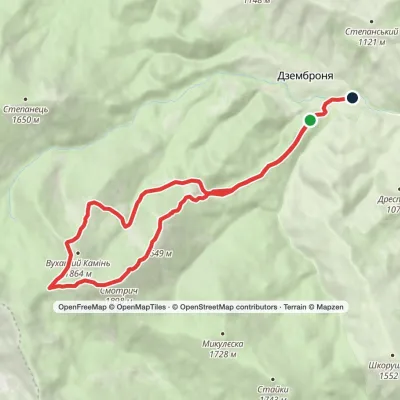 ModerateOne-dayMarkedDzembronia village loopvia Mount Vukhatyi Kamin, Mount SmotrychElevation profile803–1 898 m14.4 kmascent 1 035 m≈ 5.5 h walking
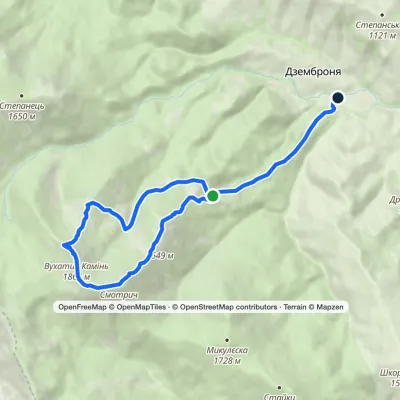 ModerateOne-dayMarkedDzembronia village loopvia Smotrych polonyna, Mount Smotrych +2Elevation profile817–1 898 m10.4 kmascent 696 m≈ 4 h walking
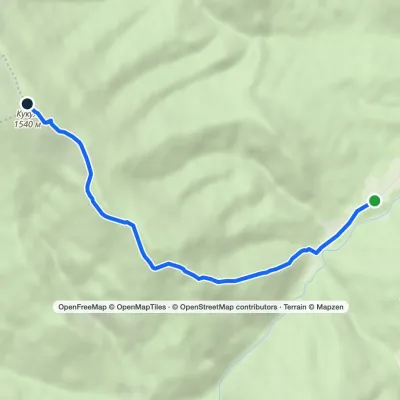 EasyOne-dayMarkedHoverla checkpoint (Zavoiela) Mount KukulElevation profile900–1 539 m4.8 kmascent 639 m≈ 2.5 h walking
Trails and peaks near which naturalists recorded the species (GBIF, iNaturalist), matched by altitude and habitat. Sightings are not guaranteed.
Similar species
Sources
- Вікіпедія: Саламандра плямиста
- Wikipedia (en): Fire salamander
- Перелік видів тварин, що заносяться до Червоної книги України (наказ Міндовкілля від 19.01.2021 № 29, зареєстровано в Мін'юсті 01.03.2021 за № 260/35882)
- Міндовкілля: текст переліку видів тварин Червоної книги України (PDF)
- GBIF: таксон і категорія МСОП
GBIF · iNaturalist · Wikidata · Distribution data: GBIF.org (CC0 and CC BY records), iNaturalist; names and identifiers: Wikidata (CC0). Text: Karpaty.rocks, checked 09.11.2026.
