Spring snowflake
This plant is poisonous: do not taste or pick it, and wash your hands after touching it. In case of poisoning call 112 (103 in Ukraine).
About
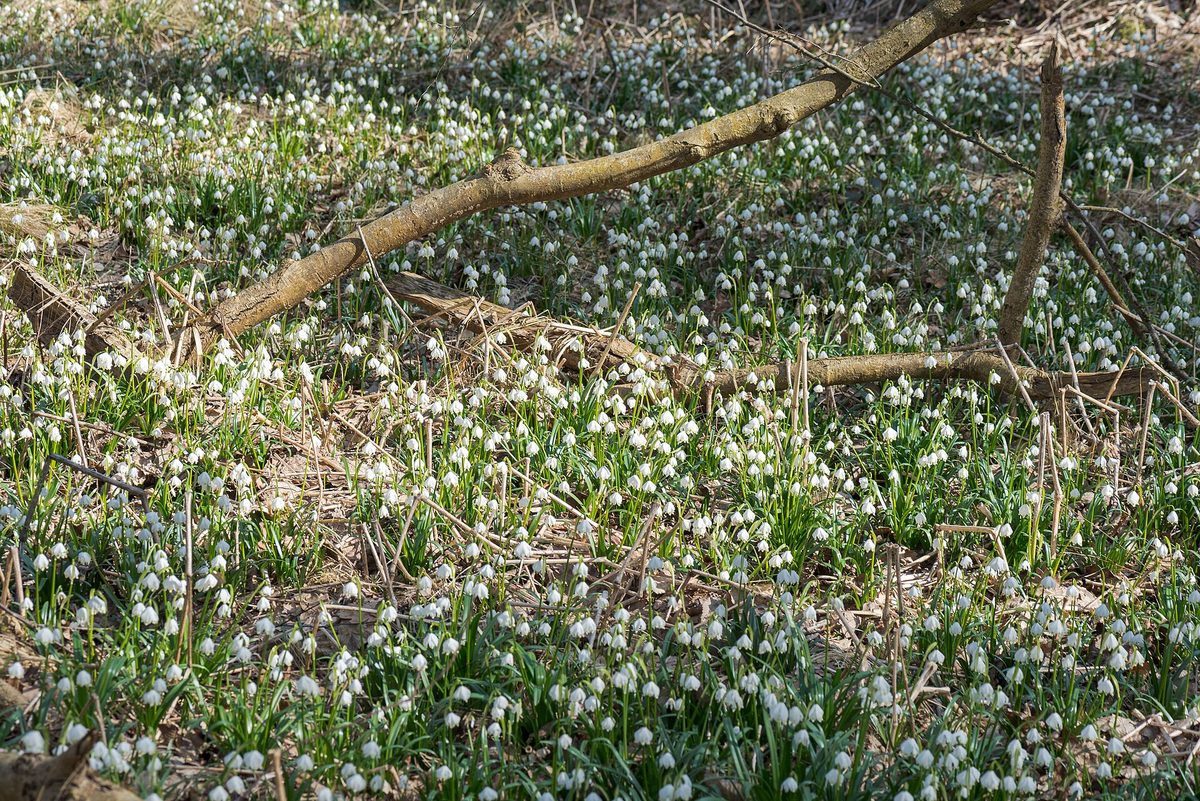
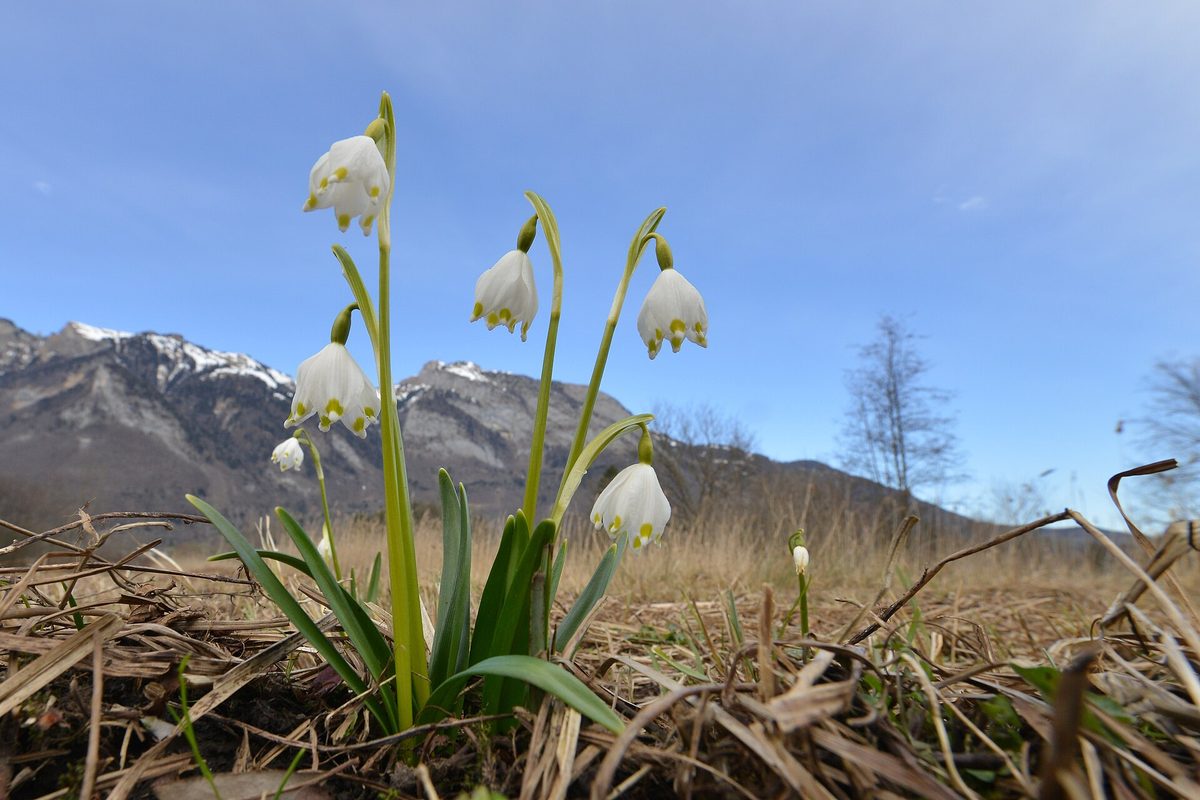
Spring snowflake is primarily a mountain species of Central Europe. In Ukraine, its continuous range covers the south of Lviv and Ivano-Frankivsk regions, the east of Chernivtsi region, and most of Transcarpathia. In the plains of Podillia, it occurs as a glacial relict that once descended from the Carpathians. It grows in moist deciduous forests, especially beech and alder forests, on forest edges, wet meadows, and along stream banks. Local names include rastyk, tsybulka, klykocey, kozi borodka.
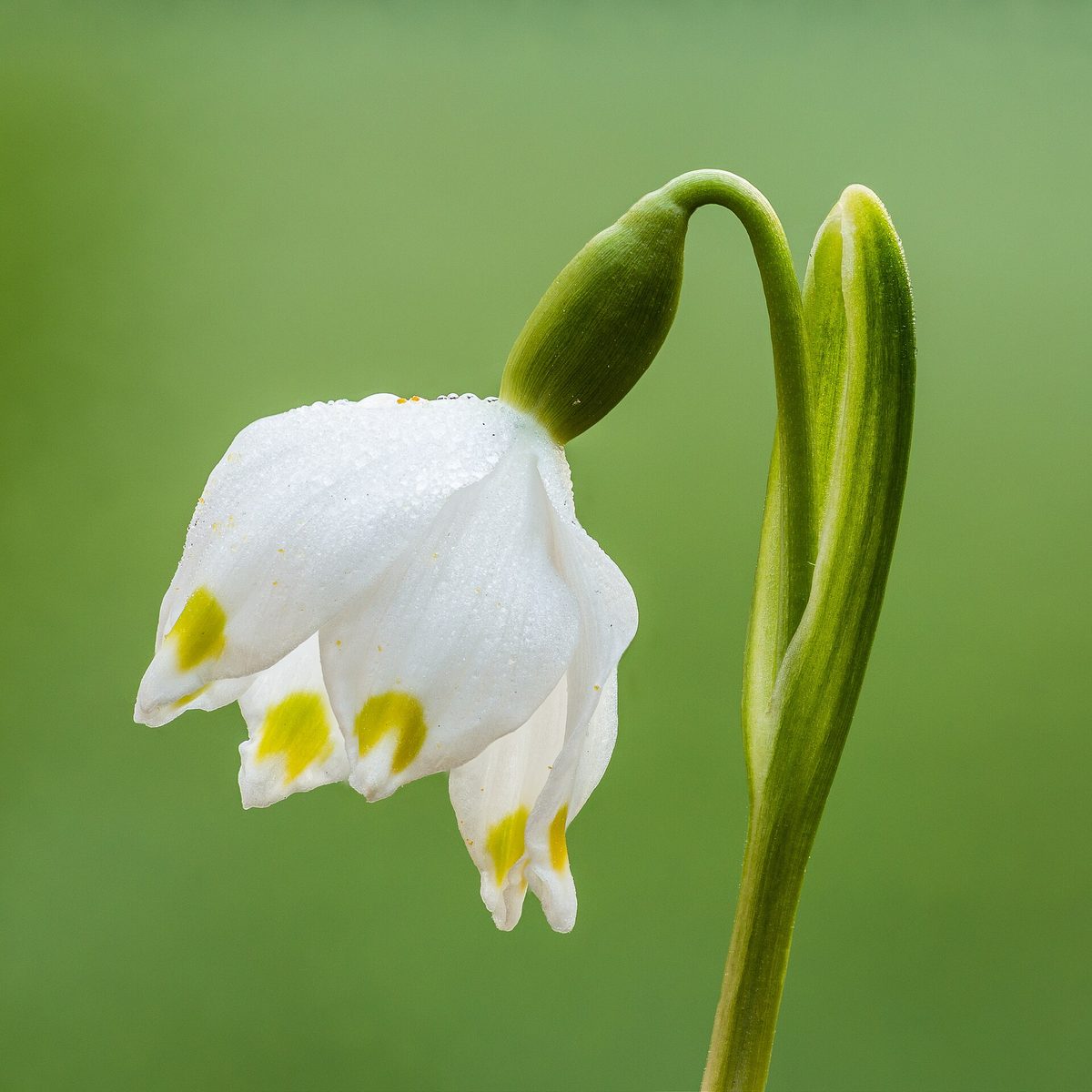
This perennial bulbous plant reaches a height of 12–35 cm, an ephemeral: all its above-ground parts appear and die back in spring when there is still plenty of light in the forest. The leaves are broad-linear and bright green. The flower stalk usually bears one, rarely two drooping flowers with six identical white tepals 15–25 mm long, each with a greenish or yellowish spot at the tip. It blooms as one of the first in March and continues to bloom into April.
The spring snowflake can be easily distinguished from the snowdrop: the snowdrop has three large outer petals and three small inner ones with a green spot, while in the spring snowflake all six are identical, resembling a bell. All species of snowflake are poisonous: they contain the alkaloids lycorine and galantamine.
Spring snowflake is listed in the Red Book of Ukraine (status 'not evaluated'). It is prohibited to pick, dig up, or sell it. In some places, it forms entire meadows in early spring—enjoy and photograph them while stepping carefully to avoid trampling the plants.
Where in the Carpathians

The map shows where naturalists recorded the species (GBIF, CC0 and CC BY records), not every place it lives. The Ukrainian Carpathians are less studied, so a blank area does not mean the species is absent.
- Countries
- Ukraine · Romania · Slovakia · Poland · Czechia · Hungary
- Mountain ranges
- Maramureș Mountains, Bieszczady, Borzhava, Gorgany, Vihorlat-Gutin Volcanic Ridge, Rivna Polonyna, Krasna Polonyna, Chornohora, Bihor-Vlădeasa Mountains, Skole Beskids
- Altitude belts
- Foothills (below 600 m) · Beech forests (600–1200 m)
When to see it
| Jan | Feb | Mar | Apr | May | Jun | Jul | Aug | Sep | Oct | Nov | Dec | |
|---|---|---|---|---|---|---|---|---|---|---|---|---|
| Flowering | ||||||||||||
| Fruit |
From naturalists’ observations in the Carpathians (iNaturalist, research grade): the darker the cell, the more often the species is seen that month.
Safety
The plant is poisonous (lycorine, galantamine): do not dig up bulbs or taste any parts.
Look-alikes — how to tell them apart
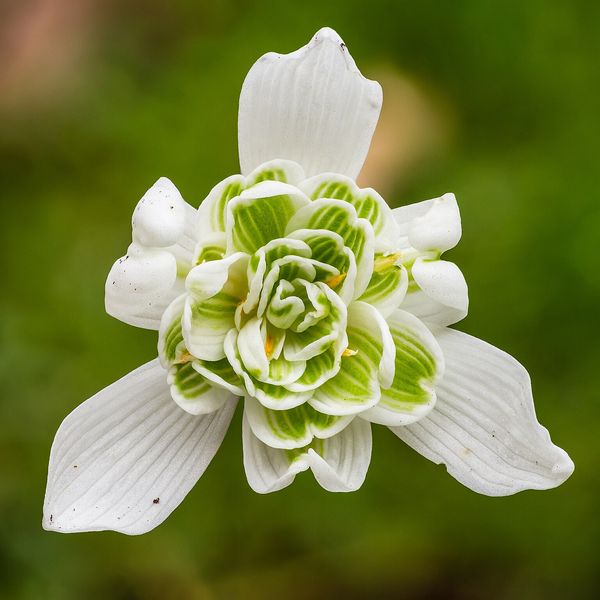
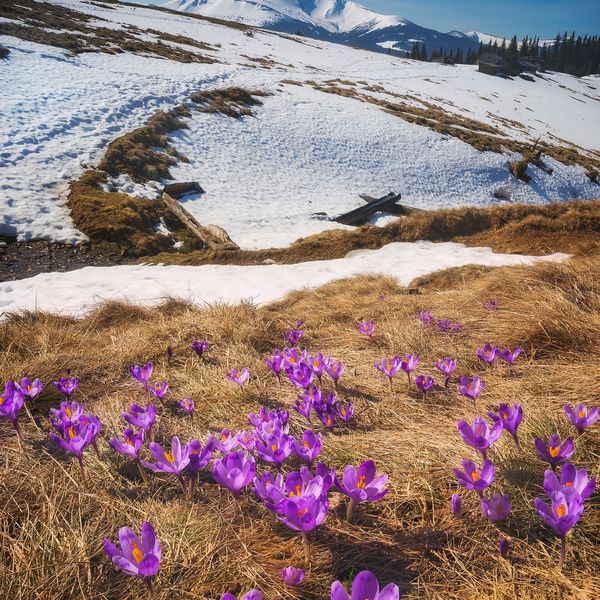
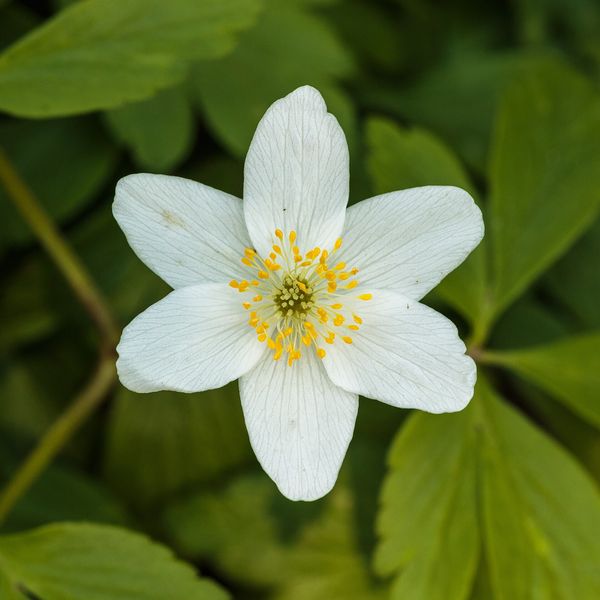
Three large outer petals and three short inner ones with a green spot; leaves are narrower and bluish. Also a species in the Red Book of Ukraine.
Protection and rules
Listed in the Red Book of Ukraine (not evaluated). It is prohibited to pick, dig up, or sell it. In Poland, it is under partial protection.
Admire, don’t pick: plants listed in the Red Data Book of Ukraine — and any plants in nature reserves and strictly protected zones of national parks — must not be collected.
FAQ
How does the spring snowflake differ from the snowdrop?
In the spring snowflake, all six petals are identical, with a greenish spot at the tip, and the flower resembles a bell. In the snowdrop, there are three large outer petals and three small inner ones.
Is it allowed to pick spring snowflake?
No. Spring snowflake is listed in the Red Book of Ukraine, so it is prohibited to pick, dig up, or sell it.
When does the spring snowflake bloom in the Carpathians?
As one of the first— in March, blooming continues into April.
Similar species
Where to meet it
Trails
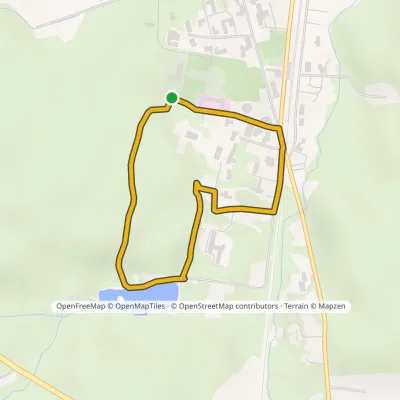 EasyOne-dayMarkedNo. 5006 Morshyn: Nordic walkingElevation profile333–370 m3.1 kmascent 43 m≈ 45 min walking
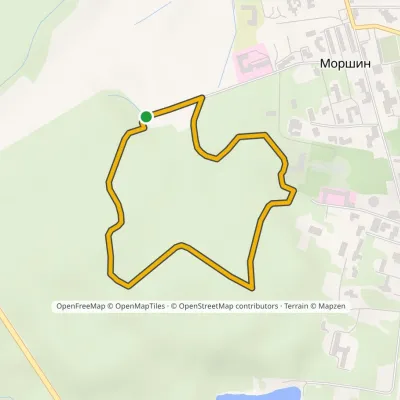 EasyOne-dayMarkedNo. 5007 Morshyn: Nordic walkingElevation profile347–381 m3.2 kmascent 31 m≈ 45 min walking
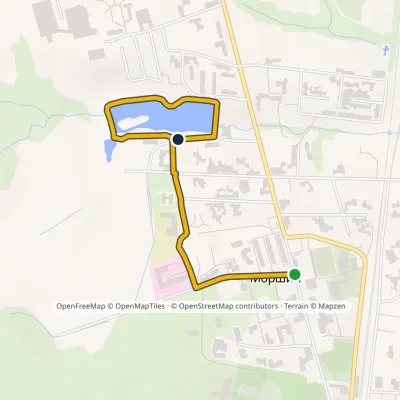 EasyOne-dayMarkedNo. 5005 Morshyn: Nordic walkingElevation profile337–357 m2.1 kmascent 14 m≈ 30 min walking
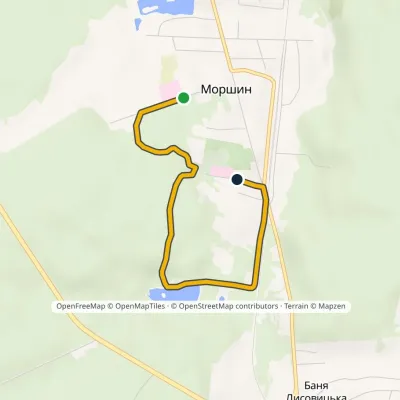 EasyOne-dayMarkedNo. 5008 Morshyn: Nordic walkingElevation profile333–372 m3.6 kmascent 23 m≈ 60 min walking
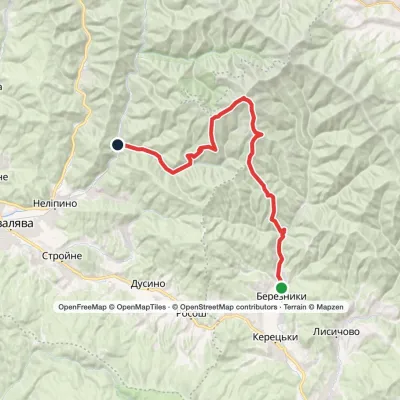 HardMulti-dayBerezniky village to Vovchyi villagevia Mount Ivolove, Mount Stiy +1Elevation profile288–1 681 m28.5 kmascent 1 436 m≈ 10 h walking
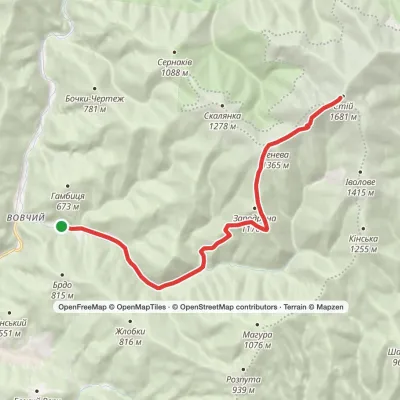 HardTwo-dayMarkedVovchyi village to Mount Stiyvia Mount ZenevaElevation profile321–1 671 m22.9 kmascent 1 350 m≈ 8.5 h walking
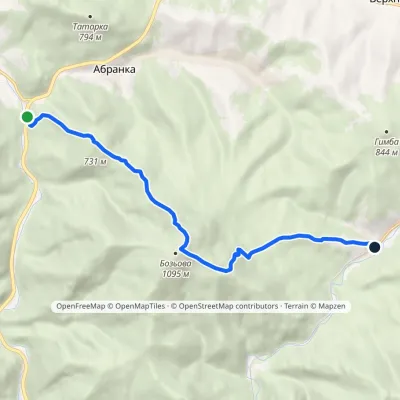 ModerateOne-dayMarkedAbranka village Yablunivvia Mount BozovaElevation profile353–1 084 m9.1 kmascent 793 m≈ 4 h walking
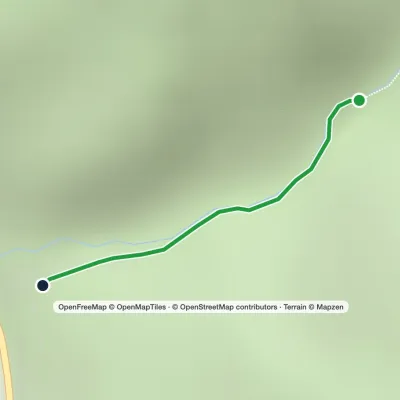 EasyOne-dayMarkedTo Sokolyne BerdoElevation profile331–674 m2.6 kmascent 344 m≈ 1.5 h walking
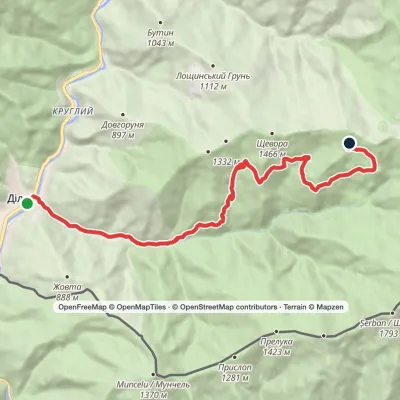 ModerateTwo-dayDilove village to Shchavora polonynavia Yalynskyi WaterfallElevation profile346–1 338 m16.3 kmascent 1 042 m≈ 6 h walking
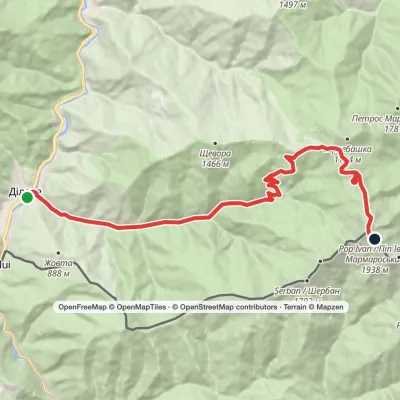 HardTwo-dayMarkedDilove village to Mount Pip Ivan Marmaroskyivia Lysycha polonynaElevation profile346–1 936 m19.4 kmascent 1 663 m≈ 8 h walking
 HardMulti-dayMarkedDilove village loopvia Mount Pip Ivan Marmaroskyi, Mount ZherbanElevation profile346–1 936 m50.5 kmascent 1 783 m
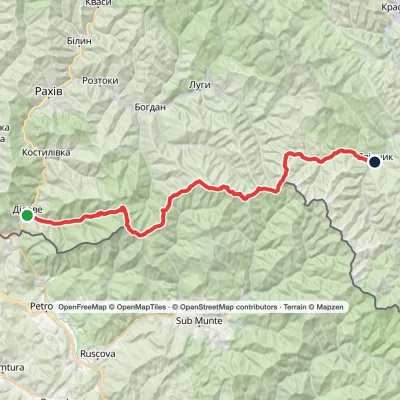 HardMulti-dayMarkedDilove village to Shybene villagevia Mount Pip Ivan Marmaroskyi, Mount Mika-Mare +1Elevation profile346–1 936 m66 kmascent 2 611 m
Peaks and meadows
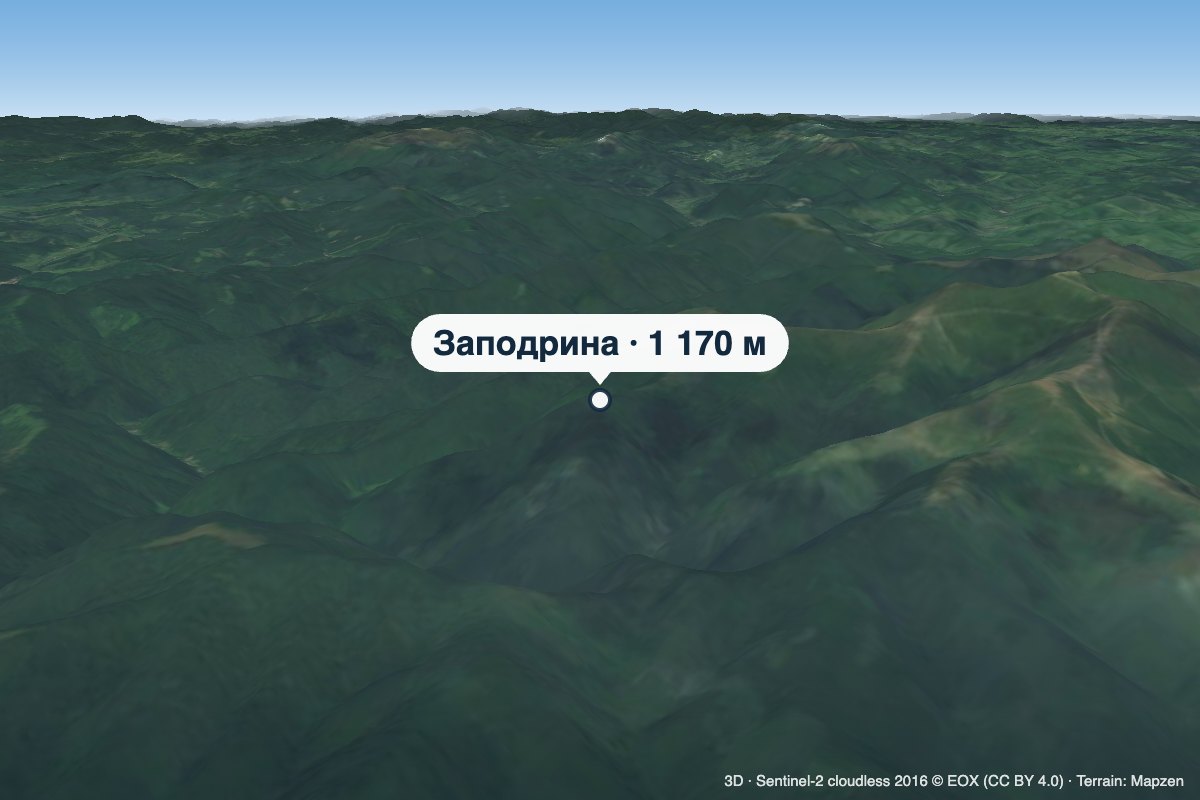 PeakMount ZapodrynaVovchyialtitude 1 170 m · Borzhava rangeZapodryna is a 1,170 m summit on the south-western spurs of the Polonyna Borzhava massif in Zakarpattia Oblast.
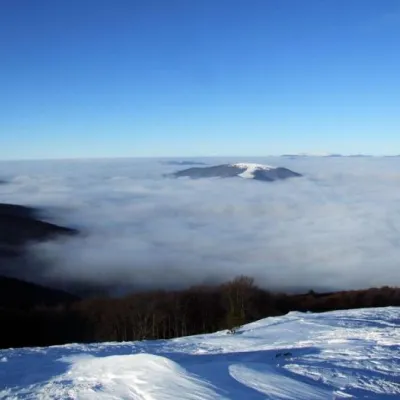 PeakBozeva MountainAbrankaaltitude 1 095 m3 trails to the topIt is said that there was an observation post on the mountain, and the place is really suitable, because you can see...
 PeakMount MakovytsiaTurya Pasikaaltitude 978 m · Volcanic Carpathians rangeMount Makovytsia is a gem of the western lands, with amazing landscapes, fairy-tale views, nature, air, and...
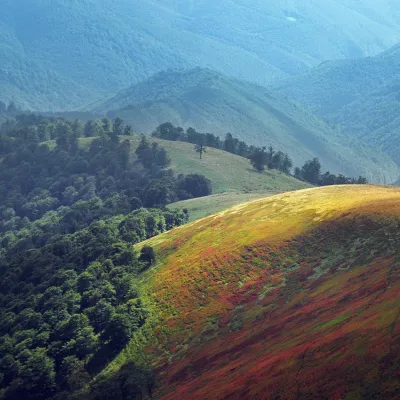 PeakMount Biletsky VerkhPodobovetsaltitude 1 146 m · Borzhava range1 trail to the topBiletsky Verkh is a mountain 1146 m above sea level on the Borzhava ridge.
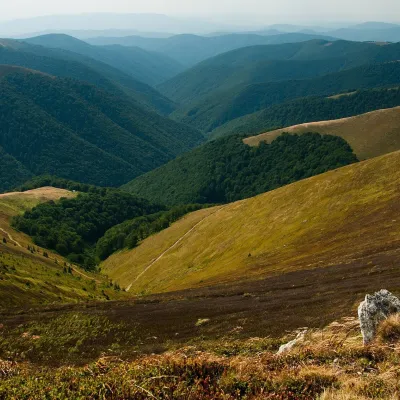 Mountain meadow1 400 mPolonyna BorzhavaPylypetsPolonyna Borzhava is the longest polonyna massif in Zakarpattia and one of the best known in the Polonynskyi Ridge of...
 Mountain meadow1 136 mPolonyna BorsuchynaVorokhtaPolonyna Borsuchyna is located in Vorokhta, Ivano-Frankivsk region, at an altitude of 1136 meters in the Carpathians.
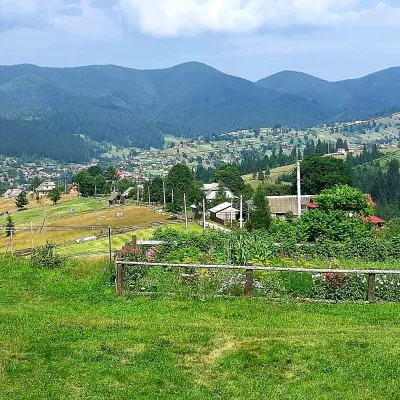 PeakMount OseredokVorokhtaaltitude 915 m · Chornohora range1 trail to the topOseredok is a modest 915 m summit right above Vorokhta (about 2 km), north of the Chornohora range, in Ivano...
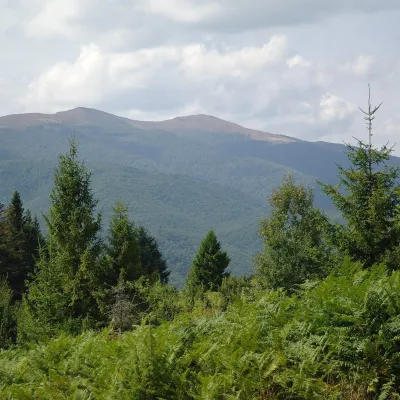 Mountain meadow1 400 mPolonyna Rivna (Runa)LumshoryPolonyna Rivna, more often called Runa in Zakarpattia (in the local dialect "runa" means exactly "flat"), is a broad,...
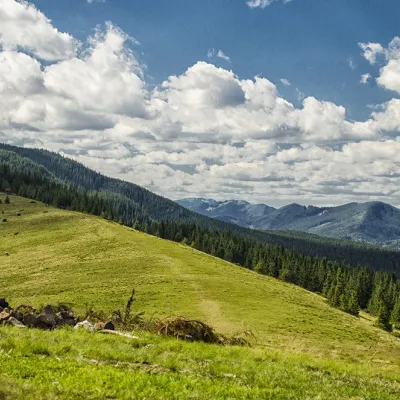 Mountain meadow1 295 mPolonyna KhomyakovTatarivYou can climb here from the Guk waterfall even in a short winter day, spend the night, and in the morning go to the...
Waters and waterfalls
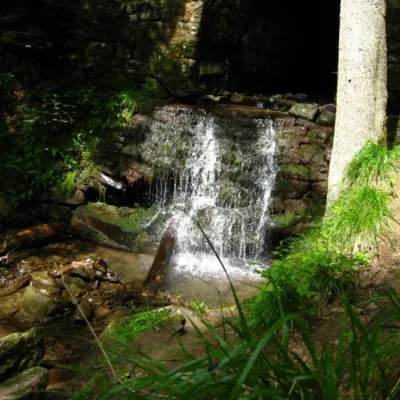 WaterfallLumshory waterfallsLumshoryLumshory waterfalls are a group of waterfalls in the Ukrainian Carpathians, a hydrological natural monument of local...
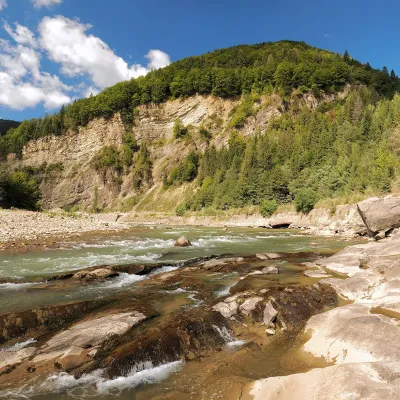 RiverCheremosh RiverVyzhnytsiaThe Cheremosh is born near Usteriky, where the Chornyi Cheremosh and the Bilyi Cheremosh meet.
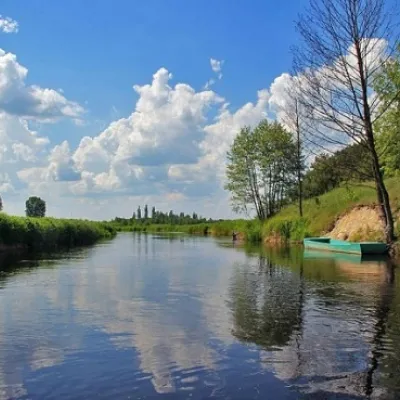 RiverTuria RiverTuri RemetyThe Turia is a small mountain river in western Zakarpattia and a right tributary of the Uzh.
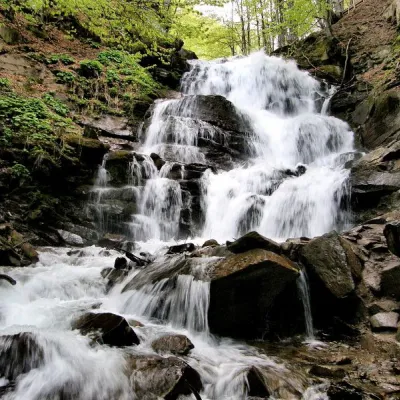 Waterfall"Shypit Waterfall" PylypetsPylypetsIn a cozy corner of the Carpathian Mountains, among the evergreen mountain forests and steep, sharp cliffs, lies the...
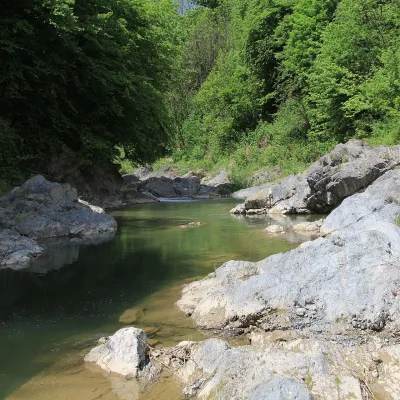 RiverPistynka RiverPistynThe Pistynka is a 56-km mountain tributary of the Prut. It rises on the eastern slopes of Mount Versalem in the...
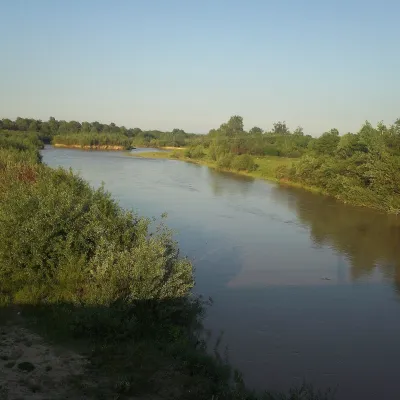 RiverSiret RiverBerehometThe Siret is a major Danube tributary 682 km long, but only its first 123 km lie in Ukraine.
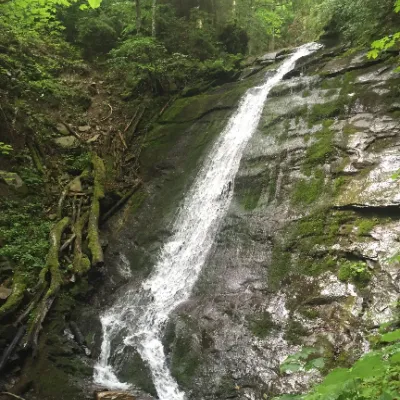 WaterfallNarinetskyi waterfall, MykulychynMykulychynNarinetskyi Waterfall is a waterfall in the Ukrainian Carpathians, on the Noretskyi Stream (a left tributary of the...
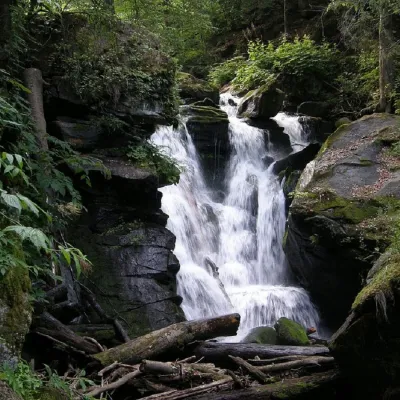 WaterfallVojvodyn waterfallPolianska HutaThe Voyevodyn Waterfall is located on the stream of the same name near the village of Zhdeniyevo in Zakarpattia...
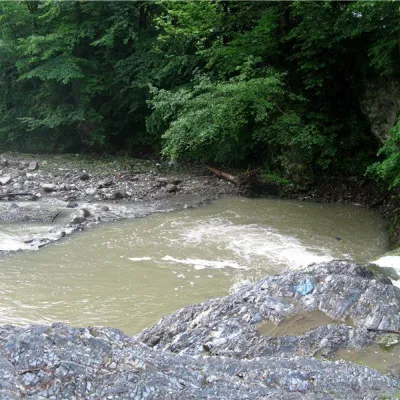 RiverVyzhenka RiverVyzhenkaTheriver Vyzhenka is located in the village of the same name in the Chernivtsi region.
Mountain ranges: Maramureș Mountains, Bieszczady, Borzhava, Gorgany, Vihorlat-Gutin Volcanic Ridge, Rivna Polonyna, Krasna Polonyna, Chornohora, Skole Beskids. In other countries: 🇷🇴 Bihor-Vlădeasa Mountains
Trails and peaks near which naturalists recorded the species (GBIF, iNaturalist), matched by altitude and habitat. Sightings are not guaranteed.
Sources
- Вікіпедія: Білоцвіт весняний
- Wikipedia (en): Leucojum vernum
- Наказ Міндовкілля від 15.02.2021 № 111: Перелік видів рослин та грибів, що заносяться до Червоної книги України
- GBIF: список рослин і грибів Червоної книги України за наказом № 111 (з категоріями)
- Rozporządzenie Ministra Środowiska z 9.10.2014 w sprawie ochrony gatunkowej roślin, Dz.U. 2014 poz. 1409 (Польща)
- iNaturalist: Leucojum vernum (спостереження в Карпатах)
GBIF · iNaturalist · Wikidata · Distribution data: GBIF.org (CC0 and CC BY records), iNaturalist; names and identifiers: Wikidata (CC0). Text: Karpaty.rocks, checked 09.11.2026.
