Wood anemone
This plant is poisonous: do not taste or pick it, and wash your hands after touching it. In case of poisoning call 112 (103 in Ukraine).
About
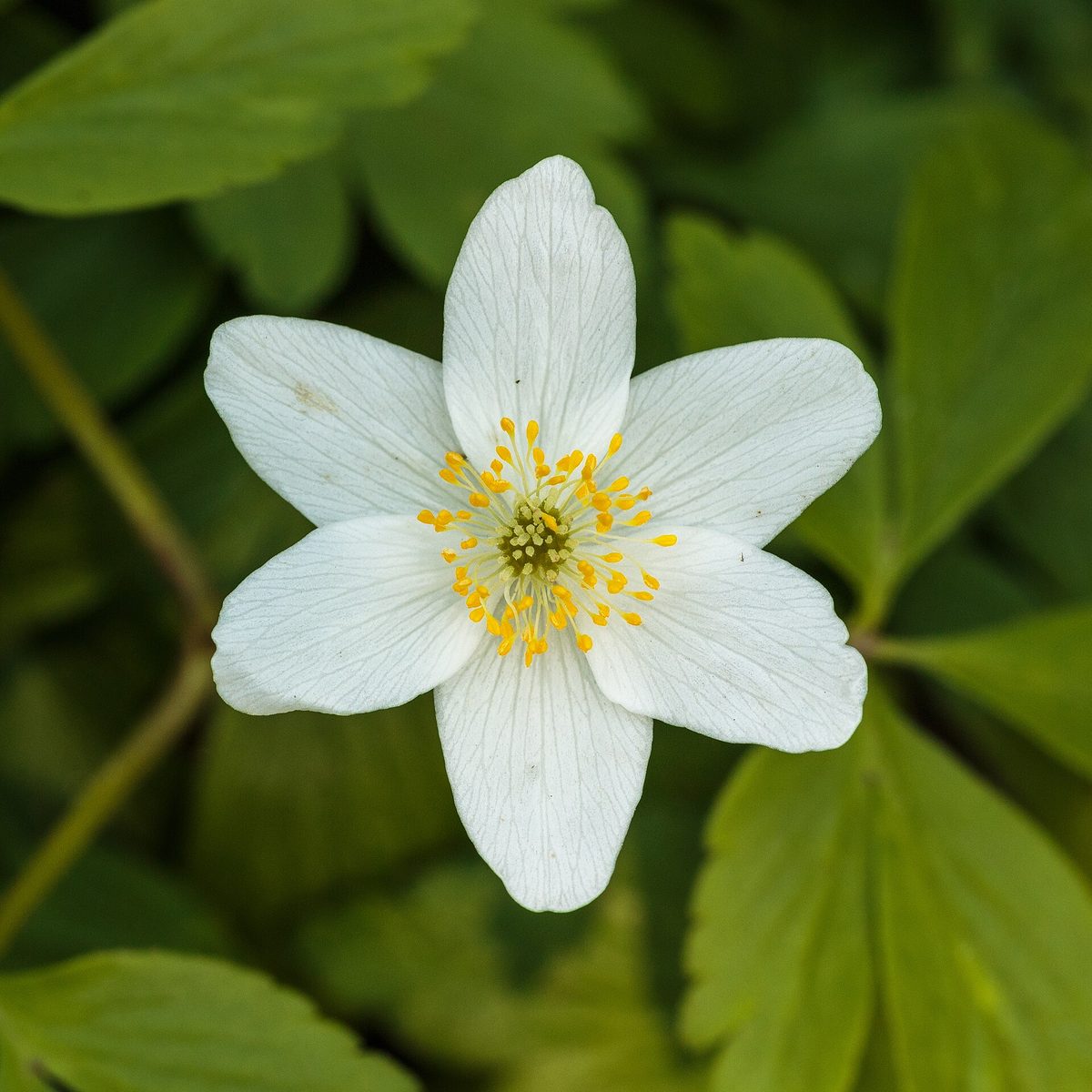
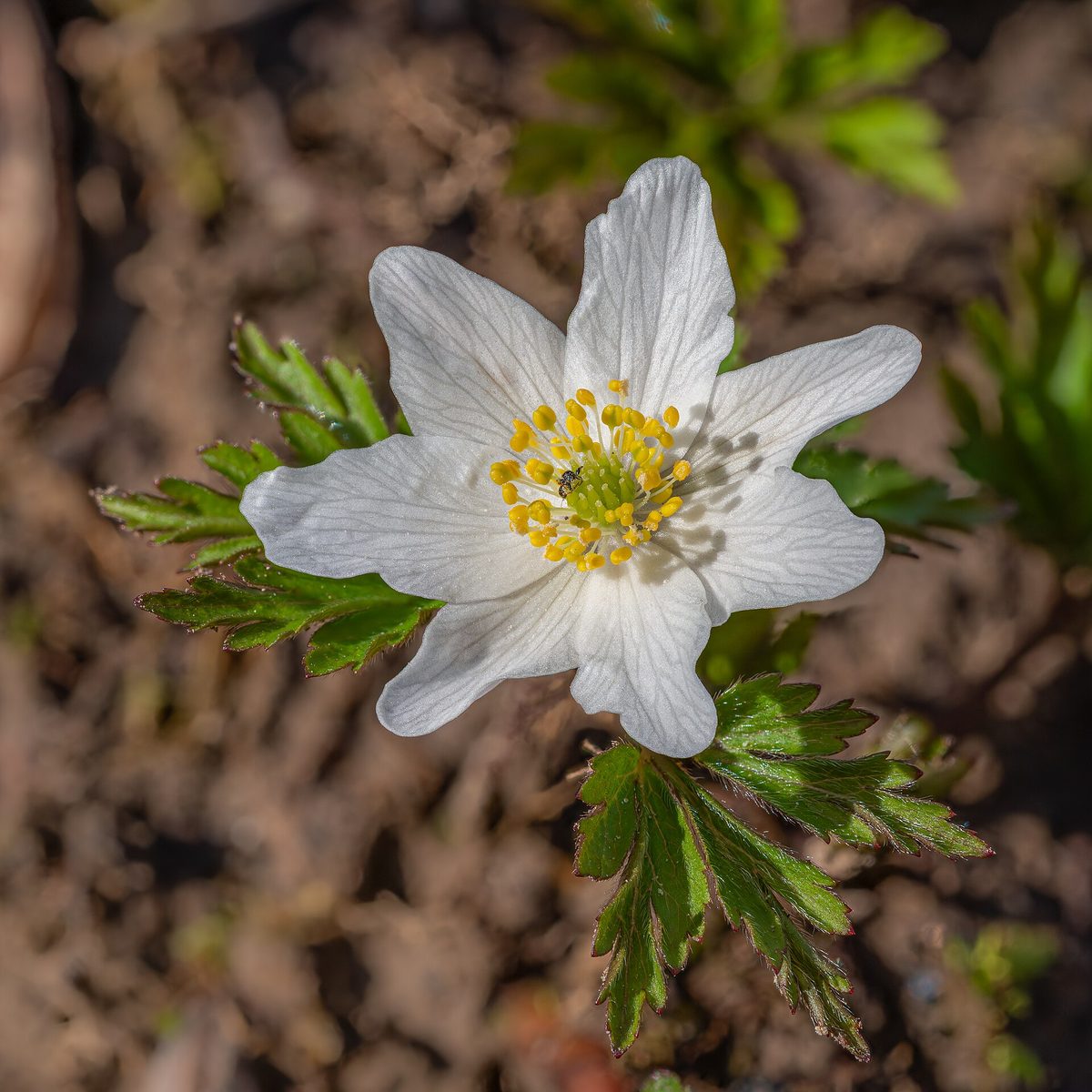
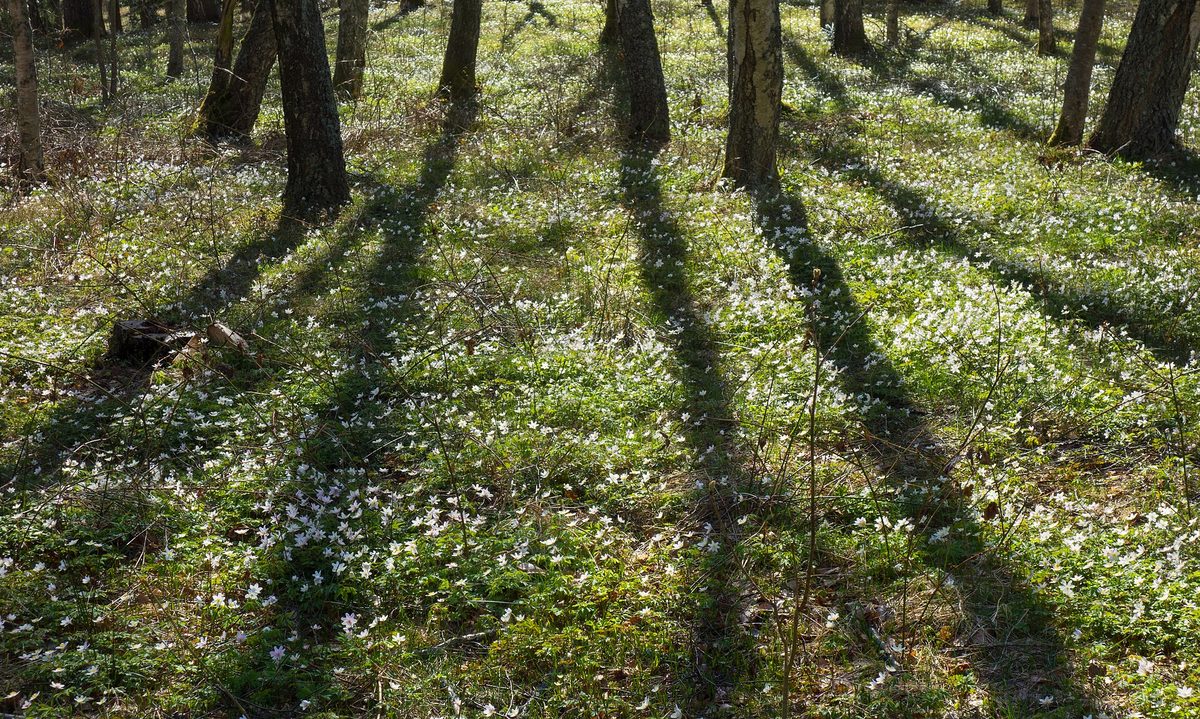
Wood anemone is one of the first flowering plants of the deciduous forest. In Ukraine, it grows in the Carpathians and Polissia, occasionally in the Forest-Steppe. It thrives particularly well in moist, shady places, in depressions with loose, nutrient-rich soil, where it forms solid white carpets in spring. It blooms in April - May, while the trees have not yet unfurled their leaves and light reaches the ground.
The plant is 10–25 cm tall, with a long creeping underground rhizome. On the stem below the flower sits a ring of three palmate leaves. The flower is solitary, about 2 cm in diameter, white, often with a pinkish tint on the outside, with six to seven tepals. At night and before rain, the flowers close to prevent the pollen from getting wet.
The anemone is a slow-growing plant: it flowers only in the 10th to 12th year from seed and mostly spreads through rhizomes. If the above-ground part is picked in spring along with the leaves, the rhizome is left without a supply of nutrients and may die. Therefore, it is not worth picking it for bouquets: it can easily destroy a patch that has been growing for decades. Moreover, the plant contains poisonous substances.
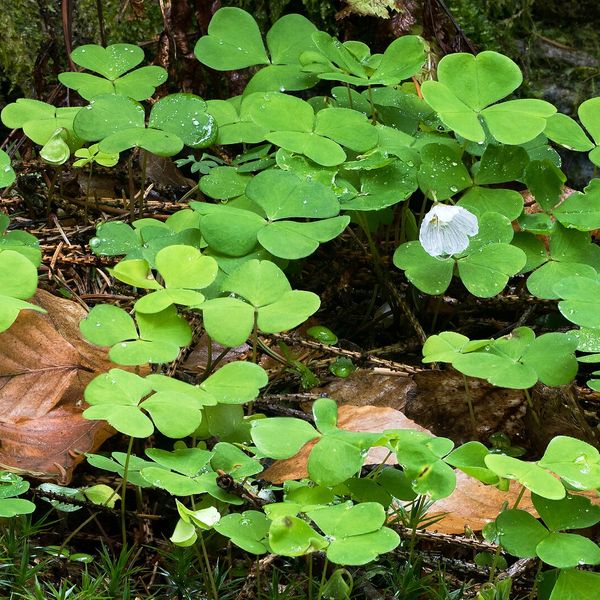
A similar species, the yellow anemone, with yellow flowers, may grow nearby; sometimes these two species form mixed carpets. The common wood sorrel also has white flowers, but it can be easily distinguished by its trifoliate leaves, resembling clover. The Wood anemone is not listed in the Red Book of Ukraine, but its spring meadows are a decoration of the Carpathian beech forests.
Where in the Carpathians

The map shows where naturalists recorded the species (GBIF, CC0 and CC BY records), not every place it lives. The Ukrainian Carpathians are less studied, so a blank area does not mean the species is absent.
- Countries
- Slovakia · Czechia · Poland · Ukraine · Romania · Austria
- Mountain ranges
- Moravian-Silesian Beskids, Slovak Ore Mountains, Greater Fatra, Lesser Fatra, Vihorlat Mountains, Bieszczady, Volovec Mountains, Strážov Mountains, Żywiec Beskids, Maramureș Mountains
- Altitude belts
- Foothills (below 600 m) · Beech forests (600–1200 m)
When to see it
| Jan | Feb | Mar | Apr | May | Jun | Jul | Aug | Sep | Oct | Nov | Dec | |
|---|---|---|---|---|---|---|---|---|---|---|---|---|
| Flowering | ||||||||||||
| Fruit |
From naturalists’ observations in the Carpathians (iNaturalist, research grade): the darker the cell, the more often the species is seen that month.
Safety
The plant is poisonous. Do not taste or give to children.
Look-alikes — how to tell them apart
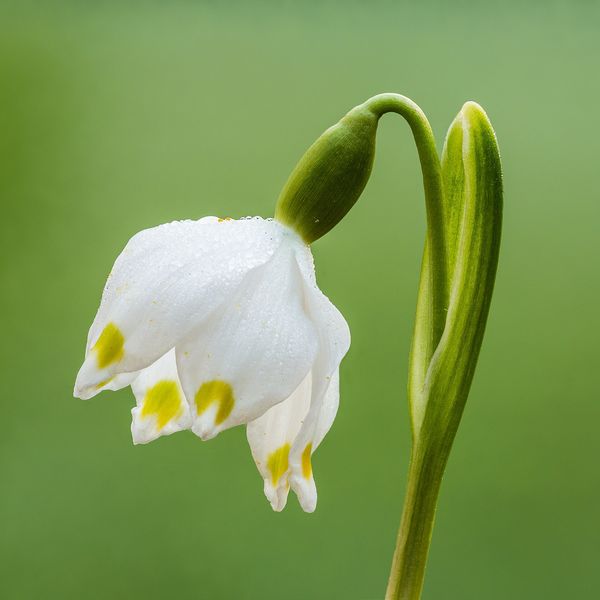
Flowers are yellow, not white; often grows together with Wood anemone.
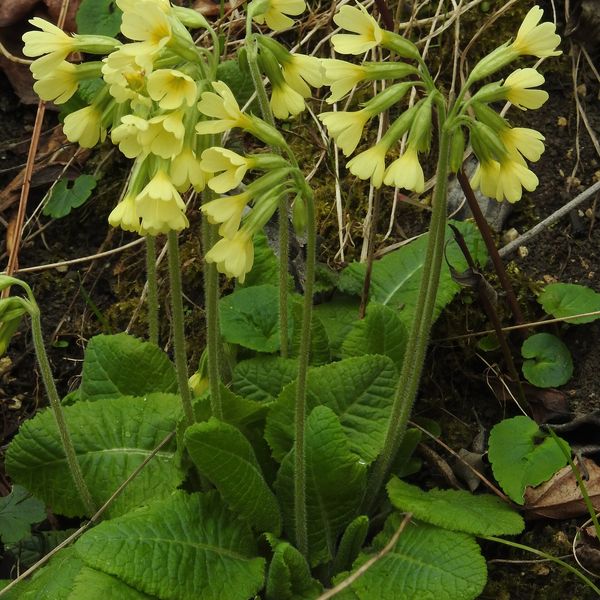
Leaves are trifoliate, like clover, on long petioles from the rhizome; flower has five white petals with pink veins.
Protection and rules
Not protected. Do not pick for bouquets: the plant flowers only in the 10th to 12th year from seed.
FAQ
Why should you not pick Wood anemone for bouquets?
It flowers only in the 10th to 12th year from seed. If the above-ground part is picked in spring, the rhizome may die, and a patch that has been growing for decades will disappear.
When does Wood anemone bloom?
In April - May, while there are still no leaves on the trees.
Similar species
Where to meet it
Trails
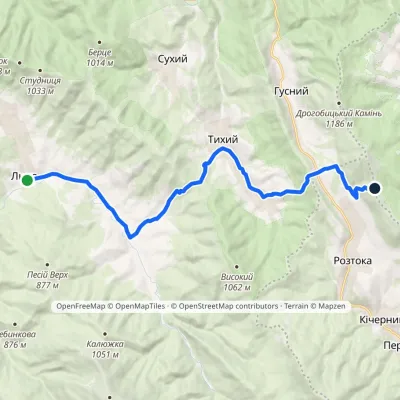 ModerateTwo-dayMarkedLiuta village Pikui ridgevia Tykhyi villageElevation profile465–1 109 m18.1 kmascent 923 m≈ 6.5 h walking
 ModerateTwo-dayKamianytsia village to Turi Remety villagevia Antalovetska PolianaElevation profile182–964 m18.1 kmascent 764 m≈ 6 h walking
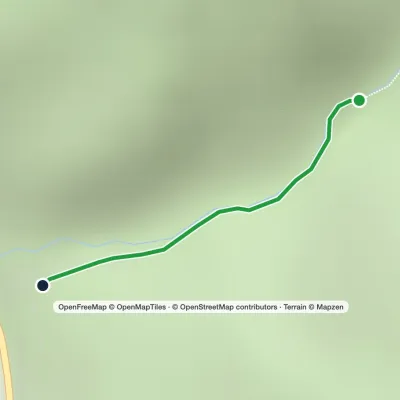 EasyOne-dayMarkedTo Sokolyne BerdoElevation profile331–674 m2.6 kmascent 344 m≈ 1.5 h walking
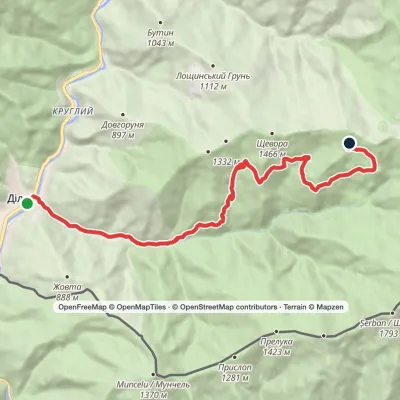 ModerateTwo-dayDilove village to Shchavora polonynavia Yalynskyi WaterfallElevation profile346–1 338 m16.3 kmascent 1 042 m≈ 6 h walking
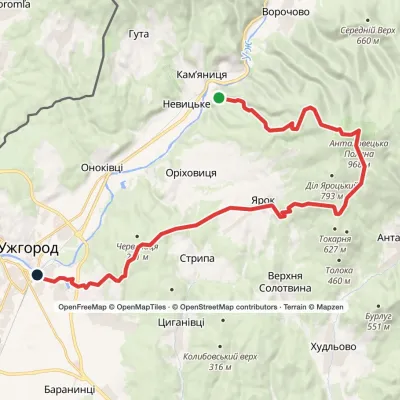 HardMulti-dayKamianytsia village to Uzhhorodvia Antalovetska Poliana, Yarok villageElevation profile117–968 m28.9 kmascent 909 m≈ 9 h walking
 HardTwo-dayKamianytsia village loopvia Antalovetska PolianaElevation profile172–968 m22.8 kmascent 933 m≈ 7.5 h walking
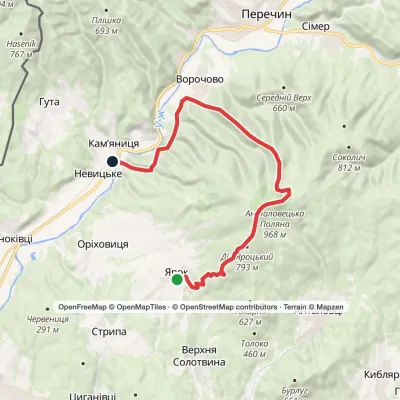 ModerateTwo-dayYarok village to Nevytske villagevia Antalovetska PolianaElevation profile131–968 m19.9 kmascent 996 m≈ 7 h walking
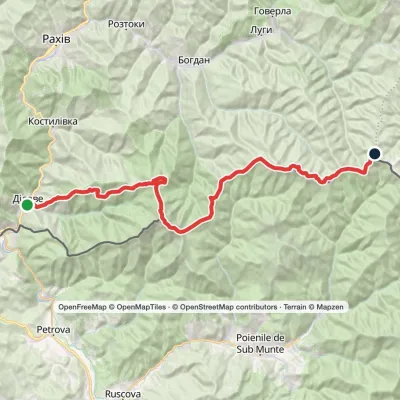 HardMulti-dayDilove village to Mount Stihvia Mount Pip Ivan Marmaroskyi, Mount Mika-Mare +1Elevation profile346–1 936 m45.1 kmascent 3 322 m
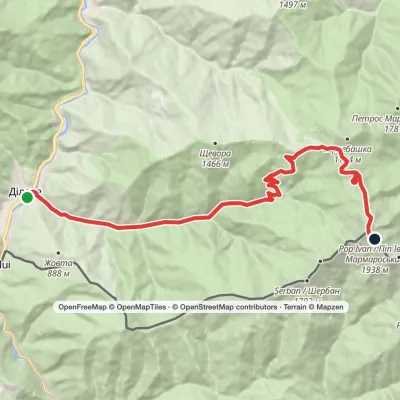 HardTwo-dayMarkedDilove village to Mount Pip Ivan Marmaroskyivia Lysycha polonynaElevation profile346–1 936 m19.4 kmascent 1 663 m≈ 8 h walking
 HardMulti-dayMarkedDilove village loopvia Mount Pip Ivan Marmaroskyi, Mount ZherbanElevation profile346–1 936 m50.5 kmascent 1 783 m
 EasyOne-dayRoztoka village Mount HostraElevation profile630–1 259 m7.6 kmascent 628 m≈ 3 h walking
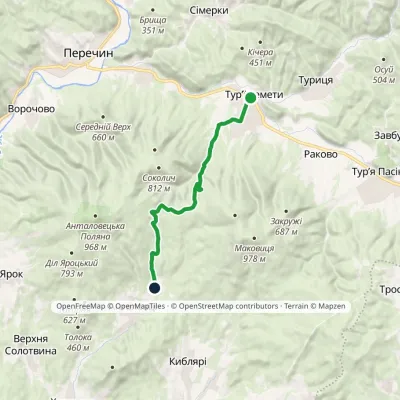 ModerateOne-dayMarkedTuri Remety village Antalovtsi villageElevation profile182–711 m14.2 kmascent 547 m≈ 4.5 h walking
Peaks and meadows
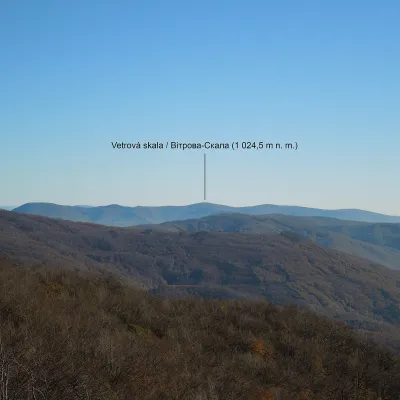 PeakMount Vitrova-SkalaMyrchaaltitude 1 025 m · Volcanic Carpathians rangeVitrova-Skala (Slovak: Vetrová skala) is a 1,025 m (more precisely 1,024.5 m) mountain in the volcanic Vihorlat massif.
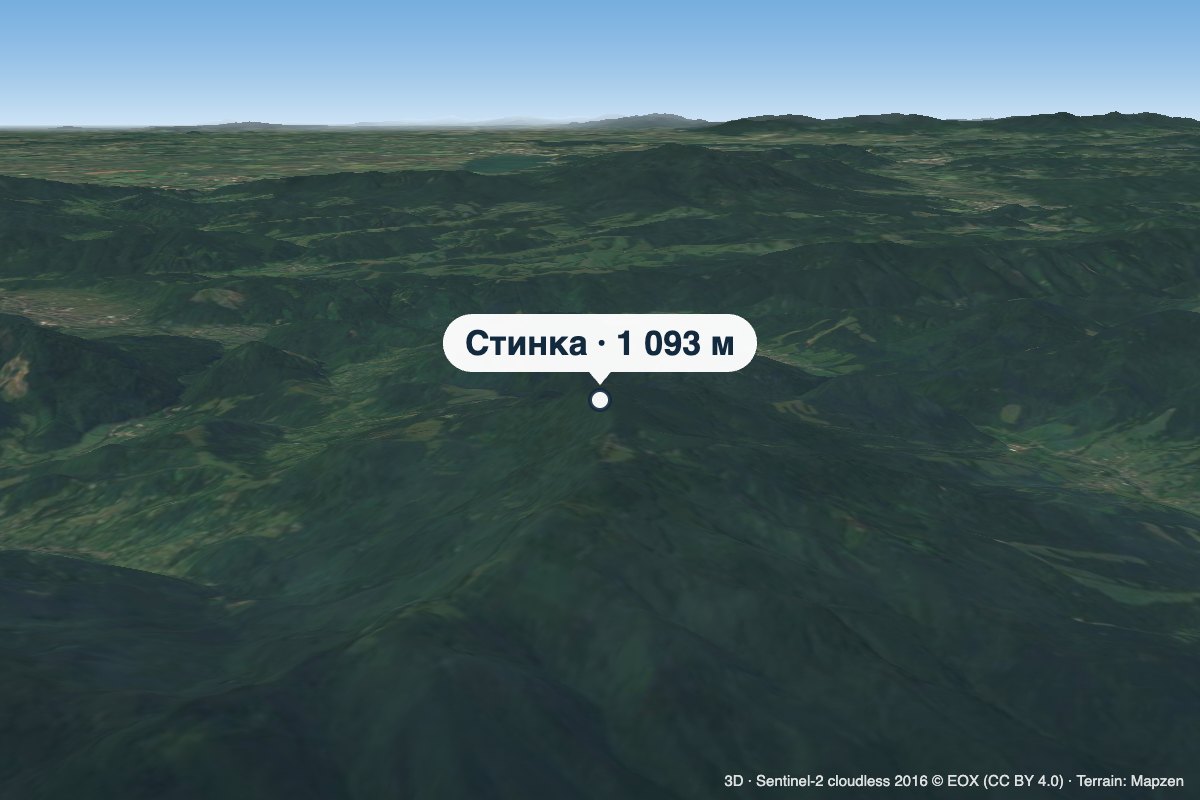 PeakMount StynkaKniahyniaaltitude 1 093 mStynka (Slovak: Stinská) is a 1,093 m mountain on the state border between Ukraine and Slovakia, in the Bukovské...
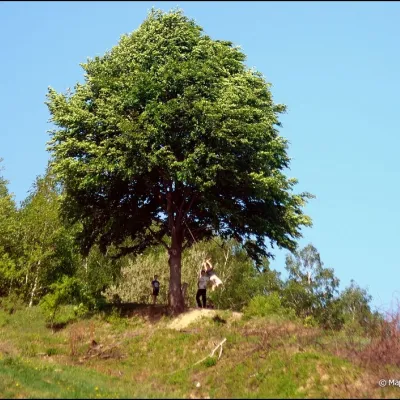 PeakMount KicheraKosivaltitude 567 mThe march to Kichera is an easy walk that all tourists can do. The small length of the march allows you to take your...
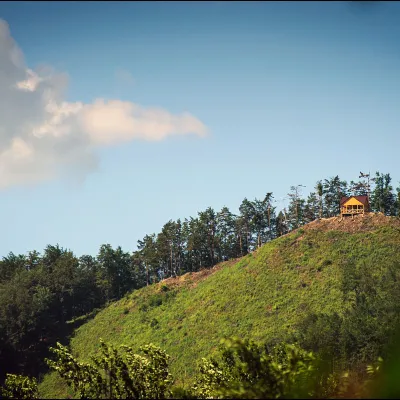 PeakMount Ostry (Ostra)Kosivaltitude 584 m2 trails to the topThe mountain offers wonderful views of the entire Kosiv. The descent is steep, and autumn is magical here.
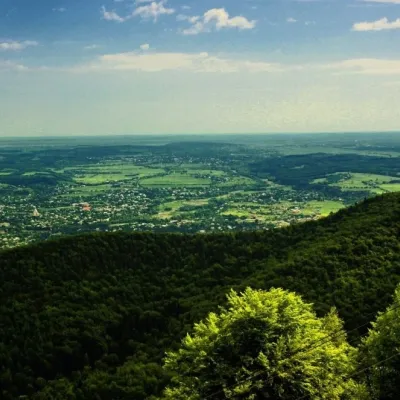 PeakMount Mykhalkova (Kosiv)Kosivaltitude 812 m2 trails to the topMount Mykhalkova (Mykhalkiv), with a height of 812 meters, is part of the Pokuttya Carpathians.
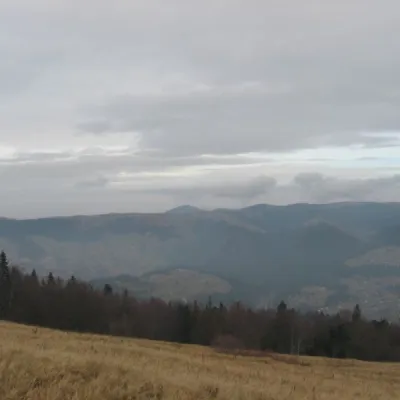 Mountain meadow1 136 mPolonyna BorsuchynaVorokhtaPolonyna Borsuchyna is located in Vorokhta, Ivano-Frankivsk region, at an altitude of 1136 meters in the Carpathians.
Waters and waterfalls
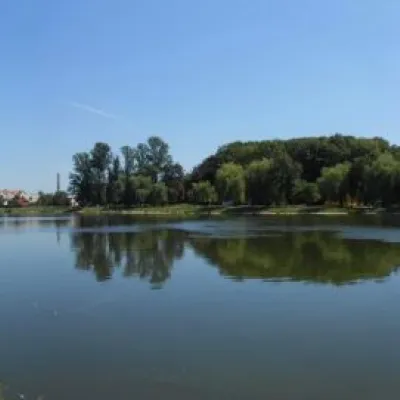 LakeCity lake in KolomyiaKolomyiaAfter touring the city, it's a good idea to relax and unwind by the water.
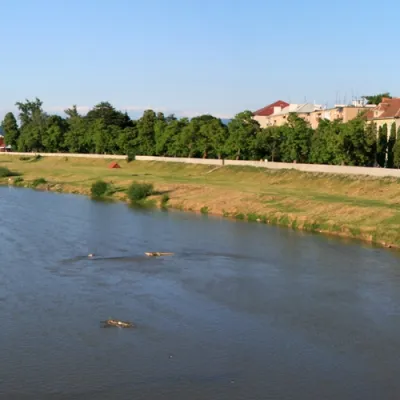 RiverLatorytsiaRoztokaLatorytsia River - Latorytsia and its surroundings are a popular destination for eco-tourism.
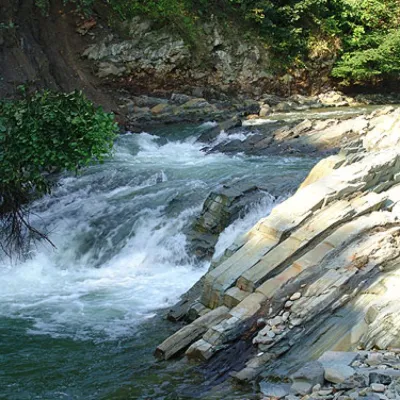 WaterfallKosivskyi Huk WaterfallKosivKosivskyi Huk - one of the most beautiful waterfalls in the Ukrainian Carpathians (in the Pokuttya-Bukovyna...
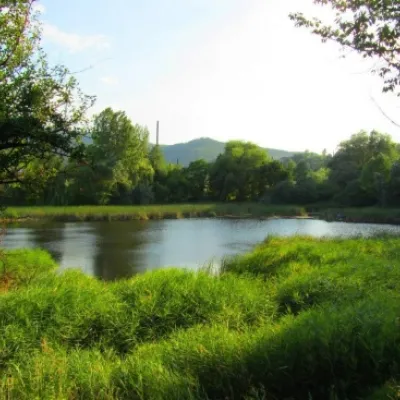 LakeCity Banske Lake (Kosiv)KosivThere are lakes of technogenic origin in the Hutsul mountains. One such lake is Banske Lake (near the former factory ...
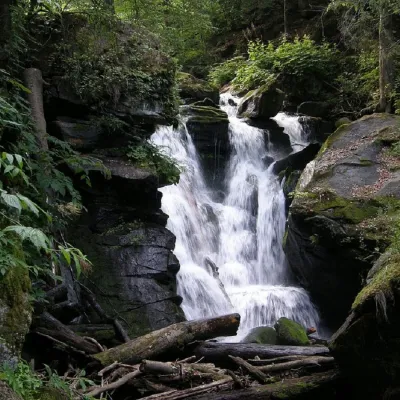 WaterfallVojvodyn waterfallPolianska HutaThe Voyevodyn Waterfall is located on the stream of the same name near the village of Zhdeniyevo in Zakarpattia...
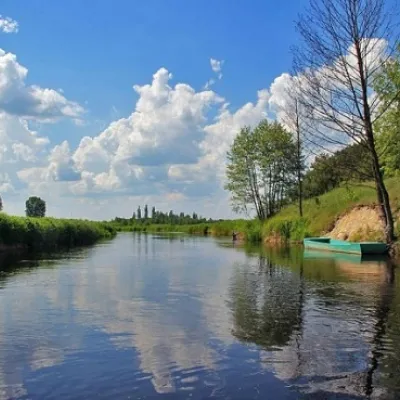 RiverTuria RiverTuri RemetyThe Turia is a small mountain river in western Zakarpattia and a right tributary of the Uzh.
Mountain ranges: Bieszczady, Maramureș Mountains. In other countries: 🇨🇿 Moravian-Silesian Beskids, 🇸🇰 Slovak Ore Mountains, 🇸🇰 Greater Fatra, 🇸🇰 Lesser Fatra, 🇸🇰 Vihorlat Mountains, 🇸🇰 Volovec Mountains, 🇸🇰 Strážov Mountains, 🇵🇱 Żywiec Beskids, 🇸🇰 Low Tatras, 🇸🇰 Levoča Mountains, 🇸🇰 Western Tatras, 🇸🇰 Spiš Magura
Trails and peaks near which naturalists recorded the species (GBIF, iNaturalist), matched by altitude and habitat. Sightings are not guaranteed.
Sources
- Вікіпедія: Анемона дібровна
- Wikipedia (en): Anemonoides nemorosa
- Wikipedia (en): Oxalis acetosella
- iNaturalist: Anemonoides nemorosa (спостереження в Карпатах)
GBIF · iNaturalist · Wikidata · Distribution data: GBIF.org (CC0 and CC BY records), iNaturalist; names and identifiers: Wikidata (CC0). Text: Karpaty.rocks, checked 09.11.2026.
