Snowdrop
This plant is poisonous: do not taste or pick it, and wash your hands after touching it. In case of poisoning call 112 (103 in Ukraine).
About
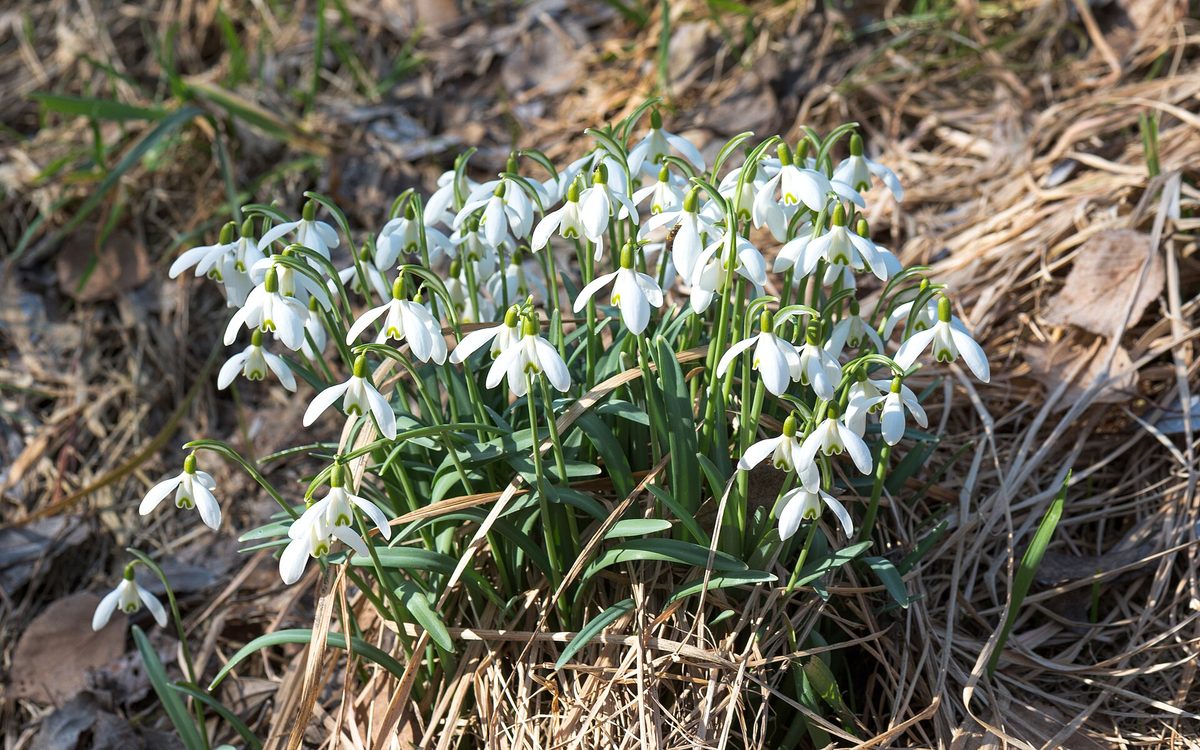
Snowdrop opens the flowering season in the Carpathians. In the deciduous forests of the foothills and low mountains — beech, hornbeam, and oak forests — as well as in shrubs and on forest edges, it blooms when patches of snow still lie around: in March — April, and in warm winters in February.
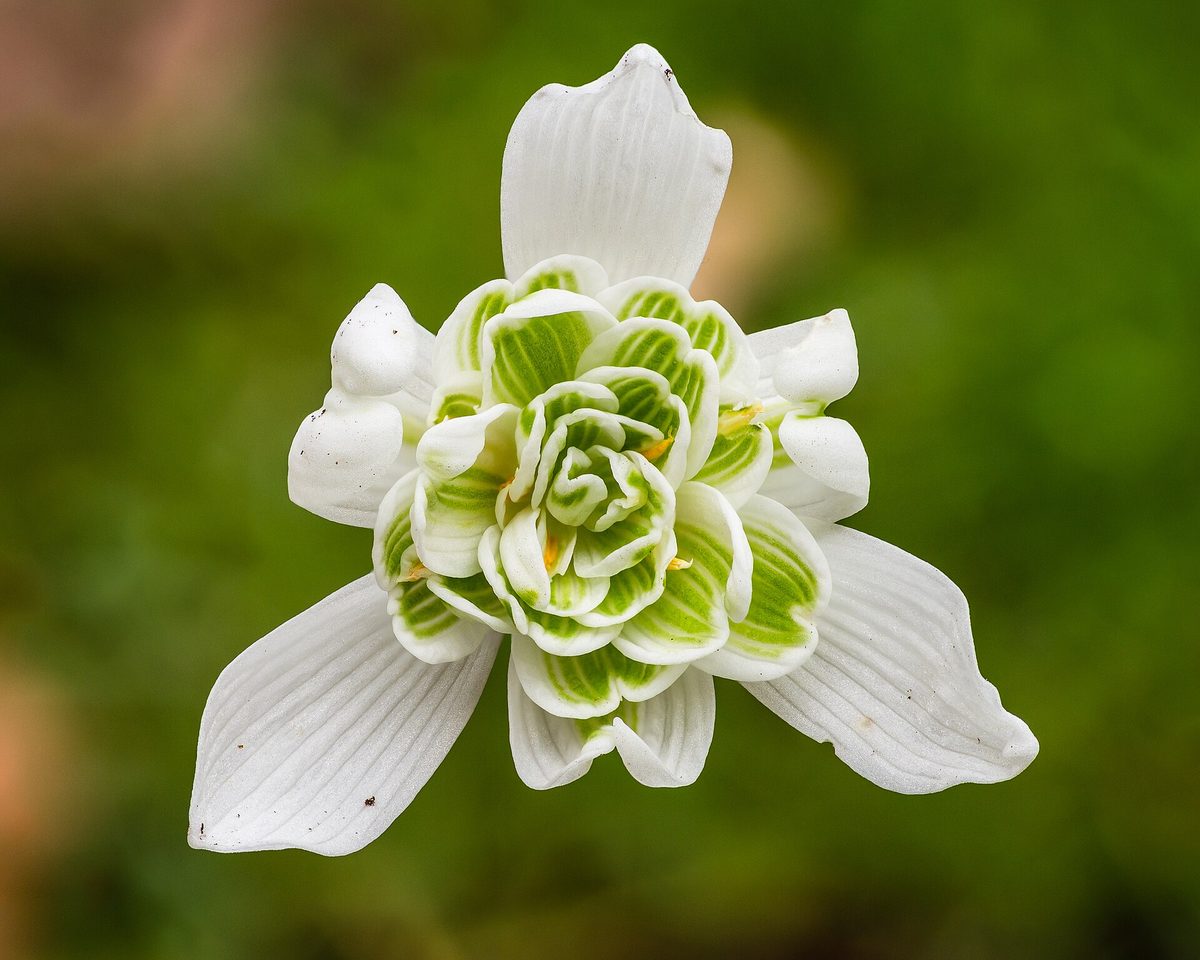
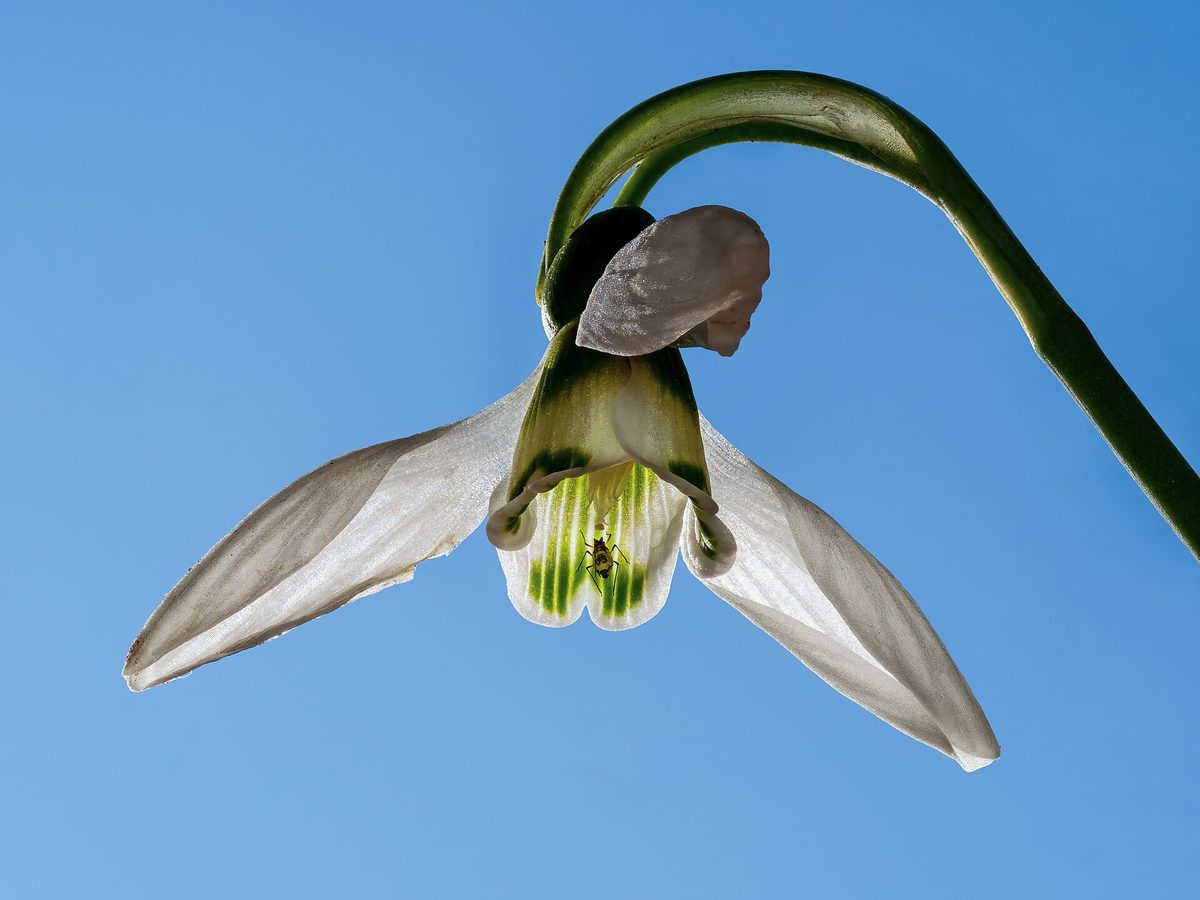
This small bulbous plant is 7–15 cm tall with two narrow bluish-green leaves. On a thin flower stalk hangs one drooping white flower: three outer petals are longer and pure white, three inner ones are shorter, with a green spot near the edge.
Snowdrop is widespread from Spain to Ukraine, but in many places its populations have declined due to mass gathering for bouquets and digging up bulbs. In Ukraine, the species is listed in the Red Data Book under the name 'white snowdrop' with the status 'data deficient', and in the EU — in Appendix V of the Habitats Directive. The International Union for Conservation of Nature assesses it as near threatened.
Therefore, picking and selling wild snowdrops is prohibited. Do not buy them at markets and along roads: each such bouquet encourages poachers. The plant's bulbs are toxic, so keep garden snowdrops away from children and pets.
Where in the Carpathians

The map shows where naturalists recorded the species (GBIF, CC0 and CC BY records), not every place it lives. The Ukrainian Carpathians are less studied, so a blank area does not mean the species is absent.
- Countries
- Slovakia · Ukraine · Czechia · Austria · Poland · Hungary · Romania
- Mountain ranges
- Slovak Ore Mountains, Maramureș Mountains, Lesser Fatra, Moravian-Silesian Beskids, Little Carpathians, Gorgany, Strážov Mountains, Vihorlat Mountains, Volovec Mountains, Chornohora
- Altitude belts
- Foothills (below 600 m) · Beech forests (600–1200 m)
When to see it
| Jan | Feb | Mar | Apr | May | Jun | Jul | Aug | Sep | Oct | Nov | Dec | |
|---|---|---|---|---|---|---|---|---|---|---|---|---|
| Flowering | ||||||||||||
| Fruit |
From naturalists’ observations in the Carpathians (iNaturalist, research grade): the darker the cell, the more often the species is seen that month.
Safety
The bulbs are toxic.
Protection and rules
Listed in the Red Data Book of Ukraine (white snowdrop, data deficient). Picking, digging up, and selling is prohibited.
Admire, don’t pick: plants listed in the Red Data Book of Ukraine — and any plants in nature reserves and strictly protected zones of national parks — must not be collected.
FAQ
When do snowdrops bloom in the Carpathians?
In March — April, and in warm winters — already in February, mainly in the deciduous forests of the foothills.
Is it allowed to pick snowdrops?
No. Snowdrop is listed in the Red Data Book of Ukraine, so picking, digging up, and selling wild plants is prohibited.
Recorded nearby
 ModerateOne-dayMarkedIlmia forestry Nimetska polonynaElevation profile602–1 256 m10 kmascent 697 m≈ 4 h walking
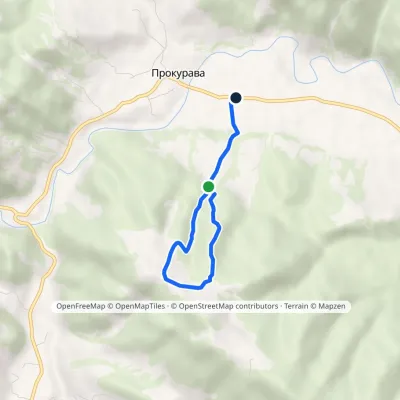 EasyOne-dayMarkedUp Brusnyi ridge to Dovbush RockElevation profile510–856 m3.5 kmascent 233 m≈ 1.5 h walking
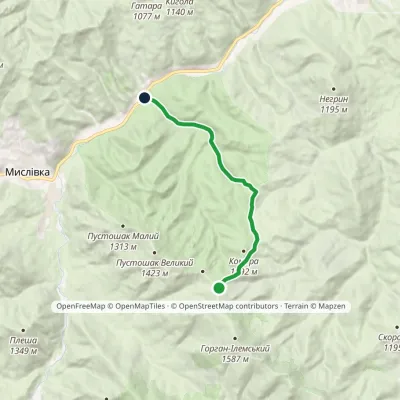
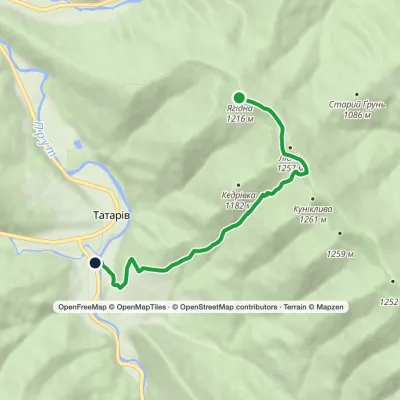 EasyOne-dayMarkedTatariv Mount YahidnaElevation profile679–1 232 m5.9 kmascent 47 m≈ 1.5 h walking
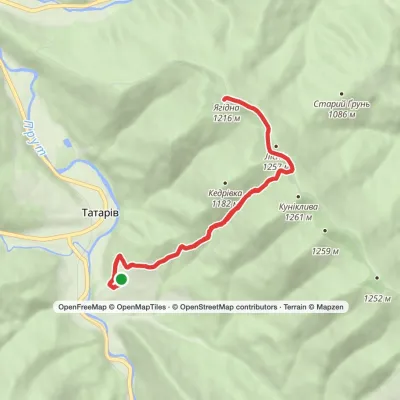 ModerateOne-dayMarkedTatariv village loopvia Mount Lisniv, Mount YahidnaElevation profile744–1 233 m11.3 kmascent 579 m≈ 4 h walking
 ModerateTwo-dayMarkedTatariv village loopvia Mount Lisniv, Mount YahidnaElevation profile678–1 234 m15.6 kmascent 645 m≈ 5 h walking
 ModerateTwo-dayMarkedTatariv village to Zhenets tract (Mykulychyn village)via Khomiakiv polonynaElevation profile643–1 354 m19 kmascent 637 m≈ 6 h walking
Trails and peaks near which naturalists recorded the species (GBIF, iNaturalist), matched by altitude and habitat. Sightings are not guaranteed.
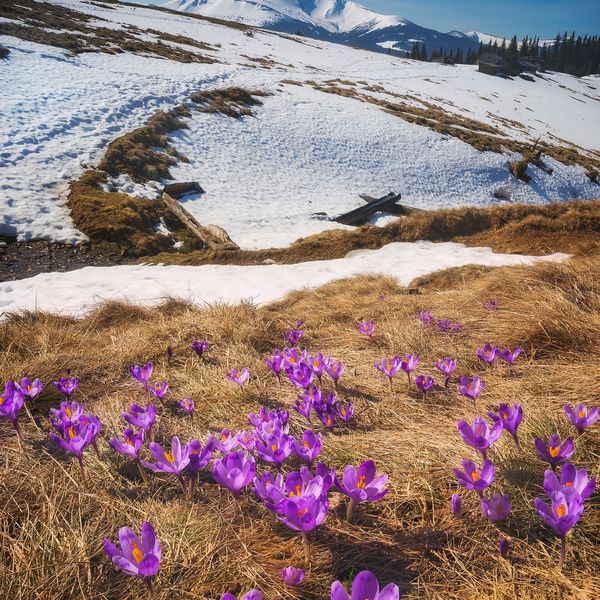
Similar species
Sources
- Вікіпедія: Підсніжник звичайний
- Wikipedia (en): Galanthus nivalis
- Наказ Міндовкілля від 15.02.2021 № 111: Перелік видів рослин та грибів, що заносяться до Червоної книги України
- GBIF: список рослин і грибів Червоної книги України за наказом № 111 (з категоріями)
- Директива Ради 92/43/ЄЕС про збереження природних оселищ (консолідований текст, додатки II, IV, V)
- Категорія IUCN (через GBIF Species API)
GBIF · iNaturalist · Wikidata · Distribution data: GBIF.org (CC0 and CC BY records), iNaturalist; names and identifiers: Wikidata (CC0). Text: Karpaty.rocks, checked 09.11.2026.
