Autumn crocus
This plant is poisonous: do not taste or pick it, and wash your hands after touching it. In case of poisoning call 112 (103 in Ukraine).
About
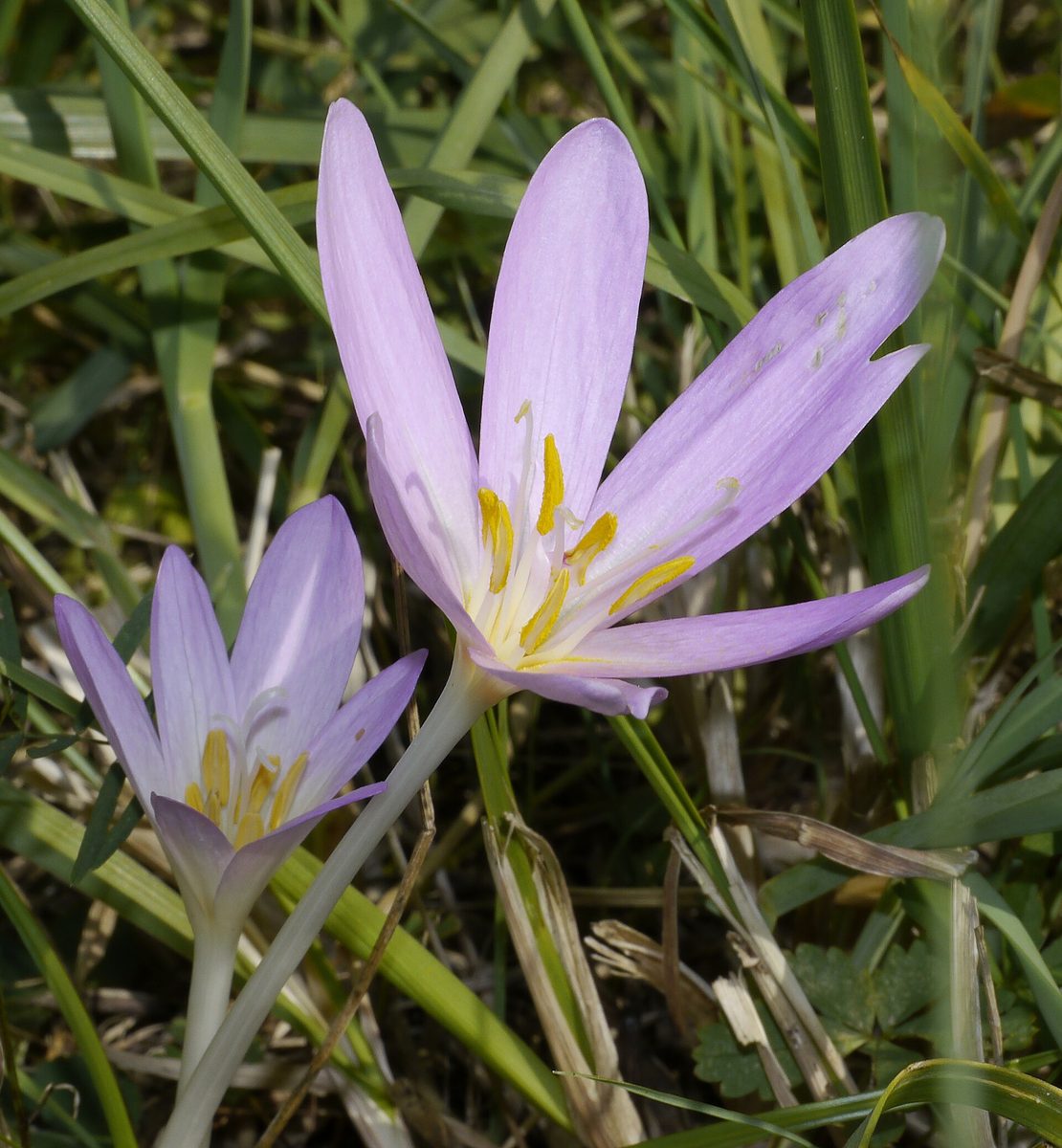
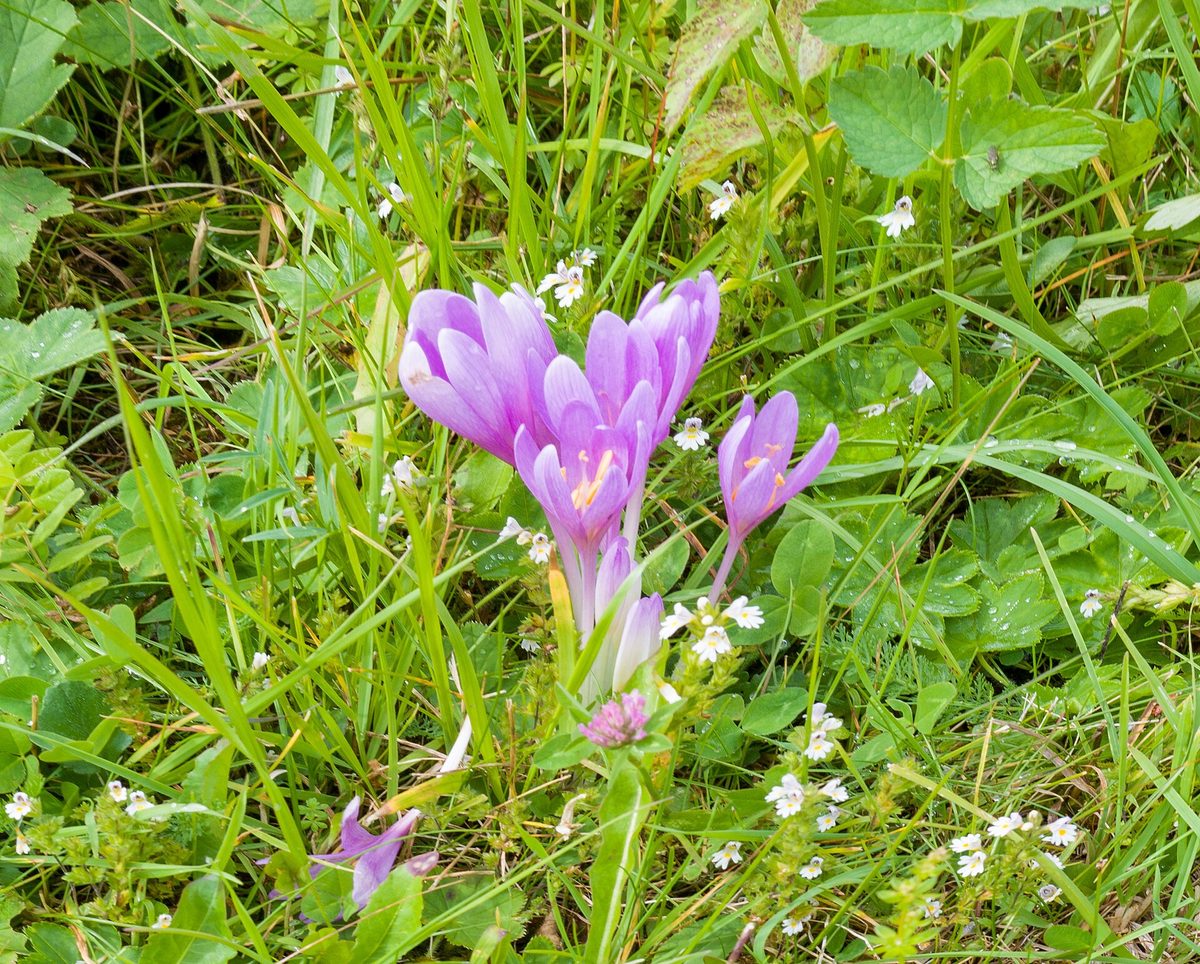
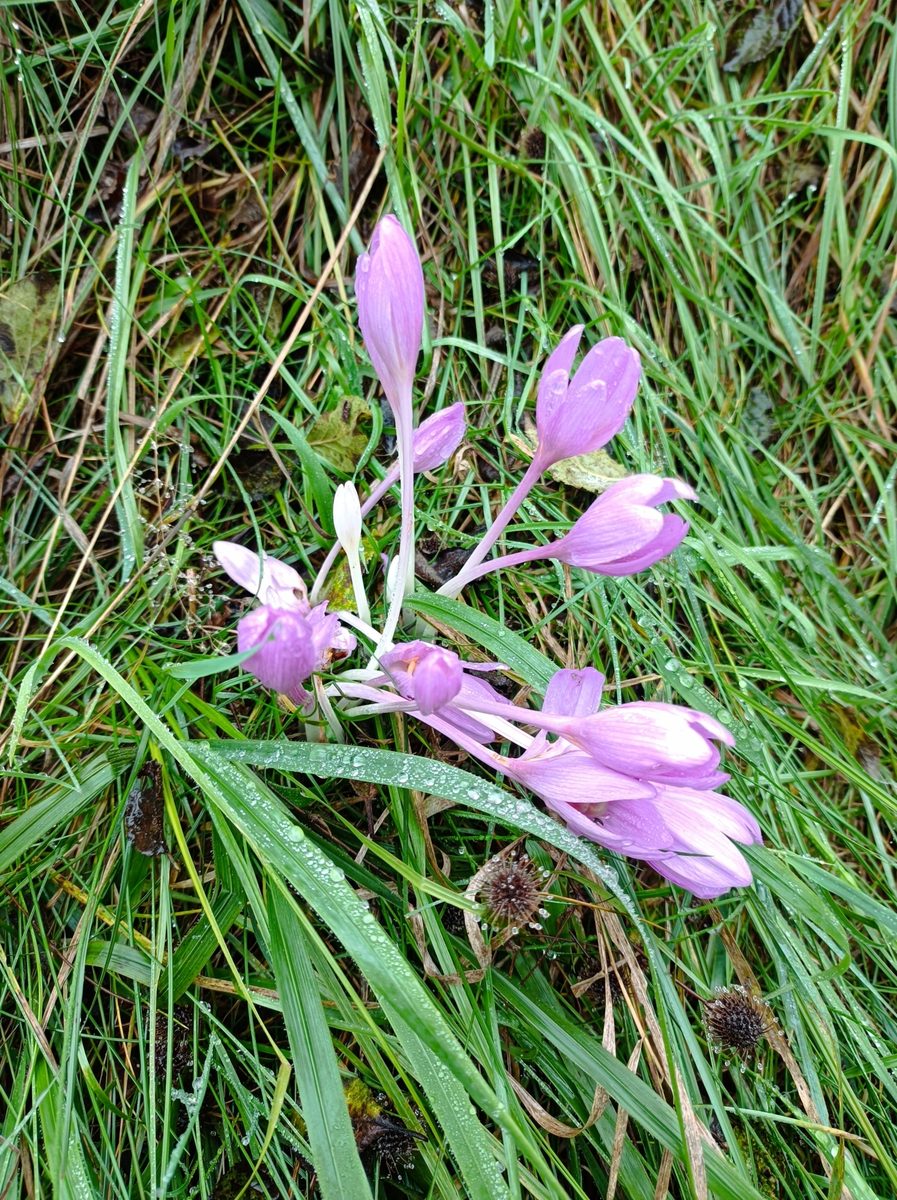
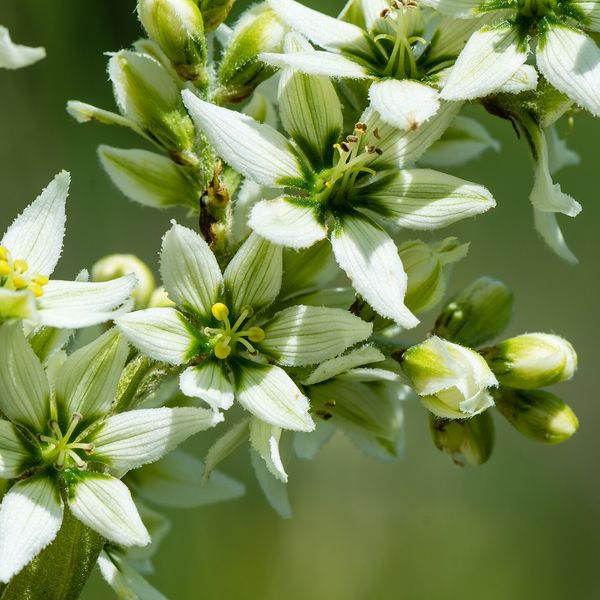
The Autumn crocus has an unusual life rhythm. In autumn, from August to October, pink-lilac flowers emerge from the ground on mown meadows and pastures without a single leaf — hence the folk names 'winter flower', 'frost flower'. The broad leaves and large seed capsule appear only the following spring.
The flower resembles saffron: six pink or pink-purple, rarely white tepals 4–7 cm long on a long white 'tube' that comes directly from the ground. It is easy to distinguish: the Autumn crocus has six stamens, while saffron has three, and saffrons mainly bloom in spring. In spring, the plant looks like a bunch of three to four broad lanceolate shiny leaves, within which a green capsule is hidden.
All parts of the plant contain colchicine — a potent poison that is not destroyed by drying or boiling. Poisoning manifests within a few hours with vomiting, abdominal pain, diarrhea, and can result in death. Most often, people get poisoned in spring when they confuse the leaves of the Autumn crocus with wild garlic (Allium ursinum), which grows in the same moist meadows and forests. In wild garlic, the leaves are solitary, on separate petioles, thinner, and smell of garlic when crushed; in the Autumn crocus, the leaves are without garlic smell, dense, and gathered in a bunch.
In the Carpathians, the Autumn crocus is common in moist meadows and hayfields of the foothills and low mountains. Despite its toxicity, the species is listed in the Red Book of Ukraine with the status 'not evaluated', so collecting and digging it up is prohibited.
Where in the Carpathians

The map shows where naturalists recorded the species (GBIF, CC0 and CC BY records), not every place it lives. The Ukrainian Carpathians are less studied, so a blank area does not mean the species is absent.
- Countries
- Slovakia · Czechia · Ukraine · Hungary · Romania · Poland · Austria · Serbia
- Mountain ranges
- Strážov Mountains, White Carpathians, Slovak Central Mountains, Low Tatras, Greater Fatra, Štiavnica Mountains, Lesser Fatra, Slovak Ore Mountains, Kysuce Beskids, Slovak Paradise
- Altitude belts
- Foothills (below 600 m) · Beech forests (600–1200 m)
When to see it
| Jan | Feb | Mar | Apr | May | Jun | Jul | Aug | Sep | Oct | Nov | Dec | |
|---|---|---|---|---|---|---|---|---|---|---|---|---|
| Flowering |
From naturalists’ observations in the Carpathians (iNaturalist, research grade): the darker the cell, the more often the species is seen that month.
Safety
Deadly poisonous: colchicine is not destroyed by drying or boiling. When collecting wild garlic, crush each leaf — it should smell of garlic. Do not leave the Autumn crocus in a vase where children or animals can reach it. In case of suspected poisoning, call 103 (or 112).
Look-alikes — how to tell them apart
Leaves are solitary, on separate petioles, thin, with a strong garlic smell when crushed. In the Autumn crocus, leaves are dense, shiny, gathered in a bunch without petioles and without garlic smell.
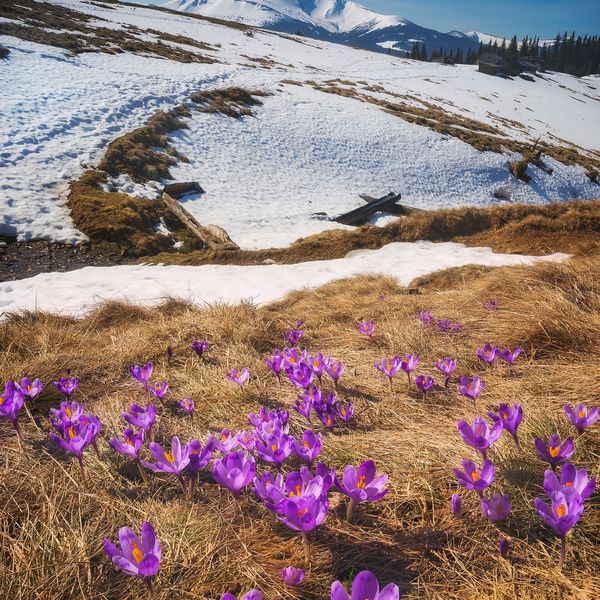
Blooms in spring, has three stamens in the flower, leaves are narrow with a silvery stripe.
Protection and rules
Despite its toxicity, it is listed in the Red Book of Ukraine (not evaluated). Collecting and digging it up is prohibited.
Admire, don’t pick: plants listed in the Red Data Book of Ukraine — and any plants in nature reserves and strictly protected zones of national parks — must not be collected.
FAQ
How to distinguish wild garlic from the Autumn crocus?
Crush a leaf: wild garlic smells of garlic, while the Autumn crocus does not. Moreover, wild garlic has solitary leaves on petioles, while the Autumn crocus has dense, petiole-less leaves gathered in a bunch.
Is the Autumn crocus poisonous?
Yes, deadly: all parts contain colchicine, and boiling or drying does not destroy it.
Why does the Autumn crocus bloom in autumn without leaves?
This is its biology: flowers appear in autumn, while leaves and the seed capsule grow only the following spring.
Similar species
Where to meet it
Trails
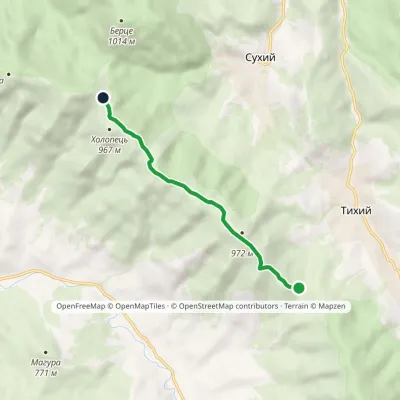 EasyOne-dayMarkedLiuta (monastery) PrylukyElevation profile733–955 m5.7 kmascent 293 m≈ 2 h walking
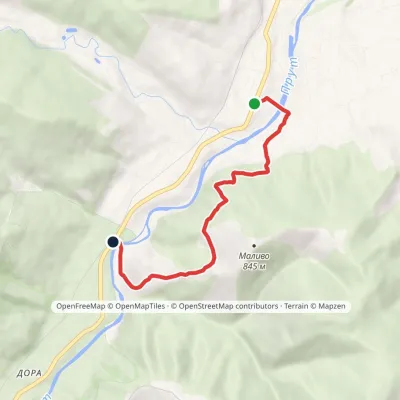 EasyOne-dayMarkedBaron's Trail: Deliatyn Dora villageElevation profile421–701 m5.3 kmascent 277 m≈ 2 h walking
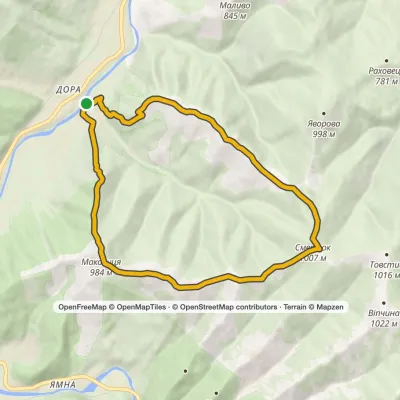 ModerateOne-dayMarkedDora loopvia Mount Makovytsia, Mount Staiky +1Elevation profile470–1 007 m13.2 kmascent 707 m≈ 4.5 h walking
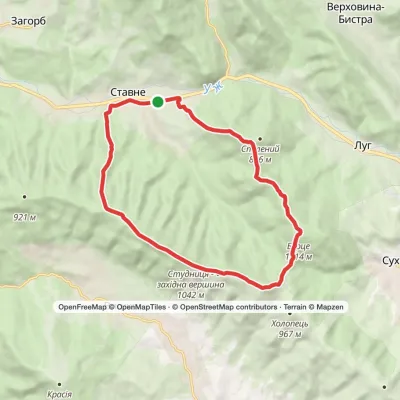 ModerateTwo-dayStavne village loopvia Mount Studnytsia, Mount SpalenyiElevation profile382–1 042 m17.6 kmascent 981 m≈ 6.5 h walking
 ModerateOne-dayYaremche loopvia Dovbush Rocks, Mount MakovytsiaElevation profile552–984 m9.9 kmascent 487 m≈ 3.5 h walking
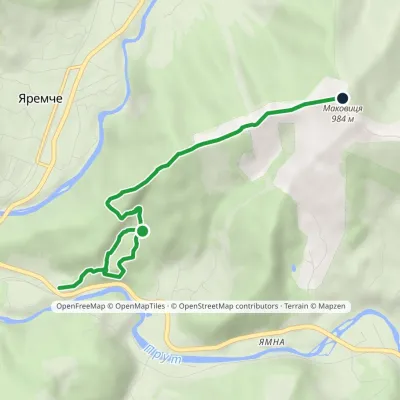 EasyOne-dayMarkedYaremche Mount MakovytsiaElevation profile555–984 m5.1 kmascent 460 m≈ 2 h walking
 ModerateOne-dayYaremche loopvia Dovbush Rocks, Mount MakovytsiaElevation profile552–984 m10.4 kmascent 494 m≈ 3.5 h walking
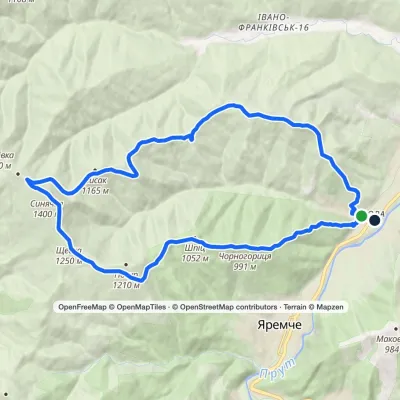 HardTwo-dayMarkedDora hamlet loopvia Bilyi Kamin rock, Mount Syniachka +1Elevation profile484–1 400 m23 kmascent 1 019 m≈ 8 h walking
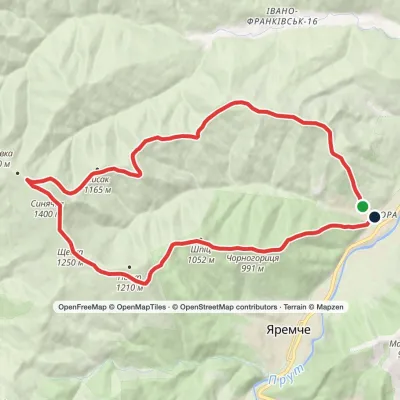 HardTwo-dayMarkedDora village loopvia Mount Bilyi Kamin, Mount SyniachkaElevation profile488–1 400 m23 kmascent 961 m≈ 7.5 h walking
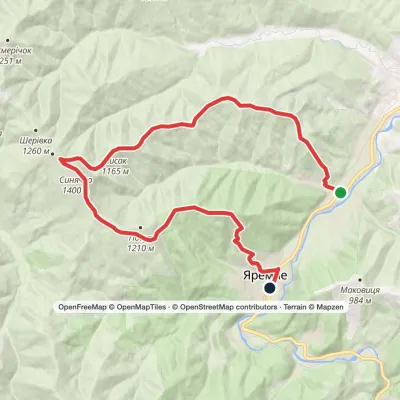 HardTwo-dayMarkedDora village to Yaremchevia Mount Syniachka, the Chornohorytsia ridgeElevation profile480–1 400 m22.5 kmascent 1 045 m≈ 7.5 h walking
 HardMulti-dayMarkedDora village to Yaremchevia Mount Syniachka, Chornohorytsia polonynaElevation profile487–1 400 m26.1 kmascent 972 m≈ 8.5 h walking
 EasyOne-dayMarkedYaremche, Dovbush Rocks and Mount Makovytsia to YaremcheElevation profile545–984 m8.3 kmascent 441 m≈ 3 h walking
Peaks and meadows
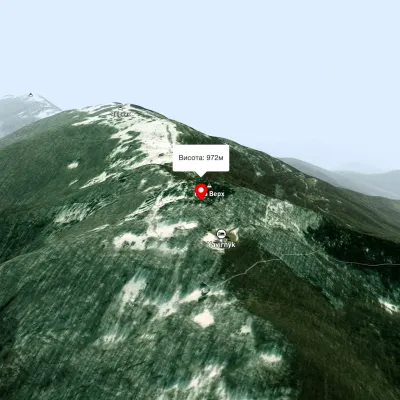 PeakMount Judah TopRuskyi Mocharaltitude 972 mThe top of Mount Judah Top is 972 meters above sea level. The nearest settlements are: Ruskyi Mochar (2.1 km), Sil (4...
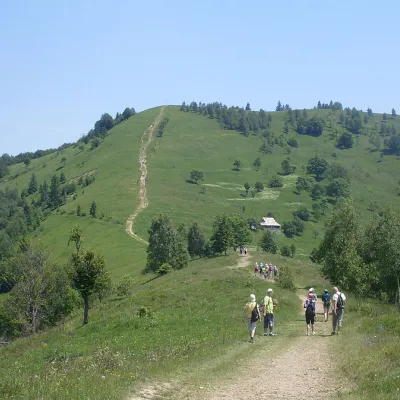 Mountain meadowMount Makovytsia, YaremcheYaremchealtitude 984 m · Gorgany range7 trails to the topMakovytsia (984 m) is a mountain of the Gorgany range on the eastern edge of Yaremche, in the Carpathian National...
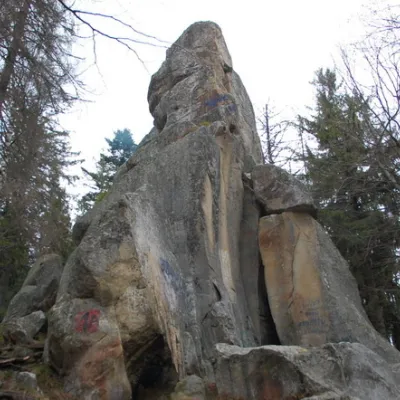 PeakWhite Stone RockDoraaltitude 538 m7 trails to the topThe White Stone Rock is located in the village of Dora in the Carpathians and is one of the most prominent natural...
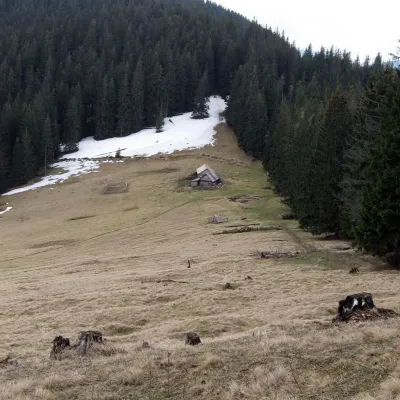 Mountain meadow1 150 mPolonyna Bukovyna (Kukul Ridge)VoronenkoPolonyna Bukovyna, often called Bukovynka, lies on the north-western section of the Kukul ridge, south of Vorokhta...
 Mountain meadow674 mPolonyna Rosokhata (Sheshory)SheshoryWhy is the meadow called "Rosokhata"? The two parts of the field that form the branches look like dewdrops.
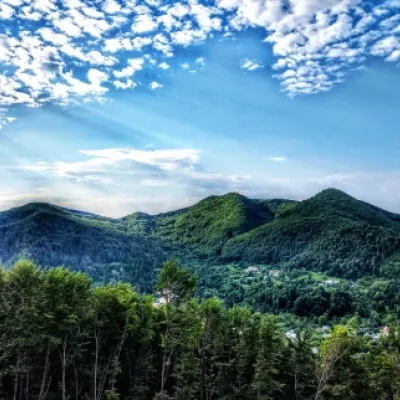 PeakMount Sopka (Stizhky, Zinyakov top).Kosivaltitude 620 m2 trails to the topStizhki (620 meters) offers a panoramic view of the city of Kosiv. The mountain is covered with forests - beech,...
Waters and waterfalls
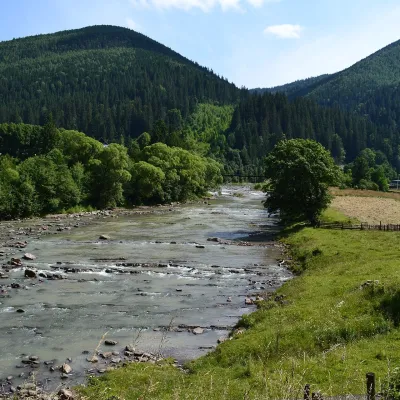 RiverChorna Tysa RiverYasinyaThe Chorna Tysa is a mountain river in eastern Zakarpattia. It rises on the northern spurs of the Svydovets massif...
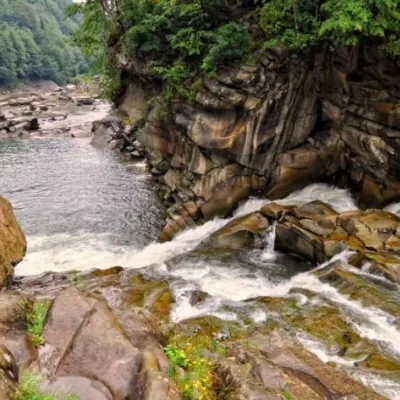 WaterfallProbiy waterfall, YaremcheYaremcheProbiy Waterfall is located in the heart of the Carpathian Mountains, in the city of Yaremche.
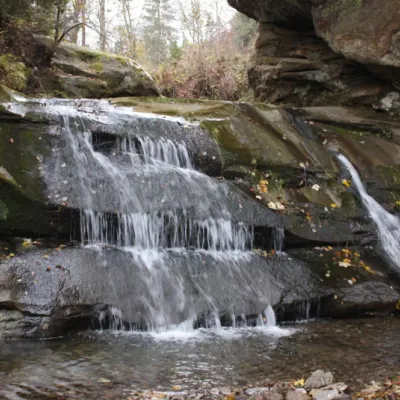 WaterfallBukovets-Bezulkivskyi Huk waterfall (Ternoshorsky)YavorivTernoshorsky Huk is a waterfall in the Ukrainian Carpathians (in the Pokutsko-Bukovyna Carpathians).
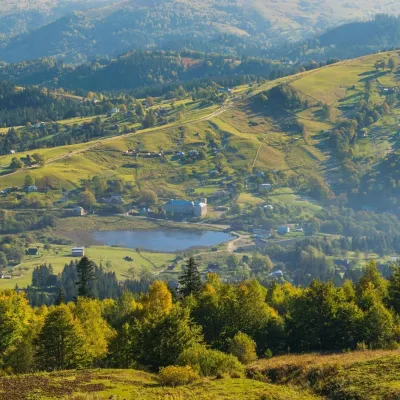 LakeLake Bukovets (Bukovetsky Pass)BukovetsThe large lake Bukivets is located on the border of Kosiv and Verkhovyna districts.
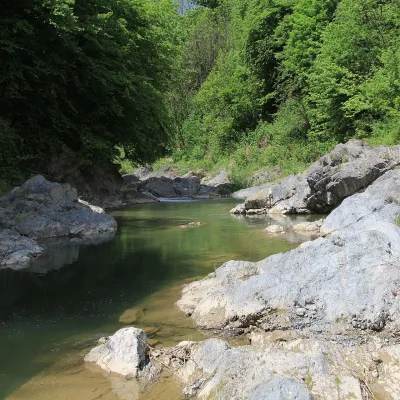 RiverPistynka RiverPistynThe Pistynka is a 56-km mountain tributary of the Prut. It rises on the eastern slopes of Mount Versalem in the...
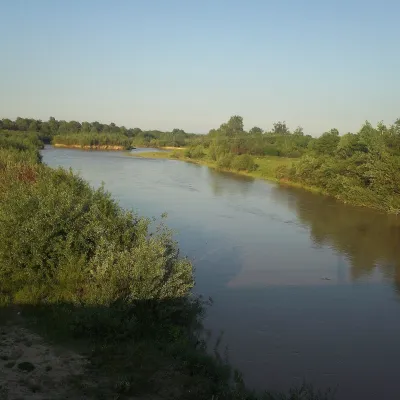 RiverSiret RiverBerehometThe Siret is a major Danube tributary 682 km long, but only its first 123 km lie in Ukraine.
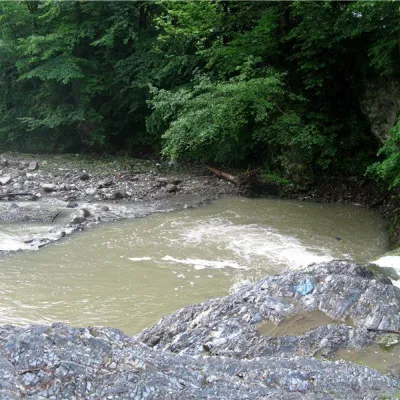 RiverVyzhenka RiverVyzhenkaTheriver Vyzhenka is located in the village of the same name in the Chernivtsi region.
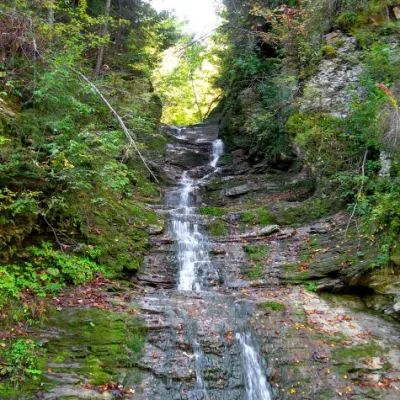 WaterfallBukovinian (Smugar) waterfallsRoztokyA picturesque chain of waterfalls, up to two kilometers long, stretches along the Smuhariv River in Bukovyna, in the...
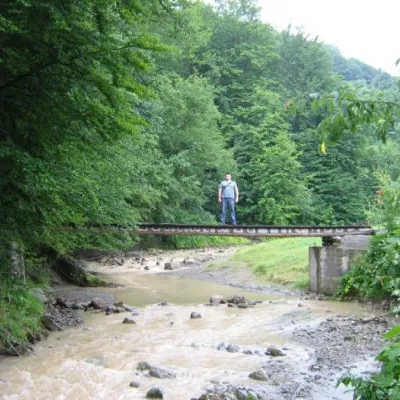 WaterfallMikva waterfallVyzhenkaThe Mykva Waterfall is a small but very picturesque waterfall located in the village of Vyzhenka, Chernivtsi region.
Mountain ranges: In other countries: 🇸🇰 Strážov Mountains, 🇨🇿 White Carpathians, 🇸🇰 Slovak Central Mountains, 🇸🇰 Low Tatras, 🇸🇰 Greater Fatra, 🇸🇰 Štiavnica Mountains, 🇸🇰 Lesser Fatra, 🇸🇰 Slovak Ore Mountains, 🇸🇰 Kysuce Beskids, 🇸🇰 Slovak Paradise, 🇸🇰 Vtáčnik Mountains, 🇸🇰 Javorníky, 🇨🇿 Moravian-Silesian Beskids, 🇸🇰 Kremnica Mountains
Trails and peaks near which naturalists recorded the species (GBIF, iNaturalist), matched by altitude and habitat. Sightings are not guaranteed.
Sources
- Вікіпедія: Пізньоцвіт осінній
- Wikipedia (en): Colchicum autumnale
- Wikipedia (en): Allium ursinum
- Наказ Міндовкілля від 15.02.2021 № 111: Перелік видів рослин та грибів, що заносяться до Червоної книги України
- GBIF: список рослин і грибів Червоної книги України за наказом № 111 (з категоріями)
GBIF · iNaturalist · Wikidata · Distribution data: GBIF.org (CC0 and CC BY records), iNaturalist; names and identifiers: Wikidata (CC0). Text: Karpaty.rocks, checked 09.11.2026.
