Mountain arnica
For information only, not medical advice. Do not self-medicate — consult a doctor. Many Carpathian medicinal plants are protected and must not be collected.
About
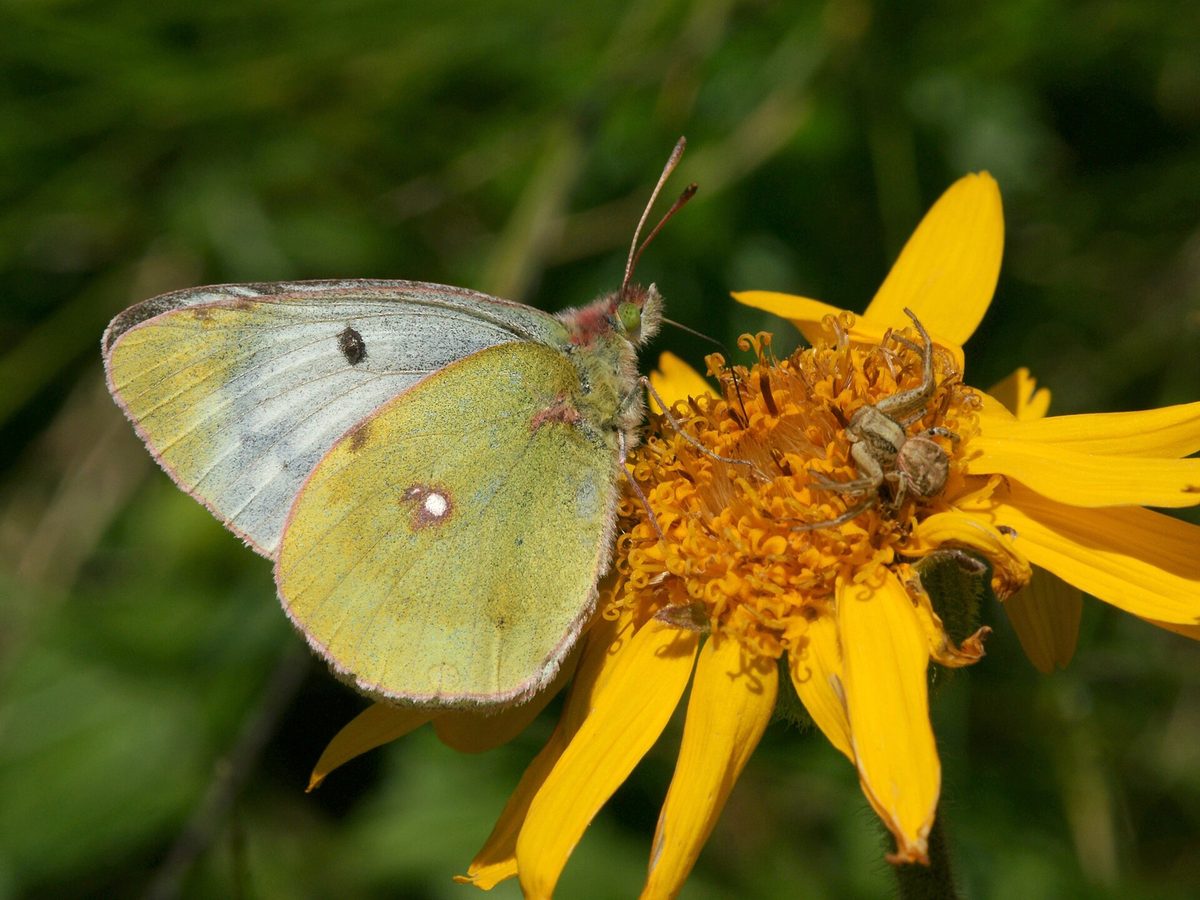
Mountain arnica is one of the most well-known medicinal plants of the Carpathians. In Ukraine, it grows only here: on polonynas, mountain meadows, forest clearings, and edges, from about 500 m above sea level to the highest peaks. It is known in Chornohora, Svydovets, in the Marmarosh, Gorgany, and Beskids.
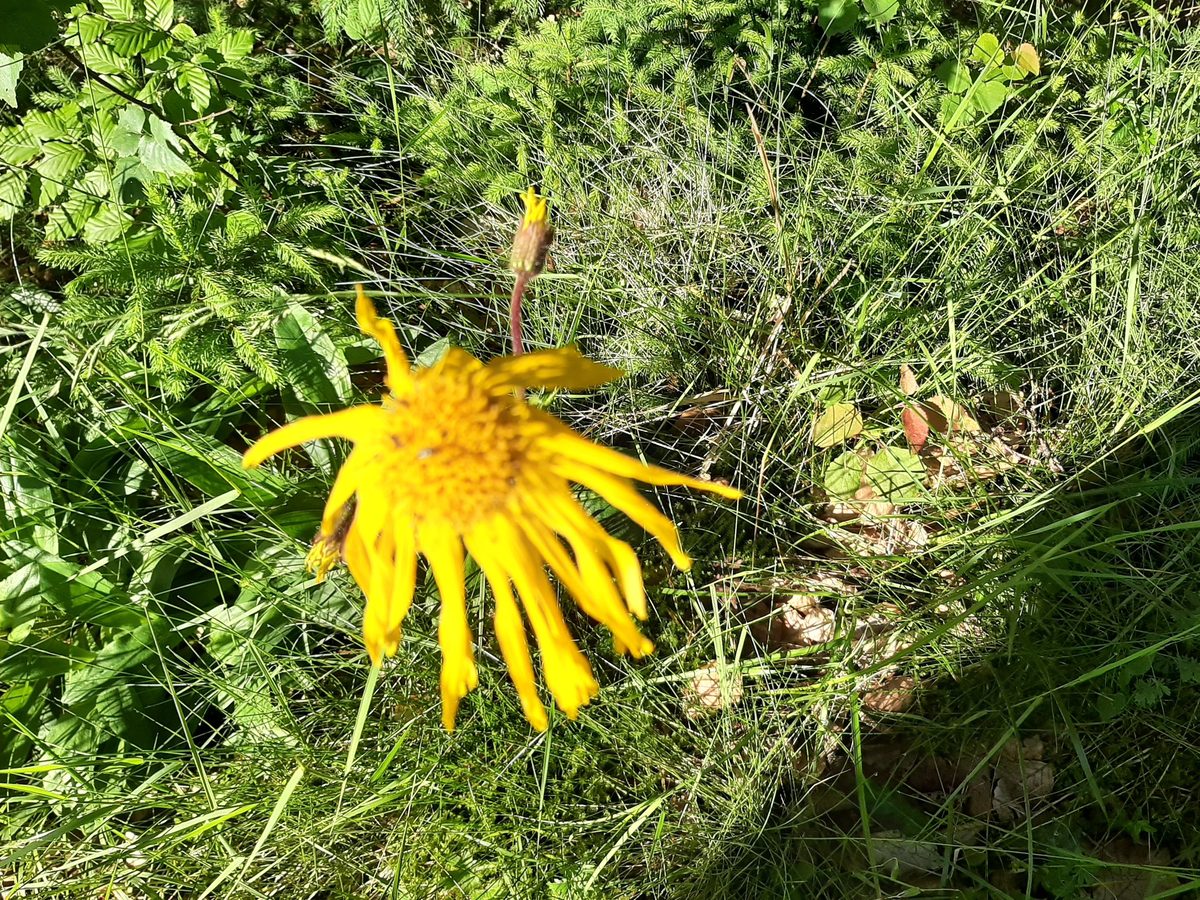
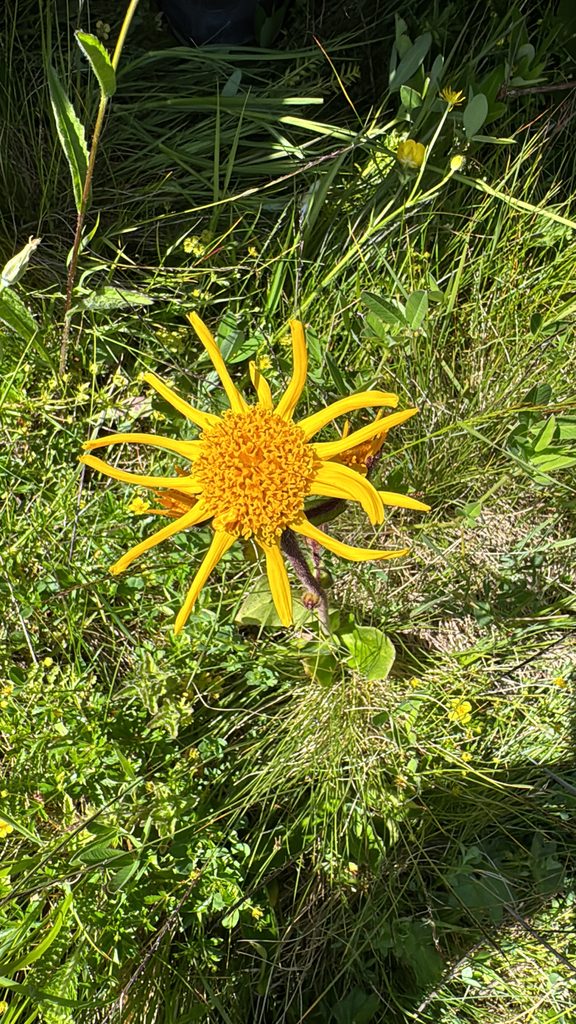
The plant is 20–60 cm tall. At the base, there is a rosette of two to four pairs of elongated leaves, and on the stem, there is only one or two pairs of small opposite leaves. The flower heads are large, 6–8 cm in diameter, golden-yellow or orange, with long ligulate flowers and slightly frayed edges. It blooms in June - July, and the fruits ripen in late July - August.
Arnica is closely linked to traditional farming: it thrives on polonynas that are mowed and grazed each year. If mowing and grazing stop, the meadows become overgrown with shrubs, and arnica disappears. At the same time, the perennial harvesting of flowers and rhizomes has depleted natural supplies.
Interestingly, mountain arnica was included in the Red Book of Ukraine in the 1996 edition, but it was excluded in 2009: according to experts, the harvesting at that time did not harm it, while the main threat was the overgrowth of polonynas. It is also absent from the current list of 2021. However, it is included in Annex V of the EU Habitats Directive, and in Poland, it is protected.
On the trail, it is better to simply admire arnica and take photos of it. In reserves and protected areas of national parks, such as the Carpathian Biosphere Reserve, collecting it is prohibited.
Where in the Carpathians

The map shows where naturalists recorded the species (GBIF, CC0 and CC BY records), not every place it lives. The Ukrainian Carpathians are less studied, so a blank area does not mean the species is absent. For rare and vulnerable species the map is deliberately coarse (hexagons of ~250 km² or more) so that it never points to dens, nests or growing sites.
- Countries
- Ukraine · Romania · Hungary · Czechia
- Mountain ranges
- Chornohora, Maramureș Mountains, Krasna Polonyna, Gorgany, Skole Beskids, Bihor-Vlădeasa Mountains, Rivna Polonyna, Hryniava Mountains, Pokuttia-Bukovina Carpathians, Watershed Ridge
- Altitude belts
- Beech forests (600–1200 m) · Conifer forests (1200–1600 m)
When to see it
| Jan | Feb | Mar | Apr | May | Jun | Jul | Aug | Sep | Oct | Nov | Dec | |
|---|---|---|---|---|---|---|---|---|---|---|---|---|
| Flowering |
From naturalists’ observations in the Carpathians (iNaturalist, research grade): the darker the cell, the more often the species is seen that month.
Safety
Mountain arnica is not consumed internally: the plant contains toxic helenalin. It may cause allergic reactions on the skin.
In folk tradition
In folk tradition, arnica flowers were used only for external remedies. It is not consumed internally.
Protection and rules
Since 2009, it is not included in the Red Book of Ukraine; collecting in reserves and protected areas of national parks is prohibited. Supplies are depleted — better to admire.
FAQ
Is mountain arnica listed in the Red Book of Ukraine?
No, it is not. Mountain arnica was in the Red Book of Ukraine in 1996, but it was excluded in the 2009 edition, and it is not in the current list of 2021. However, collecting it is prohibited in reserves and national parks, and natural supplies are depleted.
When does arnica bloom in the Carpathians?
In June - July, in polonynas and mountain meadows.
Where does arnica grow in Ukraine?
Only in the Carpathians: in Chornohora, Svydovets, in the Marmarosh, Gorgany, and Beskids, from about 500 m above sea level to the highest peaks.
Similar species
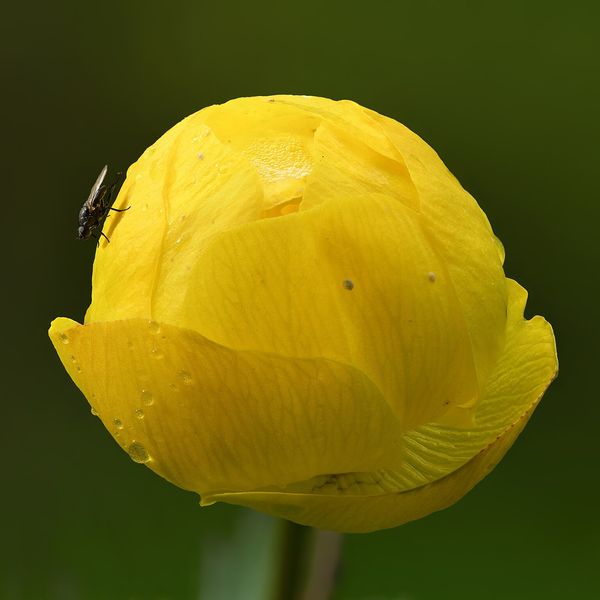
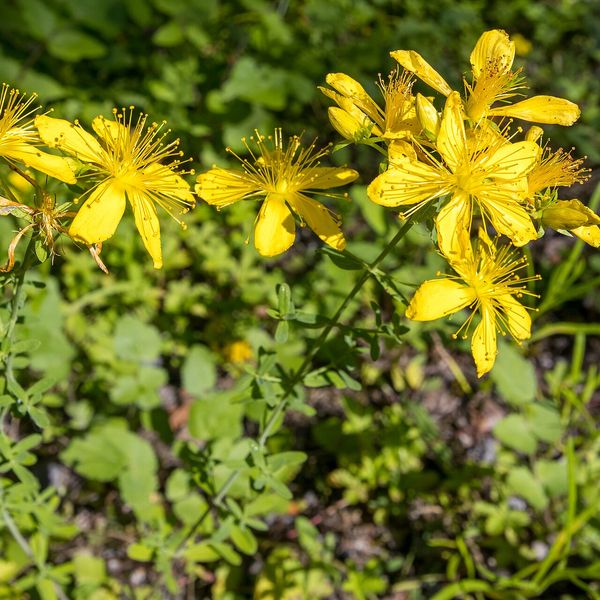
Where to meet it
Ranges where it occurs: Chornohora, Maramureș Mountains, Krasna Polonyna, Gorgany, Skole Beskids, Rivna Polonyna, Hryniava Mountains, Pokuttia-Bukovina Carpathians, Watershed Ridge, Bieszczady, Svydovets, Chyvchyn Mountains. In other countries: 🇷🇴 Bihor-Vlădeasa Mountains, 🇷🇴 Piatra Craiului
Trails and peaks near which naturalists recorded the species (GBIF, iNaturalist), matched by altitude and habitat. Sightings are not guaranteed.
Sources
- Вікіпедія: Арніка гірська
- Wikipedia (en): Arnica montana
- Червона книга України (2009), передмова: чому арніку гірську виведено з Червоної книги
- Наказ Міндовкілля від 15.02.2021 № 111: Перелік видів рослин та грибів, що заносяться до Червоної книги України
- GBIF: список рослин і грибів Червоної книги України за наказом № 111 (з категоріями)
- Директива Ради 92/43/ЄЕС про збереження природних оселищ (консолідований текст, додатки II, IV, V)
- Kobiv Y. et al. Distribution and population status of rare plant species in the Marmarosh Mountains. Ukr. Bot. J., 2017, 74(2): 163–176
- EMA/HMPC: монографія Arnicae flos
GBIF · iNaturalist · Wikidata · Distribution data: GBIF.org (CC0 and CC BY records), iNaturalist; names and identifiers: Wikidata (CC0). Text: Karpaty.rocks, checked 09.11.2026.
