Globeflower
This plant is poisonous: do not taste or pick it, and wash your hands after touching it. In case of poisoning call 112 (103 in Ukraine).
About
Globeflower is a decoration of wet Carpathian meadows in late spring and early summer. It grows in damp hayfields, forest clearings, along streams, and on polonynas, ascending from the foothills to the subalpine zone. In the high mountains, globeflower blooms later than in the valleys.
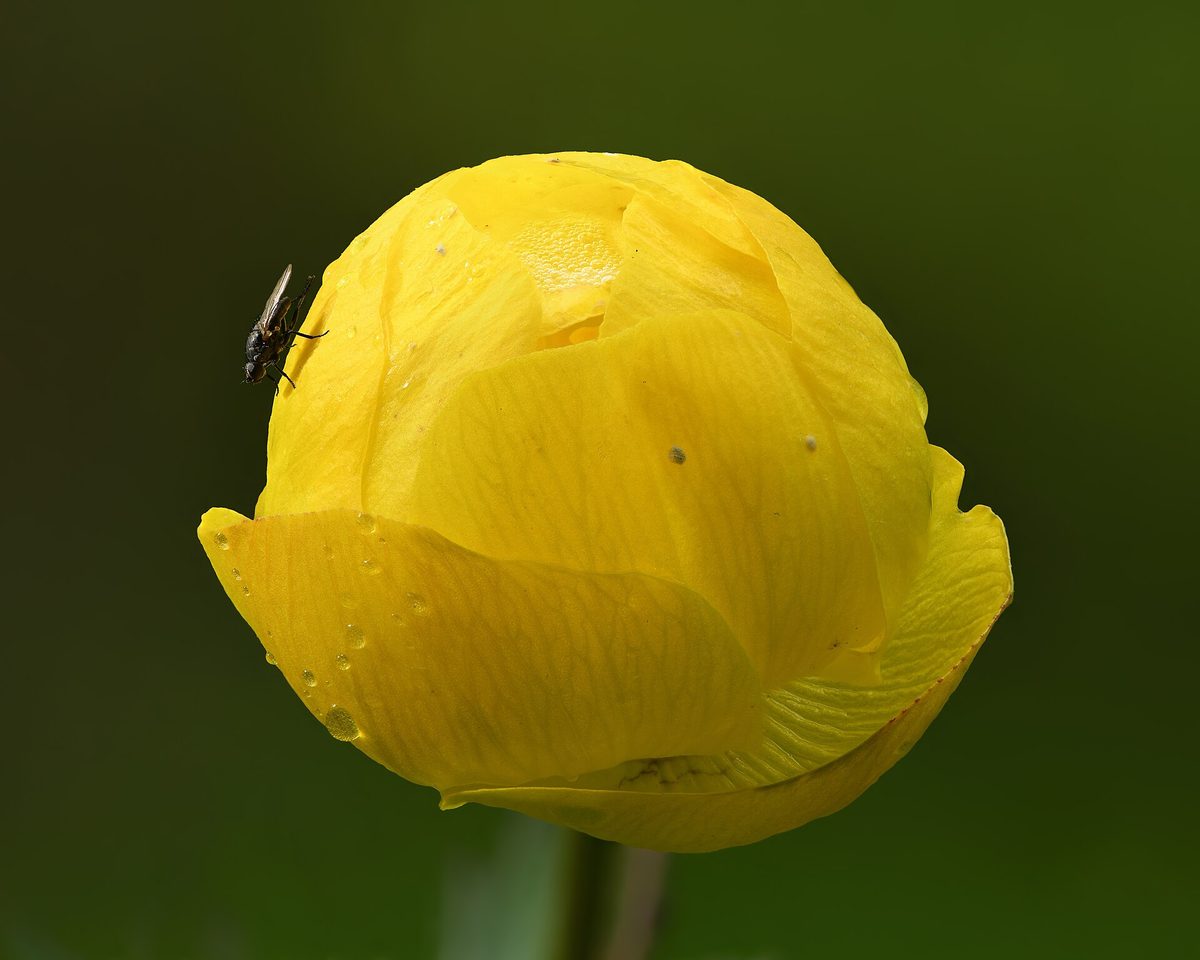
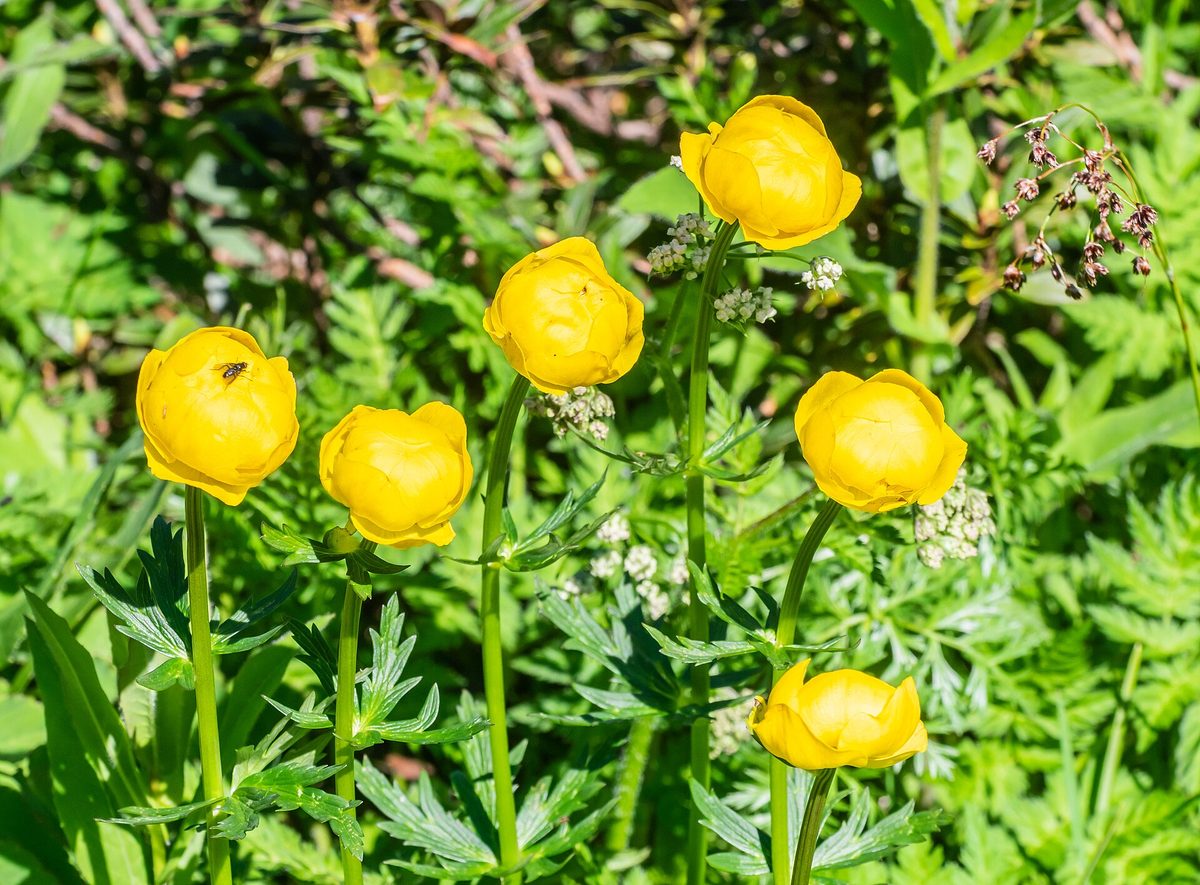
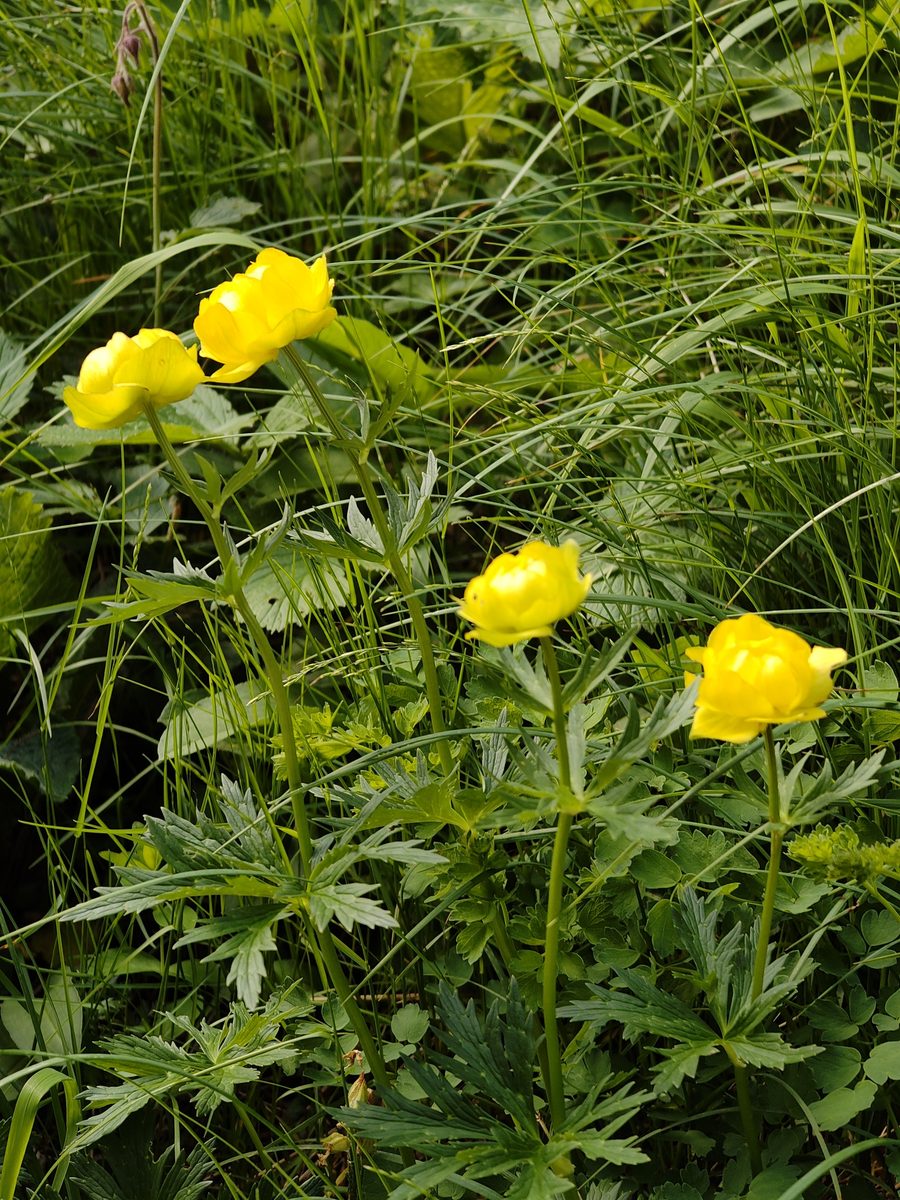
The plant is 30–70 cm tall with a straight, sparsely branched stem at the top. The leaves are palmately divided, with deeply cut lobes, resembling a paw print — hence the folk name 'wolf's paw'. The flowers are large, up to 3–5 cm, lemon or golden-yellow, globular: numerous petal-like sepals are tightly closed, so the flower almost never fully opens. Only small insects can enter to pollinate the plant.
Globeflower blooms from May to July. Like many plants in the buttercup family, it is poisonous: the fresh sap irritates the skin and mucous membranes. Bouquets of globeflower should not be collected with children.
Globeflower is not listed in the current Red Book of Ukraine, but it is highly dependent on wet meadows that are mowed. When hayfields are plowed, drained, or overgrown, the plant disappears. It is best to photograph it without picking: this way it will return to the same meadows every year.
Where in the Carpathians

The map shows where naturalists recorded the species (GBIF, CC0 and CC BY records), not every place it lives. The Ukrainian Carpathians are less studied, so a blank area does not mean the species is absent.
- Countries
- Slovakia · Romania · Ukraine · Poland · Hungary · Czechia
- Mountain ranges
- Greater Fatra, Strážov Mountains, Slovak Paradise, Low Tatras, Slovak Central Mountains, High Tatras, Lesser Fatra, Belianske Tatras, Kremnica Mountains, Choč Mountains
- Altitude belts
- Foothills (below 600 m) · Beech forests (600–1200 m) · Conifer forests (1200–1600 m)
When to see it
| Jan | Feb | Mar | Apr | May | Jun | Jul | Aug | Sep | Oct | Nov | Dec | |
|---|---|---|---|---|---|---|---|---|---|---|---|---|
| Flowering | ||||||||||||
| Fruit |
From naturalists’ observations in the Carpathians (iNaturalist, research grade): the darker the cell, the more often the species is seen that month.
Safety
The plant is poisonous; the fresh sap irritates the skin and mucous membranes. In case of suspected poisoning, call 103 (or 112).
Protection and rules
Not listed in the Red Book of Ukraine. Do not pick: the plant depends on wet meadows that are mowed.
FAQ
When does globeflower bloom in the Carpathians?
From May to July: earlier in the valleys, later on the polonynas.
Is globeflower poisonous?
Yes, like many buttercups, it is poisonous, and the fresh sap irritates the skin.
Recorded nearby
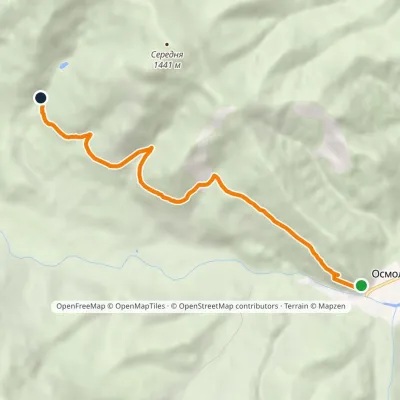 EasyOne-dayMarkedLower traverse of Arshytsia ridgeElevation profile793–1 044 m6.7 kmascent 295 m≈ 2.5 h walking
 EasyOne-dayMarkedOsmoloda Mount GorganElevation profile721–1 579 m9.6 kmascent 13 m≈ 2.5 h walking
 HardMulti-dayMarkedShepit village to Probiinivka villagevia Mount Yarovytsia, Mount Pnivie +1Elevation profile797–1 599 m59.4 kmascent 1 949 m
 HardMulti-dayMarkedShepit village to Shybene villagevia Mount Yarovytsia, Mount Pnivie +1Elevation profile849–1 599 m73.4 kmascent 2 319 m
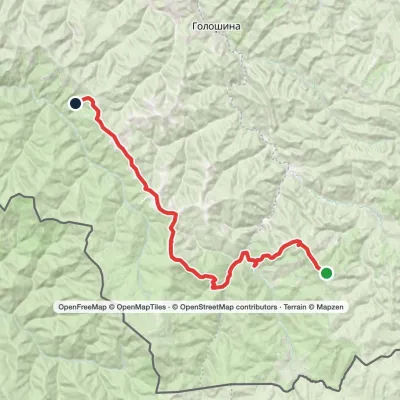 HardMulti-dayMarkedMount Yarovytsia to the Holy Trinity Monasteryvia the Pryluchnyi ridge, Mount PnivieElevation profile955–1 599 m32.5 kmascent 1 068 m≈ 10.5 h walking
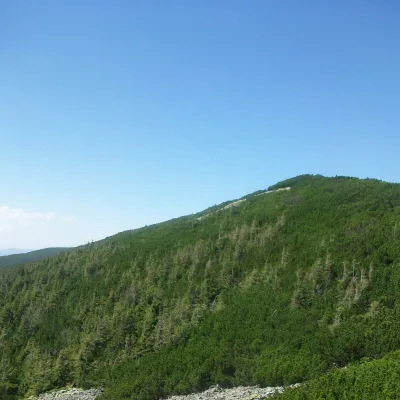 PeakMount TovstaZelenaaltitude 1 399 m · Gorgany rangeTovsta is a mountain in the Gorgany massif. It lies in the Nadvirna district of Ivano-Frankivsk Oblast, north-east of...
Trails and peaks near which naturalists recorded the species (GBIF, iNaturalist), matched by altitude and habitat. Sightings are not guaranteed.
Similar species
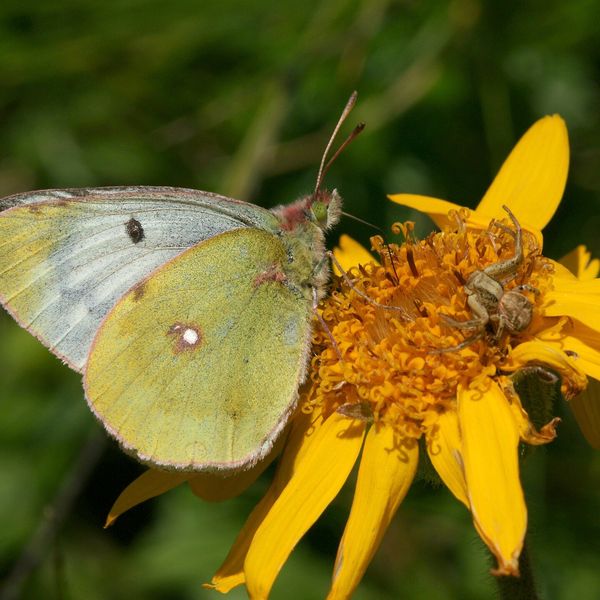
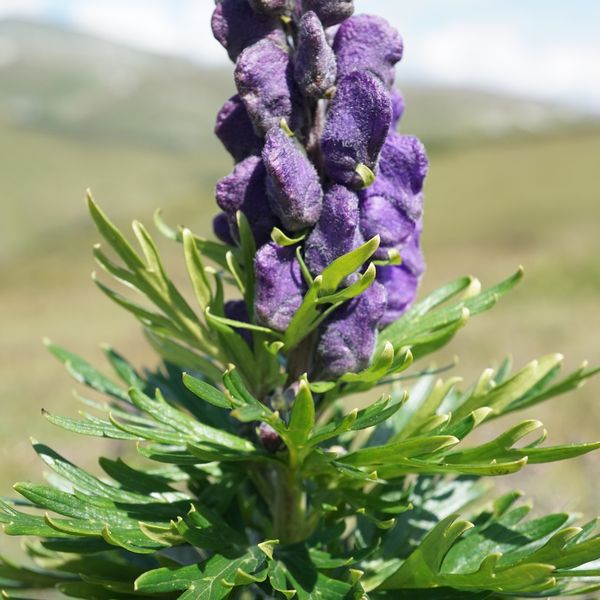
Sources
- Вікіпедія: Вовча лапа звичайна
- Wikipedia (en): Trollius europaeus
- Wikipedia (pl): Pełnik europejski
- GBIF: список рослин і грибів Червоної книги України за наказом № 111 (з категоріями)
GBIF · iNaturalist · Wikidata · Distribution data: GBIF.org (CC0 and CC BY records), iNaturalist; names and identifiers: Wikidata (CC0). Text: Karpaty.rocks, checked 09.11.2026.
