Great yellow gentian
For information only, not medical advice. Do not self-medicate — consult a doctor. Many Carpathian medicinal plants are protected and must not be collected.
About
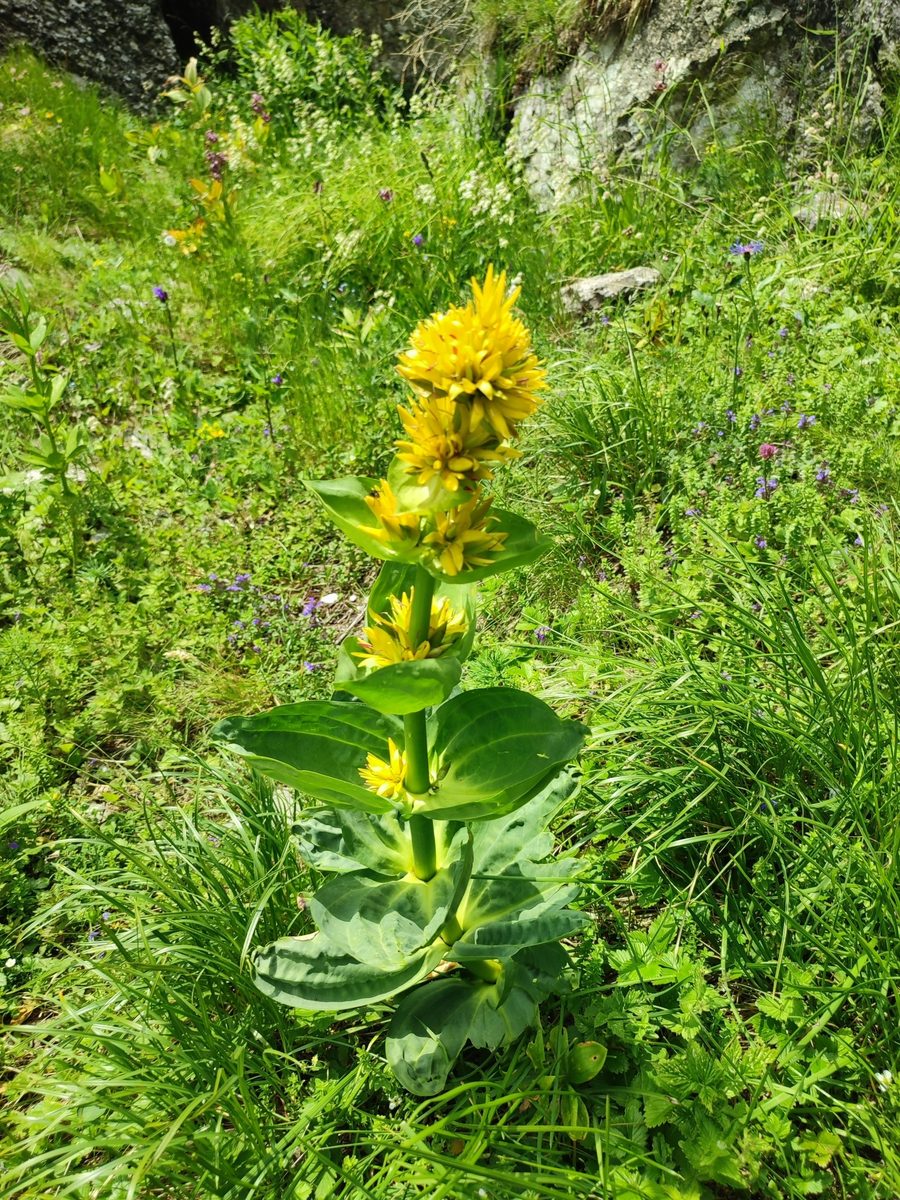
The Great yellow gentian is the largest of the Carpathian gentians and one of the rarest plants of the Ukrainian polonynas. It grows in subalpine meadows, in glacial cirques, and at the forest edge near the upper tree line. In the Ukrainian Carpathians, it is found in Chornohora, Svydovets, Gorgany, and Marmarosy, mainly at altitudes of 1200–2000 m.
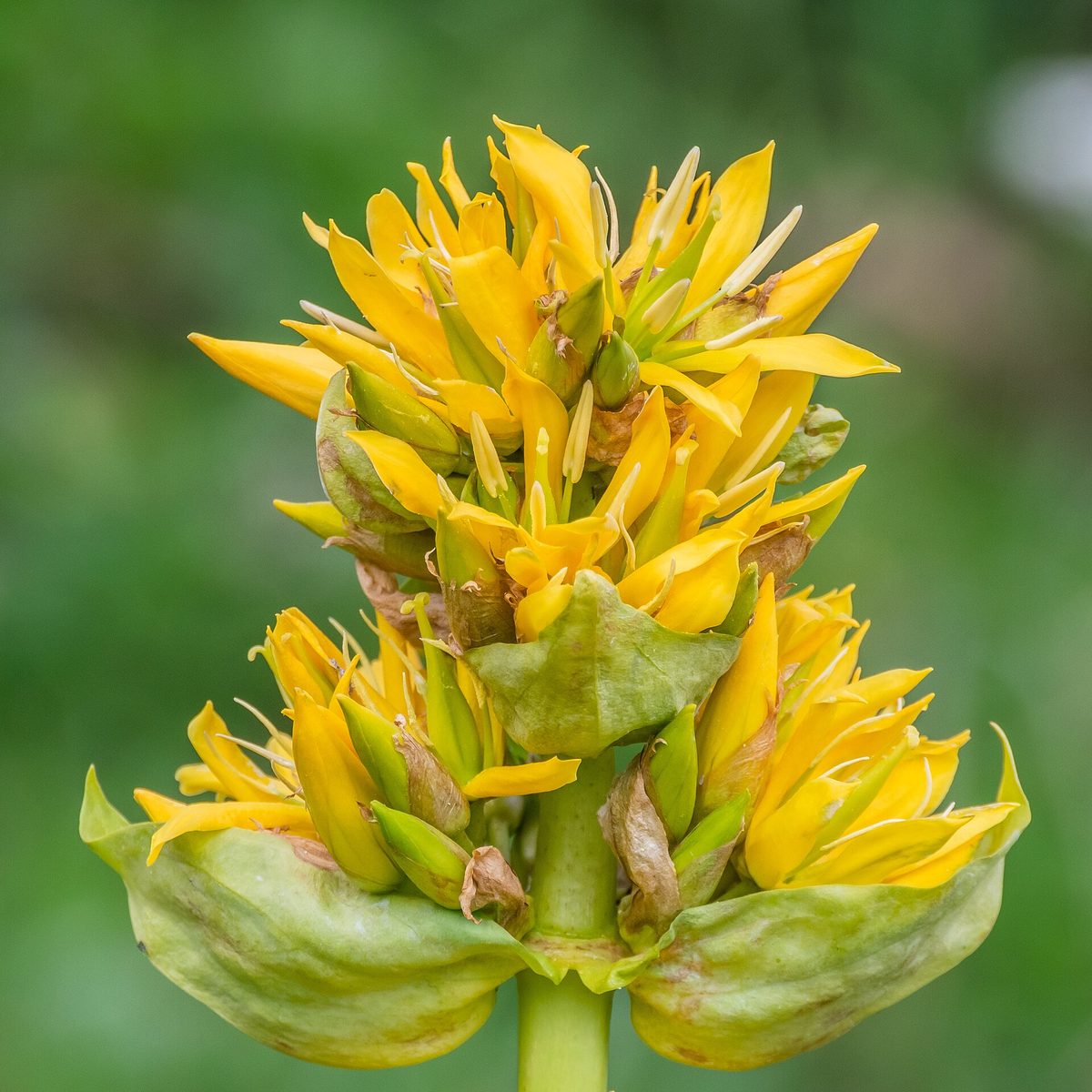
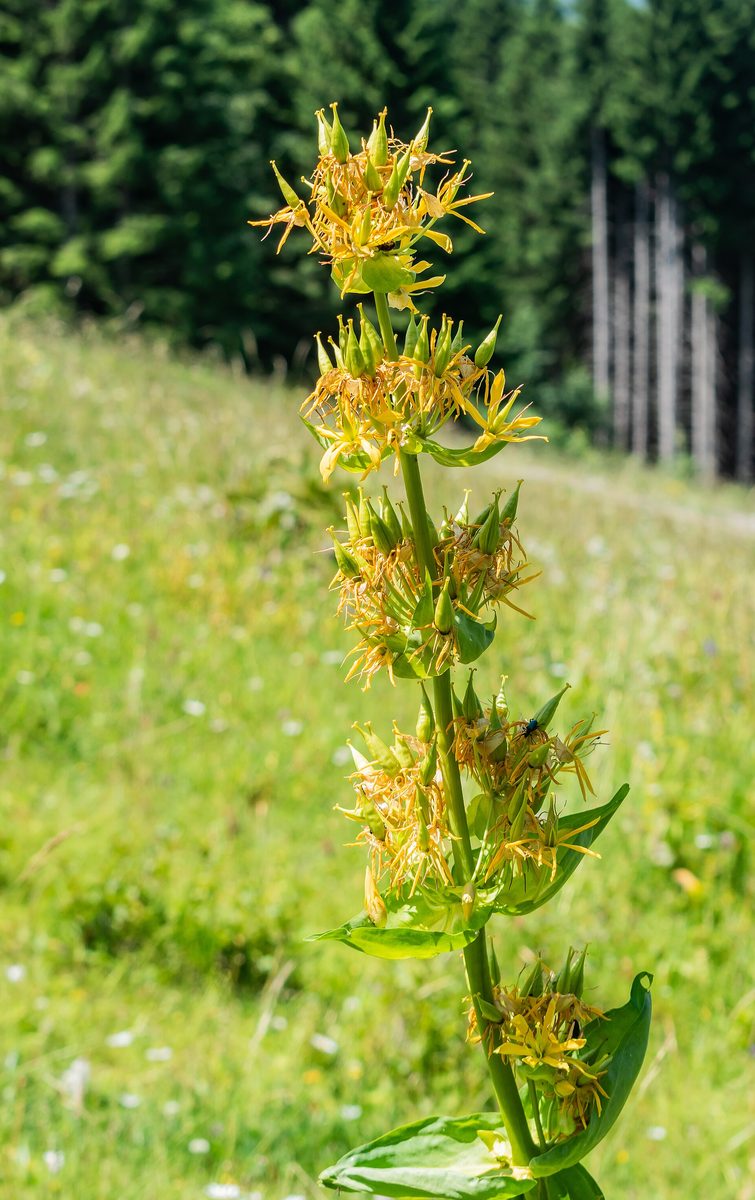
The plant is 60–120 cm tall with a thick, straight stem. The basal leaves are large, up to 30 cm long, oval, with 5–7 arching veins; the stem leaves are smaller, sessile, arranged oppositely in pairs. The flowers are bright yellow, star-shaped, gathered in clusters in the axils of the upper leaves, and seem to wrap around the stem in rings or layers. It blooms in July — August, and the seeds ripen in August — September. The root is thick and very bitter.
It is precisely because of the root that the gentian has become rare: it has long been extensively harvested for bitter tinctures, leading to a reduction in natural stocks. The species is now listed in the Red Book of Ukraine with the status of 'disappearing', as well as in Appendix V of the EU Habitats Directive.
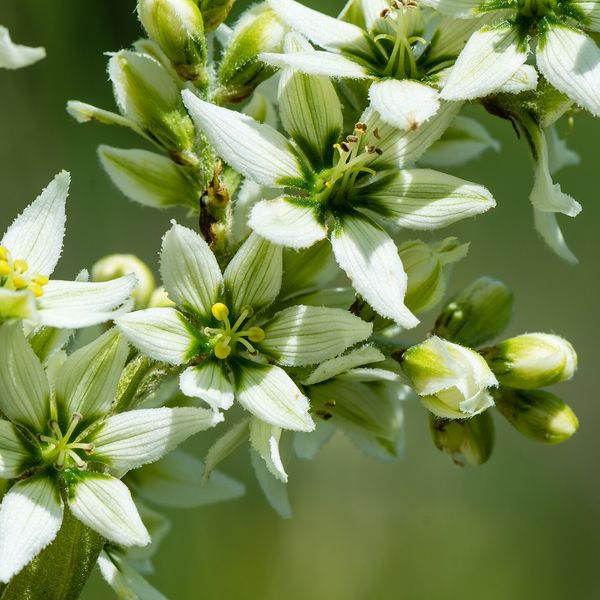
The Great yellow gentian must be carefully distinguished from white hellebore, which grows nearby in the same polonynas and has similarly broad leaves. Hellebore is deadly poisonous. In gentian, the leaves are opposite, smooth, with arching veins, while in hellebore, they are alternate, spirally arranged, folded, and hairy underneath. The gentian blooms yellow, while hellebore has whitish-green flowers in a raceme.
Where in the Carpathians

The map shows where naturalists recorded the species (GBIF, CC0 and CC BY records), not every place it lives. The Ukrainian Carpathians are less studied, so a blank area does not mean the species is absent. For rare and vulnerable species the map is deliberately coarse (hexagons of ~250 km² or more) so that it never points to dens, nests or growing sites.
- Countries
- Romania · Ukraine · Slovakia
- Mountain ranges
- Bucegi Mountains, Piatra Craiului, Chornohora, Maramureș Mountains, Hășmaș Mountains, Lesser Fatra, Skole Beskids, Svydovets
- Altitude belts
- Beech forests (600–1200 m) · Conifer forests (1200–1600 m) · Subalpine belt (1600–1900 m) · Alpine belt (above 1900 m)
When to see it
| Jan | Feb | Mar | Apr | May | Jun | Jul | Aug | Sep | Oct | Nov | Dec | |
|---|---|---|---|---|---|---|---|---|---|---|---|---|
| Flowering |
From naturalists’ observations in the Carpathians (iNaturalist, research grade): the darker the cell, the more often the species is seen that month.
Safety
Do not confuse with white hellebore: it is deadly poisonous and has similar leaves. The gentian is protected, so collecting any parts of the plant is prohibited.
Look-alikes — how to tell them apart
Leaves are alternate, spirally arranged, folded, and hairy underneath; flowers are whitish-green in a raceme. In gentian, leaves are opposite, smooth, with arching veins, and flowers are bright yellow.
In folk tradition
The root has traditionally been used for bitter tinctures. In Ukraine, wild plants are not harvested.
Protection and rules
Listed in the Red Book of Ukraine (disappearing). Enjoy observing, collecting is prohibited.
Admire, don’t pick: plants listed in the Red Data Book of Ukraine — and any plants in nature reserves and strictly protected zones of national parks — must not be collected.
FAQ
Is the Great yellow gentian listed in the Red Book of Ukraine?
Yes, in the current list of the Red Book of Ukraine, the Great yellow gentian has the status of 'disappearing'. Collecting it is prohibited.
How to distinguish the Great yellow gentian from white hellebore?
In gentian, the leaves are opposite, smooth, with arching veins, and the flowers are bright yellow. In hellebore, the leaves are alternate, folded, hairy underneath, and the flowers are whitish-green. Hellebore is deadly poisonous.
Similar species
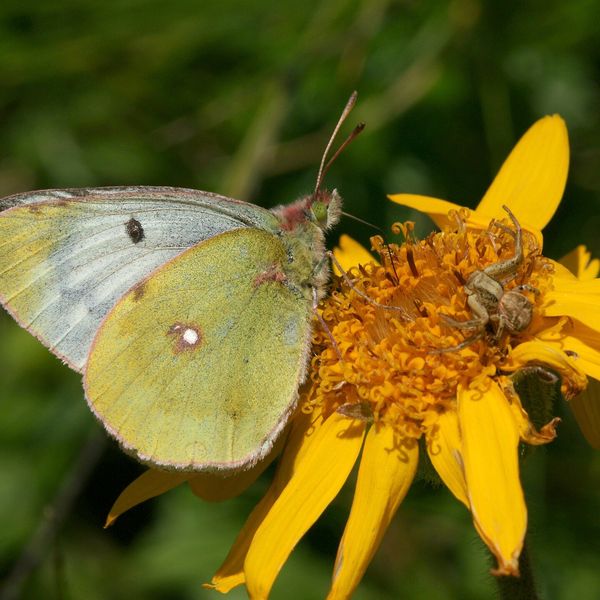
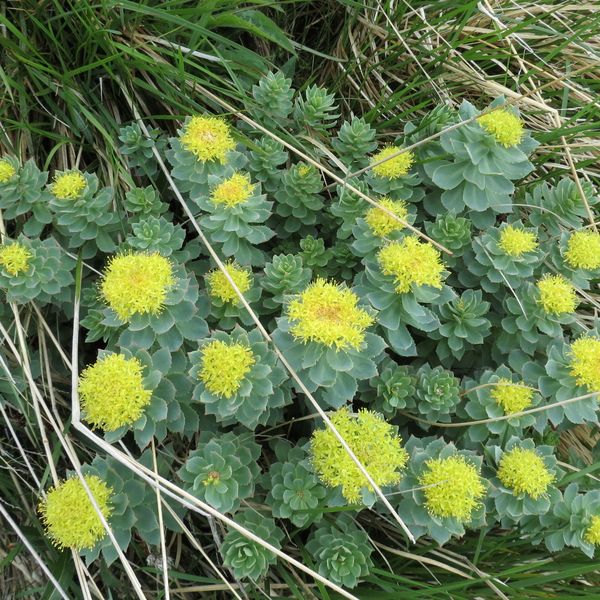
Where to meet it
Ranges where it occurs: Chornohora, Maramureș Mountains, Skole Beskids, Svydovets. In other countries: 🇷🇴 Bucegi Mountains, 🇷🇴 Piatra Craiului, 🇷🇴 Hășmaș Mountains, 🇸🇰 Lesser Fatra
Trails and peaks near which naturalists recorded the species (GBIF, iNaturalist), matched by altitude and habitat. Sightings are not guaranteed.
Sources
- Вікіпедія: Тирлич жовтий
- Wikipedia (en): Gentiana lutea
- Наказ Міндовкілля від 15.02.2021 № 111: Перелік видів рослин та грибів, що заносяться до Червоної книги України
- GBIF: список рослин і грибів Червоної книги України за наказом № 111 (з категоріями)
- Директива Ради 92/43/ЄЕС про збереження природних оселищ (консолідований текст, додатки II, IV, V)
- Kobiv Y. et al. Distribution and population status of rare plant species in the Marmarosh Mountains. Ukr. Bot. J., 2017, 74(2): 163–176
- Кульбанська С. С. Тирличі Українських Карпат (поширення Gentiana lutea)
- EMA/HMPC: монографія Gentianae radix
GBIF · iNaturalist · Wikidata · Distribution data: GBIF.org (CC0 and CC BY records), iNaturalist; names and identifiers: Wikidata (CC0). Text: Karpaty.rocks, checked 09.11.2026.
