Roseroot
For information only, not medical advice. Do not self-medicate — consult a doctor. Many Carpathian medicinal plants are protected and must not be collected.
About
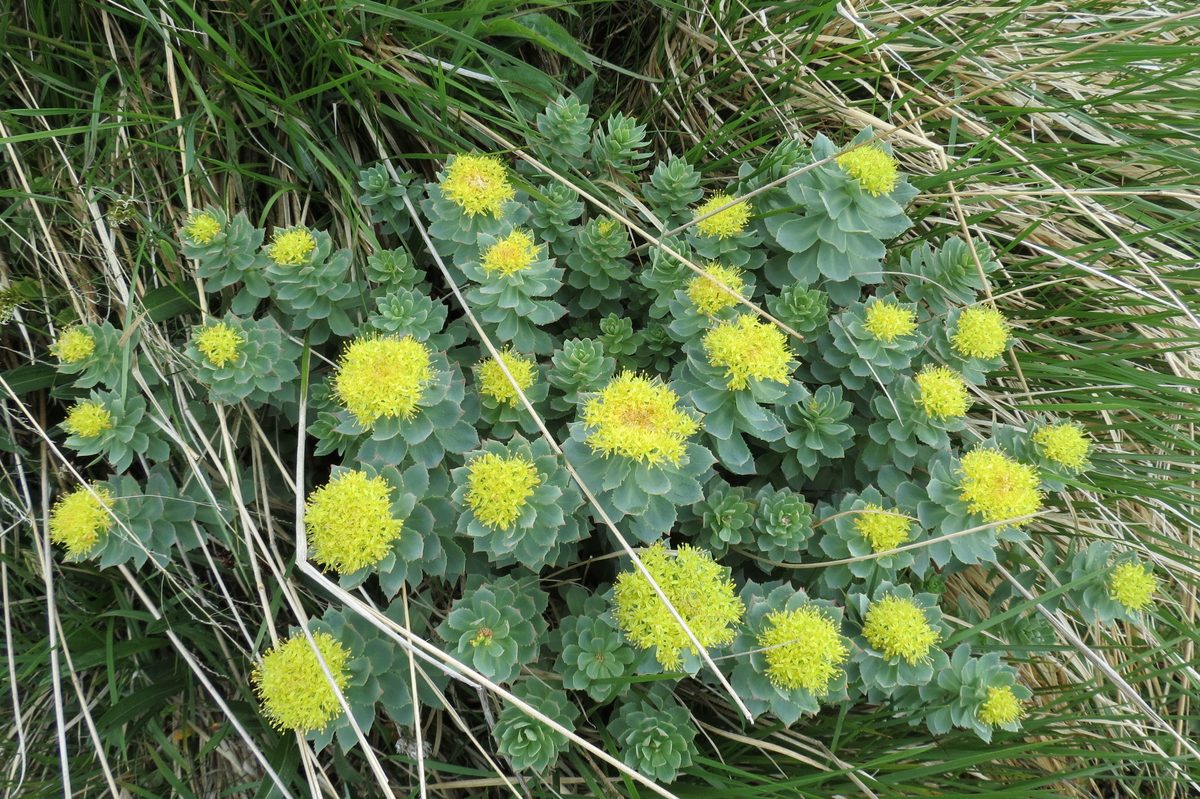
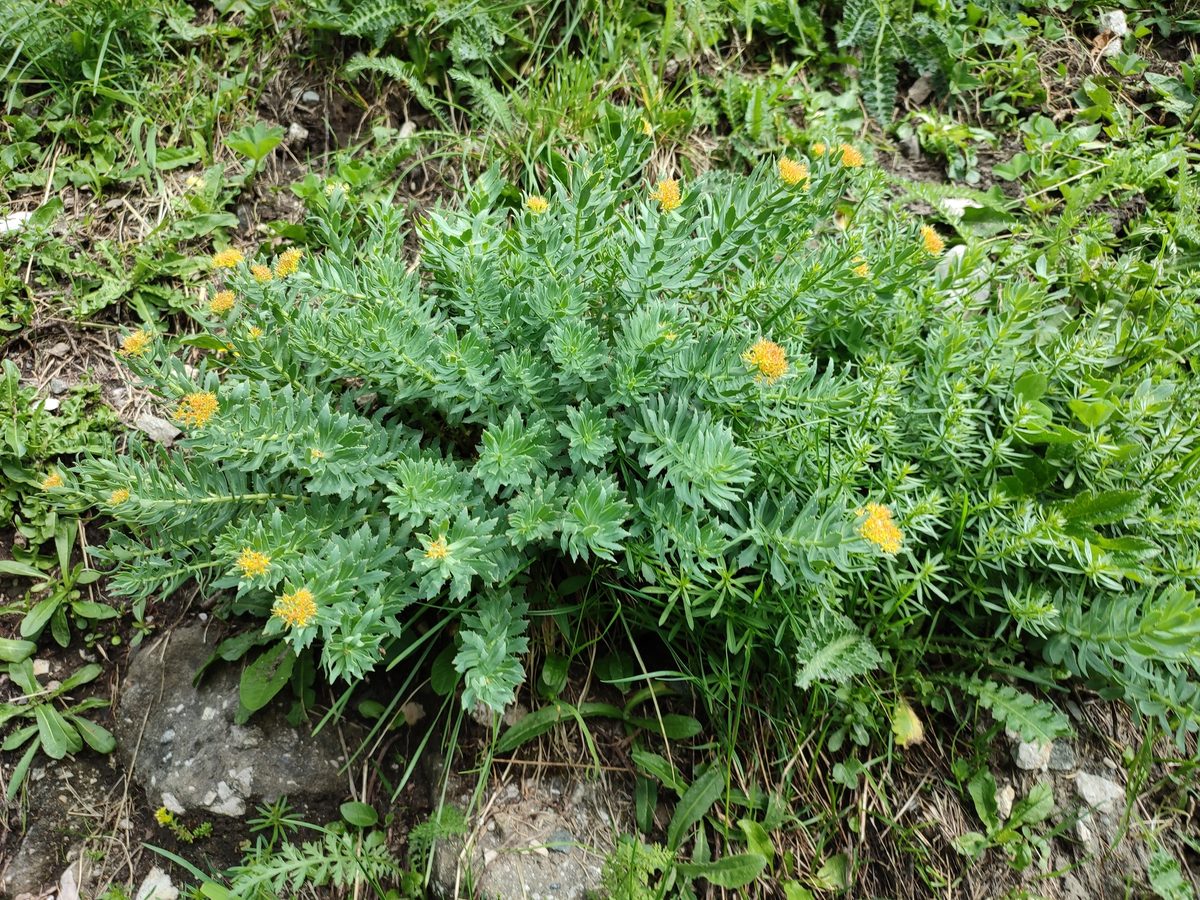
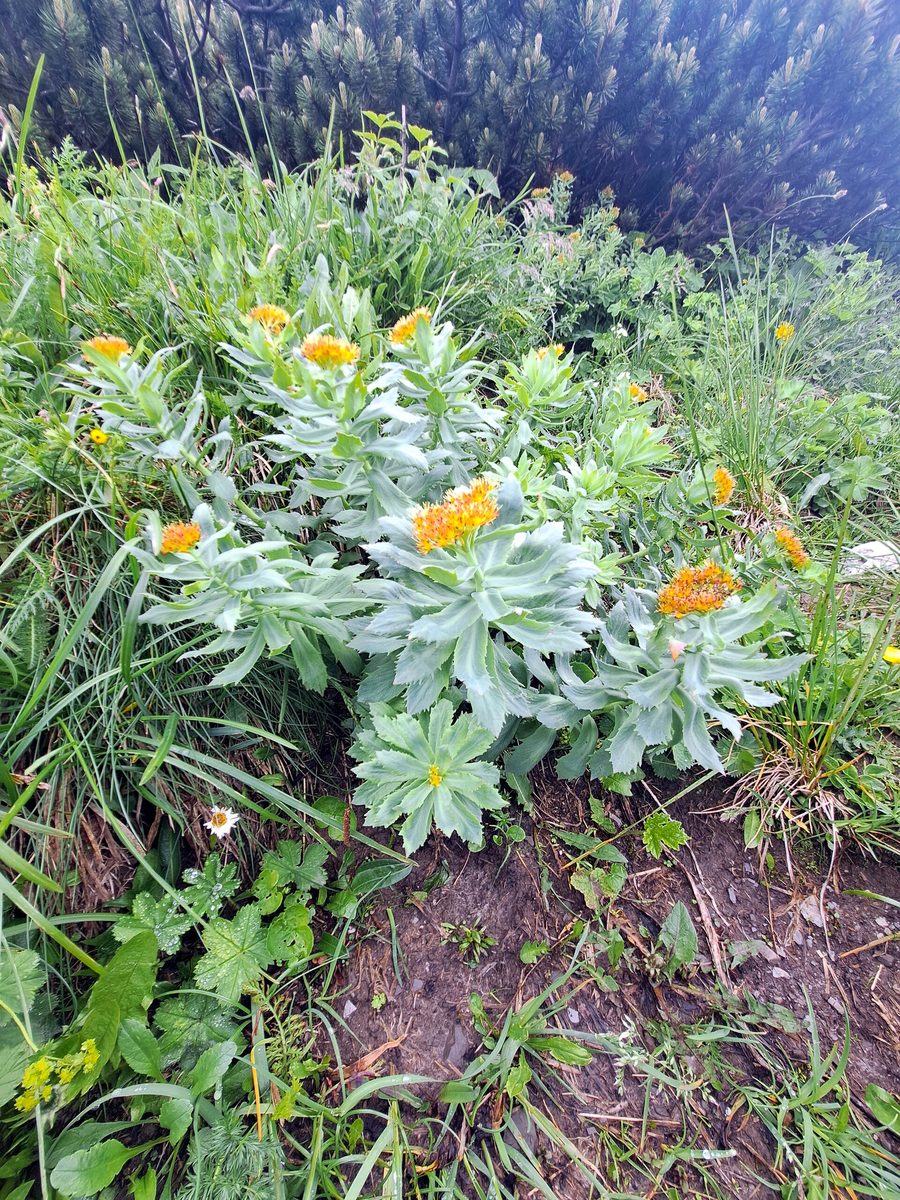
Rhodiola rosea, or Roseroot, is a resident of harsh high-altitude areas. In Ukraine, it grows only in the Carpathians, in the subalpine and alpine belts of the highest massifs, particularly on Chornohora and in the Maramureș Mountains. Its habitats include rocks, stony debris, moist ravines, and the banks of mountain streams.
This perennial plant of the Crassulaceae family reaches a height of 10–35 cm. From a thick rhizome, several upright stems grow, densely covered with fleshy bluish-green leaves with small teeth at the tips. The inflorescence is a dense cluster of small yellow flowers at the top of the stem. The plant is dioecious: male and female flowers are on different individuals. It blooms in June – July, and the seeds ripen in August – September.
The name "Roseroot" comes from the rhizome with a golden metallic sheen, while the Latin name rosea refers to the rose-like scent of the fresh cut.
Due to the rhizome, Rhodiola has found itself on the brink of extinction. Harvesters dug it up entirely, causing the plant to die without recovering. Researchers still document illegal harvesting today, particularly in the Maramureș Mountains. Therefore, Rhodiola rosea is listed in the Red Data Book of Ukraine with the status of "vulnerable": collecting it in the wild is prohibited. Raw materials for pharmacies are obtained only from plantations where the plant is successfully cultivated.
If you see Rhodiola on the rocks, take a photo of it, but do not publish exact coordinates: this helps protect the plant from poachers.
Where in the Carpathians

The map shows where naturalists recorded the species (GBIF, CC0 and CC BY records), not every place it lives. The Ukrainian Carpathians are less studied, so a blank area does not mean the species is absent. For rare and vulnerable species the map is deliberately coarse (hexagons of ~250 km² or more) so that it never points to dens, nests or growing sites.
- Countries
- Slovakia · Ukraine · Poland · Romania
- Mountain ranges
- High Tatras, Western Tatras, Belianske Tatras, Lesser Fatra, Low Tatras, Chornohora, Greater Fatra, Făgăraș Mountains, Svydovets, Babia Góra
- Altitude belts
- Conifer forests (1200–1600 m) · Subalpine belt (1600–1900 m) · Alpine belt (above 1900 m)
When to see it
| Jan | Feb | Mar | Apr | May | Jun | Jul | Aug | Sep | Oct | Nov | Dec | |
|---|---|---|---|---|---|---|---|---|---|---|---|---|
| Flowering | ||||||||||||
| Fruit |
From naturalists’ observations in the Carpathians (iNaturalist, research grade): the darker the cell, the more often the species is seen that month.
In folk tradition
The rhizome has traditionally been used in folk medicine by mountain peoples. In Ukraine, wild plants are not collected – raw materials are obtained only from plantations.
Protection and rules
Listed in the Red Data Book of Ukraine (vulnerable). Enjoy, collecting is prohibited. Do not publish exact locations.
Admire, don’t pick: plants listed in the Red Data Book of Ukraine — and any plants in nature reserves and strictly protected zones of national parks — must not be collected.
FAQ
Is it allowed to collect Roseroot in the Carpathians?
No. Rhodiola rosea is listed in the Red Data Book of Ukraine with the status of "vulnerable", so collecting it in the wild is prohibited. Raw materials are obtained from plantations.
Where does Rhodiola rosea grow in Ukraine?
Only in the Carpathians, in the high mountains of the highest massifs: on rocks, stony debris, and along mountain streams.
Similar species
Sources
- Вікіпедія: Оливник рожевий
- Wikipedia (en): Rhodiola rosea
- Наказ Міндовкілля від 15.02.2021 № 111: Перелік видів рослин та грибів, що заносяться до Червоної книги України
- GBIF: список рослин і грибів Червоної книги України за наказом № 111 (з категоріями)
- Kobiv Y. et al. Distribution and population status of rare plant species in the Marmarosh Mountains. Ukr. Bot. J., 2017, 74(2): 163–176
- EMA/HMPC: монографія Rhodiolae roseae rhizoma et radix
GBIF · iNaturalist · Wikidata · Distribution data: GBIF.org (CC0 and CC BY records), iNaturalist; names and identifiers: Wikidata (CC0). Text: Karpaty.rocks, checked 09.11.2026.
