Goat's beard
About
Goat's beard is one of the largest herbs in the Carpathian forest. In Ukraine, it is commonly found in the forests and among shrubs of the Carpathians and Prykarpattia, and sporadically in the western Polissia and Forest-Steppe. It is most often found in forests and among shrubs, in partial shade. As an ornamental plant, Goat's beard is also grown in gardens and parks.
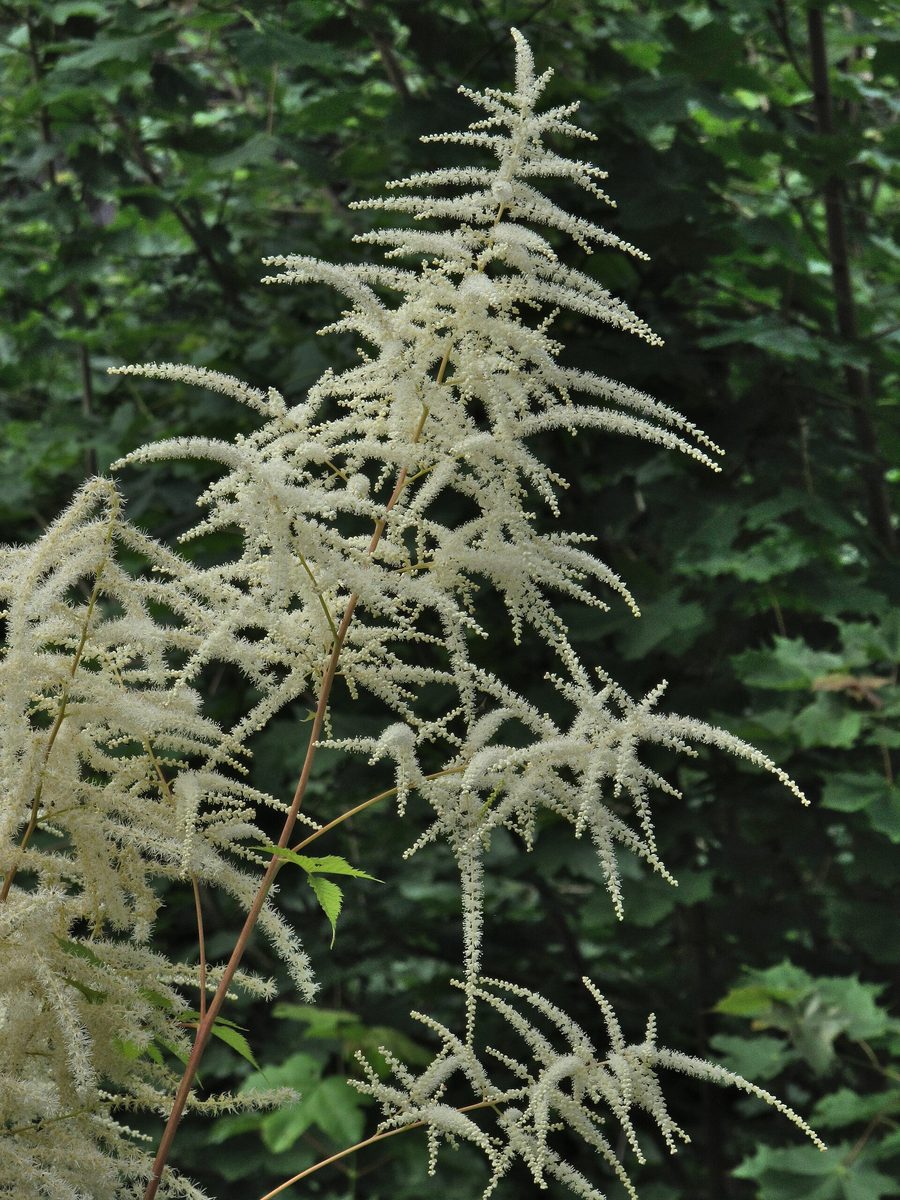
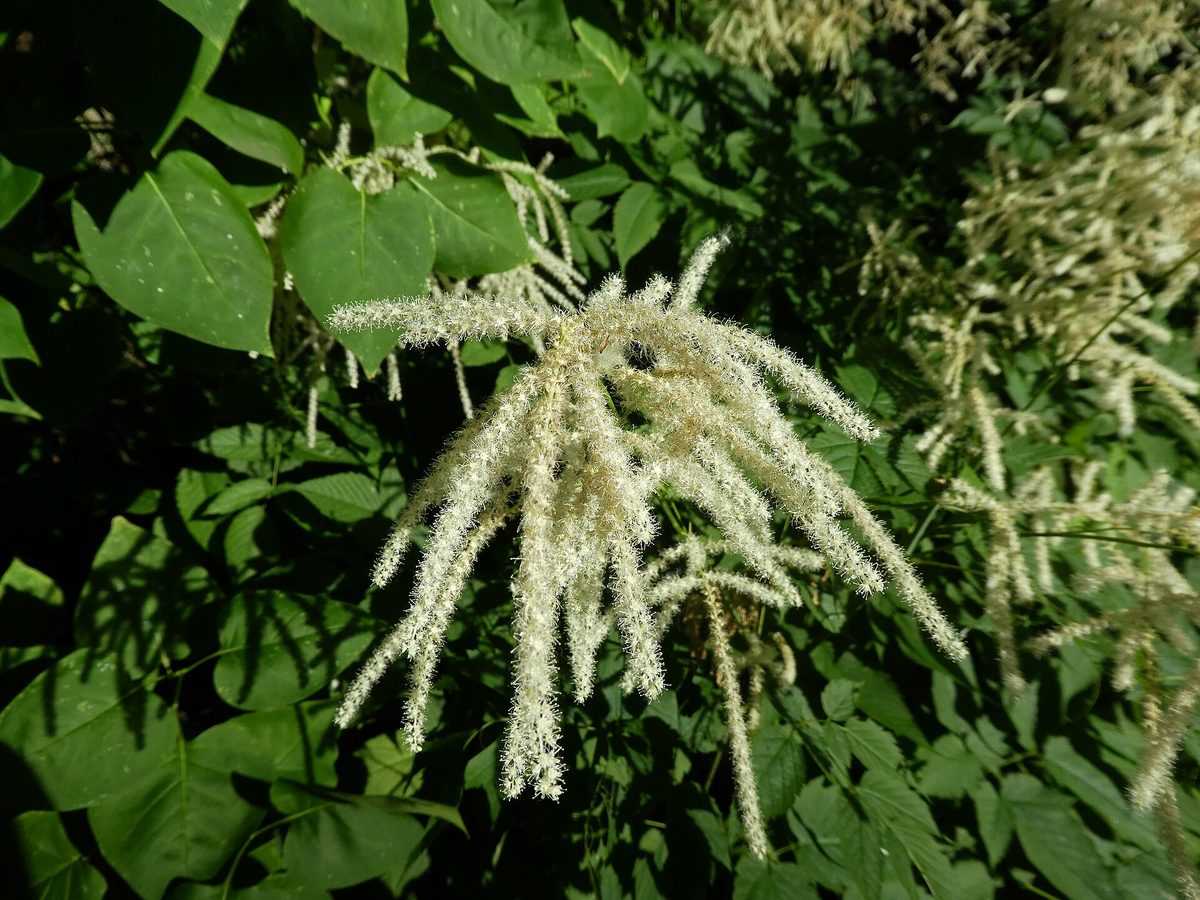
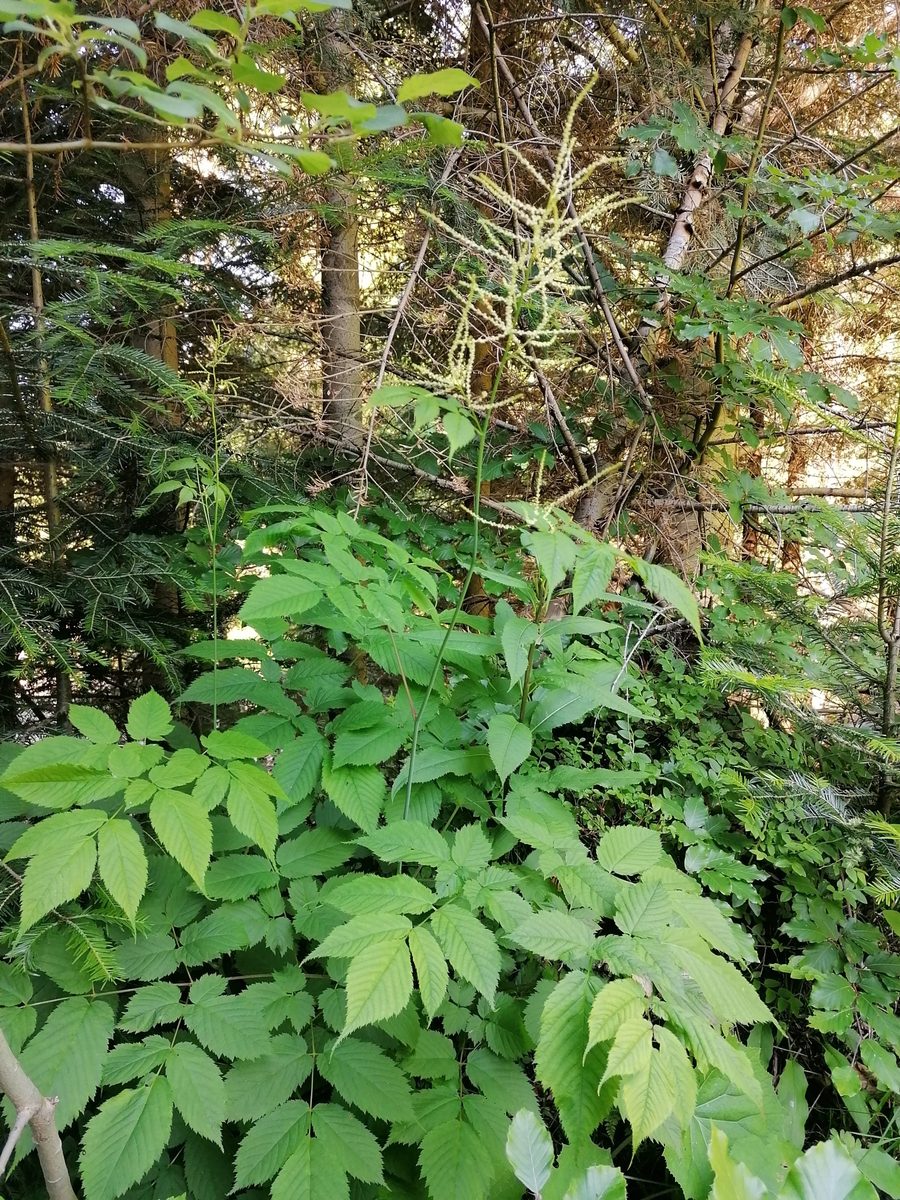
The plant reaches 1–2 m in height with large, twice-pinnate leaves that are 30–100 cm long. Their segments are elliptical, serrated, and long-pointed, measuring 3–12 cm in length. It blooms in late spring to early summer: in the Carpathians, flowering Goat's beard is mostly seen in June and July. Loose panicles of thin spikes rise above the leaves, densely covered with thousands of small flowers.
The name 'dioicus' is not accidental: male and female flowers grow on different plants. On male plants, the flowers are yellowish, while on female plants, they are white. Therefore, two plants nearby can noticeably differ in the shade of their inflorescences. Seeds are formed only on female plants.
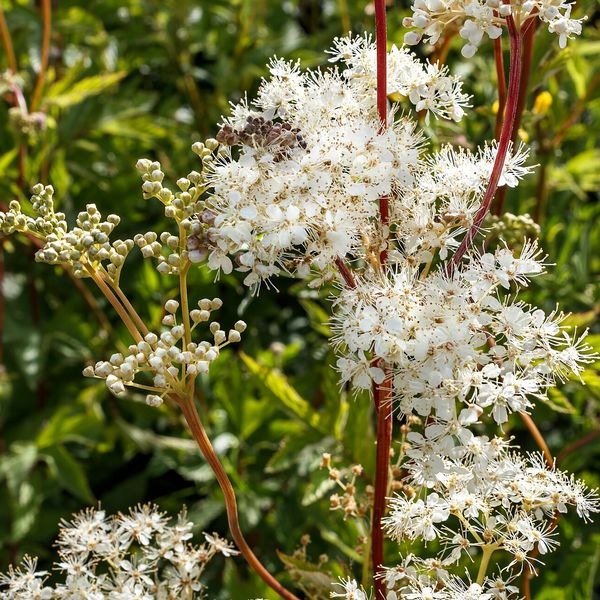
Goat's beard can be easily confused with meadowsweet (Filipendula ulmaria), but that plant is shorter, growing up to 1.2 m, has pinnate leaves with small intermediate leaflets, and fragrant creamy flower clusters. Goat's beard is not listed as a protected species in Ukraine, but in Poland, it is under partial protection. Enjoy it on the forest path and do not break the inflorescences.
Where in the Carpathians

The map shows where naturalists recorded the species (GBIF, CC0 and CC BY records), not every place it lives. The Ukrainian Carpathians are less studied, so a blank area does not mean the species is absent.
- Countries
- Slovakia · Czechia · Poland · Ukraine · Romania · Hungary
- Mountain ranges
- Greater Fatra, Low Tatras, Moravian-Silesian Beskids, Slovak Ore Mountains, Slovak Paradise, Belianske Tatras, Lesser Fatra, Volovec Mountains, Pieniny, Spiš Magura
- Altitude belts
- Foothills (below 600 m) · Beech forests (600–1200 m)
When to see it
| Jan | Feb | Mar | Apr | May | Jun | Jul | Aug | Sep | Oct | Nov | Dec | |
|---|---|---|---|---|---|---|---|---|---|---|---|---|
| Flowering | ||||||||||||
| Fruit |
From naturalists’ observations in the Carpathians (iNaturalist, research grade): the darker the cell, the more often the species is seen that month.
Look-alikes — how to tell them apart
Shorter, up to 1.2 m; leaves are intermittently pinnate with small intermediate leaflets; inflorescences are fluffy and strongly fragrant; grows in wet meadows.
Protection and rules
Not listed in the Red Book of Ukraine; partially protected in Poland.
FAQ
Why is Goat's beard called dioicus?
Male and female flowers grow on different plants: male inflorescences are yellowish, while female ones are white.
What are those tall white 'sultans' blooming in the Carpathian forest in early summer?
Most likely, it is Goat's beard: a plant up to 2 m tall with large twice-pinnate leaves and lush panicles of small flowers.
Similar species
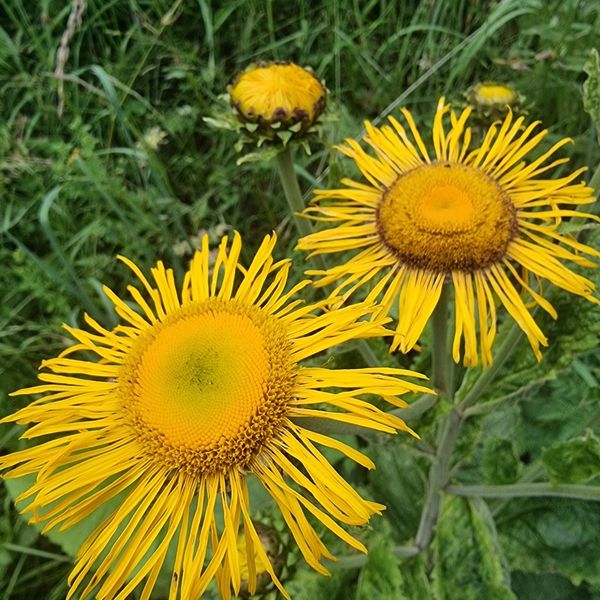
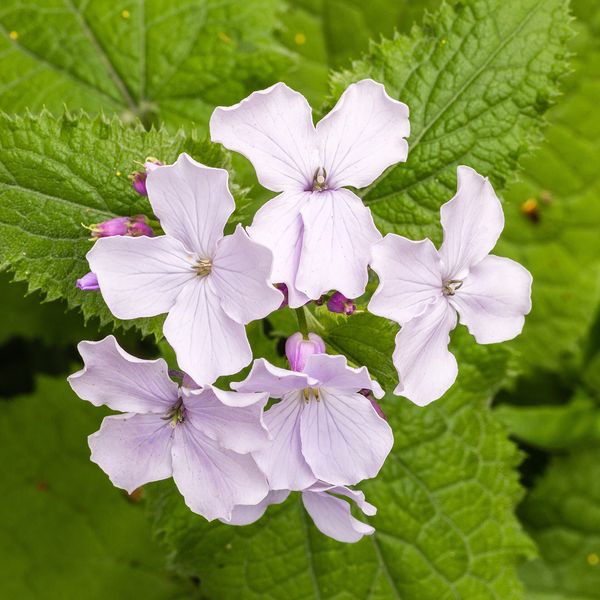
Where to meet it
Trails
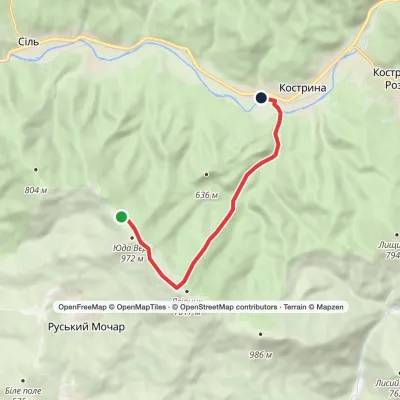 EasyOne-dayKostryno village Mount YavirnykElevation profile278–1 017 m7.4 kmascent 139 m≈ 2 h walking
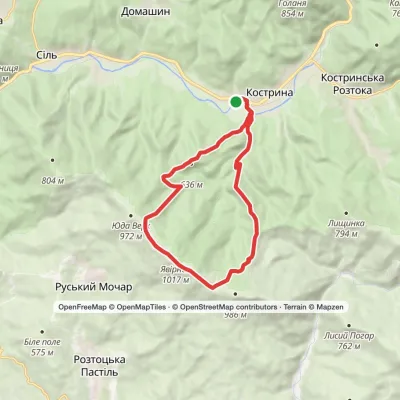 ModerateTwo-dayKostryno village loopvia Mount Yavirnyk, Batsova Yama tractElevation profile278–1 019 m15.8 kmascent 852 m≈ 5.5 h walking
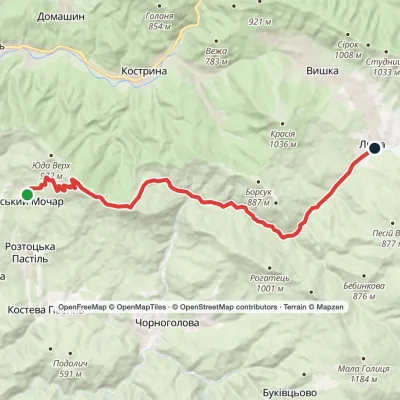 ModerateTwo-dayRuskyi Mochar village to Liuta villagevia Mount Yavirnyk, Batsova Yama tractElevation profile327–1 017 m20.6 kmascent 782 m≈ 6.5 h walking
 HardMulti-dayKostryno village loopvia Mount BorsukElevation profile279–887 m24.8 kmascent 1 200 m≈ 8.5 h walking
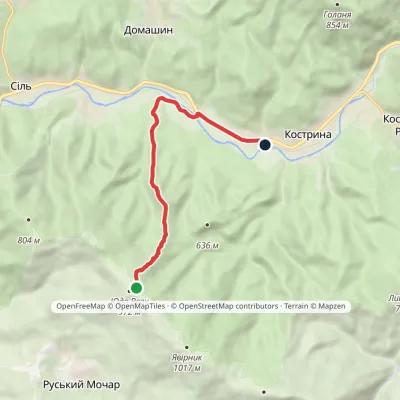 EasyOne-dayMarkedMount Yavirnyk to Kostryno villagevia Dubovyi HaiElevation profile265–947 m8.2 kmascent 30 m≈ 2 h walking
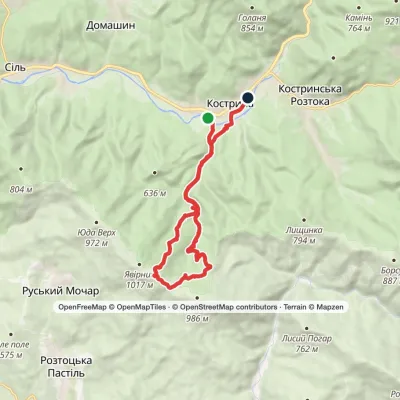 ModerateTwo-dayKostryno village loopvia Mount YavirnykElevation profile280–994 m17.1 kmascent 746 m≈ 6 h walking
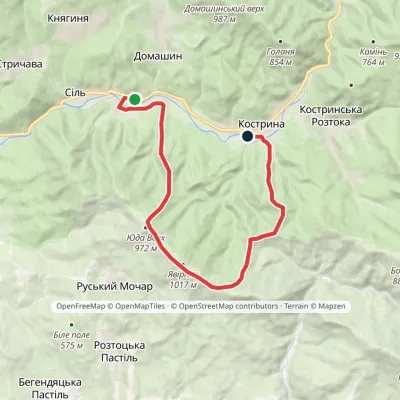 ModerateTwo-daySil village to Kostryno villagevia Mount YavirnykElevation profile255–1 019 m16.6 kmascent 858 m≈ 6 h walking
 ModerateTwo-dayYarok village to Vorochovo villagevia Antalovetska PolianaElevation profile141–968 m16 kmascent 743 m≈ 5.5 h walking
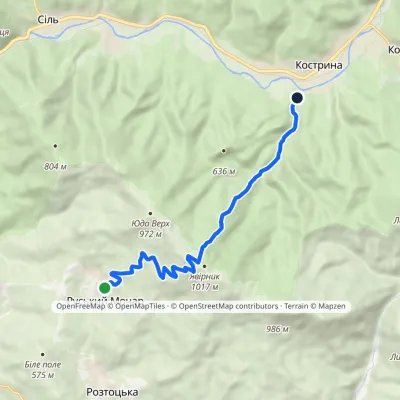 ModerateOne-dayMarkedKostryno Velykyi Bereznyivia Mount YavornykElevation profile297–1 017 m9.5 kmascent 720 m≈ 4 h walking
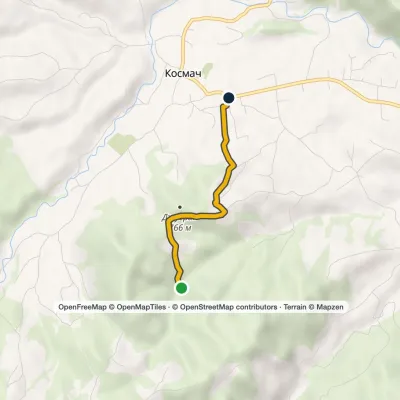 EasyOne-dayMarkedOpryshky RoadElevation profile628–754 m2.5 kmascent 63 m≈ 45 min walking
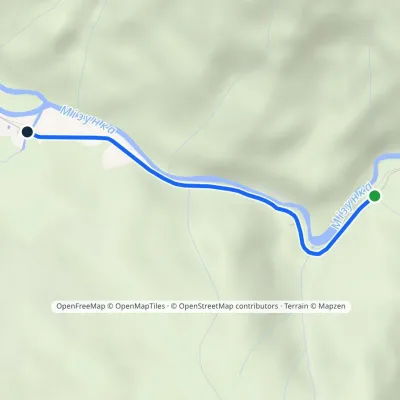 EasyOne-dayMarkedMizunskyi Waterfall Dubovyi KutElevation profile527–556 m2.8 kmascent 25 m≈ 45 min walking
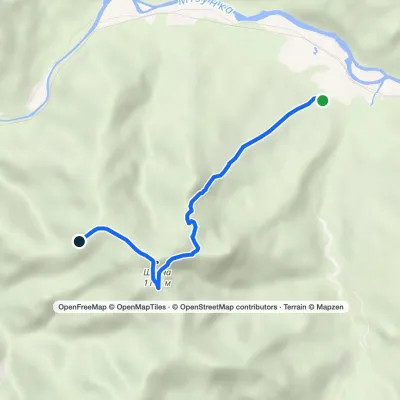 EasyOne-dayMarkedRoute to Mount ShchavnaElevation profile575–1 176 m5 kmascent 601 m≈ 2.5 h walking
Peaks and meadows
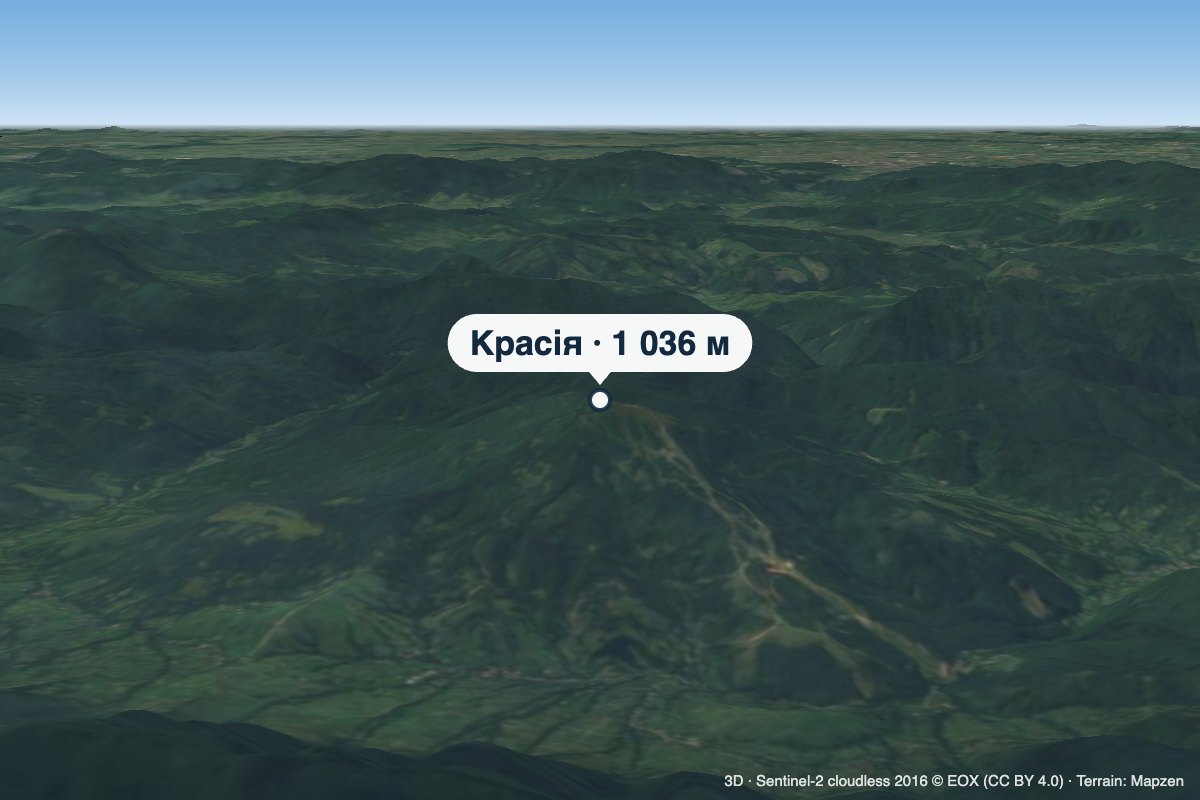 PeakMount KrasiiaVyshkaaltitude 1 036 mKrasiia is a 1,036 m mountain in the Eastern Beskids above the village of Vyshka in the Uzhhorod (formerly Velykyi...
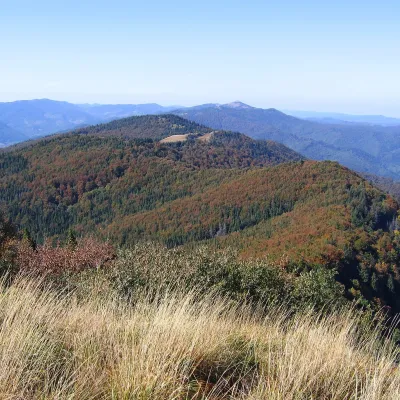 PeakMount KudriavetsHrebenivaltitude 1 242 m · Skole Beskids range1 trail to the topKudriavets is a 1,242 m summit on the Zelemianka ridge in the Skole Beskids, Lviv Oblast.
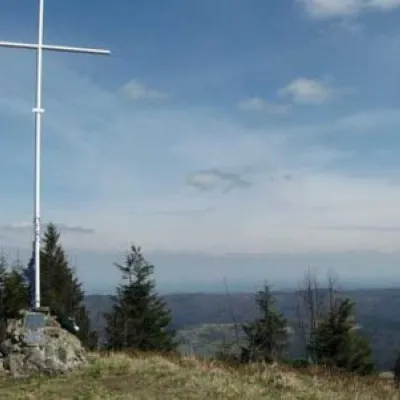 PeakMount LopataKorostivaltitude 1 211 m14 trails to the topThe mountain is located on the Zelemyanka ridge at a distance of 8 km south of the town of Skole.
Waters and waterfalls
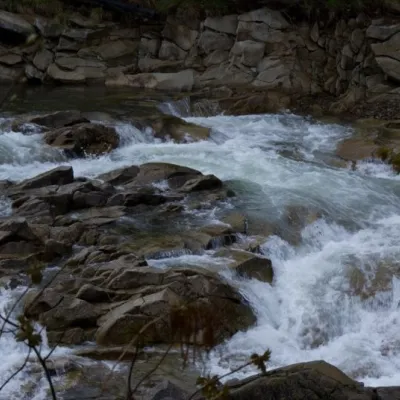 WaterfallMizun waterfallsNovyi MizunMizunski waterfalls are a great place for lovers of mountain recreation.
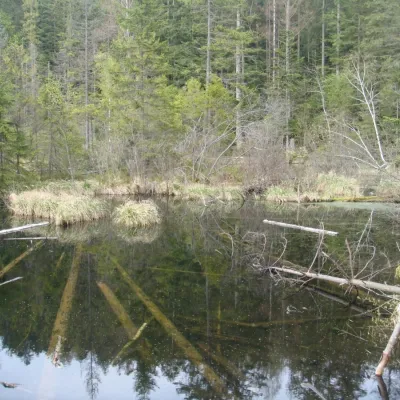 LakeLake Zhuravlyne (Dead Lake)KamiankaThere is one mysterious place in the Skole Beskydy National Nature Park - Zhuravlyne Lake, also called Dead Lake.
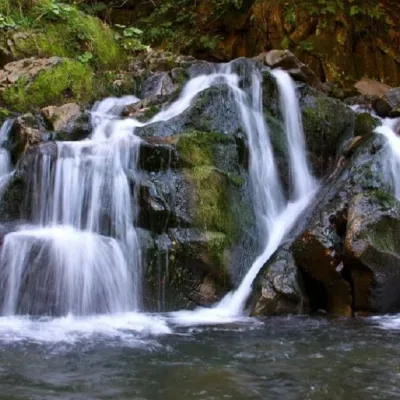 WaterfallKamianka waterfallDubyna"Kamianka Waterfall or Kamianka Waterfall is the most famous waterfall located on the mountain river of the same name...
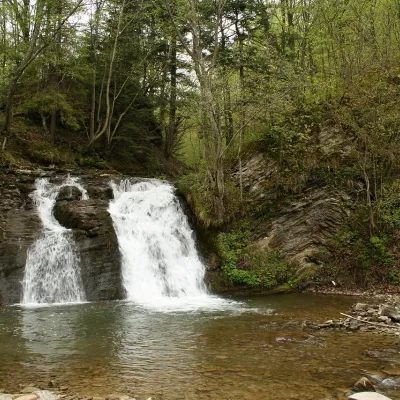 WaterfallGurkalo waterfallKorchynGurkal, located on the Velyka Richka River, has a very eloquent name! You can't argue with it, especially when the...
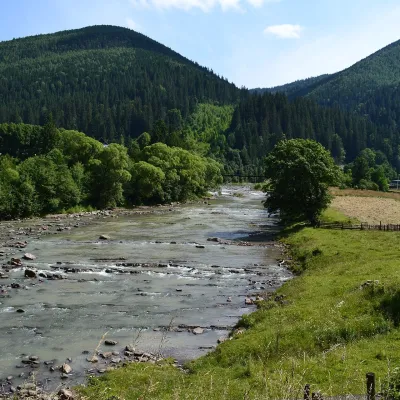 RiverChorna Tysa RiverYasinyaThe Chorna Tysa is a mountain river in eastern Zakarpattia. It rises on the northern spurs of the Svydovets massif...
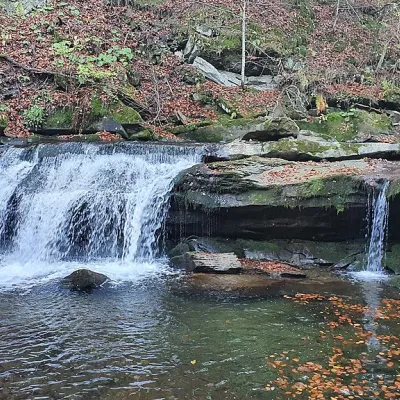 WaterfallKrushelnytskyi waterfallKrushelnytsiaThe real decoration of the mighty Carpathian Mountains is its numerous picturesque waterfalls.
Mountain ranges: In other countries: 🇸🇰 Greater Fatra, 🇸🇰 Low Tatras, 🇨🇿 Moravian-Silesian Beskids, 🇸🇰 Slovak Ore Mountains, 🇸🇰 Slovak Paradise, 🇸🇰 Belianske Tatras, 🇸🇰 Lesser Fatra, 🇸🇰 Volovec Mountains, 🇵🇱 Pieniny, 🇸🇰 Spiš Magura, 🇸🇰 Western Tatras, 🇸🇰 Slovak Central Mountains, 🇸🇰 High Tatras, 🇸🇰 Choč Mountains
Trails and peaks near which naturalists recorded the species (GBIF, iNaturalist), matched by altitude and habitat. Sightings are not guaranteed.
Sources
- Вікіпедія: Таволжник звичайний
- Wikipedia (en): Aruncus dioicus
- Rozporządzenie Ministra Środowiska z 9.10.2014 w sprawie ochrony gatunkowej roślin, Dz.U. 2014 poz. 1409 (Польща)
- iNaturalist: Aruncus dioicus (спостереження в Карпатах)
GBIF · iNaturalist · Wikidata · Distribution data: GBIF.org (CC0 and CC BY records), iNaturalist; names and identifiers: Wikidata (CC0). Text: Karpaty.rocks, checked 09.11.2026.
