Nature Reserve "Horgany", Nadvirna
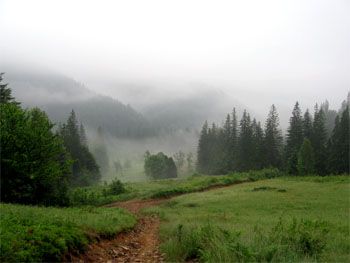


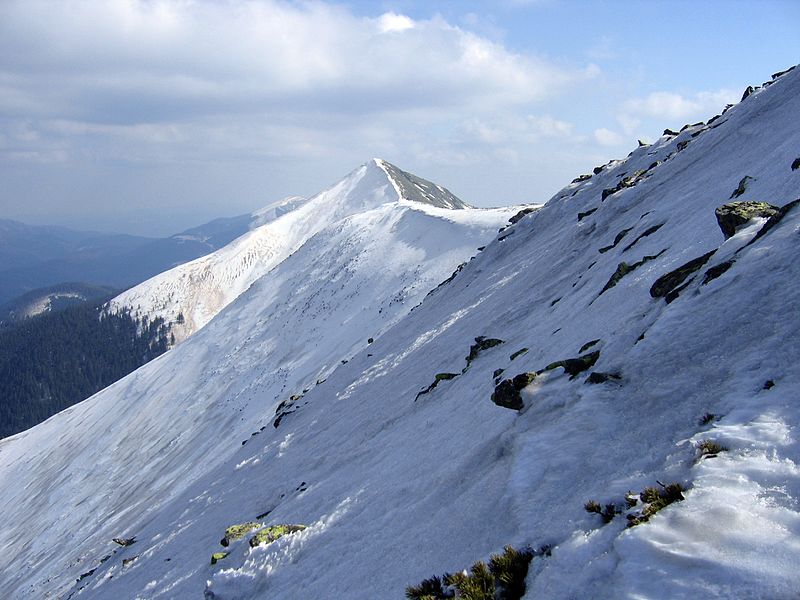
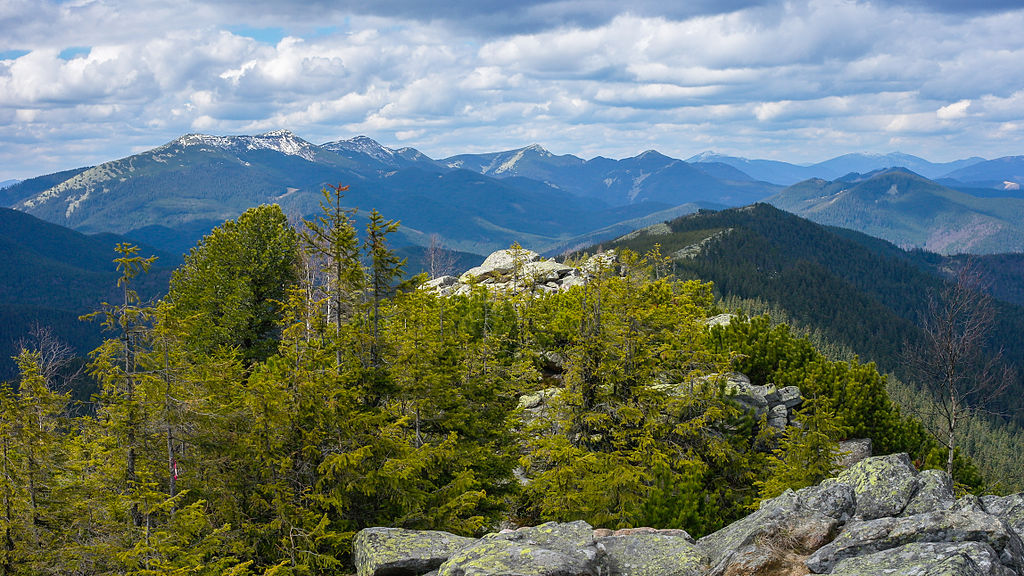
"HORGANY" – a nature reserve located in the Nadvirna district of Ivano-Frankivsk region. In administrative and economic terms, the territory of the reserve is divided into two nature conservation research departments – Horganske and Chernykivske. Area: 5344.2 ha, protective zone around – 3713.6 ha. Subordination: Ministry of Ecology and Natural Resources of Ukraine
Visiting the territory for tourism purposes is prohibited. With the permission of the administration and accompanied by reserve staff, visits to the territory are possible only for scientists.
The nature reserve "Horgany" is a natural benchmark of untouched human activity in the central part of the Ukrainian Carpathians and contains the only mass of primeval forest relic from the early Holocene period – European cedar pine in Europe and the world. It encompasses a continuous mass of three climatic zones and five vertical tiers of primeval, relict, and endemic vegetation, biotopes, and populations of the animal world. The reserve contains the only continuous horizontal and vertical strip of five subformations of primeval forests and demonstrates stages of primary vegetation development from the early Holocene. On rocky outcrops, some of the most resilient glacial settlements of common Scots pine (Pinus sylvestris) and dark birch (Betula obscura) have been preserved. In Horgany, the largest centers of relict dendroflora and outcrops of parent rocks, which are of scientific importance for studying the history of vegetation development in the post-glacial period, are known, as well as the study of dynamic trends in mountain and high-mountain ecosystems in connection with changing climatic conditions.
The first reserve of European cedar pine (previously called cedar) in the Ukrainian Carpathians was established in the upper reaches of the Limnytsia River near the village of Yasen in 1919. It had an area of 178 ha and was called "Horgany". Later, an additional 2589 ha were added to it. In 1935, also in the Limnytsia River basin, in the area "Yaytse" on the lands of the Greek Catholic Church, the "Cedar Reserve" was established, covering an area of 255.19 ha, and two years later, in the vicinity of Mount Grofa, the Ukrainian Nature Park was established, covering an area of 1800 ha.
In the basin of the Bystrytsia Nadvirnyanska River, where the nature reserve "Horgany" currently operates, a cedar reserve "Tavpyshirka" was created in the 1930s, covering an area of 583.85 ha, which is now called the state nature reserve "Tavpyshyrkivskyi" and is part of the Bystrytsia forestry of the State Enterprise "Nadvirnyanske Forestry".
In 1940, the government of the Ukrainian SSR issued a resolution "On the organization of the state nature reserve "Horgany" (50 thousand ha), which was never fully organized due to the onset of World War II. In the 1950s-1980s, a number of nature reserves, natural monuments, and protected areas were created in the territory of the Nadvirna forestry. In 1974, at the suggestion of Yu.V. Yurkevich, the Horgany reserve forestry was organized. Yu.V. Yurkevich worked as the senior forester of the Nadvirna forestry since 1946, and after the reorganization of the forestry, forest, and wood processing industry in 1959 until his retirement in 1971 – as the deputy director for forestry of the Nadvirna forestry.
The nature reserve "Horgany" was established by the Decree of the President of Ukraine on September 12, 1996, No. 831/96, with an area of 5344.2 ha. Its territory includes landscape reserves of national significance "Dzhurdzhyi" and "Sadky", and protected areas "Chernyk", "Hnilyak", "Novobudova", "Elmy", "Dovzhynets", "Stoly".
By the order of the Ivano-Frankivsk Regional State Administration dated 03.02.1997, a protective zone with a width of 750-1100 m was allocated around the perimeter of five forestry units bordering the reserve. The most significant efforts in creating the reserve were made by: Yu.V. Yurkevich, P.A. Trybun, K.K. Smaglyuk, M.V. Chernyavskyi, R.M. Yatsyk, Ye.M. Bakalenko, who justified the feasibility of creating the reserve, and Ya.I. Dutsyn, T.M. Oleksiv, V.O. Savyuk, H.O. Maslyak, M.M. Prykhodko, M.B. Shpilchak, and K.O. Turchak, who facilitated its approval and establishment.
The reserve "Horgany" is primarily a benchmark area of nature preserved in its natural, unchanged form.
The nature reserve "Horgany" is a nature conservation, scientific research institution. Its main tasks are: protection and preservation of natural complexes and objects, conducting scientific research and monitoring the state of the natural environment, developing nature conservation recommendations, and disseminating ecological knowledge.
Horgany occupies the central part of the Ukrainian Carpathians, difficult to access due to very steep slopes and rocky outcrops. The reserve encompasses the slopes of the mountains from 710 m above sea level up to the ridges: Dovbushanka (1754.6 m above sea level), Vedmezhyk (1736 m), Polensky (1693.6 m), Pikun (1651 m), Kozii Horgan (1616), Skalky Verkhni (1596.8 m), Babyn Pohar (1478 m), Skalky Nyzhni (1300 m above sea level), which stretch from the northwest to the southeast. They are characterized by steep asymmetric slopes and sharp mountain ridges; at the peaks – rocky screes (local name "Horgany"). The forest vegetation dominates in the reserve (85.5% of the area). It consists mainly of coniferous forests (4524.8 ha), while broadleaf forests occupy approximately 1% of the forested area (45.7 ha). The largest areas of the reserve are occupied by forests dominated by spruce (Picea abies) - 89.1%. The stands of mountain pine (Pinus mugo) - 7.3%, European cedar pine (Pinus cembra) - 1.8%, white fir (Abies alba), European beech (Fagus sylvatica), and other species cover 1.8% of the forested area. The most common are spruce-fir (2377.9 ha) and beech-fir-spruce (1196.3 ha) stands.
In Horgany, primeval forests have been preserved better than anywhere else in the Ukrainian Carpathians, characterized by high resilience and stability. Primeval forests are sufficiently large forest ecosystems (communities) that have arisen and developed naturally under the influence of only natural forces and phenomena and have gone through a full cycle of development without any human intervention, with their habitat, species, age, and spatial structure being exclusively influenced by environmental factors. The largest trees of spruce, beech, and fir in the primeval forests reach heights of 53 m and diameters of over 160 cm, while cedar reaches 34 m and a diameter of 108 cm.
The vegetation gives the mountains a magical beauty. In spring, they are gently emerald, in summer – densely green, in autumn – all shades of gold, in winter – gray-brown. The reserve is home to 459 species of higher vascular plants belonging to 5 divisions, 79 families, and 270 genera. A significant portion of the species are rare, endemic (found in a limited area), and relict (remnants of floras from past geological times). On the protected territory, 34 species of vascular plants listed in the Red Book of Ukraine have been identified (over 20% of the total number of such species growing in the Ukrainian Carpathians). The significant age of the flora and its uniqueness is evidenced by the presence of relict and endemic species. In total, the rare flora of the reserve includes 67 species of vascular plants. This constitutes 17.1% of the rare component of the Ukrainian Carpathians and 63% of the Horgany region. The rarest among them are: male orchid (Orchis mascula) and helmet orchid (Orchis militaris), egg-shaped lady's slipper (Listera ovata), green tongue (Coeloglossum viride), and revived lunaria (Lunaria rediviva). Among relicts, there are: many-branched grape fern (Botrychium multifidum), common ostrich fern (Matteuccia struthiopteris), bracken (Blechnum spicant), common clubmoss (Huperzia selago), and common wolf's bane (Daphne mezereum). Among endemic species are round-leaved daisy (Leucanthemum rotundifolia), Carpathian tozzia (Tozzia carpatica), Marmaros cornflower (Centauera marmarosiensis) and Carpathian cornflower (Centaurea carpatica), Carpathian carnation (Dianthus carpaticus), and declined violet (Viola declinata) and others.
In the reserve and adjacent territories, 174 species of vertebrate animals have been recorded (birds Aves – 104, mammals Mammalia – 42, fish Pisces – 12, amphibians Amphibia – 9, reptiles Reptilia - 6, lampreys Hyperoartia – 1). Of these, 33 species are listed in the Red Book of Ukraine, 91 species of animals are under special protection according to the Bern Convention, 1 species of animals with an unsatisfactory conservation status is protected by the Bonn Convention, 7 species are listed in the IUCN Red List, and 4 species of animals are included in the European Red List.
Here, little-changed habitats of the most vulnerable large mammals have been preserved: red deer (Cervus elaphus), roe deer (Capreolus capreolus), brown bear (Ursus arctor), wolf (Canis lupus), and others. The fauna of invertebrates in the reserve is diverse (1077 species), among which the most numerous group is insects. The animal world is closely linked to the altitudinal vegetation belts, so a significant portion of it consists of species characteristic of coniferous forests. Here you can find such species of the taiga complex: lynx (Lynx lynx), Ural owl (Strix uralensis), black woodpecker (Dryocopus martius), bullfinch (Pyrrhula pyrrhula), as well as species typical of broadleaf forests: blackbird (Turdus merula), middle spotted woodpecker (Dendrocopos medius), white-backed woodpecker (Dendrocopos leucotos), green woodpecker (Picus canus), collared flycatcher (Ficedulla albicollis), hawfinch (Coccothraustes coccothraustes), rock dove (Columba oenas), hazel dormouse (Muscardinus avellanarius), wildcat (Felis silvestris), and fire salamander (Salamandra salamandra). Only the snow vole (Chionomys nivalis) and alpine accentor (Prunella collaris) are ecologically associated with the subalpine belt.
Although visiting the territory of the nature reserve “Horgany” for tourism purposes is not practiced, it is still possible to admire the picturesque landscapes of nature and nature conservation objects. For this purpose, a scientific-educational trail operates within the reserve, and several tourist routes are marked outside the protected area.
-
From Yaremche or the village of Dory – to Mount Synyachka (1402 m), Yaremche – Mount Yavirnyk-Horgan (1467 m).
On Synyachka, in clear weather, some of the most picturesque views in the Ukrainian Carpathians open up. To the south, above the longitudinal ridge of Yavirnyk, you can see the main peaks of the Eastern Horgany: Khomyak (1544m), Vedmezhyk (1736m), Pikun (1651m), Polensky (1693.3m), Kozii Horgan (1617m). Such views are also visible from Mount Yavirnyk-Horgan.
Possible routes:
- Nadvirna – Pasichna village – Mount Verkhni Pody (1000 m) – Mount Pidsmerechok (1252 m) – Mount Synyachka (1402 m).
- Nadvirna – Pasichna village – area “Maidan” - village Zelenaya – hamlets Zelenytsia and Chernyk – state nature reserve “Berdulets” – area “Chernyk”, “Sadky” and “Novobudova” of the nature reserve “Horgany” – Mount Berezovachka (1500 m).
From Mount Verkhni Pody, wonderful views open up. To the west, the peaks of the watershed ridge are visible: Hropa (1758 m), Duranya (1709 m), Taupysh (1450 m), Syvulia and Vysoka. From Mount Pidsmerechok, the entire eastern part of the reserve “Horgany” is visible.
On the tributary of Buhtivets, which flows through the area “Maidan”, there is a beautiful waterfall where one can relax. And on Mount Berezovachka, there is a historical monument of the liberation struggle of the UPA – “Bunker “Hroma”.
Video 6
 ГорганиА ТИ ЗНАВ?


Location on the map
Comments
Places to stay nearby
All stays HotelHomestead "U Pani Adelyi" DelyatynDeliatyn10 km from Nature Reserve "Horgany", NadvirnaSaunaFireplaceKitchenNearby: Church of St. Francis 1.0 kmWhite Stone Rock 6.2 km1 trail
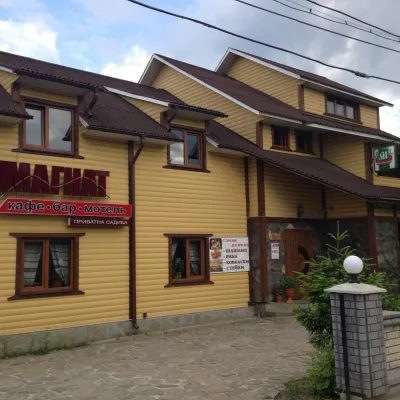 HomesteadHomestead "Mahnat" MykulychynDeliatyn11 km from Nature Reserve "Horgany", NadvirnaSaunaBBQKitchenNearby: Church of St. Francis 200 mWhite Stone Rock 5.3 km1 trail
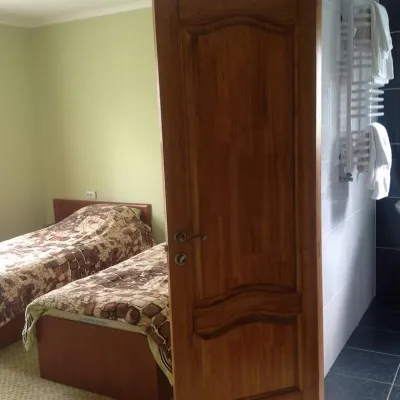 HomesteadGuest House "Vizyt" DelyatynDeliatyn12 km from Nature Reserve "Horgany", NadvirnaBBQKitchenParkingNearby: Church of St. Francis 1.1 kmWhite Stone Rock 4.7 km5 trails
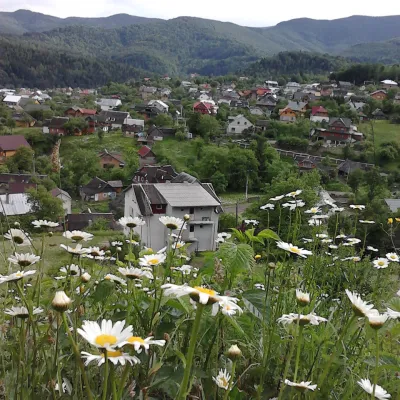 HomesteadHomestead "Hutsulochka"Yaremche15 km from Nature Reserve "Horgany", NadvirnaPoolNearby: Peter and Paul Church 100 mMount Makovytsia 3.4 km16 trails
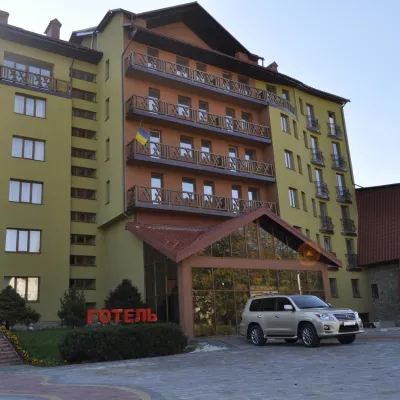 HotelHotel and Recreation Complex "Malivo" DelyatynDeliatyn13 km from Nature Reserve "Horgany", NadvirnaHot tubPoolSaunaNearby: White Stone Rock 2.9 kmMount Makovytsia 5.1 km8 trails
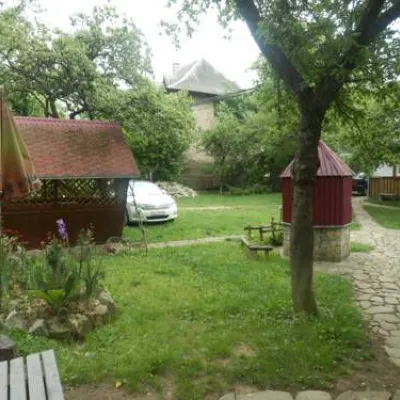 HomesteadHomestead "Darunochok"Yaremche15 km from Nature Reserve "Horgany", NadvirnaSaunaBBQKitchenNearby: Peter and Paul Church 400 mMount Makovytsia 3.2 km15 trails
Trails nearby
All trails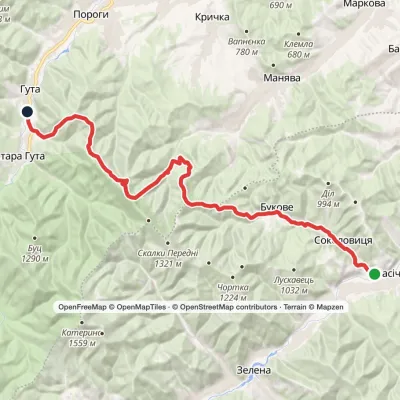 HardMulti-dayMarkedHuta village Pasichna villageElevation profile524–1 207 m26.4 kmascent 1 093 m≈ 9 h walking11 km from Nature Reserve "Horgany", Nadvirna
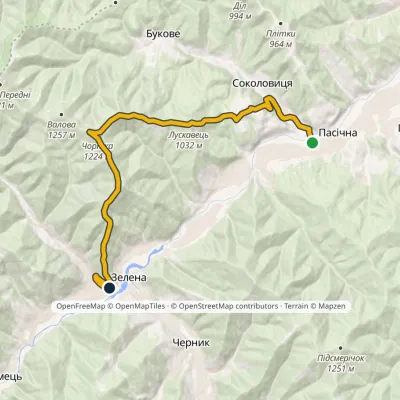 ModerateOne-dayMarkedPasichna village Zelena villagevia Mount ChortkaElevation profile520–1 223 m15.8 kmascent 733 m≈ 5.5 h walking11 km from Nature Reserve "Horgany", Nadvirna
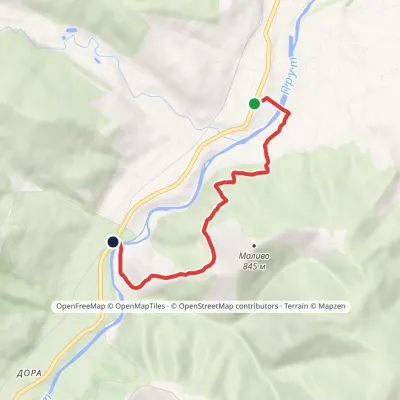 EasyOne-dayMarkedBaron's Trail: Deliatyn Dora villageElevation profile421–701 m5.3 kmascent 268 m≈ 2 h walking12 km from Nature Reserve "Horgany", Nadvirna
Nearby attractions
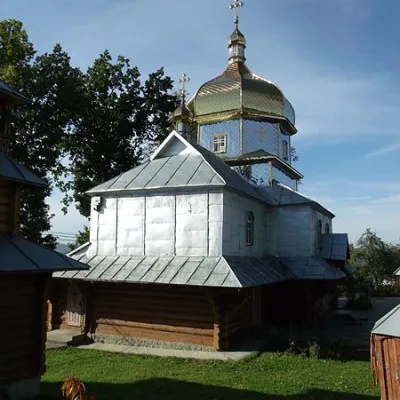 ChurchChurch of St. Nicholas, StrymbaStrymba1.1 km from Nature Reserve "Horgany", NadvirnaIn the center of the village of Strymba, opposite the medical center, there is a wooden church of St. It is made almost entirely of tin and attracts the eyes of...
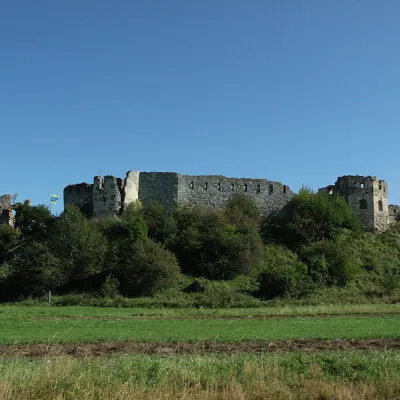 CastlePniv CastlePniv2 km from Nature Reserve "Horgany", NadvirnaPniv Castle is one of the unique historical monuments of Ukraine. Throughout its history, it has played an important role in the events that took place in the lands of...
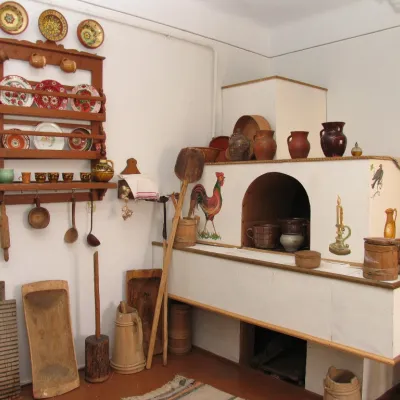 MuseumMuseum of the history of Nadvirna districtNadvirna2.3 km from Nature Reserve "Horgany", NadvirnaThe Nadvirna History Museum was established by the Memorial Historical and Educational Society in 1995 to recreate the historical truth about the heroic struggle of...
Craft nearby
All craft places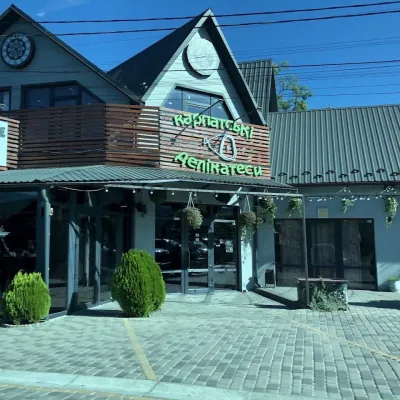 Craft shopsKarpatski Delikatesy farm shop, YaremcheYaremche15 km from Nature Reserve "Horgany", NadvirnaKarpatski Delikatesy (“Carpathian Delicacies”) is one of the largest shops of local products in Yaremche, right on the main road through town at 59/2 Svobody Street.
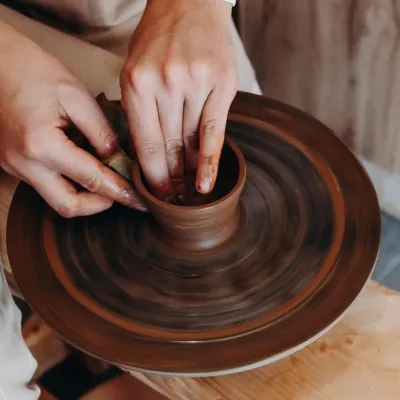 Ethno tours & guidesKosiv & Yavoriv Hutsul Crafts Tour from YaremcheYaremche18 km from Nature Reserve "Horgany", NadvirnaIf you are staying in Yaremche or Bukovel and want to see the real craft heartland of the Hutsul region, not just the mountain views, a handy option is a day tour to...
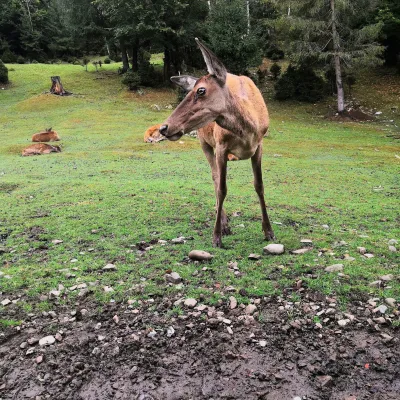 Wildlife parks & animal farmsCarpathian National Park Enclosure Farm, YaremcheYaremche19 km from Nature Reserve "Horgany", NadvirnaThe Enclosure Farm of the Carpathian National Nature Park is a small wildlife park on the edge of Yaremche where you can see animals of the Carpathian forests up close.
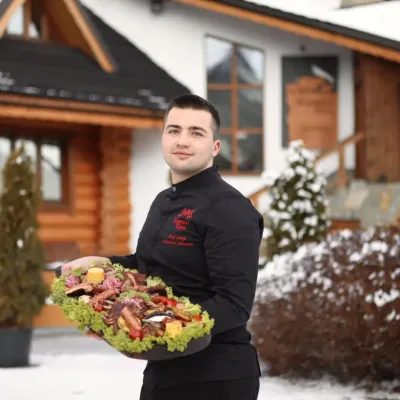 Koliby & Hutsul cuisineVedmezha Hora Koliba, YaremcheYaremche19 km from Nature Reserve "Horgany", NadvirnaVedmezha Hora koliba in Yaremche (“Bear Mountain”) is a family restaurant that has long been one of the town’s most popular food addresses.
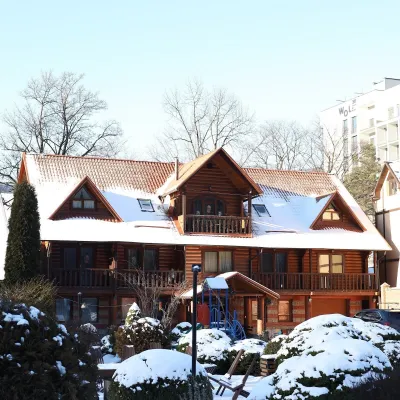 Koliby & Hutsul cuisineKrasna Sadyba Koliba, YaremcheYaremche19 km from Nature Reserve "Horgany", NadvirnaKrasna Sadyba in Yaremche is one of the town’s busiest places to eat: it has almost seven and a half thousand reviews on Google Maps.
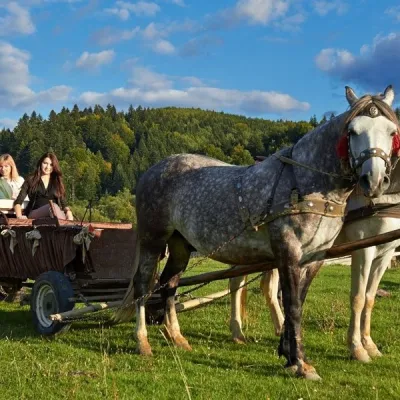 Horse ridingHorse Trails from Kamianyi Dvir Cottage, YaremcheYaremche19 km from Nature Reserve "Horgany", NadvirnaBesides accommodation, the Kamianyi Dvir (“Stone Yard”) cottage on Hrushevskoho Street in Yaremche is known for its horse rides.