Seven-spot ladybird
About
The Seven-spot ladybird is the most widespread species of ladybirds in Ukraine. It lives in a variety of habitats: in forests, meadows, fields, gardens, and cities. In the mountains, ladybirds can be found from sea level up to about 1500 m, so they are easy to spot in the blooming meadows, forest edges, and near villages in the Carpathians.
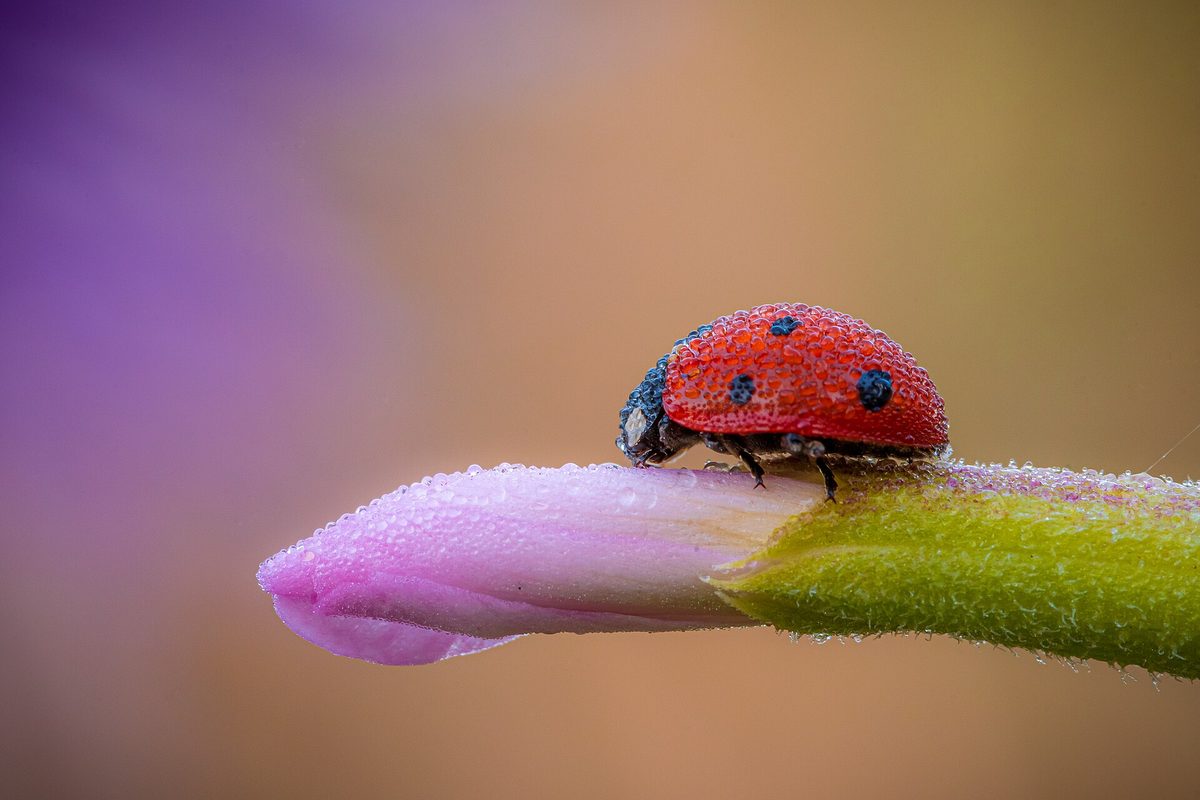
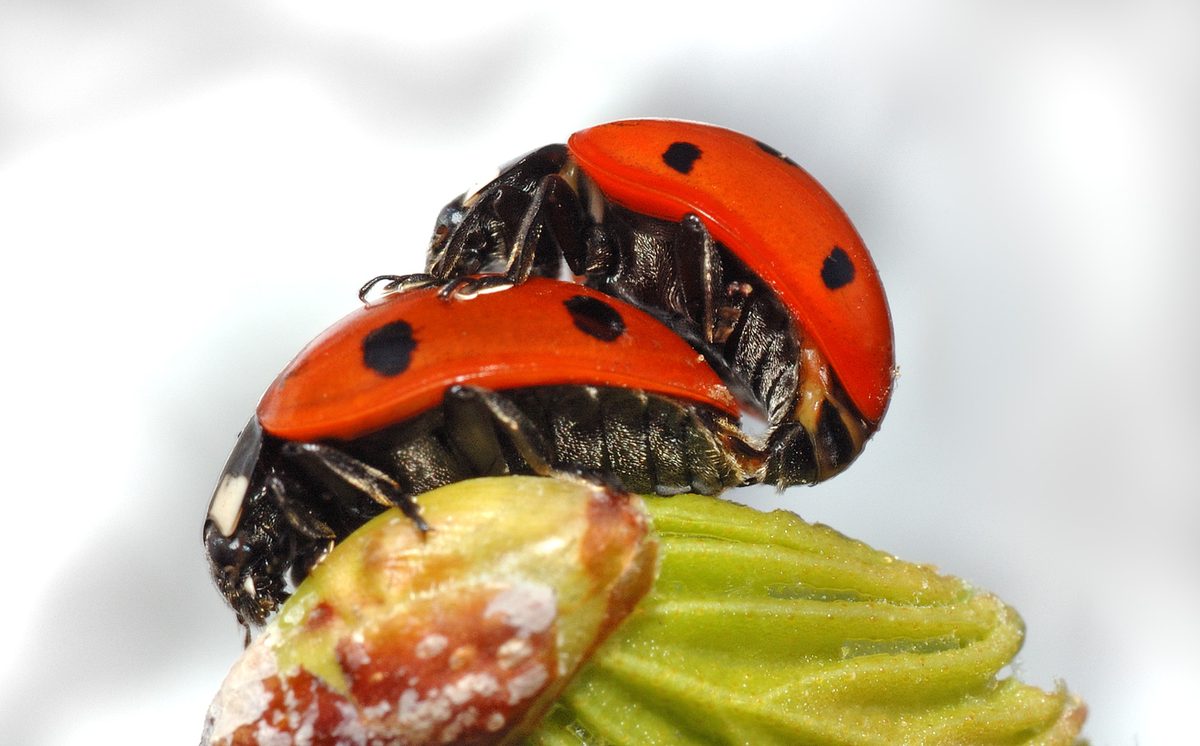
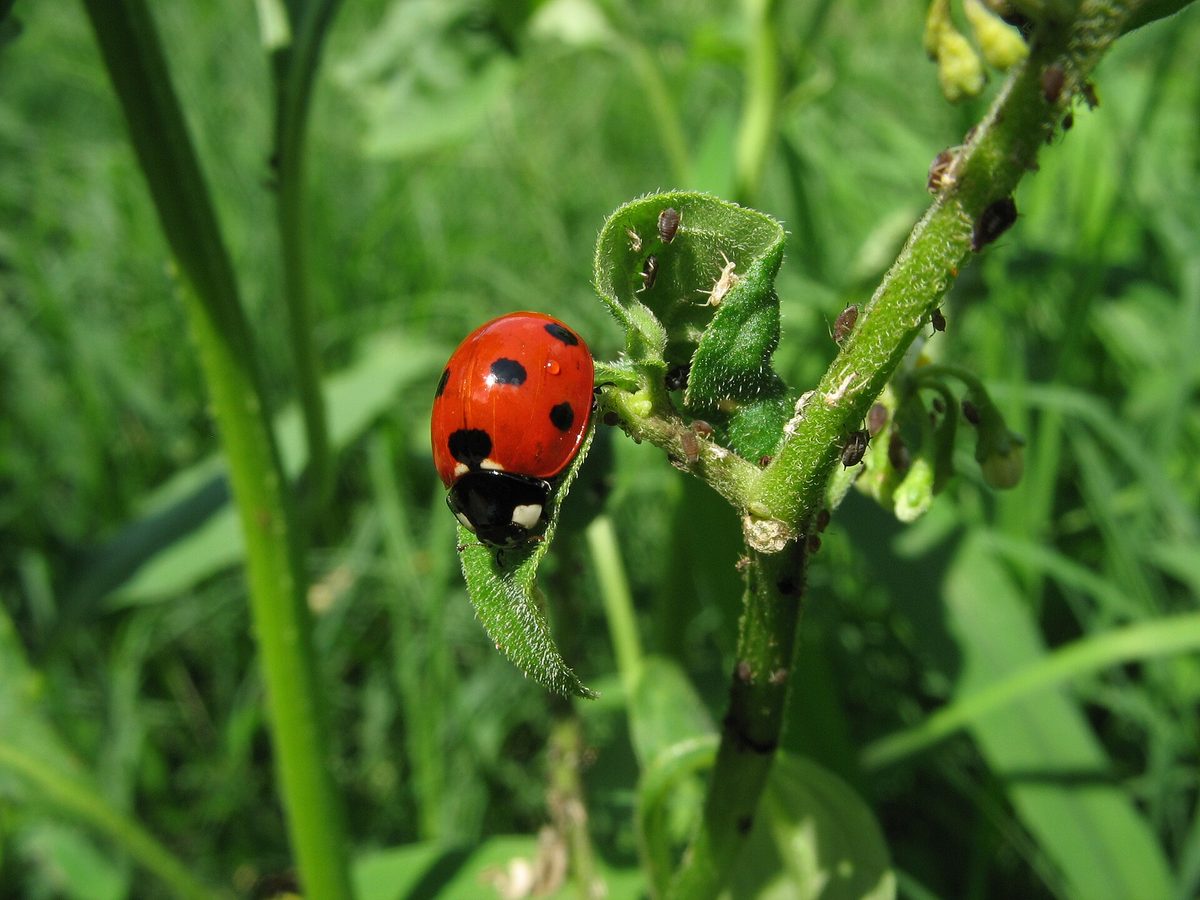
The beetle is 5–8 mm long, hemispherical. The elytra are red, orange, or yellow, each with three black spots, plus one shared spot near the scutellum, making a total of seven. The head and pronotum are black, with two light spots at the corners. The Latin name septempunctata translates to 'seven-spotted'.
Despite its peaceful appearance, the ladybird is a predator. Both adult beetles and larvae feed on aphids, as well as scale insects, thrips, and butterfly eggs; when aphids are scarce, they switch to pollen and nectar, but then do not reproduce. For this reason, ladybirds are valued by gardeners, and in other countries, they have even been introduced to combat aphids. The larva looks nothing like the adult beetle and grows from 1–2 mm to 8 mm over four molts.
The bright coloration serves as a warning: the ladybird is inedible. In case of danger, it secretes a yellowish bitter fluid from the joints of its legs, which is toxic to most predators. The ladybird poses no harm to humans: it does not bite or sting. Ladybirds hibernate as adult beetles and become active in the spring. The Seven-spot ladybird is not listed in the Red Book of Ukraine.
Where in the Carpathians

The map shows where naturalists recorded the species (GBIF, CC0 and CC BY records), not every place it lives. The Ukrainian Carpathians are less studied, so a blank area does not mean the species is absent.
- Countries
- Hungary · Slovakia · Romania · Ukraine · Czechia · Poland · Austria · Serbia · BG
- Mountain ranges
- Bucegi Mountains, Rivna Polonyna, Piatra Craiului, High Tatras, Mátra, Lesser Fatra, Low Tatras, Little Carpathians, Zemplén Mountains, Gorgany
- Altitude belts
- Foothills (below 600 m) · Beech forests (600–1200 m)
When to see it
| Jan | Feb | Mar | Apr | May | Jun | Jul | Aug | Sep | Oct | Nov | Dec | |
|---|---|---|---|---|---|---|---|---|---|---|---|---|
| Sightings |
From naturalists’ observations in the Carpathians (iNaturalist, research grade): the darker the cell, the more often the species is seen that month.
Protection and rules
Not listed in the Red Book of Ukraine.
FAQ
Do ladybirds bite?
The Seven-spot ladybird does not bite or sting. When frightened, it secretes a yellowish bitter fluid that deters predators.
What do ladybirds eat?
Primarily aphids — both adult beetles and larvae. Therefore, ladybirds are very beneficial for gardens and fields.
Similar species
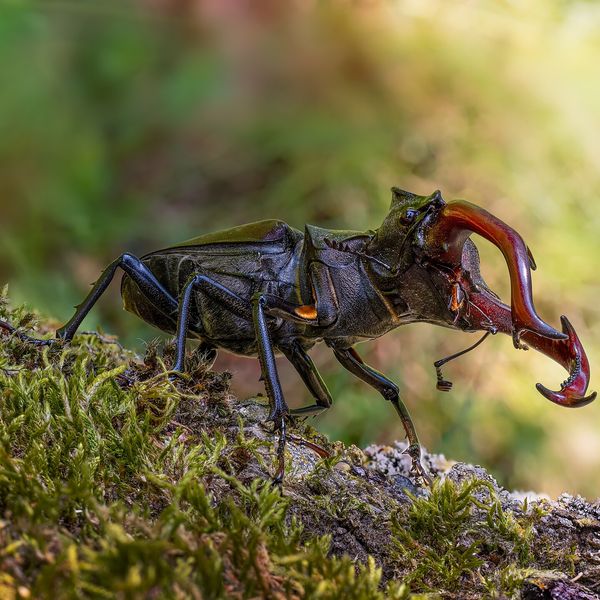
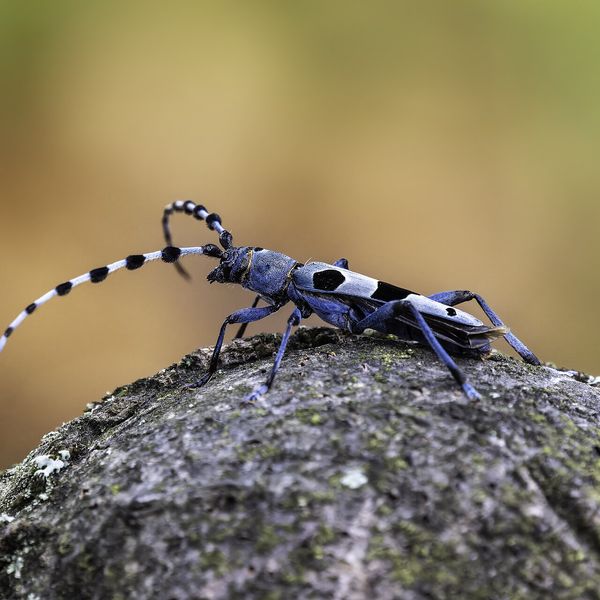
Where to meet it
Trails
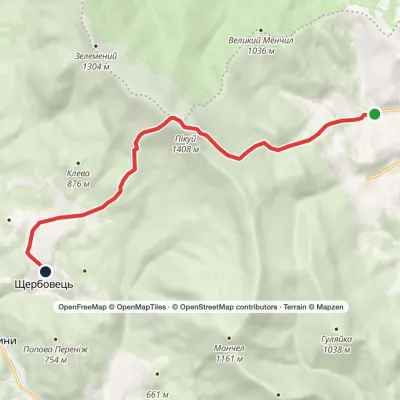 ModerateOne-dayMarkedBilasovytsia village to Shcherbovets villagevia Mount PikuiElevation profile513–1 408 m9.9 kmascent 822 m≈ 4 h walking
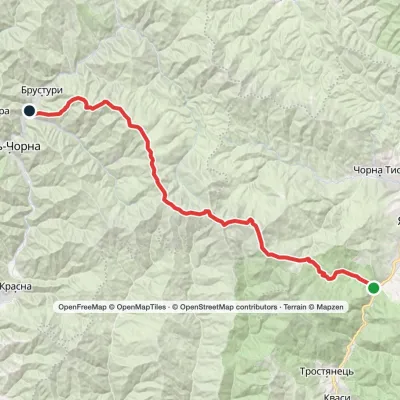 HardMulti-dayYasinia to Lopukhiv villagevia Mount Stih, Mount Troiaska +1Elevation profile577–1 762 m40.3 kmascent 1 923 m≈ 14 h walking
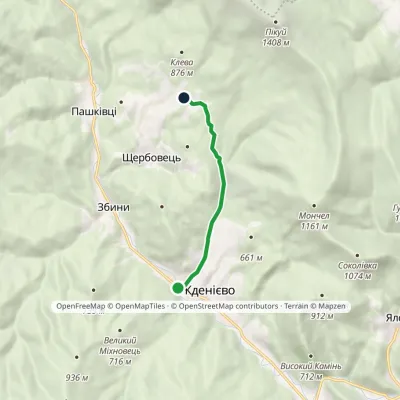 EasyOne-dayMarkedZhdeniievo Mount KlevaElevation profile411–714 m5.4 kmascent 303 m≈ 2 h walking
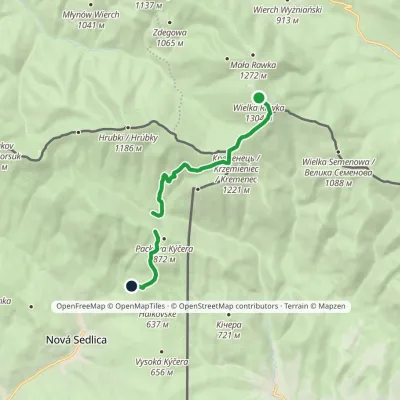 EasyOne-dayMarkedCross-border trail «Brown Bear»: Mount Velyka Ravka Nova SedlytsiaElevation profile586–1 303 m7.9 kmascent 226 m≈ 2.5 h walking
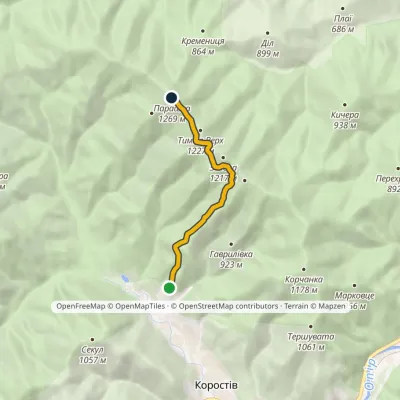 EasyOne-dayMarkedNo. 5044 Korostiv Monastery Mount ParashkaElevation profile653–1 268 m5.8 kmascent 671 m≈ 3 h walking
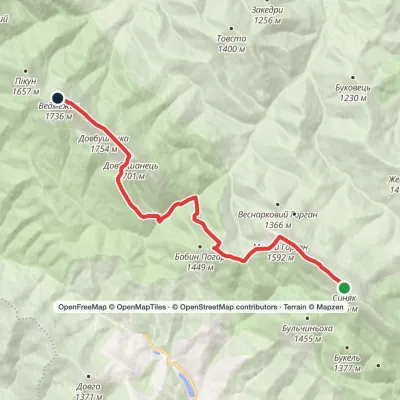 ModerateOne-dayMount Syniak to Mount Vedmezhykvia Mount Malyi Horhan, Mount DovbushankaElevation profile1 004–1 754 m12.3 kmascent 1 006 m≈ 5 h walking
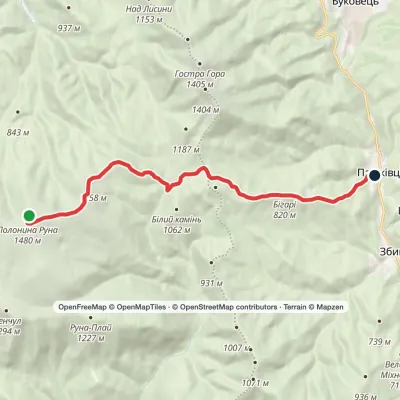 EasyOne-dayMarkedRuna polonyna to Pashkivtsi villagevia Preluka tractElevation profile472–1 480 m13.1 kmascent 88 m≈ 3.5 h walking
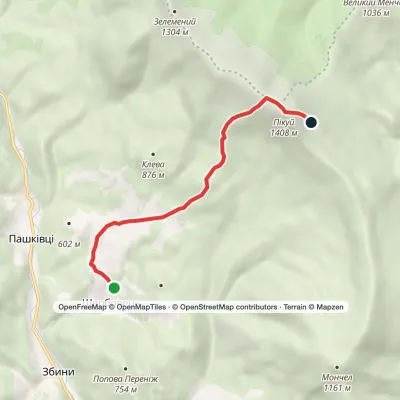 ModerateOne-dayMarkedShcherbovets village Mount PikuiElevation profile511–1 408 m6.1 kmascent 897 m≈ 3.5 h walking
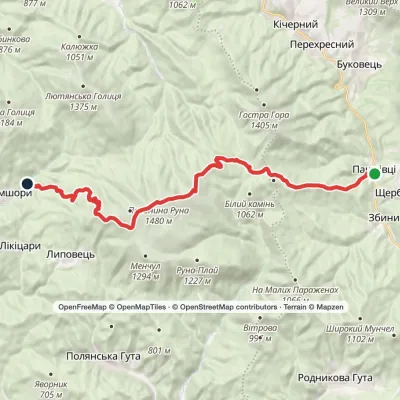 HardTwo-dayMarkedRuna polonynaElevation profile465–1 473 m23.6 kmascent 1 075 m≈ 8 h walking
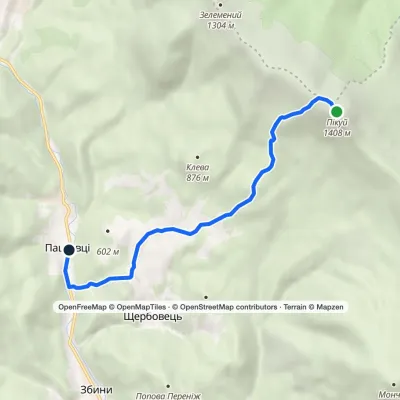 EasyOne-dayMarkedPashkivtsi Mount Pikuivia ShcherbovetsElevation profile458–1 408 m6.8 kmascent 7 m≈ 1.5 h walking
 EasyOne-dayMarkedBlazhiv polonyna Pereslop PassElevation profile853–1 327 m9.3 kmascent 143 m≈ 2.5 h walking
 ModerateTwo-dayMarkedVelykyi Bereznyi village to Chornoholova villagevia Ruskyi Mochar village, Mount YavirnykElevation profile195–1 019 m20.7 kmascent 846 m≈ 7 h walking
Peaks and meadows
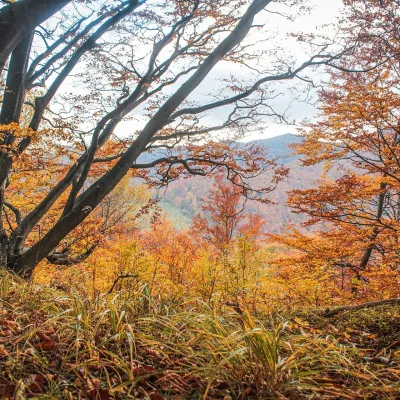 PeakMount Dil (Krushelnytsia)Krushelnytsiaaltitude 899 m · Skole Beskids rangeIt lies north-east of the Parashka ridge, about 2.6 km from Parashka itself (1,268 m), and rises above the village of...
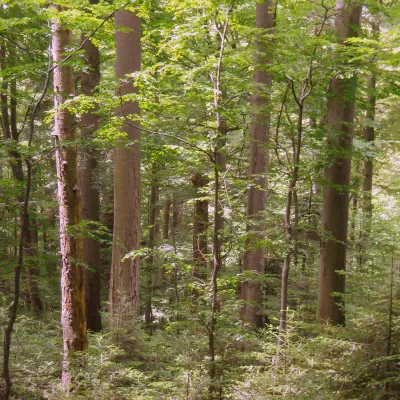 PeakMount KalnytsiaStuzhytsiaaltitude 1 004 mKalnytsia (Slovak: Kalnica) is a 1,004 m mountain on the state border between Ukraine and Slovakia, in the Bukovské...
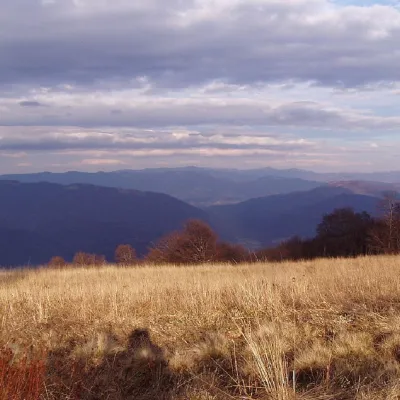 PeakMount YavirnykRuskyi Mocharaltitude 1 017 m17 trails to the topMount Yavirnyk is a 1,017-meter peak of the Ukrainian Carpathians, which is located within the Polonynsky Beskyd.
Waters and waterfalls
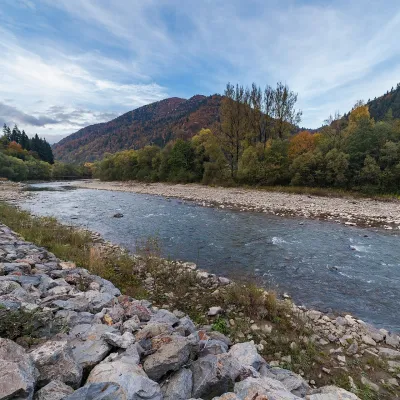 RiverTeresva RiverUst-ChornaThe Teresva forms in Ust-Chorna, where the Mokrianka and Brusturianka meet, and flows south through Dubove, Kalyny,...
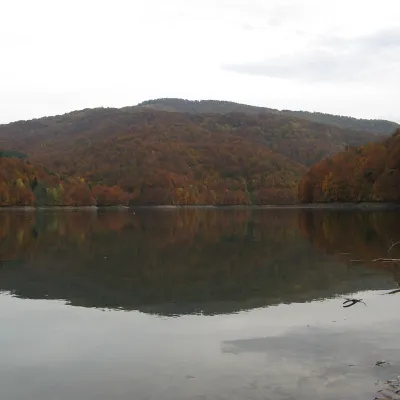 LakeVilshany ReservoirVilshanyThe Vilshany Reservoir, also called the Tereblia-Rika Reservoir, is a narrow mountain lake in the Tereblia valley...
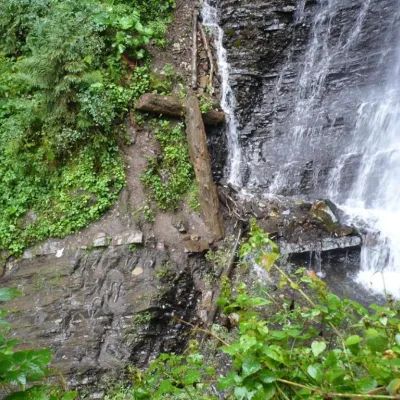 WaterfallZhenetsky Hook waterfallMykulychynZhenetskyi Huk is one of the most convenient Carpathian waterfalls for tourists, as it is accessible by a direct,...
 LakeTruskavets ReservoirTruskavetsTruskavets Reservoir, known locally as Lake Solonytsia, lies on the south-eastern edge of Truskavets, next to the...
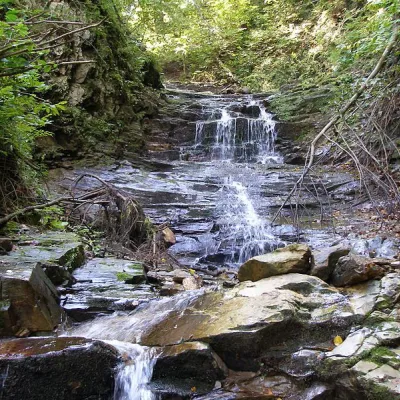 WaterfallChemernarsky waterfall Lower HookDolishnii ShepitThe Chemernarsky Lower Hook Waterfall (also known as Lower Shepit) is located in Dolishnyi Shepit, in the western...
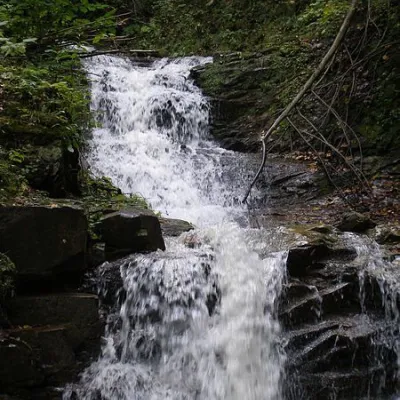 WaterfallChemernarsky Hook waterfallDolishnii ShepitChemernarsky Huk Waterfall is a small but very beautiful waterfall located in the village of Dolishniy Shepit,...
Mountain ranges: Rivna Polonyna, Gorgany. In other countries: 🇷🇴 Bucegi Mountains, 🇷🇴 Piatra Craiului, 🇸🇰 High Tatras, 🇭🇺 Mátra, 🇸🇰 Lesser Fatra, 🇸🇰 Low Tatras, 🇸🇰 Little Carpathians, 🇭🇺 Zemplén Mountains, 🇭🇺 Börzsöny and Cserhát, 🇷🇴 Vrancea Mountains, 🇸🇰 Slovak Ore Mountains, 🇷🇴 Trascău and Metaliferi Mountains
Trails and peaks near which naturalists recorded the species (GBIF, iNaturalist), matched by altitude and habitat. Sightings are not guaranteed.
Sources
- Вікіпедія: Сонечко семикрапкове
- Wikipedia (en): Coccinella septempunctata
- Перелік видів тварин, що заносяться до Червоної книги України (наказ Міндовкілля від 19.01.2021 № 29, зареєстровано в Мін'юсті 01.03.2021 за № 260/35882)
- Міндовкілля: текст переліку видів тварин Червоної книги України (PDF)
- GBIF: таксон і категорія МСОП
GBIF · iNaturalist · Wikidata · Distribution data: GBIF.org (CC0 and CC BY records), iNaturalist; names and identifiers: Wikidata (CC0). Text: Karpaty.rocks, checked 09.11.2026.
