Great tit
About
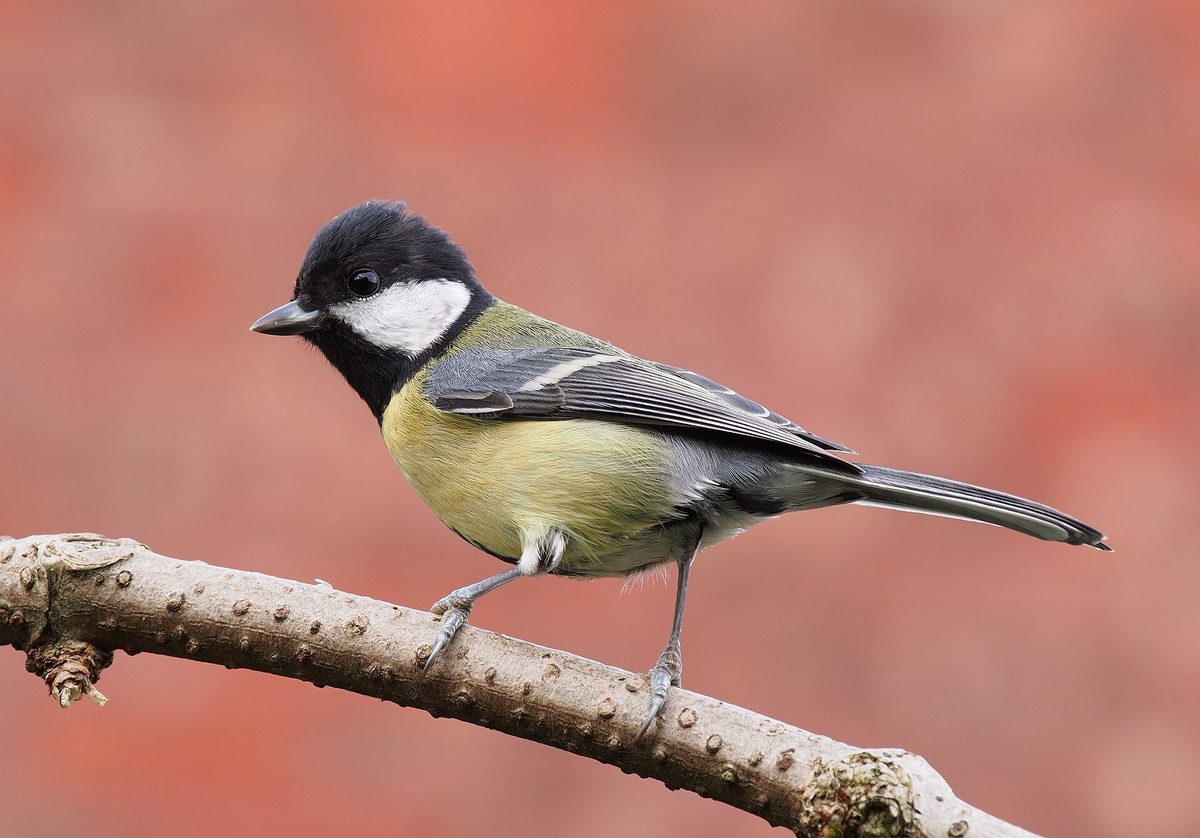
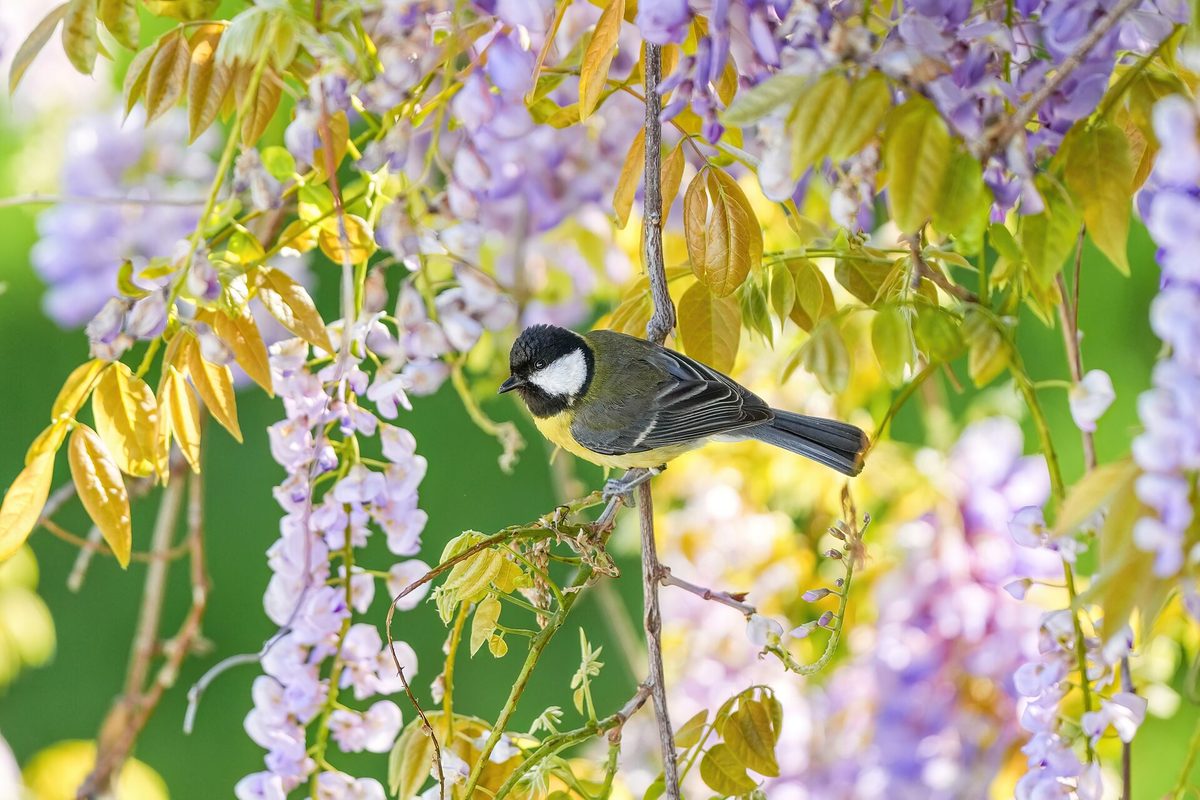
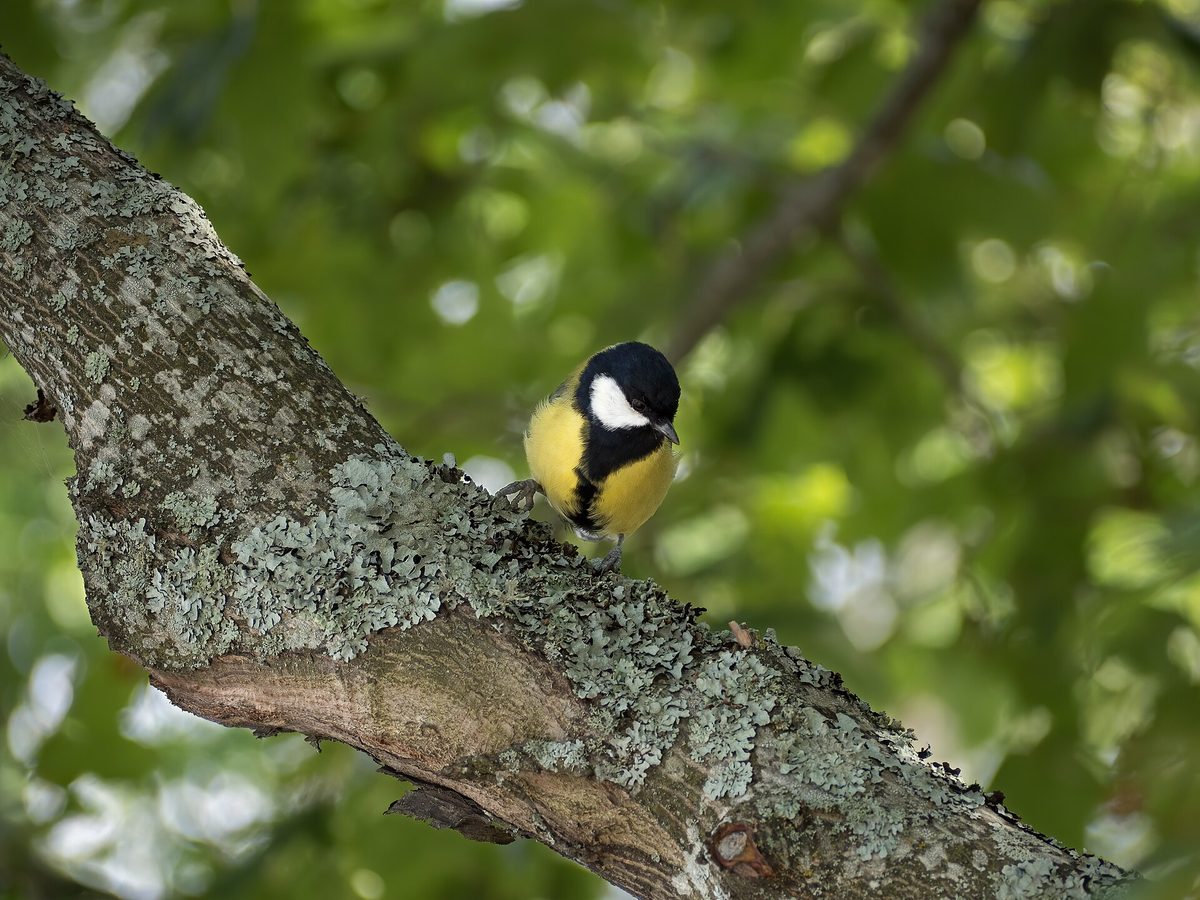
The Great tit is a bird about the size of a sparrow, 12.5–14 cm long. The head is black with white cheeks, the back is olive-green, and the belly is yellow with a black longitudinal stripe. In males, the stripe is wide and extends to the legs, while in females it is narrower and shorter.
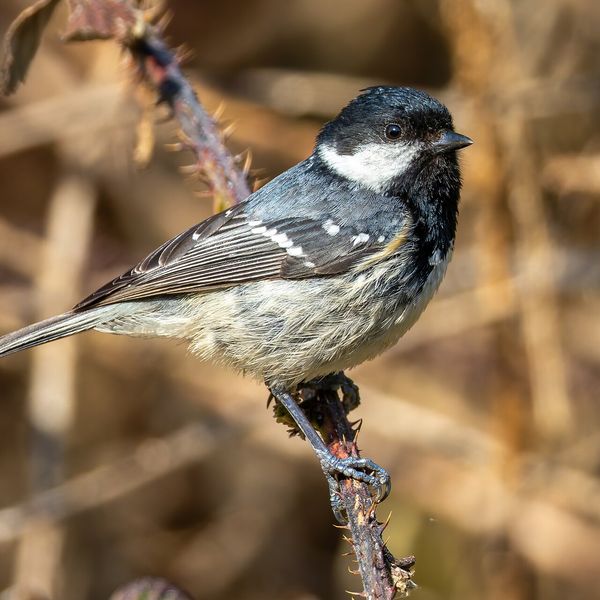
In the Carpathians, the Great tit lives in deciduous and mixed forests, gardens, parks, and villages, most often in valleys and the lower forest belt. In continuous spruce forests, it is replaced by smaller relatives — the Coal tit and the Crested tit.
It nests in tree holes, wall crevices, and nest boxes. In summer, it eats insects and spiders, while it primarily feeds its chicks with caterpillars. In autumn and winter, it switches to seeds and eagerly visits feeders.
This is a resident bird: Great tits do not migrate but form flocks in winter along with other tits, creepers, and woodpeckers. Therefore, during winter hikes, it is often the flocks of tits that enliven the quiet forest.
At the end of winter, as soon as the sun warms up, males begin to sing — the ringing two-syllable "tsi-tsi-pi" can be heard from afar. The song has many variations, and even experienced observers do not always immediately recognize the common tit in an unfamiliar voice.
Where in the Carpathians

Teal — roughly where the species can occur, by elevation and habitat; orange — where naturalists recorded it (GBIF, CC0/CC BY).
Range: elevation belt and the countries where it is known — our model (AWS Terrain Tiles)
- Countries
- Ukraine · Slovakia · Czechia · Poland · Hungary · Romania · Serbia · Austria · BG
- Mountain ranges
- nearly all Carpathian ranges, within its elevation belt
- Altitude belts
- Foothills (below 600 m) · Beech forests (600–1200 m)
When to see it
| Jan | Feb | Mar | Apr | May | Jun | Jul | Aug | Sep | Oct | Nov | Dec | |
|---|---|---|---|---|---|---|---|---|---|---|---|---|
| Sightings |
From naturalists’ observations in the Carpathians (iNaturalist, research grade): the darker the cell, the more often the species is seen that month.
Protection and rules
Not listed in the Red Book of Ukraine.
FAQ
Do Great tits migrate in winter?
No, the Great tit is a resident bird. In winter, it forms flocks and stays closer to homes and feeders.
How to distinguish a male Great tit from a female?
By the black stripe on the yellow belly: in males, it is wide and extends to the legs, while in females it is narrow and interrupted.
Comments
Travellers’ experience: reports, tips, questions.
No one has written here yet. Be the first — your experience helps others.
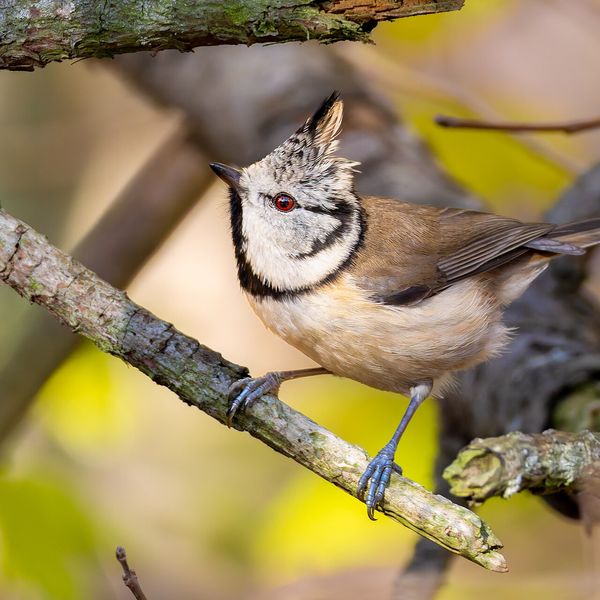
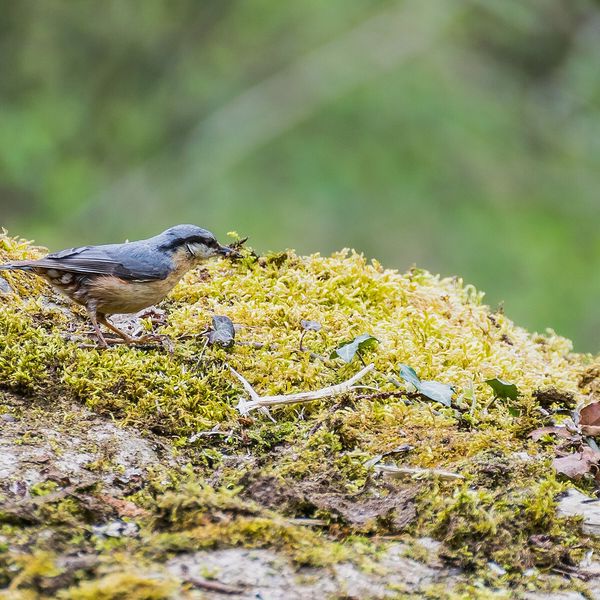
Similar species
Where to meet it
Peaks and meadows
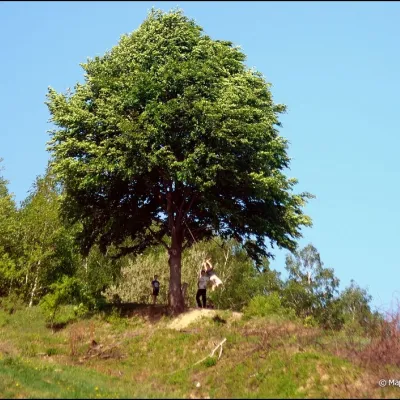 PeakMount KicheraKosivaltitude 567 mThe march to Kichera is an easy walk that all tourists can do. The small length of the march allows you to take your...
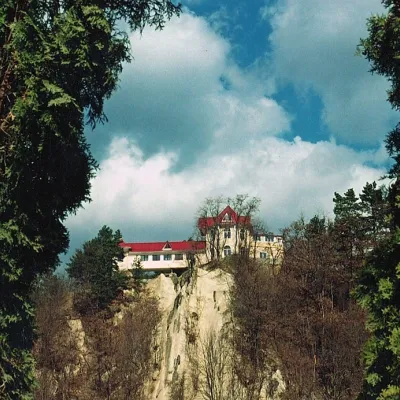 PeakCastle Hill (City)Kosivaltitude 450 mThe top offers a panoramic view of the city. The mountain is home to unique black alpine pines, as well as deciduous...
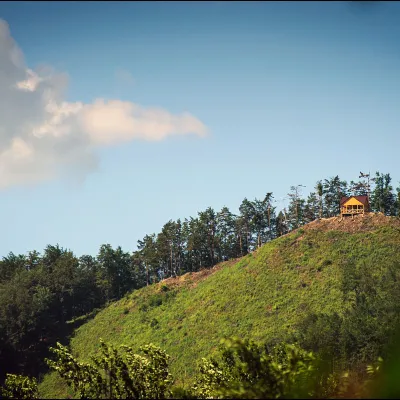 PeakMount Ostry (Ostra)Kosivaltitude 584 m2 trails to the topThe mountain offers wonderful views of the entire Kosiv. The descent is steep, and autumn is magical here.
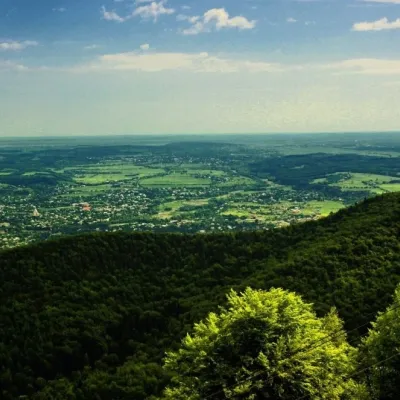 PeakMount Mykhalkova (Kosiv)Kosivaltitude 812 m2 trails to the topMount Mykhalkova (Mykhalkiv), with a height of 812 meters, is part of the Pokuttya Carpathians.
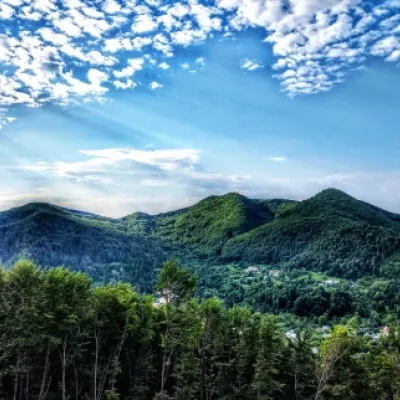 PeakMount Sopka (Stizhky, Zinyakov top).Kosivaltitude 620 m2 trails to the topStizhki (620 meters) offers a panoramic view of the city of Kosiv. The mountain is covered with forests - beech,...
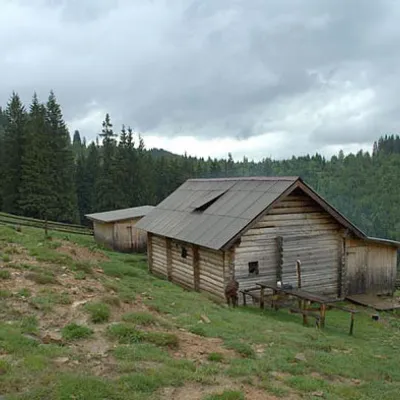 Mountain meadow1 031 mPolonyna DilKryvopilliaShepherds graze cows in the meadow. You can buy dairy products from the shepherds, as well as take part in a master...
Waters and waterfalls
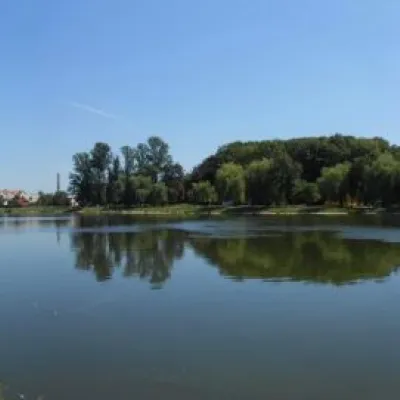 LakeCity lake in KolomyiaKolomyiaAfter touring the city, it's a good idea to relax and unwind by the water.
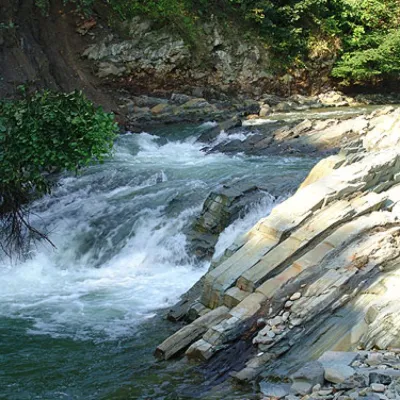 WaterfallKosivskyi Huk WaterfallKosivKosivskyi Huk - one of the most beautiful waterfalls in the Ukrainian Carpathians (in the Pokuttya-Bukovyna...
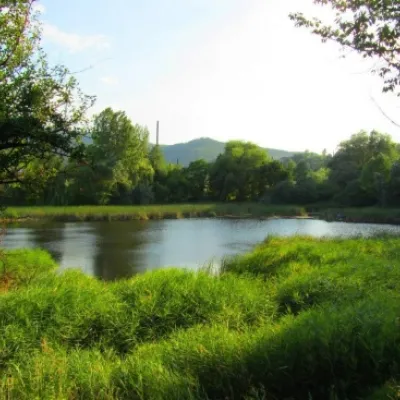 LakeCity Banske Lake (Kosiv)KosivThere are lakes of technogenic origin in the Hutsul mountains. One such lake is Banske Lake (near the former factory ...
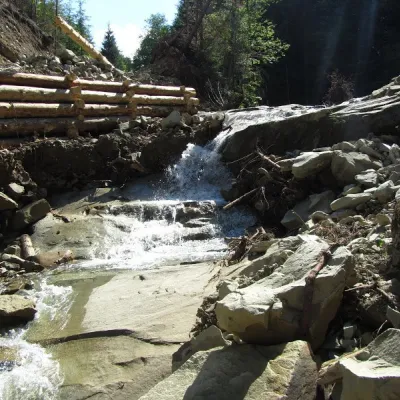 WaterfallSiruchok waterfallTovarnytsiaSiruchok is a waterfall located in the Putyla district of the Chernivtsi region of Ukraine. its height reaches about...
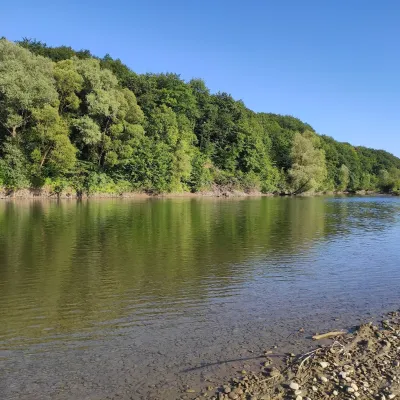 RiverBystrytsia Solotvynska RiverSolotvynThe Bystrytsia Solotvynska rises at about 1,390 m at the foot of Mala Syvulia and Bystryk, near the Peklo cliffs in...
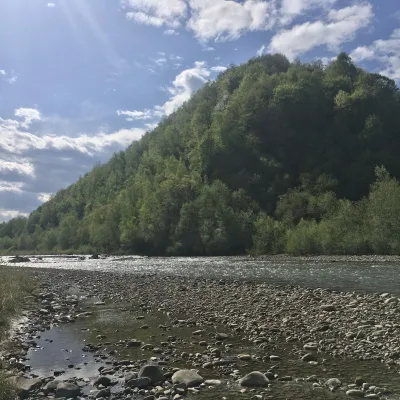 RiverBystrytsia Nadvirnianska RiverNadvirnaThe Bystrytsia Nadvirnianska rises on the northern slope of Mount Chorna Kleva in the Gorgany, at about 1,280 m.
Mountain ranges: Bieszczady. In other countries: 🇭🇺 Börzsöny and Cserhát, 🇨🇿 Moravian-Silesian Beskids, 🇸🇰 Western Tatras, 🇭🇺 Bükk, 🇷🇴 Bucegi Mountains, 🇸🇰 Slovak Ore Mountains, 🇸🇰 High Tatras, 🇸🇰 Slovak Central Mountains, 🇵🇱 Silesian Beskids, 🇸🇰 Low Tatras, 🇷🇴 Trascău and Metaliferi Mountains, 🇸🇰 Volovec Mountains, 🇷🇸 Đerdap and Miroč
Trails and peaks near which naturalists recorded the species (GBIF, iNaturalist), matched by altitude and habitat. Sightings are not guaranteed.
Sources
- Вікіпедія: Синиця велика
- Wikipedia (en): Great tit
- iNaturalist: Parus major (спостереження в Карпатах)
GBIF · iNaturalist · Wikidata · Distribution data: GBIF.org (CC0 and CC BY records), iNaturalist; names and identifiers: Wikidata (CC0). Text: Karpaty.rocks, checked 11.11.2026.
