Eurasian nuthatch
About
The Eurasian nuthatch is a small but very noticeable bird of old forests. In Ukraine, it is resident or nomadic and is found in Polissia, in the Forest-Steppe, and in the Carpathians — most often in old deciduous and mixed forests where there are plenty of hollow trees, as well as in old parks.
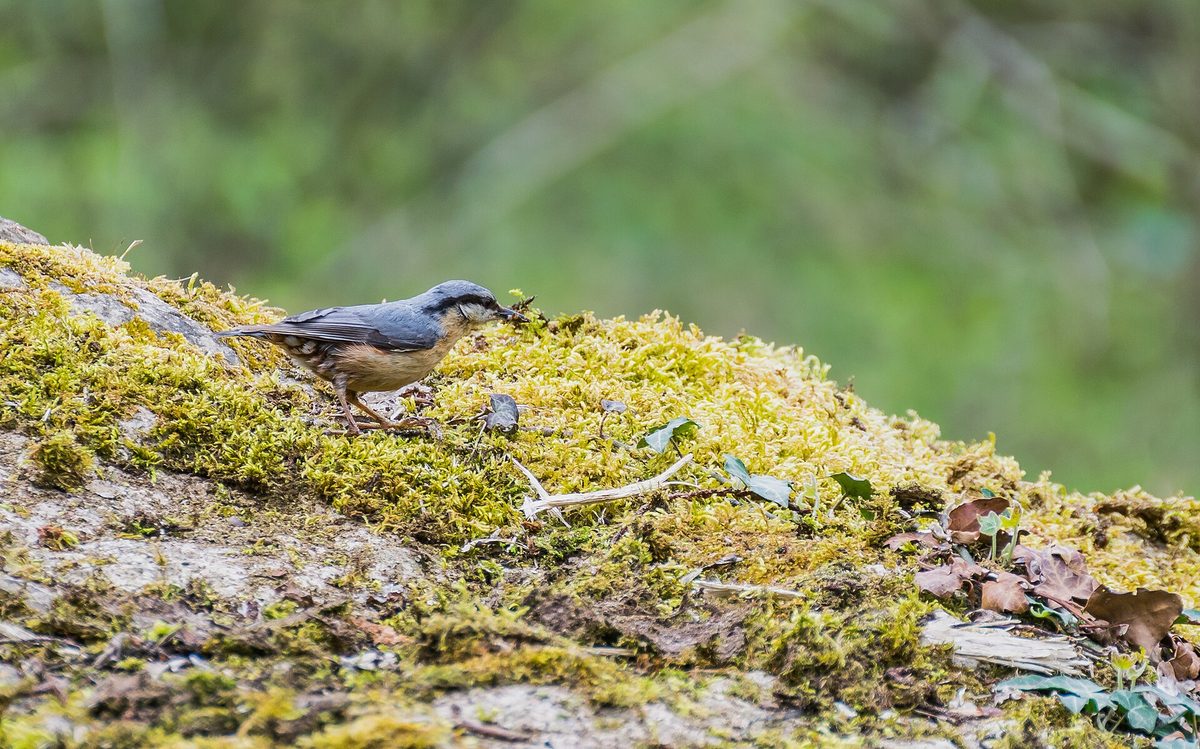
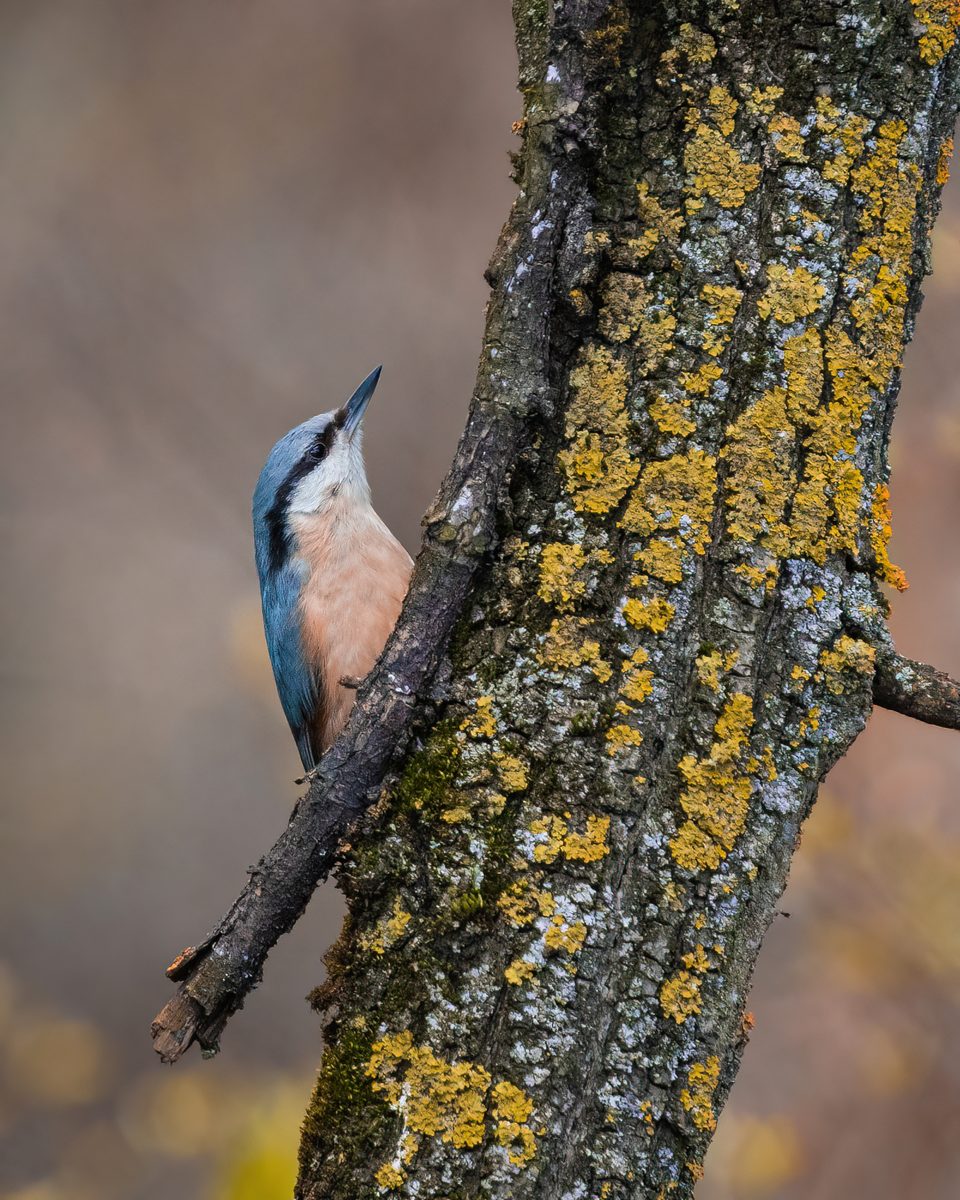
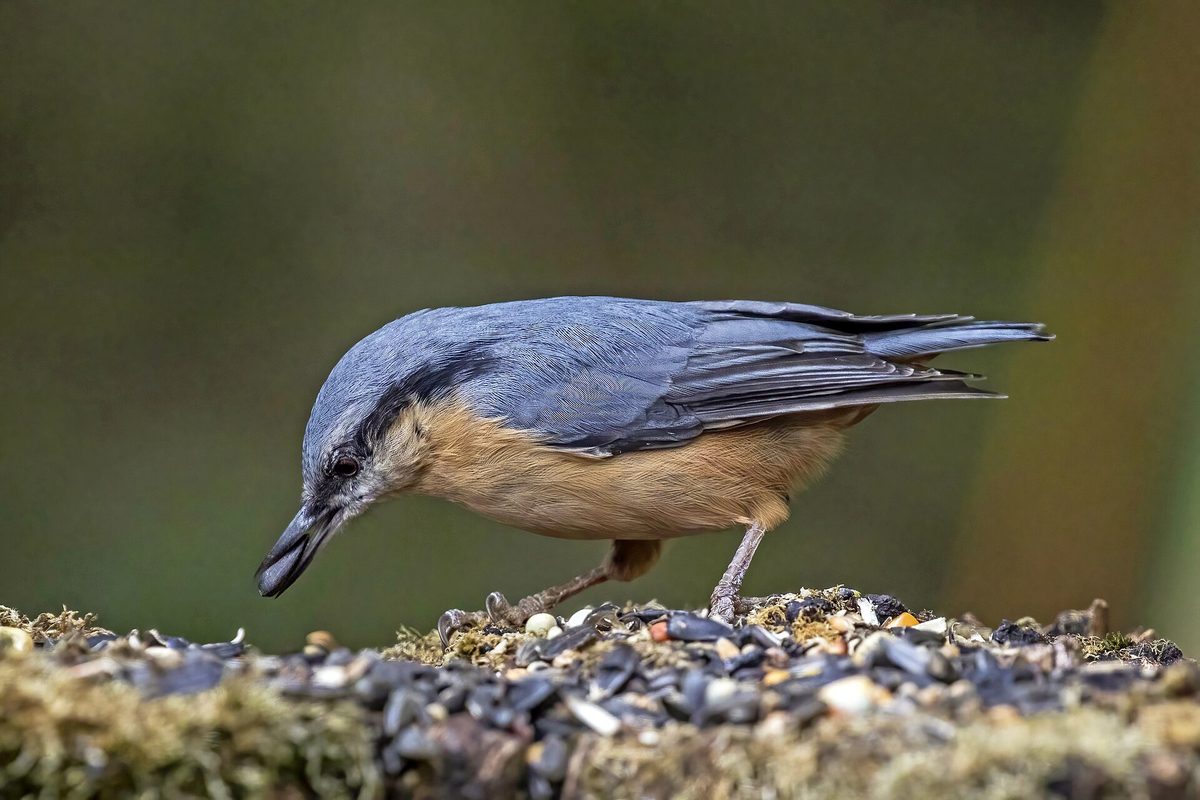
The bird is about 14 cm long and weighs 19–24 g, with a large head, short tail, and strong sharp beak. Its back is blue-grey, the underside is ochre, and a black stripe stretches across its eye like a mask. The most distinctive feature is its behavior: the Eurasian nuthatch nimbly climbs up, down, and sideways on trunks, boldly descending headfirst, which neither woodpeckers nor treecreepers can do.
The Eurasian nuthatch is very vocal. It often gives a loud sharp call of "tvit", usually repeated twice, and when alarmed, a piercing "sirrr". Its song is a slow whistle of "pee-pee-pee" in many variations. In spring, these sounds resonate through the forest even before the leaves unfold.
The Eurasian nuthatch nests in tree holes and crevices at heights of 2–20 m, often in old woodpecker holes. If the entrance is too large, the female narrows it by plastering it with clay and mud, and often also muds the inside of the hole. The bottom of the hole is lined with pieces of pine bark or small chips. The female incubates the eggs for 13–18 days, and the chicks fledge after another 20–26 days. The Eurasian nuthatch is not listed in the Red Book of Ukraine.
Where in the Carpathians

The map shows where naturalists recorded the species (GBIF, CC0 and CC BY records), not every place it lives. The Ukrainian Carpathians are less studied, so a blank area does not mean the species is absent.
- Countries
- Slovakia · Czechia · Poland · Hungary · Romania · Ukraine · Austria · Serbia · BG
- Mountain ranges
- Börzsöny and Cserhát, Moravian-Silesian Beskids, Bükk, Skole Beskids, Bucegi Mountains, Volovec Mountains, Slovak Ore Mountains, Little Carpathians, Silesian Beskids, Bieszczady
- Altitude belts
- Foothills (below 600 m) · Beech forests (600–1200 m)
When to see it
| Jan | Feb | Mar | Apr | May | Jun | Jul | Aug | Sep | Oct | Nov | Dec | |
|---|---|---|---|---|---|---|---|---|---|---|---|---|
| Sightings |
From naturalists’ observations in the Carpathians (iNaturalist, research grade): the darker the cell, the more often the species is seen that month.
Protection and rules
Not listed in the Red Book of Ukraine.
FAQ
What bird runs down the trunk headfirst?
This is the Eurasian nuthatch — a blue-grey bird with a black stripe across its eye. It is the only bird in our forests that can descend headfirst so nimbly.
Why does the Eurasian nuthatch plaster its hole with clay?
To narrow a too-large entrance: this way, larger birds and predators cannot squeeze into the hole.
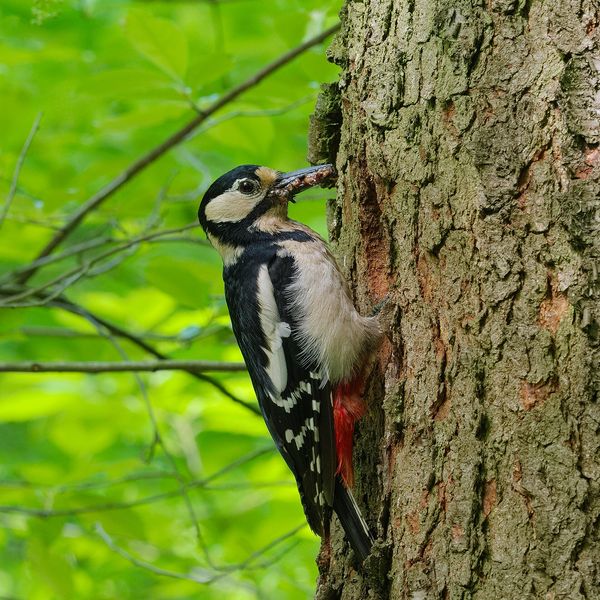
Similar species
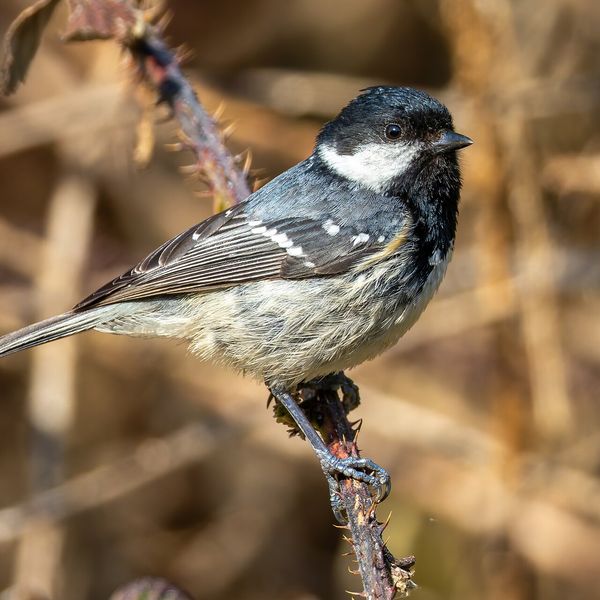
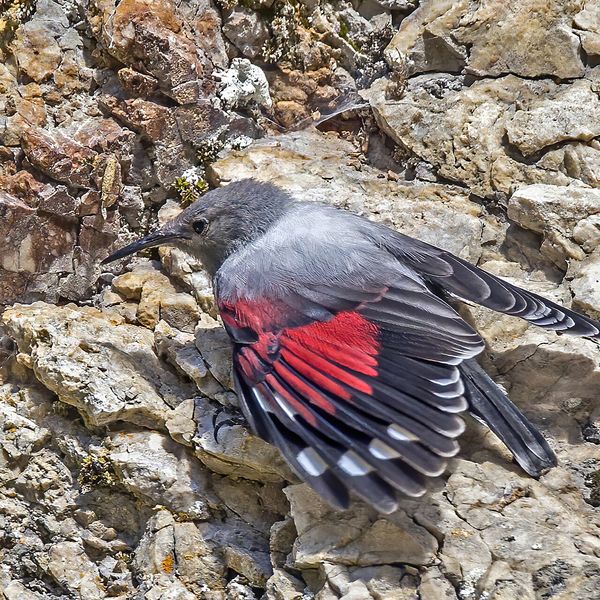
Where to meet it
Trails
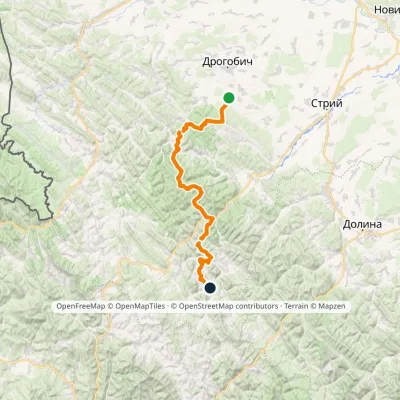 HardMulti-dayMarkedNo. 504 Truskavets SlavskoElevation profile349–1 168 m88.5 kmascent 4 090 m
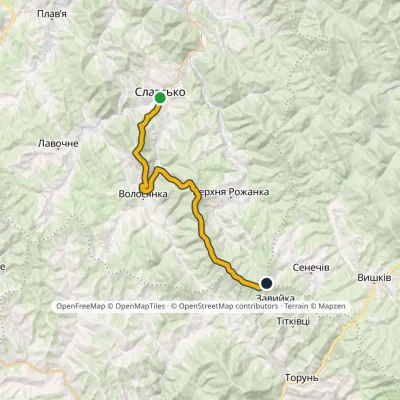 HardTwo-dayMarkedNo. 5011 Slavsko «Where Three Regions Meet»Elevation profile592–1 287 m24.5 kmascent 1 326 m≈ 9 h walking
 HardMulti-daySlavske village to Lake Synevyrvia the Bukovets PassElevation profile587–1 306 m53.8 kmascent 1 585 m
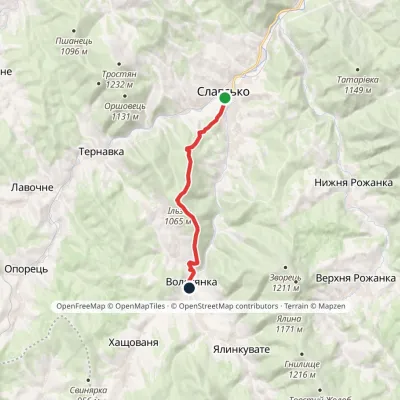 ModerateOne-dayMarkedNo. 5001 Slavske Volosianka villagevia Mount IlzaElevation profile599–1 065 m9.1 kmascent 492 m≈ 3.5 h walking
 HardTwo-dayTukhlia village to Slavskevia Mount MakivkaElevation profile521–1 090 m23.2 kmascent 1 065 m≈ 8 h walking
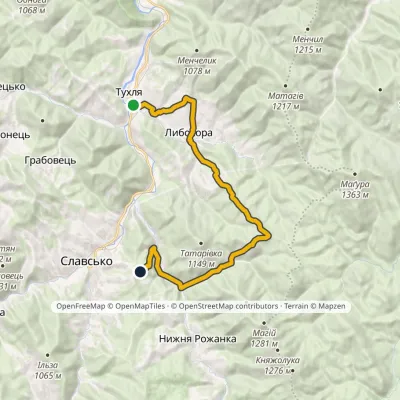 ModerateTwo-dayMarkedNo. 5002 Tukhlia Slavskovia LybokhoraElevation profile542–951 m20.3 kmascent 815 m≈ 6.5 h walking
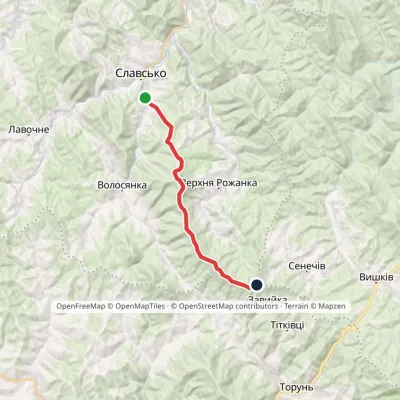 ModerateTwo-dayMarkedSlavske Obnoha tractvia Mount Chorna RipaElevation profile603–1 287 m17.2 kmascent 883 m≈ 6 h walking
 HardMulti-dayTukhlia village to Skolevia Mount Kindrat, Mount Matahiv +2Elevation profile445–1 265 m29.6 kmascent 1 569 m≈ 10.5 h walking
 HardMulti-dayDubyna village to Tukhlia villagevia Kamianka Waterfall, Mount Lopata +1Elevation profile418–1 233 m38.8 kmascent 1 600 m≈ 13 h walking
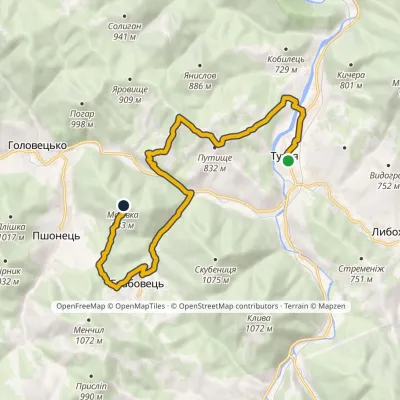 ModerateOne-dayMarkedNo. 5014 «To Zakhar Berkut»: Tukhlia Mount MakivkaElevation profile525–958 m14.4 kmascent 743 m≈ 5 h walking
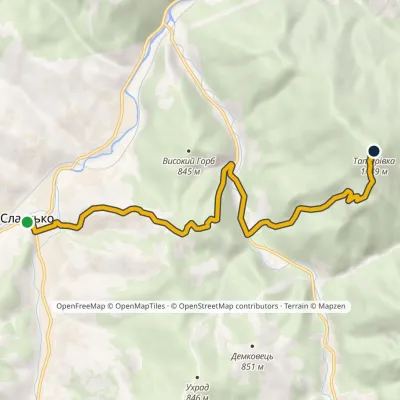 ModerateOne-dayMarkedNo. 5013 Slavsko Mount Tatarivka (Teterivka)Elevation profile587–1 149 m8.6 kmascent 775 m≈ 3.5 h walking
 ModerateTwo-dayHrebeniv village to Skolevia Mount Kudriavets, Mount LopataElevation profile437–1 242 m18 kmascent 780 m≈ 6 h walking
Peaks and meadows
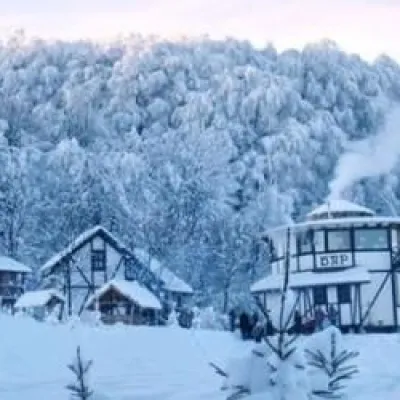 PeakMount TsetsynoChernivtsialtitude 537 mTsetsyno is the highest hill of the Chernivtsi Upland, 537 m high (538 m according to other data).
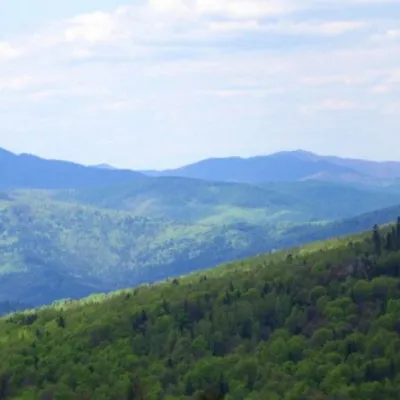 PeakMount KlyuchKamiankaaltitude 927 m · Skole Beskids range2 trails to the topMount Klyuch is one of the peaks of the ridge in the Skole Beskydy, which starts from the Sukel River (Bukivets...
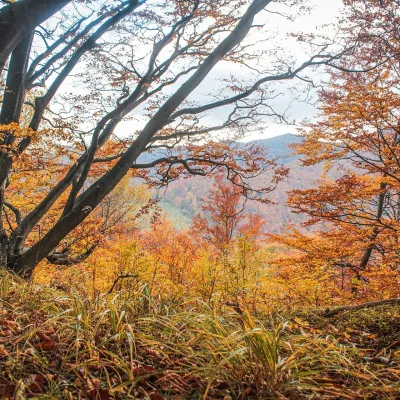 PeakMount Dil (Krushelnytsia)Krushelnytsiaaltitude 899 m · Skole Beskids rangeIt lies north-east of the Parashka ridge, about 2.6 km from Parashka itself (1,268 m), and rises above the village of...
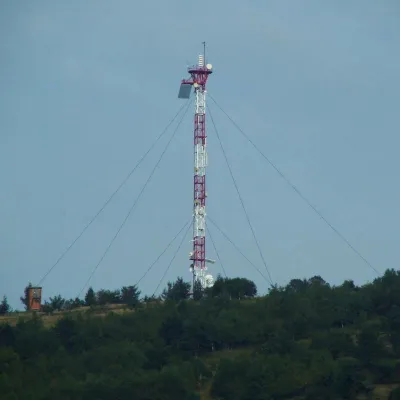 PeakMount Horodyshche (Boryslav)Boryslavaltitude 646 mHorodyshche (646 m; other sources give 641.8 m) is a hill in the Upper Dniester Beskids and the highest point of the...
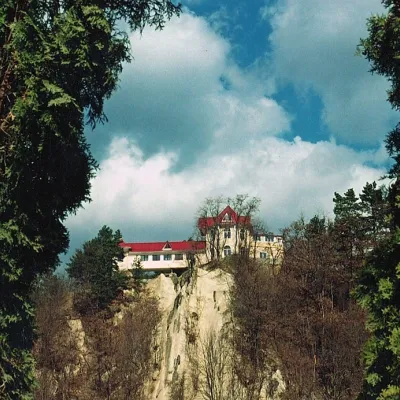 PeakCastle Hill (City)Kosivaltitude 450 mThe top offers a panoramic view of the city. The mountain is home to unique black alpine pines, as well as deciduous...
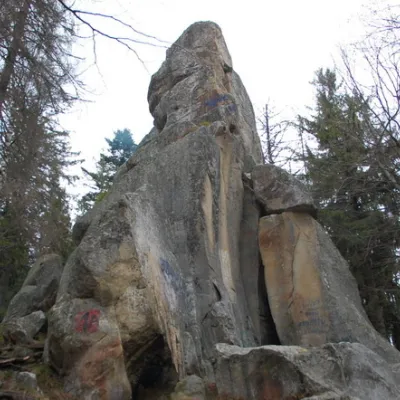 PeakWhite Stone RockDoraaltitude 538 m7 trails to the topThe White Stone Rock is located in the village of Dora in the Carpathians and is one of the most prominent natural...
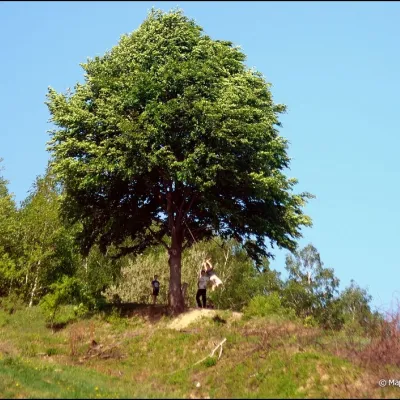 PeakMount KicheraKosivaltitude 567 mThe march to Kichera is an easy walk that all tourists can do. The small length of the march allows you to take your...
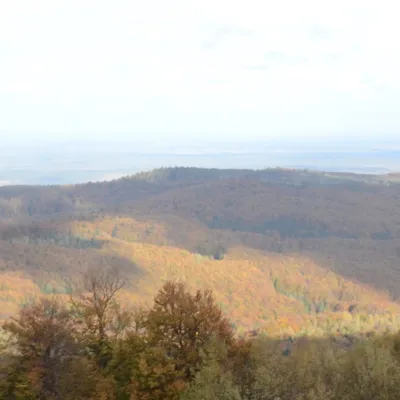 PeakMount BobovyshcheOrivaltitude 817 m4 trails to the topBobovyshche (also called Popivska) is an 817 m mountain in the Upper Dniester Beskids, Lviv Oblast.
 Mountain meadow674 mPolonyna Rosokhata (Sheshory)SheshoryWhy is the meadow called "Rosokhata"? The two parts of the field that form the branches look like dewdrops.
Waters and waterfalls
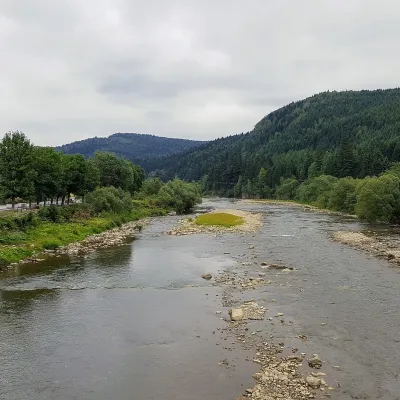 RiverOpir RiverSkoleThe Opir is a 58-km mountain river of the Skole Beskids. It rises on the eastern slope of Mount Velykyi Yavirnyk,...
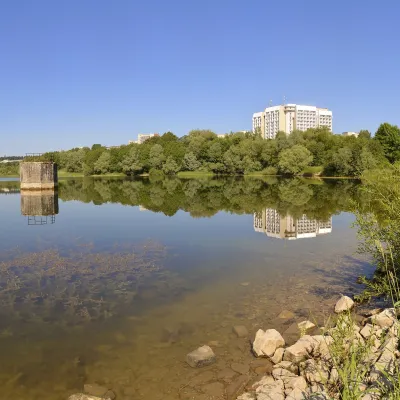 LakeTruskavets ReservoirTruskavetsTruskavets Reservoir, known locally as Lake Solonytsia, lies on the south-eastern edge of Truskavets, next to the...
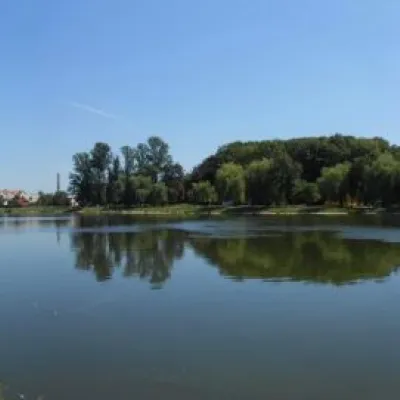 LakeCity lake in KolomyiaKolomyiaAfter touring the city, it's a good idea to relax and unwind by the water.
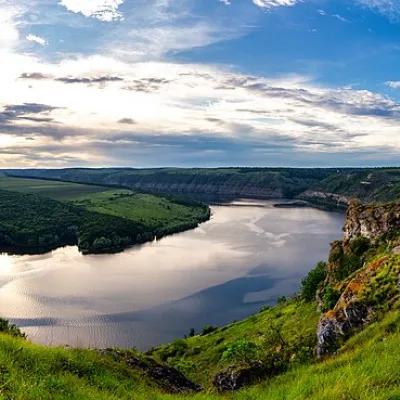 RiverDniesterVovcheThe Dniester is one of the most famous and largest rivers in Ukraine. The Dniester has been used as an important...
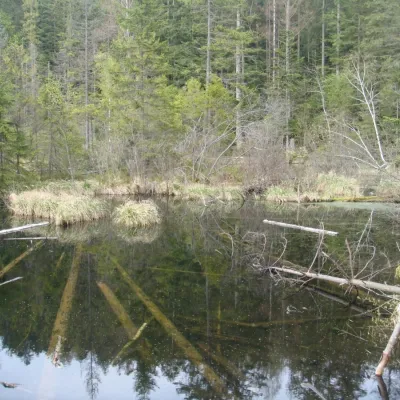 LakeLake Zhuravlyne (Dead Lake)KamiankaThere is one mysterious place in the Skole Beskydy National Nature Park - Zhuravlyne Lake, also called Dead Lake.
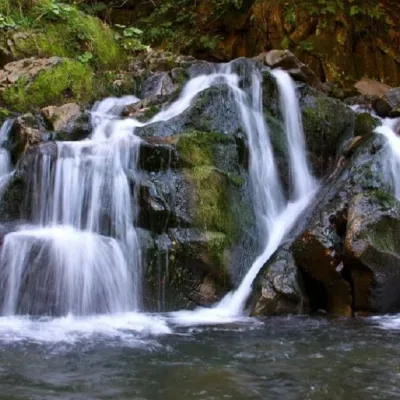 WaterfallKamianka waterfallDubyna"Kamianka Waterfall or Kamianka Waterfall is the most famous waterfall located on the mountain river of the same name...
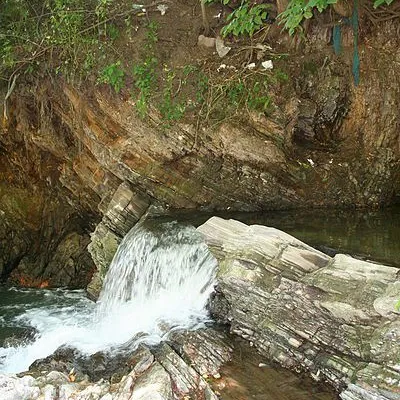 WaterfallBoryslav waterfallBoryslavThe Young Boryslav Waterfall is a small waterfall (falling height is about two meters).
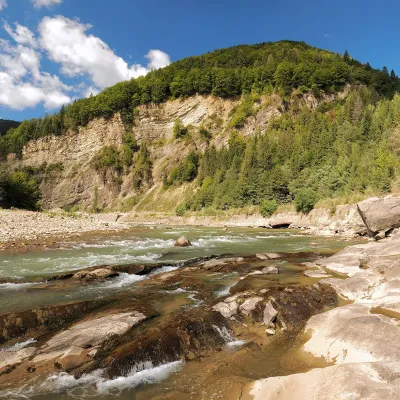 RiverCheremosh RiverVyzhnytsiaThe Cheremosh is born near Usteriky, where the Chornyi Cheremosh and the Bilyi Cheremosh meet.
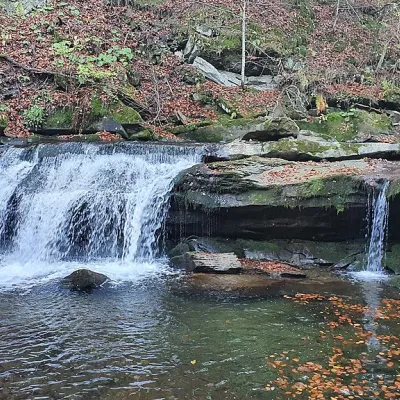 WaterfallKrushelnytskyi waterfallKrushelnytsiaThe real decoration of the mighty Carpathian Mountains is its numerous picturesque waterfalls.
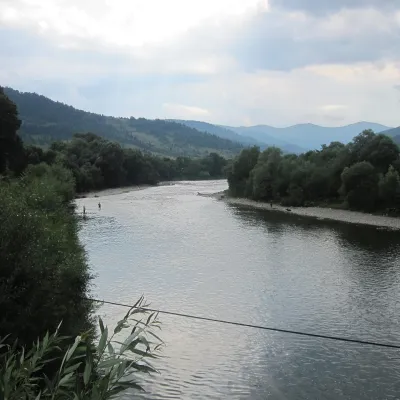 RiverStryi RiverTurkaThe Stryi is one of the largest Carpathian tributaries of the Dniester: 232 km from its source between Mount Yavirnyk...
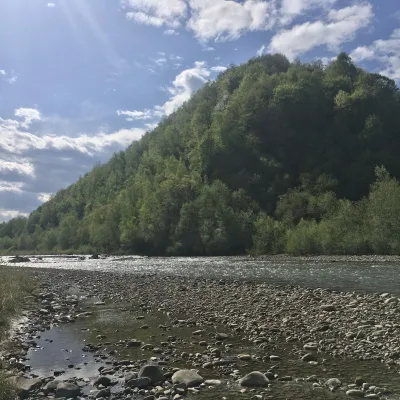 RiverBystrytsia Nadvirnianska RiverNadvirnaThe Bystrytsia Nadvirnianska rises on the northern slope of Mount Chorna Kleva in the Gorgany, at about 1,280 m.
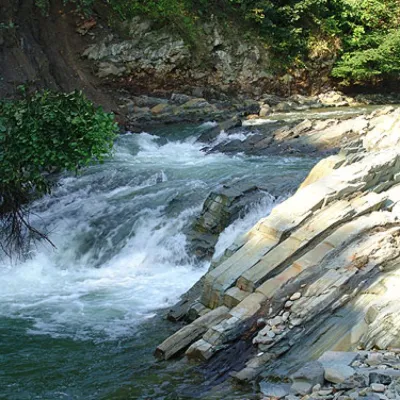 WaterfallKosivskyi Huk WaterfallKosivKosivskyi Huk - one of the most beautiful waterfalls in the Ukrainian Carpathians (in the Pokuttya-Bukovyna...
Mountain ranges: Skole Beskids, Bieszczady. In other countries: 🇭🇺 Börzsöny and Cserhát, 🇨🇿 Moravian-Silesian Beskids, 🇭🇺 Bükk, 🇷🇴 Bucegi Mountains, 🇸🇰 Volovec Mountains, 🇸🇰 Slovak Ore Mountains, 🇸🇰 Little Carpathians, 🇵🇱 Silesian Beskids, 🇸🇰 Western Tatras, 🇵🇱 Żywiec Beskids, 🇸🇰 High Tatras, 🇭🇺 Zemplén Mountains
Trails and peaks near which naturalists recorded the species (GBIF, iNaturalist), matched by altitude and habitat. Sightings are not guaranteed.
Sources
- Вікіпедія: Повзик звичайний
- Wikipedia (en): Eurasian nuthatch
- Wikipedia (pl): Kowalik (zwyczajny)
- Перелік видів тварин, що заносяться до Червоної книги України (наказ Міндовкілля від 19.01.2021 № 29, зареєстровано в Мін'юсті 01.03.2021 за № 260/35882)
- Міндовкілля: текст переліку видів тварин Червоної книги України (PDF)
- GBIF: таксон і категорія МСОП
GBIF · iNaturalist · Wikidata · Distribution data: GBIF.org (CC0 and CC BY records), iNaturalist; names and identifiers: Wikidata (CC0). Text: Karpaty.rocks, checked 09.11.2026.
