Common hazel
About
Common hazel is a tall bush, sometimes a small tree, 2–7 m high, without which it is hard to imagine the edges and underbrush of the Carpathian deciduous and mixed forests. It is shade-tolerant, so it feels good under the canopy of beech, hornbeam, or oak, and forms dense thickets in clearings and edges. It is widespread throughout Ukraine.
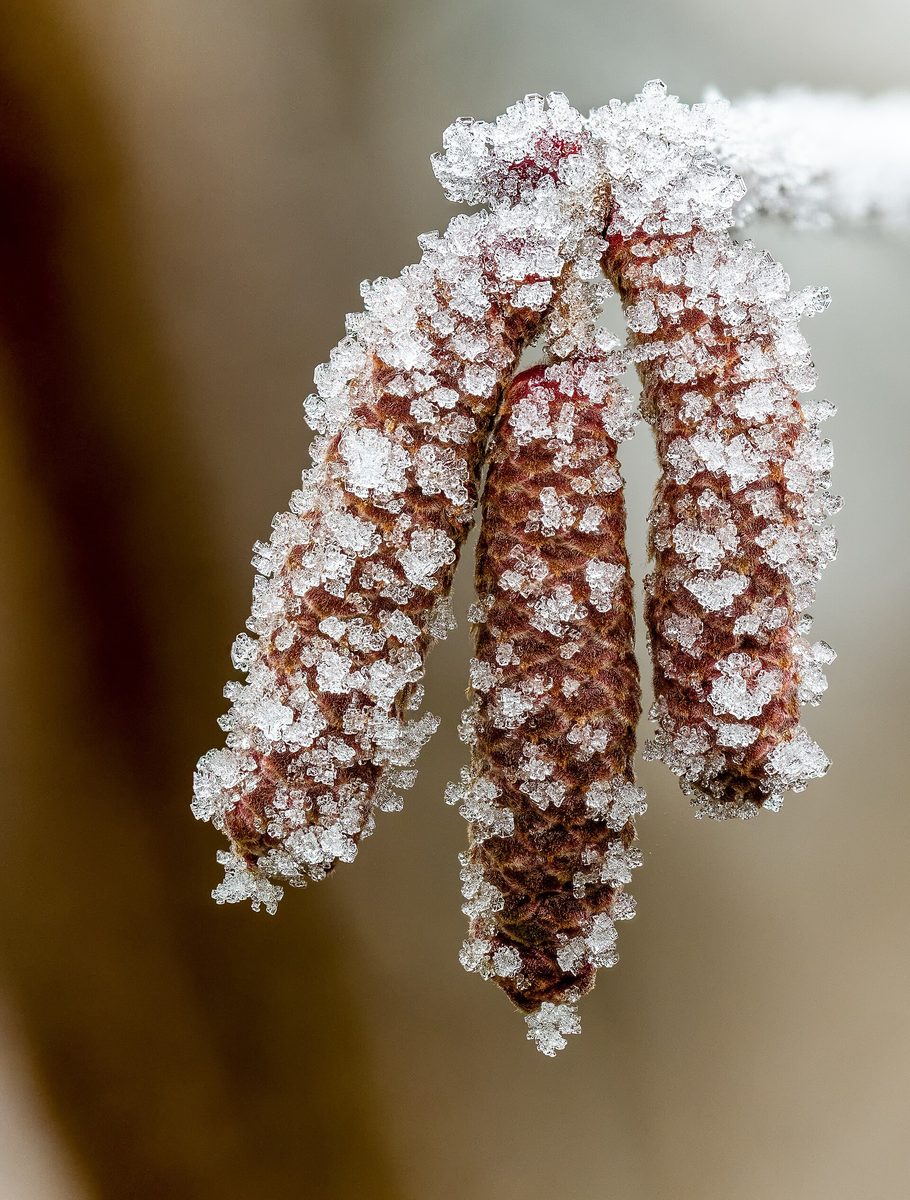
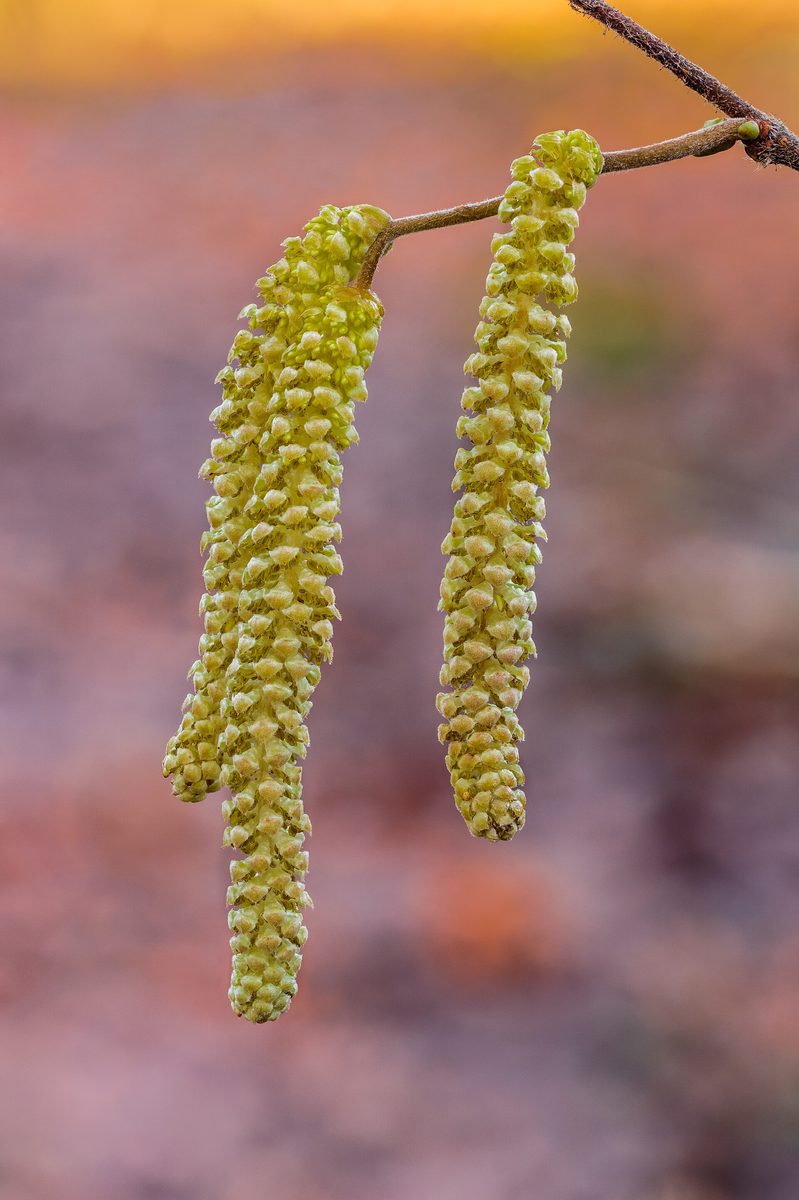
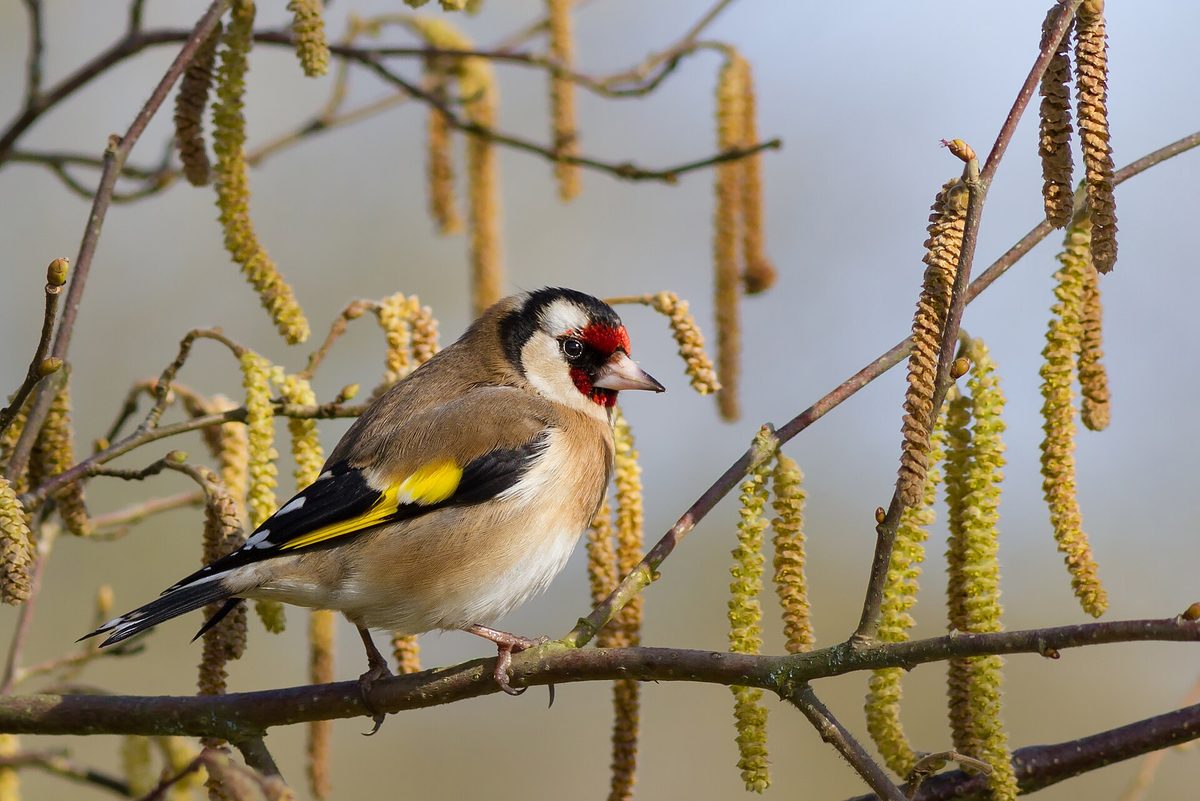
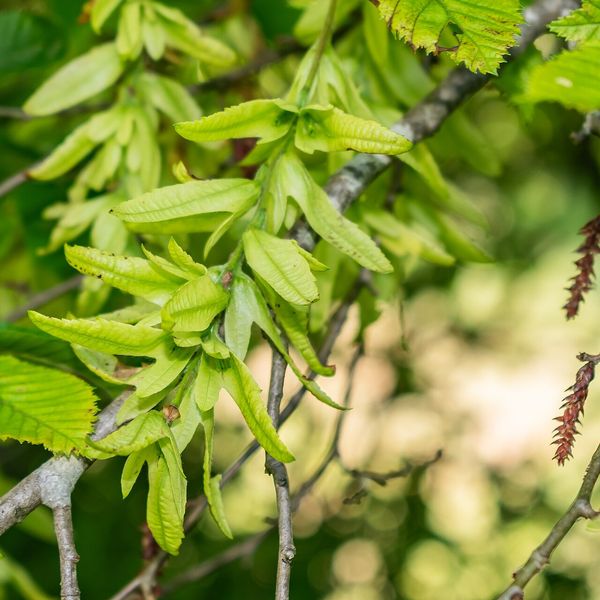
Common hazel blooms as one of the first — in March–April, before the leaves unfold. Male flowers are gathered in long yellow catkins that release pollen at the slightest breeze, while female flowers are hidden in buds, with only tiny red stigmas peeking out. The leaves are broad, rounded, with a double-toothed edge, and feel soft to the touch.
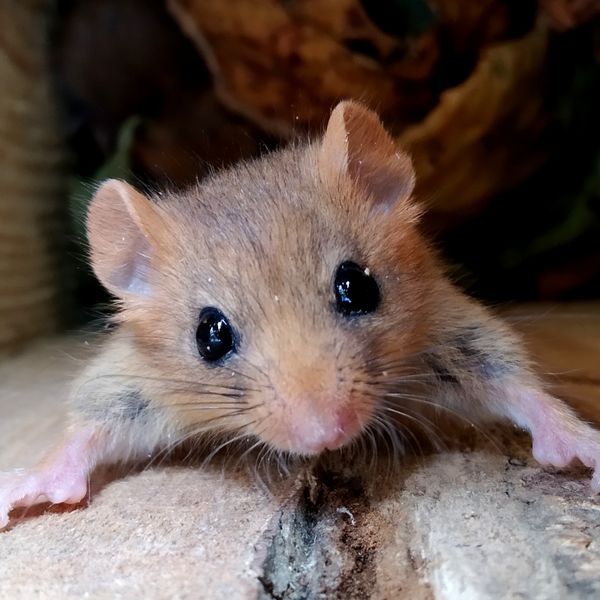
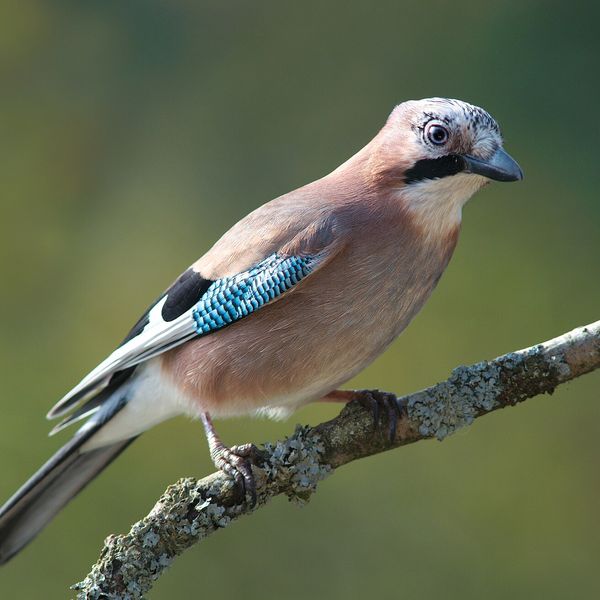
The fruit is a nut 15–20 mm wide in a green tubular husk; it ripens in August. Common hazel nuts are eaten by humans, but even more so by forest inhabitants: squirrels, jays, creepers, mice, and dormice. The dormouse, a small reddish rodent, particularly loves hazelnuts, which is why it is called 'hazel dormouse' in English. The nut kernel is very nutritious, containing 57–62% fat. Cultivated varieties of hazel are known as filbert. Mushrooms often grow under hazel, forming mycorrhiza with it, including the delicate chanterelle, which should not be collected.
Common hazel is not listed in the Red Book of Ukraine. When collecting nuts, leave some for animals and birds: it is an important winter reserve for them.
Where in the Carpathians

The map shows where naturalists recorded the species (GBIF, CC0 and CC BY records), not every place it lives. The Ukrainian Carpathians are less studied, so a blank area does not mean the species is absent.
- Countries
- Slovakia · Czechia · Ukraine · Poland · Romania · Austria · Hungary
- Mountain ranges
- Strážov Mountains, Slovak Ore Mountains, Greater Fatra, Low Tatras, Lesser Fatra, White Carpathians, Volovec Mountains, Slovak Central Mountains, Považský Inovec, Pieniny
- Altitude belts
- Foothills (below 600 m) · Beech forests (600–1200 m)
When to see it
| Jan | Feb | Mar | Apr | May | Jun | Jul | Aug | Sep | Oct | Nov | Dec | |
|---|---|---|---|---|---|---|---|---|---|---|---|---|
| Flowering | ||||||||||||
| Fruit |
From naturalists’ observations in the Carpathians (iNaturalist, research grade): the darker the cell, the more often the species is seen that month.
Protection and rules
Not listed in the Red Book of Ukraine.
FAQ
When to collect Common hazel nuts in the Carpathians?
Hazelnuts ripen in August when the husk begins to brown, and the nut easily falls out.
When does Common hazel bloom?
In March–April, before the leaves unfold: the long yellow catkins are the male flowers.
Similar species
Where to meet it
Trails
 HardMulti-dayZelene village to Verkhovynavia Mount SkupovaElevation profile601–1 579 m32.7 kmascent 995 m≈ 10 h walking
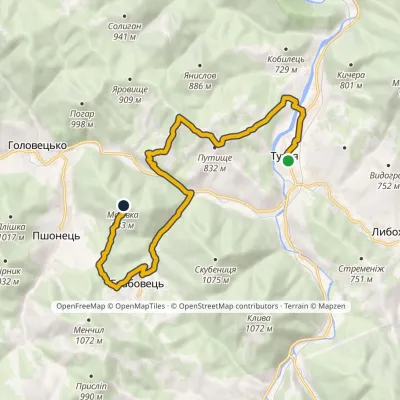 ModerateOne-dayMarkedNo. 5014 «To Zakhar Berkut»: Tukhlia Mount MakivkaElevation profile525–958 m14.4 kmascent 743 m≈ 5 h walking
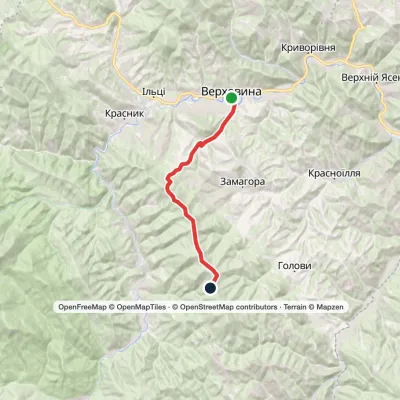 ModerateTwo-dayVerkhovyna Mount SkupovaElevation profile601–1 399 m15.3 kmascent 905 m≈ 5.5 h walking
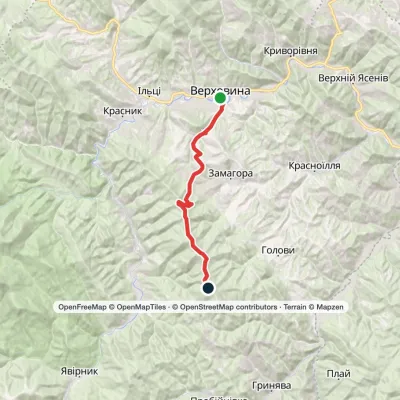 ModerateTwo-dayVerkhovyna Krynta-Skupova ridgeElevation profile601–1 422 m18.7 kmascent 908 m≈ 6.5 h walking
 ModerateTwo-dayVerkhovyna loopvia Krynta-Skupova ridgeElevation profile602–1 322 m22.2 kmascent 766 m≈ 7 h walking
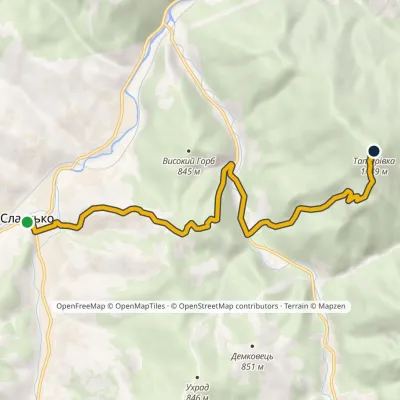 ModerateOne-dayMarkedNo. 5013 Slavsko Mount Tatarivka (Teterivka)Elevation profile587–1 149 m8.6 kmascent 775 m≈ 3.5 h walking
 HardTwo-dayTukhlia village to Slavskevia Mount MakivkaElevation profile521–1 090 m23.2 kmascent 1 065 m≈ 8 h walking
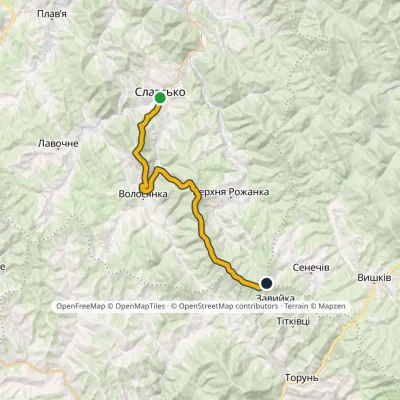 HardTwo-dayMarkedNo. 5011 Slavsko «Where Three Regions Meet»Elevation profile592–1 287 m24.5 kmascent 1 326 m≈ 9 h walking
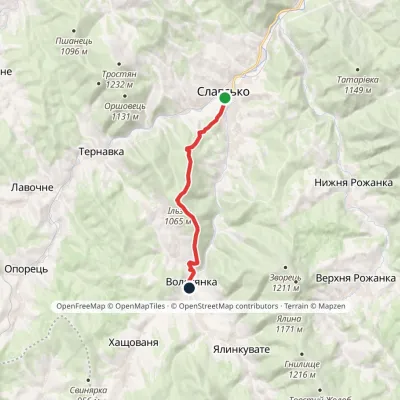 ModerateOne-dayMarkedNo. 5001 Slavske Volosianka villagevia Mount IlzaElevation profile599–1 065 m9.1 kmascent 492 m≈ 3.5 h walking
 EasyOne-dayMount Bila Kobyla VerkhovynaElevation profile613–1 466 m9.5 kmascent 27 m≈ 2.5 h walking
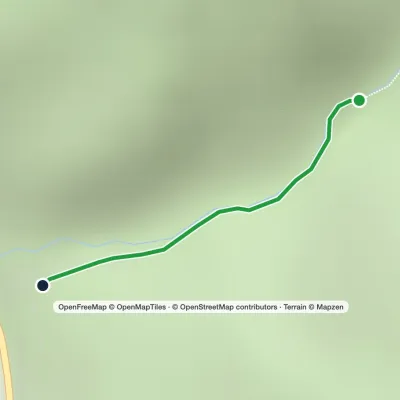 EasyOne-dayMarkedTo Sokolyne BerdoElevation profile331–674 m2.6 kmascent 344 m≈ 1.5 h walking
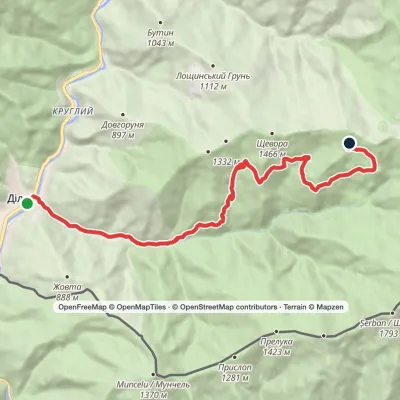 ModerateTwo-dayDilove village to Shchavora polonynavia Yalynskyi WaterfallElevation profile346–1 338 m16.3 kmascent 1 042 m≈ 6 h walking
Waters and waterfalls
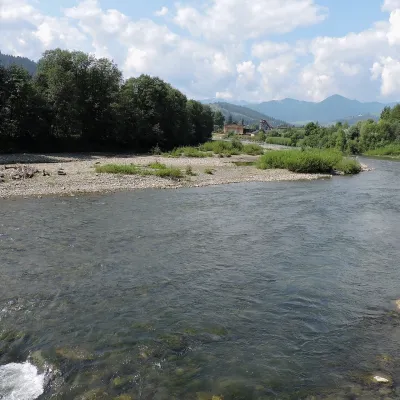 RiverChornyi Cheremosh RiverVerkhovynaThe Chornyi Cheremosh rises south-east of Burkut on the slopes of the Chyvchyn Mountains, the most remote corner of...
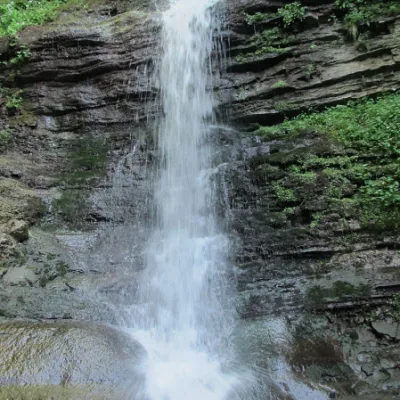 WaterfallLazny waterfallDrohobych districtLaznyi is a waterfall in the Ukrainian Carpathians (in the Skole Beskydy massif), a hydrological natural monument of...
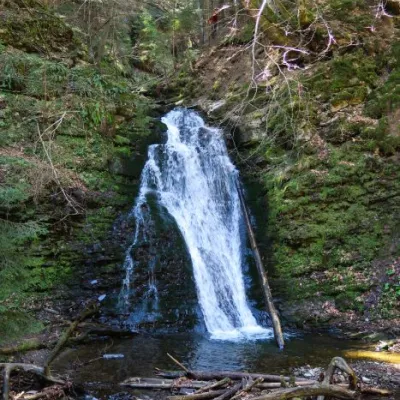 WaterfallSopit waterfallSopitSopit (Sopitsky ) is a waterfall in the Ukrainian Carpathians on the territory of the Skole Beskydy National Nature...
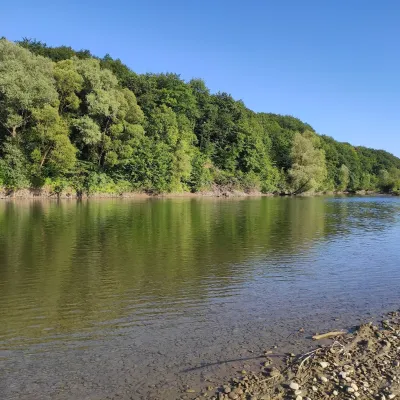 RiverBystrytsia Solotvynska RiverSolotvynThe Bystrytsia Solotvynska rises at about 1,390 m at the foot of Mala Syvulia and Bystryk, near the Peklo cliffs in...
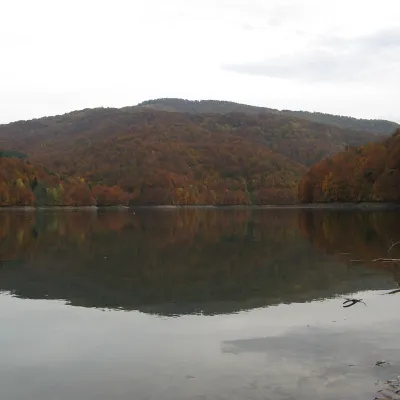 LakeVilshany ReservoirVilshanyThe Vilshany Reservoir, also called the Tereblia-Rika Reservoir, is a narrow mountain lake in the Tereblia valley...
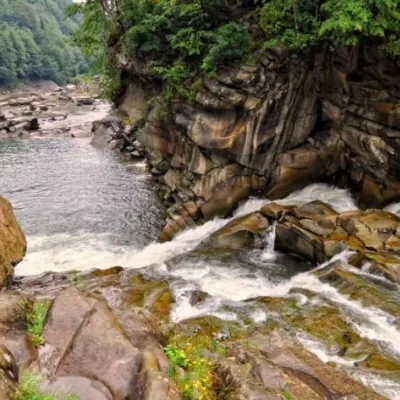 WaterfallProbiy waterfall, YaremcheYaremcheProbiy Waterfall is located in the heart of the Carpathian Mountains, in the city of Yaremche.
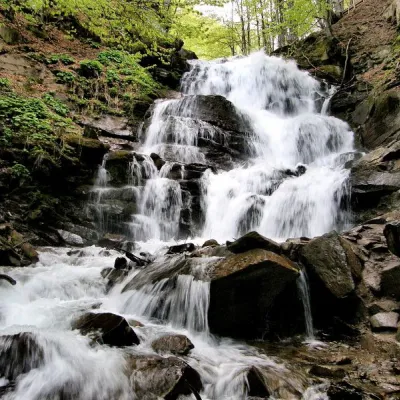 Waterfall"Shypit Waterfall" PylypetsPylypetsIn a cozy corner of the Carpathian Mountains, among the evergreen mountain forests and steep, sharp cliffs, lies the...
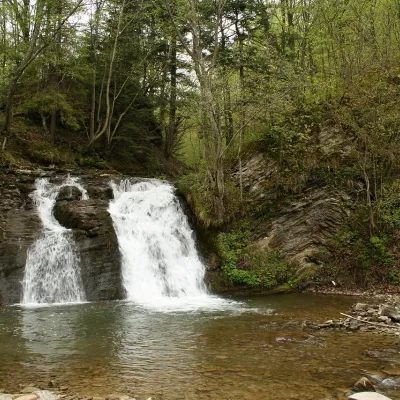 WaterfallGurkalo waterfallKorchynGurkal, located on the Velyka Richka River, has a very eloquent name! You can't argue with it, especially when the...
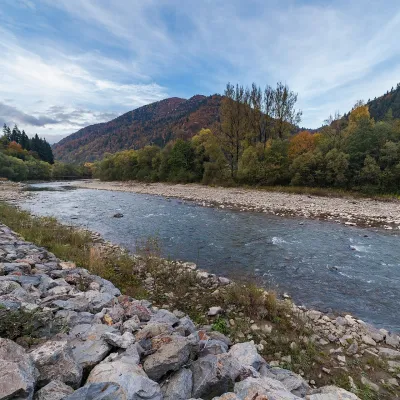 RiverTeresva RiverUst-ChornaThe Teresva forms in Ust-Chorna, where the Mokrianka and Brusturianka meet, and flows south through Dubove, Kalyny,...
Mountain ranges: In other countries: 🇸🇰 Strážov Mountains, 🇸🇰 Slovak Ore Mountains, 🇸🇰 Greater Fatra, 🇸🇰 Low Tatras, 🇸🇰 Lesser Fatra, 🇨🇿 White Carpathians, 🇸🇰 Volovec Mountains, 🇸🇰 Slovak Central Mountains, 🇸🇰 Považský Inovec, 🇵🇱 Pieniny, 🇸🇰 Štiavnica Mountains, 🇸🇰 Kysuce Beskids, 🇵🇱 Low Beskids, 🇸🇰 Kremnica Mountains
Trails and peaks near which naturalists recorded the species (GBIF, iNaturalist), matched by altitude and habitat. Sightings are not guaranteed.
Sources
- Вікіпедія: Ліщина звичайна
- Wikipedia (en): Corylus avellana
- Wikipedia (en): Hazel dormouse
- Перелік видів рослин та грибів, що заносяться до Червоної книги України (наказ Міндовкілля від 15.02.2021 № 111, z0370-21)
- GBIF: Червона книга України — рослини й гриби (набір даних)
- GBIF: таксон і категорія МСОП
GBIF · iNaturalist · Wikidata · Distribution data: GBIF.org (CC0 and CC BY records), iNaturalist; names and identifiers: Wikidata (CC0). Text: Karpaty.rocks, checked 09.11.2026.
