Common hornbeam
About
The Common hornbeam is a tree of the foothills and lower parts of the mountains. It prefers warmth and usually does not grow above 1000 m above sea level. In the Polish Carpathians, its distribution limit is typically around 600 m, while in the Bieszczady Mountains, it reaches up to 900 m. In Ukraine, the Common hornbeam grows in the Carpathians, in the Forest-Steppe, and in Polissia, often coexisting with beech and oak in the forests of Prykarpattia and Zakarpattia.
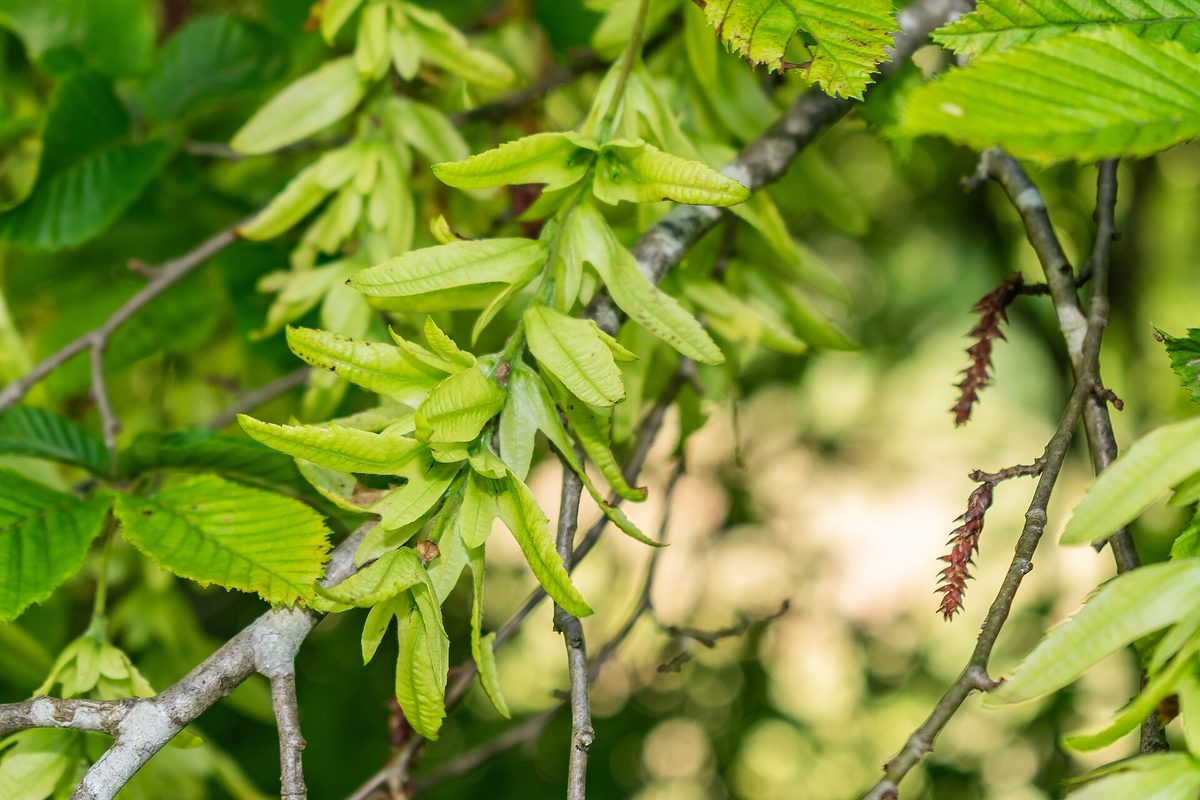
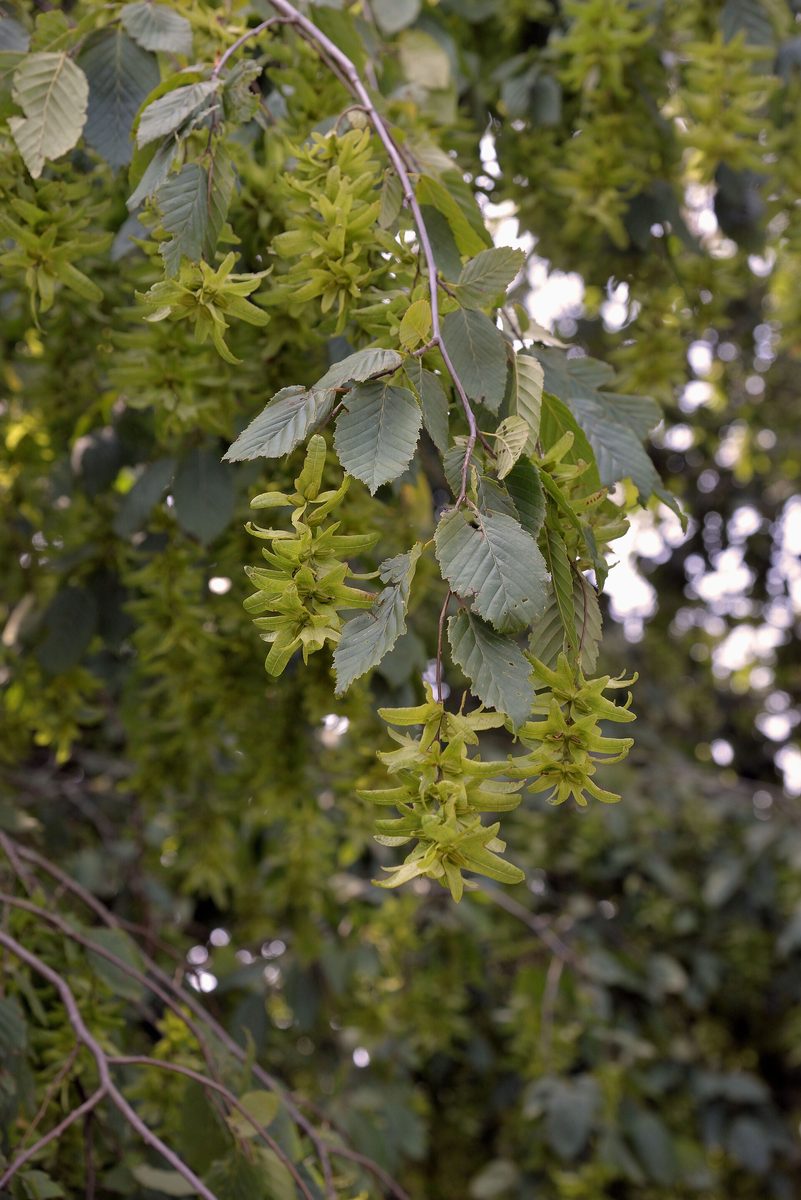
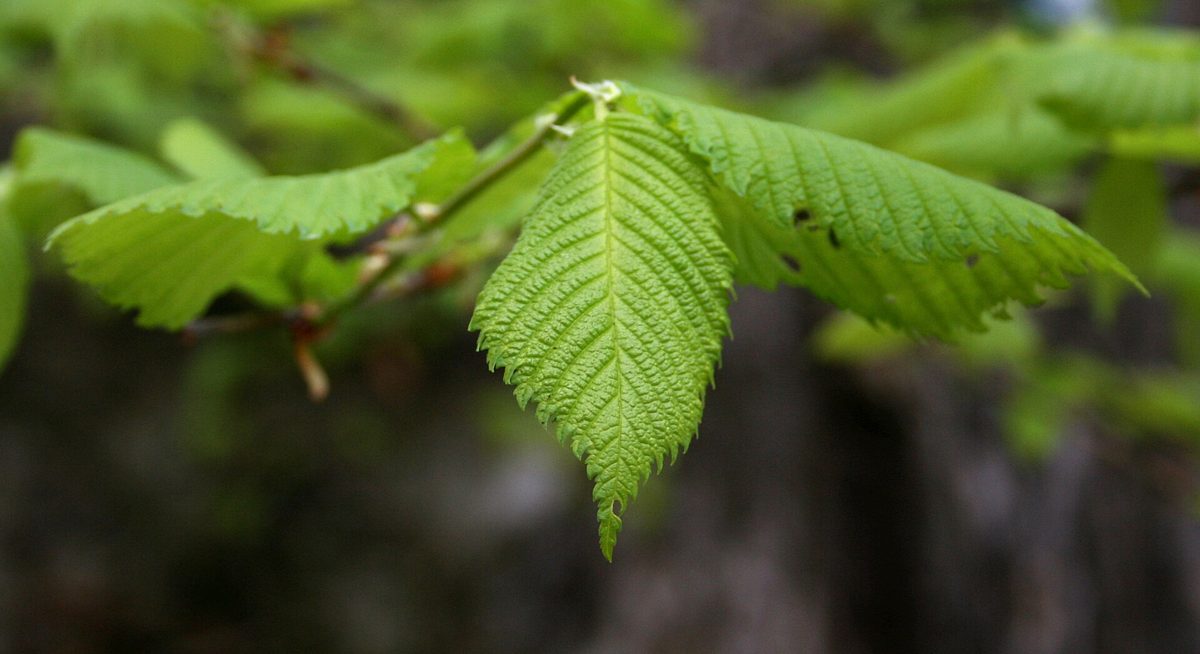
The Common hornbeam is easily recognizable by its trunk: it is smooth, silvery-gray, and appears ribbed, as if muscles are stretched beneath the bark. The tree usually reaches a height of 7–25 m and has a dense rounded crown. The leaves are oval, 6–15 cm long, pointed, with a doubly serrated edge and prominently protruding veins that give them a crinkled appearance. In autumn, they turn yellow, and clusters of fruits—nuts with three-winged wings—hang on the branches for a long time.
The wood of the Common hornbeam is very hard and dense; it has been used for fuel and small products since ancient times. The Ukrainian name, according to one version, is related to the word 'grебти' (to rake): hornbeam leaves were once collected for livestock feed. The Latin name Carpinus is explained in the same way.
An interesting fact for mushroom pickers: the Common hornbeam, like other deciduous trees, forms mycorrhiza with fungi, including the deadly poisonous Amanita phalloides. Therefore, it is especially important to carefully check each mushroom under hornbeams. The Common hornbeam is not listed in the Red Book of Ukraine.
Where in the Carpathians

The map shows where naturalists recorded the species (GBIF, CC0 and CC BY records), not every place it lives. The Ukrainian Carpathians are less studied, so a blank area does not mean the species is absent.
- Countries
- Slovakia · Czechia · Ukraine · Poland · Romania · Hungary · Austria · Serbia
- Mountain ranges
- Slovak Ore Mountains, Strážov Mountains, White Carpathians, Štiavnica Mountains, Slovak Central Mountains, Považský Inovec, Little Carpathians, Low Tatras, Volovec Mountains, Zemplén Mountains
- Altitude belts
- Foothills (below 600 m) · Beech forests (600–1200 m)
When to see it
| Jan | Feb | Mar | Apr | May | Jun | Jul | Aug | Sep | Oct | Nov | Dec | |
|---|---|---|---|---|---|---|---|---|---|---|---|---|
| Flowering | ||||||||||||
| Fruit |
From naturalists’ observations in the Carpathians (iNaturalist, research grade): the darker the cell, the more often the species is seen that month.
Protection and rules
Not listed in the Red Book of Ukraine.
FAQ
How to distinguish the Common hornbeam from beech?
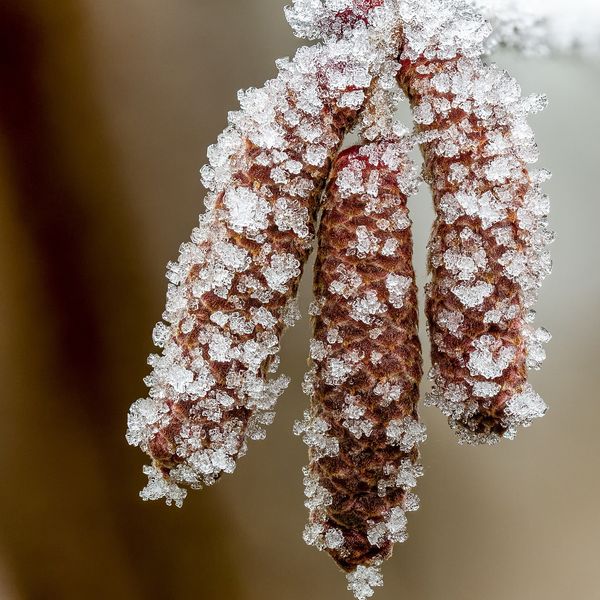
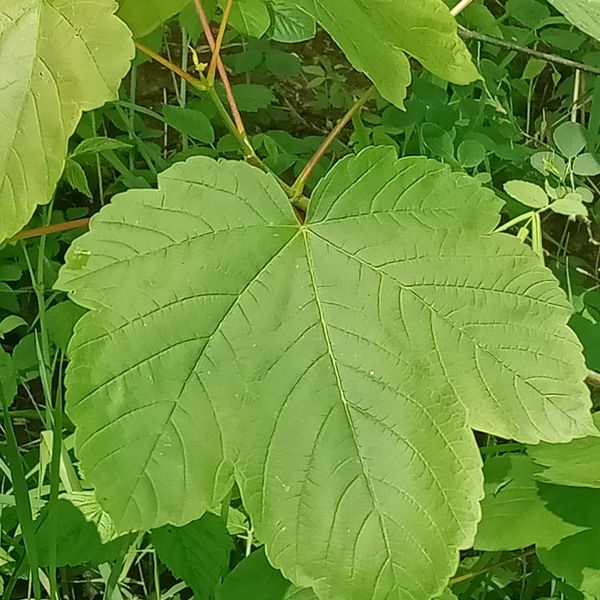
The Common hornbeam has a ribbed trunk, as if with muscles, and leaves with a doubly serrated edge and dense veins. The beech has a smooth and even trunk, and its leaves have almost entire edges.
At what height does the Common hornbeam grow in the Carpathians?
Mainly in the foothills and lower parts of the mountains: the Common hornbeam prefers warmth and rarely grows above 1000 m.
Similar species
Where to meet it
Waters and waterfalls
 RiverBystrytsia Nadvirnianska RiverNadvirnaThe Bystrytsia Nadvirnianska rises on the northern slope of Mount Chorna Kleva in the Gorgany, at about 1,280 m.
 WaterfallLumshory waterfallsLumshoryLumshory waterfalls are a group of waterfalls in the Ukrainian Carpathians, a hydrological natural monument of local...
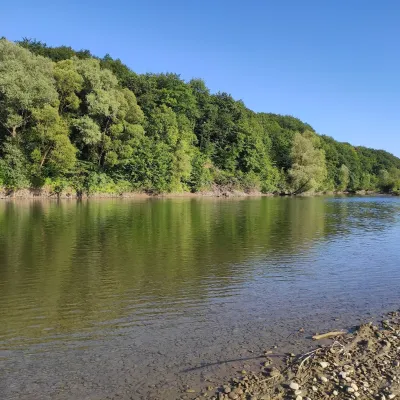 RiverBystrytsia Solotvynska RiverSolotvynThe Bystrytsia Solotvynska rises at about 1,390 m at the foot of Mala Syvulia and Bystryk, near the Peklo cliffs in...
Mountain ranges: Bieszczady. In other countries: 🇸🇰 Slovak Ore Mountains, 🇸🇰 Strážov Mountains, 🇨🇿 White Carpathians, 🇸🇰 Štiavnica Mountains, 🇸🇰 Slovak Central Mountains, 🇸🇰 Považský Inovec, 🇸🇰 Little Carpathians, 🇸🇰 Low Tatras, 🇸🇰 Volovec Mountains, 🇭🇺 Zemplén Mountains, 🇨🇿 Moravian-Silesian Beskids, 🇵🇱 Low Beskids, 🇸🇰 Vihorlat Mountains
Trails and peaks near which naturalists recorded the species (GBIF, iNaturalist), matched by altitude and habitat. Sightings are not guaranteed.
Sources
- Вікіпедія: Граб звичайний
- Wikipedia (en): Carpinus betulus
- Wikipedia (pl): Grab pospolity
- Перелік видів рослин та грибів, що заносяться до Червоної книги України (наказ Міндовкілля від 15.02.2021 № 111, z0370-21)
- GBIF: Червона книга України — рослини й гриби (набір даних)
- GBIF: таксон і категорія МСОП
GBIF · iNaturalist · Wikidata · Distribution data: GBIF.org (CC0 and CC BY records), iNaturalist; names and identifiers: Wikidata (CC0). Text: Karpaty.rocks, checked 09.11.2026.
