Alder buckthorn
This plant is poisonous: do not taste or pick it, and wash your hands after touching it. In case of poisoning call 112 (103 in Ukraine).
About
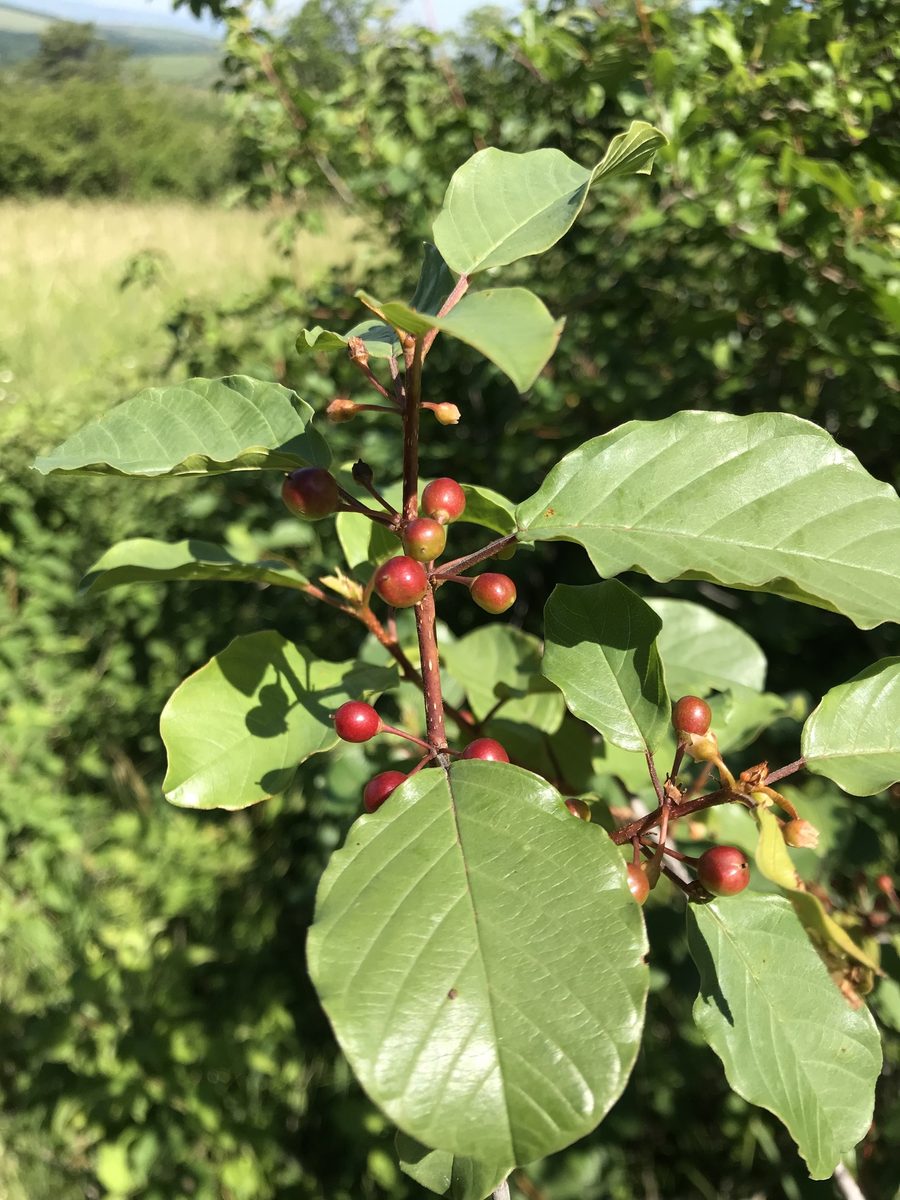
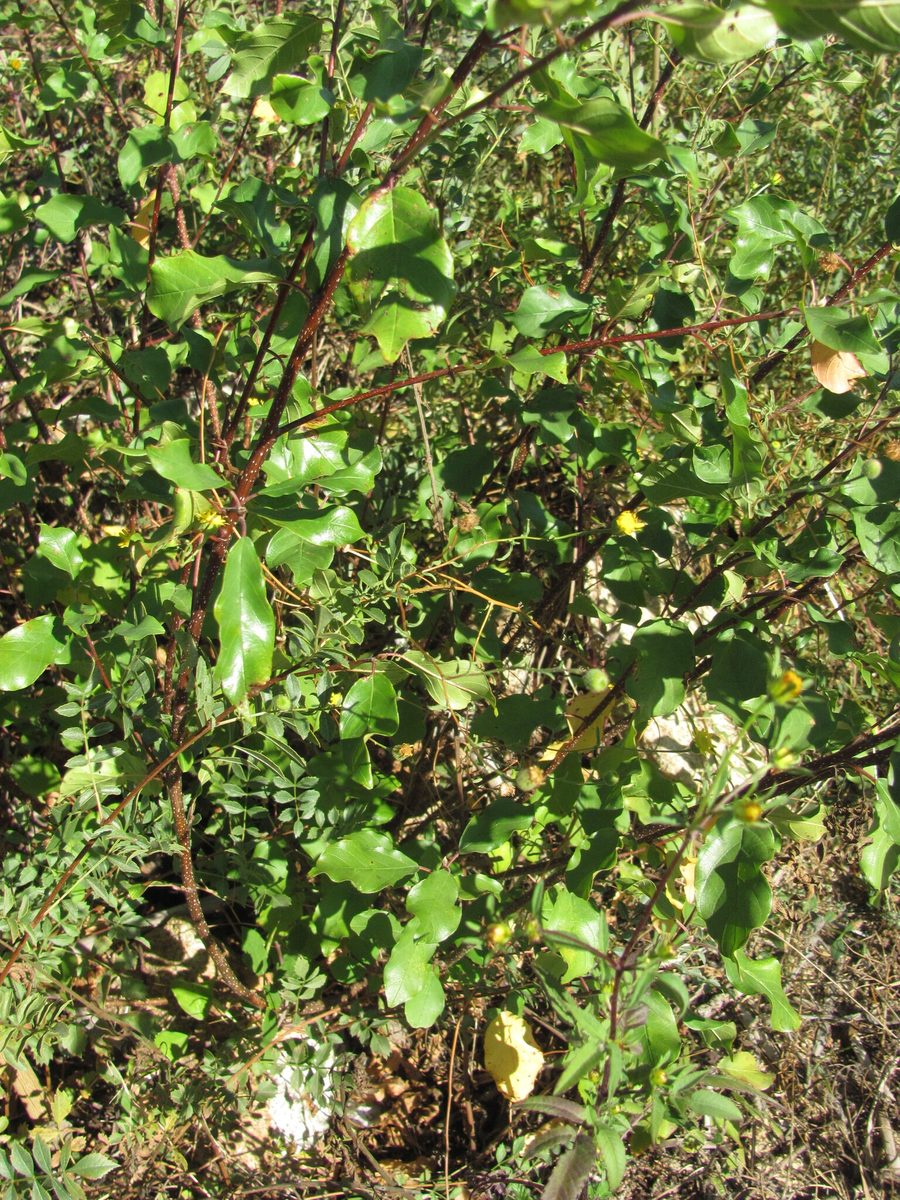
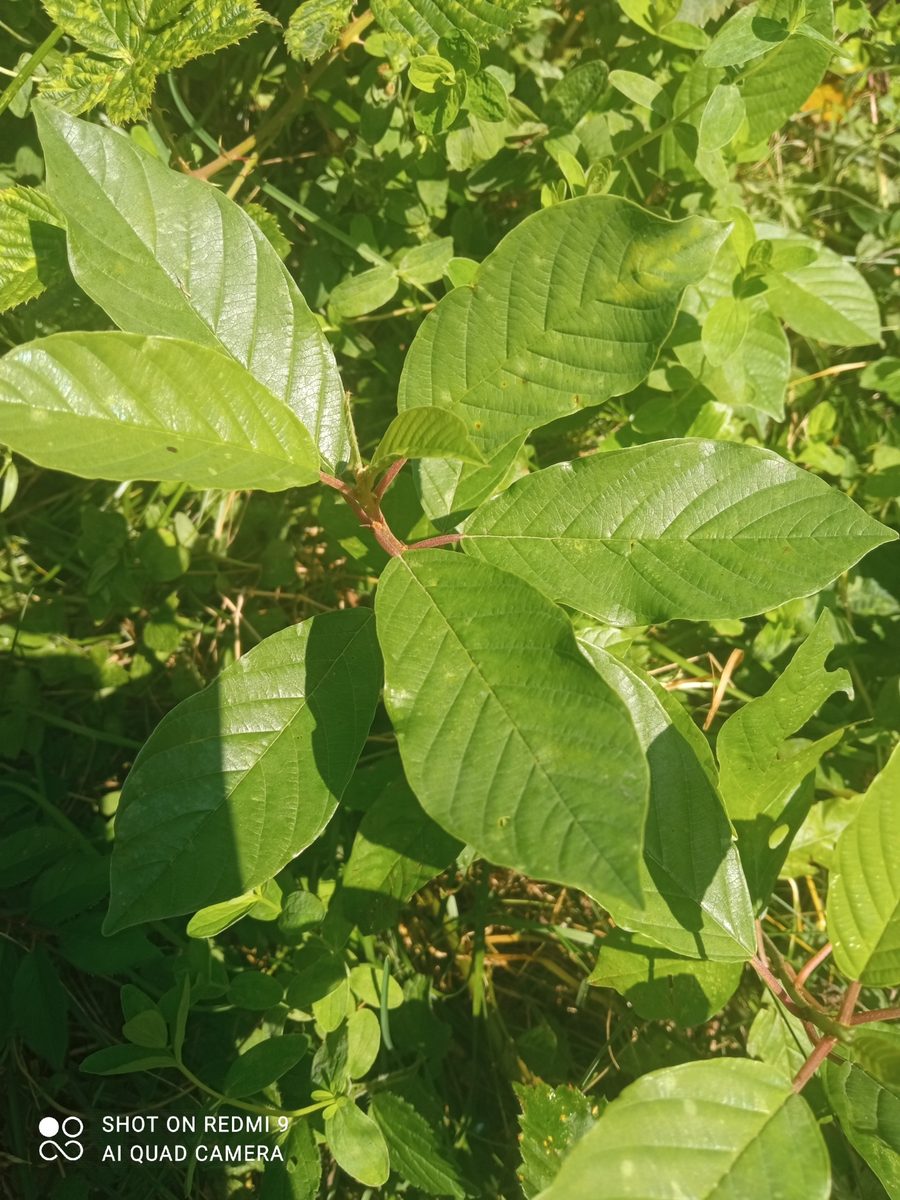
Alder buckthorn is a shrub or small tree, usually 2–4 m tall, without thorns. The branches are brittle, with dark bark sprinkled with whitish transverse lenticels; if you scrape off the top layer, yellow is visible underneath. The leaves are entire, oval, shiny, with seven to nine pairs of equal lateral veins.
Alder buckthorn blooms for a long time, from May to July, with small greenish-white flowers in the leaf axils. Because of this, the fruits ripen at different times, and by the end of summer, green, red, and black drupes the size of peas hang on one branch. This feature makes the shrub easiest to identify.
In the Carpathians, alder buckthorn grows in moist deciduous and mixed forests, alder groves, on forest edges, riverbanks, and around swamps — from the foothills to the middle mountain belt.
The fruits of alder buckthorn are poisonous: even a few berries can cause vomiting, abdominal pain, and diarrhea. Children are most often poisoned, attracted by the shiny black 'berries.' The fresh bark is also poisonous. As a medicinal raw material, it is used only after prolonged aging, so it should not be harvested or consumed independently.
The leaves of alder buckthorn are eaten by the caterpillars of the yellow butterfly, which is one of the first seen in spring. The fruits are eaten by thrushes and other birds without harm to themselves, and they disperse the seeds.
Where in the Carpathians

Teal — the species' natural range within its elevation belt; orange — where naturalists recorded it (GBIF, CC0/CC BY).
Range: Caudullo, Welk & San-Miguel-Ayanz 2017, CC BY 4.0; elevation belt and the countries where it is known — our model (AWS Terrain Tiles)
- Countries
- Ukraine · Slovakia · Czechia · Poland · Romania · Hungary · Austria
- Mountain ranges
- nearly all Carpathian ranges, within its elevation belt
- Altitude belts
- Foothills (below 600 m) · Beech forests (600–1200 m)
When to see it
| Jan | Feb | Mar | Apr | May | Jun | Jul | Aug | Sep | Oct | Nov | Dec | |
|---|---|---|---|---|---|---|---|---|---|---|---|---|
| Flowering | ||||||||||||
| Fruit |
From naturalists’ observations in the Carpathians (iNaturalist, research grade): the darker the cell, the more often the species is seen that month.
Safety
The fruits and fresh bark are poisonous: they cause vomiting, abdominal pain, and diarrhea. Do not allow children to taste the black 'berries' from the shrubs. In case of suspected poisoning, call 103 (or 112).
Look-alikes — how to tell them apart
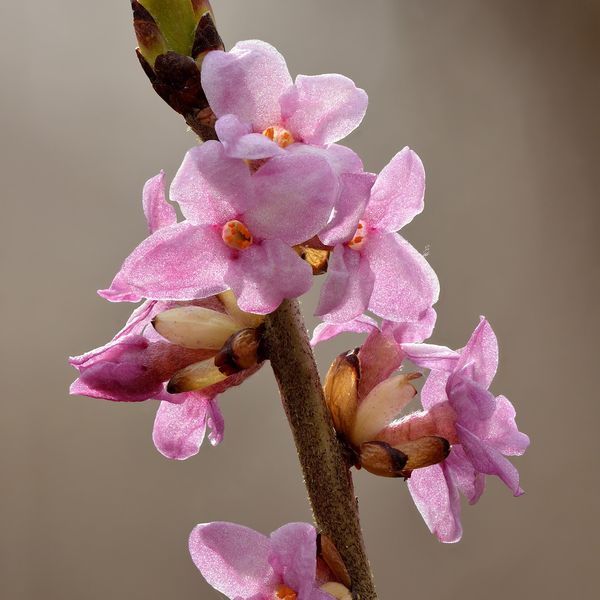
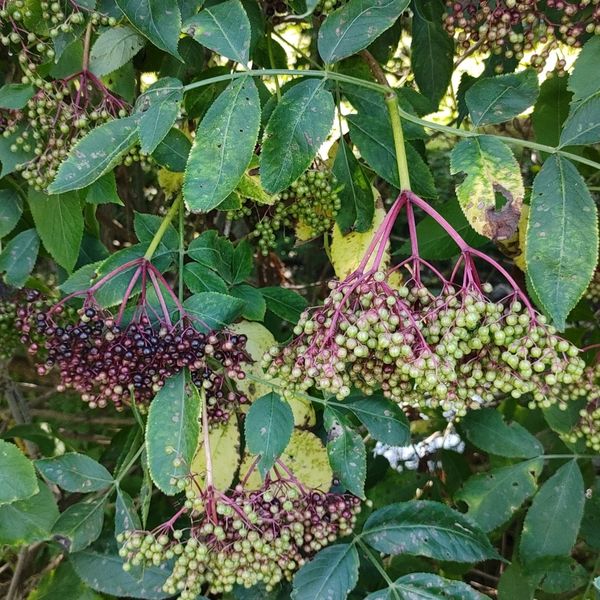
Fruits are gathered in long drooping racemes and ripen simultaneously; leaves are finely serrated at the edge, not entire.
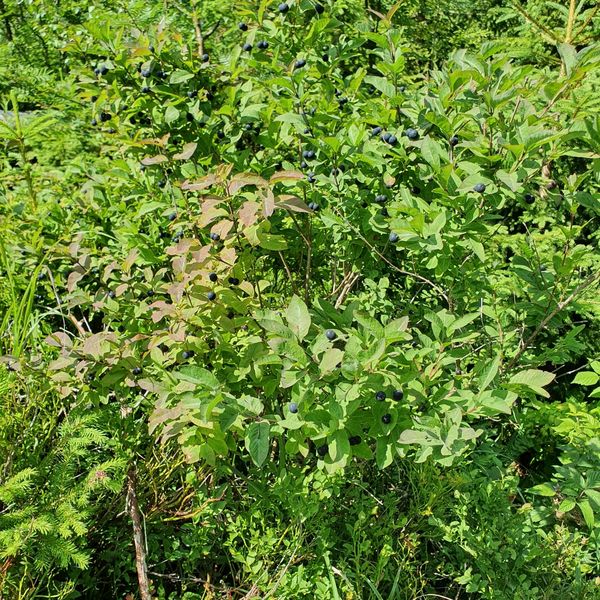
Berries sit in pairs on a common long stalk; leaves are opposite, without shine.
In folk tradition
Aged bark is a medicinal raw material. Fresh bark and fruits are poisonous.
Protection and rules
Not included in the Red Book of Ukraine.
FAQ
Can you eat the fruits of alder buckthorn?
No. The fruits of alder buckthorn are poisonous and cause vomiting and diarrhea.
How to identify alder buckthorn?
It is a thornless shrub with shiny entire leaves. By the end of summer, green, red, and black fruits hang simultaneously on one branch.
Comments
Travellers’ experience: reports, tips, questions.
No one has written here yet. Be the first — your experience helps others.
Similar species
Where to meet it
Trails
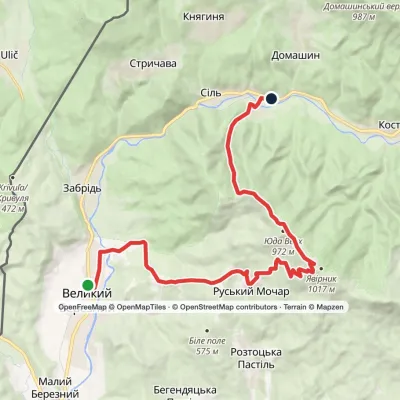 ModerateOne-dayVelykyi Bereznyi to Sil villagevia Ruskyi Mochar village, Mount YavirnykElevation profile203–1 013 m20 kmascent 888 m≈ 6.5 h walking
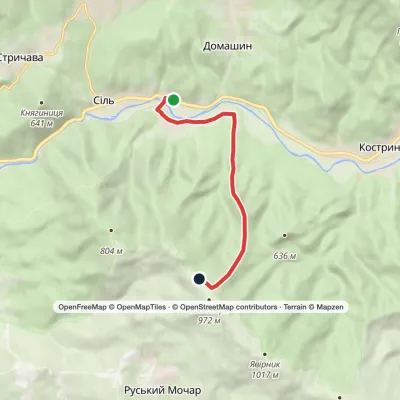 EasyOne-daySil village Mount YavirnykElevation profile253–934 m6.8 kmascent 694 m≈ 3 h walking
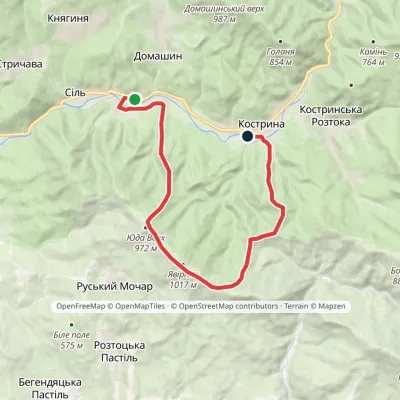 ModerateOne-daySil village to Kostryno villagevia Mount YavirnykElevation profile255–1 019 m16.6 kmascent 858 m≈ 5.5 h walking
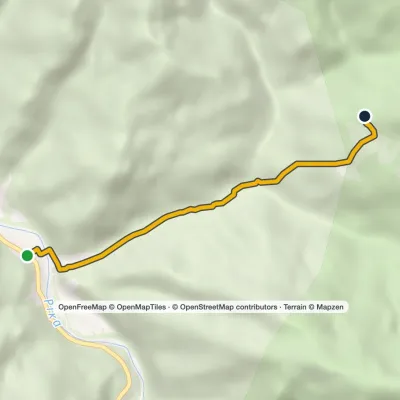 EasyOne-dayMarkedCarpathian Tourist TrailElevation profile342–823 m4.2 kmascent 480 m≈ 2 h walking
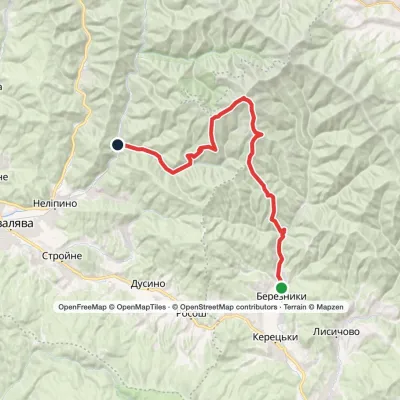 Hard1–2 daysBerezniky village to Vovchyi villagevia Mount Ivolove, Mount Stiy +1Elevation profile288–1 681 m28.5 kmascent 1 436 m≈ 9.5 h walking
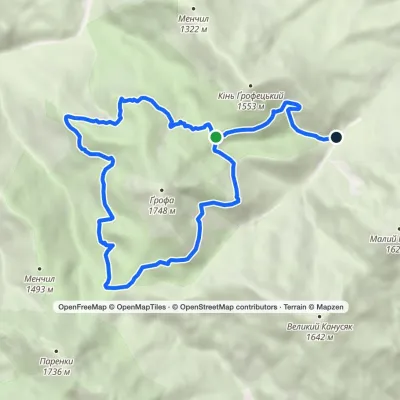 ModerateOne-dayMarkedEco-trail around Mount GrofaElevation profile914–1 472 m13.6 kmascent 302 m≈ 4 h walking
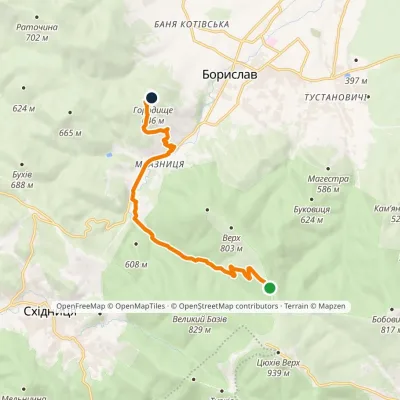 EasyOne-dayMarkedMonastery Road: Boryslav Mount Horodyshche (VeloBeskydy)Elevation profile424–776 m10.3 kmascent 217 m≈ 3 h walking
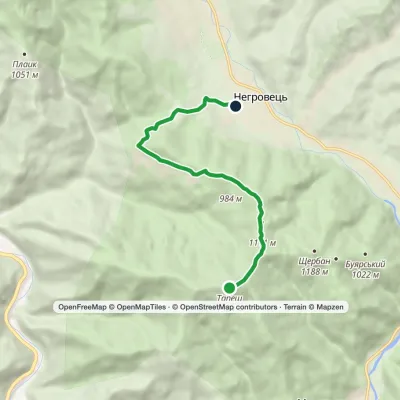 EasyOne-dayMarkedNehrovets Tapeshvia Kosiv VerkhElevation profile598–1 324 m7.6 kmascent 3 m≈ 2 h walking
 EasyOne-dayMarkedKorchyn village Hurkalo WaterfallElevation profile399–519 m6.2 kmascent 138 m≈ 2 h walking
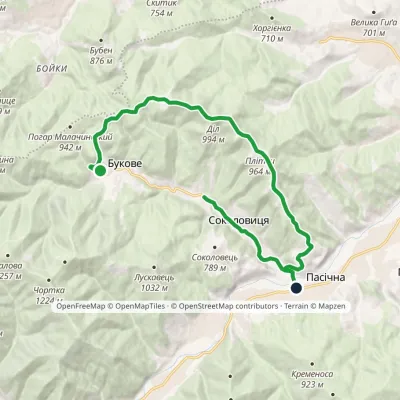 ModerateOne-dayMarkedBukove Bukhtivets-Bystrytsia waterfallElevation profile520–994 m15.5 kmascent 369 m≈ 4.5 h walking
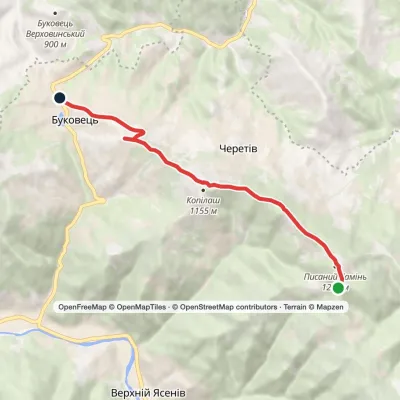 EasyOne-dayPysanyi Kamin Bukovets villageElevation profile813–1 221 m6.9 kmascent 90 m≈ 2 h walking
 ModerateOne-dayBukovets village loopvia Pysanyi KaminElevation profile807–1 221 m12.4 kmascent 484 m≈ 4 h walking
Waters and waterfalls
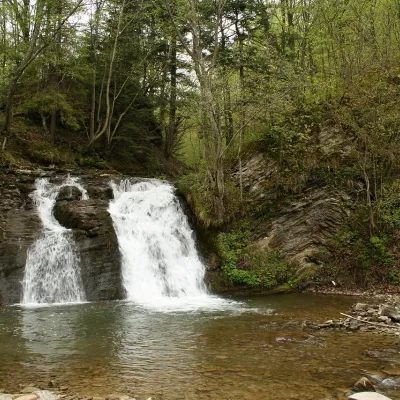 WaterfallGurkalo waterfallKorchynGurkal, located on the Velyka Richka River, has a very eloquent name! You can't argue with it, especially when the...
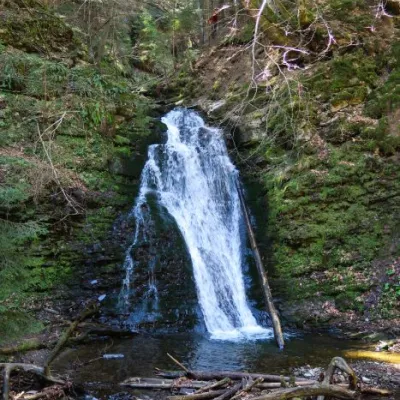 WaterfallSopit waterfallSopitSopit (Sopitsky ) is a waterfall in the Ukrainian Carpathians on the territory of the Skole Beskydy National Nature...
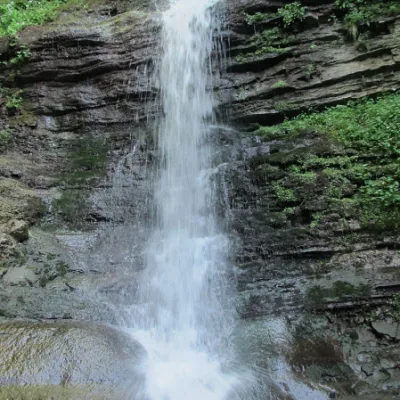 WaterfallLazny waterfallDrohobych districtLaznyi is a waterfall in the Ukrainian Carpathians (in the Skole Beskydy massif), a hydrological natural monument of...
Mountain ranges: Bieszczady. In other countries: 🇸🇰 Strážov Mountains, 🇸🇰 Volovec Mountains, 🇸🇰 Greater Fatra, 🇸🇰 Lesser Fatra, 🇸🇰 Low Tatras, 🇸🇰 Slovak Ore Mountains, 🇨🇿 Moravian-Silesian Beskids, 🇨🇿 White Carpathians, 🇵🇱 Żywiec Beskids, 🇸🇰 High Tatras, 🇸🇰 Kysuce Beskids, 🇸🇰 Western Tatras, 🇵🇱 Low Beskids
Trails and peaks near which naturalists recorded the species (GBIF, iNaturalist), matched by altitude and habitat. Sightings are not guaranteed.
Sources
- Вікіпедія: Крушина ламка
- Wikipedia (en): Frangula alnus
- iNaturalist: Frangula alnus (спостереження в Карпатах)
GBIF · iNaturalist · Wikidata · Distribution data: GBIF.org (CC0 and CC BY records), iNaturalist; names and identifiers: Wikidata (CC0). Text: Karpaty.rocks, checked 11.11.2026.
