Elder
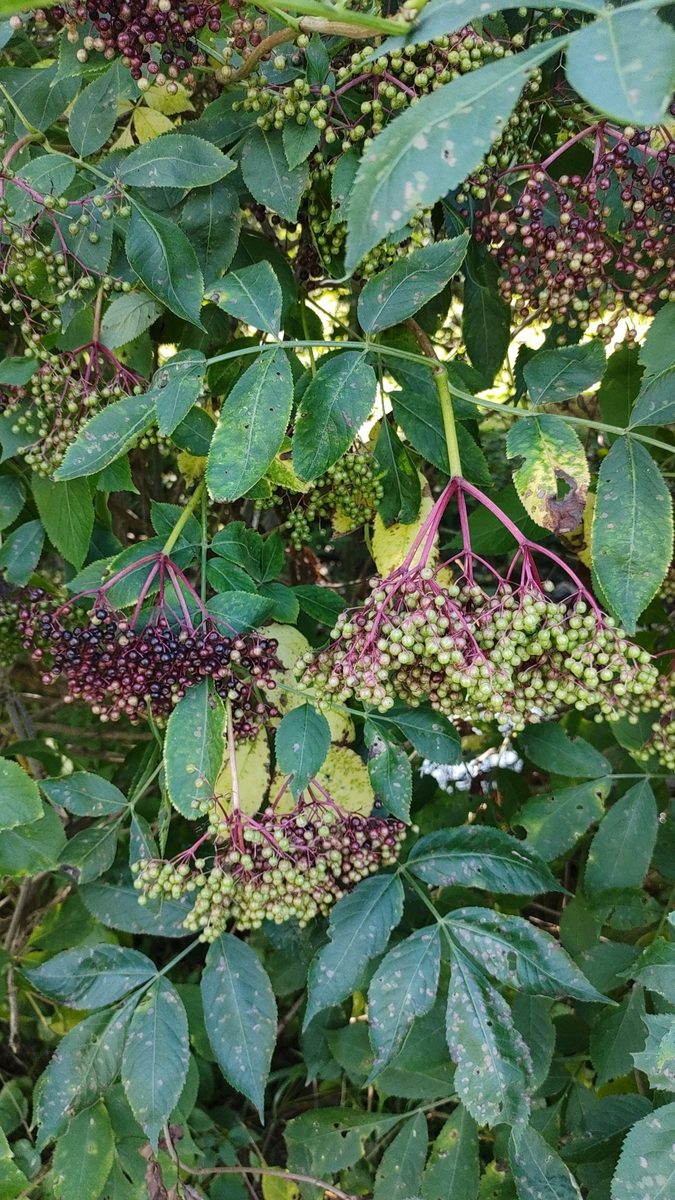
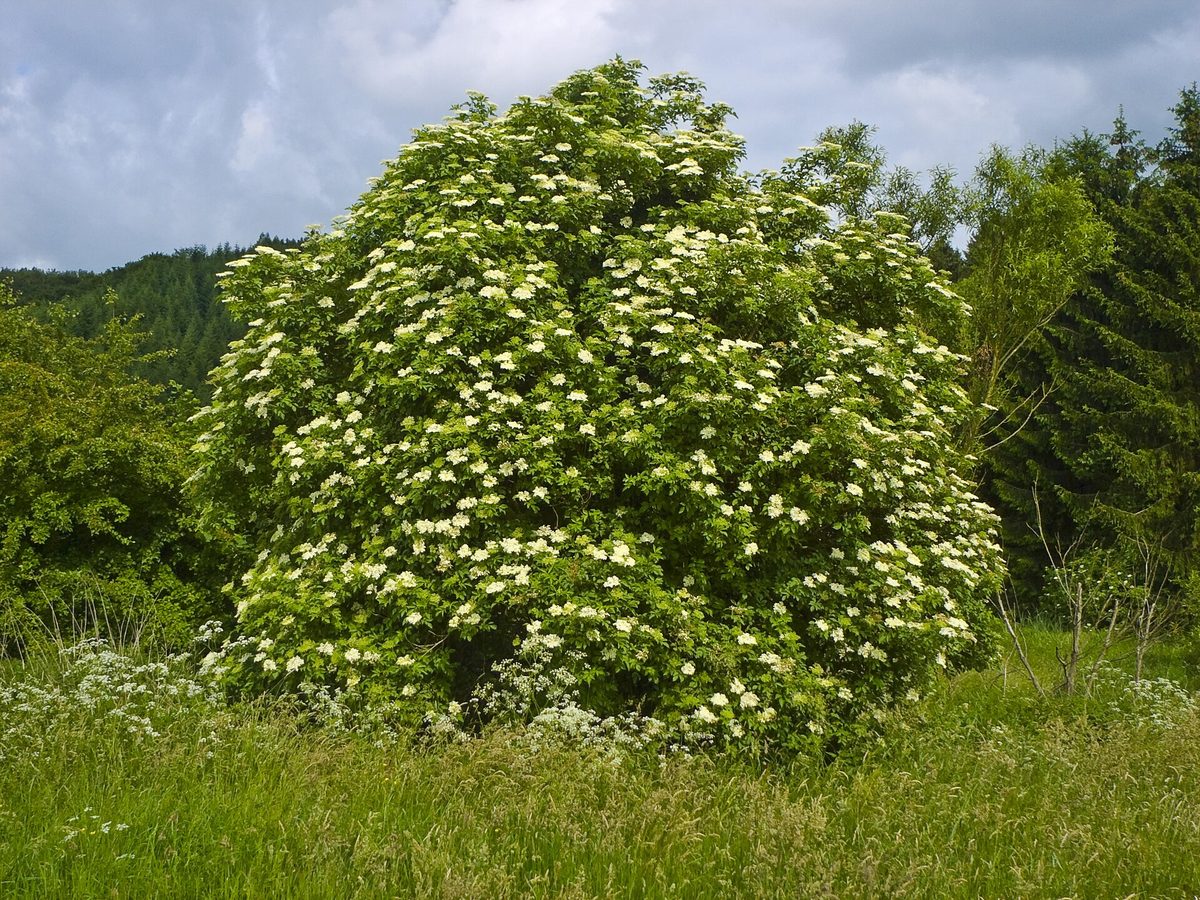
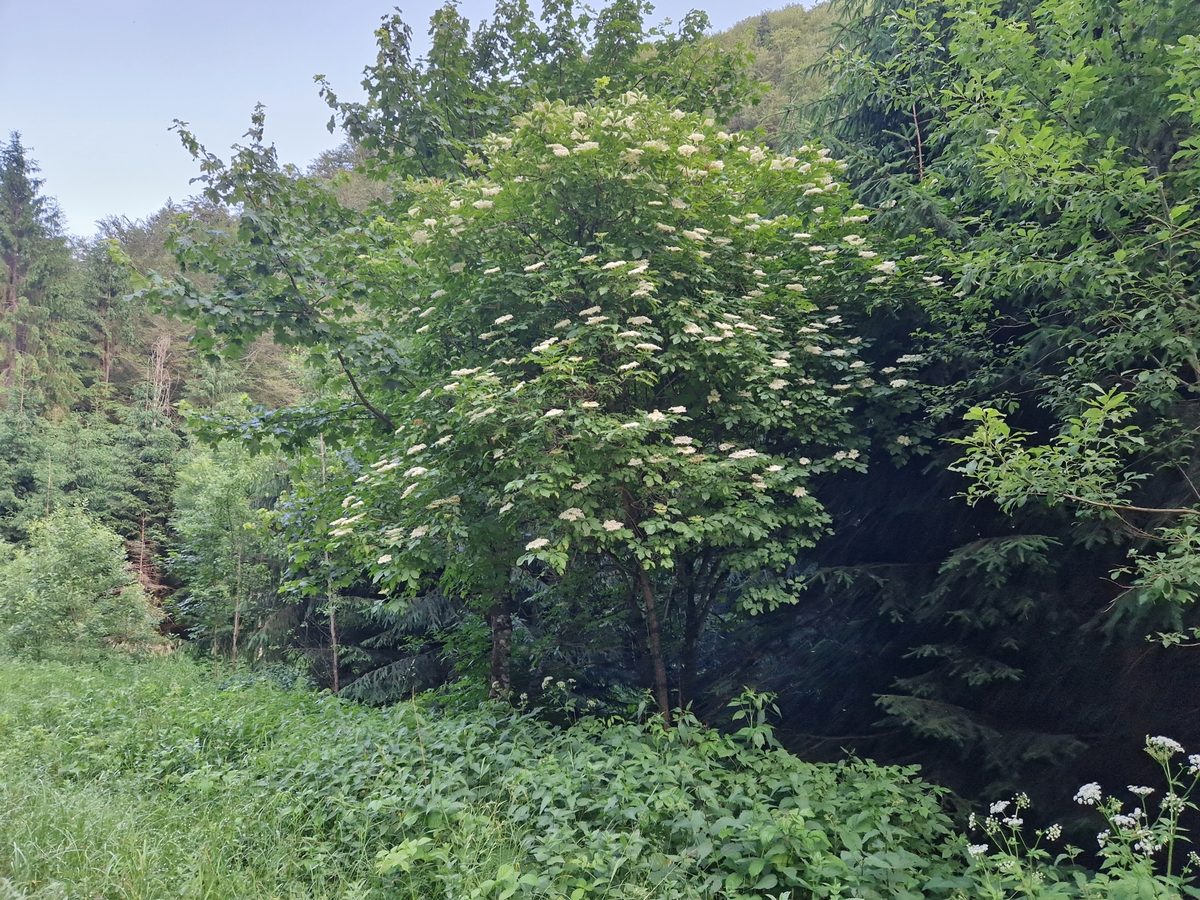
Never eat berries you are not sure about and never give unknown berries to children. In case of poisoning call 112 (103 in Ukraine).
About
Elder is a bush or small tree up to 6–7 m, common in Carpathian villages, at forest edges, along streams, near fences and old Sadybas. In the mountains, it mainly inhabits the lower belt and valleys, where the soil is rich in nitrogen.
The bark is grayish, with lenticels, and young branches have a white spongy pith. The leaves are pinnate, with five to seven pointed leaflets, having a sharp smell when crushed. In May — June, the bush is covered with large flat white inflorescences with a honey aroma. The berries are small, black-purple, shiny, ripening in August — September and hanging in heavy clusters.
Ripe berries and flowers are the only parts used for food. The leaves, bark, branches, and also green, unripe berries contain cyanogenic glycosides and can cause nausea and vomiting. Raw ripe berries can also irritate the stomach, so they are consumed only after cooking.
Two other species of elder grow in the Carpathians, both of which are dangerous. Herbaceous elder is a tall herb, not a bush: it dies back to the ground every year, has an unpleasant smell, inflorescences that face upwards, and berries that stand upright. It is poisonous. Red elder grows higher in the mountains, in clearings and spruce forests; its red berries appear as early as July, and its seeds are poisonous.
Where in the Carpathians

The map shows where naturalists recorded the species (GBIF, CC0 and CC BY records), not every place it lives. The Ukrainian Carpathians are less studied, so a blank area does not mean the species is absent.
- Countries
- Slovakia · Czechia · Poland · Ukraine · Hungary · Romania · Austria
- Mountain ranges
- Slovak Ore Mountains, Strážov Mountains, White Carpathians, Moravian-Silesian Beskids, Lesser Fatra, Little Carpathians, Greater Fatra, Štiavnica Mountains, Slovak Central Mountains, Low Tatras
- Altitude belts
- Foothills (below 600 m) · Beech forests (600–1200 m)
When to see it
| Jan | Feb | Mar | Apr | May | Jun | Jul | Aug | Sep | Oct | Nov | Dec | |
|---|---|---|---|---|---|---|---|---|---|---|---|---|
| Flowering | ||||||||||||
| Fruit |
From naturalists’ observations in the Carpathians (iNaturalist, research grade): the darker the cell, the more often the species is seen that month.
Safety
Only flowers and ripe black berries after heat treatment are edible. Leaves, bark, branches, and green berries are poisonous. Do not confuse with herbaceous elder (a herb with upright berries) and red elder (red berries, poisonous seeds). Do not give unfamiliar berries to children and teach them not to taste anything in the forest without adults.
Look-alikes — how to tell them apart
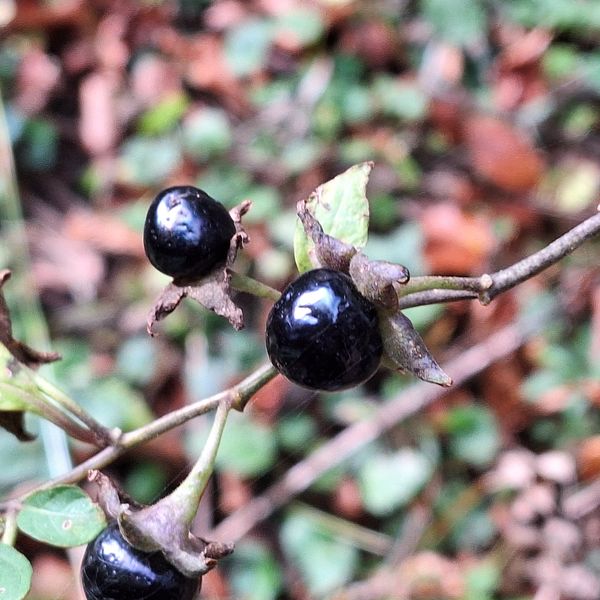
A herbaceous plant 1–2 m, dies back every year; has an unpleasant smell; inflorescences and berries face upwards, not hanging.
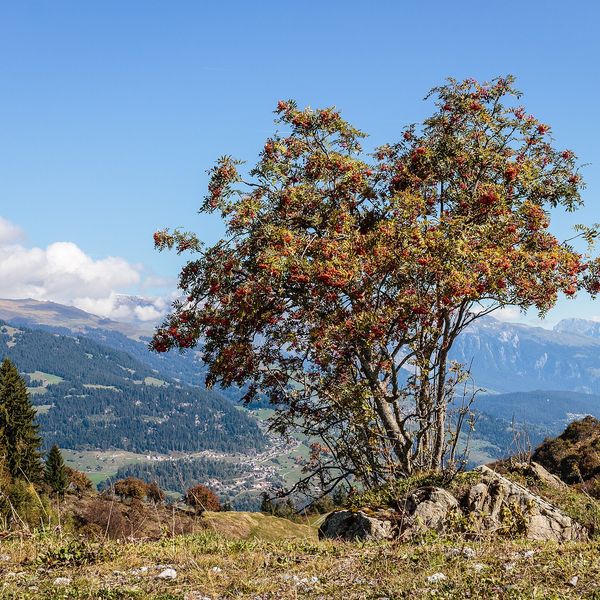
Berries are red, in dense egg-shaped clusters; blooms in April — May with yellowish-green racemes; grows higher in the mountains.
In folk tradition
Flowers are traditionally dried and brewed as tea; from ripe berries after cooking, jams, syrups, and compotes are made.
Protection and rules
Not protected. For personal use, it can be collected in state and communal forests; in reserves and protected areas of national parks — prohibited.
FAQ
Can you eat black elderberries raw?
Better not. Raw berries can irritate the stomach, and green ones are poisonous. They are used only when ripe and after cooking.
How to distinguish black elder from herbaceous elder?
Black elder is a woody bush with hanging inflorescences and berries. Herbaceous elder dies back to the ground every year, has an unpleasant smell, and its berries stand upright. It is poisonous.
Recorded nearby
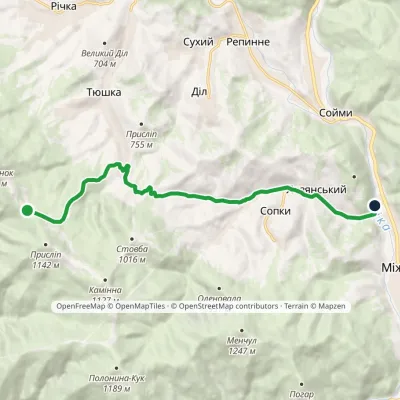 EasyOne-dayMarkedPryslip Pass Mount KlevaElevation profile443–941 m12.3 kmascent 66 m≈ 3 h walking
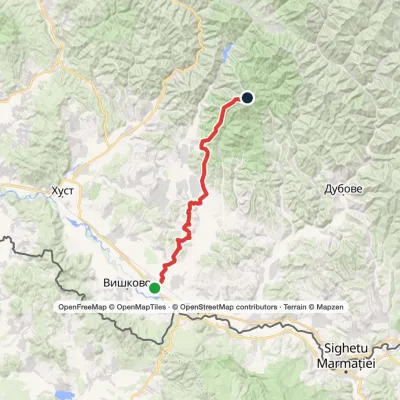 HardMulti-dayBushtyno to Mount Manchulvia Zanivka tractElevation profile208–1 501 m45.5 kmascent 2 029 m
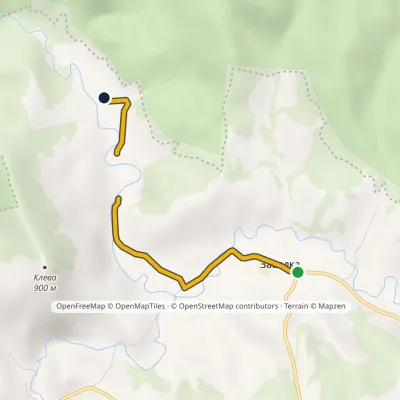 EasyOne-dayMarkedNo. 5047 «Settlements», Zavadka villageElevation profile643–673 m2.9 kmascent 3 m≈ 45 min walking
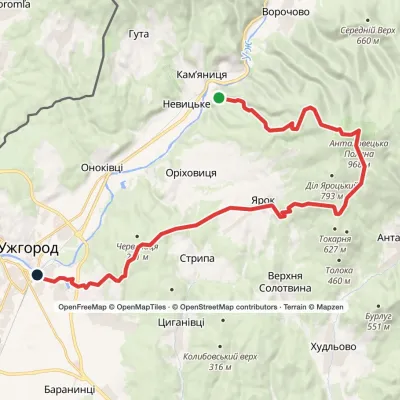 HardMulti-dayKamianytsia village to Uzhhorodvia Antalovetska Poliana, Yarok villageElevation profile117–968 m28.9 kmascent 909 m≈ 9 h walking
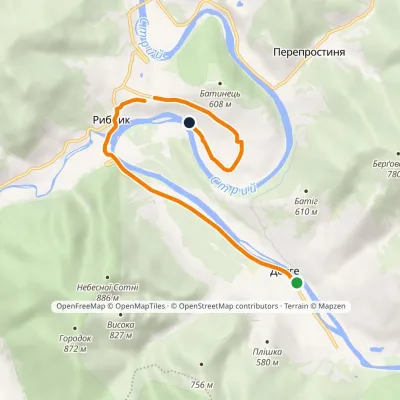 EasyOne-dayMarkedNo. 5003 Dovhe RybnykElevation profile452–531 m6.9 kmascent 82 m≈ 2 h walking
 ModerateTwo-dayHrebeniv village to Skolevia Kudriavets village, Lopata villageElevation profile437–1 242 m16.9 kmascent 779 m≈ 6 h walking
Trails and peaks near which naturalists recorded the species (GBIF, iNaturalist), matched by altitude and habitat. Sightings are not guaranteed.
Similar species
Sources
- Вікіпедія: Бузина чорна
- Wikipedia (en): Sambucus nigra
- Wikipedia (en): Sambucus ebulus
- Wikipedia (en): Sambucus racemosa
- EMA/HMPC: монографія Sambuci flos
GBIF · iNaturalist · Wikidata · Distribution data: GBIF.org (CC0 and CC BY records), iNaturalist; names and identifiers: Wikidata (CC0). Text: Karpaty.rocks, checked 09.11.2026.
