Rowan
Never eat berries you are not sure about and never give unknown berries to children. In case of poisoning call 112 (103 in Ukraine).
About
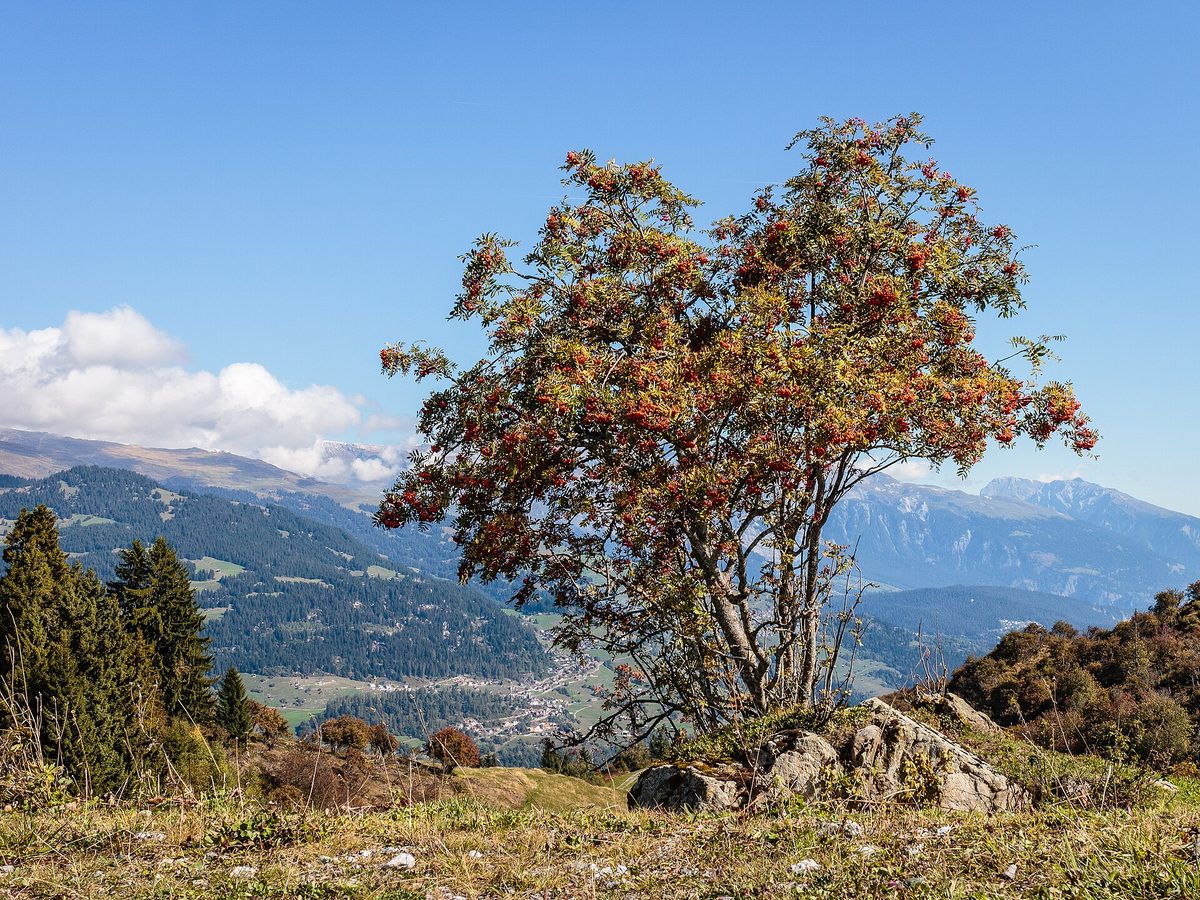
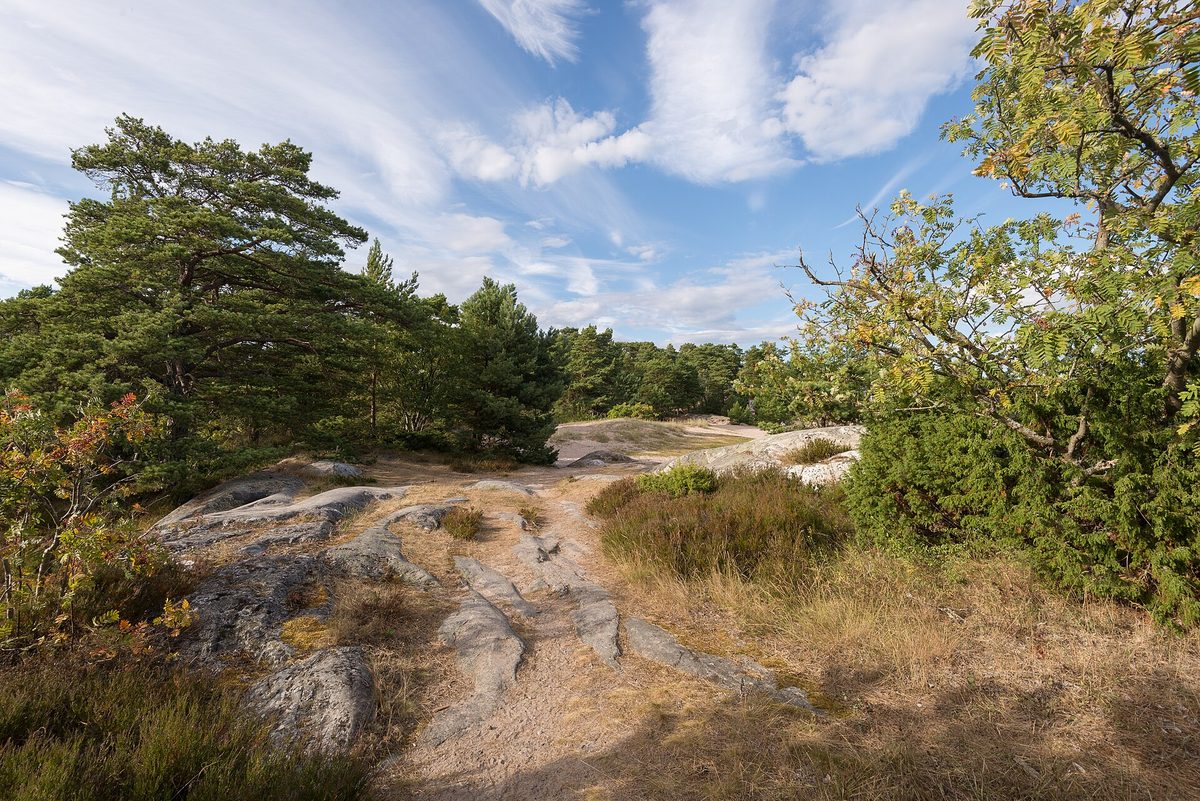
Rowan is one of the hardiest trees in the Carpathians. It grows from the foothills to the upper forest limit, extending to the polonynas along with juniper and common juniper, and is found on rocky slopes, clearings, and in spruce forests.
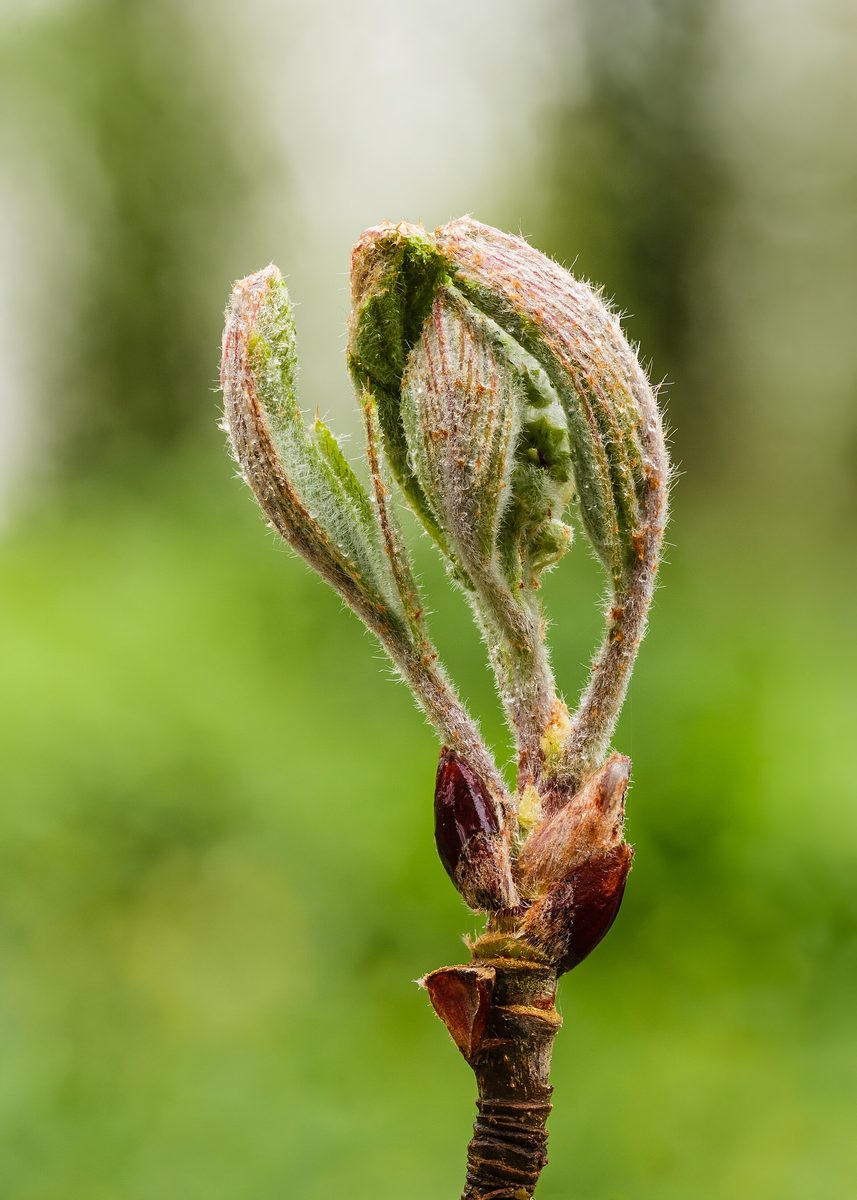
This small tree is 5–15 m tall or a shrub with smooth gray bark. The leaves are odd-pinnate, with 9–15 elongated serrated leaflets, turning yellow and red in autumn. In May – June, rowan blooms with flat white umbels that have a sharp smell.
The fruits are small, spherical, orange-red, gathered in large clusters. They turn red as early as August, but are traditionally harvested in autumn, after the first frosts. Raw fruits are bitter and astringent: they contain parasorbic acid, which irritates the stomach lining. Freezing, cooking, or drying destroys this substance, so rowan is considered conditionally edible.
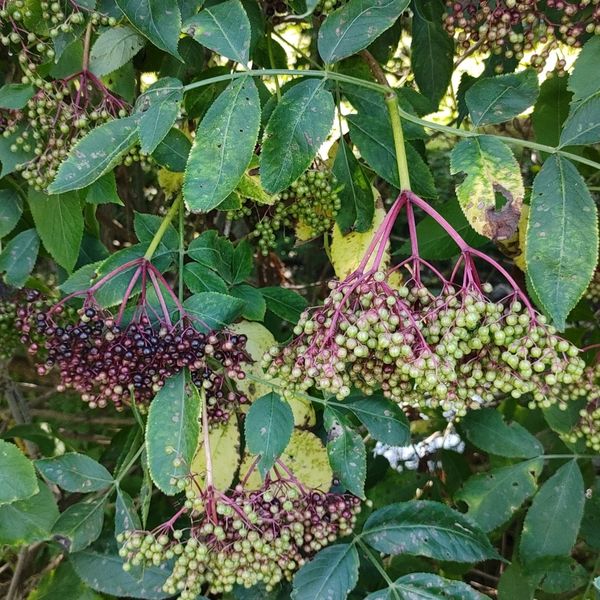
In winter, rowan clusters are an important food source for birds: thrushes, waxwings, and bullfinches, as well as for martens and foxes. Therefore, when collecting berries, leave some on the tree. There are no dangerous lookalikes among rowan trees, but the red berries of red elderberry, which grows nearby, have poisonous seeds.
Where in the Carpathians

The map shows where naturalists recorded the species (GBIF, CC0 and CC BY records), not every place it lives. The Ukrainian Carpathians are less studied, so a blank area does not mean the species is absent.
- Countries
- Slovakia · Czechia · Poland · Ukraine · Romania · Hungary
- Mountain ranges
- Lesser Fatra, Greater Fatra, Slovak Ore Mountains, Low Tatras, Western Tatras, High Tatras, Moravian-Silesian Beskids, Volovec Mountains, Strážov Mountains, Żywiec Beskids
- Altitude belts
- Foothills (below 600 m) · Beech forests (600–1200 m) · Conifer forests (1200–1600 m)
When to see it
| Jan | Feb | Mar | Apr | May | Jun | Jul | Aug | Sep | Oct | Nov | Dec | |
|---|---|---|---|---|---|---|---|---|---|---|---|---|
| Flowering | ||||||||||||
| Fruit |
From naturalists’ observations in the Carpathians (iNaturalist, research grade): the darker the cell, the more often the species is seen that month.
Safety
Raw berries are bitter and irritate the stomach; they should only be consumed after freezing, cooking, or drying. Do not give unfamiliar berries to children and teach them not to taste anything in the forest without adults.
Look-alikes — how to tell them apart
A shrub with opposite pinnate leaves; red berries in dense egg-shaped clusters ripen as early as July; the seeds are poisonous.
In folk tradition
The fruits are traditionally cooked into jams, jellies, and compotes after frost, and dried for tea.
Protection and rules
Not protected. It can be collected for personal use in state and communal forests; collection is prohibited in nature reserves and protected areas of national parks.
FAQ
Can rowan be eaten raw?
It is not advisable: raw fruits are bitter and irritate the stomach. They are collected after frost and cooked, dried, or frozen.
When to collect rowan?
The fruits turn red in August, but they are traditionally harvested in September – October, after the first frosts.
Recorded nearby
 Mountain meadow1 150 mPolonyna Bukovyna (Kukul Ridge)VoronenkoPolonyna Bukovyna, often called Bukovynka, lies on the north-western section of the Kukul ridge, south of Vorokhta...
 ModerateTwo-dayStavne village loopvia Mount Cheremkha, Lubnia villageElevation profile386–1 130 m18.6 kmascent 847 m≈ 6.5 h walking
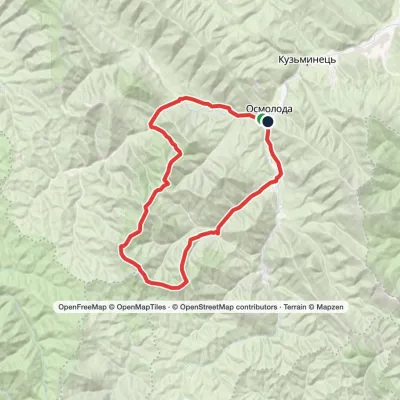 HardMulti-dayMarkedOsmoloda village loopvia Mount Grofa, Mount Koretvyna +1Elevation profile717–1 748 m40.6 kmascent 1 974 m
Trails and peaks near which naturalists recorded the species (GBIF, iNaturalist), matched by altitude and habitat. Sightings are not guaranteed.
Similar species
Sources
- Вікіпедія: Горобина звичайна
- Wikipedia (en): Sorbus aucuparia
- Лісовий кодекс України, ст. 69: загальне використання лісових ресурсів (збирання грибів і ягід для власних потреб)
GBIF · iNaturalist · Wikidata · Distribution data: GBIF.org (CC0 and CC BY records), iNaturalist; names and identifiers: Wikidata (CC0). Text: Karpaty.rocks, checked 09.11.2026.
