Black-berried honeysuckle
This plant is poisonous: do not taste or pick it, and wash your hands after touching it. In case of poisoning call 112 (103 in Ukraine).
About
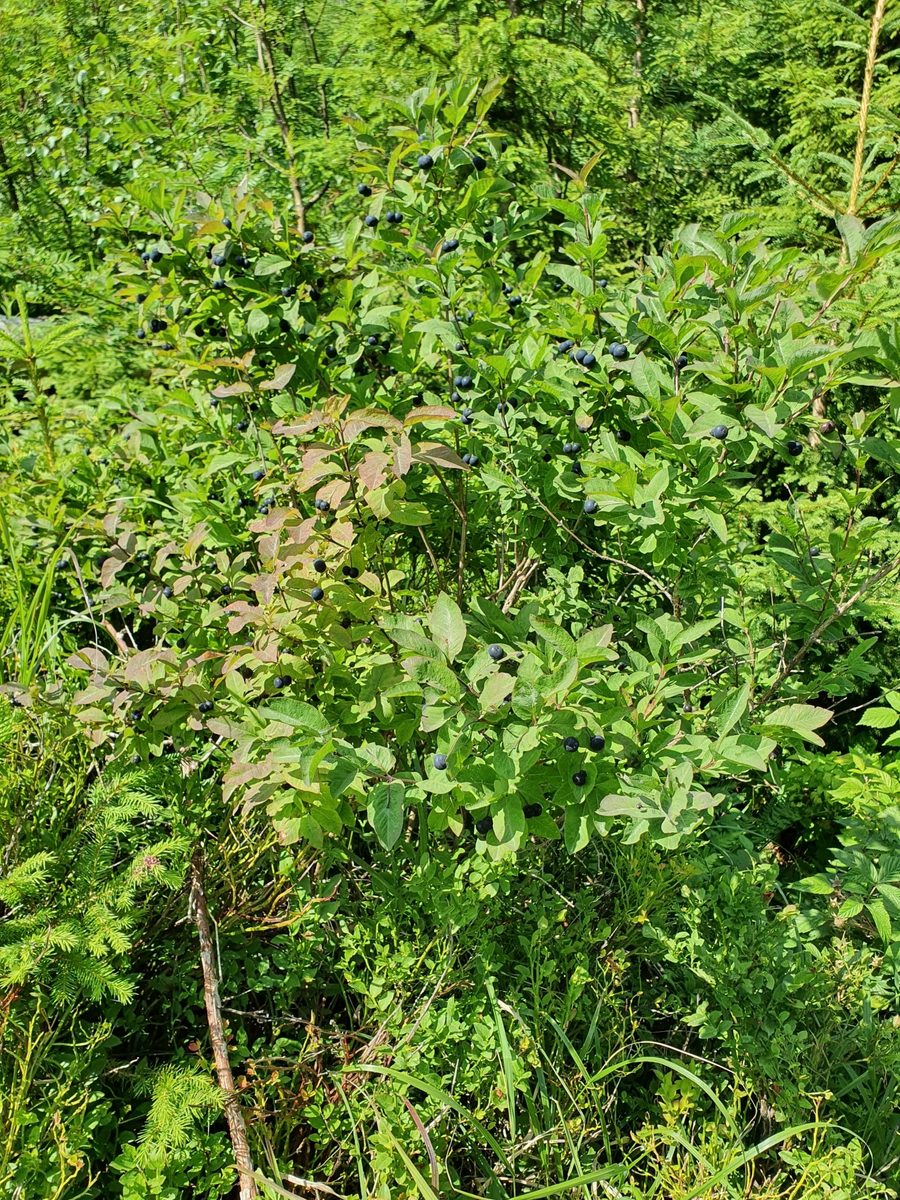
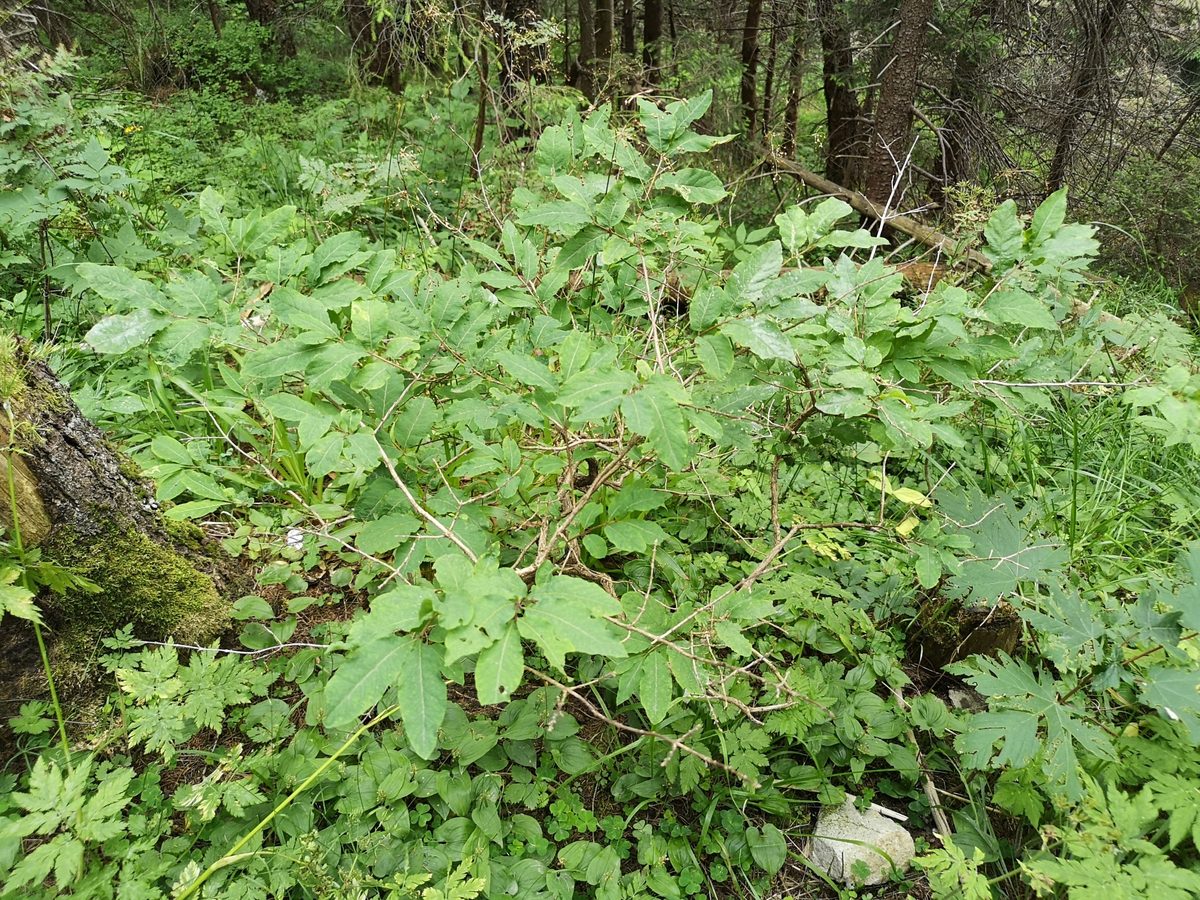
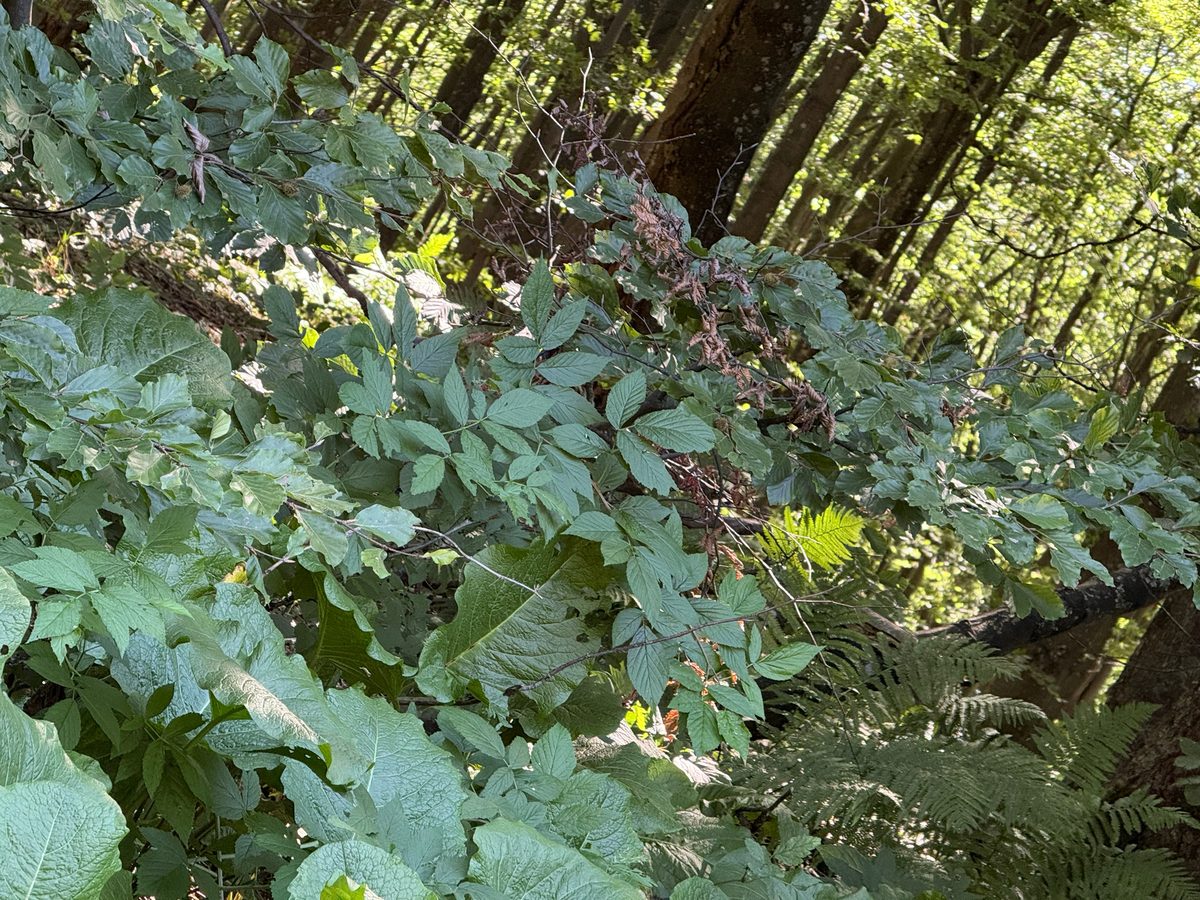
Black-berried honeysuckle is an upright shrub 1–1.5 m tall, occasionally reaching two meters. The leaves are opposite, elliptical, entire, soft, dark green on top, and bluish below. Young shoots are bare, while older branches are covered with gray bark that peels off in strips.
It blooms in May—June. The flowers are small, bilabiate, whitish-pink, and grow in pairs on a common long thin stem that emerges from the leaf axil. Similarly, the berries ripen in pairs: two round blue-black berries with a bluish bloom, fused at the base. They ripen in July—August.
This is a true mountain species. In the Carpathians, black-berried honeysuckle grows in beech, fir, and spruce forests, at forest edges, along streams, and forest roads, most often at an altitude of 600–1600 m. In the Ukrainian Carpathians, naturalists frequently record it.
The berries of black-berried honeysuckle are inedible. They are bitter and can cause vomiting and digestive upset, so guides advise considering them poisonous. The danger is that they ripen during the blueberry season and are similar in color to blueberries.
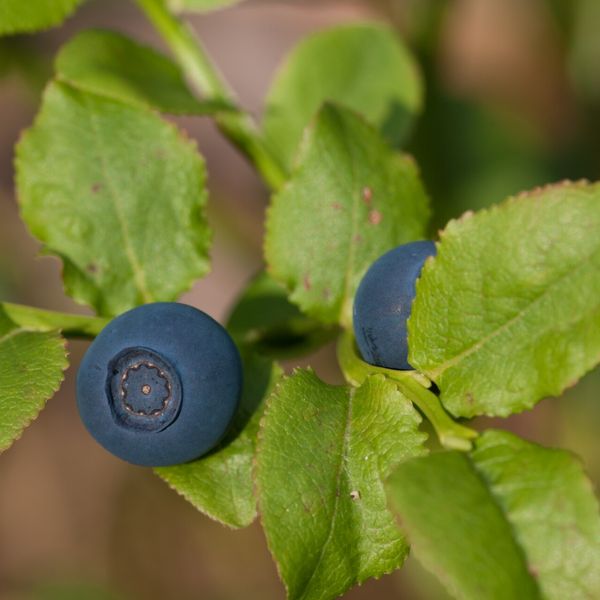
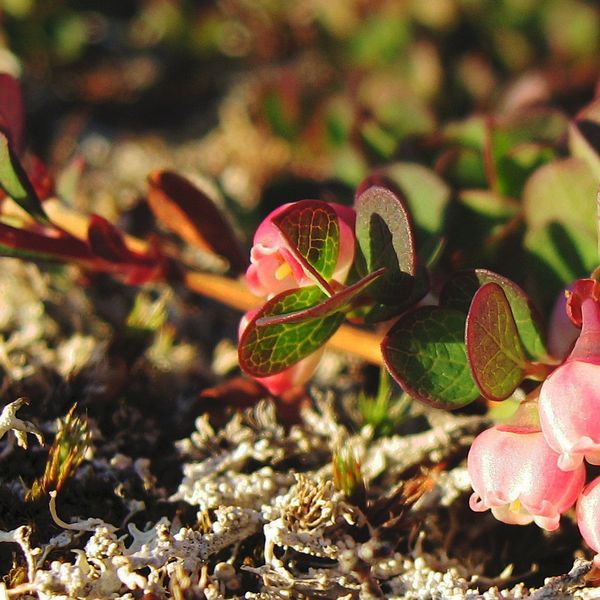
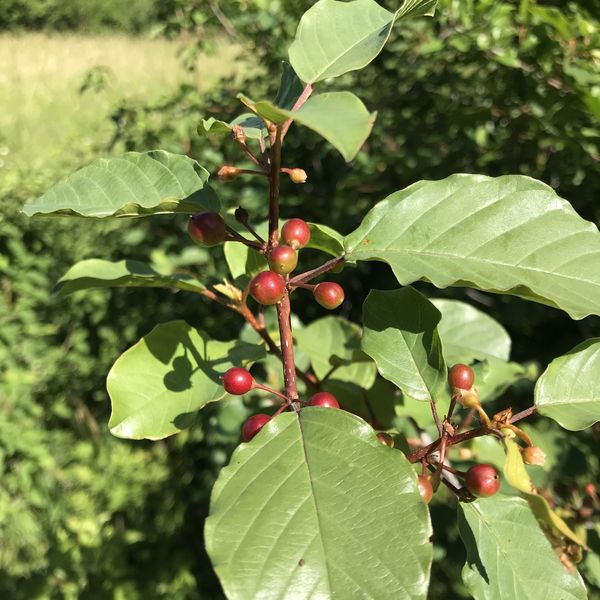
They are easy to distinguish. Blueberries are low shrubs up to half a meter with small serrated leaves; the berries grow singly and have a round "crown" on top, with dark purple juice. Honeysuckle is a tall shrub, and the berries grow in pairs on a long stem, without a "crown."
Where in the Carpathians

Orange — where naturalists recorded the species (GBIF, CC0/CC BY); a blank area does not mean it is absent.
- Countries
- Ukraine · Slovakia · Czechia · Poland · Romania
- Mountain ranges
- In other countries: 🇸🇰 High Tatras, 🇸🇰 Slovak Ore Mountains, 🇸🇰 Belianske Tatras, 🇸🇰 Greater Fatra, 🇸🇰 Western Tatras, 🇸🇰 Low Tatras, 🇸🇰 Lesser Fatra, 🇸🇰 Volovec Mountains, 🇸🇰 Slovak Paradise, 🇨🇿 Moravian-Silesian Beskids, 🇸🇰 Strážov Mountains, 🇸🇰 Levoča Mountains, 🇸🇰 Slovak Central Mountains, 🇵🇱 Pieniny
- Altitude belts
- Foothills (below 600 m) · Beech forests (600–1200 m) · Conifer forests (1200–1600 m)
When to see it
| Jan | Feb | Mar | Apr | May | Jun | Jul | Aug | Sep | Oct | Nov | Dec | |
|---|---|---|---|---|---|---|---|---|---|---|---|---|
| Flowering | ||||||||||||
| Fruit |
From naturalists’ observations in the Carpathians (iNaturalist, research grade): the darker the cell, the more often the species is seen that month.
Safety
Berries are inedible and can cause vomiting and digestive upset. Do not confuse with blueberries: in honeysuckle, the berries are paired, on a long stem, on a tall shrub. In case of suspected poisoning, call 103 (or 112).
Look-alikes — how to tell them apart
A low shrub up to 50 cm with small serrated leaves; berries grow singly, with a round "crown" on top and dark purple juice.
A low shrub in wetlands and crooked forests; leaves are bluish, entire, berries grow singly or in clusters, with light juice.
Protection and rules
Not listed in the Red Book of Ukraine.
FAQ
Are the berries of black-berried honeysuckle edible?
No. They are bitter and can cause vomiting and digestive upset.
How to distinguish black-berried honeysuckle from blueberries?
In honeysuckle, the berries grow in pairs on a long common stem, and the shrub is tall, up to one and a half meters. Blueberries are low shrubs with single berries that have a "crown" on top.
Comments
Travellers’ experience: reports, tips, questions.
No one has written here yet. Be the first — your experience helps others.
Similar species
Where to meet it
Trails
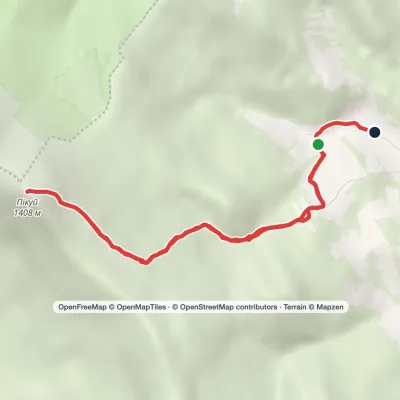 ModerateOne-dayMarkedBilasovytsia village loopvia Mount PikuiElevation profile622–1 408 m8.9 kmascent 750 m≈ 3.5 h walking
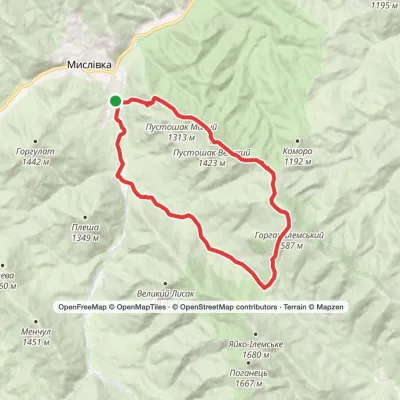 HardOne-dayMarkedMyslivka village loopvia Mount Horhan-IlemskyiElevation profile663–1 587 m24 kmascent 1 188 m≈ 8 h walking
 EasyOne-dayMarkedBilasovytsia village Mount PikuiElevation profile594–1 408 m4.5 kmascent 814 m≈ 2.5 h walking
 EasyOne-dayBilasovytsia village Mount PikuiElevation profile594–1 334 m5.3 kmascent 779 m≈ 2.5 h walking
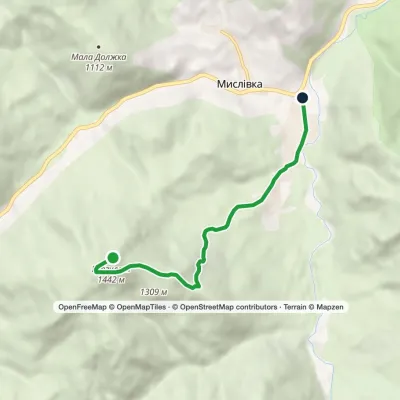 EasyOne-dayMarkedMyslivka GurgulatElevation profile656–1 442 m6.1 kmascent 7 m≈ 1.5 h walking
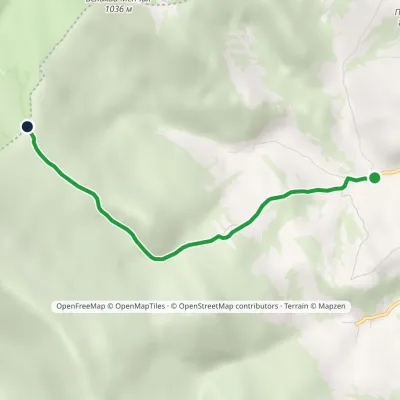 EasyOne-dayMarkedBilasovytsia village Mount KosharyshcheElevation profile586–1 085 m4 kmascent 499 m≈ 2 h walking
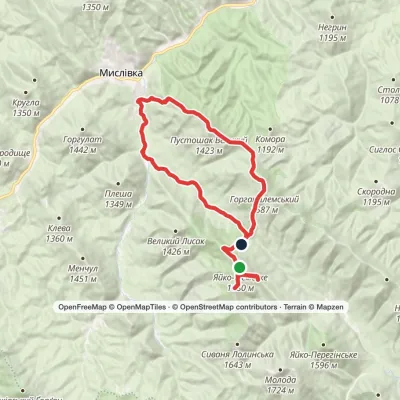 Hard1–2 daysMarkedMyslivka village loopvia Mount Yayko Ilemske, Mount Horhan IlemskyiElevation profile667–1 680 m36.3 kmascent 1 618 m≈ 12 h walking
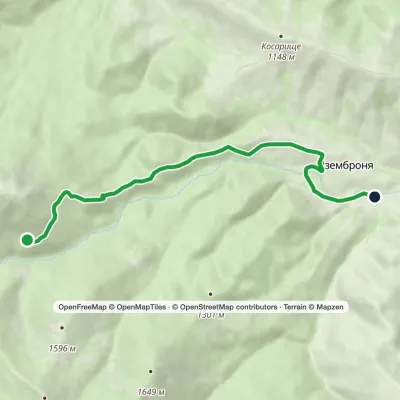 EasyOne-dayMarkedDzembronia ChufrovaElevation profile818–1 386 m6.2 kmascent 1 m≈ 1.5 h walking
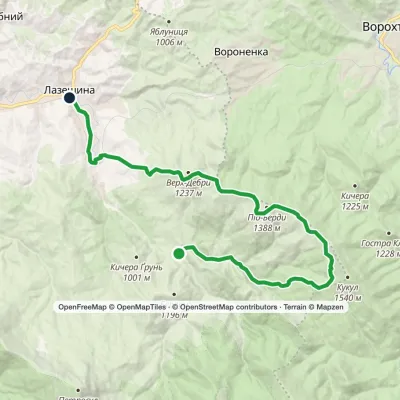 ModerateOne-dayMarkedLazeshchyna loopvia Mount KukulElevation profile717–1 410 m21.3 kmascent 652 m≈ 6.5 h walking
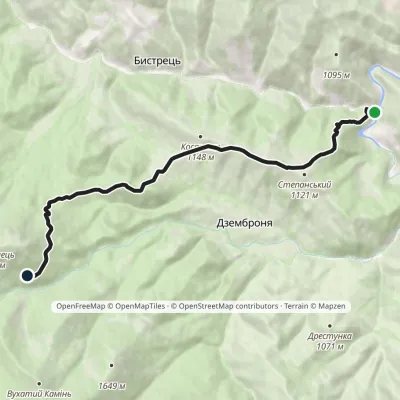 ModerateOne-dayMarkedBystrets turn-off Chufrova polonynaElevation profile697–1 386 m9.4 kmascent 876 m≈ 4 h walking
 EasyOne-dayMarkedDzembronia village Chufrova polonynaElevation profile869–1 411 m5.1 kmascent 540 m≈ 2 h walking
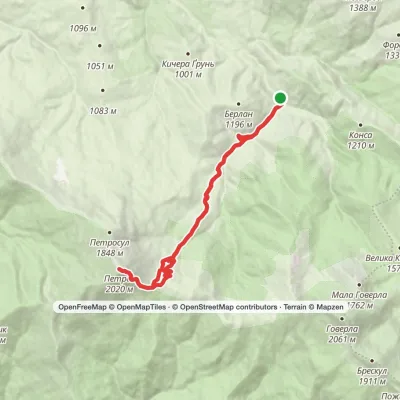 ModerateOne-dayMarkedKozmeshchyk to Mount Petrosvia Holovcheska polonynaElevation profile864–2 020 m17.7 kmascent 1 176 m≈ 6.5 h walking
Peaks and meadows
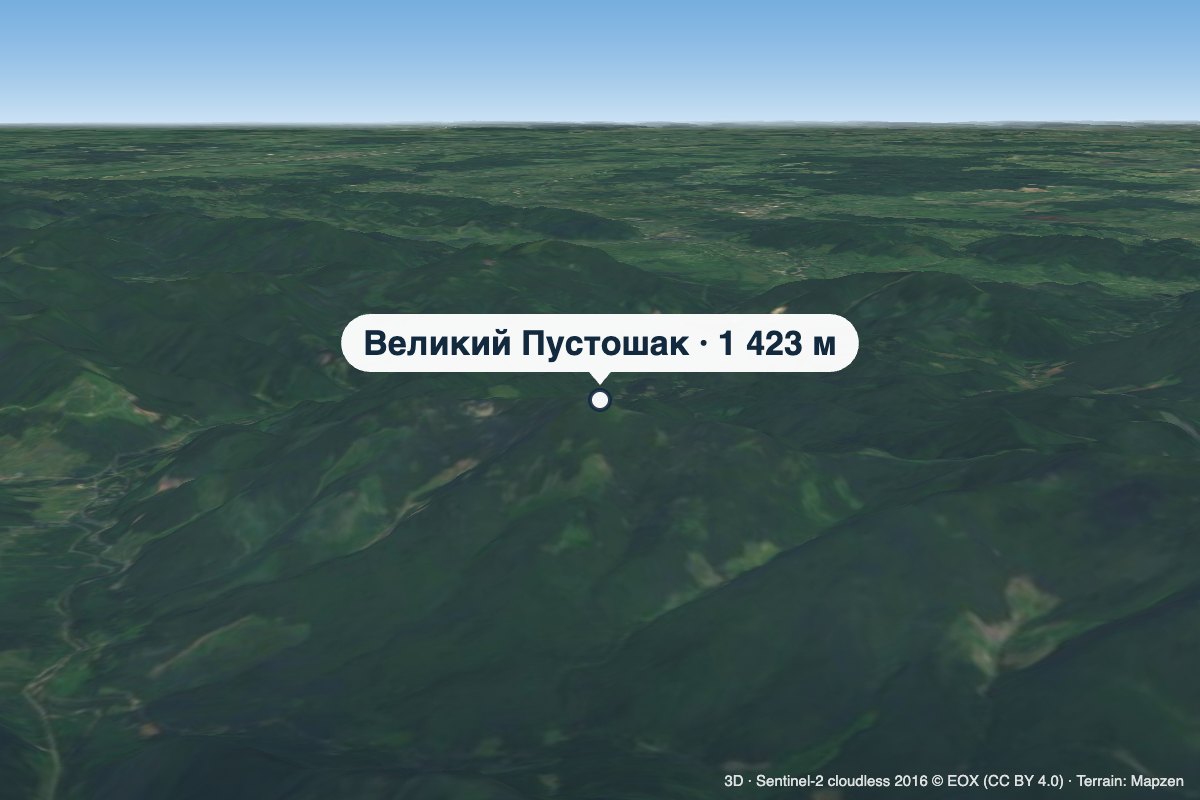 PeakMount Velykyi PustoshakMyslivkaaltitude 1 423 m · Gorgany rangeVelykyi Pustoshak is a 1,423 m summit (1,427 m according to other sources) in the northern Gorgany, in the Kalush...
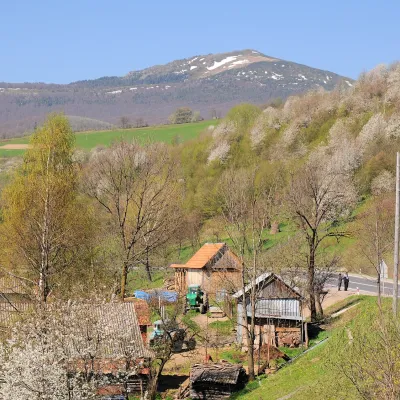 PeakMount PikuiShcherbovetsaltitude 1 408 m · Watershed Ridge range2 trails to the topPikui is the highest peak of the Vododilnyi (Verkhovyna Watershed) Ridge of the Ukrainian Carpathians.
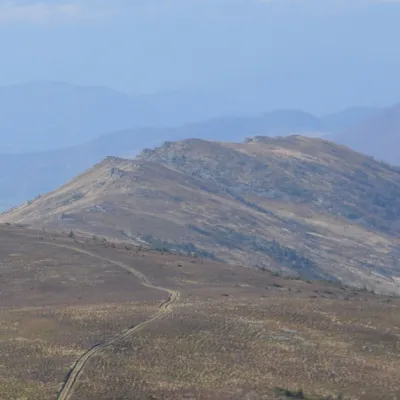 PeakMount ZelemenyiShcherbovetsaltitude 1 304 m · Watershed Ridge range1 trail to the topZelemenyi is a 1,304 m summit on the Vododilnyi (Verkhovyna Watershed) Ridge of the Ukrainian Carpathians.
Mountain ranges: In other countries: 🇸🇰 High Tatras, 🇸🇰 Slovak Ore Mountains, 🇸🇰 Belianske Tatras, 🇸🇰 Greater Fatra, 🇸🇰 Western Tatras, 🇸🇰 Low Tatras, 🇸🇰 Lesser Fatra, 🇸🇰 Volovec Mountains, 🇸🇰 Slovak Paradise, 🇨🇿 Moravian-Silesian Beskids, 🇸🇰 Strážov Mountains, 🇸🇰 Levoča Mountains, 🇸🇰 Slovak Central Mountains, 🇵🇱 Pieniny
Trails and peaks near which naturalists recorded the species (GBIF, iNaturalist), matched by altitude and habitat. Sightings are not guaranteed.
Sources
- Вікіпедія: Жимолость чорна
- Wikipedia (en): Lonicera nigra
- Wikipedia (pl): Wiciokrzew czarny
- iNaturalist: Lonicera nigra (спостереження в Карпатах)
GBIF · iNaturalist · Wikidata · Distribution data: GBIF.org (CC0 and CC BY records), iNaturalist; names and identifiers: Wikidata (CC0). Text: Karpaty.rocks, checked 11.11.2026.
