Bog bilberry
Never eat berries you are not sure about and never give unknown berries to children. In case of poisoning call 112 (103 in Ukraine).
About
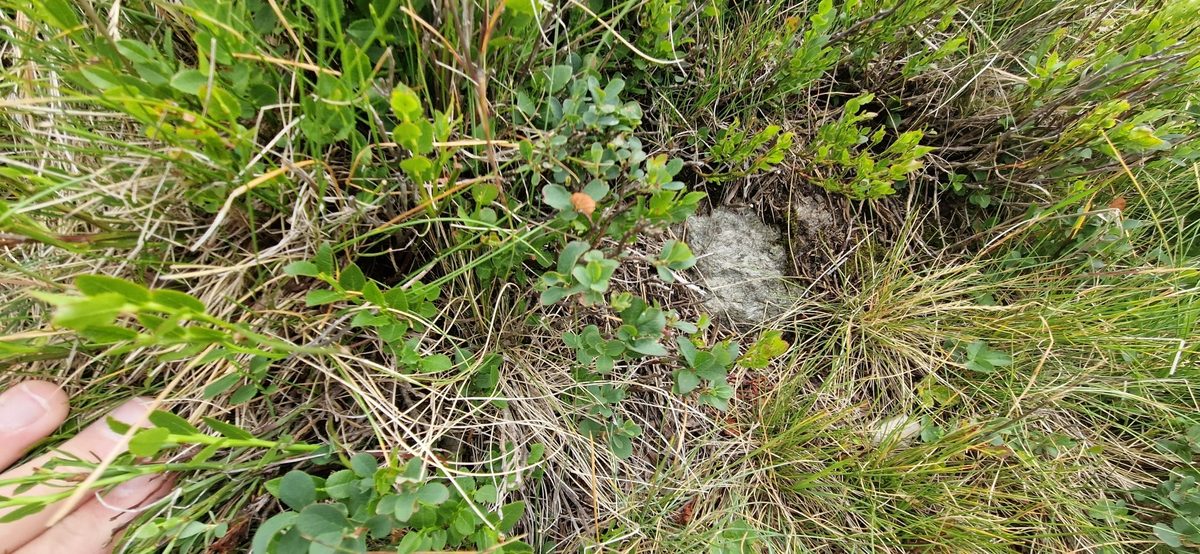
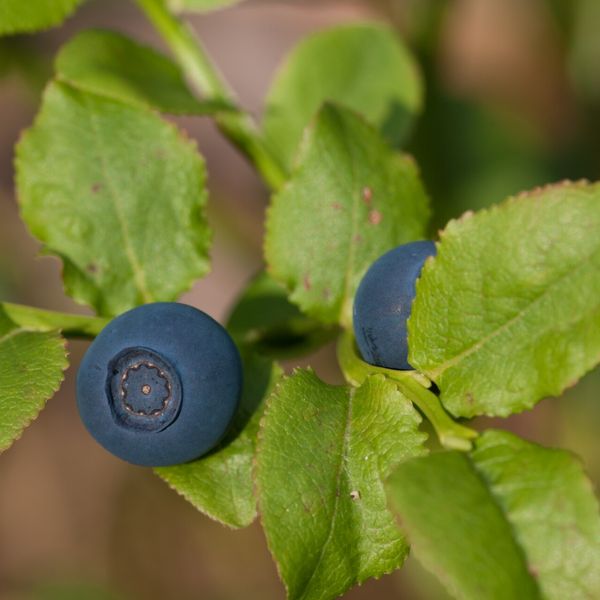
Buiahy, or bog bilberry, is a wild relative of garden blueberry and a close relative of blueberry. In the Carpathians, it grows in two different habitats: in mountain peat bogs and on high mountain polonynas and rocky slopes above the tree line, among juniper, blueberry, and lingonberry.
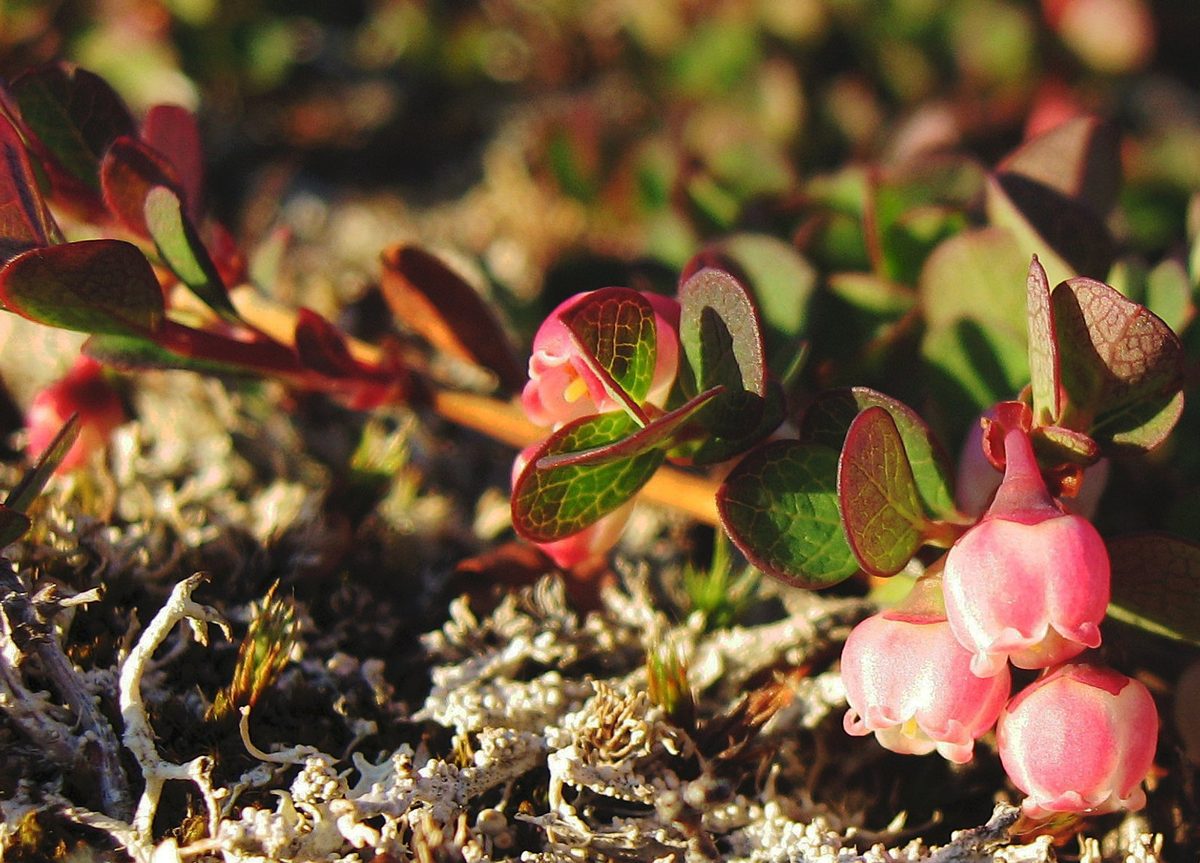
This deciduous bush is 30 cm to 1 m tall with round, gray-brown, rather than green, branches. The leaves are obovate, entire, grayish-green on top and even lighter underneath, with a noticeable network of veins. The flowers are small, urn-shaped, white or pale pink, appearing in May - June.
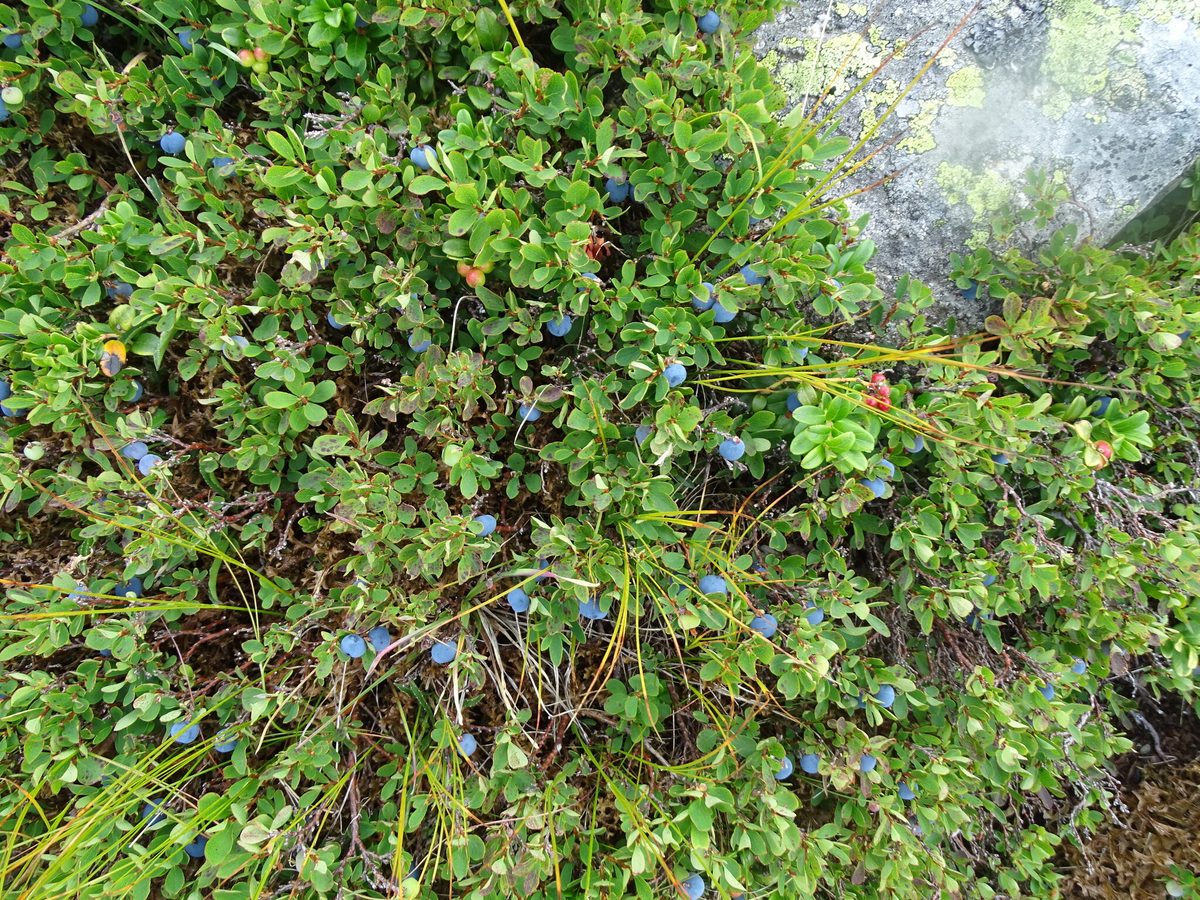
The berries are blue with a dense grayish bloom, elongated or round, larger than blueberries. The main difference from blueberry is the flesh: in buiahy, it is greenish, and the juice is almost colorless, so fingers do not get stained. The berries ripen in July - August, later in the high mountains. They taste milder than blueberries.
The berries of buiahy are edible. However, they often grow near other berry bushes, so check which plant you are collecting from. In Polissia, buiahy are much more abundant than in the Carpathians, and they are harvested there in large quantities; in the mountains, they are rather a pleasant find along the trail.
Where in the Carpathians

The map shows where naturalists recorded the species (GBIF, CC0 and CC BY records), not every place it lives. The Ukrainian Carpathians are less studied, so a blank area does not mean the species is absent.
- Countries
- Slovakia · Ukraine · Poland · Romania
- Mountain ranges
- High Tatras, Western Tatras, Vihorlat-Gutin Volcanic Ridge, Żywiec Beskids, Low Tatras, Svydovets, Chornohora, Făgăraș Mountains, Lesser Fatra, Rivna Polonyna
- Altitude belts
- Beech forests (600–1200 m) · Conifer forests (1200–1600 m) · Subalpine belt (1600–1900 m)
When to see it
| Jan | Feb | Mar | Apr | May | Jun | Jul | Aug | Sep | Oct | Nov | Dec | |
|---|---|---|---|---|---|---|---|---|---|---|---|---|
| Flowering | ||||||||||||
| Fruit |
From naturalists’ observations in the Carpathians (iNaturalist, research grade): the darker the cell, the more often the species is seen that month.
Safety
Collect only from bushes with grayish leaves and round branches. Do not give unfamiliar berries to children and teach them not to taste anything in the forest without adults.
Look-alikes — how to tell them apart
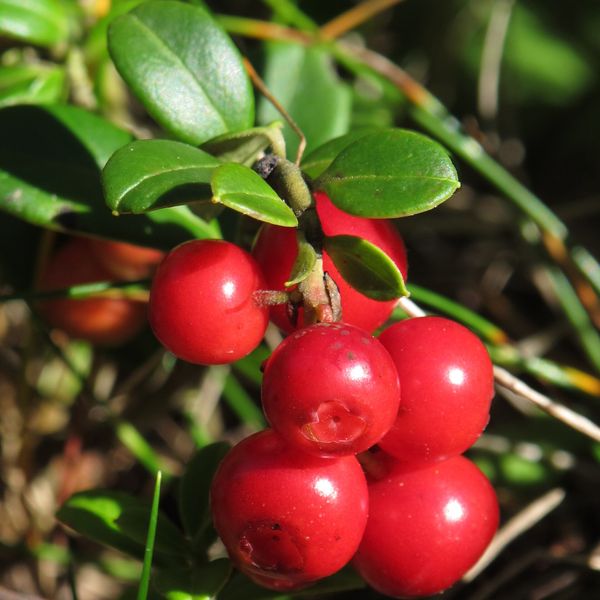
A lower bush with green sharp-edged branches and green finely serrated leaves; the flesh of the berries is dark purple, and the juice stains.
Only one blue-black berry at the top of the stem, above a ring of four broad leaves; not a bush, but a solitary herbaceous plant.
In folk tradition
Berries are eaten fresh, made into jam; leaves are traditionally added to herbal teas.
Protection and rules
Not protected. For personal use, collection is allowed in state and communal forests; in reserves and protected areas of national parks, it is prohibited.
FAQ
How do buiahy differ from blueberries?
Buiahy are a taller bush with grayish-green leaves and round branches. Their berries have light greenish flesh and colorless juice, while blueberries have dark flesh that stains fingers.
Where do buiahy grow in the Carpathians?
In mountain peat bogs and high in the mountains - on polonynas and rocky slopes above the tree line.
Recorded nearby
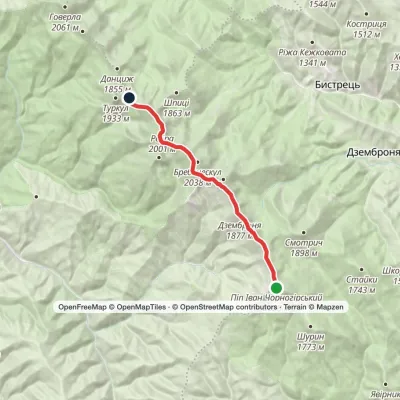 ModerateOne-dayMarkedMount Pip Ivan Chornohirskyi to Lake Nesamovytevia Mount Dzembronia, Mount RebraElevation profile1 742–2 028 m13.3 kmascent 329 m≈ 4 h walking
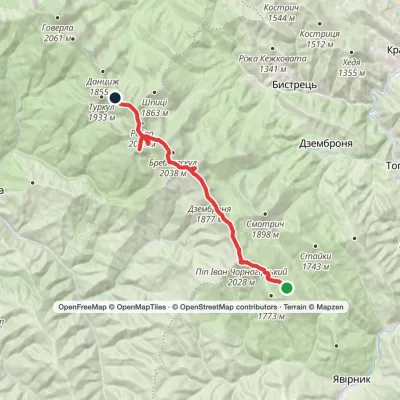 ModerateTwo-dayMarkedVesnarka polonyna to Lake Nesamovytevia Mount Pip Ivan Chornohirskyi, Mount RebraElevation profile1 505–2 028 m18.3 kmascent 1 092 m≈ 7 h walking
 ModerateOne-dayMarkedZaroslyak base Mount ShpytsiElevation profile1 134–1 863 m6.9 kmascent 743 m≈ 3 h walking
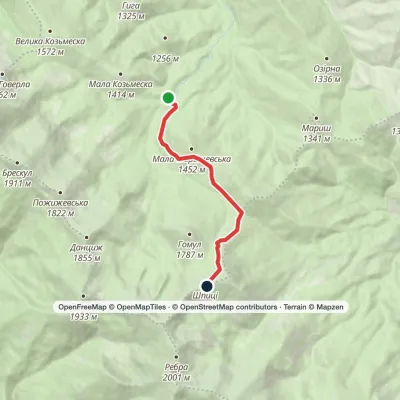 EasyOne-dayMarkedZaroslyak base Mount ShpytsiElevation profile1 128–1 863 m6.1 kmascent 758 m≈ 3 h walking
 ModerateOne-dayHadzhyna polonyna to Turkulska polonynavia Mount Rebra, Lake BrebeneskulElevation profile1 210–2 001 m14 kmascent 1 050 m≈ 5.5 h walking
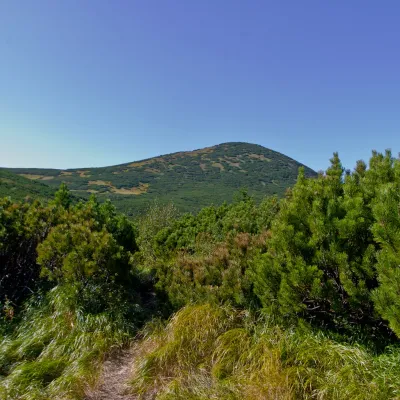 PeakMount GomulBystretsaltitude 1 788 m · Chornohora range15 trails to the topGomul (also known by another name - Khomul) is a 1788-meter peak in the Ukrainian Carpathians, which is located in...
Trails and peaks near which naturalists recorded the species (GBIF, iNaturalist), matched by altitude and habitat. Sightings are not guaranteed.
Similar species
Sources
- Вікіпедія: Буяхи
- Wikipedia (en): Vaccinium uliginosum
- Wikipedia (pl): Borówka bagienna
- Лісовий кодекс України, ст. 69: загальне використання лісових ресурсів (збирання грибів і ягід для власних потреб)
GBIF · iNaturalist · Wikidata · Distribution data: GBIF.org (CC0 and CC BY records), iNaturalist; names and identifiers: Wikidata (CC0). Text: Karpaty.rocks, checked 09.11.2026.
