Bilberry
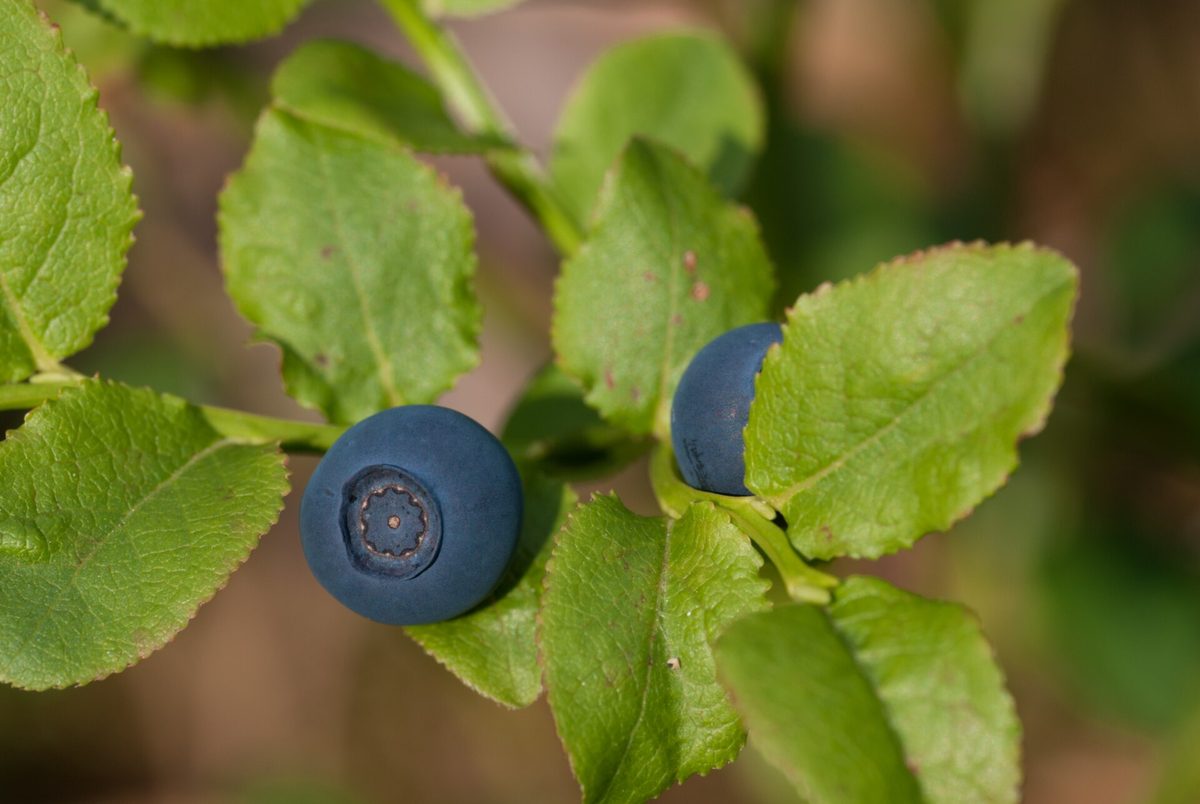
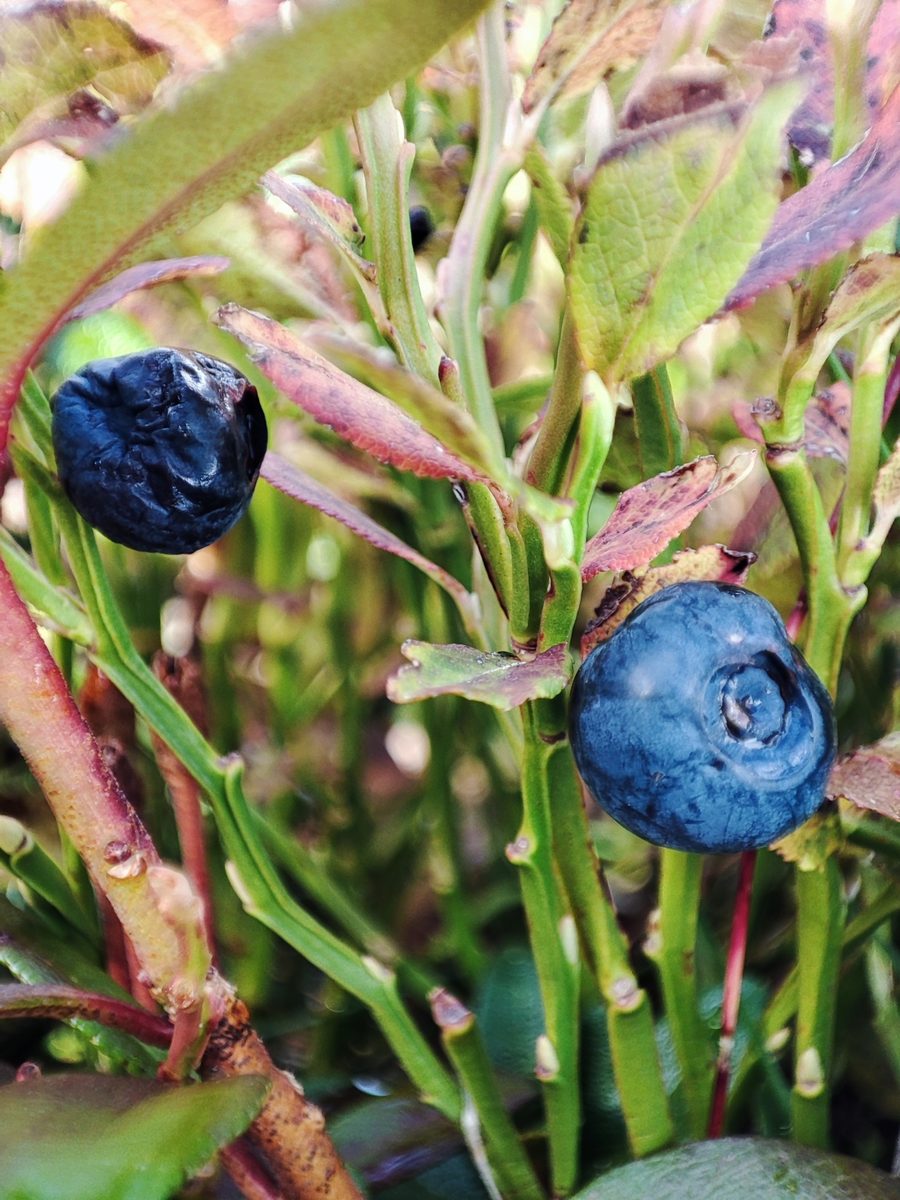
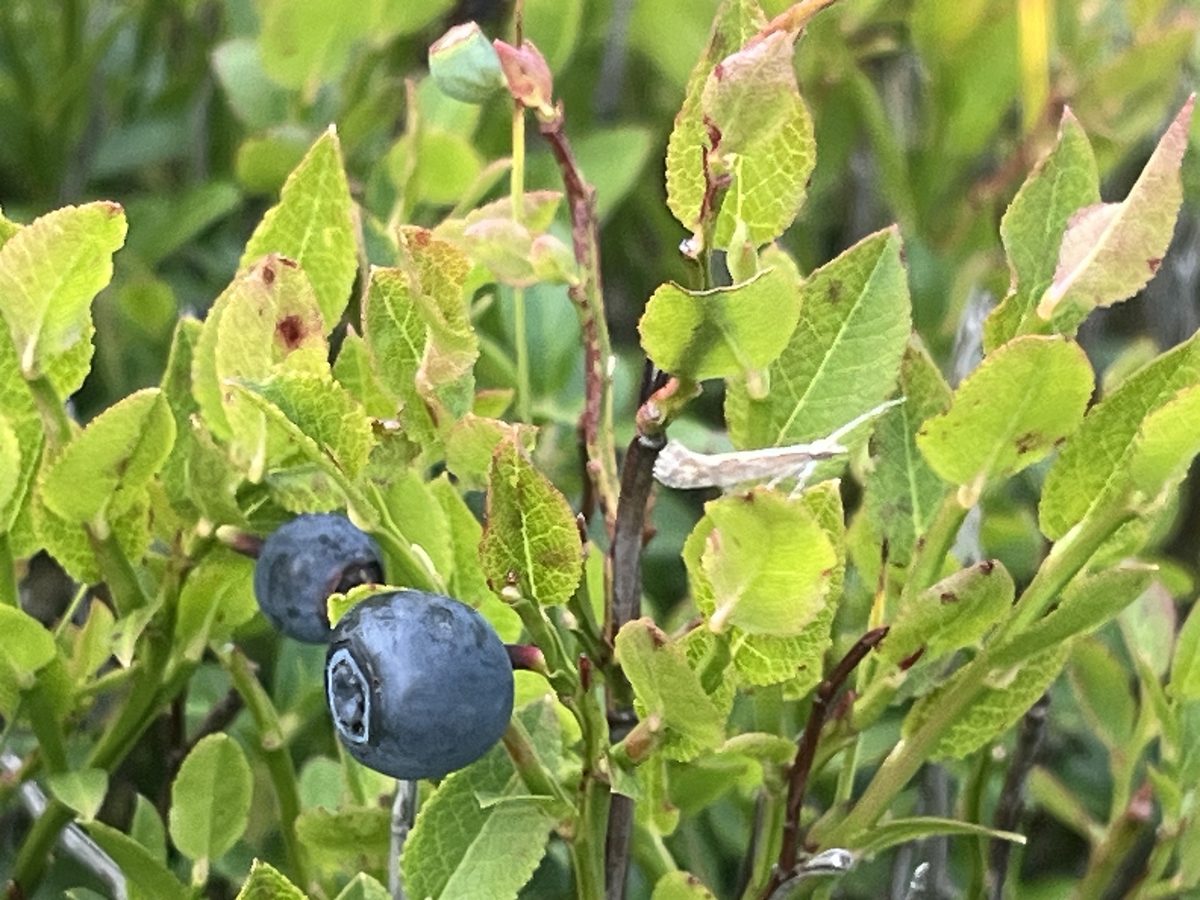
Never eat berries you are not sure about and never give unknown berries to children. In case of poisoning call 112 (103 in Ukraine).
About
Bilberry is the berry most often associated with the Carpathians. In Hutsulshchyna and Boikivshchyna, it is called yafyny or afyny. It covers the slopes under spruce trees, clearings, and polonynas with solid carpets, from beech forests to the subalpine zone. For many mountain families, gathering bilberries is an ancient summer tradition.
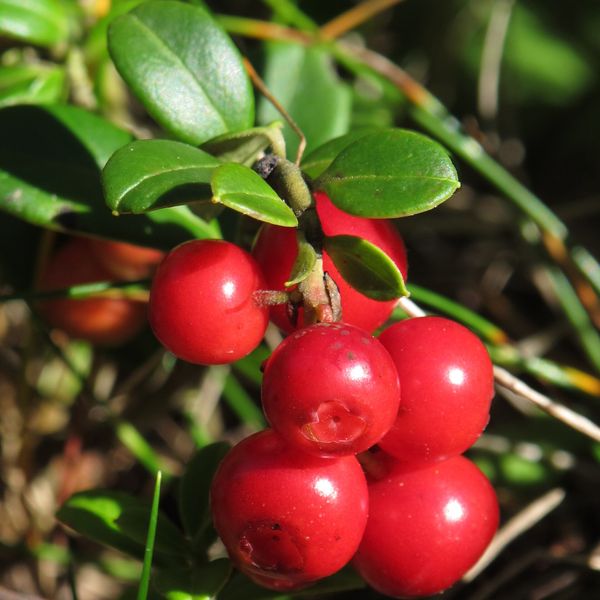
It is a small deciduous bush 15–50 cm tall with sharply ribbed green branches that remain green even in winter. The leaves are small, oval, with finely serrated edges. The flowers are solitary, spherical, greenish-pink, appearing in May – June. The berries are round, blue-black with a waxy bloom, and dark purple inside: the juice stains fingers and tongue.
Bilberries ripen in July and August; in the high mountains, on the polonynas of Chornohora, Svydovets, or Gorgany, the harvest continues into September. It is best to pick the berries by hand: combs tear off leaves and break branches, and the bushes take longer to recover afterwards.
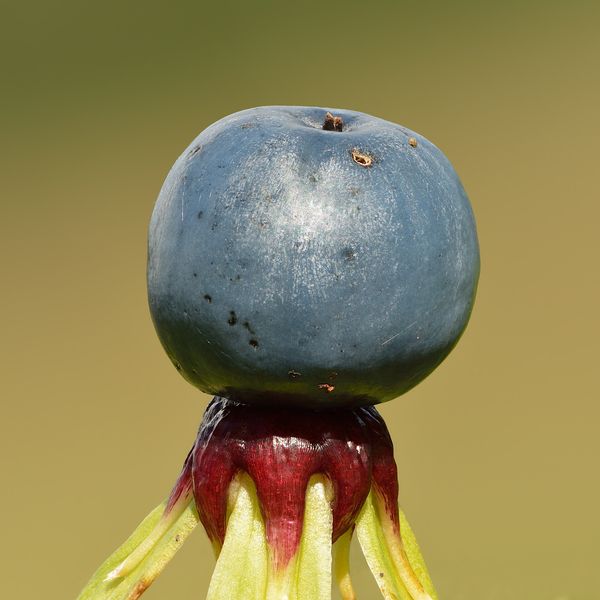
It is dangerous to confuse bilberries with crow's eye — a herbaceous plant that has only one black berry above four leaves — and with belladonna, which has shiny berries sitting in a star-shaped cup on tall grass. Similar to bilberries are blueberries (Vaccinium uliginosum), which are edible: this is a taller bush with bluish leaves and light-fleshed berries.
The berries are eaten fresh, and the leaves and berries are traditionally dried for tea. Dried bilberries have long been part of the home supplies of mountain families.
Where in the Carpathians

The map shows where naturalists recorded the species (GBIF, CC0 and CC BY records), not every place it lives. The Ukrainian Carpathians are less studied, so a blank area does not mean the species is absent.
- Countries
- Slovakia · Czechia · Ukraine · Poland · Romania · Hungary
- Mountain ranges
- Western Tatras, High Tatras, Low Tatras, Lesser Fatra, Greater Fatra, Slovak Ore Mountains, Moravian-Silesian Beskids, Żywiec Beskids, Volovec Mountains, Kysuce Beskids
- Altitude belts
- Beech forests (600–1200 m) · Conifer forests (1200–1600 m) · Subalpine belt (1600–1900 m)
When to see it
| Jan | Feb | Mar | Apr | May | Jun | Jul | Aug | Sep | Oct | Nov | Dec | |
|---|---|---|---|---|---|---|---|---|---|---|---|---|
| Flowering | ||||||||||||
| Fruit |
From naturalists’ observations in the Carpathians (iNaturalist, research grade): the darker the cell, the more often the species is seen that month.
Safety
Before gathering, make sure that each berry grows on a bush with small leaves, not alone on the top of a herbaceous plant (crow's eye) or on tall grass (belladonna). Forest berries are better washed. Do not give unfamiliar berries to children and teach them not to taste anything in the forest without adults.
Look-alikes — how to tell them apart
Only one blue-black berry at the top of the stem, above a ring of four broad leaves; not a bush, but a solitary herbaceous plant.
Tall herb up to 1.5–2 m, not a low bush; shiny black berries the size of cherries sit alone in a star-shaped cup made of five green parts.
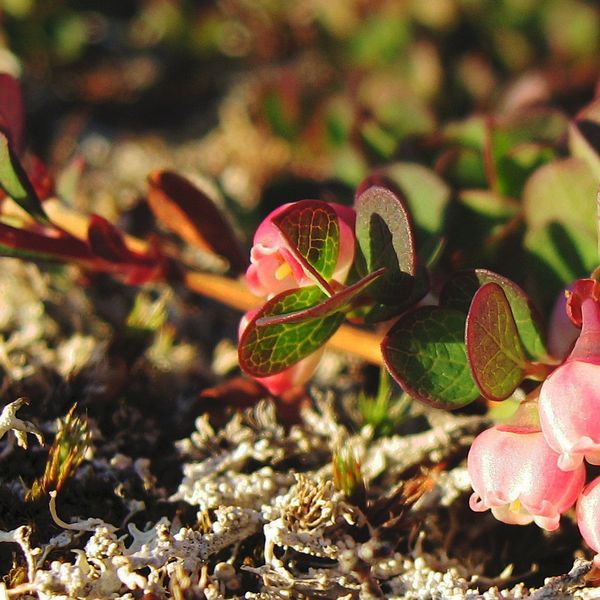
Taller bush, up to 1 m, with bluish-green leaves and round branches; the flesh of the berries is greenish, and the juice is almost colorless.
In folk tradition
The berries are traditionally eaten fresh, dried, and made into jam; dried leaves and berries are brewed like tea.
Protection and rules
Not protected. For personal use, gathering is allowed in state and communal forests; in reserves and protected areas of national parks, it is prohibited.
FAQ
When to gather bilberries in the Carpathians?
The main season is July and August. In the polonynas and high mountains, bilberries ripen later, so they are gathered there in September.
How to distinguish bilberries from crow's eye?
Bilberry is a bush with many berries under small leaves. Crow's eye is a herbaceous plant with one black berry at the top, above a ring of four large leaves. It is poisonous.
What poisonous berries grow in the Carpathians?
The most dangerous are belladonna, crow's eye, wolf berries, yew, herbaceous elderberry, and lily of the valley. Therefore, only gather berries that you are sure of.
Recorded nearby
 ModerateOne-dayPolianytsia village Mount DovbushankaElevation profile887–1 754 m13.4 kmascent 1 061 m≈ 5.5 h walking
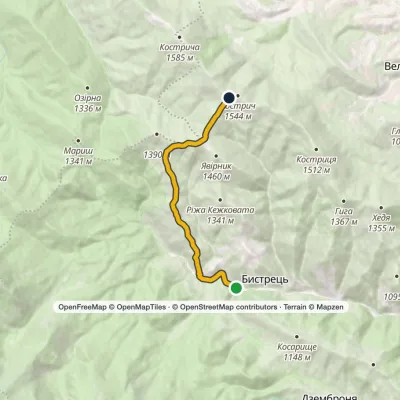 ModerateTwo-dayMarkedBystrets village Mount Kostrychvia Psarivka polonynaElevation profile816–1 516 m15 kmascent 732 m≈ 5 h walking
 HardTwo-dayPolianytsia village loopvia Mount DovbushankaElevation profile894–1 754 m22.3 kmascent 1 419 m≈ 8.5 h walking
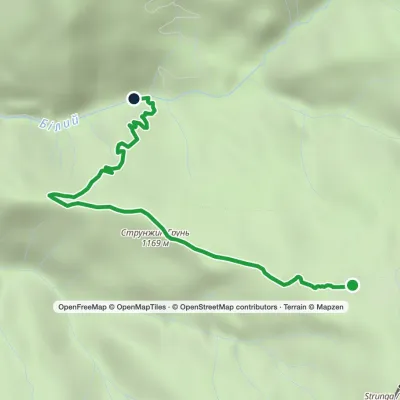 EasyOne-dayMarkedTo StrunhyElevation profile752–1 421 m4.2 km≈ 1 h walking
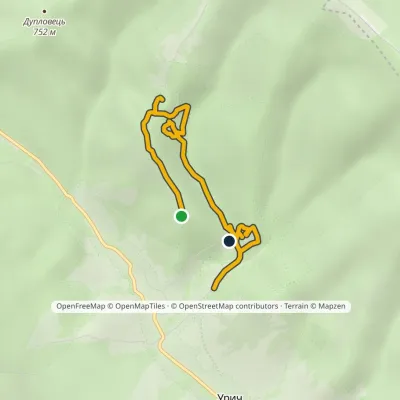 EasyOne-dayMarkedNo. 5048 «In the Footsteps of Legendary Tustan»Elevation profile551–712 m4.1 kmascent 139 m≈ 1.5 h walking
 EasyOne-dayMarkedCarpathian Tourist TrailElevation profile342–823 m4.2 kmascent 480 m≈ 2 h walking
Trails and peaks near which naturalists recorded the species (GBIF, iNaturalist), matched by altitude and habitat. Sightings are not guaranteed.
Similar species
Sources
- Вікіпедія: Чорниця звичайна
- Wikipedia (en): Vaccinium myrtillus
- Wikipedia (en): Paris quadrifolia
- Wikipedia (en): Atropa bella-donna
- Лісовий кодекс України, ст. 69: загальне використання лісових ресурсів (збирання грибів і ягід для власних потреб)
GBIF · iNaturalist · Wikidata · Distribution data: GBIF.org (CC0 and CC BY records), iNaturalist; names and identifiers: Wikidata (CC0). Text: Karpaty.rocks, checked 09.11.2026.
