Zakopane
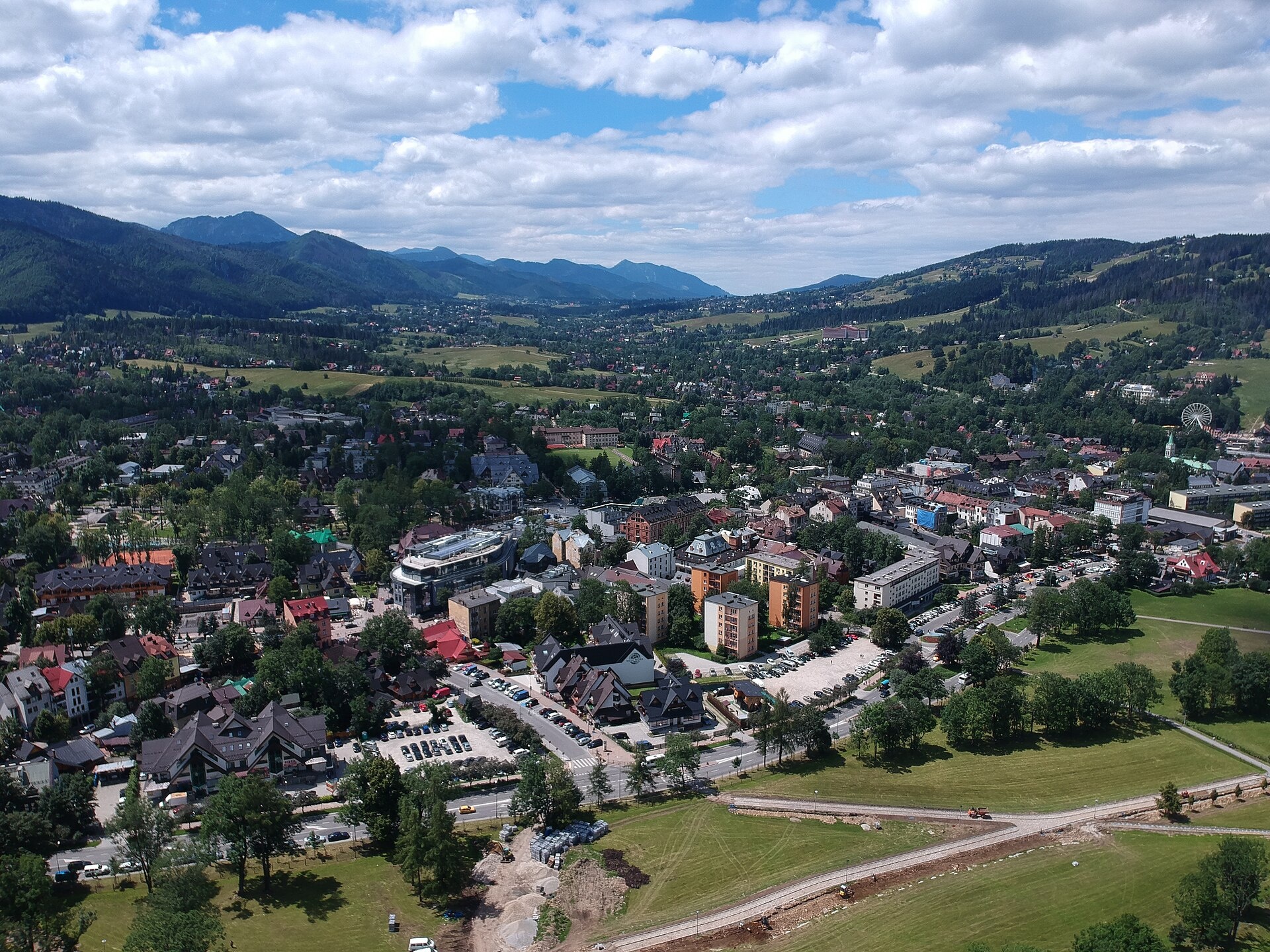

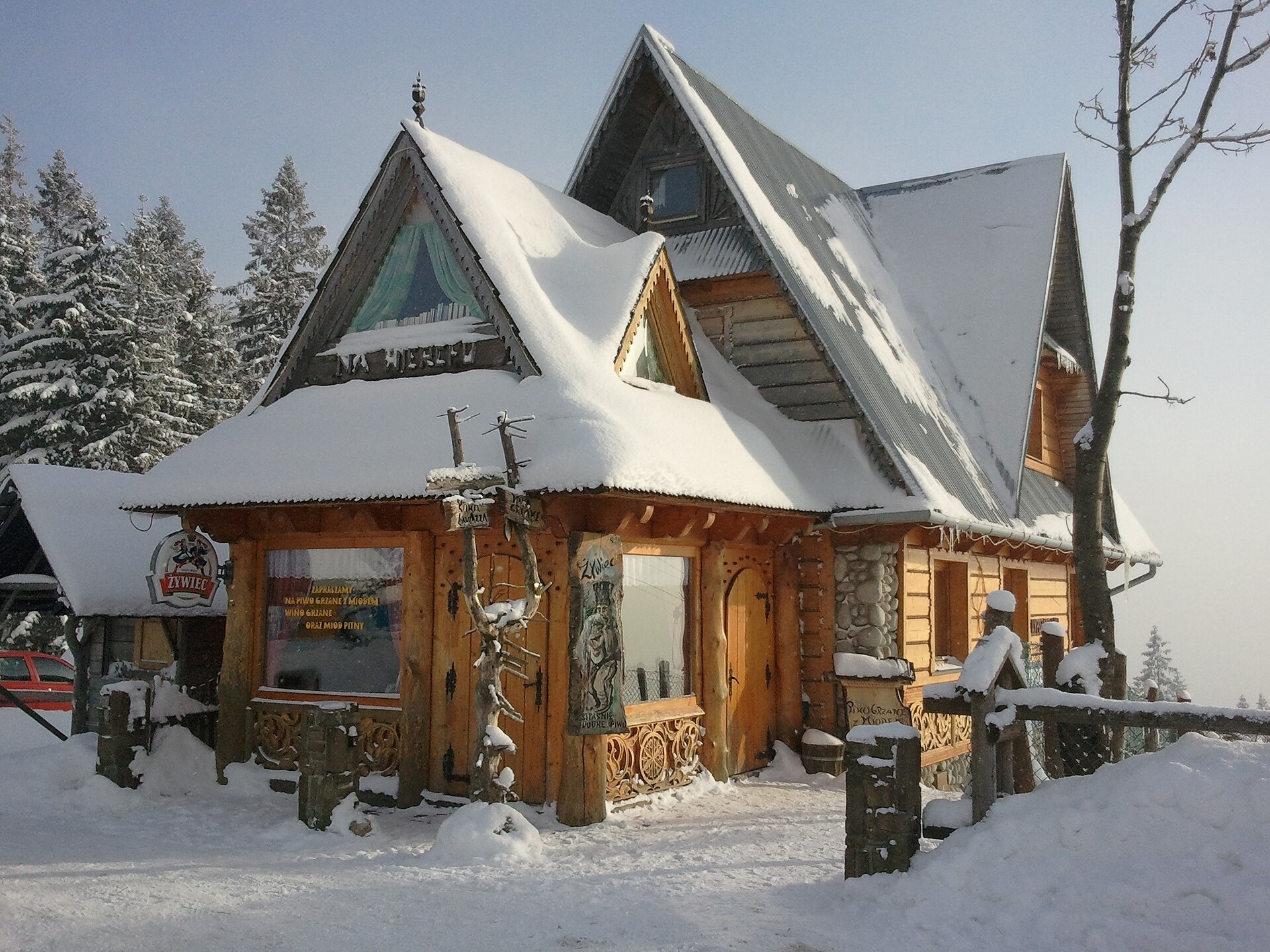
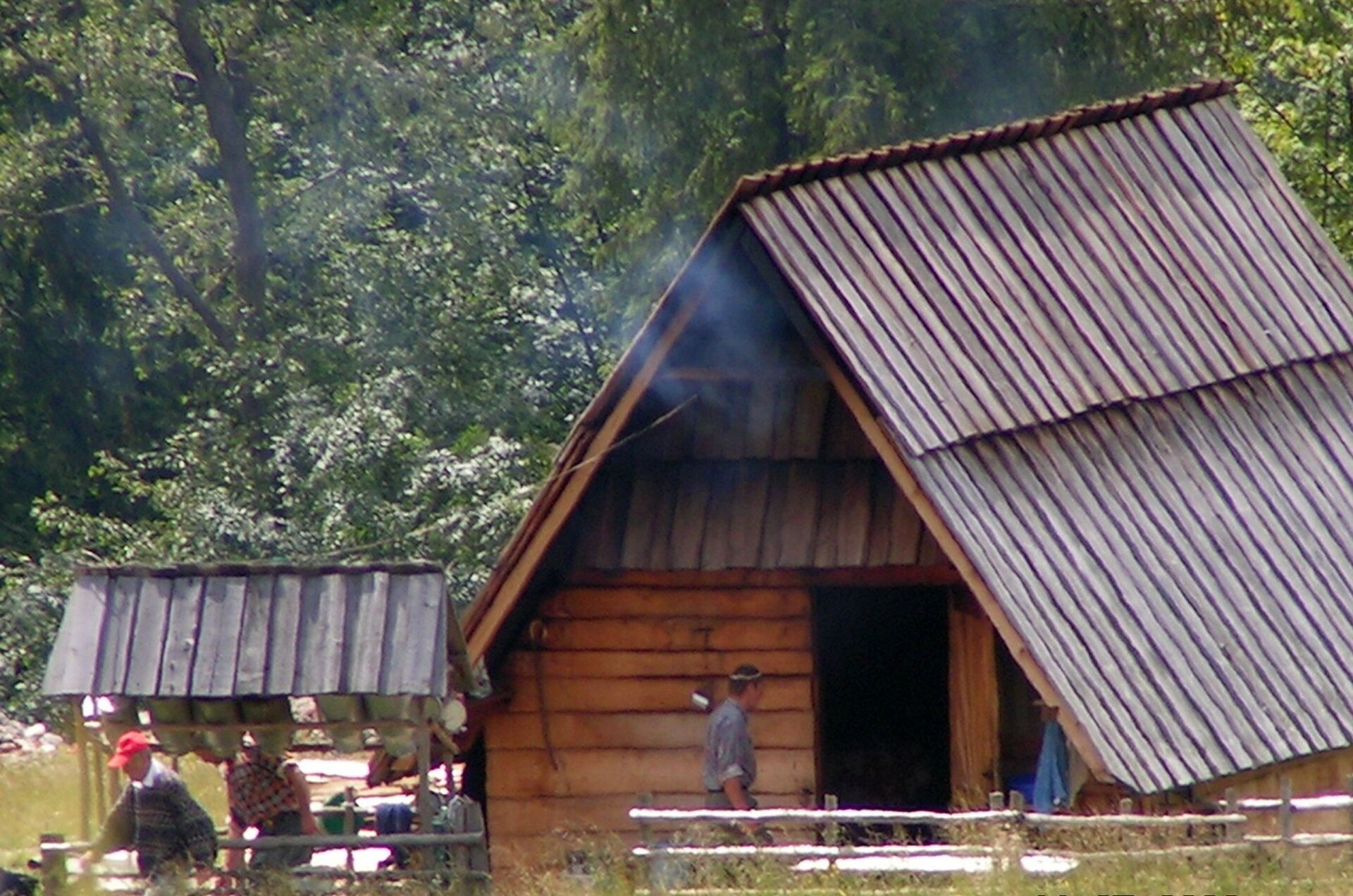
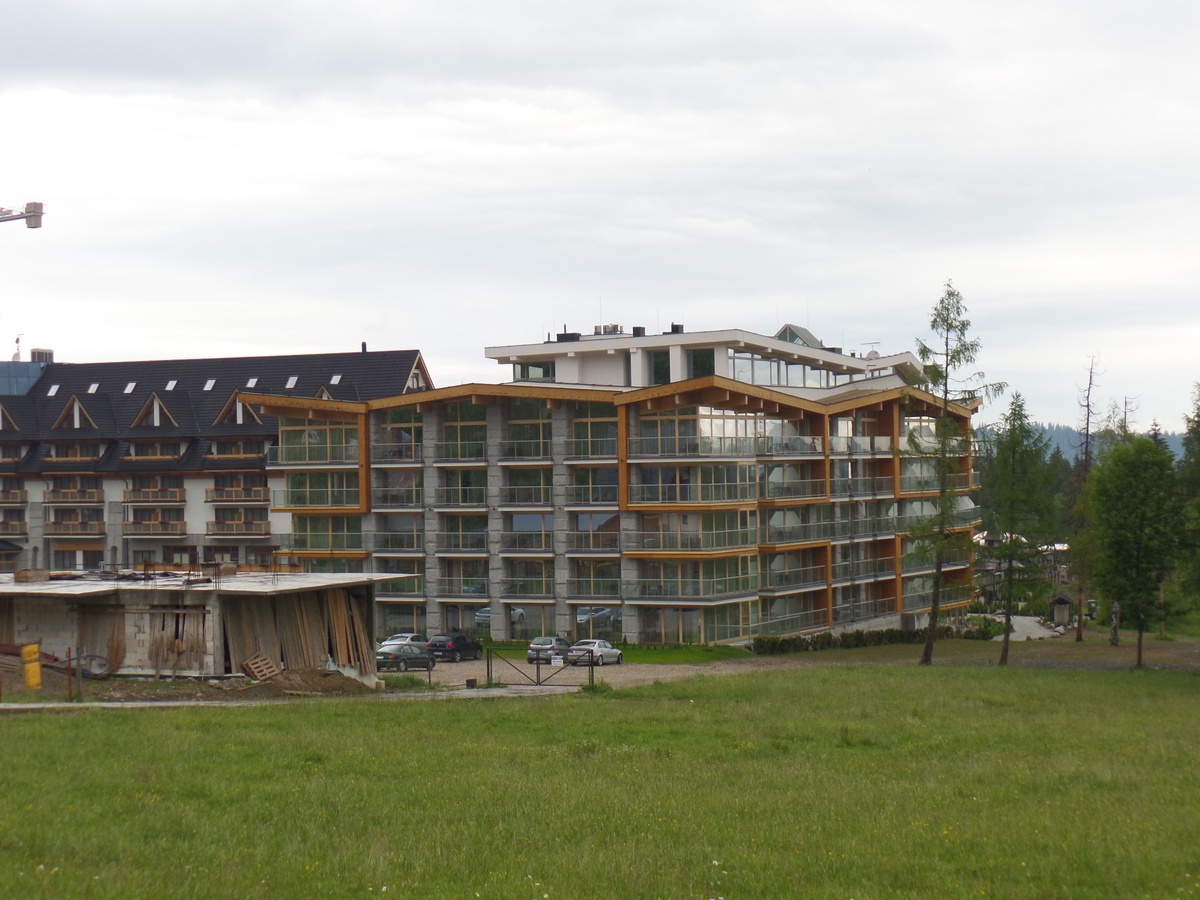
Photos: Maksym Kozlenko, CC BY-SA 4.0 (Wikimedia Commons); Maksym Kozlenko, CC BY-SA 4.0 (Wikimedia Commons); Aldis Dzenovskis, CC BY-SA 3.0 (Wikimedia Commons); OrlandoFax, CC BY 3.0 (Wikimedia Commons); enonim, CC BY-SA 3.0 (Wikimedia Commons); FraKtus, CC BY-SA 3.0 (Wikimedia Commons)
Zakopane is a town in southern Poland, serving as the administrative centre of Tatra County in the Lesser Poland Voivodeship. It is located at the foot of the Tatra Mountains, in the Podtatrzański Trench, at an elevation of 837 m above sea level. The town is surrounded by the Western Tatras, with Gubałówka Hill to the north and Giewont mountain rising to the south. Within Zakopane's boundaries lies part of the Tatra Mountains, including the peak Świnica (2301 m). Several streams run through the town, flowing into the Zakopianka River, a tributary of the Biały Dunajec.
Zakopane originated on the site of seasonal shepherds' settlements. The first mention is believed to date back to 1578, though the document has not survived. In 1676, the settlement had 43 inhabitants. Initially, it belonged to the Polish king, later to the Austrian Empire. In the 18th century, an iron foundry was built in Kuźnice, which became the largest in the region by the 19th century. The town began to flourish in the second half of the 19th century, thanks to Tytus Chałubiński. In 1886, Zakopane was recognised as a health resort, and in 1933 it gained town status. During World War II, it was an important underground point, and the Gestapo prison was located in the "Palace" hotel.
Zakopane is known as the largest settlement at the foot of the Tatras and a major centre for winter sports. The World Cup ski jumping competition is held annually on Krokiew Hill. Part of the Tatra National Park is within the town. The cable cars to Kasprowy Wierch and Gubałówka are popular attractions. Zakopane is famous for its folk crafts, especially wooden, woollen, and oscypek cheese products. The town offers numerous sanatoriums, guesthouses, theatres, museums, and hosts festivals such as Tatrzańska Jesień and the International Folklore Festival.
Visitors can explore many trails, including Kuźnice – Myślenickie Turnie, Hala Chochołowska – Trzydniowiański Wierch, and Droga pod Reglami. Popular peaks are Giewont, Kasprowy Wierch, Świnica, and Gubałówka. Notable sights include Czarny Staw Gąsienicowy, Kościeliska Valley, Mroźna Cave, the Tatra Museum in Zakopane, the Wielka Krokiew ski jump, and the "Atma" villa – Karol Szymanowski Museum. Craft enthusiasts can visit the "Oscypek House" on Krupówki, the "Sztukomania" workshop, and the market under Gubałówka. For relaxation, there are the Zakopane Thermal Baths (Aquapark Zakopane), and for accommodation, mountain huts such as Murowaniec, Hala Chochołowska, and Hala Kondratowa.
Getting there from Ukraine
Lviv – Zakopane ≈421 km, ≈5 h 10 min without border queues. Route: M-10 Lviv – Krakovets → Krakovets – Korczowa checkpoint → A4 motorway (Rzeszów – Tarnów – Kraków) → Kraków southern bypass → S7/DK7 → DK47 ('Zakopianka') via Nowy Targ → Zakopane. The A4 Katowice – Kraków section (Balice and Mysłowice toll plazas) is tolled, but this route does not use it. In summer and at weekends the DK47 near Zakopane is often congested.
Sources: Wikipedia, Wikidata, OpenStreetMap, Karpaty.rocks data. More on Wikipedia
Trails nearby
All trails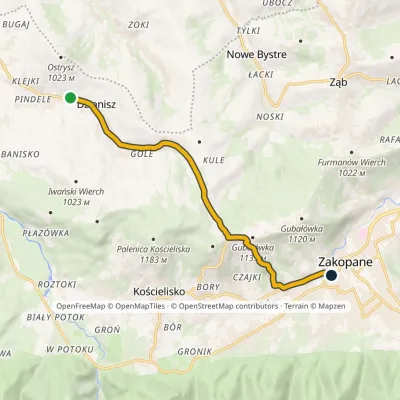 EasyOne-dayMarkedZakopane DzianiszElevation profile822–1 132 m9.2 kmascent 277 m≈ 3 h walkingunder 1 km from the centre
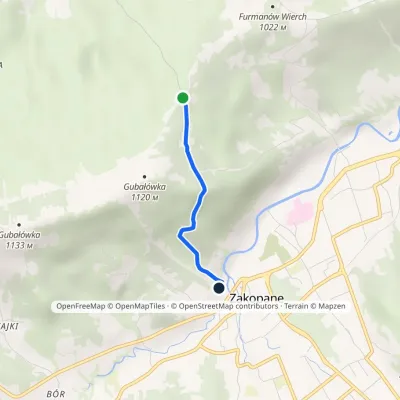 EasyOne-dayMarkedMichny ZakopaneElevation profile821–1 070 m2.2 km≈ 30 min walkingunder 1 km from the centre
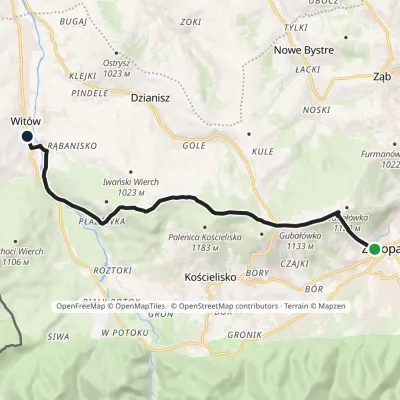 ModerateOne-dayMarkedZakopane WitówElevation profile820–1 179 m11.5 kmascent 405 m≈ 3.5 h walkingunder 1 km from the centre
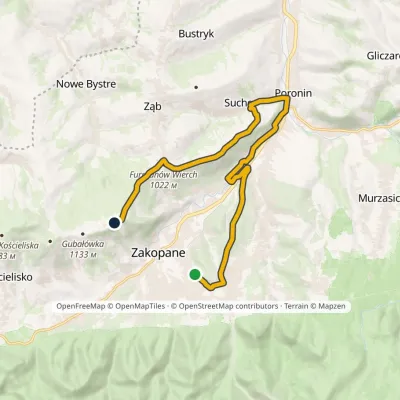 ModerateOne-dayMarkedAntałówka Gubałówka, upper funicular stationElevation profile729–1 123 m16.4 kmascent 443 m≈ 5 h walking1.2 km from the centre
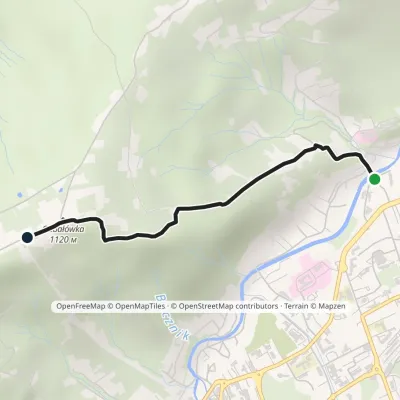 EasyOne-dayMarkedZakopane Gubałówkavia KotelnicaElevation profile789–1 125 m2.5 kmascent 334 m≈ 1.5 h walking1.2 km from the centre
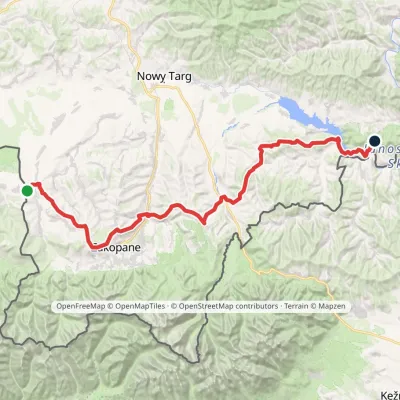 HardMulti-dayMarkedChochołów Trzy Kopce PassElevation profile469–1 132 m65.7 kmascent 1 966 m1.6 km from the centre
Peaks nearby
All peaks PeakGubałówkaZakopanealtitude 1 126 m1.6 km from the centreGubałówka is a long, gentle hill above the north-western part of Zakopane and the best-known summit of the Gubałówka Foothills in Podhale.
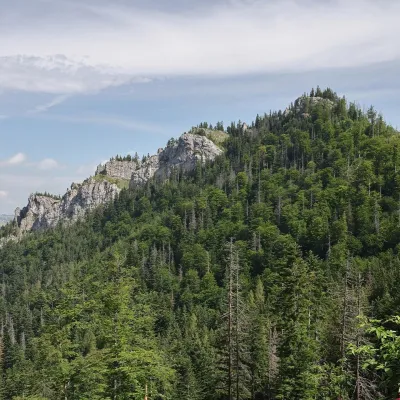 PeakNosalZakopanealtitude 1 206 m3.6 km from the centre1 trail to the topNosal is a low, wooded 1,206 m summit in the Western Tatras, right above Kuźnice on the south-eastern edge of Zakopane.
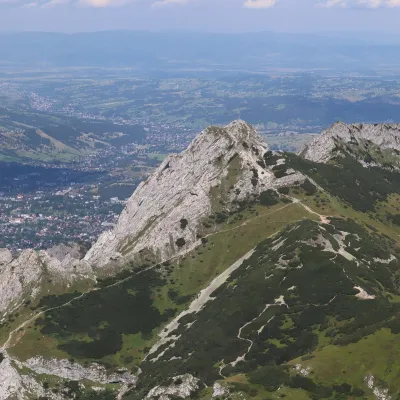 PeakGiewontZakopanealtitude 1 895 m5.2 km from the centre1 trail to the topGiewont is a 1,895 m mountain massif in the Western Tatras, towering over Zakopane. Its main summit, Wielki Giewont, is usually regarded as the highest peak of the...
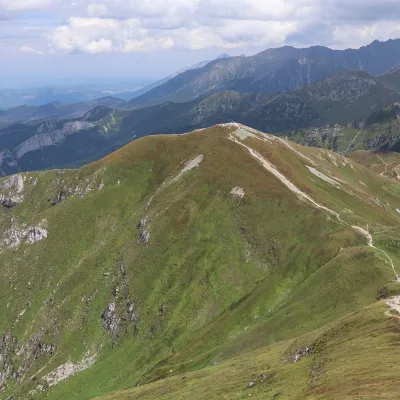 PeakKopa KondrackaZakopanealtitude 2 005 m6.8 km from the centreKopa Kondracka (Slovak: Kondratova kopa) is a 2,005 m peak on the main ridge of the Tatras, on the border between Poland and Slovakia.
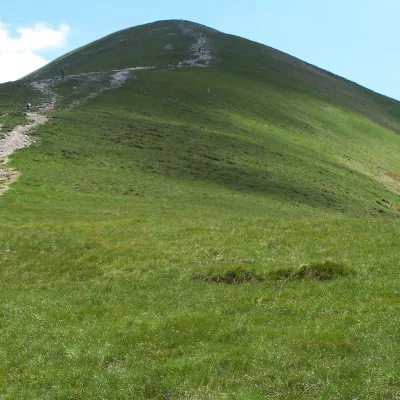 PeakMałołączniakKościeliskoaltitude 2 096 m7.2 km from the centreMałołączniak (Slovak Malolúčniak) is a 2,096 m summit of the Western Tatras on the main Tatra ridge along the Polish–Slovak border.
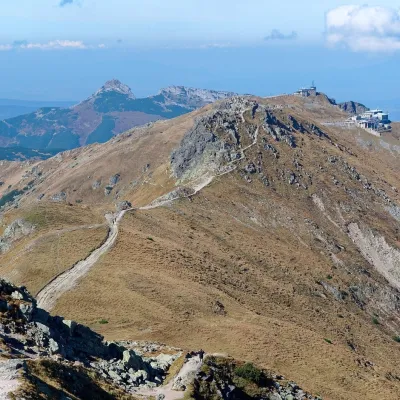 PeakKasprowy WierchZakopanealtitude 1 987 m7.6 km from the centre1 trail to the topKasprowy Wierch (Slovak: Kasprov vrch) is a 1,987 m summit on the main ridge of the Western Tatras, on the Polish–Slovak border.
What to visit
All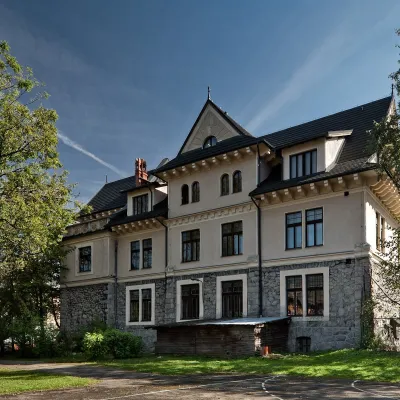 MuseumTatra Museum in ZakopaneZakopaneunder 1 km from the centreThe Dr Tytus Chałubiński Tatra Museum (Muzeum Tatrzańskie) is one of the oldest museums in Poland and the best place to understand Zakopane, the Tatras and the Podhale...
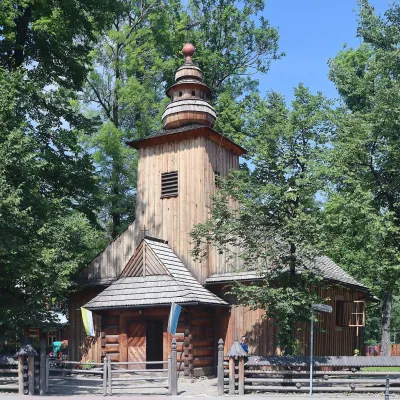 ChurchOld Church and Pęksowy Brzyzek CemeteryZakopaneunder 1 km from the centreOn Kościeliska Street, a few minutes from Krupówki, stands a small larch-wood church, and behind it Zakopane's oldest cemetery.
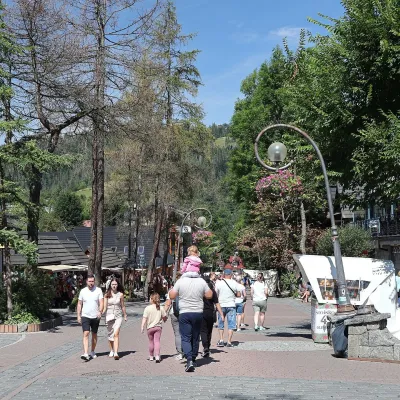 Historic siteKrupówki Street, ZakopaneZakopaneunder 1 km from the centreKrupówki is Zakopane's main street and the town's central axis. The name comes from the old Krupówki clearing.
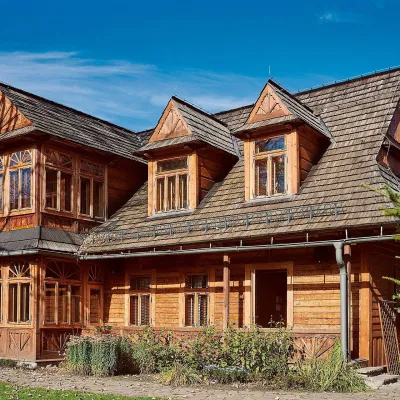 MuseumVilla Atma — Karol Szymanowski MuseumZakopaneunder 1 km from the centreVilla Atma is a small timber house on Kasprusie Street in Zakopane, home of one of the greatest Polish composers of the 20th century, Karol Szymanowski.
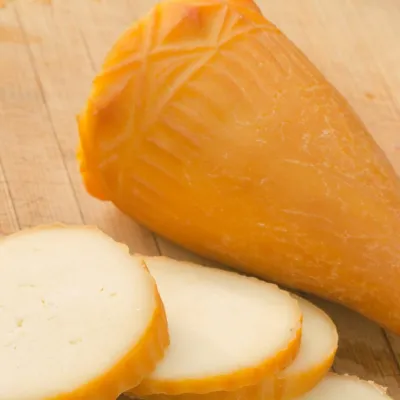 Cheese dairies & pasturesDom Oscypka, Krupówki, Zakopane: cheese-making workshop with a bacaZakopaneunder 1 km from the centreDom Oscypka ("House of Oscypek") is a workshop studio on Krupówki in the very centre of Zakopane, where you can see how highland cheese is made from milk and make some...
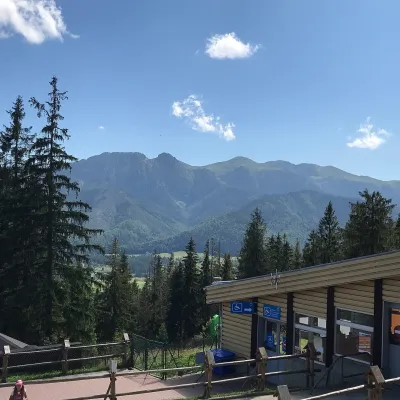 NatureGubałówka — viewpoint ridge above ZakopaneZakopane1.6 km from the centreGubałówka is an elongated ridge on the north-western edge of Zakopane, part of the Gubałówka Range. It rises from 1,120 m at its eastern end to 1,129 m at its western...
Craft nearby
All craft places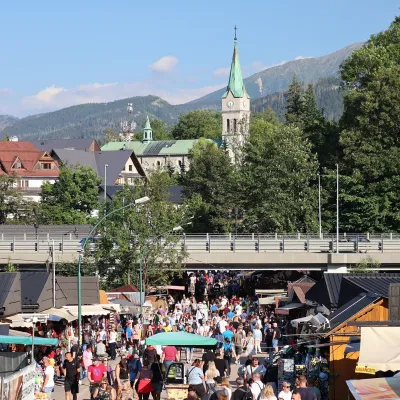 Markets & fairsMarket under GubałówkaZakopaneunder 1 km from the centreThe market under Gubałówka (Targ pod Gubałówką) is Zakopane's best-known bazaar and probably the most photographed row of stalls in the Polish Tatras.
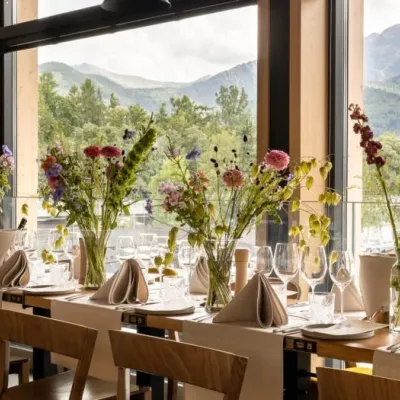 Craft beer & breweriesGwarno Restaurant & Brewery, ZakopaneZakopaneunder 1 km from the centreGwarno is a restaurant with its own small brewery at the foot of Gubałówka in Zakopane. It stands on Na Gubałówkę street right next to the lower station of the...
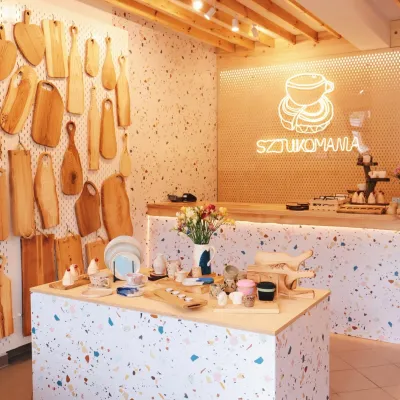 Crafts & workshopsSztukomania Studio, Zakopane: handmade ceramics and pottery workshopsZakopaneunder 1 km from the centreSztukomania is a small ceramics and woodwork studio on Staszica street in Zakopane, a few minutes' walk from Krupówki.
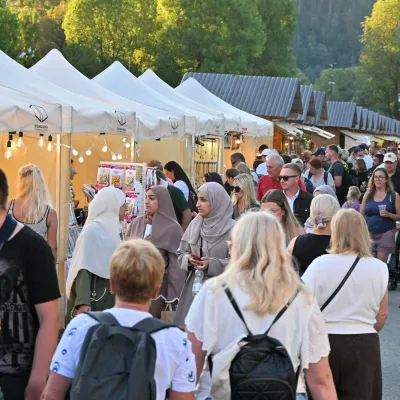 Markets & fairsEuropean Fair of Regional Products, Zakopane (every August)Zakopaneunder 1 km from the centreThe European Fair of Regional Products (Europejskie Targi Produktów Regionalnych) is a five-day festival of food, crafts and music held every August on Górna Równia...
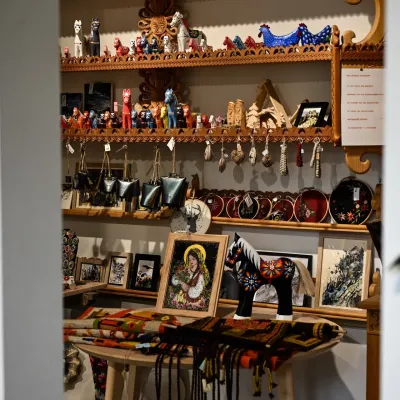 Craft shopsGazduś gallery, Zakopane: Podhale folk art and handicraft shopZakopaneunder 1 km from the centreGazduś is a small folk-art gallery and shop in Zakopane run by the Zakopane Cultural Centre (Zakopiańskie Centrum Kultury).
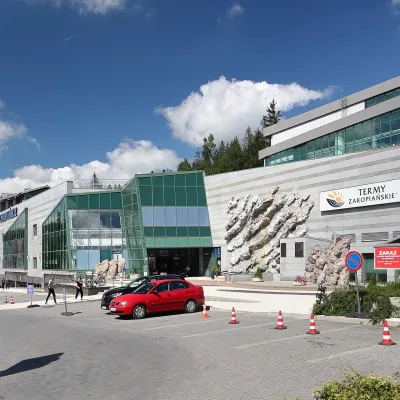 Water parks & thermal poolsTermy Zakopiańskie (Aqua Park Zakopane)Zakopane1.1 km from the centreTermy Zakopiańskie is a thermal water park right in Zakopane, on Jagiellońska Street, only a kilometre from Krupówki.
Spas and thermal pools nearby
Water parks & thermal poolsTermy Zakopiańskie (Aqua Park Zakopane)Zakopane1.1 km from the centreTermy Zakopiańskie is a thermal water park right in Zakopane, on Jagiellońska Street, only a kilometre from Krupówki.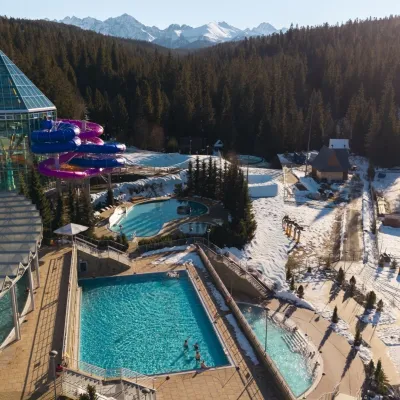 Water parks & thermal poolsTermy BukovinaBukowina Tatrzańska11 km from the centreTermy Bukovina is a modern thermal pool complex in Bukowina Tatrzańska, a village lying about a thousand metres above sea level on the edge of the Tatra National Park.
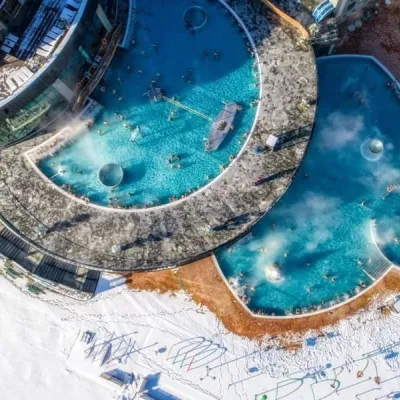 Water parks & thermal poolsChochołowskie TermyChochołów11 km from the centreChochołowskie Termy stand in the village of Chochołów in the Podhale region, north-west of Zakopane and not far from the Slovak border.
Huts, shelters and springs nearby
 1 198 mMountain shelterKalatówki Mountain HotelWestern Tatras · PolandStandingOn a trailSleeps up to 86Meals served
 1 333 mMountain shelterHala Kondratowa HutWestern Tatras · PolandStandingOn a trailMeals servedPaid overnight stay

Getting there from Ukraine
Border crossings
- Krakovets – Korczowa — road, 24/7
- Shehyni – Medyka — road, 24/7 Pedestrian crossing is not confirmed by the Ukrainian border service — check dpsu.gov.ua before the trip.
- Smilnytsia – Krościenko — road, 24/7
- Hrushiv – Budomierz — road, 24/7
- Mostyska – Przemyśl (rail) — rail, 24/7
By car
Lviv – Zakopane ≈421 km, ≈5 h 10 min without border queues. Route: M-10 Lviv – Krakovets → Krakovets – Korczowa checkpoint → A4 motorway (Rzeszów – Tarnów – Kraków) → Kraków southern bypass → S7/DK7 → DK47 ('Zakopianka') via Nowy Targ → Zakopane. The A4 Katowice – Kraków section (Balice and Mysłowice toll plazas) is tolled, but this route does not use it. In summer and at weekends the DK47 near Zakopane is often congested.
Checked 23.10.2026; border crossing hours and timetables change — check before you travel.
