Sinaia Monastery: the 17th-century cloister that named the town
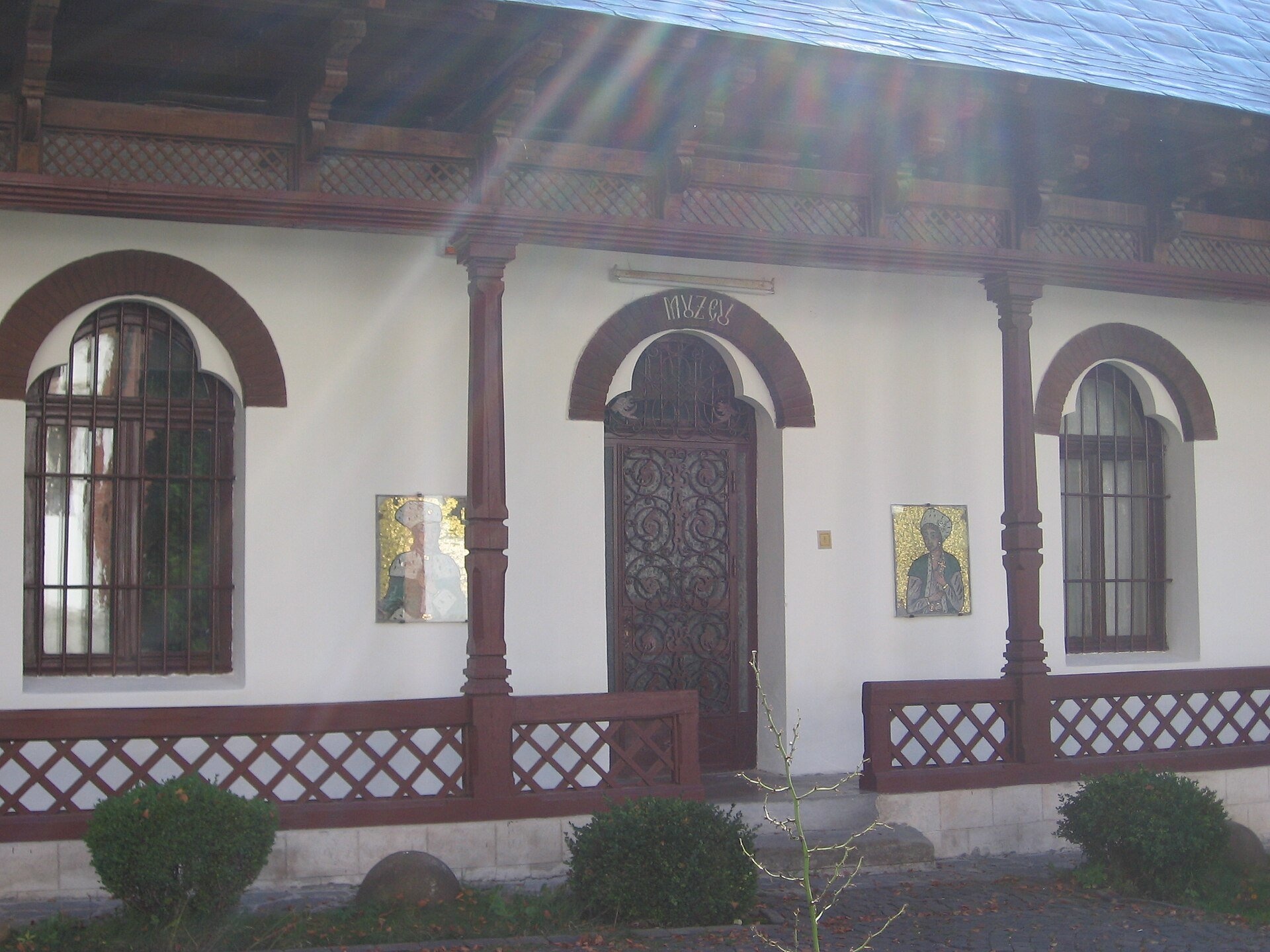
The monastery the town grew from
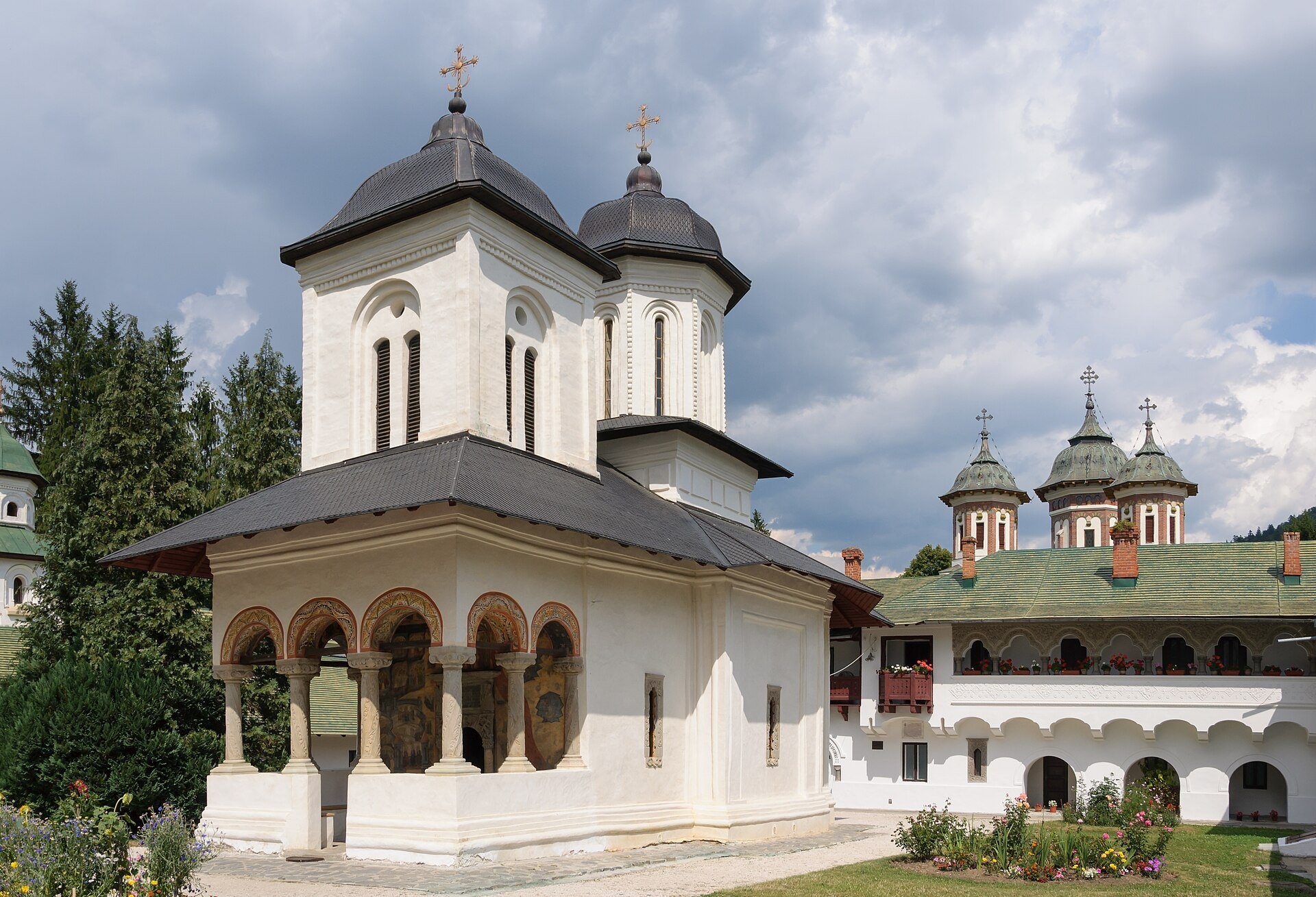
Sinaia Monastery (Mănăstirea Sinaia) stands at 860 metres at the foot of Mount Furnica in the Bucegi massif, close to where the Peleș stream joins the Prahova. The trade route along the Prahova Valley is documented from 1422, and small wooden sketes existed here from the second half of the fifteenth century. In 1690–1695 the spătar Mihail Cantacuzino built a masonry monastery below the skete of St Nicholas and named it Sinaia, after the Monastery of St Catherine on Mount Sinai, which he had visited in 1681. He built the Church of the Dormition (today the "old" or "small" church) and a fortress-like quadrangle of cells measuring 30 by 40 metres with thick, high walls, which also includes the Chapel of the Transfiguration of 1695.
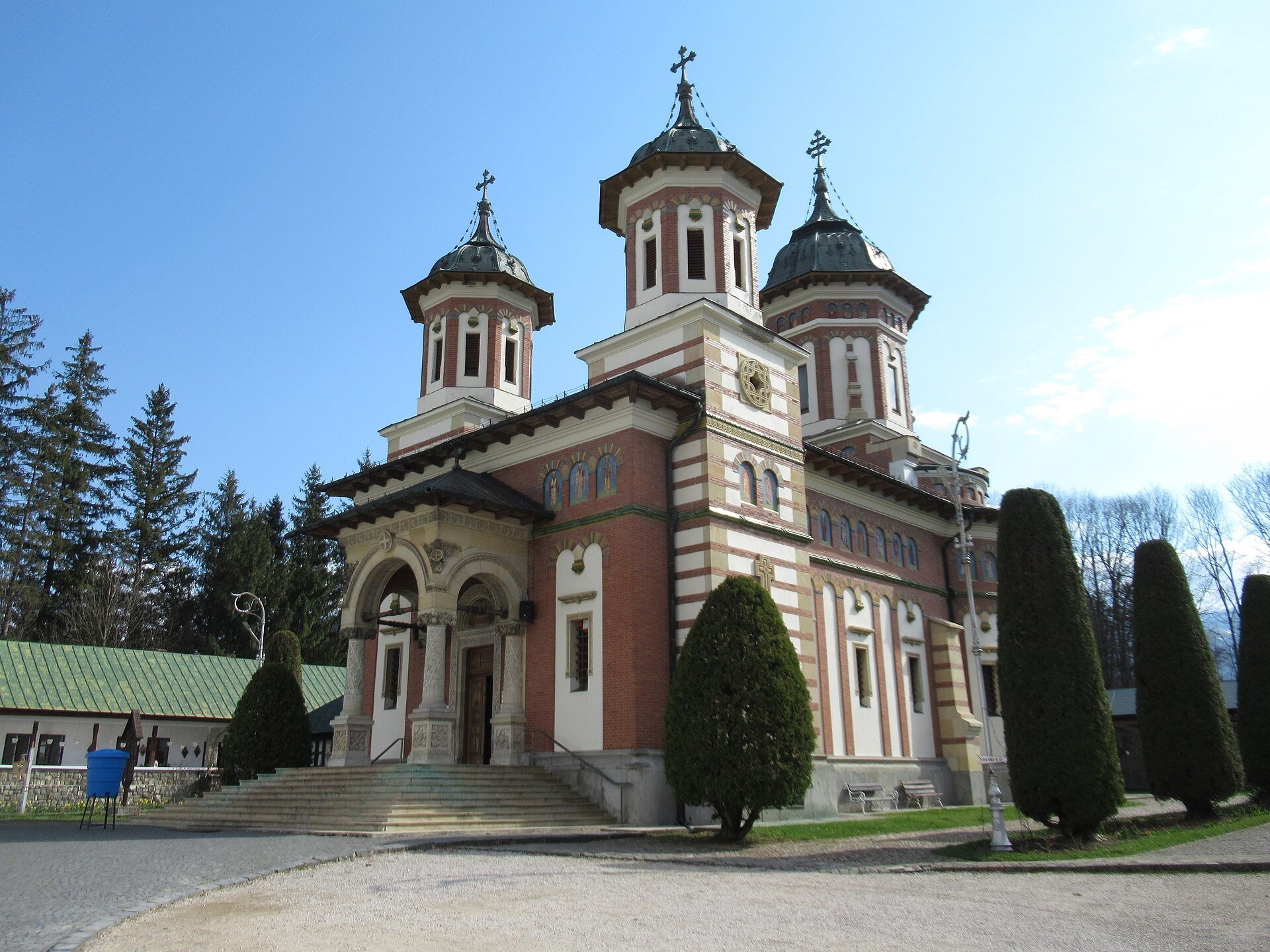
The old church was burned in 1791 during the Russo-Austro-Turkish war and partly repainted in 1795 by Teodor from Făgăraș. The "new" part of the monastery was built in 1843–1846 together with the great Holy Trinity church, which architect George Mandrea rebuilt in 1897–1903, combining the Brâncovenesc and Moldavian styles. In the summers of 1871–1883 the royal family lived at the monastery — it was from here that Carol I decided to build Peleș Castle nearby. A town grew up around the monastery and the royal residence and took its name. Today it is an active monastery of the Romanian Orthodox Church for monks.
Why go
It is Sinaia's oldest monument and the key to its history: without the monastery there would have been no royal castle and no resort. Two eras meet in one courtyard — a quiet Brâncovenesc church of the late seventeenth century with original paintings by Pârvu Mutu, one of the best-known Romanian icon painters, and a grand nineteenth-century church with Neo-Byzantine painting on a gold ground. The monastery is a few minutes' walk from Peleș and Pelișor castles, so it is easy to add to a visit.
What to see
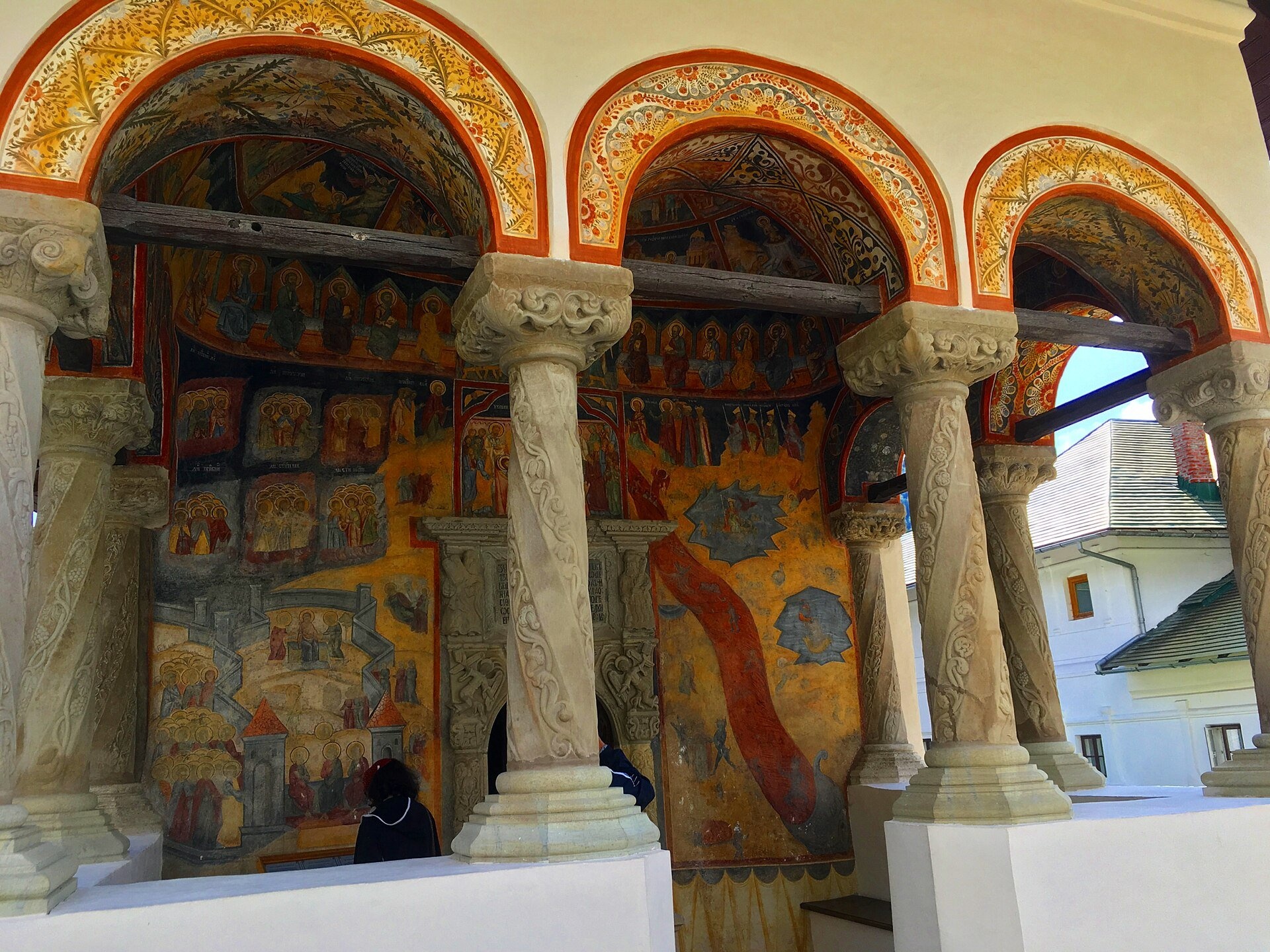
- The old Church of the Dormition in the shape of a Latin cross — according to the monastery, the only one of its kind in the country; the porch and narthex keep paintings by Pârvu Mutu and the founder's portrait of Mihail Cantacuzino with his eighteen children and family.
- The great Holy Trinity church (30 m long, over 25 m high) with oil painting on a gilded ground by the Danish artist Aage Exner, a gilded iconostasis and royal thrones; King Carol I and Queen Elisabeth are painted in the narthex.
- The Chapel of the Transfiguration of 1695 and the crypt of statesman Take Ionescu with frescoes by Costin Petrescu.
- The bell tower of 1892 with a 1,700 kg bell brought from Colțea Monastery in Bucharest.
- The monastery museum, opened, according to the monastery, in 1892 — exhibits include the Bucharest Bible of 1688, an icon of the Holy Trinity by Pârvu Mutu from 1693, and epitaphioi and vestments embroidered with gold thread.
Practical information
Address: Strada Mănăstirii nr. 2, 106100 Sinaia. The monastery lies in the town, 122 km from Bucharest and 49 km from Brașov; from the Porubne — Siret border crossing via Brașov it is about 430 km. Sinaia is easy to reach by train on the Bucharest — Brașov line; from the station to the monastery it is a 15–20 minute walk uphill. Visiting: daily 8:00–20:00; daily services 8:00–10:00, 16:00–17:00 and 18:45–20:15, on Sundays and major feasts the liturgy is 9:00–11:30. Entry to the grounds is free; ask on site about visiting the museum. Phone: +40 244 314 917. Information as of November 2026.
This is a living monastery: keep quiet, dress modestly (shoulders and knees covered), do not disturb the services, and ask on site about taking photos in the churches. In 2025 the monastery signed contracts to restore the Holy Trinity church and the old enclosure, so some buildings may be under scaffolding. Allow about an hour for both churches and the museum. Check before you go.
Nearby
- Peleș Castle — the royal residence a few minutes' walk uphill.
- Pelișor Castle — Queen Marie's Art Nouveau home.
- Cantacuzino Castle in Bușteni — the palace of descendants of the same Cantacuzino family.
- Bucegi Plateau and Coștila peak.
Official website: manastireasinaia.ro
Photos: Superchilum, CC BY-SA 4.0, Wikimedia Commons; Myrabella, CC BY-SA 3.0, Wikimedia Commons; Glorious 93, CC BY-SA 4.0, Wikimedia Commons; Doru10stefan, CC BY-SA 3.0 ro, Wikimedia Commons; IonIonescu, CC BY 2.5, Wikimedia Commons.
Getting there from Ukraine
Border crossings
- Porubne – Siret — road and pedestrian, 24/7
- Diakivtsi – Racovăț — road and pedestrian, 24/7 No freight traffic.
- Krasnoilsk – Vicovu de Sus — road and pedestrian, 08:00–20:00 Cars up to 3.5 t and pedestrians only; not 24/7.
- Solotvyno – Sighetu Marmației — road and pedestrian, 24/7 Passenger traffic only: vehicles up to 3.5 t with up to 9 seats, pedestrians.
- Diakove – Halmeu — road, 24/7 No pedestrian crossing.
By car
Chernivtsi – Bușteni ≈426 km, ≈7 h 32 min (via Diakivtsi – Racovăț); Rakhiv – Bușteni ≈454 km, ≈8 h 01 min (via Solotvyno – Sighetu Marmației); Uzhhorod – Bușteni ≈557 km, ≈9 h 15 min (via Diakove – Halmeu). Times without border queues, our road routing (GraphHopper, OSM).
Checked 03.11.2026; border crossing hours and timetables change — check before you travel.
Comments
Travellers’ experience: reports, tips, questions.
No one has written here yet. Be the first — your experience helps others.
Video
 Mănăstirea Sinaia - Catedrala CarpațilorPas in doi
Location on the map
Trails nearby
All trails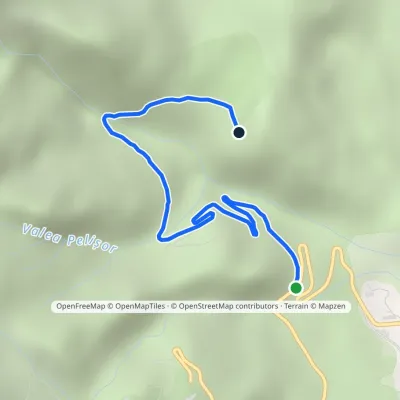 EasyOne-dayMarkedSinaia–Cota 1400 road Poiana StâniiElevation profile1 097–1 312 m3.3 kmascent 215 m≈ 1 h walking1.9 km from Sinaia Monastery: the 17th-century cloister that named the town
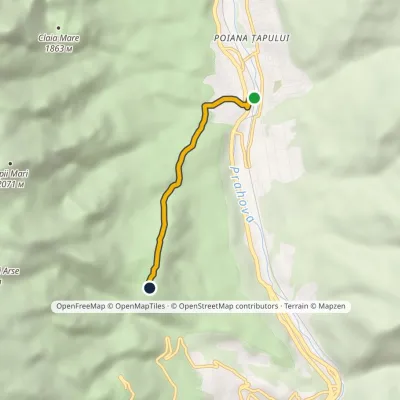 EasyOne-dayMarkedPoiana Țapului Stâna Regală HutElevation profile842–1 274 m3.5 kmascent 432 m≈ 1.5 h walking2.5 km from Sinaia Monastery: the 17th-century cloister that named the town
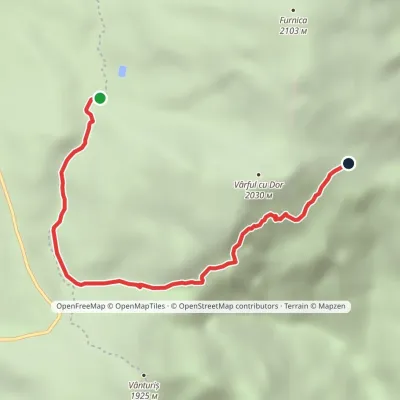 ModerateOne-dayMarkedValea Soarelui chairlift Piatra TurculuiElevation profile1 672–1 822 m4.8 kmascent 139 m≈ 1.5 h walking3.9 km from Sinaia Monastery: the 17th-century cloister that named the town
Nearby attractions
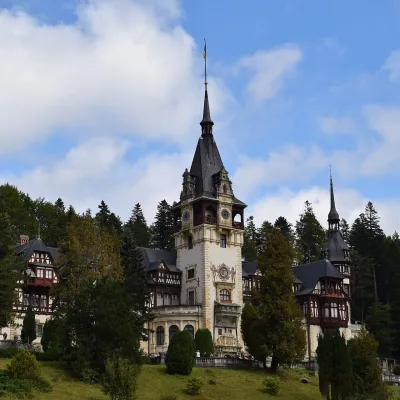 CastlePeleș Castle: summer residence of Romania's kings in SinaiaSinaiaunder 1 km from Sinaia Monastery: the 17th-century cloister that named the townPeleș Castle (Castelul Peleș) stands in the Royal Park above the town of Sinaia in the Prahova Valley, at the foot of the Bucegi Mountains.
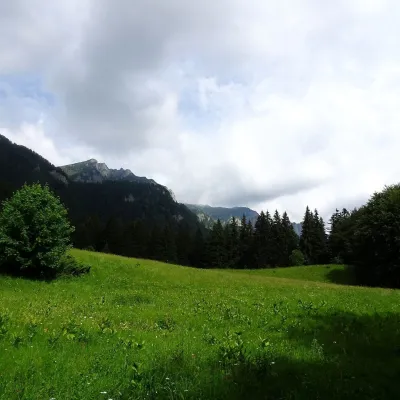 Mountain meadowPoiana StâniiSinaiaaltitude 1 273 m2.7 km from Sinaia Monastery: the 17th-century cloister that named the townPoiana Stânii (in full Poiana Stânii Regale, "the meadow of the royal sheepfold") is a broad mountain meadow at about 1,270 m on the Prahova side of the Bucegi...
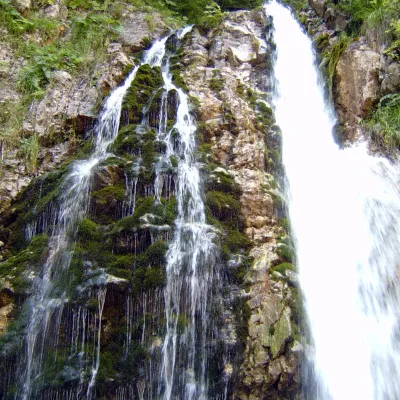 WaterfallUrlătoarea Waterfall (Cascada Urlătoarea)Bușteni · Bucegi Mountains5.3 km from Sinaia Monastery: the 17th-century cloister that named the townheight 15 m1 141 m above sea levelUrlătoarea Waterfall (Cascada Urlătoarea) is one of the best known in Romania. It lies on the eastern slope of the Bucegi Mountains, in the Bucegi Natural Park, very...
Craft nearby
All craft places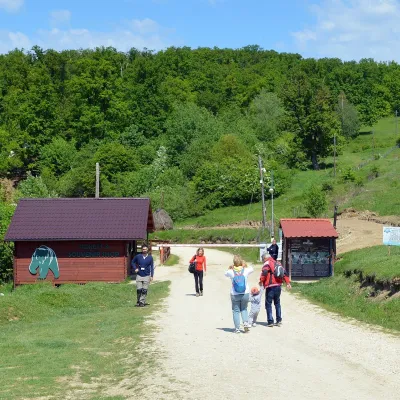 Wildlife parks & animal farmsLibearty Bear Sanctuary in Zărnești: a forest for rescued bearsVulcan29 km from Sinaia Monastery: the 17th-century cloister that named the townThe AMP Libearty Bear Sanctuary lies near the town of Zărnești in Brașov County, at the edge of a forest below the Piatra Craiului massif.
 Water parks & thermal poolsPucioasa: sulphur baths and inhalations in the Carpathian foothillsPucioasa32 km from Sinaia Monastery: the 17th-century cloister that named the townPucioasa is a small spa town in Dâmbovița County, in the valley of the Ialomița river among the wooded hills of the Carpathian foothills, about 20 km north of the city...
 Water parks & thermal poolsSlănic Salt Mine: a 208 m deep microclimate and salt lakesSlănic33 km from Sinaia Monastery: the 17th-century cloister that named the townThe Slănic Salt Mine (Salina Slănic), or the Unirea mine (Mina Unirea), is one of Romania's best-known show salt mines.
