Slănic Salt Mine: a 208 m deep microclimate and salt lakes
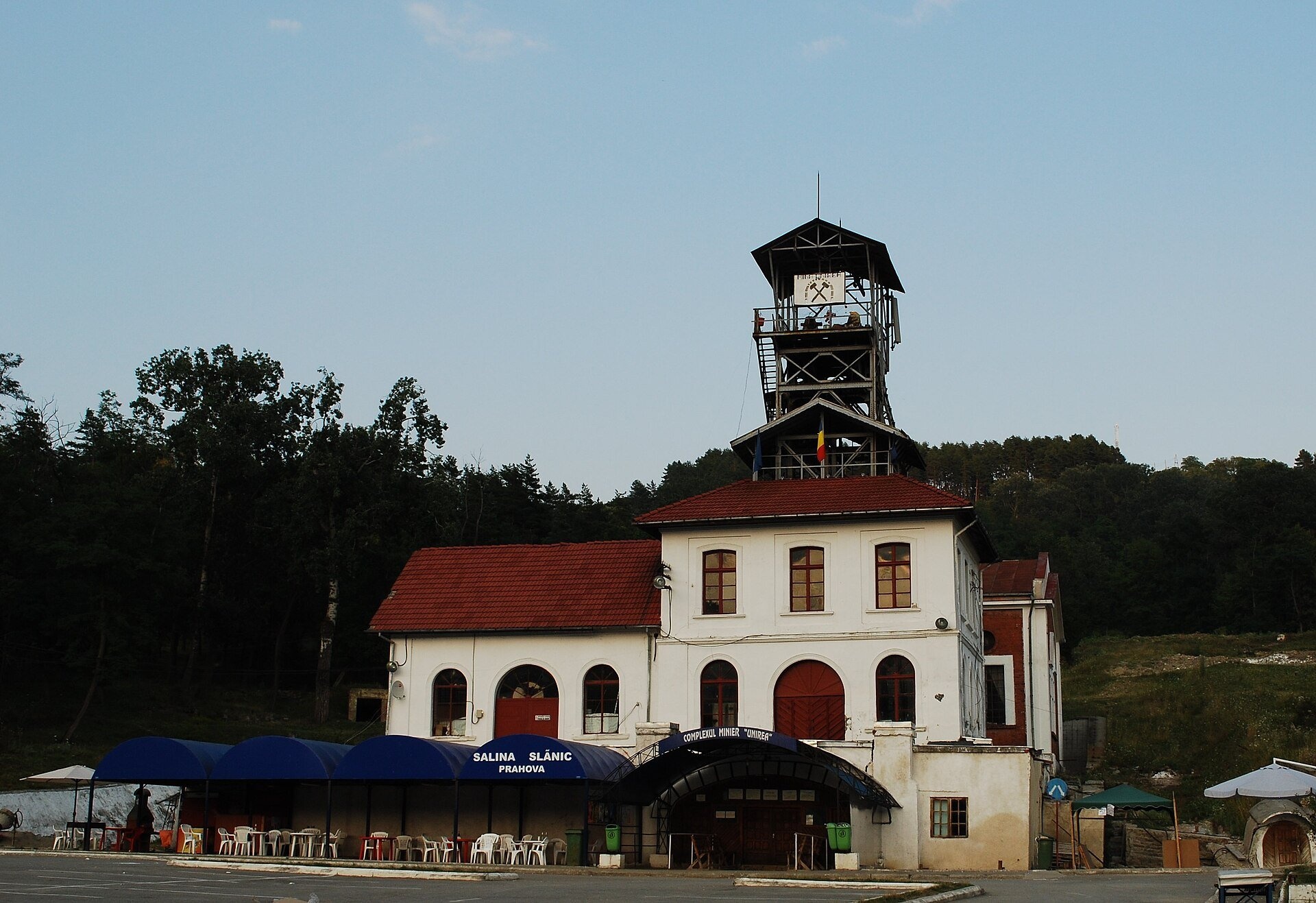
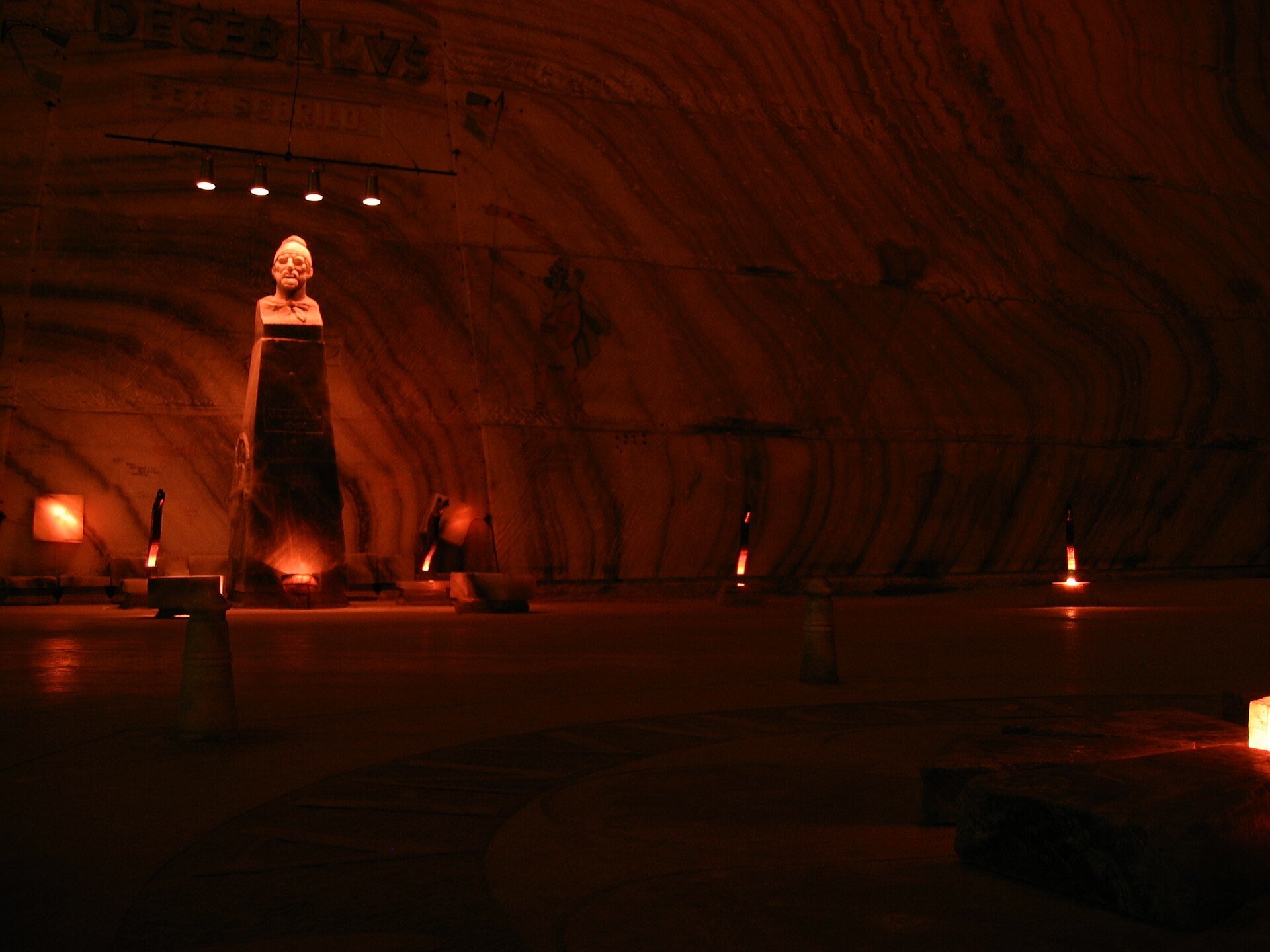
The Slănic Salt Mine (Salina Slănic), or the Unirea mine (Mina Unirea), is one of Romania's best-known show salt mines. It lies in the small town of Slănic in Prahova County, among hills covered with broadleaf forest in the Carpathian foothills, about 100 km north of Bucharest, at an altitude of around 450 m. Salt has been mined here for more than three centuries: in 1685 the spatar Mihail Cantacuzino bought the Slănic estate to open a mine, and the first workings began in 1688. The Unirea mine was opened in 1938; salt was extracted from it until 1970, and it has been open to visitors since the 1970s. The mine is run by the state company Salrom. Slănic has been a balneoclimatic resort since 2011.
Natural healing resources
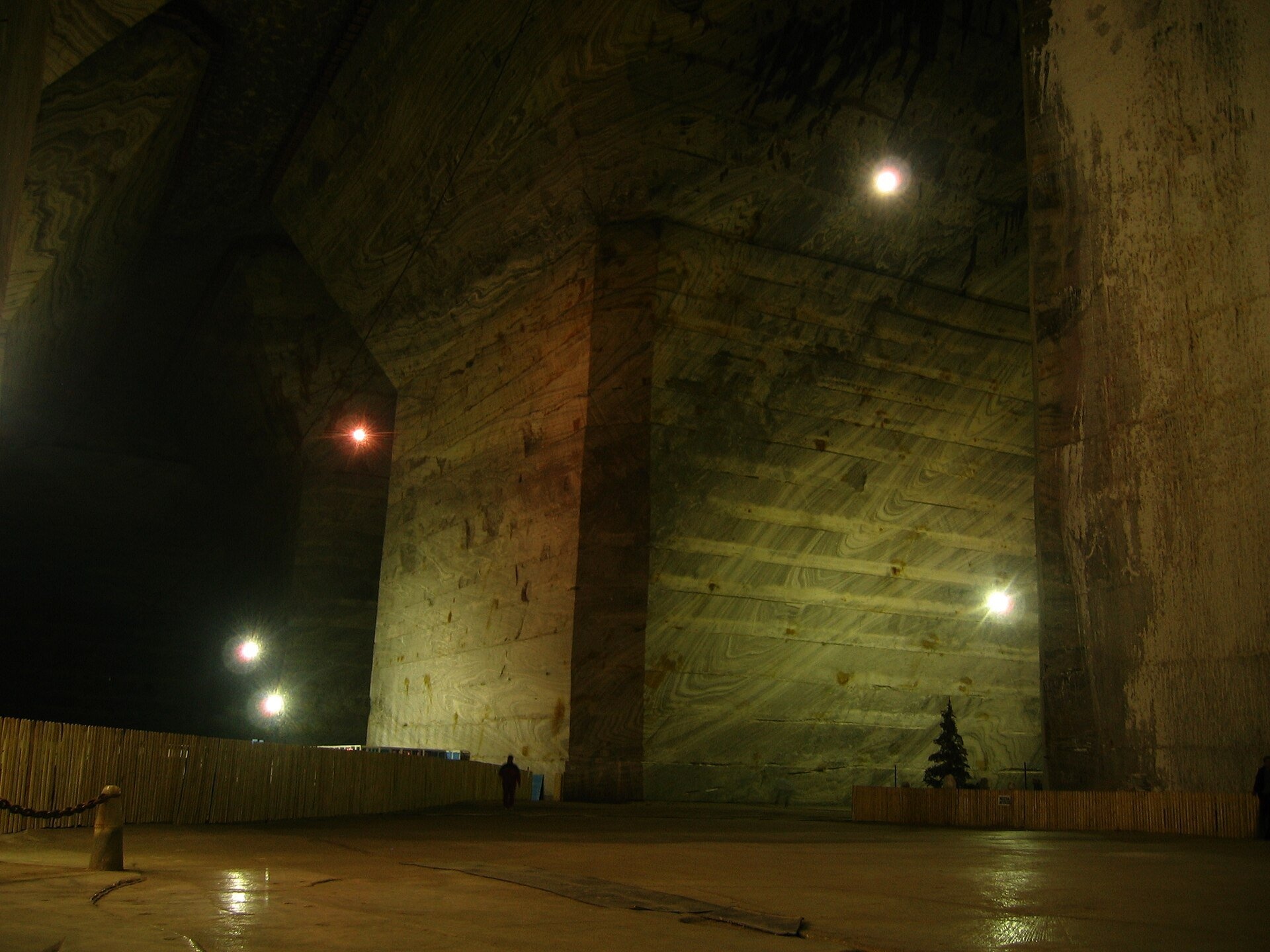
Visitors are taken down by minibus to a depth of 208 m. Extracting 2.9 million m³ of salt left 14 gigantic trapezoidal chambers with a total floor area of about 80,000 m². According to Salrom, the mine's microclimate is constant and impossible to reproduce on the surface:
- a temperature of 12–13 °C all year and a relative humidity of 50–60%;
- air pressure 18 mmHg higher than on the surface, and radioactivity at the limit of detection;
- a high concentration of natural salt aerosols, no plant allergens and no pathogenic germs.
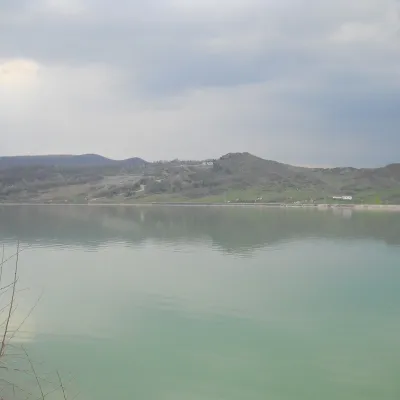
The resort's second natural asset is its salt lakes, formed where old mine workings collapsed. The Baia Verde complex of three lakes has a salinity of over 200 g/l (80–120 g/l at the surface in spring and after rain), and the lakes contain sapropelic mud. The largest lake, Baia Baciului, is 15 m deep with a total mineralisation of about 109 g/l; the Lacul Miresei lake in the Salt Mountain reaches 260 g/l.
What is treated
According to the town hall, the mine's microclimate is indicated for respiratory diseases – asthma, bronchitis and allergies; the mine has a separate area with deckchairs and beds where people with such conditions can spend a few quiet hours. The town hall recommends bathing in the salt lakes and pools for degenerative rheumatic diseases, post-traumatic conditions (after sprains, dislocations and healed fractures), peripheral nervous system disorders, some gynaecological conditions, chronic bronchitis, allergic asthma, and some skin (psoriasis) and vascular diseases. The mud of the salt lakes is used for rheumatic, gynaecological and peripheral neurological conditions. Children under 3 go down the mine on the recommendation of a family doctor or paediatrician, or at the accompanying adult's responsibility. This information is for reference only and is not medical advice: a doctor prescribes the course and procedures after a consultation.
Treatments and the salt mine
Slănic is above all a place for a day of "salt" relaxation. Underground, besides the rest area for people with respiratory conditions, there are sports pitches, children's play areas, go-karts, minigolf, tennis, a café and shops. In the Genesis Hall stand salt sculptures – Decebalus and Trajan, a bust of Burebista, a bas-relief of Michael the Brave and a bust of the poet Mihai Eminescu; there is also a small salt lake with a cascade and a little museum of mining equipment. On the surface, salt bathing places open in summer: the private Baia Roșie pool with 130–260 g/l water and the lakes of the Baia Verde complex. As of October 2026, according to the town hall, the treatment base by the Baia Verde lakes is not working, and Baia Baciului and the Slănic spa complex are closed for renovation – check before you travel.
Practical information
The mine's ticket office is at Str. Salinei 1. As of November 2026 the mine is open Wednesday to Sunday and closed on Monday and Tuesday (except 30 November and 1 December); the first descent is at 9:15, the last descent at 15:30 and the last ascent at 16:30. The schedule changes every month, so check the mine's page on the Salrom website. A day ticket costs 60 lei for adults, 40 lei for children and pupils aged 3–18, 50 lei for students up to 26, 45 lei for people over 65, and is free for children under 3; a 5-visit pass valid for 14 days is cheaper (50 lei per day for adults). Tickets are also sold online (Easy2visit, Eventim). It is cool underground – bring warm clothes; pets are not allowed.
Getting there from Ukraine
From Chernivtsi via the Porubne – Siret border crossing it is about 529 km to Slănic (around 6 h 42 min), from Rakhiv via the Solotvyno – Sighetu Marmației crossing 495 km (around 9 h 07 min); times exclude border queues. Romanian roads require the rovinieta e-vignette. By public transport: according to Salrom, minibuses to Slănic leave Ploiești Nord every half hour.
Nearby
A few hundred metres from the mine is the Salt Mountain (Muntele de Sare), a 2-hectare natural monument with the Grota Miresei ("Bride's Grotto") lake. 24 km to the north lies the mountain village of Cheia below the Ciucaș massif, close to Zăganu peak. Another salt-water resort in the Carpathian foothills is Sărata-Monteoru.
Photos: Andrei Stroe, CC BY 3.0, Wikimedia Commons; User:Beradrian, CC BY-SA 3.0, Wikimedia Commons; Horia Varlan from Bucharest, Romania, CC BY 2.0, Wikimedia Commons.
Getting there from Ukraine
Border crossings
- Porubne – Siret — road and pedestrian, 24/7
- Diakivtsi – Racovăț — road and pedestrian, 24/7 No freight traffic.
- Krasnoilsk – Vicovu de Sus — road and pedestrian, 08:00–20:00 Cars up to 3.5 t and pedestrians only; not 24/7.
- Solotvyno – Sighetu Marmației — road and pedestrian, 24/7 Passenger traffic only: vehicles up to 3.5 t with up to 9 seats, pedestrians.
- Diakove – Halmeu — road, 24/7 No pedestrian crossing.
By car
Chernivtsi – Bușteni ≈426 km, ≈7 h 32 min (via Diakivtsi – Racovăț); Rakhiv – Bușteni ≈454 km, ≈8 h 01 min (via Solotvyno – Sighetu Marmației); Uzhhorod – Bușteni ≈557 km, ≈9 h 15 min (via Diakove – Halmeu). Times without border queues, our road routing (GraphHopper, OSM).
Checked 03.11.2026; border crossing hours and timetables change — check before you travel.
Comments
Travellers’ experience: reports, tips, questions.
No one has written here yet. Be the first — your experience helps others.
Location on the map
Nearby attractions
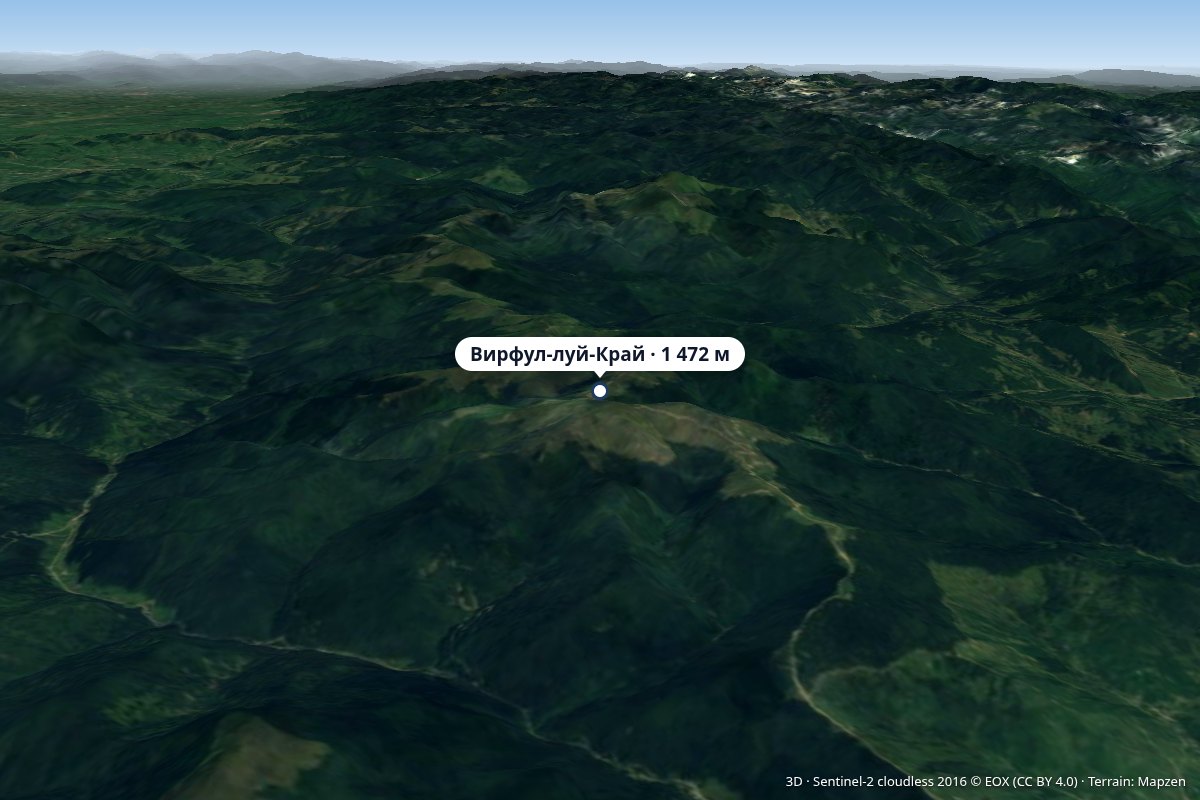 PeakVârful lui CraiSlonaltitude 1 472 m22 km from Slănic Salt Mine: a 208 m deep microclimate and salt lakesVârful lui Crai (Romanian: Vârful lui Crai, "King's Peak") is a summit with an elevation of 1,472 m (according to muntii-nostri.ro — 1,473 m) in the Buzău Mountains,...
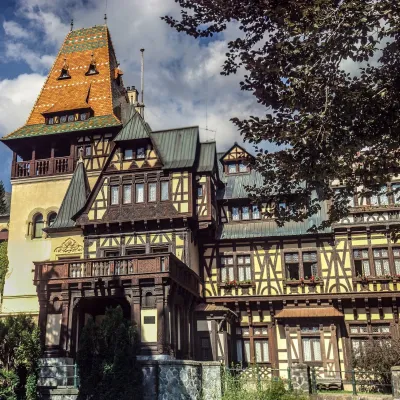 CastlePelișor Castle: Queen Marie's Art Nouveau dream house in SinaiaSinaia34 km from Slănic Salt Mine: a 208 m deep microclimate and salt lakesPelișor Castle (Castelul Pelișor) — the "little Peleș" — stands a few hundred metres from the main royal castle in Sinaia, on the same estate in the valley of the...
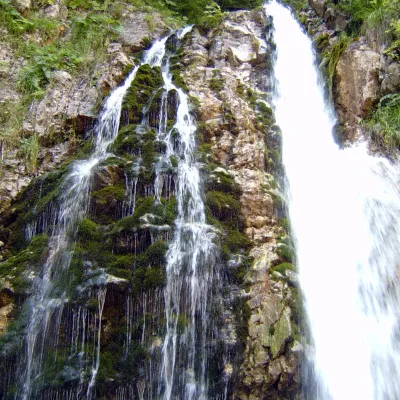 WaterfallUrlătoarea Waterfall (Cascada Urlătoarea)Bușteni · Bucegi Mountains38 km from Slănic Salt Mine: a 208 m deep microclimate and salt lakesheight 15 m1 141 m above sea levelUrlătoarea Waterfall (Cascada Urlătoarea) is one of the best known in Romania. It lies on the eastern slope of the Bucegi Mountains, in the Bucegi Natural Park, very...