Scarletina bolete
Never identify a mushroom from a photo alone. If in doubt, leave it. In case of poisoning call 112 (103 in Ukraine) at once.
About
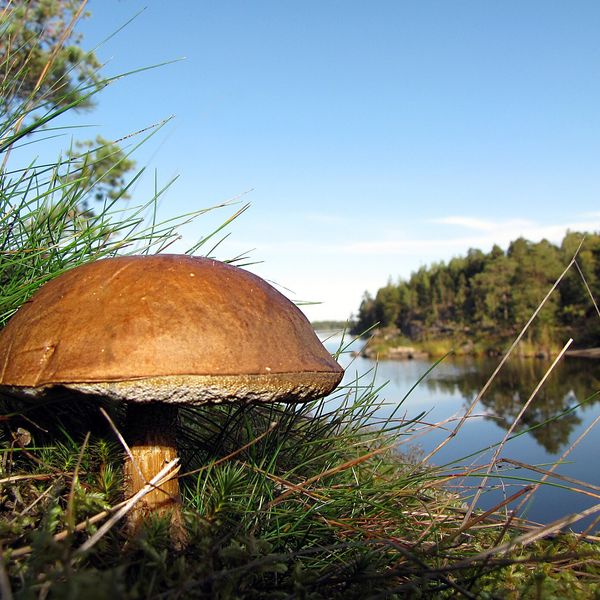
Neoboletus luridiformis grows in deciduous and coniferous forests in summer and autumn, often in the same places as the porcini mushroom. In Ukraine, it is known from the Carpathians, Forest-Steppe, and steppe zone.
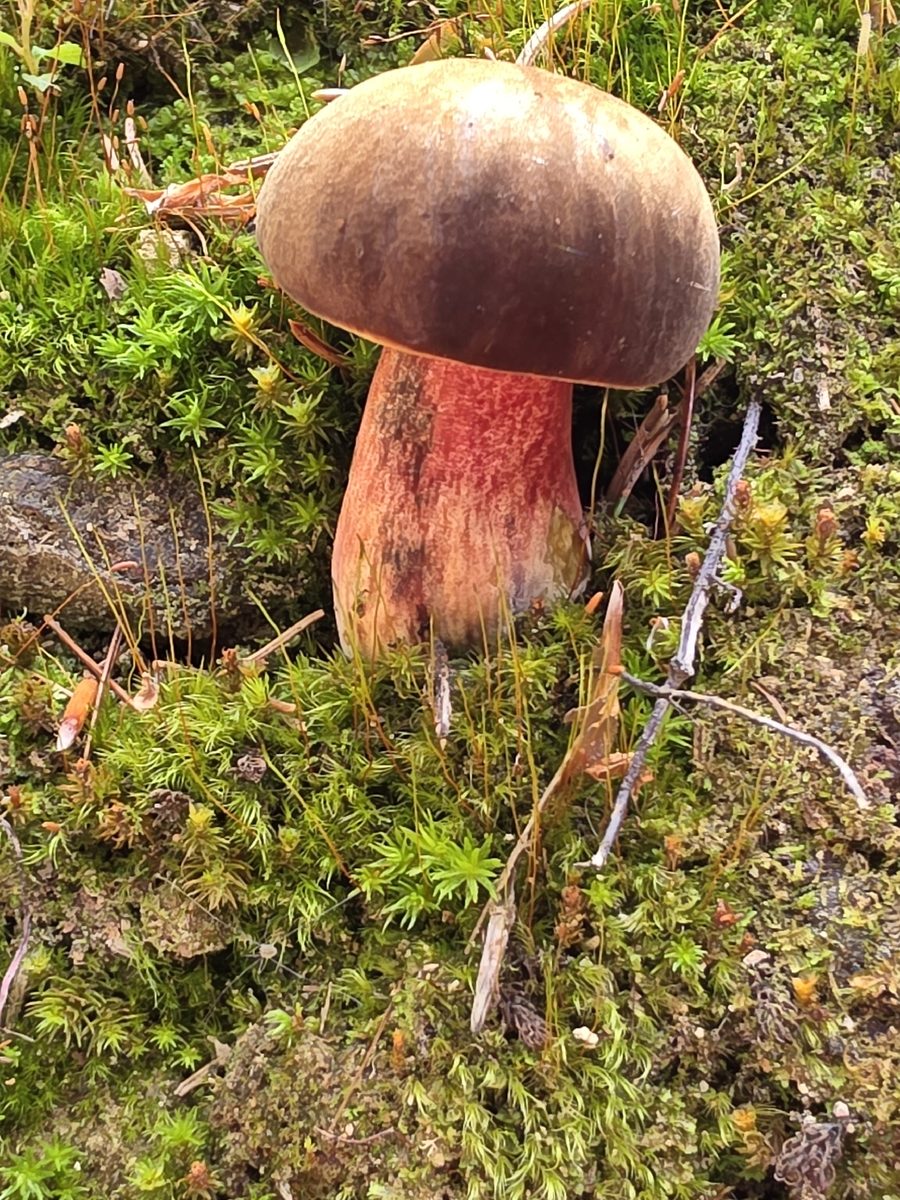
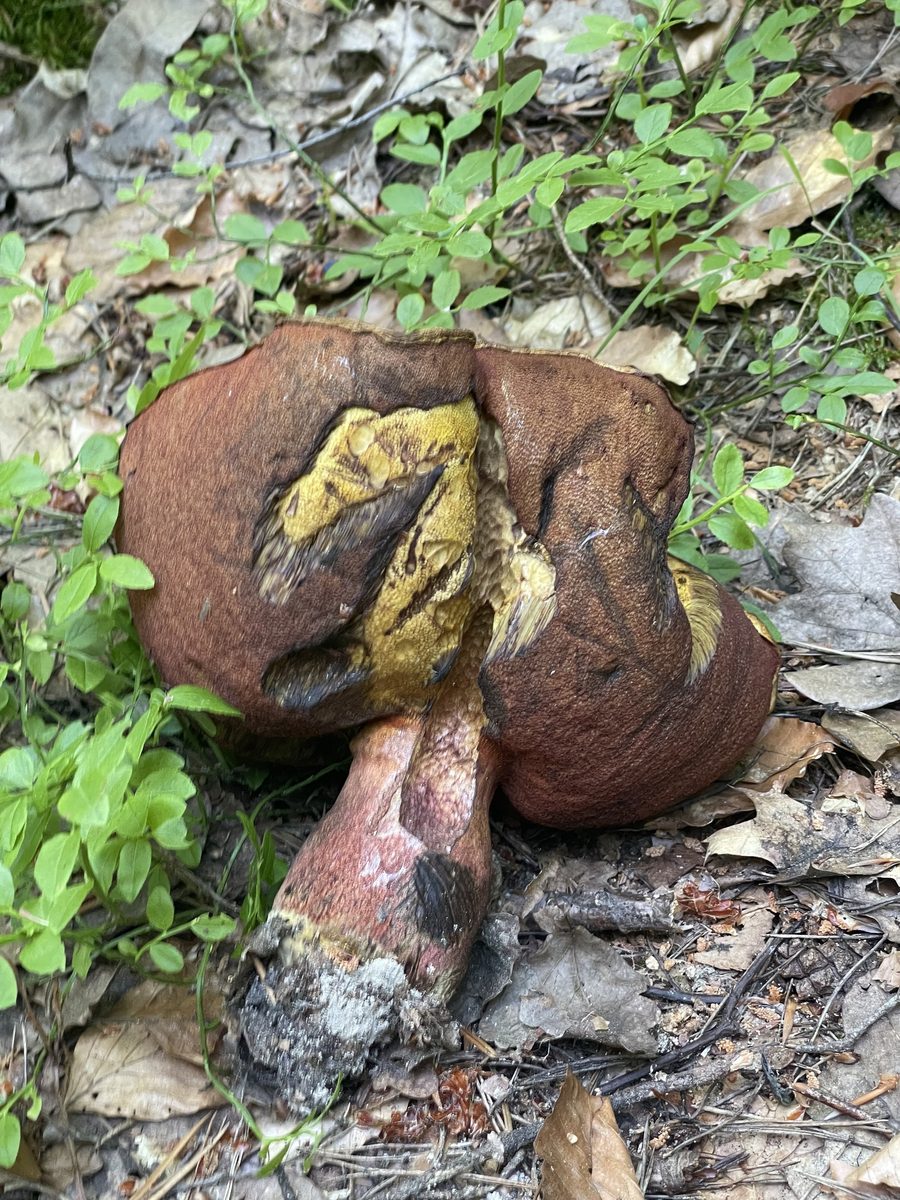
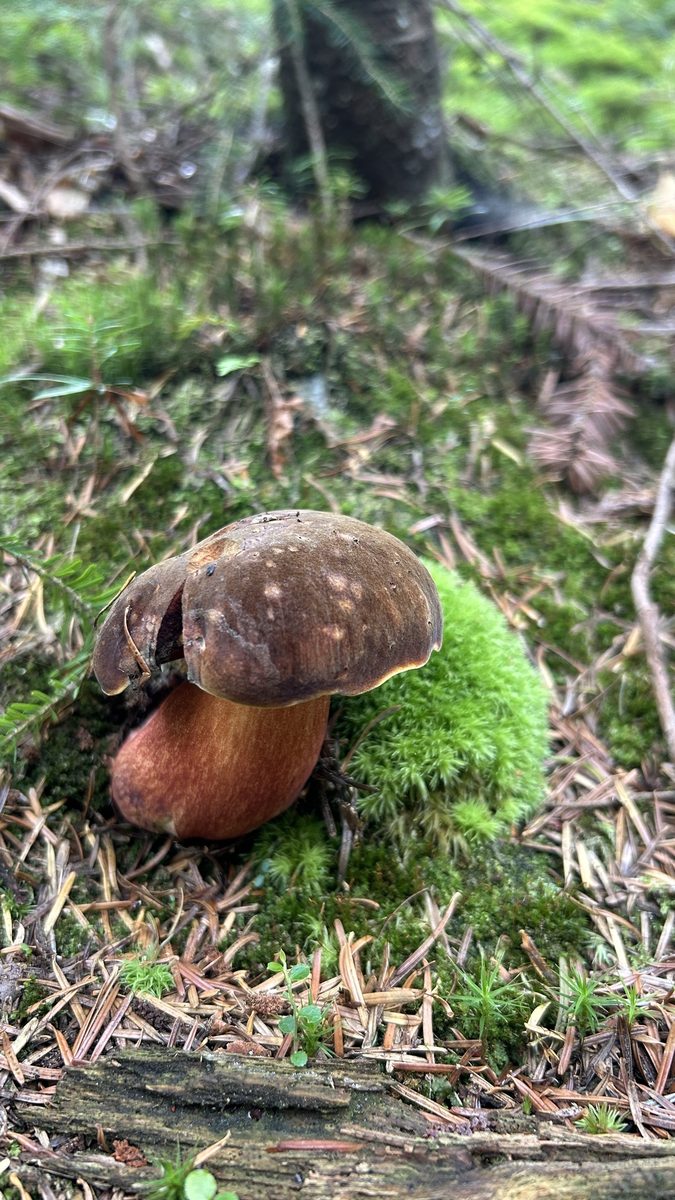
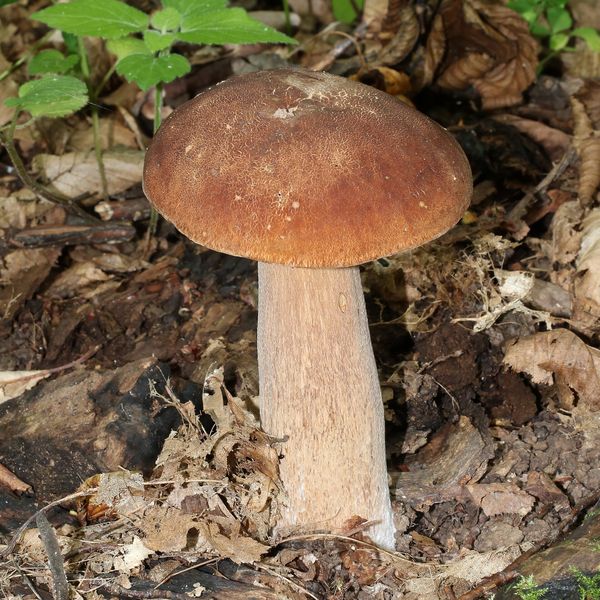
The cap is large, up to 20 cm, initially hemispherical, later cushion-shaped, dark chestnut or chocolate brown, initially velvety. The tubes are yellow-green, and the pores are small, orange-red, rusting with age; they instantly turn blue or black upon contact. The stem is thick, yellow, densely covered with small red speckles, but without a net. The flesh is yellow and turns dark blue within seconds when cut. This reaction frightens beginners, although it does not indicate toxicity by itself.
The mushroom is conditionally edible. Raw or undercooked, it causes vomiting and diarrhea, so it is consumed only after thorough heat treatment; it is not suitable for drying. Ukrainian guides recommend preliminary boiling with mandatory draining of the broth. Some people tolerate it poorly even after cooking. It is noted that poisoning is exacerbated if the mushroom is combined with alcohol.
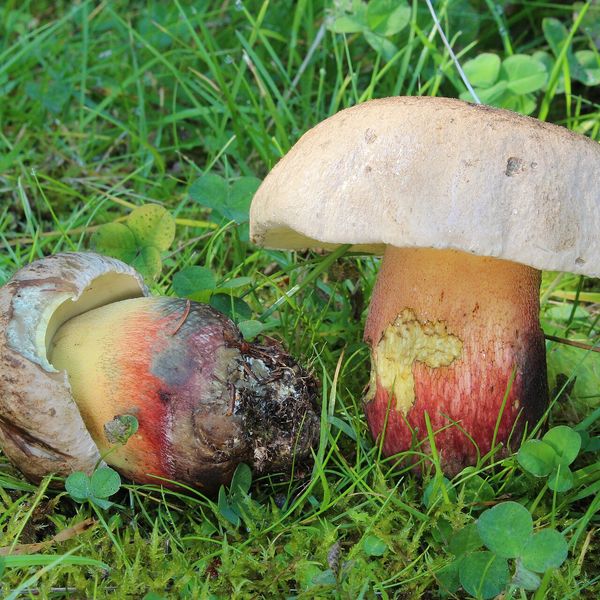
Among lookalikes, there is the inedible bolete with very bitter flesh and the poisonous Satan's bolete — a mushroom with an almost white cap and a net on the stem. Therefore, red-pored boletes are mushrooms for experienced foragers, not for first-time outings.
Where in the Carpathians

The map shows where naturalists recorded the species (GBIF, CC0 and CC BY records), not every place it lives. The Ukrainian Carpathians are less studied, so a blank area does not mean the species is absent.
- Countries
- Poland · Slovakia · Ukraine · Romania · Czechia
- Mountain ranges
- Gorce, Żywiec Beskids, Gorgany, Low Beskids
- Altitude belts
- Foothills (below 600 m) · Beech forests (600–1200 m)
When to see it
| Jan | Feb | Mar | Apr | May | Jun | Jul | Aug | Sep | Oct | Nov | Dec | |
|---|---|---|---|---|---|---|---|---|---|---|---|---|
| Sightings |
From naturalists’ observations in the Carpathians (iNaturalist, research grade): the darker the cell, the more often the species is seen that month.
Safety
Only after thorough cooking: raw and undercooked mushrooms cause poisoning. Do not combine with alcohol. Do not dry. Mushroom dishes should not be given to children under 12 years. In case of suspected poisoning, call 103 (or 112).
Look-alikes — how to tell them apart
Cap very light, whitish-gray; distinct net on the stem, not small speckles.
Pores yellow, not red; stem red with a light net; flesh very bitter.
Protection and rules
Not protected.
FAQ
Why does the mushroom turn blue when cut?
The flesh of many boletes, including Neoboletus luridiformis, oxidizes in the air and turns blue. This is not a sign of toxicity, but it is also not a guarantee of edibility.
Can you eat Neoboletus luridiformis?
Conditionally: only after thorough heat treatment. Raw or undercooked, it causes poisoning, and it should not be combined with alcohol.
Similar species
Where to meet it
Trails
 ModerateOne-dayYaremche loopvia Dovbush Rocks, Mount MakovytsiaElevation profile552–984 m10.4 kmascent 494 m≈ 3.5 h walking
 EasyOne-dayYaremche loopvia Dovbush RocksElevation profile533–750 m7.1 kmascent 202 m≈ 2 h walking
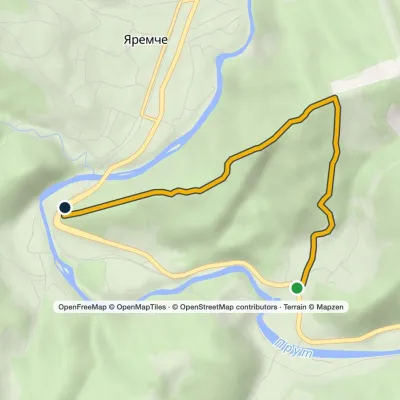 EasyOne-dayMarkedYaremche Mount MakovytsiaElevation profile541–862 m4.2 kmascent 307 m≈ 1.5 h walking
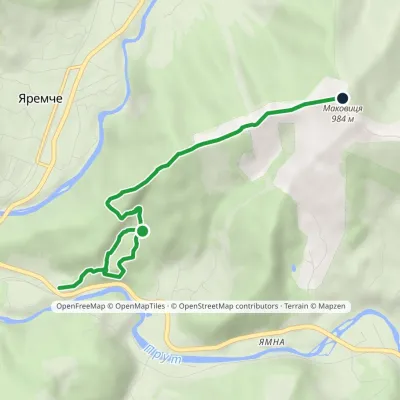 EasyOne-dayMarkedYaremche Mount MakovytsiaElevation profile555–984 m5.1 kmascent 460 m≈ 2 h walking
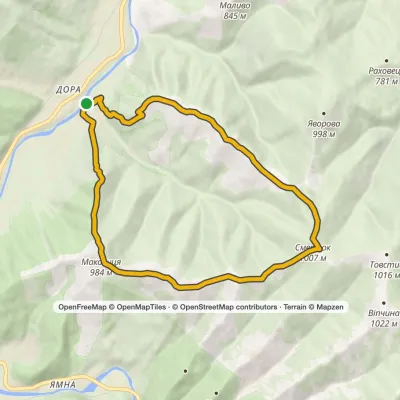 ModerateOne-dayMarkedDora loopvia Mount Makovytsia, Mount Staiky +1Elevation profile470–1 007 m13.2 kmascent 707 m≈ 4.5 h walking
 EasyOne-dayMarkedYaremche, Dovbush Rocks and Mount Makovytsia to YaremcheElevation profile545–984 m8.3 kmascent 441 m≈ 3 h walking
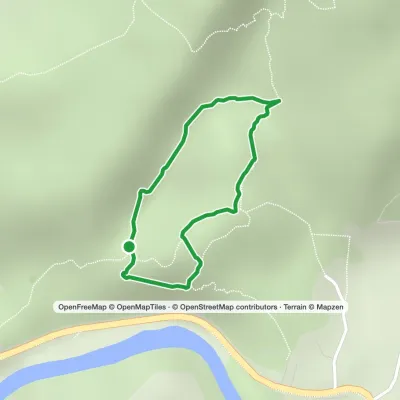 EasyOne-dayMarkedDovbush TrailElevation profile613–674 m1.4 kmascent 61 m≈ 30 min walking
 ModerateOne-dayYaremche loopvia Dovbush Rocks, Mount MakovytsiaElevation profile552–984 m9.9 kmascent 487 m≈ 3.5 h walking
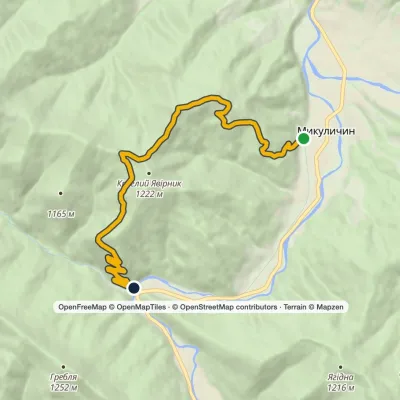 ModerateOne-dayMarkedZhenets Mykulychyn villagevia Kruhloyavirnyk polonynaElevation profile599–1 189 m10.3 kmascent 608 m≈ 4 h walking
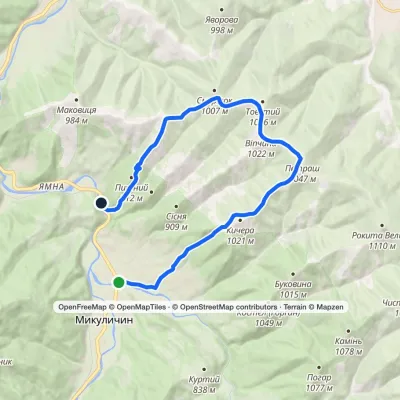 ModerateTwo-dayMarkedRivnia hamlet Mykulychynvia Mount Smerichok, Mount PetrashElevation profile574–1 047 m15 kmascent 587 m≈ 5 h walking
 ModerateOne-dayMarkedVorokhta village Rizhi PassElevation profile761–1 295 m8.8 kmascent 570 m≈ 3.5 h walking
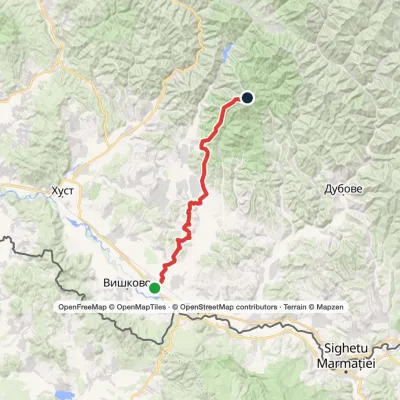 HardMulti-dayBushtyno to Mount Manchulvia Zanivka tractElevation profile208–1 501 m45.5 kmascent 2 029 m
Mountain ranges: Gorgany. In other countries: 🇵🇱 Gorce, 🇵🇱 Żywiec Beskids, 🇵🇱 Low Beskids
Trails and peaks near which naturalists recorded the species (GBIF, iNaturalist), matched by altitude and habitat. Sightings are not guaranteed.
Sources
- Вікіпедія: Боровик зернистоногий
- Wikipedia (en): Neoboletus luridiformis
- Wikipedia (en): Rubroboletus satanas
- МОЗ України: отруєння грибами — профілактика та перша допомога
- iNaturalist: Neoboletus erythropus (спостереження в Карпатах)
GBIF · iNaturalist · Wikidata · Distribution data: GBIF.org (CC0 and CC BY records), iNaturalist; names and identifiers: Wikidata (CC0). Text: Karpaty.rocks, checked 09.11.2026.
