Bitter beech bolete
Never identify a mushroom from a photo alone. If in doubt, leave it. In case of poisoning call 112 (103 in Ukraine) at once.
About
The inedible bolete has a Latin name that means 'beautiful stem,' and it indeed looks attractive. It forms mycorrhiza with beech, oak, and coniferous trees, often found at higher altitudes, especially under beech and oak. Fruiting bodies appear in summer and autumn. In Ukraine, the species is rare; observations have been made in the Carpathian forests.
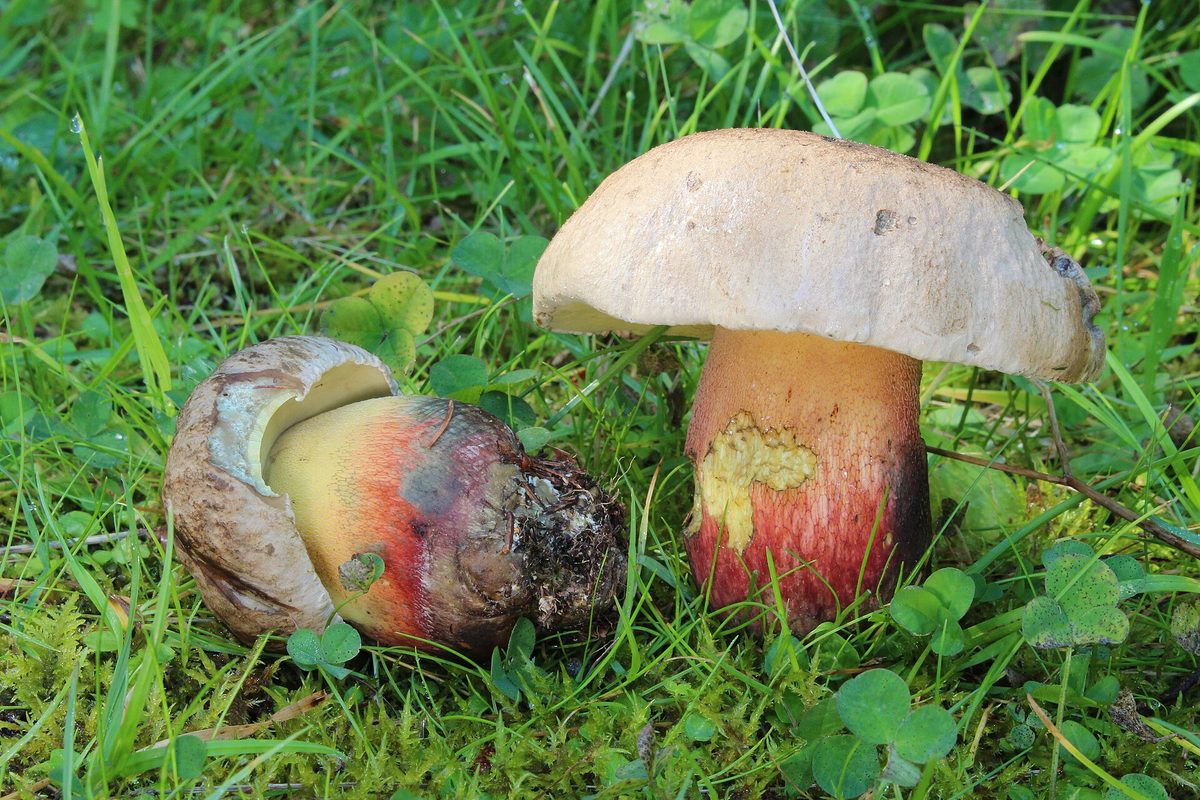
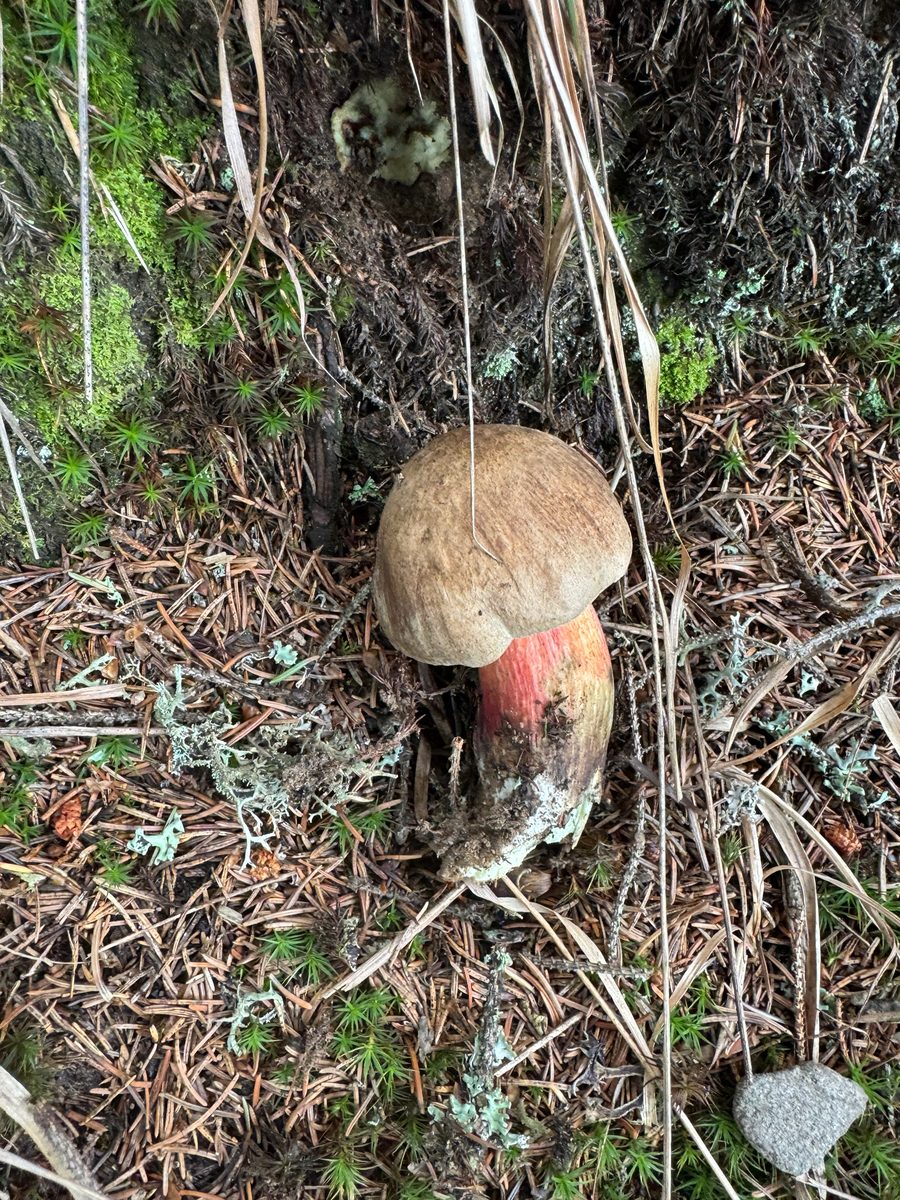
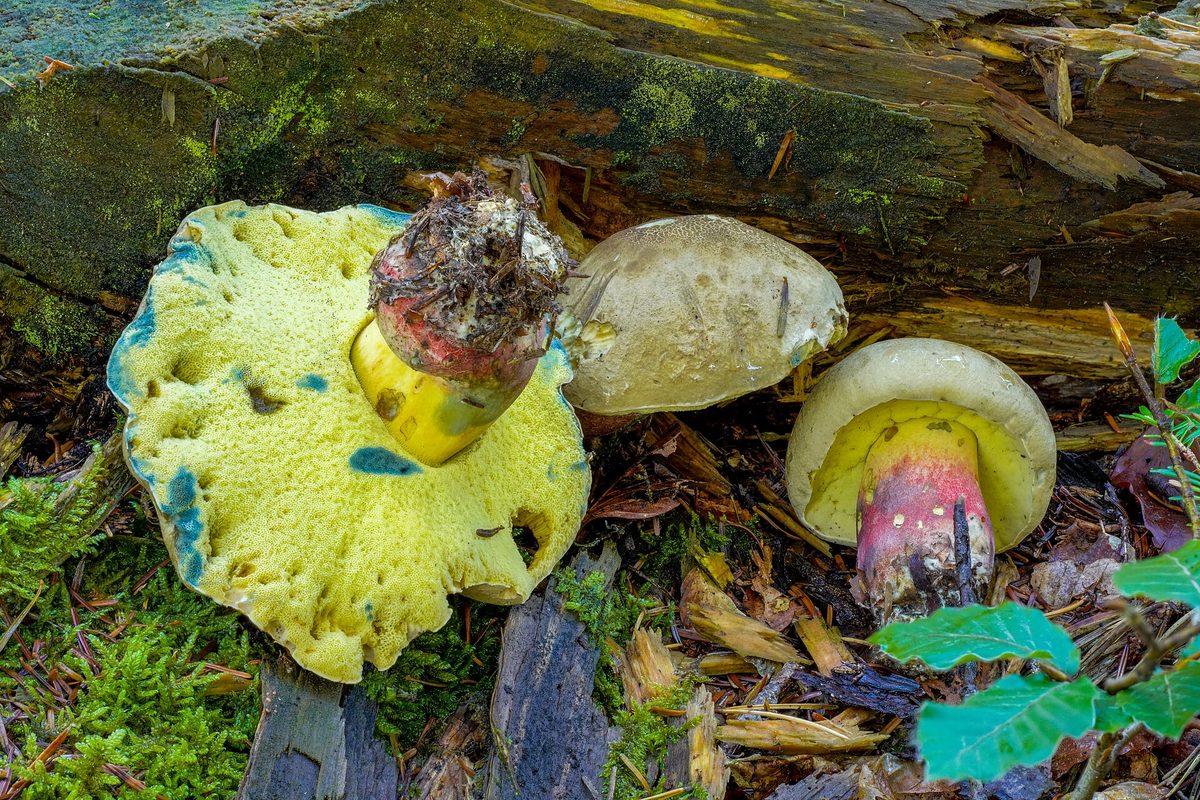
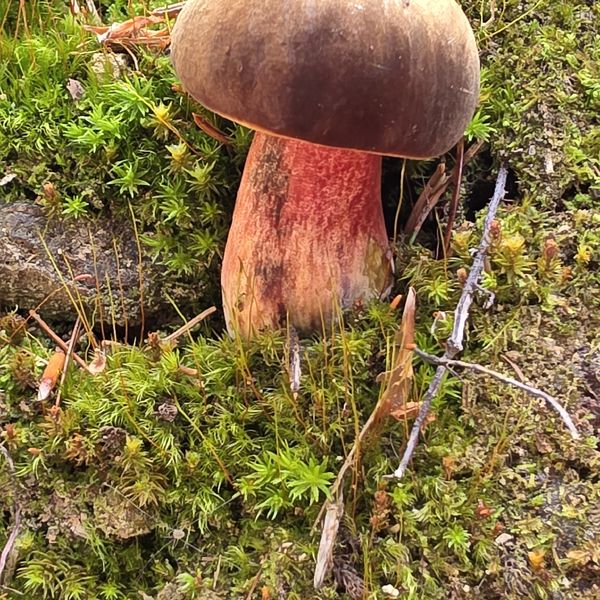
Cap 5–10 cm, occasionally up to 16 cm, dry, thinly felted, grayish-beige, light brown, or olive. The tubes and pores are lemon-yellow, turning olive with age, and they turn blue when touched. The stem is thick, yellow at the top, reddish-pink or carmine-red below, covered with a light mesh at the upper part. The flesh is whitish or yellowish, turning blue when cut, and is very bitter.
The mushroom is not poisonous in the usual sense, but it is unsuitable for food: the bitterness from calopin and its derivatives does not disappear during boiling or frying. Even one such mushroom makes the entire dish bitter. Some publications mention that it is eaten in the Far East and in Ukraine, but guides classify it as inedible.
Beginners often confuse it with the porcini or oak bolete. Check three signs: the porcini has white or olive-yellow pores that do not turn blue when touched, and a light stem without red color; the inedible bolete has yellow pores that turn blue, a red stem, and bitter flesh. Do not taste raw mushrooms — it is better to leave the questionable mushroom in the forest.
Where in the Carpathians

The map shows where naturalists recorded the species (GBIF, CC0 and CC BY records), not every place it lives. The Ukrainian Carpathians are less studied, so a blank area does not mean the species is absent.
- Countries
- Poland · Slovakia · Romania · Czechia · Ukraine
- Mountain ranges
- Island Beskids, Low Tatras, Sądecki Beskids, Gorce, Harghita and Gurghiu Mountains, Moravian-Silesian Beskids, Piatra Craiului, Skole Beskids, Żywiec Beskids, Kysuce Beskids
- Altitude belts
- Foothills (below 600 m) · Beech forests (600–1200 m)
When to see it
| Jan | Feb | Mar | Apr | May | Jun | Jul | Aug | Sep | Oct | Nov | Dec | |
|---|---|---|---|---|---|---|---|---|---|---|---|---|
| Sightings |
From naturalists’ observations in the Carpathians (iNaturalist, research grade): the darker the cell, the more often the species is seen that month.
Safety
Inedible due to strong bitterness that does not disappear during boiling. Do not taste raw mushrooms.
Look-alikes — how to tell them apart
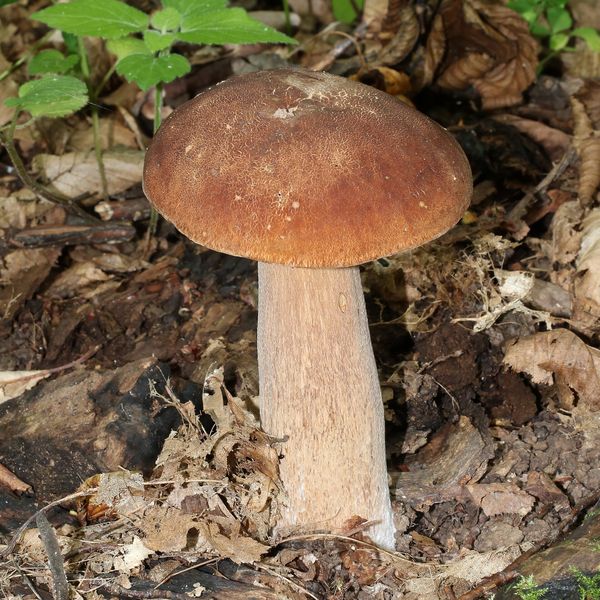
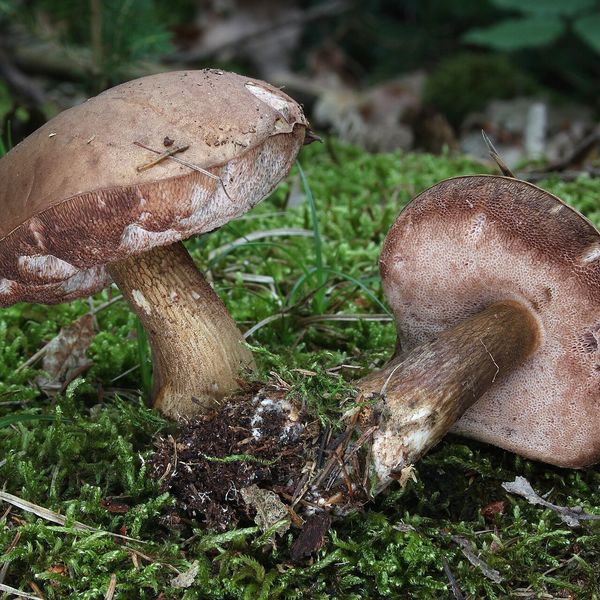
Pores are white, yellow, or olive and do not turn blue when touched; stem is light, without red color; flesh is white, does not change when cut, pleasant taste.
Pores are red or orange, stem without mesh, covered with small red dots; cap is dark brown, velvety. Conditionally edible, only after thorough boiling.
Another bitter lookalike of the porcini: tubes turn pink, stem with dark mesh, no red color, does not turn blue.
Protection and rules
Not protected.
FAQ
Is the inedible bolete poisonous?
No, the main issue is the very bitter taste that does not disappear during boiling. Therefore, guides classify it as inedible.
How to distinguish the inedible bolete from the porcini?
The inedible bolete has yellow pores that turn blue when touched and a red stem. The porcini has white or olive-yellow pores that do not turn blue, and a light stem.
Similar species
Where to meet it
Mountain ranges: Skole Beskids. In other countries: 🇵🇱 Island Beskids, 🇸🇰 Low Tatras, 🇵🇱 Sądecki Beskids, 🇵🇱 Gorce, 🇷🇴 Harghita and Gurghiu Mountains, 🇨🇿 Moravian-Silesian Beskids, 🇷🇴 Piatra Craiului, 🇵🇱 Żywiec Beskids, 🇸🇰 Kysuce Beskids, 🇸🇰 Western Tatras
Trails and peaks near which naturalists recorded the species (GBIF, iNaturalist), matched by altitude and habitat. Sightings are not guaranteed.
Sources
- Вікіпедія: Боровик неїстівний
- Wikipedia (en): Caloboletus calopus
- Wikipedia (en): Boletus edulis
- iNaturalist: Caloboletus calopus (спостереження в Карпатах)
GBIF · iNaturalist · Wikidata · Distribution data: GBIF.org (CC0 and CC BY records), iNaturalist; names and identifiers: Wikidata (CC0). Text: Karpaty.rocks, checked 09.11.2026.
