Bitter bolete
Never identify a mushroom from a photo alone. If in doubt, leave it. In case of poisoning call 112 (103 in Ukraine) at once.
About
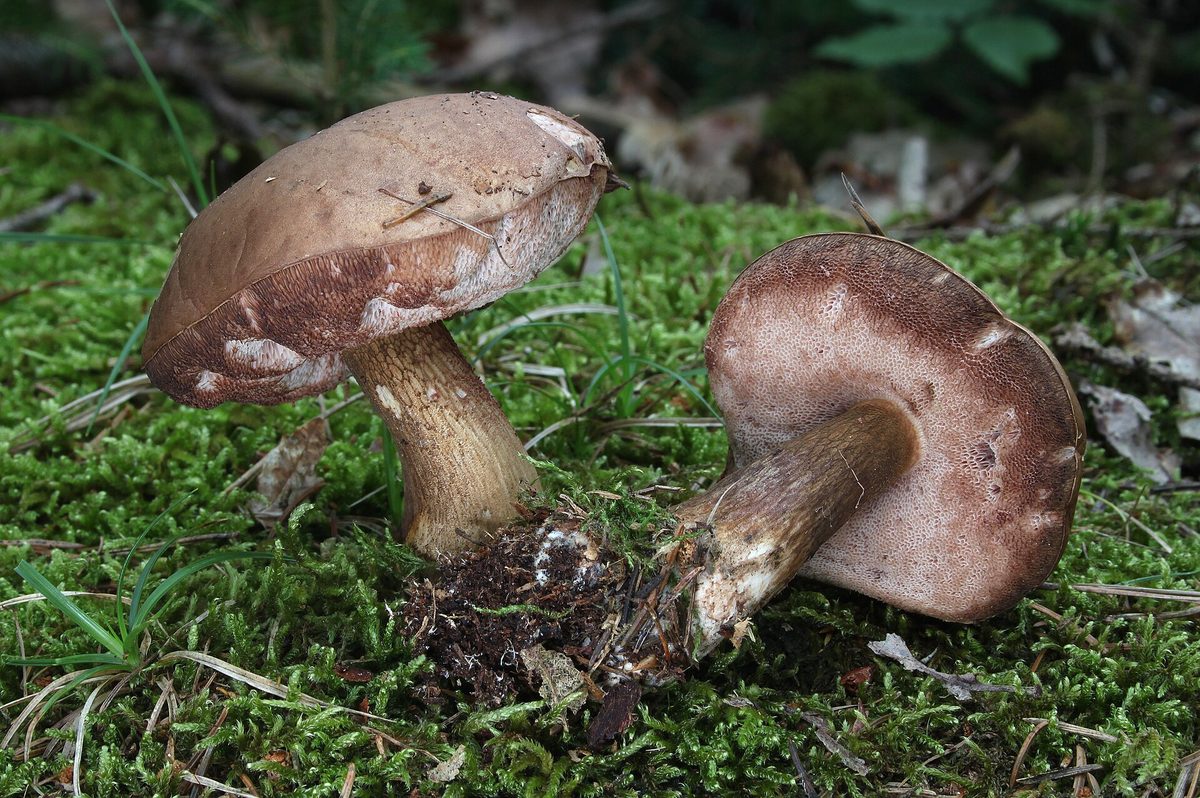
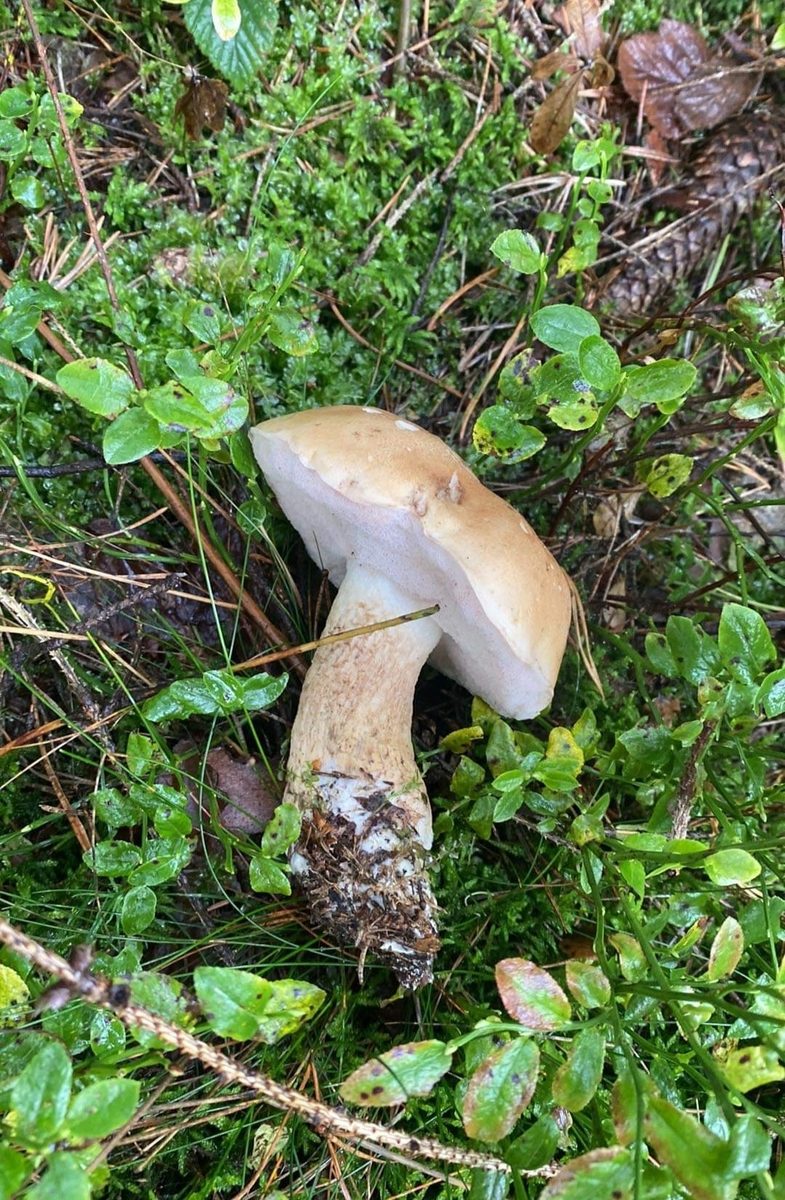
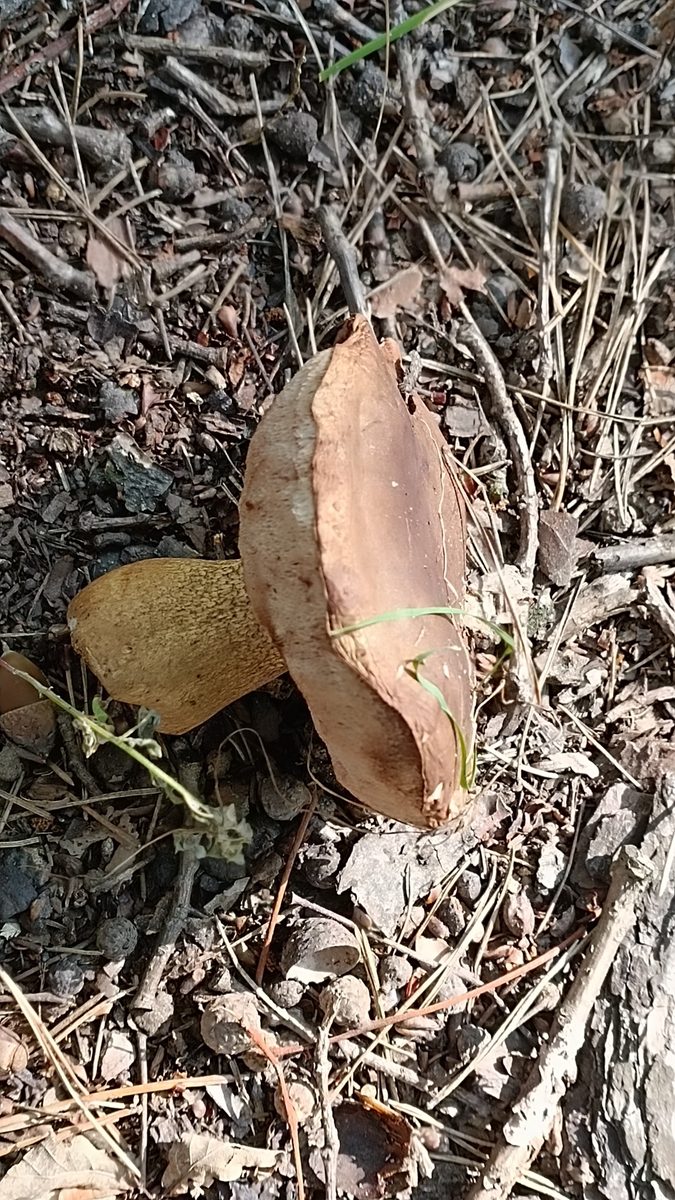
The Bitter bolete, or felleus, disappoints many mushroom pickers: from a distance, it closely resembles the porcini or the birch bolete, and wormy specimens are rare, making the mushroom appear perfect. In the Carpathians, it is common in spruce and mixed forests, on acidic soils, among moss, near stumps, and grows from June to October.
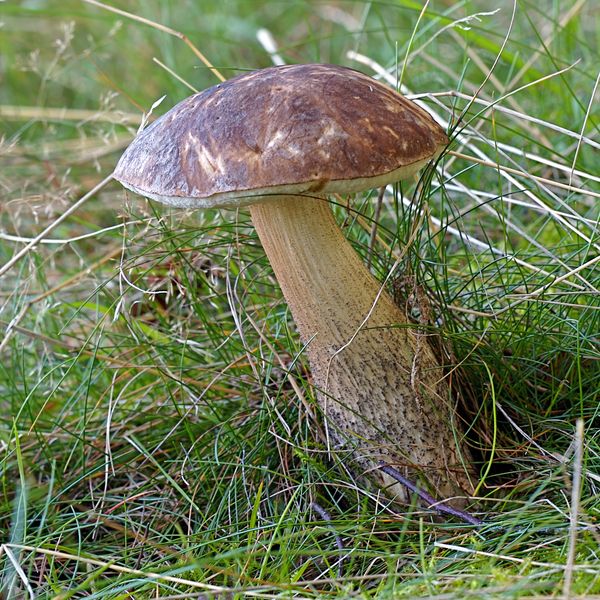
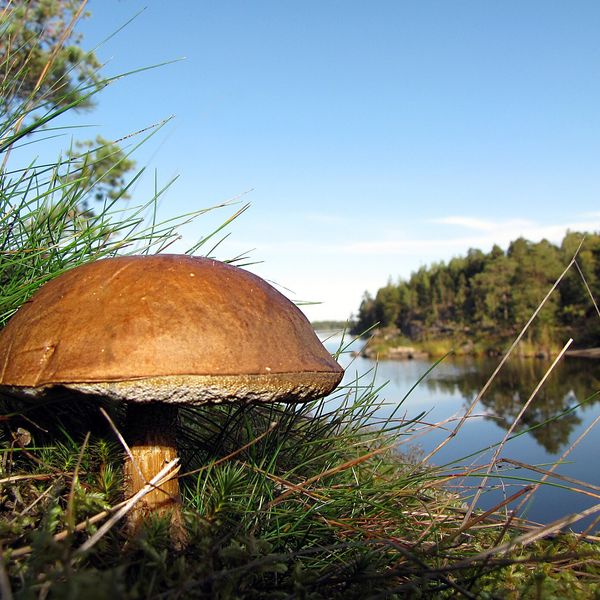
The cap is 4–15 cm, light nut-brown or brown, dry, and velvety. The tubes of a young mushroom are white, then pink, and in an old one, dirty pink; the flesh is white and may turn slightly pink when cut. The most reliable feature is the stem: it is covered with a distinct dark brown mesh. If you touch the flesh with the tip of your tongue and immediately spit it out, you will feel a strong bitterness, but it is not advisable to do this with unfamiliar mushrooms.
The Bitter bolete is not poisonous, but it is inedible: the bitterness does not disappear during boiling, frying, or pickling; on the contrary, it intensifies. One such mushroom in a pot makes the entire dish bitter.
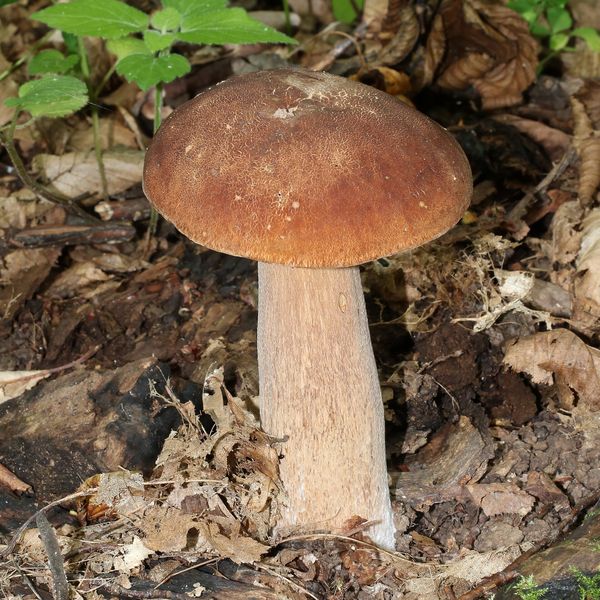
The Bitter bolete is most often confused with the porcini, which never has pink tubes, and the mesh on its stem is light. The birch bolete has dark scales on its stem, not a mesh. The king bolete differs with yellowish tubes that turn blue when pressed.
This species does not live in the Ukrainian Carpathians today — you can see it in other Carpathian countries.
Where in the Carpathians

The map shows where naturalists recorded the species (GBIF, CC0 and CC BY records), not every place it lives. The Ukrainian Carpathians are less studied, so a blank area does not mean the species is absent.
- Countries
- Poland · Romania · Slovakia
- Mountain ranges
- Harghita and Gurghiu Mountains, Silesian Beskids
- Altitude belts
- Foothills (below 600 m) · Conifer forests (1200–1600 m)
When to see it
| Jan | Feb | Mar | Apr | May | Jun | Jul | Aug | Sep | Oct | Nov | Dec | |
|---|---|---|---|---|---|---|---|---|---|---|---|---|
| Sightings |
From naturalists’ observations in the Carpathians (iNaturalist, research grade): the darker the cell, the more often the species is seen that month.
Safety
Not poisonous, but very bitter and spoils dishes. Check the tubes and stem of every 'porcini'.
Look-alikes — how to tell them apart
The tubes are white, yellowish, or olive, never pink; the mesh on the stem is light; the flesh is not bitter.
Has dark scales on the stem, not a mesh; grows only near birch trees.
Protection and rules
Not protected. It is not advisable to destroy mushrooms in the forest: they are needed by the forest and animals.
FAQ
Is the Bitter bolete poisonous?
No, it is not poisonous, but it is inedible due to the strong bitterness that only intensifies during cooking.
How to distinguish the Bitter bolete from the porcini?
The Bitter bolete has pink tubes, and the stem has a dark brown mesh. The porcini has white or olive tubes, and the mesh is light.
Similar species
Where to meet it
Mountain ranges: In other countries: 🇷🇴 Harghita and Gurghiu Mountains, 🇵🇱 Silesian Beskids
Trails and peaks near which naturalists recorded the species (GBIF, iNaturalist), matched by altitude and habitat. Sightings are not guaranteed.
Sources
- Вікіпедія: Гірчак (гриб)
- Wikipedia (en): Tylopilus felleus
- МОЗ України: отруєння грибами — профілактика та перша допомога
GBIF · iNaturalist · Wikidata · Distribution data: GBIF.org (CC0 and CC BY records), iNaturalist; names and identifiers: Wikidata (CC0). Text: Karpaty.rocks, checked 09.11.2026.
