Grey wolf
About
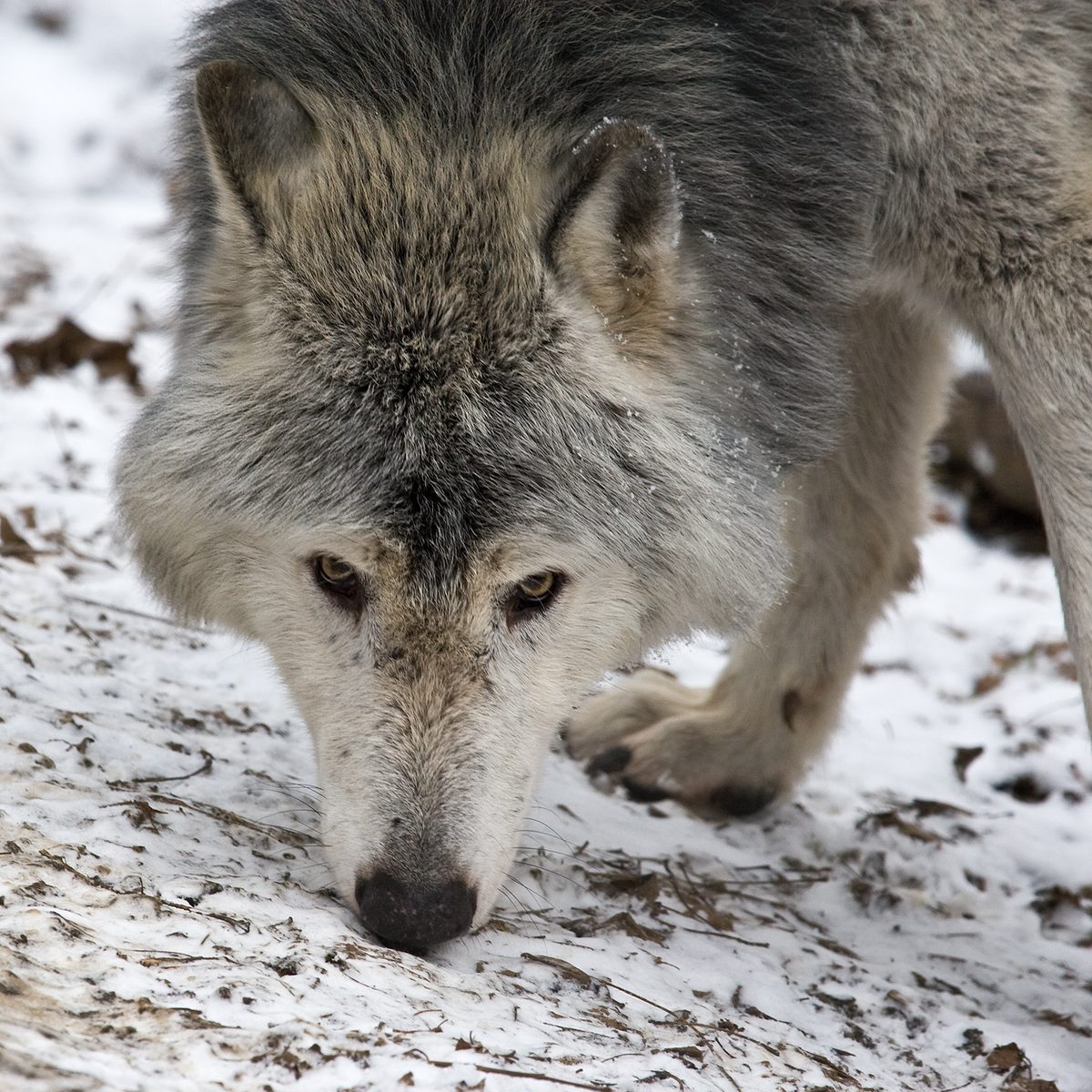
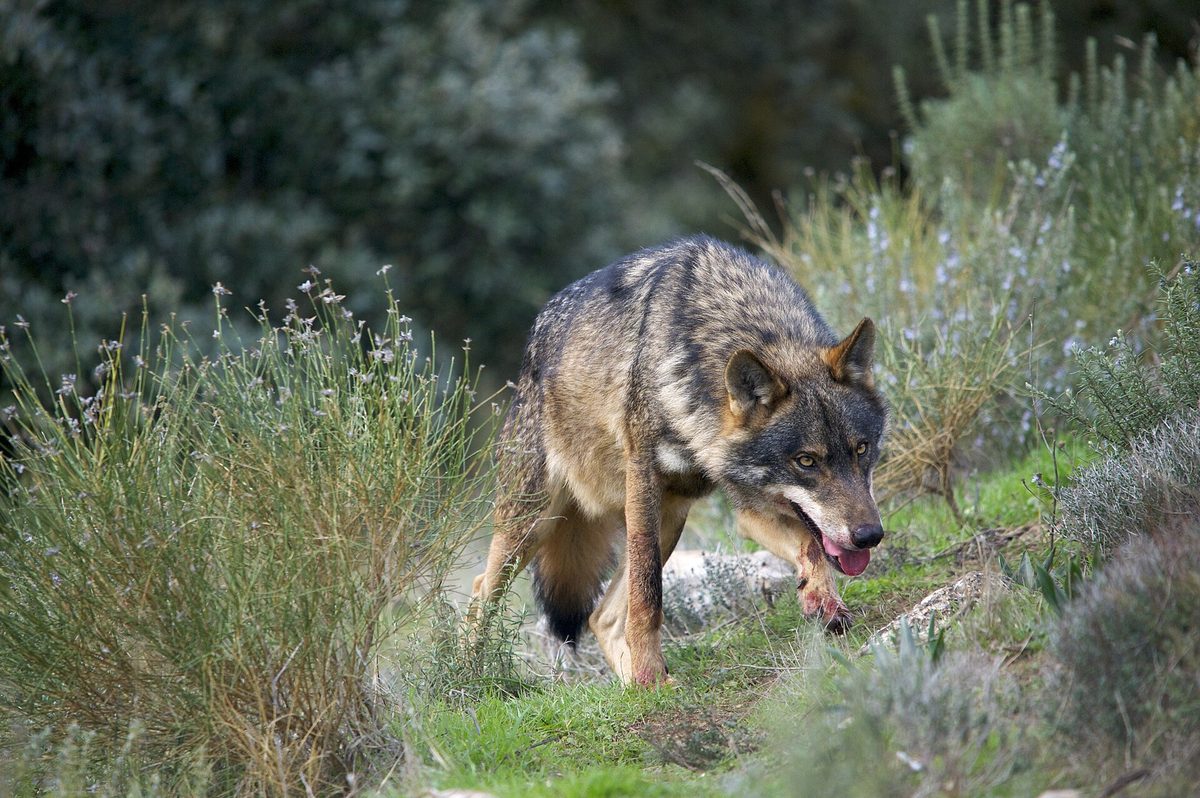
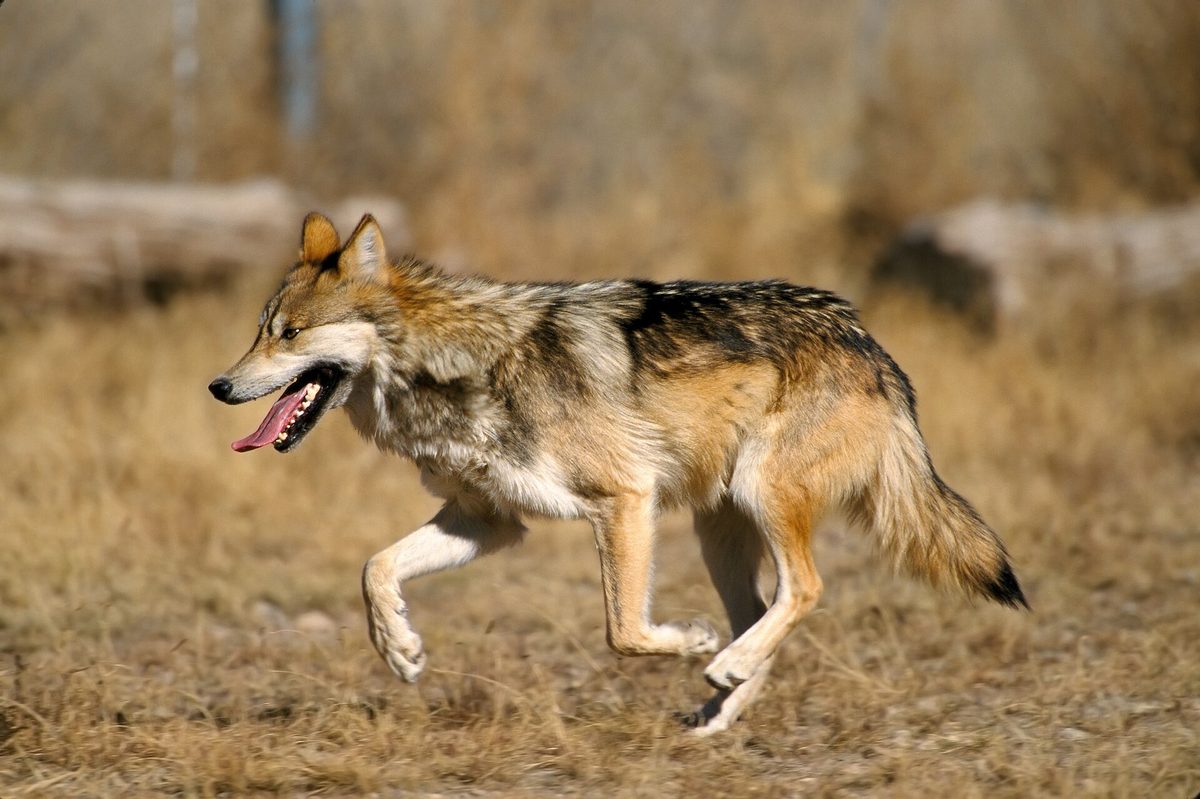
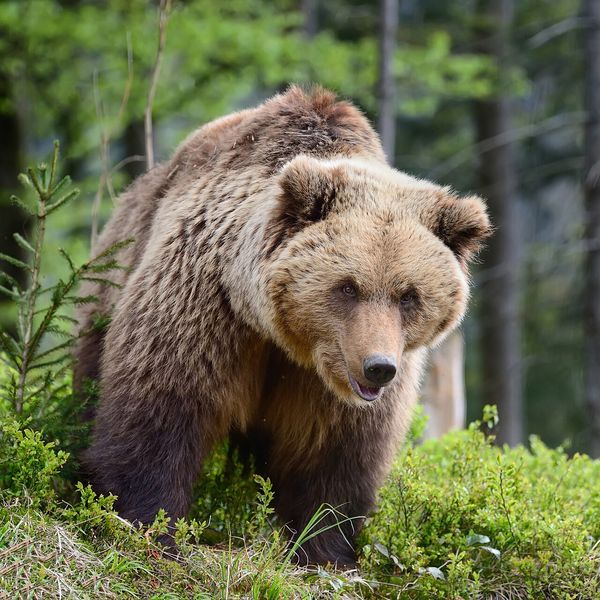
The Grey wolf is the second largest predator in the Carpathians after the bear and the most important "sanitary" of the forest. It lives in all Carpathian countries: Ukraine, Poland, Slovakia, and Romania, from the foothills to the polonynas.
The Grey wolf measures 135–160 cm in length without the tail, stands 80–95 cm at the shoulder, and typically weighs 45–60 kg. Its fur is grey with reddish and black hues, the tail hangs down and does not curl like a dog's. A pack is a family: a breeding pair, this year's pups, and last year's young; packs are rarely larger than 10–12 individuals. The breeding season for wolves occurs in winter, and the pups, usually five to six, are born in spring in a den or under a root. The main prey consists of ungulates: roe deer, deer, wild boar, which the pack hunts together, taking turns driving the prey; when the opportunity arises, the wolf also takes hares, rodents, and carrion. An adult wolf's daily meat requirement is about two kilograms.
Seeing a wolf in the Carpathians is a great rarity: it is cautious, keeps away from people, and mostly moves at night and in twilight. In winter, fresh snow may reveal a chain of tracks where the animals walk in single file. The locations of dens and wolf trails are never disclosed: in spring and summer, while the pups are small, the family is very vulnerable to disturbance, and startled animals may abandon the den.
The status of the wolf varies in different countries. In Ukraine, it is not listed in the Red Book and is considered a game species. In Poland, the wolf is under strict protection. In the EU, in 2025, it was moved from Annex IV to Annex V of the Habitats Directive, thus changing from strict protection to managed conservation.
The wolf is very important for the forest. By hunting, it most often takes sick, old, and weak animals, thus controlling the spread of diseases among ungulates and preventing deer and roe deer from destroying young undergrowth. Howling helps the pack communicate and mark their territory; on a quiet night, it can be heard from afar. The wolf's track is larger and more elongated than a dog's, and its toes are more closely gathered. Wolves are found throughout the Ukrainian part of the Carpathians, but they are most numerous in large sparsely populated forest areas. Occasionally, the wolf attacks livestock, so shepherd dogs have long guarded flocks in the polonynas.
Where in the Carpathians

The map shows where naturalists recorded the species (GBIF, CC0 and CC BY records), not every place it lives. The Ukrainian Carpathians are less studied, so a blank area does not mean the species is absent. For rare and vulnerable species the map is deliberately coarse (hexagons of ~250 km² or more) so that it never points to dens, nests or growing sites.
- Countries
- Ukraine · Romania · Slovakia · Serbia · Czechia · Poland
- Mountain ranges
- Maramureș Mountains, Chornohora, Hryniava Mountains, Chyvchyn Mountains, Bieszczady, Polonynian Ridge, Rivna Polonyna, Svydovets, Low Tatras, Pokuttia-Bukovina Carpathians
- Altitude belts
- Foothills (below 600 m) · Beech forests (600–1200 m) · Conifer forests (1200–1600 m)
When to see it
| Jan | Feb | Mar | Apr | May | Jun | Jul | Aug | Sep | Oct | Nov | Dec | |
|---|---|---|---|---|---|---|---|---|---|---|---|---|
| Sightings |
From naturalists’ observations in the Carpathians (iNaturalist, research grade): the darker the cell, the more often the species is seen that month.
Safety
A healthy wolf avoids humans. Do not feed wild animals and do not leave food waste near campsites; keep your dog close in the mountains. If an animal behaves unusually boldly or approaches people, step back and report it at 112.
Protection and rules
In Ukraine, the wolf is not listed in the Red Book. In Poland, it is under strict protection; in the EU from 2025, it is in Annex V of the Habitats Directive (previously IV).
FAQ
Are there wolves in the Carpathians?
Yes, the Grey wolf lives in all Carpathian countries — Ukraine, Poland, Slovakia, and Romania. It is difficult to see: the animal is cautious and mostly active at night.
Are wolves dangerous to tourists in the Carpathians?
A healthy wolf avoids humans. The main thing is not to feed wild animals, not to leave food near the campsite, and to keep your dog close.
Similar species
Sources
- Вікіпедія: Вовк сірий
- Wikipedia (en): Wolf
- Директива (ЄС) 2025/1237 про зміну статусу охорони вовка
- Перелік видів тварин, що заносяться до Червоної книги України (наказ Міндовкілля від 19.01.2021 № 29, зареєстровано в Мін'юсті 01.03.2021 за № 260/35882)
- Міндовкілля: текст переліку видів тварин Червоної книги України (PDF)
- GBIF: таксон і категорія МСОП
- Директива Ради 92/43/ЄЕС про збереження природних оселищ (консолідована редакція)
GBIF · iNaturalist · Wikidata · Distribution data: GBIF.org (CC0 and CC BY records), iNaturalist; names and identifiers: Wikidata (CC0). Text: Karpaty.rocks, checked 09.11.2026.
