Red fox
About
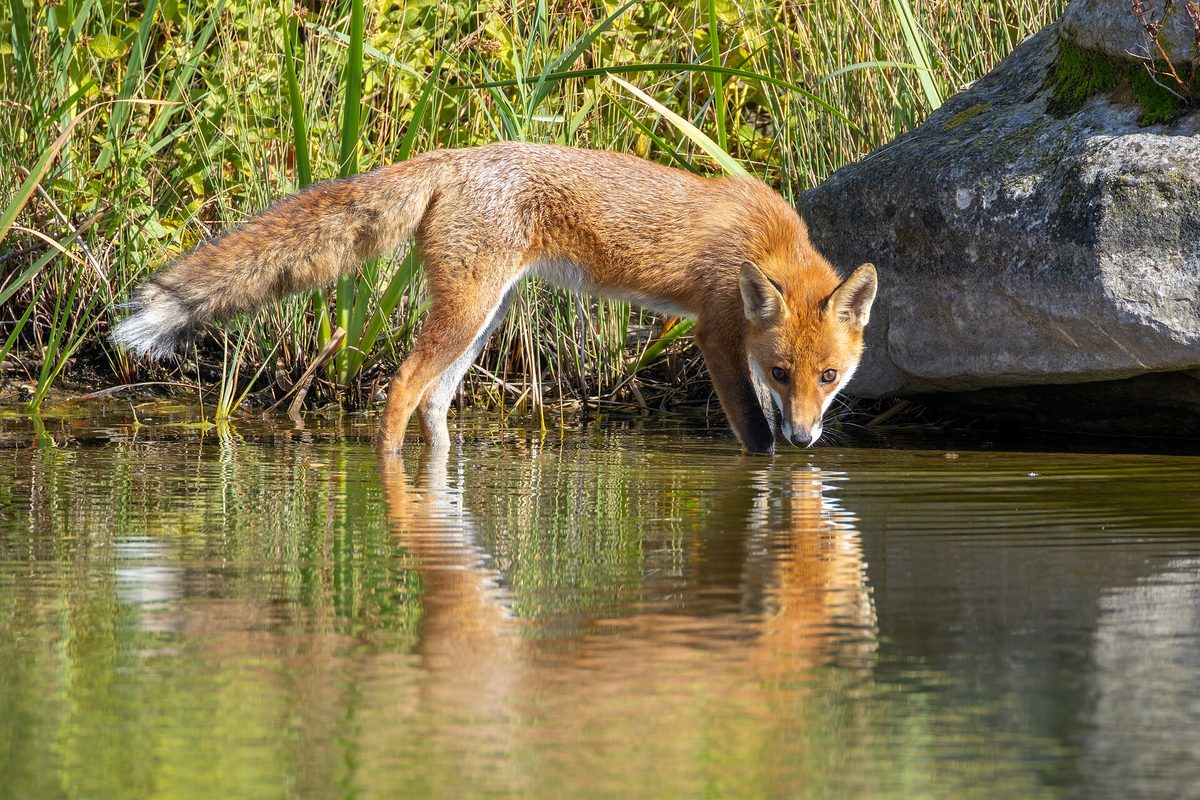
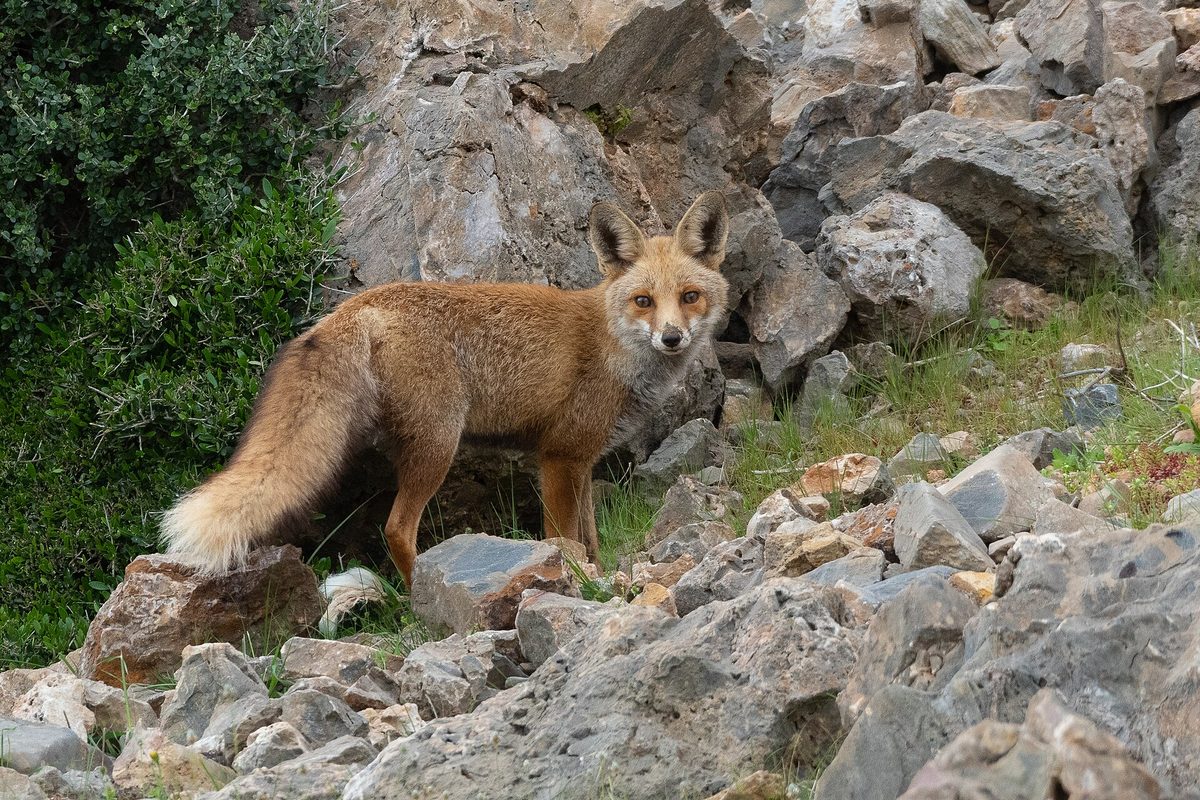
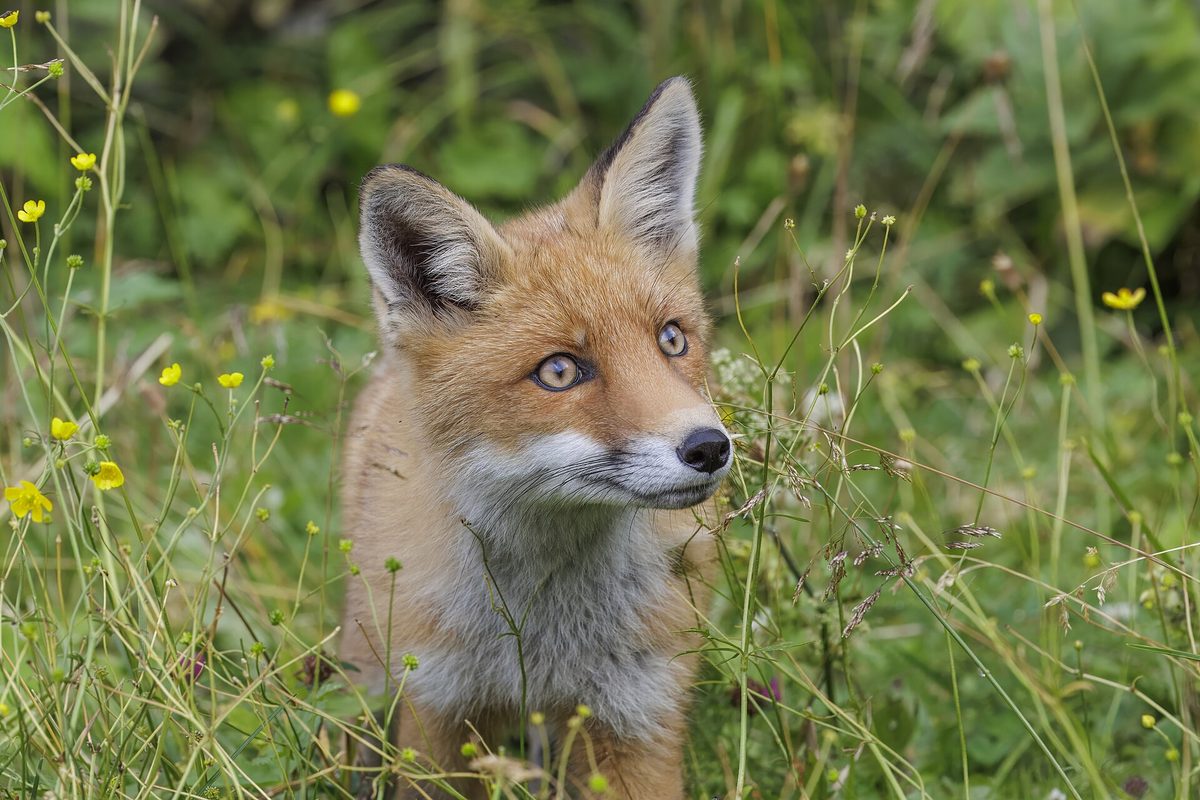
The Red fox is the most common predator in the Carpathians. It lives everywhere: in the forest edges, meadows, pastures, near villages and tourist camps, and in summer it ascends to the polonynas. It occurs in all Carpathian countries.
Its reddish fur, white belly, black "socks" on its legs, and long fluffy tail with a white tip make the fox recognizable from afar. In the mountains, darker, brownish animals can also be found.
The fox is omnivorous: its main prey consists of field mice and voles, which it catches with a characteristic high jump from above. It also eats birds, insects, berries, fruits, and carrion, and near human dwellings, it does not disdain waste. It digs its own burrow or occupies an abandoned badger's. Fox cubs are born in spring and already play near the burrow in summer. In winter, the fox leaves a neat chain of tracks in the snow, placing its paws almost in a straight line; this track is noticeably narrower than a dog's.
The active fox is mainly active at dusk and at night, but in quiet places, it is often seen during the day, especially in mowed meadows where it can easily hunt for rodents.
The fox is a game species and is not listed in the Red Data Book of Ukraine.
Where in the Carpathians

The map shows where naturalists recorded the species (GBIF, CC0 and CC BY records), not every place it lives. The Ukrainian Carpathians are less studied, so a blank area does not mean the species is absent.
- Countries
- Romania · Ukraine · Czechia · Serbia · Poland · Slovakia · Hungary · Austria
- Mountain ranges
- Maramureș Mountains, Hryniava Mountains, Bieszczady, Făgăraș Mountains, Pădurea Craiului, Piatra Craiului, Chyvchyn Mountains, Bucegi Mountains, Chornohora, High Tatras
- Altitude belts
- Foothills (below 600 m) · Beech forests (600–1200 m) · Conifer forests (1200–1600 m)
When to see it
| Jan | Feb | Mar | Apr | May | Jun | Jul | Aug | Sep | Oct | Nov | Dec | |
|---|---|---|---|---|---|---|---|---|---|---|---|---|
| Sightings |
From naturalists’ observations in the Carpathians (iNaturalist, research grade): the darker the cell, the more often the species is seen that month.
Safety
Do not feed foxes and do not approach them. A fox that is not afraid of people, approaches on its own, or behaves strangely may be rabid. If a wild animal bites or scratches you, wash the wound with soap and water and seek medical attention immediately (103 or 112).
Protection and rules
A game species and is not listed in the Red Data Book of Ukraine.
FAQ
Are foxes dangerous in the Carpathians?
A healthy fox avoids people. An animal that is not afraid of humans or behaves strangely may be rabid — do not approach it, and in case of a bite, seek medical attention immediately.
Is it possible to feed foxes near the campsite?
No. Fed foxes become accustomed to people, get sick more often, and may bite.
Recorded nearby
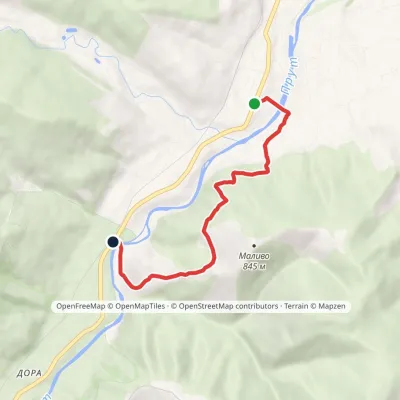 EasyOne-dayMarkedBaron's Trail: Deliatyn Dora villageElevation profile421–701 m5.3 kmascent 277 m≈ 2 h walking
 HardMulti-dayNyzhnii Yalovets village to Shypit villagevia Mount YarovytsiaElevation profile863–1 574 m24.7 kmascent 993 m≈ 8 h walking
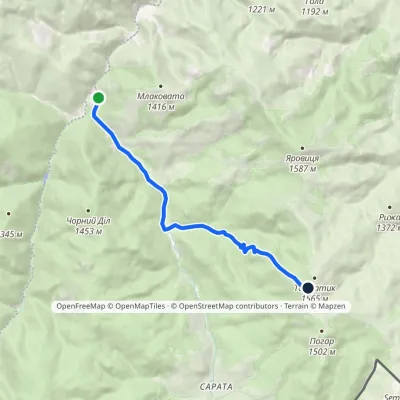 ModerateOne-dayMarkedPerkalaba Mount TomnatykElevation profile957–1 542 m8.7 kmascent 594 m≈ 3.5 h walking
 HardMulti-dayMarkedShepit village to Probiinivka villagevia Mount Yarovytsia, Mount Pnivie +1Elevation profile797–1 599 m59.4 kmascent 1 949 m
 HardMulti-dayMarkedShepit village to Shybene villagevia Mount Yarovytsia, Mount Pnivie +1Elevation profile849–1 599 m73.4 kmascent 2 319 m
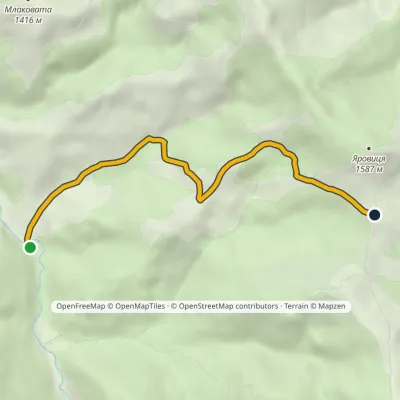 EasyOne-dayMarkedVereshchykha Mount YarovytsiaElevation profile1 001–1 416 m5.3 kmascent 426 m≈ 2 h walking
Trails and peaks near which naturalists recorded the species (GBIF, iNaturalist), matched by altitude and habitat. Sightings are not guaranteed.
Similar species
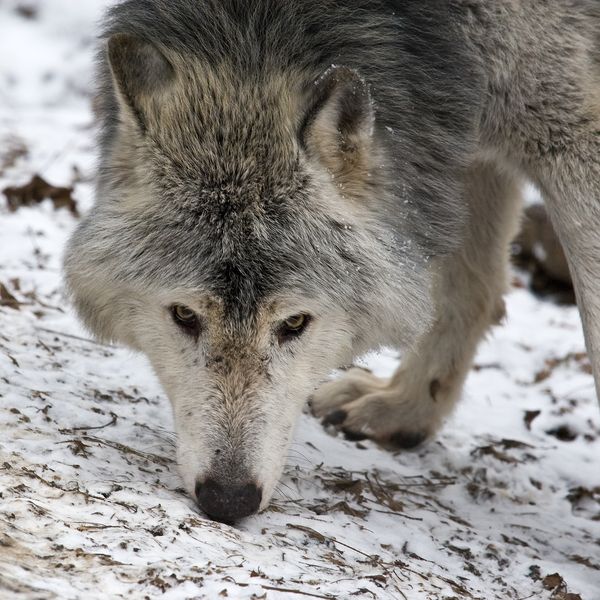
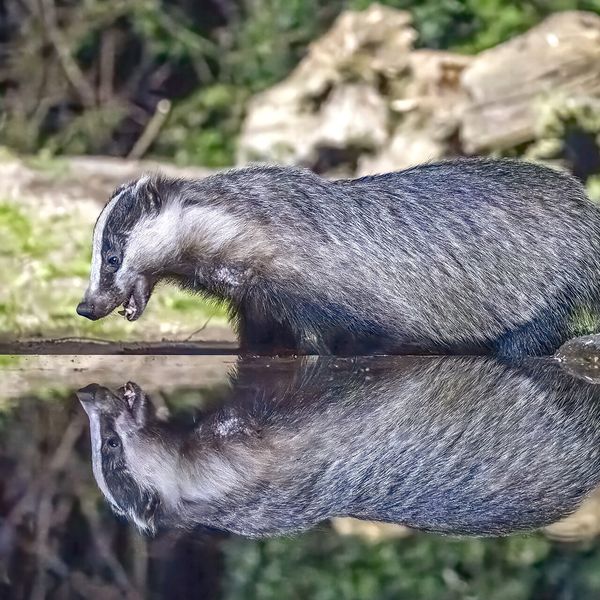
Sources
- Вікіпедія: Лисиця звичайна
- Wikipedia (en): Red fox
- ВООЗ: сказ (інформаційний бюлетень)
- Перелік видів тварин, що заносяться до Червоної книги України (наказ Міндовкілля від 19.01.2021 № 29, зареєстровано в Мін'юсті 01.03.2021 за № 260/35882)
- Міндовкілля: текст переліку видів тварин Червоної книги України (PDF)
- GBIF: таксон і категорія МСОП
GBIF · iNaturalist · Wikidata · Distribution data: GBIF.org (CC0 and CC BY records), iNaturalist; names and identifiers: Wikidata (CC0). Text: Karpaty.rocks, checked 09.11.2026.
