Brown bear
About
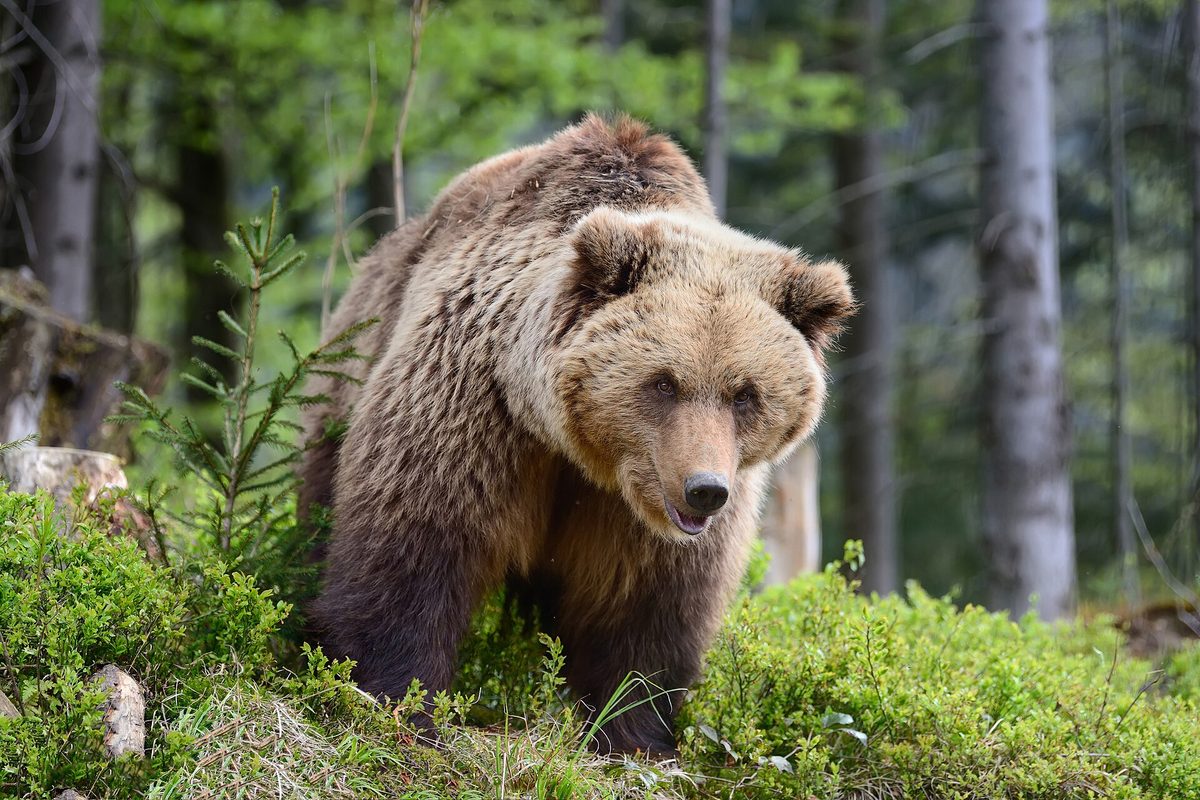
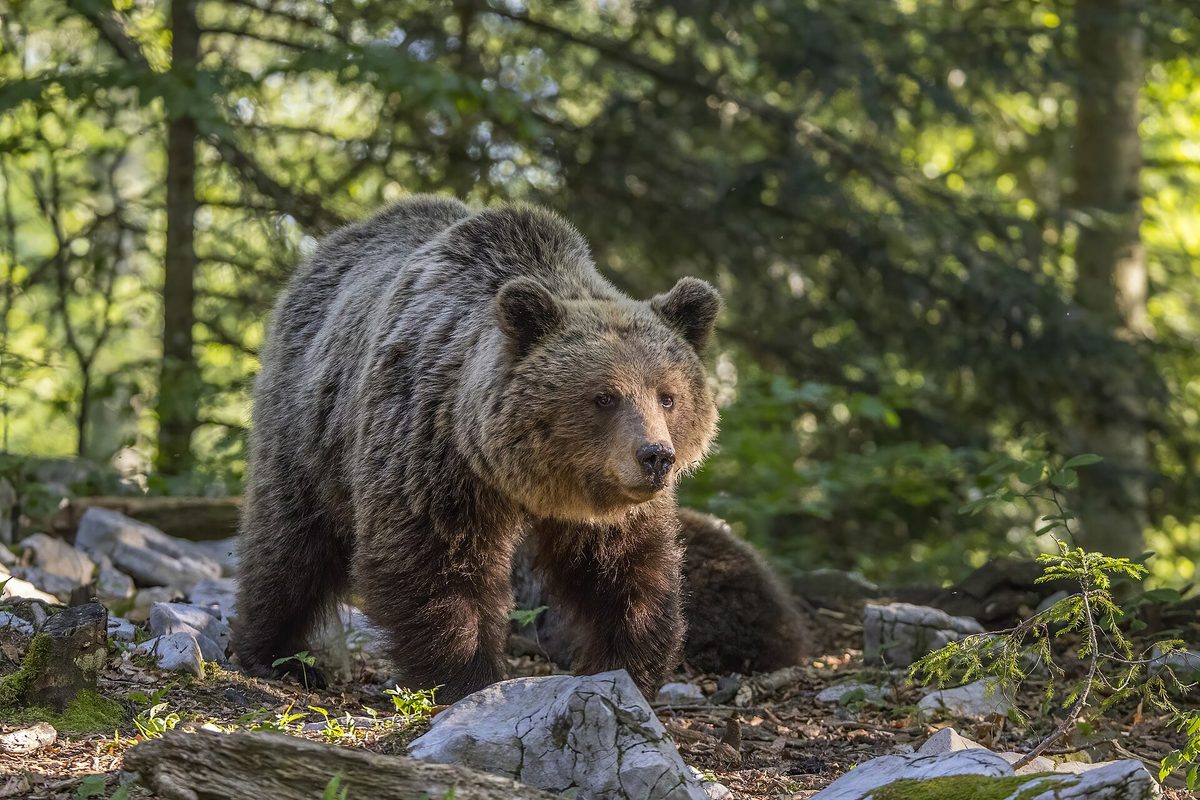
The Brown bear is the largest predator of the Carpathians and probably the most famous resident. In Ukraine, a permanent population exists only in the Carpathians: in the large beech and fir-spruce forests of Zakarpattia, Ivano-Frankivsk, Lviv, and Bukovina. The highest number of bears in the entire Carpathian arc lives in Romania, fewer in Slovakia and the Polish Bieszczady and Tatras.
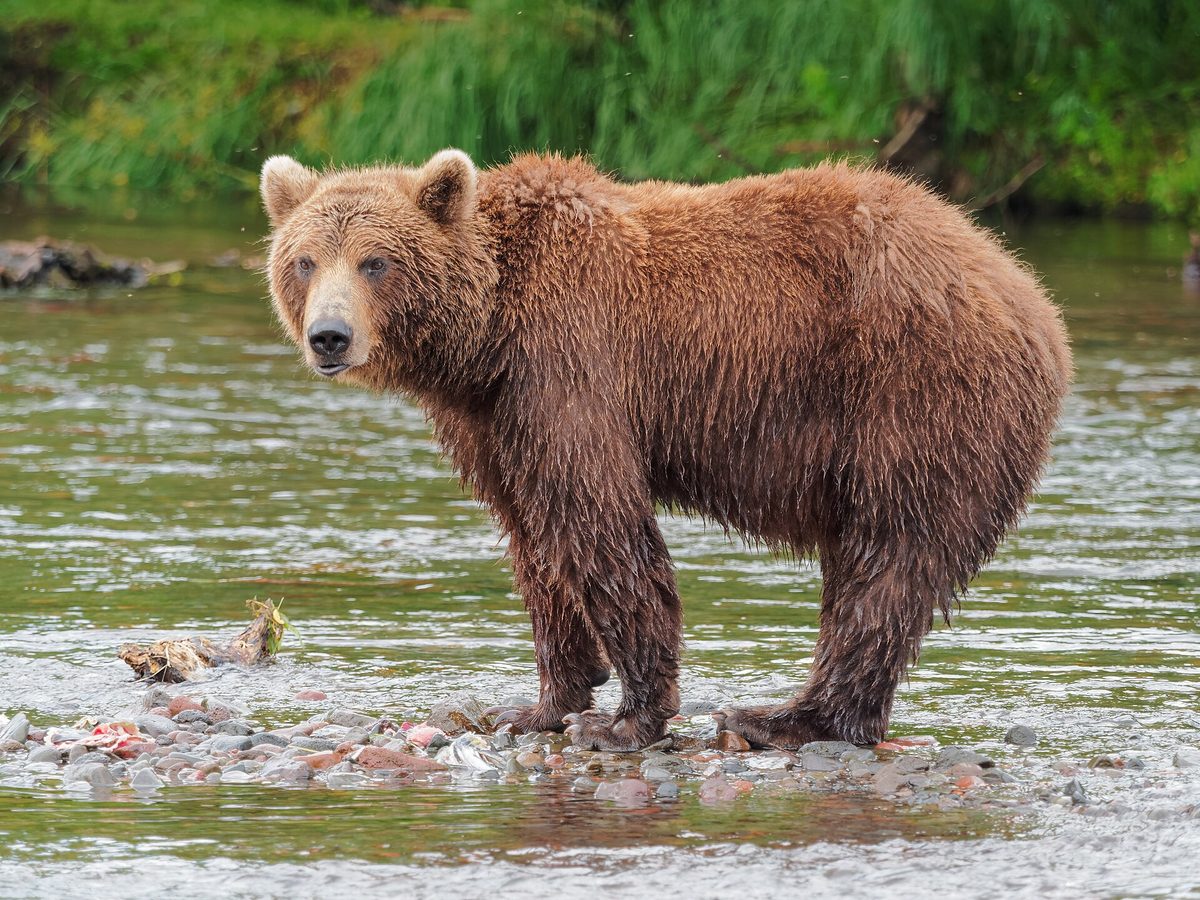
An adult animal measures 1.2–2 m in length, about a meter at the shoulder, and weighs mostly 100–400 kg; males are noticeably larger than females. The fur can range from light brown to almost black, and a muscular hump is visible over the shoulders. The bear is omnivorous: in spring it eats grass and young shoots, in summer — insects, ant larvae, blueberries, and raspberries, and in autumn it accumulates fat on beech nuts, acorns, and fruits. It rarely hunts for prey, more often scavenging.
From October-November to March-April, the bear lies in its den. This is not true hibernation, but a winter sleep: during a thaw, the animal can wake up and come out. Bear cubs, usually two to three, are born in the den from January to March and weigh less than a kilogram. The mother bear raises the young for up to two years and is particularly dangerous during this time.
Encountering a bear on a trail is rare: it hears a person and senses their smell before you notice it and leaves. Much more often, traces are found — paw prints on a muddy path, excavated anthills, overturned stones, scratches on bark. Dens and feeding places are not disclosed: this protects the animal from poachers and overly curious people. You can observe bears up close without risk at the Brown Bear Rehabilitation Center in the Synevyr National Nature Park. It was opened in 2011 on an area of 12 hectares, and it houses animals rescued from restaurants, circuses, and private cages. It is no longer possible to return them to the wild, so the center has become their home.
Conservationists warn that the number of bears in the Ukrainian Carpathians is decreasing: they are harmed by poaching, logging, and disturbances in the forests. For this reason, the Brown bear is listed in the Red Data Book of Ukraine as a vulnerable species, and hunting it is prohibited. The best thing a tourist can do is not to leave food and garbage in the mountains and not to seek encounters with the animal.
Where in the Carpathians

The map shows where naturalists recorded the species (GBIF, CC0 and CC BY records), not every place it lives. The Ukrainian Carpathians are less studied, so a blank area does not mean the species is absent. For rare and vulnerable species the map is deliberately coarse (hexagons of ~250 km² or more) so that it never points to dens, nests or growing sites.
- Countries
- Ukraine · Slovakia · Romania · Serbia · Poland
- Mountain ranges
- Chornohora, Maramureș Mountains, Gorgany, Hryniava Mountains, Pokuttia-Bukovina Carpathians, Krasna Polonyna, Skole Beskids, Low Tatras, Bieszczady, Chyvchyn Mountains
- Altitude belts
- Beech forests (600–1200 m) · Conifer forests (1200–1600 m)
When to see it
| Jan | Feb | Mar | Apr | May | Jun | Jul | Aug | Sep | Oct | Nov | Dec | |
|---|---|---|---|---|---|---|---|---|---|---|---|---|
| Sightings |
From naturalists’ observations in the Carpathians (iNaturalist, research grade): the darker the cell, the more often the species is seen that month.
Safety
When walking in the forest, talk or occasionally make noise so the bear hears you in advance; do not walk alone in the forest at dusk. Never feed bears and do not leave food and garbage near your campsite — an animal that becomes accustomed to human food becomes dangerous. If you see a bear, do not run away or climb a tree: stop, speak calmly, and slowly back away without turning your back. Be especially cautious near a mother bear with cubs. If a bear is near a village or campsite or if trouble occurs — call 112 or 101 (emergency services).
Protection and rules
Hunting bears in Ukraine is prohibited: the species is listed in the Red Data Book of Ukraine. In Poland, it is under strict protection, and in the EU — in Annexes II (priority species) and IV of the Habitats Directive.
FAQ
Are there bears in the Carpathians?
Yes. In Ukraine, the Brown bear permanently lives only in the Carpathians — in the large mountain forests of Zakarpattia, Ivano-Frankivsk, Lviv, and Bukovina. Romania has the highest number of bears in the Carpathians.
What to do if you encounter a bear in the Carpathians?
Do not run away or climb a tree. Stop, speak calmly, and slowly back away without turning your back. Never approach bear cubs or feed the animal. In case of danger, call 112 or 101.
Where in the Carpathians can you safely see a bear?
At the Brown Bear Rehabilitation Center in the Synevyr National Nature Park in Zakarpattia: it houses animals rescued from captivity that can no longer be released into the wild.
Similar species
Sources
- Вікіпедія: Ведмідь бурий
- Wikipedia (en): Brown bear
- НПП «Синевир»: Реабілітаційний центр бурого ведмедя
- Zaxid.net: у Карпатах скорочується популяція ведмедів
- ТСН: Що робити, якщо у Карпатах натрапили на ведмедя — поради фахівця
- Перелік видів тварин, що заносяться до Червоної книги України (наказ Міндовкілля від 19.01.2021 № 29, зареєстровано в Мін'юсті 01.03.2021 за № 260/35882)
- Міндовкілля: текст переліку видів тварин Червоної книги України (PDF)
- GBIF: таксон і категорія МСОП
- Директива Ради 92/43/ЄЕС про збереження природних оселищ (консолідована редакція)
GBIF · iNaturalist · Wikidata · Distribution data: GBIF.org (CC0 and CC BY records), iNaturalist; names and identifiers: Wikidata (CC0). Text: Karpaty.rocks, checked 09.11.2026.
