Wild boar
About
The wild boar, or Sus scrofa, is a common inhabitant of the Carpathian forests from the foothills to beech and mixed forests. It lives in all Carpathian countries and often ventures into fields and gardens near villages, where it digs up potatoes and corn.
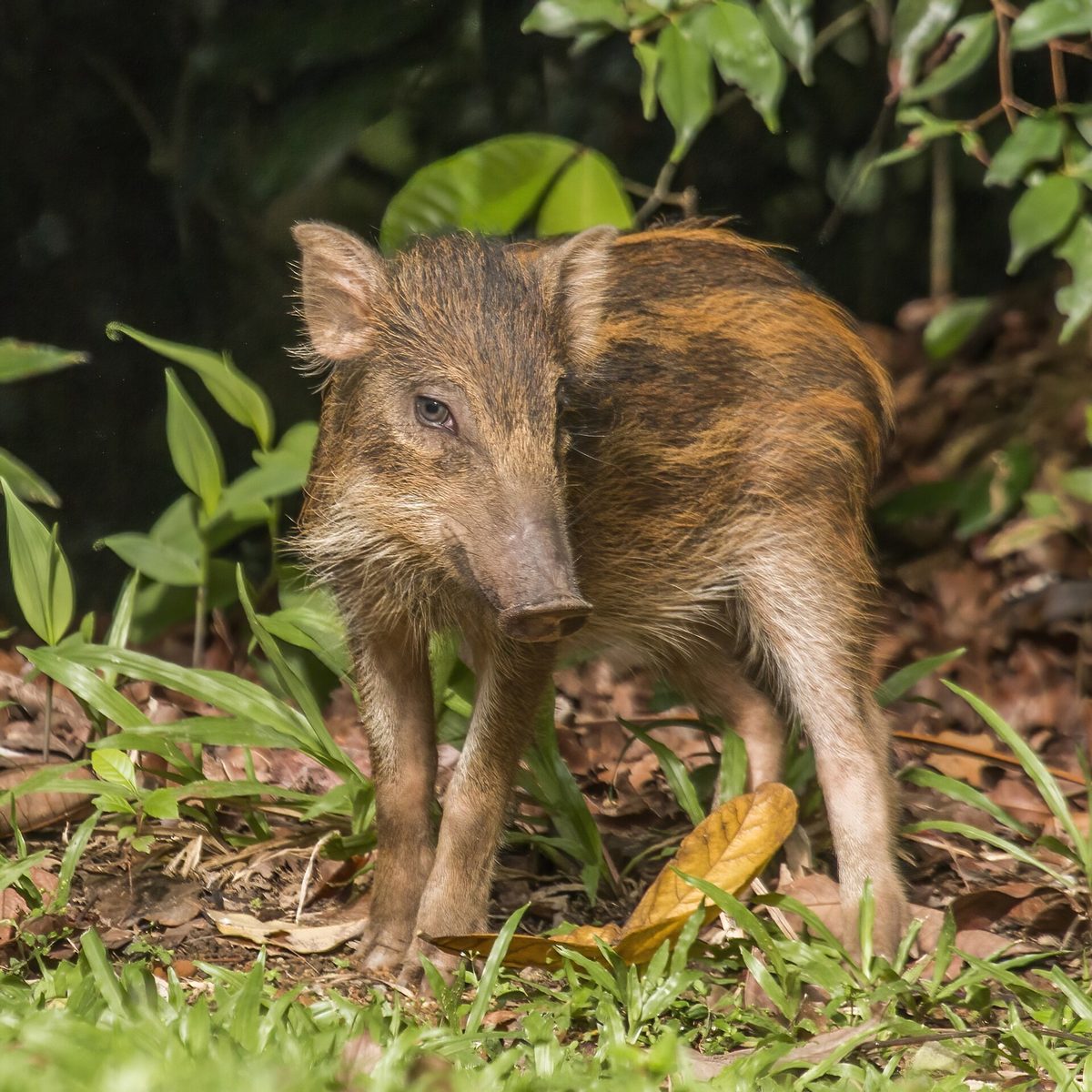
The wild boar is massive, with a wedge-shaped head, coarse dark-brown bristles, and a long snout. Adult males have tusks protruding from their mouths. Piglets are striped, with longitudinal light stripes on reddish-brown fur, which disappear after a few months.
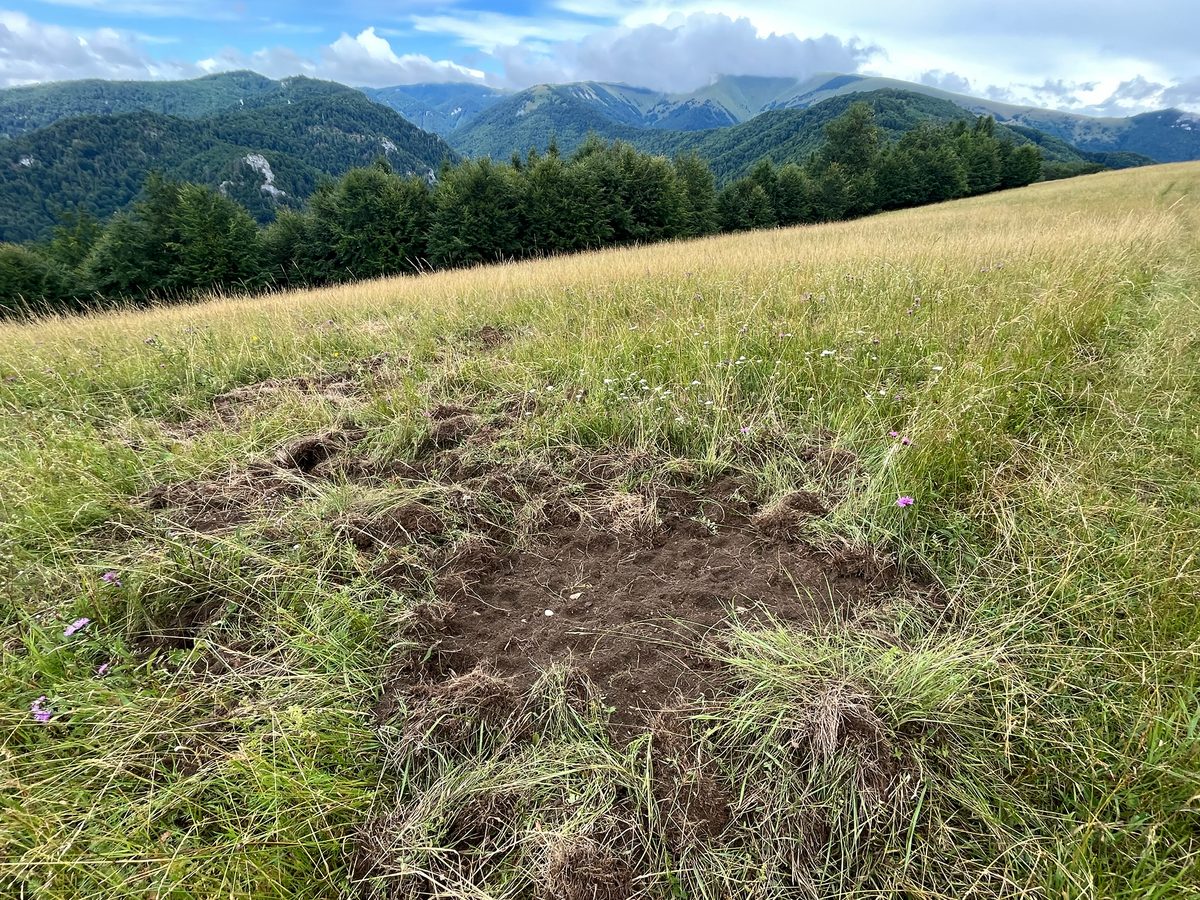
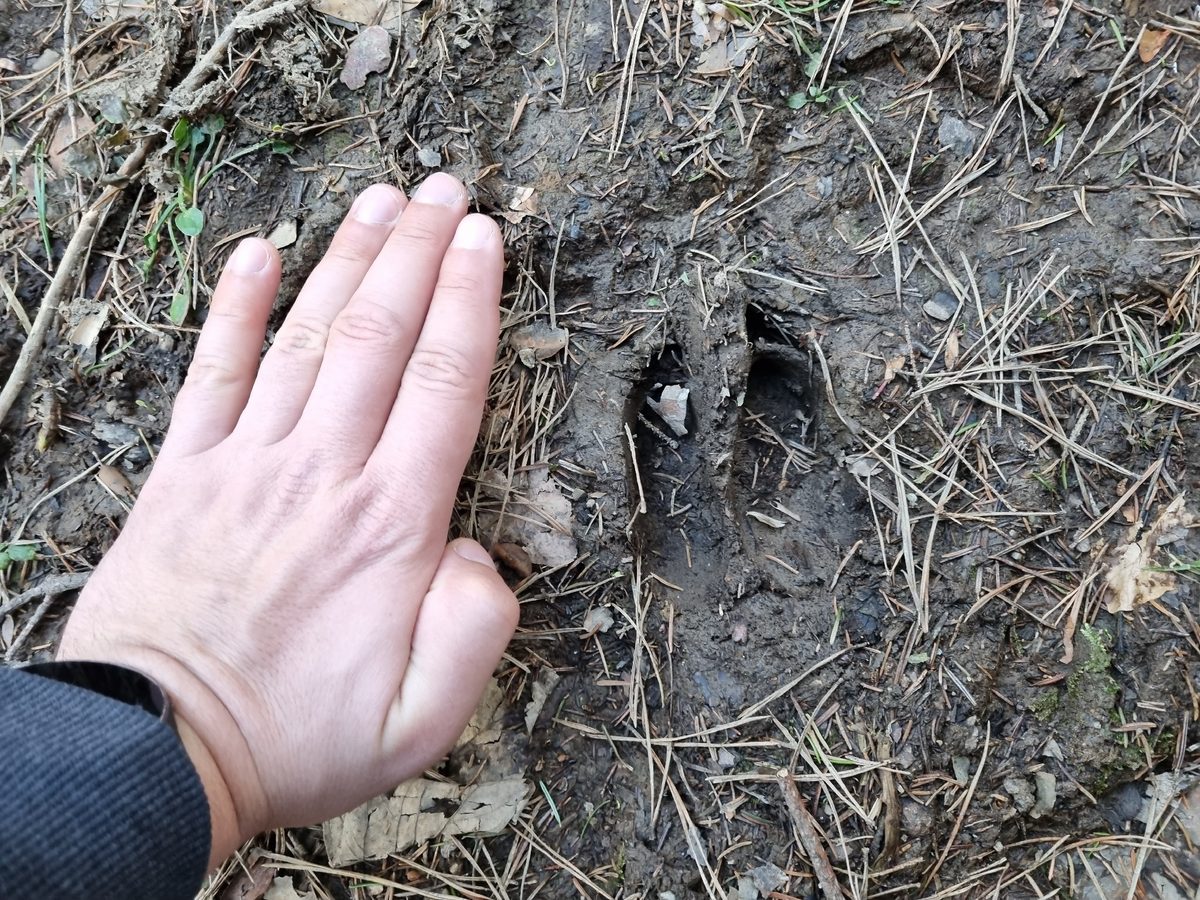
Boars live in family groups: several females with young; adult males are solitary. Piglets are born mainly in spring. The wild boar is omnivorous: in autumn, its main food is beech nuts and acorns, as well as roots, tubers, worms, insect larvae, rodents, and carrion. Signs of its presence in the forest include turned-up soil and muddy wallows where the animals roll in the mud.
During the day, wild boars rest in thickets and come out to feed at dusk and at night. They are sensitive to smells and sounds, so they usually hear a person and avoid them.
The wild boar is a game species and is not listed in the Red Data Book of Ukraine.
Where in the Carpathians

The map shows where naturalists recorded the species (GBIF, CC0 and CC BY records), not every place it lives. The Ukrainian Carpathians are less studied, so a blank area does not mean the species is absent.
- Countries
- Ukraine · Serbia · Poland · Hungary · Slovakia · Romania · Czechia · Austria
- Mountain ranges
- Maramureș Mountains, Hryniava Mountains, Chyvchyn Mountains, Little Beskids, Pădurea Craiului, Vrancea Mountains, Kučaj Mountains and Beljanica, Lesser Fatra, Sądecki Beskids, White Carpathians
- Altitude belts
- Foothills (below 600 m) · Beech forests (600–1200 m) · Conifer forests (1200–1600 m)
When to see it
| Jan | Feb | Mar | Apr | May | Jun | Jul | Aug | Sep | Oct | Nov | Dec | |
|---|---|---|---|---|---|---|---|---|---|---|---|---|
| Sightings |
From naturalists’ observations in the Carpathians (iNaturalist, research grade): the darker the cell, the more often the species is seen that month.
Safety
The wild boar usually avoids people, but a female with piglets will defend them fiercely. If you see striped piglets, stop and calmly back away the same way you came; do not attempt to pet or photograph them up close. Do not approach an injured or cornered animal. Keep your dog on a leash.
Protection and rules
A game species and is not listed in the Red Data Book of Ukraine.
FAQ
Are wild boars dangerous in the Carpathians?
Usually, the wild boar avoids humans. A female with piglets can be dangerous—if you see them, calmly back away and do not approach closer.
When are wild boars most active?
At dusk and at night; during the day, they rest in thickets.
Recorded nearby
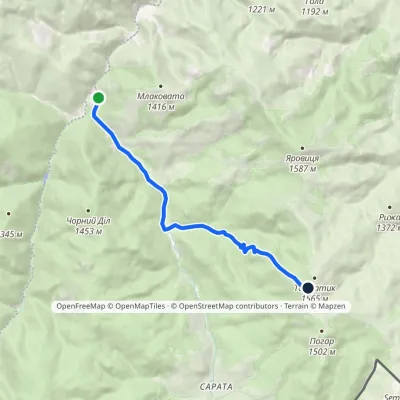 ModerateOne-dayMarkedPerkalaba Mount TomnatykElevation profile957–1 542 m8.7 kmascent 594 m≈ 3.5 h walking
 HardMulti-dayMarkedShepit village to Probiinivka villagevia Mount Yarovytsia, Mount Pnivie +1Elevation profile797–1 599 m59.4 kmascent 1 949 m
 HardMulti-dayMarkedShepit village to Shybene villagevia Mount Yarovytsia, Mount Pnivie +1Elevation profile849–1 599 m73.4 kmascent 2 319 m
 HardMulti-dayNyzhnii Yalovets village to Shypit villagevia Mount YarovytsiaElevation profile863–1 574 m24.7 kmascent 993 m≈ 8 h walking
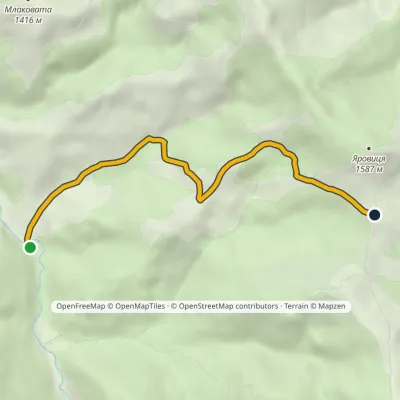 EasyOne-dayMarkedVereshchykha Mount YarovytsiaElevation profile1 001–1 416 m5.3 kmascent 426 m≈ 2 h walking
 EasyOne-dayMarkedNyzhnii Yalovets village Yarovytsia ridgeElevation profile867–1 463 m6.4 kmascent 607 m≈ 3 h walking
Trails and peaks near which naturalists recorded the species (GBIF, iNaturalist), matched by altitude and habitat. Sightings are not guaranteed.
Similar species
Sources
- Вікіпедія: Свиня дика
- Wikipedia (en): Wild boar
- Перелік видів тварин, що заносяться до Червоної книги України (наказ Міндовкілля від 19.01.2021 № 29, зареєстровано в Мін'юсті 01.03.2021 за № 260/35882)
- Міндовкілля: текст переліку видів тварин Червоної книги України (PDF)
- GBIF: таксон і категорія МСОП
GBIF · iNaturalist · Wikidata · Distribution data: GBIF.org (CC0 and CC BY records), iNaturalist; names and identifiers: Wikidata (CC0). Text: Karpaty.rocks, checked 09.11.2026.
