European wildcat
About
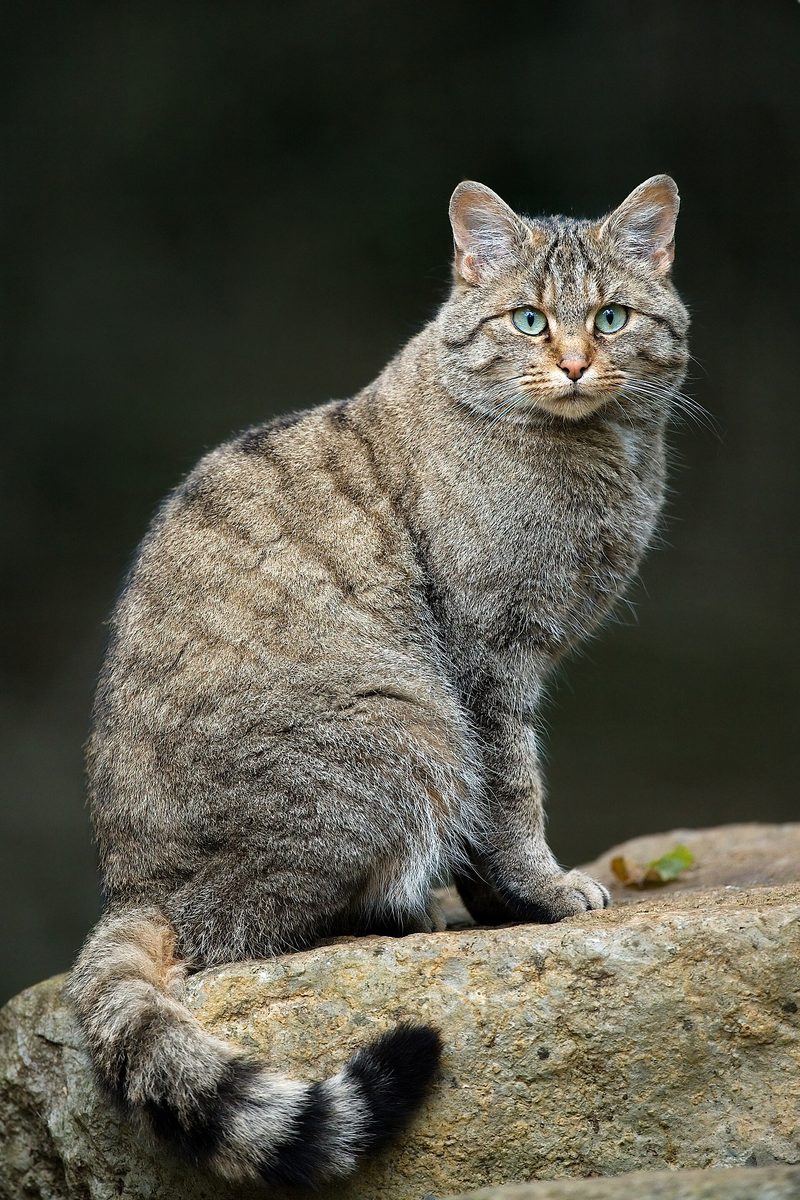
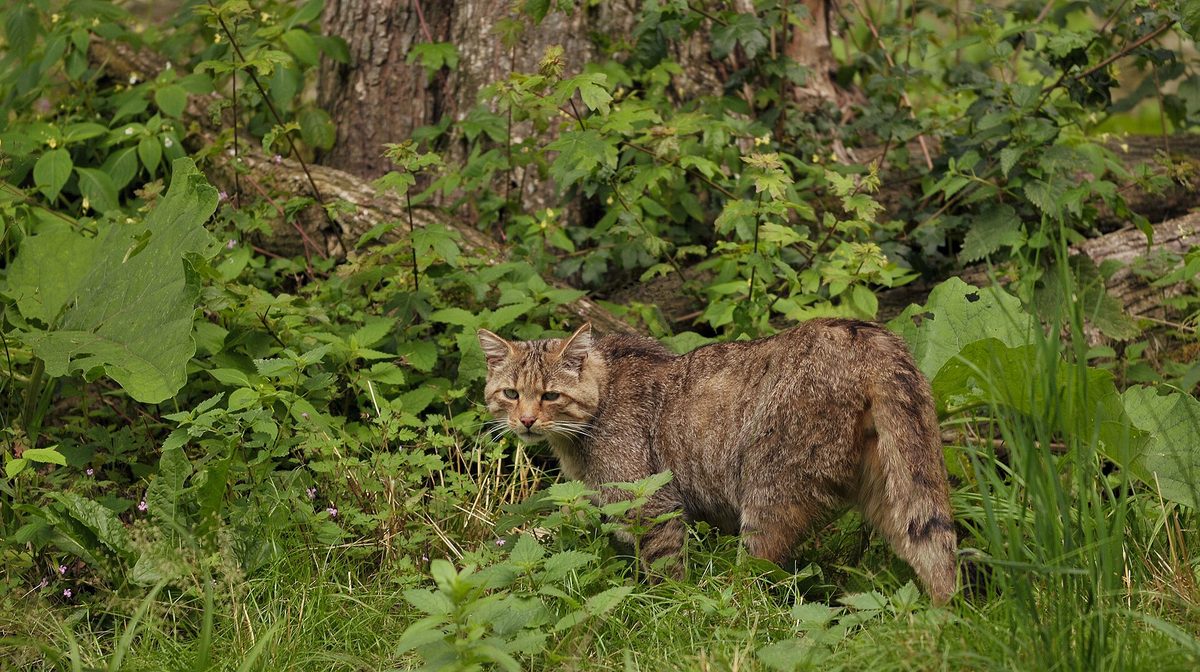
The European wildcat resembles a large striped domestic cat, but it is a distinct wild species. In Ukraine, it primarily lives in the Carpathians and Transcarpathia — in deciduous forests, most often beech and oak, in the foothills and low mountains, near river valleys where there are many mouse-like rodents. It is also found in Poland, Slovakia, and Romania.
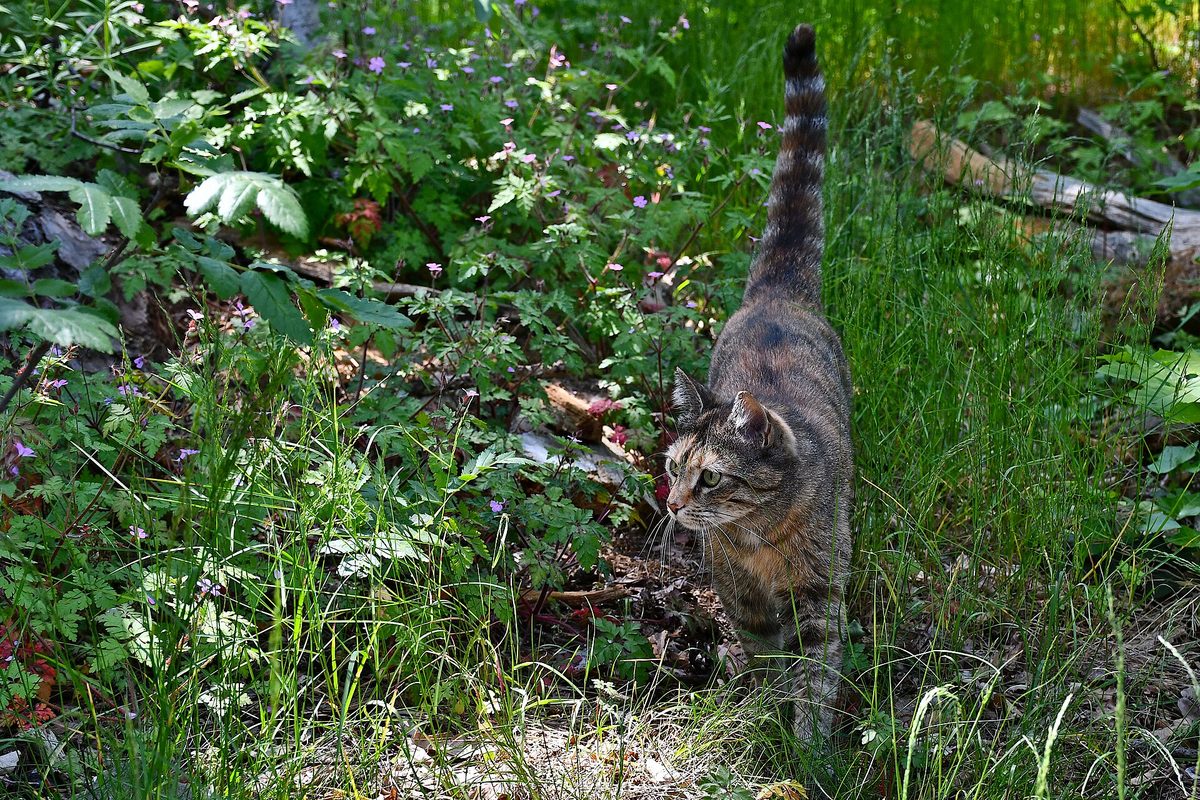
It is not easy to distinguish the European wildcat from the domestic striped cat, but there are some characteristics. It is larger and sturdier, with thick, gray-brown fur and blurred stripes. The tail is thick, fluffy, and appears truncated, with several distinct black rings and a blunt black tip. A dark stripe runs along the back, which does not extend onto the tail.
The European wildcat primarily hunts rodents, as well as birds and small mammals. It is active at dusk and at night, hiding during the day in tree hollows, rock crevices, or old burrows. Kittens are born in spring.
The main threat to the species is hybridization with stray domestic cats, which leads to the disappearance of purebred wild animals. Therefore, even in the Carpathian forests, it is not advisable to let domestic cats roam far from homes.
The European wildcat is listed in the Red Book of Ukraine as a vulnerable species, and hunting it is prohibited.
Where in the Carpathians

The map shows where naturalists recorded the species (GBIF, CC0 and CC BY records), not every place it lives. The Ukrainian Carpathians are less studied, so a blank area does not mean the species is absent. For rare and vulnerable species the map is deliberately coarse (hexagons of ~250 km² or more) so that it never points to dens, nests or growing sites.
- Countries
- Ukraine · Serbia · Slovakia · Poland
- Mountain ranges
- Chornohora, Maramureș Mountains, Rivna Polonyna, Bieszczady, Pokuttia-Bukovina Carpathians, Polonynian Ridge, Svydovets, Gorgany, Krasna Polonyna, Chyvchyn Mountains
- Altitude belts
- Foothills (below 600 m) · Beech forests (600–1200 m) · Conifer forests (1200–1600 m)
When to see it
| Jan | Feb | Mar | Apr | May | Jun | Jul | Aug | Sep | Oct | Nov | Dec | |
|---|---|---|---|---|---|---|---|---|---|---|---|---|
| Sightings |
From naturalists’ observations in the Carpathians (iNaturalist, research grade): the darker the cell, the more often the species is seen that month.
Protection and rules
Hunting the European wildcat is prohibited: the species is listed in the Red Book of Ukraine.
FAQ
Is the European wildcat found in the Carpathians?
Yes. In Ukraine, the European wildcat primarily lives in the Carpathians and Transcarpathia, in the deciduous forests of the foothills and low mountains. It is very secretive.
How can you distinguish the European wildcat from the domestic cat?
The European wildcat has a fluffy 'truncated' tail with distinct black rings and a blunt black tip, and the dark stripe on its back does not extend onto the tail.
Similar species
Where to meet it
Ranges where it occurs: Chornohora, Maramureș Mountains, Rivna Polonyna, Bieszczady, Pokuttia-Bukovina Carpathians, Polonynian Ridge, Svydovets, Gorgany, Krasna Polonyna, Chyvchyn Mountains, Hryniava Mountains. In other countries: 🇸🇰 Low Tatras
Trails and peaks near which naturalists recorded the species (GBIF, iNaturalist), matched by altitude and habitat. Sightings are not guaranteed.
Sources
- Вікіпедія: Кіт лісовий
- Wikipedia (en): European wildcat
- Перелік видів тварин, що заносяться до Червоної книги України (наказ Міндовкілля від 19.01.2021 № 29, зареєстровано в Мін'юсті 01.03.2021 за № 260/35882)
- Міндовкілля: текст переліку видів тварин Червоної книги України (PDF)
- GBIF: таксон і категорія МСОП
- Директива Ради 92/43/ЄЕС про збереження природних оселищ (консолідована редакція)
GBIF · iNaturalist · Wikidata · Distribution data: GBIF.org (CC0 and CC BY records), iNaturalist; names and identifiers: Wikidata (CC0). Text: Karpaty.rocks, checked 09.11.2026.
