European mole
About
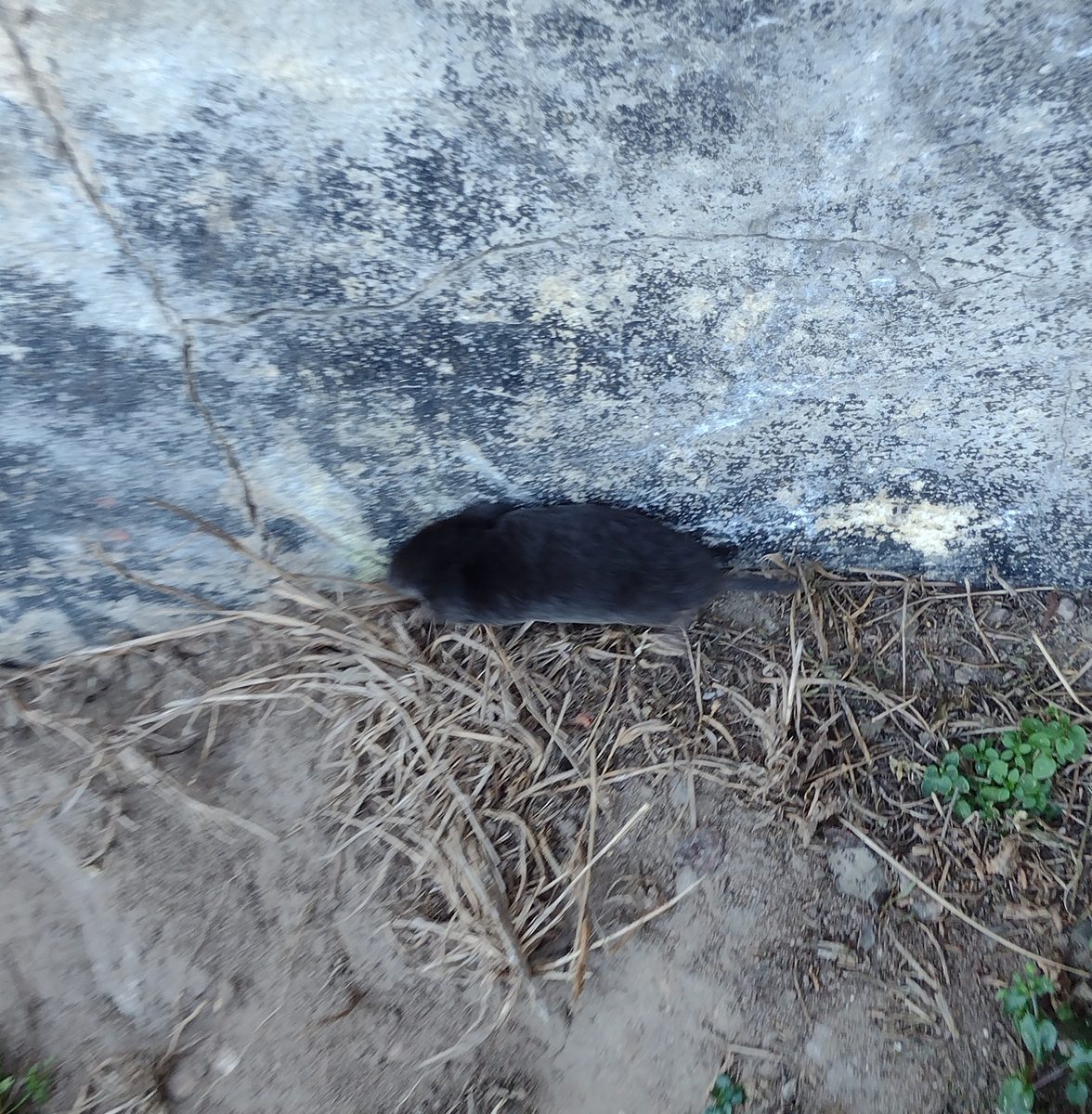
The mole itself is rarely seen, but everyone knows its work: fresh mounds of soil in meadows, gardens, and fields. The mole occupies various places — forest edges, meadows, fields, gardens — and is especially common in river floodplains. It spends its entire life underground in a branched system of multi-layered tunnels with a diameter of 5–5.5 cm.
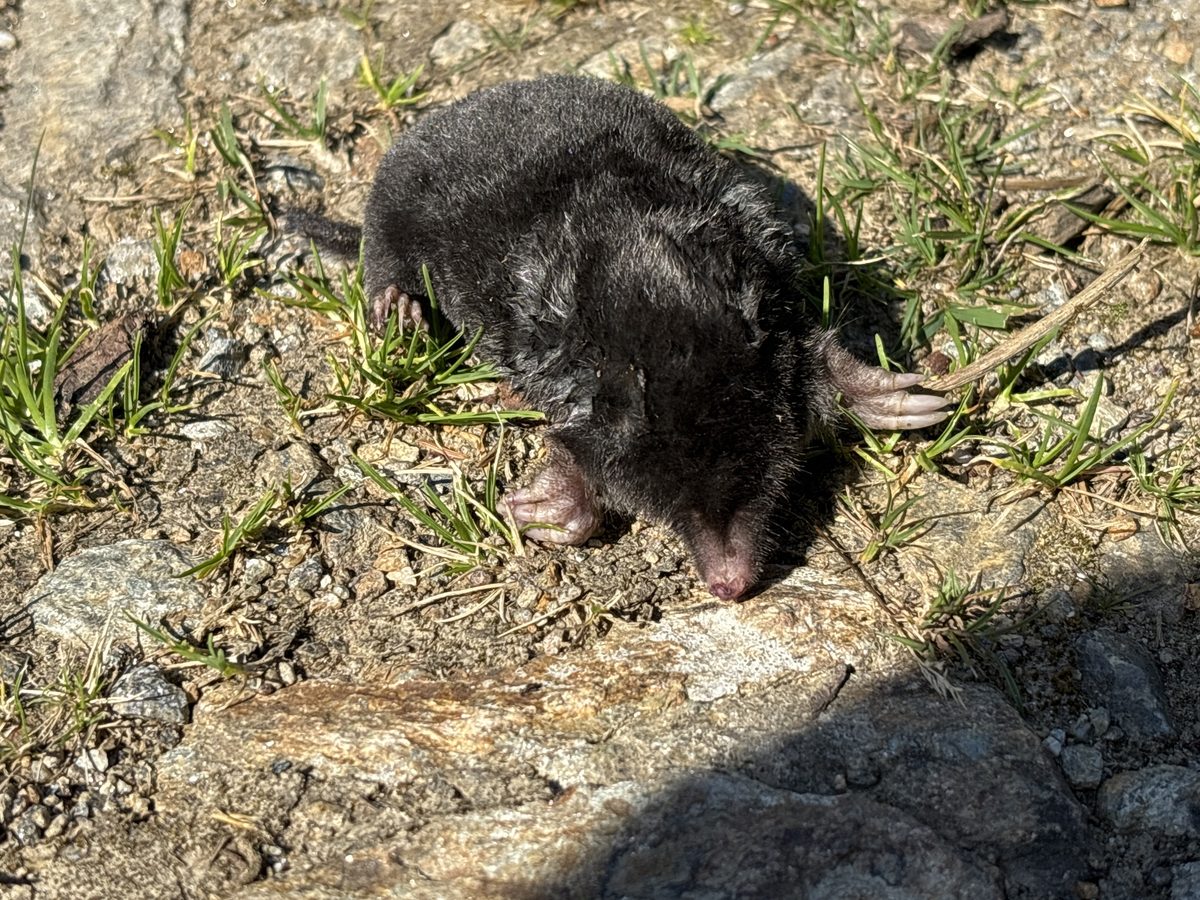
The animal is 12–16.5 cm long, with a short tail of 2–4.8 cm, and weighs 70–119 g. Its front paws are broad like shovels, with strong claws, and its eyes are tiny and hidden in fur. The fur is velvety and grows straight up, which does not hinder the mole's movement in the tunnel both forwards and backwards.
The feeding tunnels are dug close to the surface, at a depth of 2–5 cm. Excess soil is pushed up through vertical shafts — this is how molehills are formed, and the mound above the nest can be particularly large, up to 70–80 cm. The tunnels become traps for earthworms, attracted by the smell and warmth inside. The mole consumes 50–60 g of food per day, almost as much as it weighs, and in winter it stores worms by biting off their heads so they do not crawl away.
Moles do not hibernate and continue to dig tunnels even in winter. The young, from 3 to 9, are born blind and hairless from late April to June. Moles can swim and even cross small rivers. The European mole is not listed in the Red Book of Ukraine; its digging aerates the soil and helps water drain deeper.
Where in the Carpathians

The map shows where naturalists recorded the species (GBIF, CC0 and CC BY records), not every place it lives. The Ukrainian Carpathians are less studied, so a blank area does not mean the species is absent.
- Countries
- Ukraine · Romania · Slovakia · Poland · Czechia · Hungary · Austria
- Mountain ranges
- Pădurea Craiului, Bieszczady, Maramureș Mountains, Krasna Polonyna, Gorgany, Pokuttia-Bukovina Carpathians, Western Tatras, Polonynian Ridge, Skole Beskids, Slovak Central Mountains
- Altitude belts
- Foothills (below 600 m) · Beech forests (600–1200 m)
When to see it
| Jan | Feb | Mar | Apr | May | Jun | Jul | Aug | Sep | Oct | Nov | Dec | |
|---|---|---|---|---|---|---|---|---|---|---|---|---|
| Sightings |
From naturalists’ observations in the Carpathians (iNaturalist, research grade): the darker the cell, the more often the species is seen that month.
Protection and rules
Not listed in the Red Book of Ukraine.
FAQ
Does the mole hibernate?
No. Moles are active all year round and store paralyzed earthworms in their burrows for winter.
What does the mole eat?
Primarily earthworms, as well as other soil invertebrates. It consumes 50–60 g of food per day.
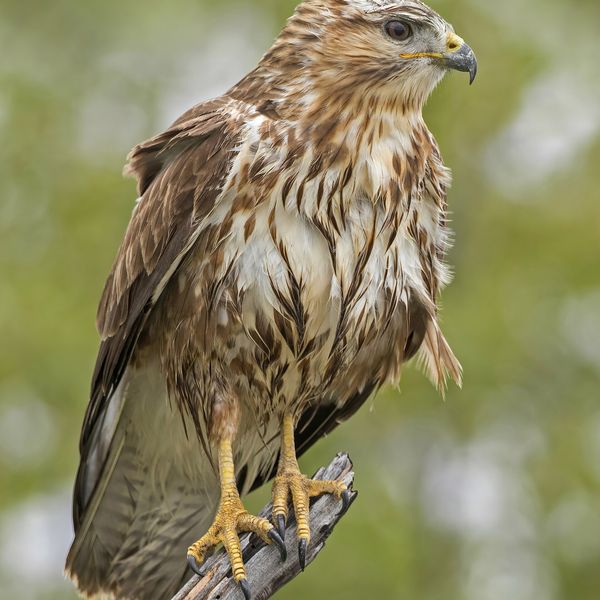
Similar species
Where to meet it
Trails
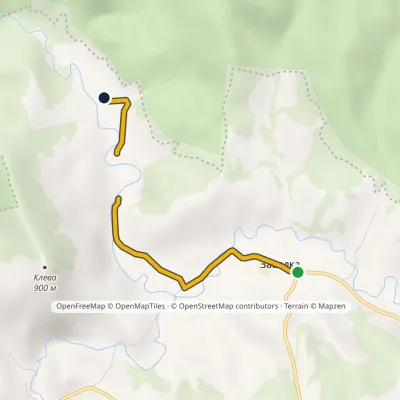 EasyOne-dayMarkedNo. 5047 «Settlements», Zavadka villageElevation profile643–673 m2.9 kmascent 3 m≈ 45 min walking
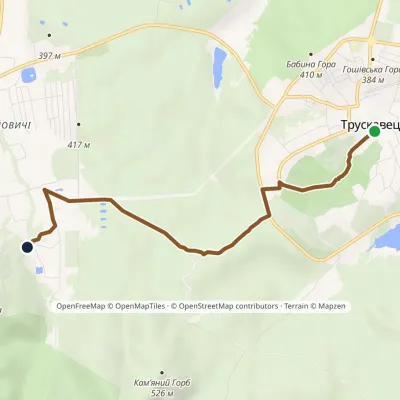 EasyOne-dayMarkedSalt Road: Truskavets Bukovytsia resortElevation profile351–438 m5.4 kmascent 101 m≈ 1.5 h walking
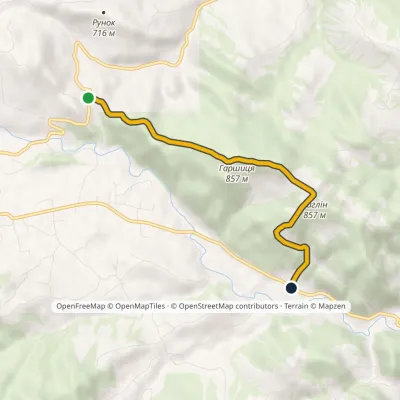 EasyOne-dayMarkedRunok Pass Kosmach villagevia Dovbush Rock, Mount Harshytsia +1Elevation profile560–864 m4.5 kmascent 217 m≈ 1.5 h walking
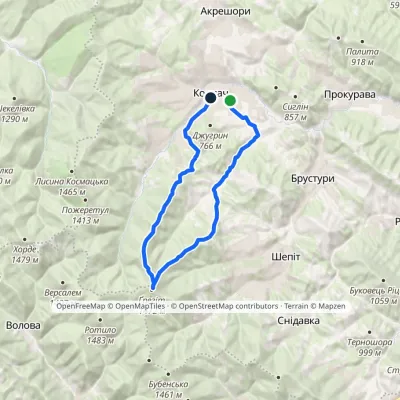 HardTwo-dayMarkedKosmach village loopvia Mount HrehitElevation profile584–1 470 m22 kmascent 936 m≈ 7.5 h walking
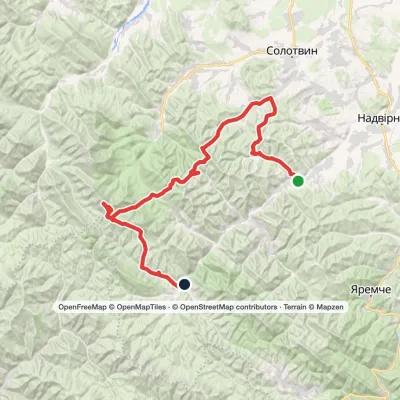 HardMulti-dayPasichna village to Bystrytsia villagevia Maniava village, Maniava Waterfall +1Elevation profile495–1 836 m69.7 kmascent 2 898 m
 HardMulti-dayDragobrat to Krasna villagevia Mount Stih, Mount Velykyi Kotel +2Elevation profile421–1 762 m35.3 kmascent 871 m≈ 10.5 h walking
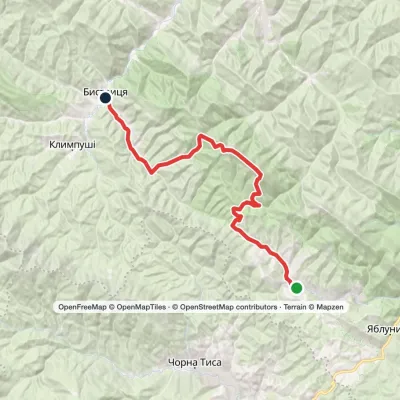 HardMulti-dayPolianytsia village to Bystrytsia villagevia Mount Dovbushanka, Mount VedmezhykElevation profile744–1 754 m29.4 kmascent 1 187 m≈ 9.5 h walking
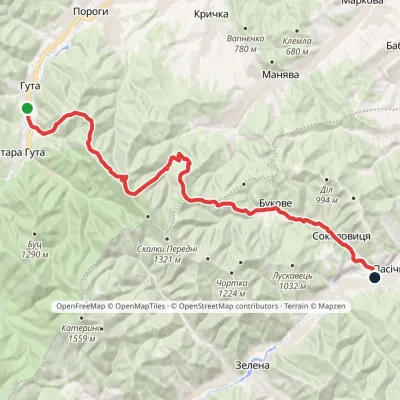 HardMulti-dayMarkedHuta village Pasichna villageElevation profile524–1 207 m26.4 kmascent 993 m≈ 8.5 h walking
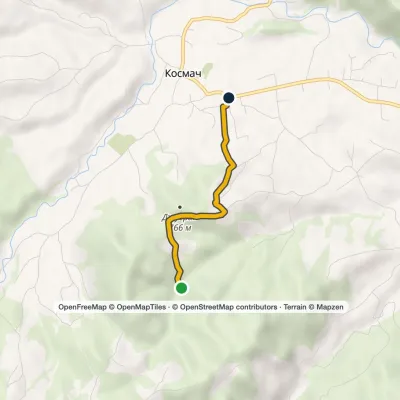 EasyOne-dayMarkedOpryshky RoadElevation profile628–754 m2.5 kmascent 63 m≈ 45 min walking
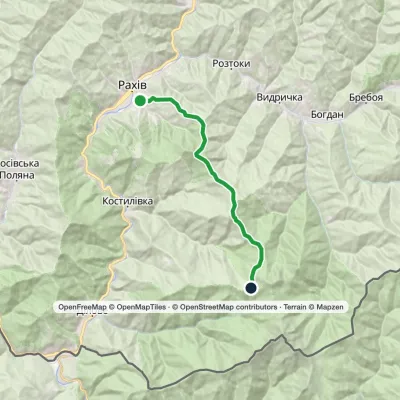 ModerateTwo-dayMarkedRakhiv town Berlebashka polonynaElevation profile460–1 468 m17.1 kmascent 1 172 m≈ 6.5 h walking
 ModerateTwo-dayMount Topas to Kolochava villagevia Mereshor villageElevation profile513–1 527 m21.8 kmascent 376 m≈ 6 h walking
 HardMulti-dayUst-Chorna village to Kolochava villagevia Mount Klymova, Mount Syhlianskyi +1Elevation profile514–1 568 m42.1 kmascent 1 611 m≈ 13.5 h walking
Waters and waterfalls
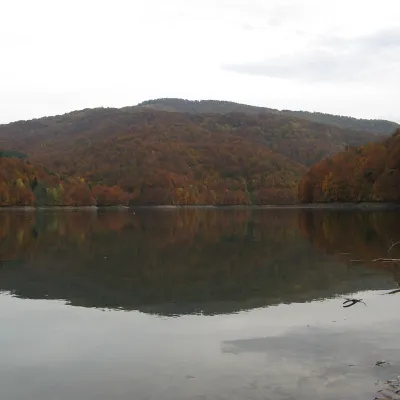 LakeVilshany ReservoirVilshanyThe Vilshany Reservoir, also called the Tereblia-Rika Reservoir, is a narrow mountain lake in the Tereblia valley...
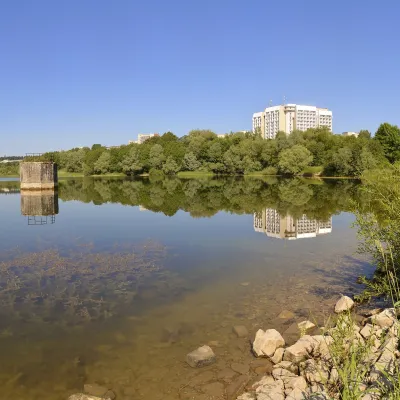 LakeTruskavets ReservoirTruskavetsTruskavets Reservoir, known locally as Lake Solonytsia, lies on the south-eastern edge of Truskavets, next to the...
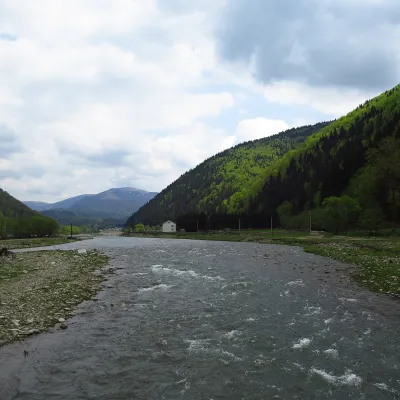 RiverTereblia RiverKolochavaThe Tereblia begins in the Inner Gorgany, where the Roztoka and Sloboda streams meet, and flows through Synevyrska...
Mountain ranges: Bieszczady, Maramureș Mountains, Krasna Polonyna, Gorgany, Pokuttia-Bukovina Carpathians, Polonynian Ridge, Skole Beskids. In other countries: 🇷🇴 Pădurea Craiului, 🇸🇰 Western Tatras, 🇸🇰 Slovak Central Mountains, 🇸🇰 Slovak Ore Mountains, 🇸🇰 High Tatras, 🇷🇴 Bihor-Vlădeasa Mountains, 🇭🇺 Börzsöny and Cserhát
Trails and peaks near which naturalists recorded the species (GBIF, iNaturalist), matched by altitude and habitat. Sightings are not guaranteed.
Sources
- Вікіпедія: Кріт європейський
- Wikipedia (en): European mole
- Перелік видів тварин, що заносяться до Червоної книги України (наказ Міндовкілля від 19.01.2021 № 29, зареєстровано в Мін'юсті 01.03.2021 за № 260/35882)
- Міндовкілля: текст переліку видів тварин Червоної книги України (PDF)
- GBIF: таксон і категорія МСОП
GBIF · iNaturalist · Wikidata · Distribution data: GBIF.org (CC0 and CC BY records), iNaturalist; names and identifiers: Wikidata (CC0). Text: Karpaty.rocks, checked 09.11.2026.
