Brown roll-rim
Never identify a mushroom from a photo alone. If in doubt, leave it. In case of poisoning call 112 (103 in Ukraine) at once.
About
The Brown roll-rim is a very common mushroom: it grows in almost all forests of the Carpathians, most often under birch, spruce, pine, and oak, at forest edges, in young growth, and even in old gardens. Fruiting bodies appear from July to October, often in large groups.
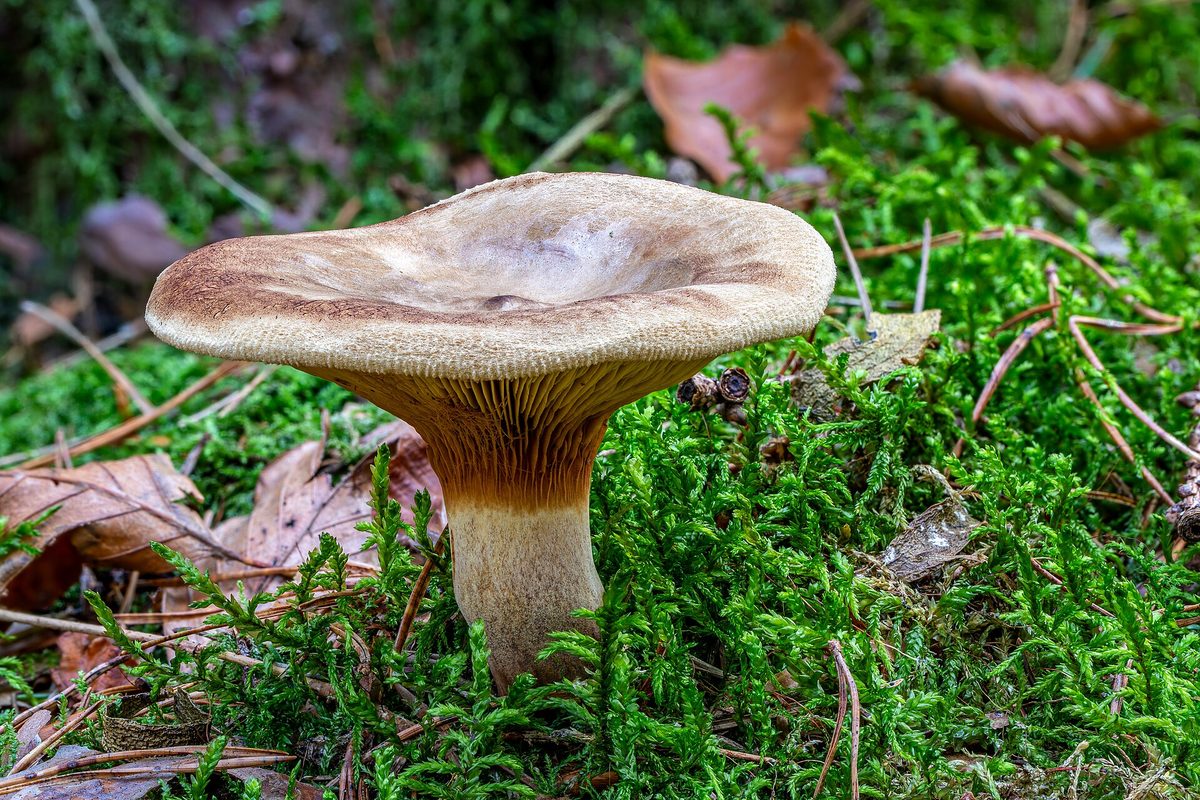
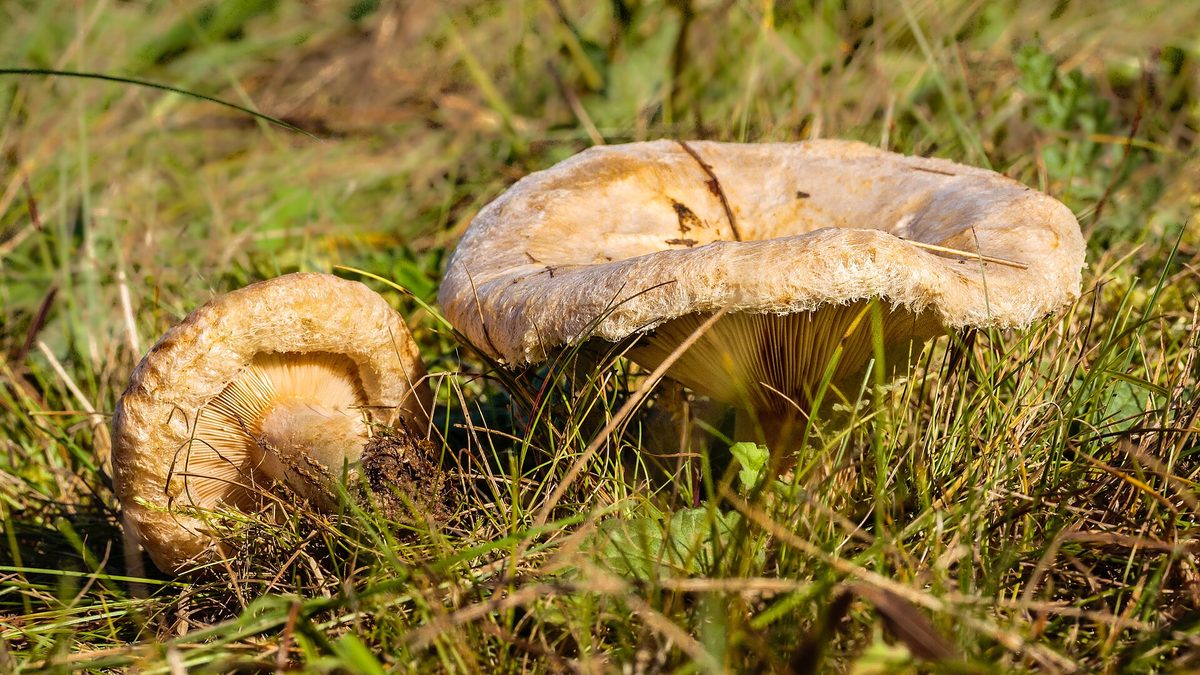
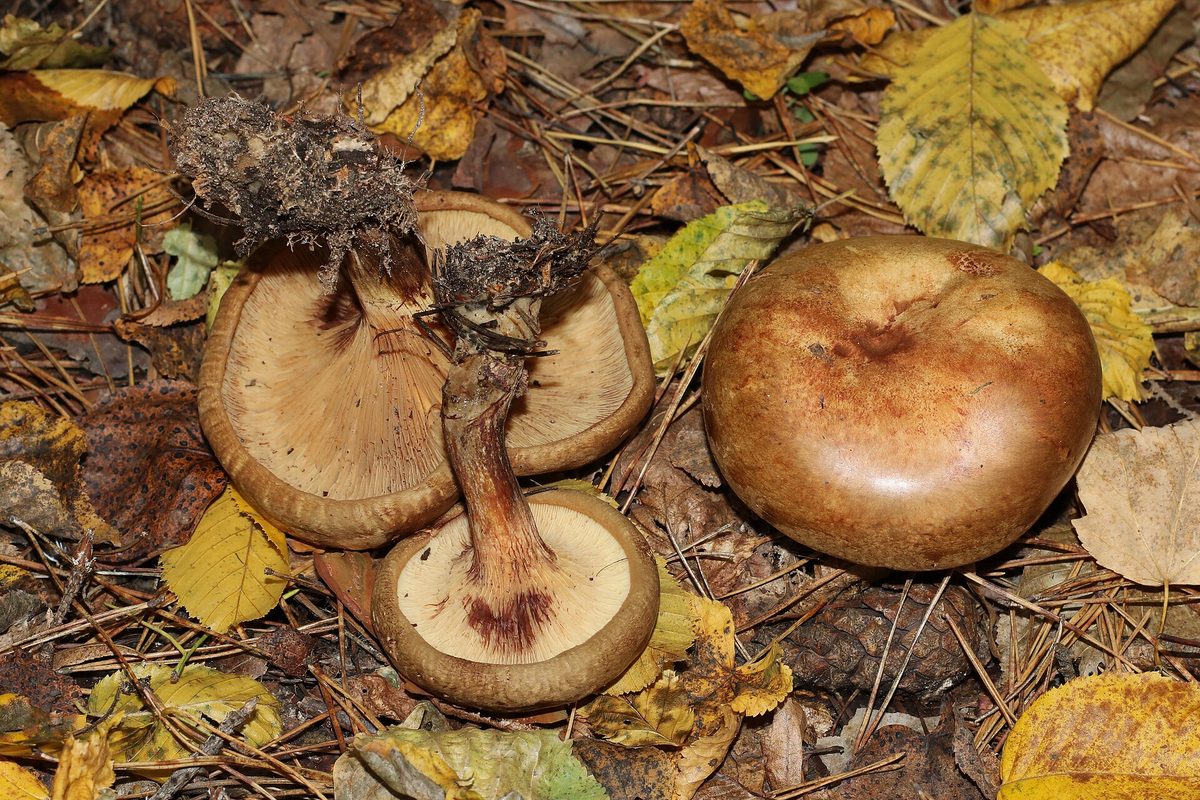
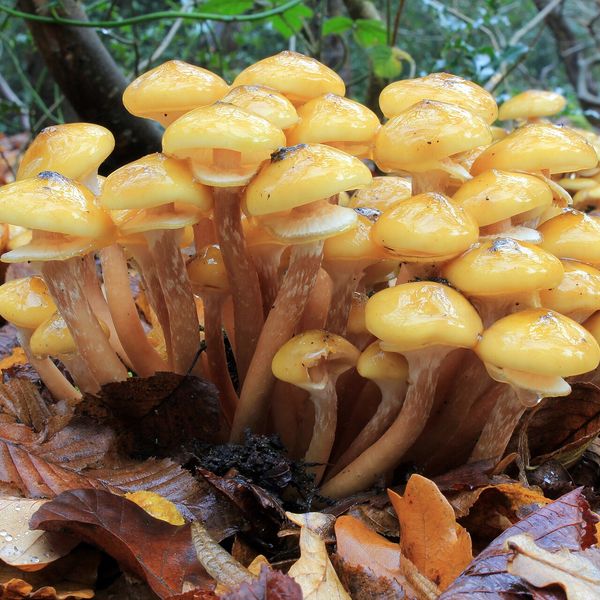
The cap is 5–15 cm, olive-brown or yellow-brown, funnel-shaped with age; its edge remains tightly curled downwards for a long time, and in wet weather, the cap is sticky. The gills are yellow-ochre, easily separable from the flesh, and run down the stem; if pressed, they quickly turn brown. The stem is short, dense, and the same color as the cap.
For a long time, the Brown roll-rim was considered conditionally edible, and in Ukraine, it is still often collected. However, in the 1980s, Swiss doctor René Flammer discovered that this mushroom contains a substance that causes the immune system to attack its own red blood cells. Such a reaction can develop suddenly even in people who have eaten the Brown roll-rim for years without problems, potentially resulting in severe kidney damage or death. In 1944, renowned German mycologist Julius Schaeffer died from poisoning by the Brown roll-rim.
Therefore, according to our safety rule, the Brown roll-rim is marked as poisonous. In Poland, it is not included in the official list of mushrooms permitted for sale. Do not collect the Brown roll-rim and do not advise soaking or boiling it for a long time: this does not neutralize the immune reaction.
Where in the Carpathians

The map shows where naturalists recorded the species (GBIF, CC0 and CC BY records), not every place it lives. The Ukrainian Carpathians are less studied, so a blank area does not mean the species is absent.
- Countries
- Ukraine · Czechia · Poland · Austria · Slovakia
- Mountain ranges
- Gorgany, Sądecki Beskids, Low Tatras, Pokuttia-Bukovina Carpathians
- Altitude belts
- Foothills (below 600 m) · Beech forests (600–1200 m) · Conifer forests (1200–1600 m)
When to see it
| Jan | Feb | Mar | Apr | May | Jun | Jul | Aug | Sep | Oct | Nov | Dec | |
|---|---|---|---|---|---|---|---|---|---|---|---|---|
| Sightings |
From naturalists’ observations in the Carpathians (iNaturalist, research grade): the darker the cell, the more often the species is seen that month.
Safety
Can cause a life-threatening immune reaction with destruction of red blood cells, even after many years of consumption without consequences. Soaking and boiling do not help. In case of poisoning, call 112.
Look-alikes — how to tell them apart
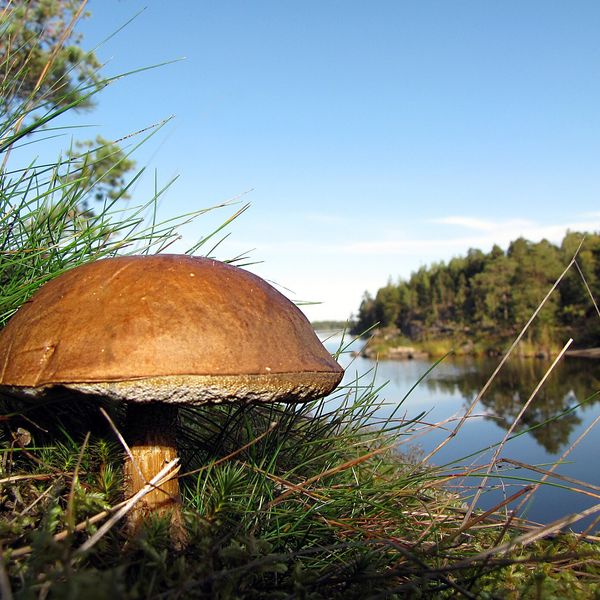
Has tubes instead of gills: under the cap, there are yellowish tubes that turn blue when pressed; the cap edge is not curled.
Release milky sap when broken; the Brown roll-rim has no sap, and its gills darken upon contact.
Protection and rules
Not protected. It is not advisable to destroy mushrooms in the forest: they are needed by the forest and animals.
FAQ
Can you eat the Brown roll-rim?
No. It was once considered conditionally edible, but the Brown roll-rim can cause a severe immune reaction with destruction of red blood cells, even in those who have eaten it for years. Therefore, we mark it as poisonous.
How to recognize the Brown roll-rim?
Brown cap with a downward curled edge, yellowish gills that run down the stem and quickly turn brown when pressed.
Similar species
Where to meet it
Trails
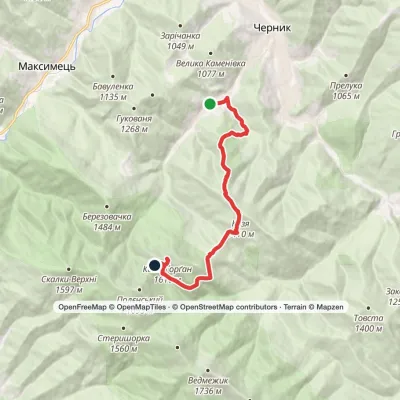 ModerateOne-dayChernyk village to Mount Kiziiskyi Horhanvia Chernyk WaterfallElevation profile737–1 617 m11.1 kmascent 1 062 m≈ 5 h walking
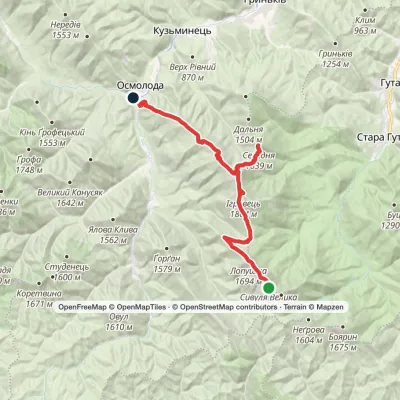 HardMulti-dayMarkedMount Velyka Syvulia to Osmoloda villagevia Mount Borevka, Mount Ihrovets +2Elevation profile721–1 836 m27.8 kmascent 1 080 m≈ 9 h walking
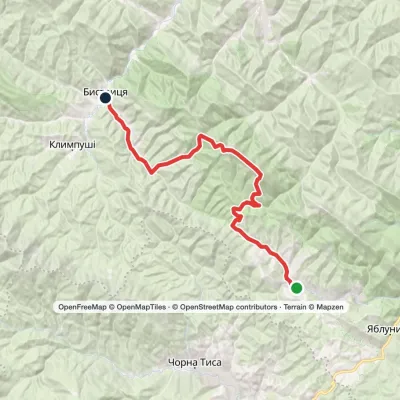 HardMulti-dayPolianytsia village to Bystrytsia villagevia Mount Dovbushanka, Mount VedmezhykElevation profile744–1 754 m29.4 kmascent 1 187 m≈ 9.5 h walking
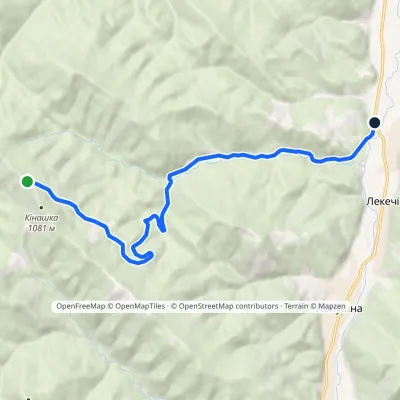 EasyOne-dayMarkedMount Kinashka Lekechi villageElevation profile521–1 043 m9.5 kmascent 4 m≈ 2.5 h walking
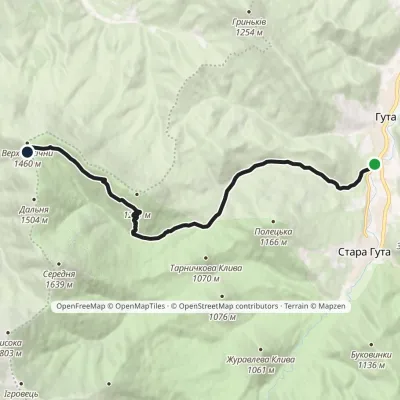 ModerateOne-dayMarkedHuta village Mount PasichnaElevation profile635–1 477 m11.4 kmascent 841 m≈ 4.5 h walking
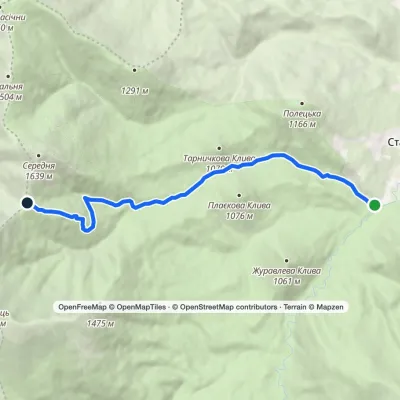 ModerateOne-dayMarkedStara Huta village Serednia polonynaElevation profile705–1 469 m8.5 kmascent 765 m≈ 3.5 h walking
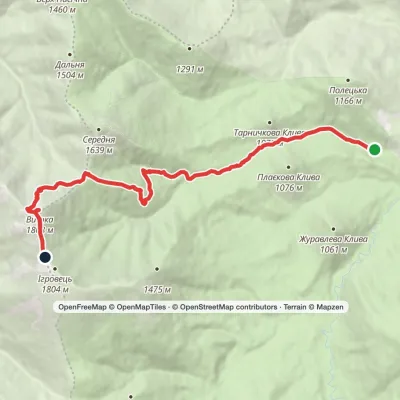 ModerateOne-dayMarkedStara Huta village to Mount Ihrovetsvia Mount VysokaElevation profile752–1 803 m12.5 kmascent 1 112 m≈ 5.5 h walking
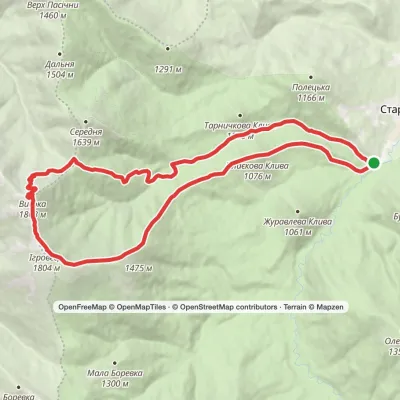 HardTwo-dayStara Huta village loopvia Mount Vysoka, Mount IhrovetsElevation profile703–1 804 m21.2 kmascent 1 269 m≈ 8 h walking
 HardTwo-dayMarkedStara Huta village loopvia Mount Ihrovets, Borevka PassElevation profile662–1 804 m20.4 kmascent 1 205 m≈ 7.5 h walking
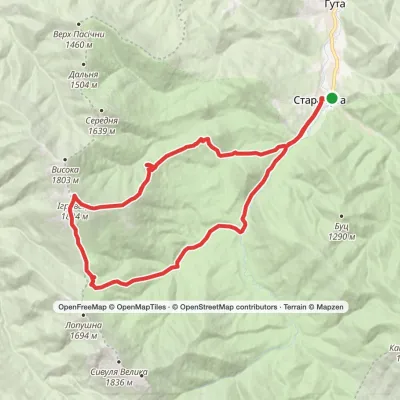 HardMulti-dayStara Huta village loopvia Mount IhrovetsElevation profile658–1 804 m29.9 kmascent 1 226 m≈ 10 h walking
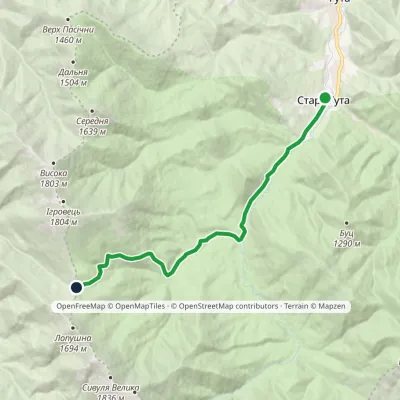 ModerateOne-dayMarkedStara Huta village Borevka PassElevation profile669–1 327 m12.2 kmascent 683 m≈ 4.5 h walking
 HardMulti-dayOsmoloda to Stara Huta villagevia Mount Vysoka, Mount Ihrovets +1Elevation profile662–1 836 m33.4 kmascent 1 987 m≈ 12.5 h walking
Mountain ranges: Gorgany, Pokuttia-Bukovina Carpathians. In other countries: 🇵🇱 Sądecki Beskids, 🇸🇰 Low Tatras
Trails and peaks near which naturalists recorded the species (GBIF, iNaturalist), matched by altitude and habitat. Sightings are not guaranteed.
Sources
- Вікіпедія: Свинуха тонка
- Wikipedia (en): Paxillus involutus
- Rozporządzenie Ministra Zdrowia z 17.05.2011, t.j. Dz.U. 2023 poz. 2237: wykaz grzybów dopuszczonych do obrotu (Польща)
GBIF · iNaturalist · Wikidata · Distribution data: GBIF.org (CC0 and CC BY records), iNaturalist; names and identifiers: Wikidata (CC0). Text: Karpaty.rocks, checked 09.11.2026.
