Honey fungus
Never identify a mushroom from a photo alone. If in doubt, leave it. In case of poisoning call 112 (103 in Ukraine) at once.
About
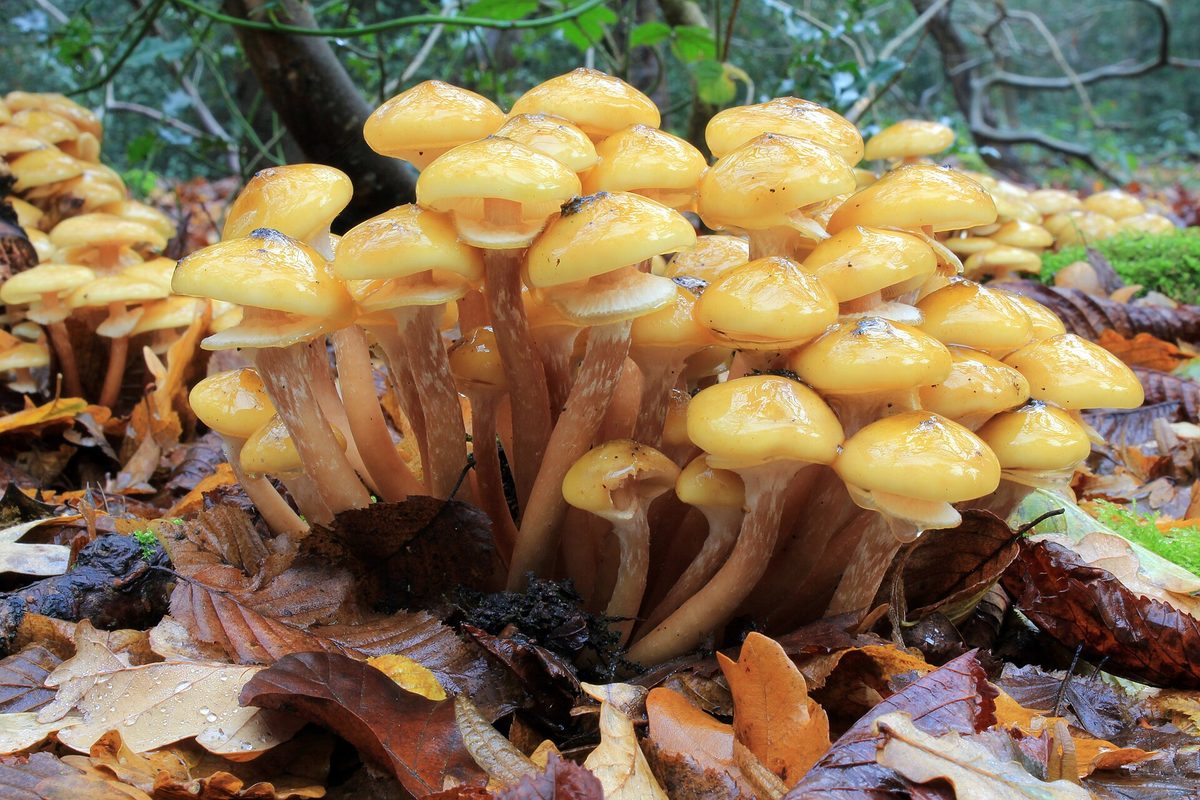
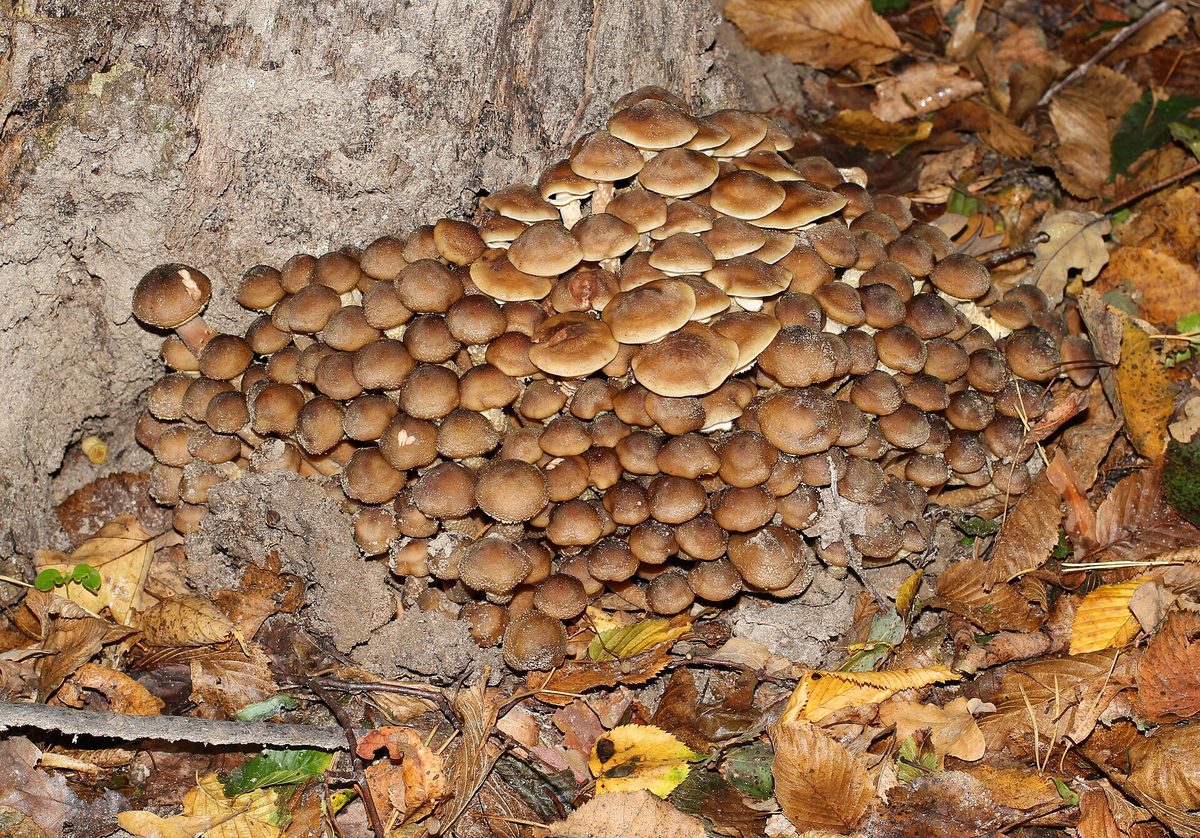
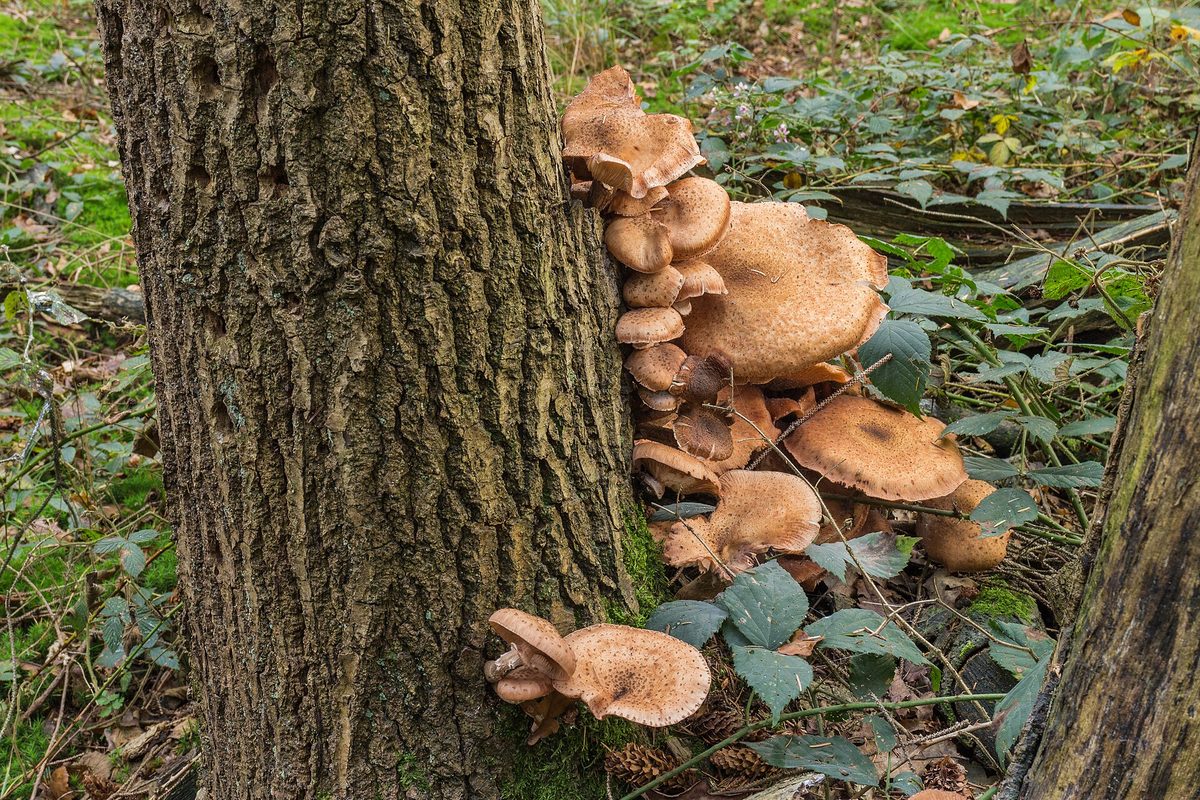
Autumn honey fungus is a mushroom that is often more abundant in the Carpathians in autumn than all others combined. It parasitizes living trees and decomposes dead wood, thus growing in dense clusters on stumps, trunks, roots, and fallen trees. It can be found in beech, hornbeam, oak, and mixed forests, in gardens, and on clearings.
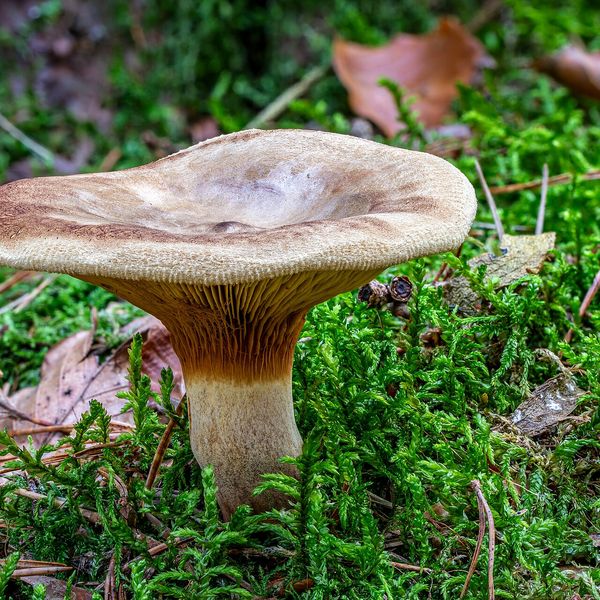
The cap is honey-yellow or ochre-brown, covered in small darker scales in the center. The gills are whitish, later developing rusty spots. There is a white membranous ring on the stem, resembling a collar. The spore powder is white: if you place the cap on dark paper, a white imprint will remain after a few hours. The stems are fibrous and tough, so usually only the caps of young mushrooms are collected.
For the forest, honey fungus is a serious pest: its dark cord-like strands, rhizomorphs, stretch under the bark and in the soil for meters, transferring from tree to tree and causing root rot. In forests weakened by drought or bark beetles, honey fungus accelerates tree dieback. On coniferous trees in the mountains, a closely related species, dark honey fungus, with a brownish cap, usually grows.
The main season is from late August to October, with the most honey fungus appearing in September, and they come in waves.
Honey fungus is classified as a conditionally edible mushroom: raw or undercooked, it causes digestive upset. It is even more dangerous to confuse it with lookalikes. Galerina marginata contains the same deadly toxins as the death cap and also grows on wood. False honey fungi have sulfur-yellow or greenish gills and a bitter taste. Therefore, honey fungi should only be collected by those who can confidently distinguish these mushrooms, and only clusters with a clear white ring.
Where in the Carpathians

The map shows where naturalists recorded the species (GBIF, CC0 and CC BY records), not every place it lives. The Ukrainian Carpathians are less studied, so a blank area does not mean the species is absent.
- Countries
- Slovakia · Austria · Hungary · Ukraine · Poland
- Mountain ranges
- Watershed Ridge, Skole Beskids, Lesser Fatra, Javorníky
- Altitude belts
- Foothills (below 600 m) · Beech forests (600–1200 m)
When to see it
| Jan | Feb | Mar | Apr | May | Jun | Jul | Aug | Sep | Oct | Nov | Dec | |
|---|---|---|---|---|---|---|---|---|---|---|---|---|
| Sightings |
From naturalists’ observations in the Carpathians (iNaturalist, research grade): the darker the cell, the more often the species is seen that month.
Safety
Only after thorough cooking; raw and undercooked honey fungus can cause poisoning. Do not collect small brown mushrooms from wood if you are not sure: among them is the deadly Galerina marginata. Check for the white ring and white spore powder. At the first signs of poisoning, call 103.
Look-alikes — how to tell them apart
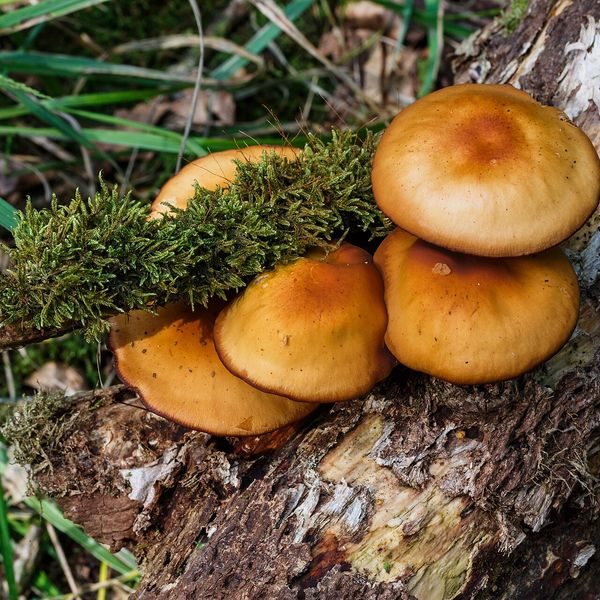
Smaller, cap 1–6 cm, smooth, brown, without scales; the ring is thin and browns; spore powder is rusty-brown; often on decayed coniferous wood.
Gills are sulfur-yellow, later greenish and dark; no membranous ring; flesh is bitter.
Protection and rules
Not protected. Collecting mushrooms is prohibited in reserves and protected areas of national parks.
FAQ
When to collect honey fungus in the Carpathians?
The main season for autumn honey fungus is from late August to October, with the most in September.
How to distinguish honey fungus from false ones?
True honey fungus has a white membranous ring, scales on the cap, and white spore powder. False honey fungi lack a ring, have yellow-green or dark gills, and a bitter taste. The most dangerous is Galerina marginata with rusty-brown spore powder.
Can honey fungus be eaten raw?
No. Honey fungus is a conditionally edible mushroom, it is only eaten after thorough cooking.
Similar species
Where to meet it
Trails
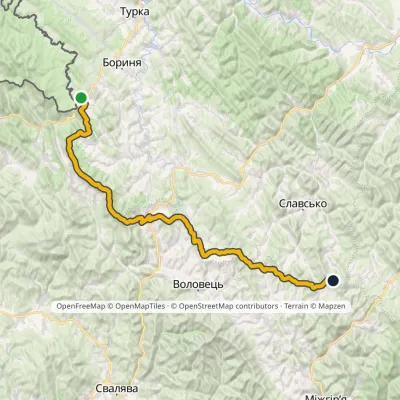 HardMulti-dayMarkedNo. 14 Sianky Mount Chorna RypaElevation profile536–1 408 m85 kmascent 3 601 m
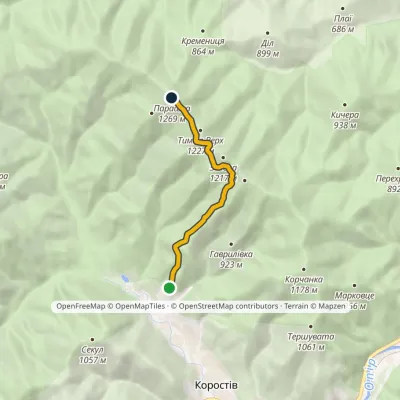 EasyOne-dayMarkedNo. 5044 Korostiv Monastery Mount ParashkaElevation profile653–1 268 m5.8 kmascent 671 m≈ 3 h walking
 EasyOne-dayMarkedKorchyn village Hurkalo WaterfallElevation profile399–519 m6.2 kmascent 138 m≈ 2 h walking
 HardMulti-dayKorchyn village to Krushelnytsia villagevia Hurkalo Waterfall, Mount ParashkaElevation profile396–1 268 m39.2 kmascent 1 094 m≈ 12 h walking
 ModerateTwo-dayMarkedSkole loopvia Mount ParashkaElevation profile459–1 268 m17.9 kmascent 1 031 m≈ 6.5 h walking
 ModerateOne-dayMarkedSkole Mount ParashkaElevation profile447–1 268 m10.4 kmascent 945 m≈ 4.5 h walking
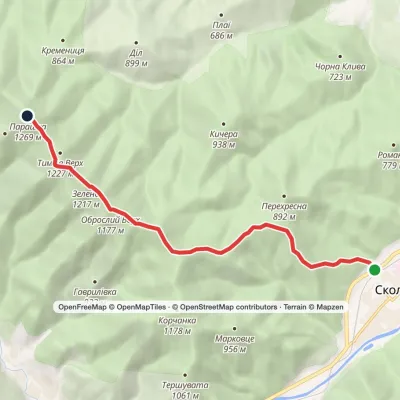 ModerateOne-dayMarkedSkole Mount ParashkaElevation profile450–1 268 m9.1 kmascent 930 m≈ 4 h walking
 ModerateOne-dayMarkedSkole Mount ParashkaElevation profile449–1 268 m10.2 kmascent 929 m≈ 4.5 h walking
 ModerateOne-dayMarkedSkole Mount ParashkaElevation profile447–1 268 m9.9 kmascent 935 m≈ 4.5 h walking
Mountain ranges: Watershed Ridge, Skole Beskids. In other countries: 🇸🇰 Lesser Fatra, 🇸🇰 Javorníky
Trails and peaks near which naturalists recorded the species (GBIF, iNaturalist), matched by altitude and habitat. Sightings are not guaranteed.
Sources
- Вікіпедія: Опеньок осінній справжній
- Wikipedia (en): Armillaria mellea
- Wikipedia (en): Galerina marginata
- Rozporządzenie Ministra Zdrowia z 17.05.2011, t.j. Dz.U. 2023 poz. 2237: wykaz grzybów dopuszczonych do obrotu (Польща)
- МОЗ України: отруєння грибами — профілактика та перша допомога
- Wikipedia (en): Armillaria
GBIF · iNaturalist · Wikidata · Distribution data: GBIF.org (CC0 and CC BY records), iNaturalist; names and identifiers: Wikidata (CC0). Text: Karpaty.rocks, checked 09.11.2026.
