Funeral bell
Never identify a mushroom from a photo alone. If in doubt, leave it. In case of poisoning call 112 (103 in Ukraine) at once.
About
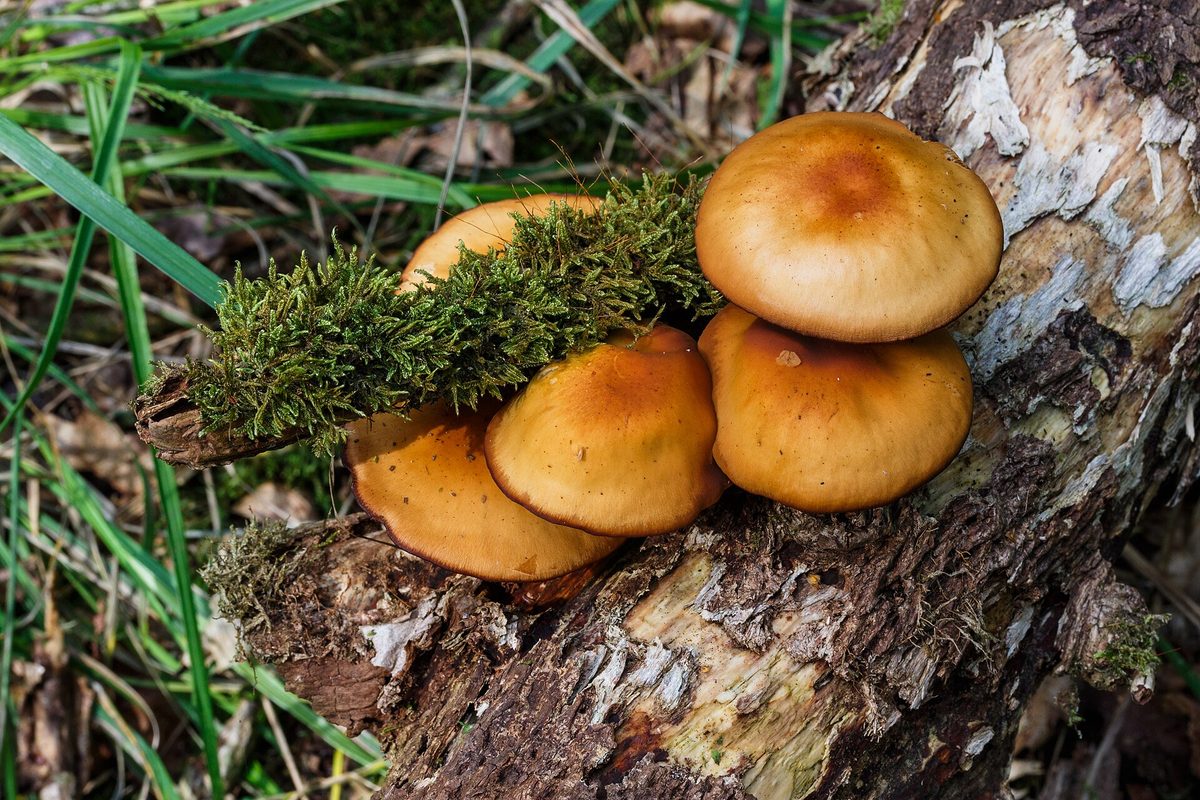
Galerina marginata is an inconspicuous mushroom that is easy to overlook. However, it is dangerous for those who collect honey fungi: it grows on wood, often in clusters, and contains amatoxins—the same poisons found in the death cap. These toxins destroy the liver and are not neutralized by cooking.
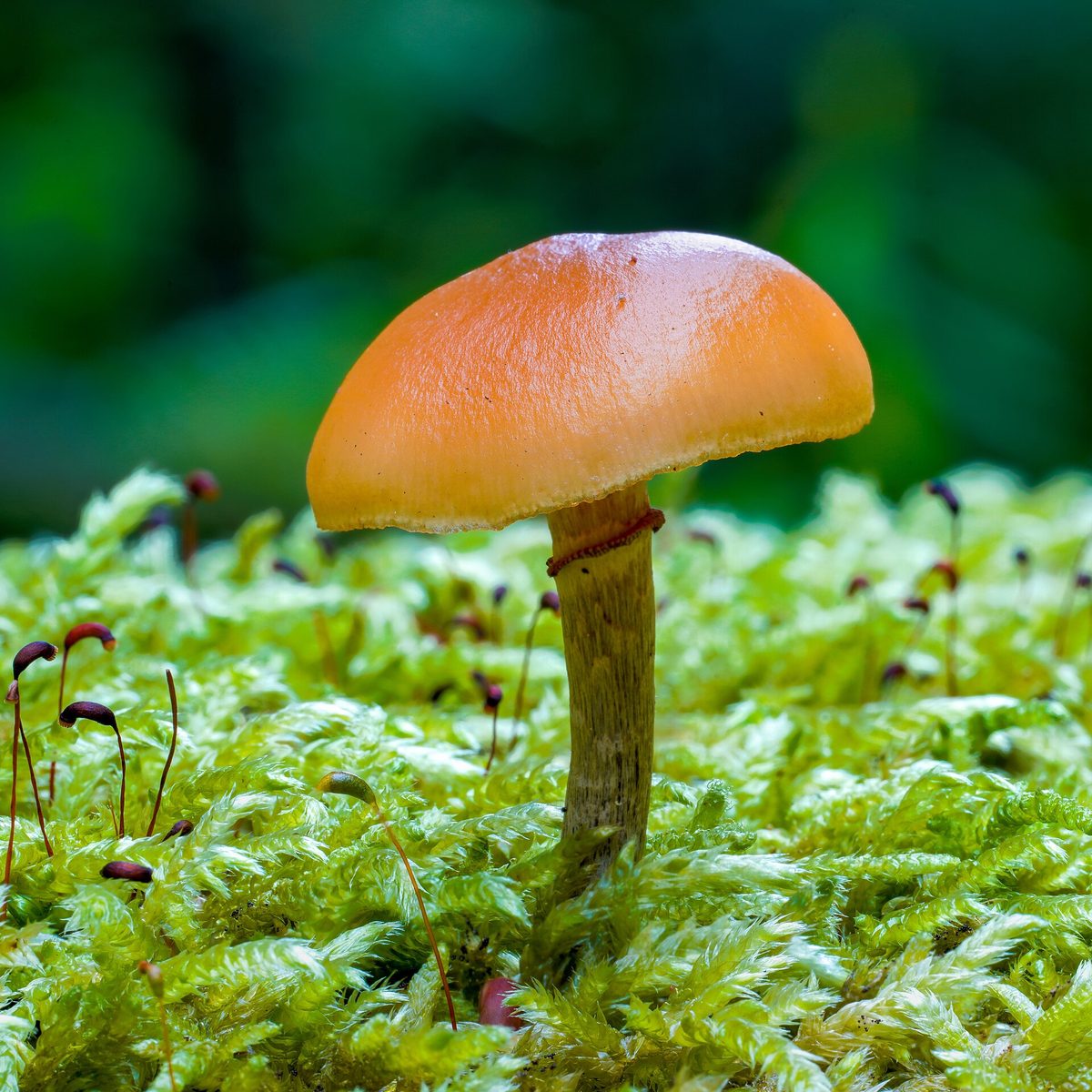
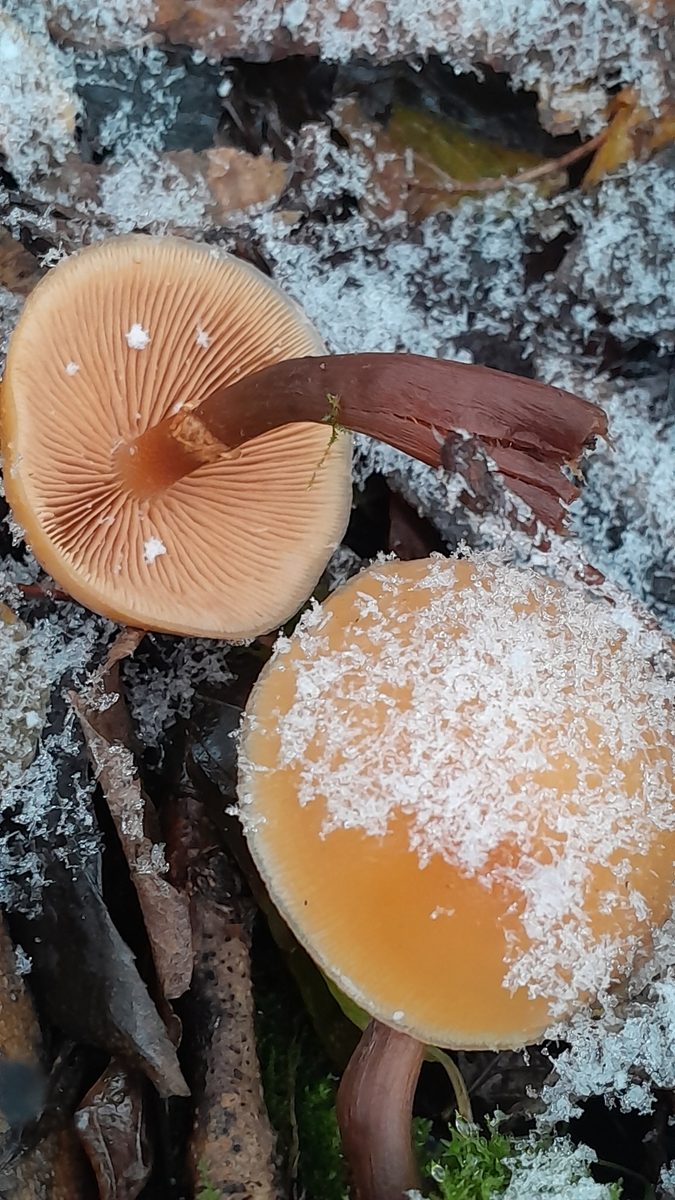
The cap measures 1–6 cm, initially convex, then flat, smooth, ochre-brown, darkening in wet weather and lightening as it dries. The gills are yellowish, later becoming rusty-brown. There is a thin membranous ring on the stem that darkens with age from spores or disappears; below the ring, the stem is covered with silvery fibers. The spore powder is rusty-brown—this is one of the main differences from the honey fungus, which has white spore powder.
The mushroom decomposes rotten wood, mainly coniferous, but can also be found on deciduous: on stumps, logs, branches, often among moss. In the Carpathians, it can be found in spruce and mixed forests. Fruiting bodies appear from spring to late autumn, and in mild winters—even when other mushrooms are absent.
Galerina is confused with the autumn honey fungus, and even more often—with the summer honey fungus, which grows on the same stumps. Distinguishing them without experience is very difficult. Therefore, the safest rule is not to collect small brown mushrooms from wood, especially solitary ones, and to only take large clusters of honey fungi with scales on the cap and a white ring, checking the spore powder.
Where in the Carpathians

The map shows where naturalists recorded the species (GBIF, CC0 and CC BY records), not every place it lives. The Ukrainian Carpathians are less studied, so a blank area does not mean the species is absent.
- Countries
- Ukraine · Austria · Slovakia · Poland · Hungary
- Mountain ranges
- Gorgany, Maramureș Mountains, High Tatras, Vihorlat-Gutin Volcanic Ridge, Rivna Polonyna, Slovak Central Mountains
- Altitude belts
- Foothills (below 600 m) · Beech forests (600–1200 m)
When to see it
| Jan | Feb | Mar | Apr | May | Jun | Jul | Aug | Sep | Oct | Nov | Dec | |
|---|---|---|---|---|---|---|---|---|---|---|---|---|
| Sightings |
From naturalists’ observations in the Carpathians (iNaturalist, research grade): the darker the cell, the more often the species is seen that month.
Safety
Deadly poisonous: contains amatoxins, like the death cap. Symptoms of poisoning appear with a delay. Do not collect small brown mushrooms from wood. In case of any symptoms after consuming mushrooms, call 112 and keep the leftovers of the dish.
Look-alikes — how to tell them apart
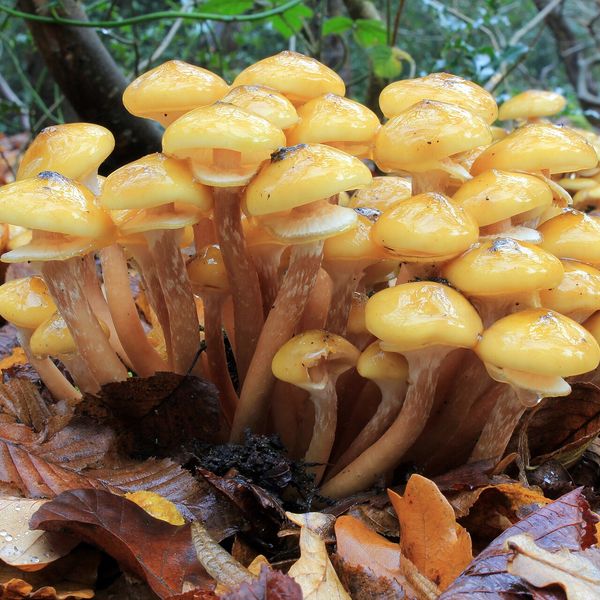
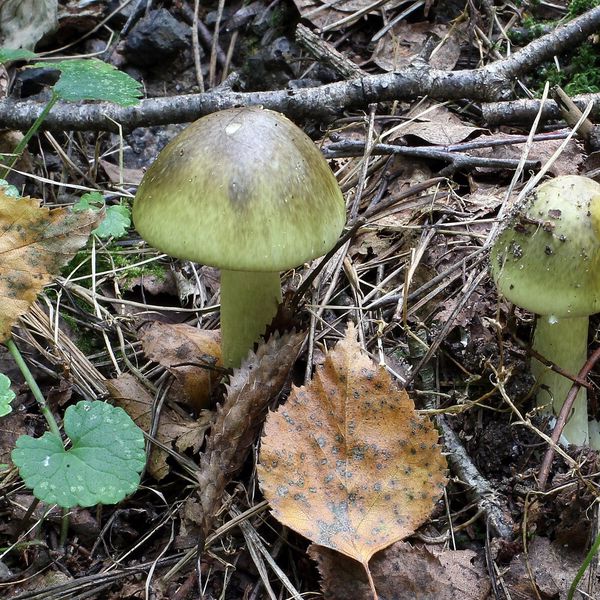
Larger, grows in large clusters; has small scales on the cap; the ring is white, membranous; spore powder is white.
Very similar; under the ring, the stem is covered with small scales, not silvery fibers. Only experienced foragers can distinguish them—beginners should avoid collecting.
Protection and rules
Not protected. It is not advisable to destroy mushrooms in the forest: they are needed by the forest and animals.
FAQ
How does Galerina differ from honey fungus?
Galerina is smaller, with a smooth cap without scales, a thin ring that darkens, and rusty-brown spore powder. The autumn honey fungus has scales on the cap, a white ring, and white spore powder.
Is Galerina marginata poisonous?
Yes, it is deadly. It contains amatoxins, like the death cap, and cooking does not destroy them.
Recorded nearby
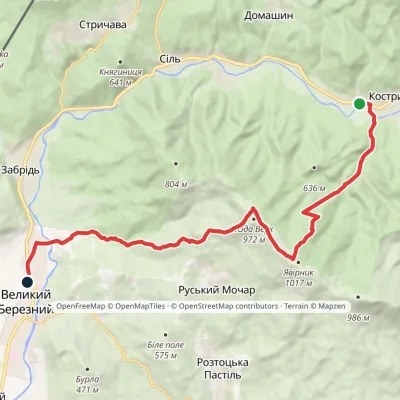 ModerateTwo-dayMarkedKostryno village to Velykyi Bereznyi villagevia Mount YavirnykElevation profile203–1 016 m17.4 kmascent 739 m≈ 6 h walking
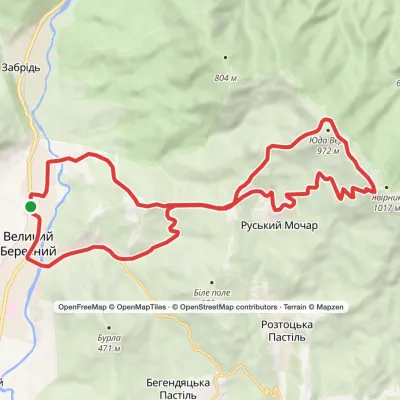 HardTwo-dayVelykyi Bereznyi village loopvia Mount Yavirnyk, Ruskyi Mochar villageElevation profile195–1 006 m22.8 kmascent 861 m≈ 7.5 h walking
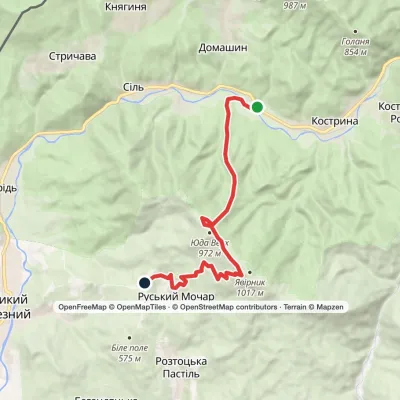 ModerateOne-dayMarkedKostryno village to Ruskyi Mochar villagevia Mount YavirnykElevation profile264–1 006 m12.8 kmascent 789 m≈ 5 h walking
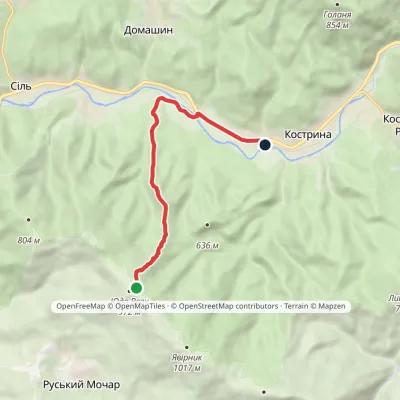 EasyOne-dayMarkedMount Yavirnyk to Kostryno villagevia Dubovyi HaiElevation profile265–947 m8.2 kmascent 30 m≈ 2 h walking
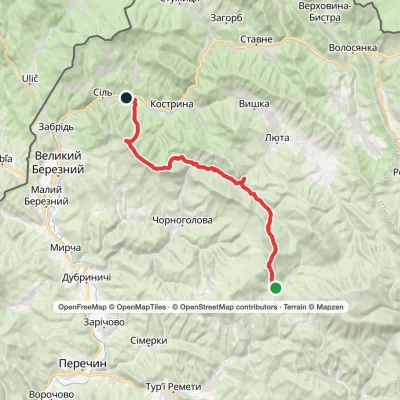 HardMulti-dayLumshory village to Sil villagevia Mount Mala Holytsia, Mount YavirnykElevation profile258–1 184 m35.5 kmascent 1 569 m≈ 12 h walking
 EasyOne-dayMarkedRuskyi Mochar village loopvia Mount YavirnykElevation profile529–1 006 m9 kmascent 487 m≈ 3 h walking
Trails and peaks near which naturalists recorded the species (GBIF, iNaturalist), matched by altitude and habitat. Sightings are not guaranteed.
Similar species
Sources
- Вікіпедія: Галерина оторочкувата
- Wikipedia (en): Galerina marginata
- МОЗ України: отруєння грибами — профілактика та перша допомога
GBIF · iNaturalist · Wikidata · Distribution data: GBIF.org (CC0 and CC BY records), iNaturalist; names and identifiers: Wikidata (CC0). Text: Karpaty.rocks, checked 09.11.2026.
