Death cap
Never identify a mushroom from a photo alone. If in doubt, leave it. In case of poisoning call 112 (103 in Ukraine) at once.
About
The Death cap causes the majority of fatal mushroom poisonings. Its toxins, amatoxins, destroy liver and kidney cells and do not disappear during boiling, drying, or pickling. Even half a mushroom can be dangerous.
In the Carpathians, the Death cap is primarily found in deciduous forests of the foothills and low mountains: it forms mycorrhiza with oak, beech, hornbeam, and hazel. Fruiting bodies appear from July to October, most often at the end of summer and the beginning of autumn — just when there are the most mushroom pickers in the forest.
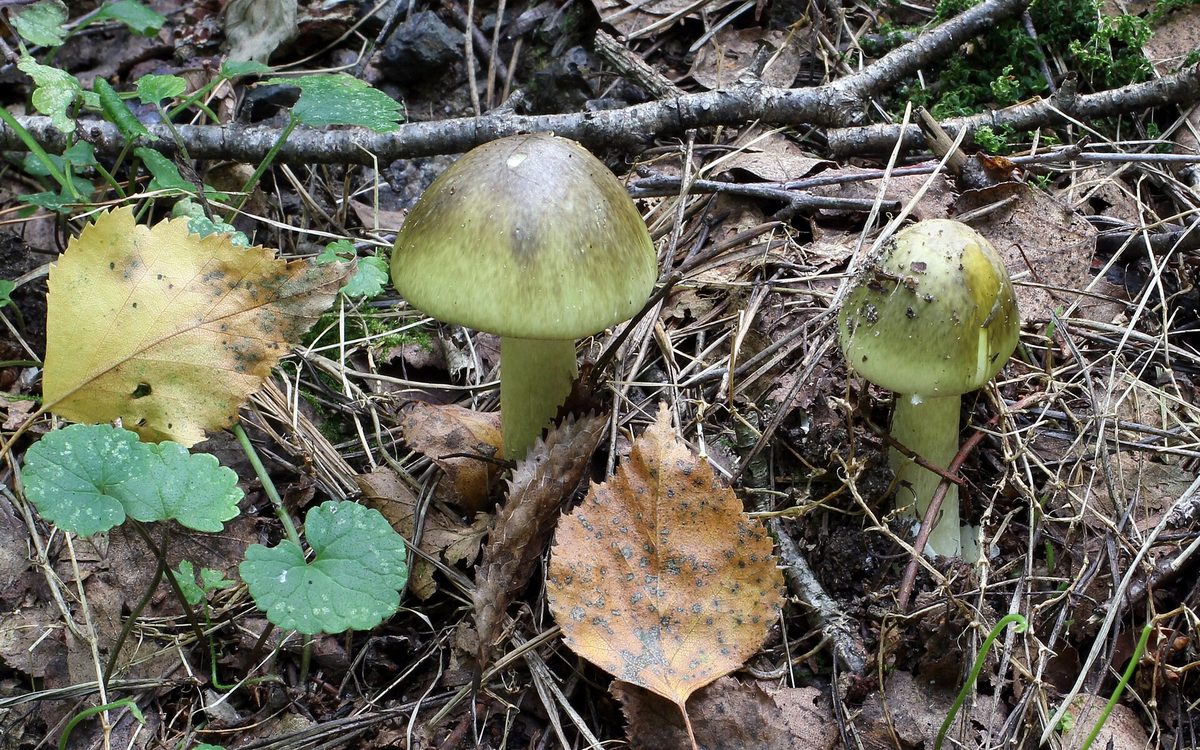
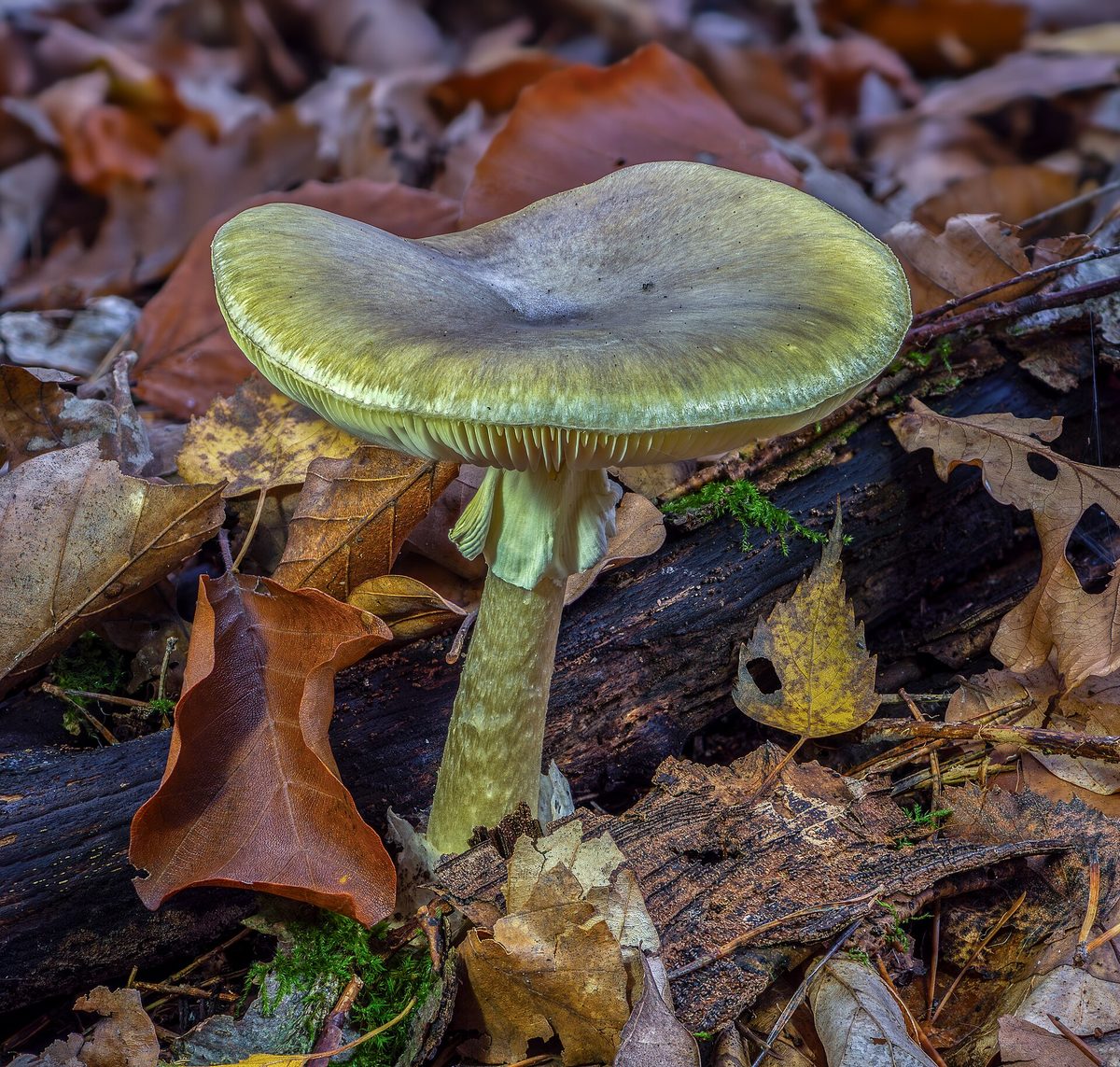
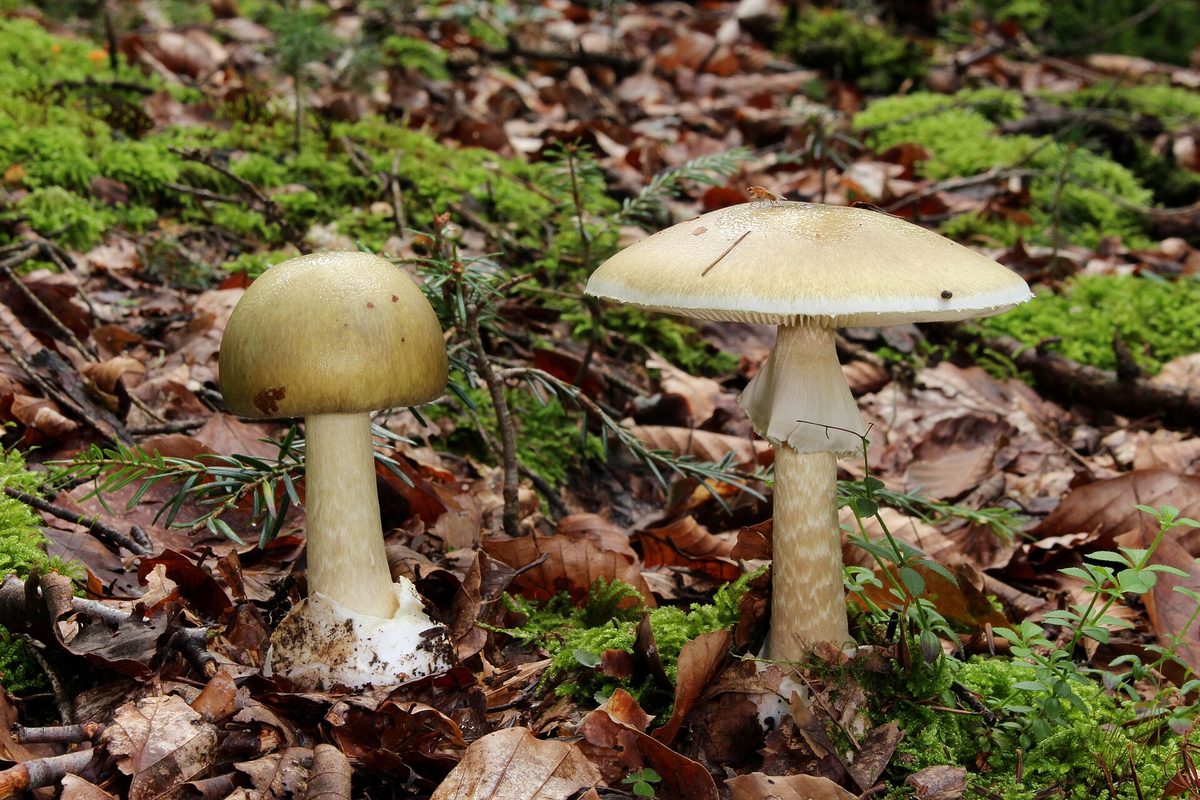
Cap 5–15 cm, smooth, olive-green, yellowish-green, or almost white, with barely noticeable darker radial fibers. Gills are always white and free. A white membranous ring hangs from the stem, and the base of the stem is thickened and hidden in a bag-like white sheath — the volva. The volva is often concealed by the litter, so the mushroom must be twisted out completely to see it. The smell is weak, and the taste does not reveal the poison.
The insidiousness of the Death cap is that the first signs of poisoning usually appear after 6–12 hours: vomiting, abdominal pain, diarrhea. Then there may be a false sense of relief, while the liver is being damaged. Therefore, even with mild nausea after mushrooms, you should immediately call 103 and not wait.
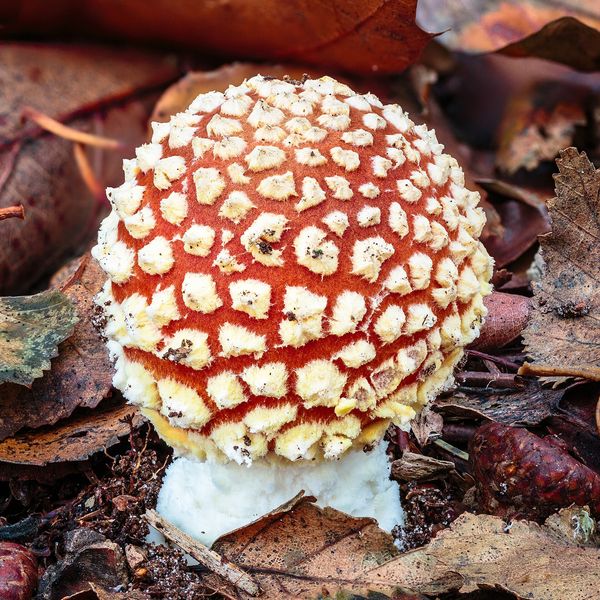
The Death cap is most often confused with field mushrooms, green Russulas, and other light mushrooms. The rule is simple: white gills, ring, and volva together are signs of a fly agaric, and such a mushroom should not be placed in the basket.
Where in the Carpathians

The map shows where naturalists recorded the species (GBIF, CC0 and CC BY records), not every place it lives. The Ukrainian Carpathians are less studied, so a blank area does not mean the species is absent.
- Countries
- Slovakia · Hungary · Austria · Czechia · Ukraine · Romania · Poland
- Mountain ranges
- Low Tatras, Mátra, Poiana Ruscă Mountains, Little Carpathians, Maramureș Mountains, Štiavnica Mountains
- Altitude belts
- Foothills (below 600 m) · Beech forests (600–1200 m)
When to see it
| Jan | Feb | Mar | Apr | May | Jun | Jul | Aug | Sep | Oct | Nov | Dec | |
|---|---|---|---|---|---|---|---|---|---|---|---|---|
| Sightings |
From naturalists’ observations in the Carpathians (iNaturalist, research grade): the darker the cell, the more often the species is seen that month.
Safety
Deadly poisonous. Toxins do not break down during boiling, drying, or pickling. Signs of poisoning appear with a delay, usually after 6–12 hours. At the first symptoms after mushrooms, immediately call 103 (or 112) and keep the remains of the mushrooms or dishes for analysis. Do not collect light gilled mushrooms with a ring if you do not see the base of the stem.
Look-alikes — how to tell them apart
Gills are pink, later chocolate-brown, never white in an adult mushroom; no volva at the base; grows in meadows, not in the forest.
No ring or volva; flesh is brittle, breaks like chalk; stem is straight, without a bulb.
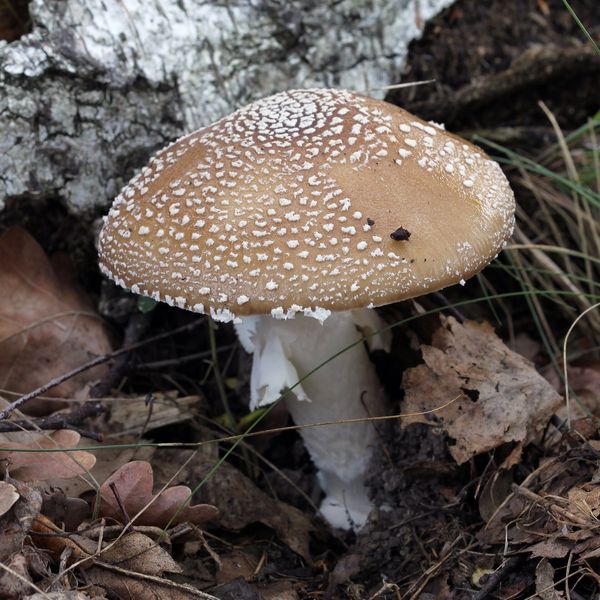
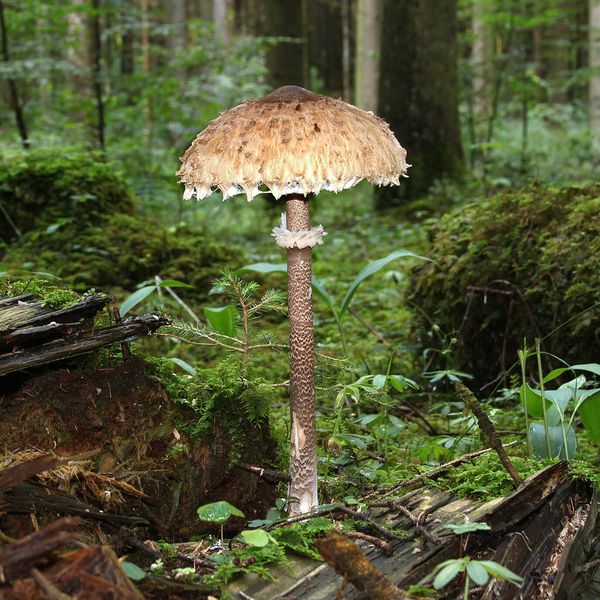
Cap covered with brown scales, stem with a snake-like pattern, ring is thick and movable, no volva.
Protection and rules
Not protected. It is not advisable to destroy mushrooms in the forest: they are needed by the forest and animals.
FAQ
What does the Death cap look like?
Greenish, yellowish-olive, or white smooth cap, white free gills, white ring on the stem, and bag-like volva at the base.
How many hours after consumption do symptoms of Death cap poisoning appear?
Usually after 6–12 hours, sometimes earlier. Then there may be a false improvement, although the poison continues to damage the liver. In case of any symptoms, call 103.
Can the Death cap be neutralized by boiling?
No. Its toxins do not break down during boiling, drying, pickling, or freezing.
Similar species
Sources
- Вікіпедія: Мухомор зелений
- Wikipedia (en): Amanita phalloides
- МОЗ України: отруєння грибами — профілактика та перша допомога
GBIF · iNaturalist · Wikidata · Distribution data: GBIF.org (CC0 and CC BY records), iNaturalist; names and identifiers: Wikidata (CC0). Text: Karpaty.rocks, checked 09.11.2026.
