Parasol mushroom
Never identify a mushroom from a photo alone. If in doubt, leave it. In case of poisoning call 112 (103 in Ukraine) at once.
About
The Parasol mushroom is one of the largest edible mushrooms in the Carpathians. It grows not deep in the forest, but in bright places: glades, edges of forests, clearings, on meadows and pastures near the forest, often in groups or circles.
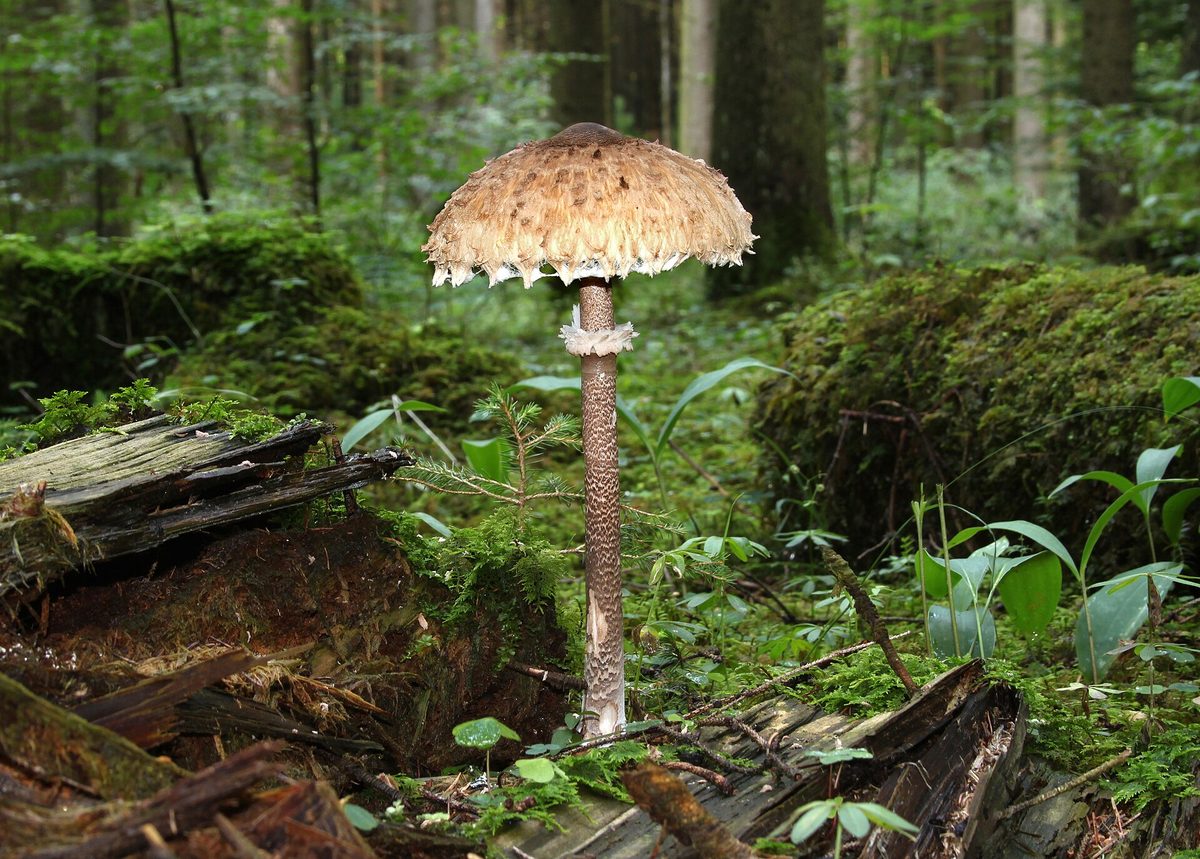
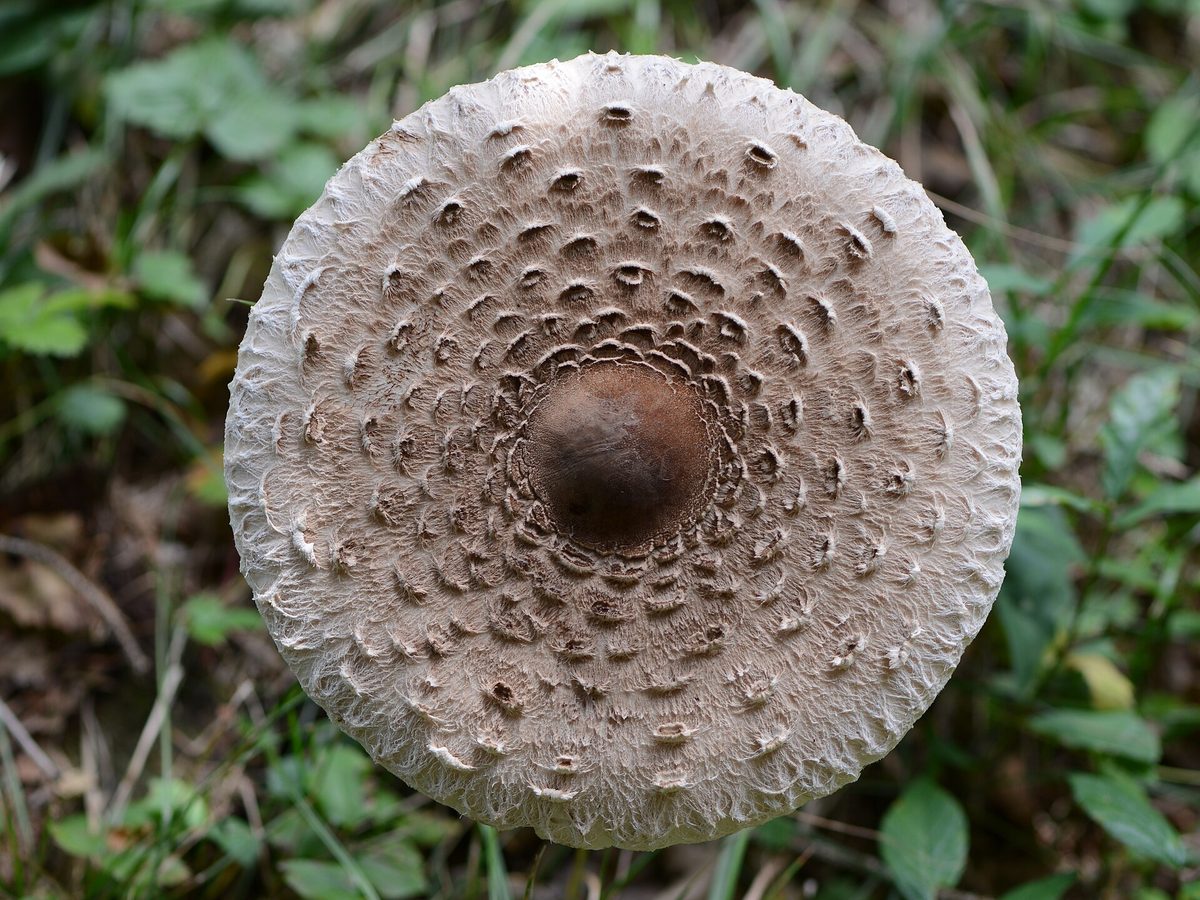
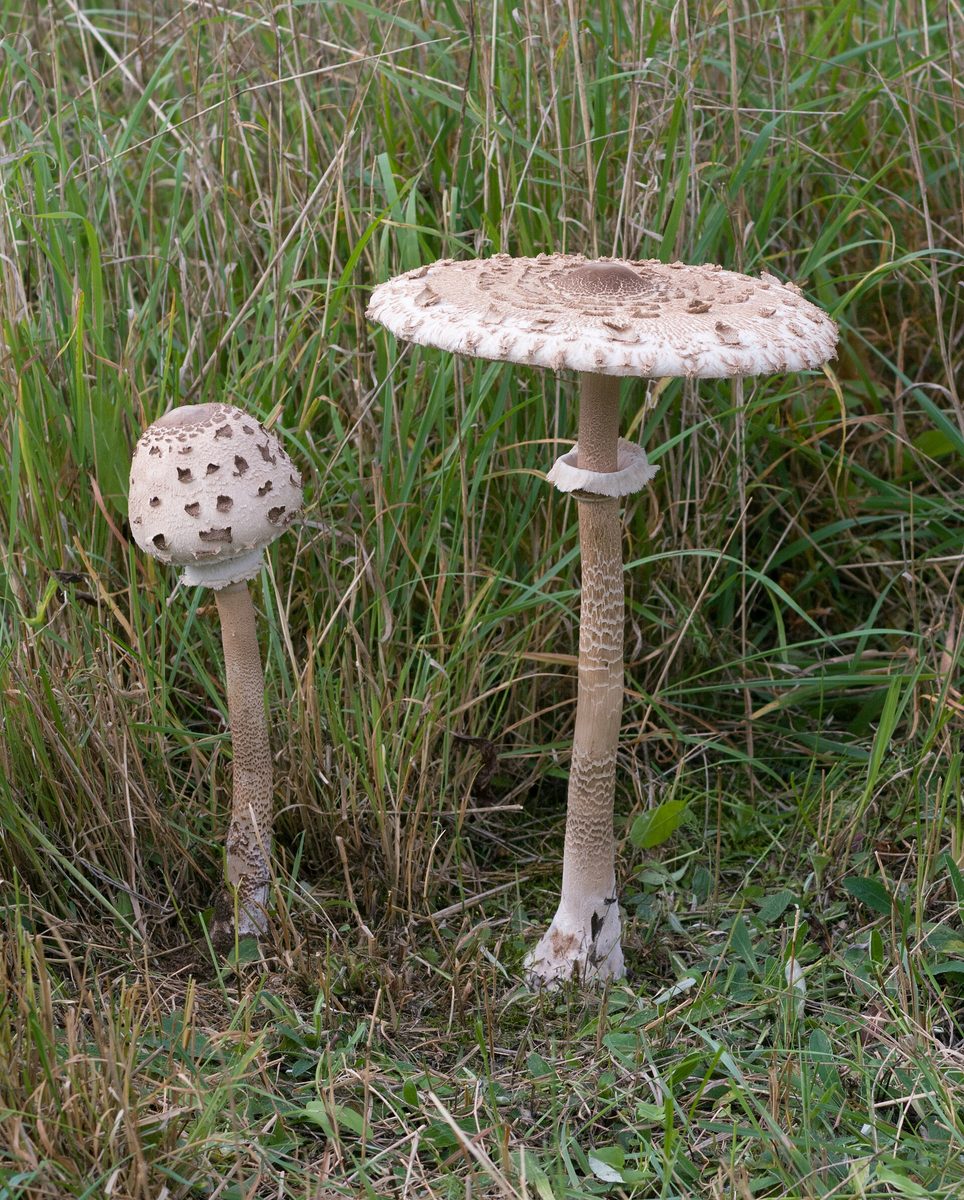
A young mushroom resembles a drumstick; later, the cap opens like an umbrella and reaches 20–30 cm. It is light brown, covered with large dark scales, with a dark bump in the center. The gills are white, free, meaning they do not reach the stem. The stem is tall, thin, hollow, with a snake-like brown pattern. It has a thick double ring that moves easily up and down.
In the Carpathians, parasol mushrooms are particularly noticeable at the end of summer on meadows along the forest, near Kolibas and on polonynas in the lower part of the forest belt. They grow well in soils rich in organic matter, so they are often seen near pastures. Due to their large size, the mushroom is visible from afar, which encourages foragers to collect everything indiscriminately. However, both parasol mushrooms and fly agarics can grow in the same place, so each mushroom should be examined separately, from the cap to the base of the stem.
The season is from July to October. The stems are very fibrous, so they are not eaten; only the caps are collected.
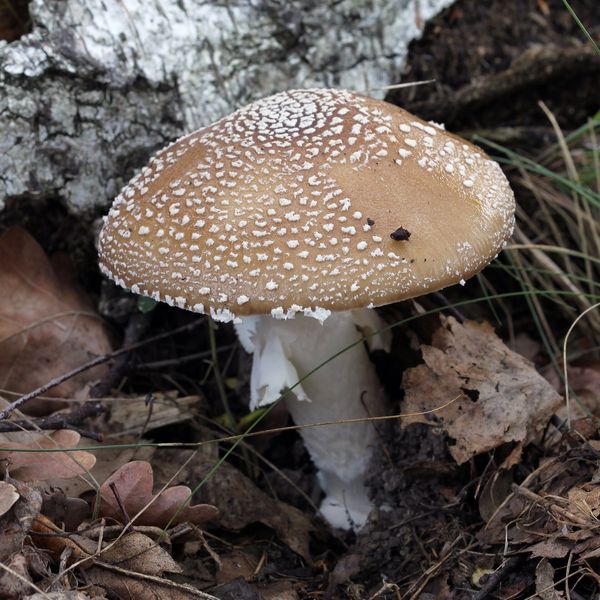
The Parasol mushroom can be dangerously confused with fly agarics, especially when the cap has not yet opened. Fly agarics have a bag-like volva at the base of the stem, the ring does not move, and the stem lacks a snake-like pattern. Some Chlorophyllum species have a smooth stem, and the flesh turns red or orange when cut. Among small Lepiota species, there are deadly poisonous types, so do not collect small 'parasol mushrooms.'
Where in the Carpathians

The map shows where naturalists recorded the species (GBIF, CC0 and CC BY records), not every place it lives. The Ukrainian Carpathians are less studied, so a blank area does not mean the species is absent.
- Countries
- Slovakia · Romania · Austria · Hungary · Poland · Czechia · Ukraine
- Mountain ranges
- Poiana Ruscă Mountains, Low Tatras, Pieniny, Štiavnica Mountains, Strážov Mountains, Little Carpathians
- Altitude belts
- Foothills (below 600 m) · Beech forests (600–1200 m)
When to see it
| Jan | Feb | Mar | Apr | May | Jun | Jul | Aug | Sep | Oct | Nov | Dec | |
|---|---|---|---|---|---|---|---|---|---|---|---|---|
| Sightings |
From naturalists’ observations in the Carpathians (iNaturalist, research grade): the darker the cell, the more often the species is seen that month.
Safety
Only the caps are edible. Do not collect unopened 'eggs' and small parasol mushrooms: they can easily be confused with fly agarics and poisonous Lepiota. Always check the base of the stem: a volva or bulb indicates a fly agaric. Mushroom dishes are not recommended for children under 12 years old. In case of poisoning, call 103.
Look-alikes — how to tell them apart
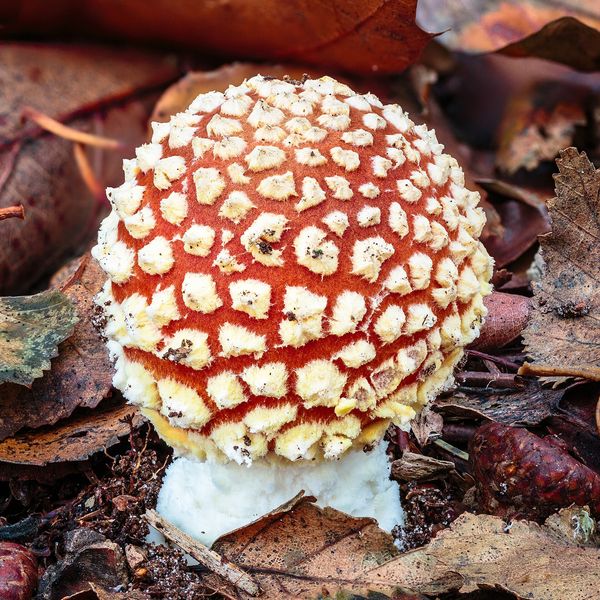
Smaller; at the base, a bulb with a collar volva; the ring is immobile; the stem is white without a snake-like pattern; the cap has white flakes, not brown scales.
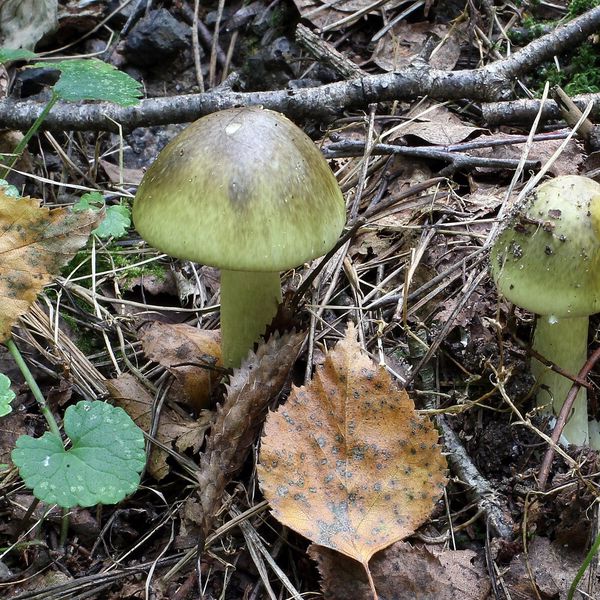
The cap is smooth, greenish or whitish, without scales; bag-like volva at the base; the stem is without a pattern.
The stem is smooth, without a snake-like pattern; the flesh turns red or orange when cut; in some cases, it causes digestive upset.
Protection and rules
Not protected. Collecting mushrooms is prohibited in reserves and protected areas of national parks.
FAQ
Can you eat the stem of the Parasol mushroom?
No, the stem is very fibrous. Only the caps are eaten.
How to distinguish a Parasol mushroom from a fly agaric?
Look at the base of the stem. Fly agarics have a bag-like volva or bulb there, the ring is immobile, and the stem is without a pattern. The Parasol mushroom has a snake-like patterned stem, and the thick ring moves.
Similar species
Where to meet it
Mountain ranges: In other countries: 🇷🇴 Poiana Ruscă Mountains, 🇸🇰 Low Tatras, 🇵🇱 Pieniny, 🇸🇰 Štiavnica Mountains, 🇸🇰 Strážov Mountains, 🇸🇰 Little Carpathians
Trails and peaks near which naturalists recorded the species (GBIF, iNaturalist), matched by altitude and habitat. Sightings are not guaranteed.
Sources
- Вікіпедія: Гриб-зонтик великий
- Wikipedia (en): Macrolepiota procera
- Rozporządzenie Ministra Zdrowia z 17.05.2011, t.j. Dz.U. 2023 poz. 2237: wykaz grzybów dopuszczonych do obrotu (Польща)
- МОЗ України: отруєння грибами — профілактика та перша допомога
GBIF · iNaturalist · Wikidata · Distribution data: GBIF.org (CC0 and CC BY records), iNaturalist; names and identifiers: Wikidata (CC0). Text: Karpaty.rocks, checked 09.11.2026.
