Fly agaric
Never identify a mushroom from a photo alone. If in doubt, leave it. In case of poisoning call 112 (103 in Ukraine) at once.
About
The Fly agaric is familiar to everyone from children's books, and it is indeed very common in the Carpathians. The mushroom forms mycorrhiza with birch and spruce, so it is abundant in coniferous forests, at the edges with birches, and on overgrown polonynas. Fruiting bodies appear from July to October, most abundantly at the end of summer.
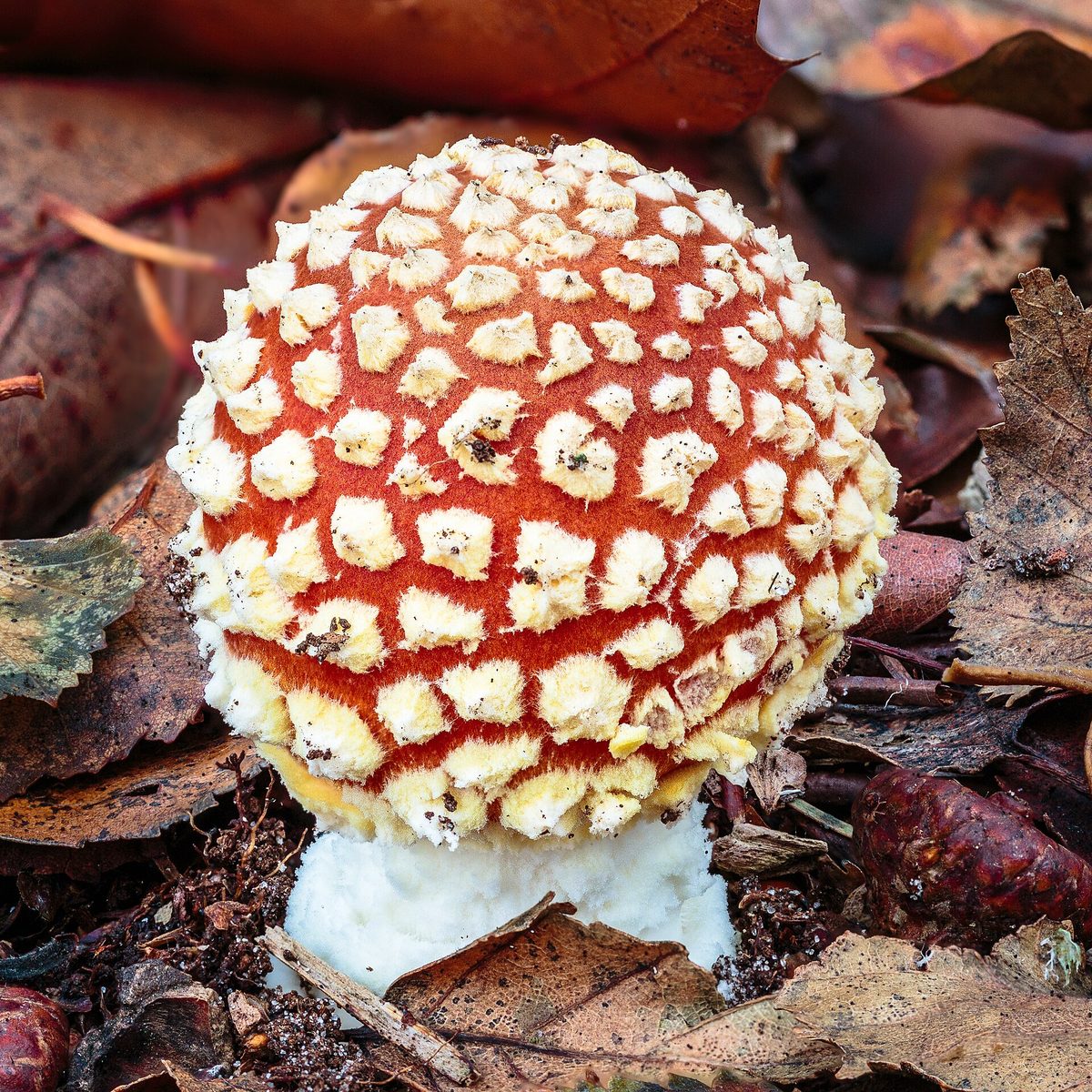
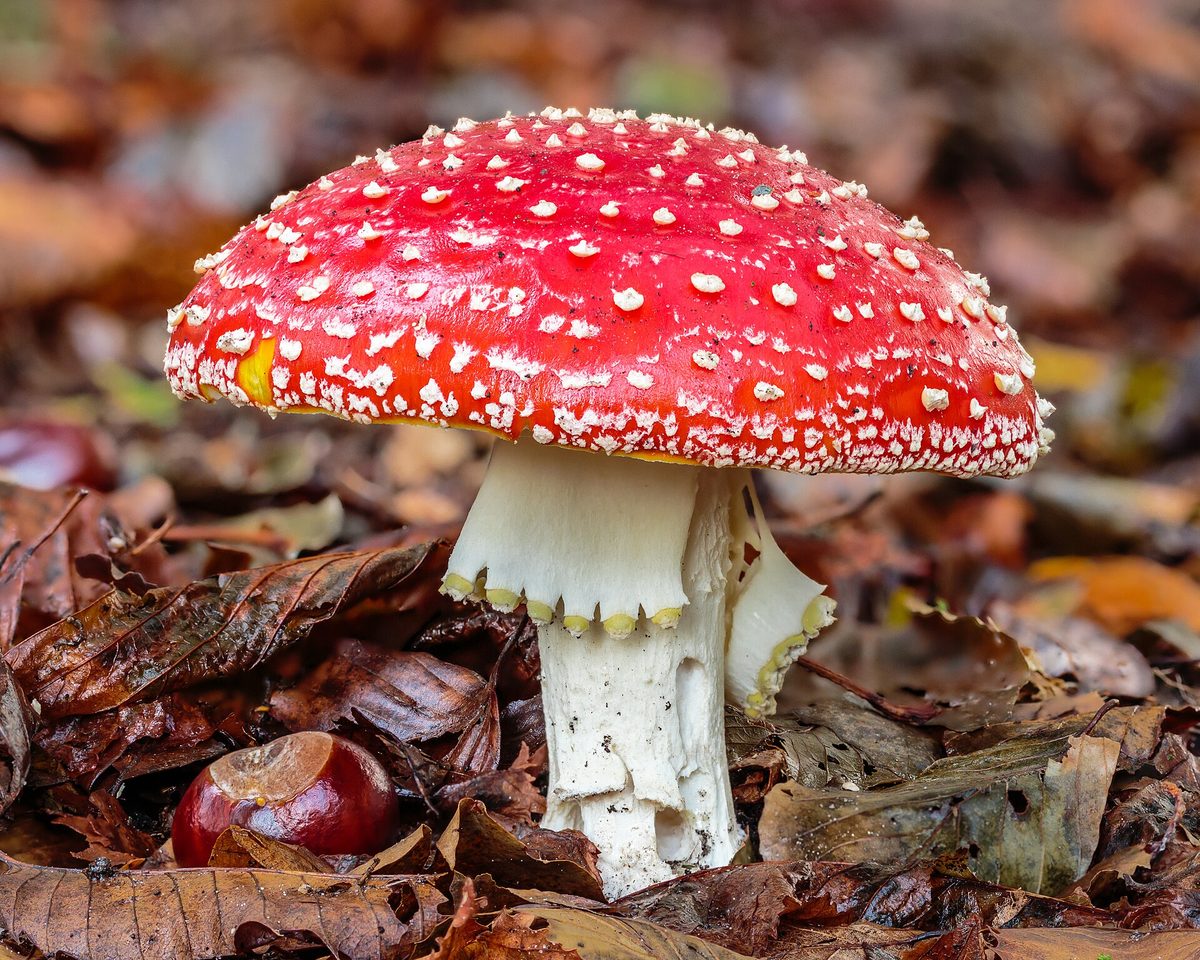
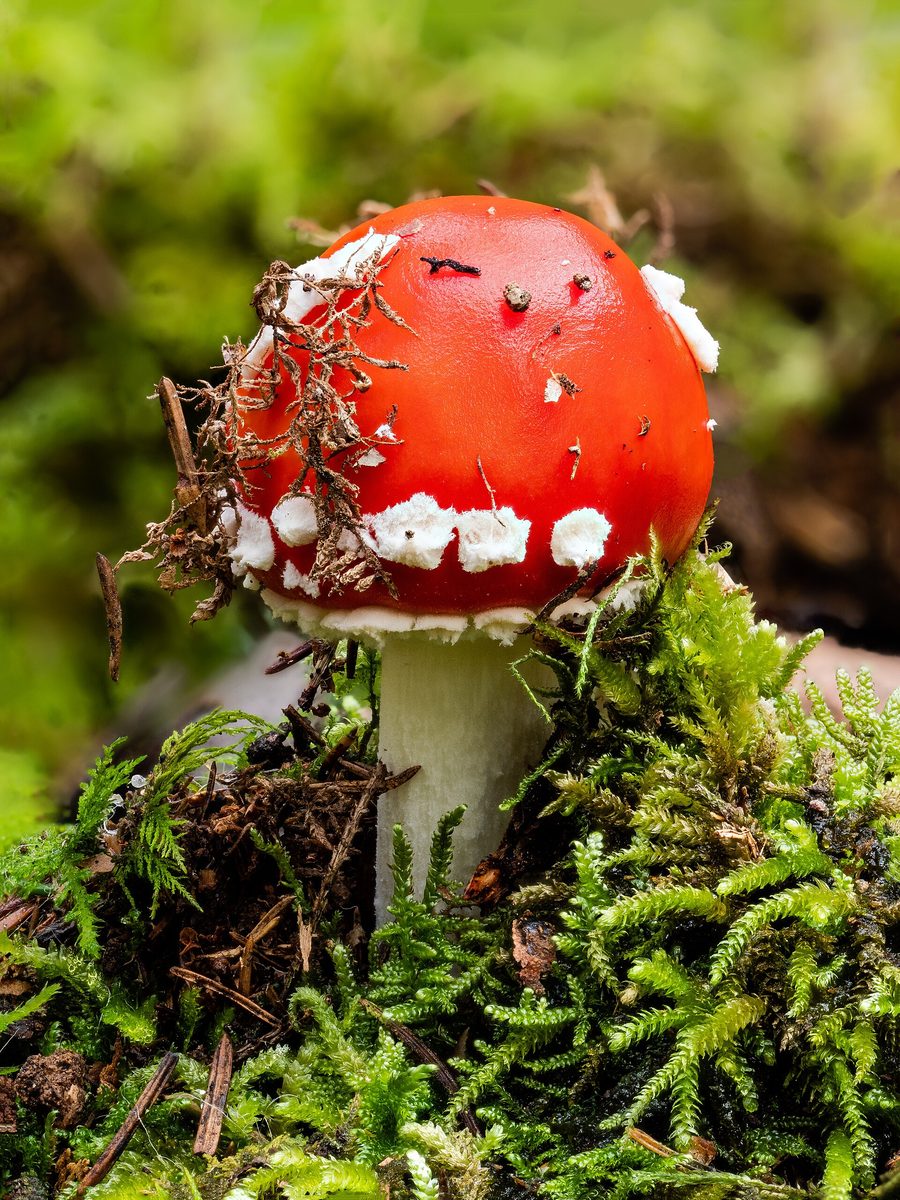
The cap is 8–20 cm, bright red or orange-red, covered with white or yellowish flakes — remnants of the veil that covered the young mushroom. Rain washes away the flakes, and the cap fades, so old fly agarics can be almost orange and smooth. The gills are white, with a white hanging ring on the stem, and the base of the stem is bulbous, encircled by several rings of flakes.
The Fly agaric is poisonous. Its substances, ibotenic acid and muscimol, affect the nervous system: causing dizziness, confusion, hallucinations, seizures, and vomiting. Poisonings can be severe, especially in children. No soaking or cooking methods make the mushroom safe, and popular internet advice to consume fly agaric in small amounts is a dangerous myth.
For the forest, the fly agaric is beneficial: it nourishes trees through mycorrhiza, and its fruiting bodies are eaten by slugs and some insects. Therefore, do not crush fly agarics underfoot — just walk around them and admire. It is difficult to confuse the Fly agaric with edible mushrooms, but a faded old mushroom is sometimes mistaken for a Russula.
Where in the Carpathians

The map shows where naturalists recorded the species (GBIF, CC0 and CC BY records), not every place it lives. The Ukrainian Carpathians are less studied, so a blank area does not mean the species is absent.
- Countries
- Romania · Ukraine · Slovakia · Poland · Czechia · Hungary · Austria
- Mountain ranges
- Gorgany, Western Tatras, Bihor-Vlădeasa Mountains, Krasna Polonyna, Low Tatras, Lesser Fatra, Vrancea Mountains, Gorce, Maramureș Mountains, Chornohora
- Altitude belts
- Foothills (below 600 m) · Beech forests (600–1200 m) · Conifer forests (1200–1600 m)
When to see it
| Jan | Feb | Mar | Apr | May | Jun | Jul | Aug | Sep | Oct | Nov | Dec | |
|---|---|---|---|---|---|---|---|---|---|---|---|---|
| Sightings |
From naturalists’ observations in the Carpathians (iNaturalist, research grade): the darker the cell, the more often the species is seen that month.
Safety
Poisonous, affects the nervous system. Do not consume in any form and do not let children touch mushrooms or put them in their mouths. In case of poisoning, call 103 (or 112).
Look-alikes — how to tell them apart
Without flakes, ring, and bulb at the base; flesh is brittle. However, among red Russulas, there are hot and inedible ones, so it is better not to pick them without experience.
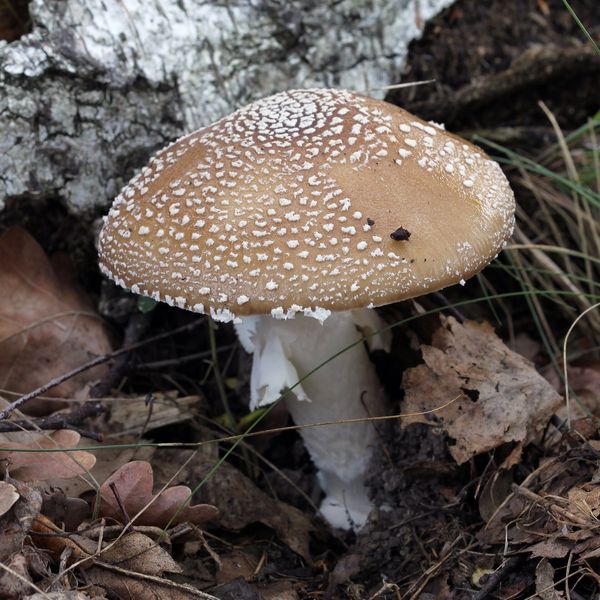
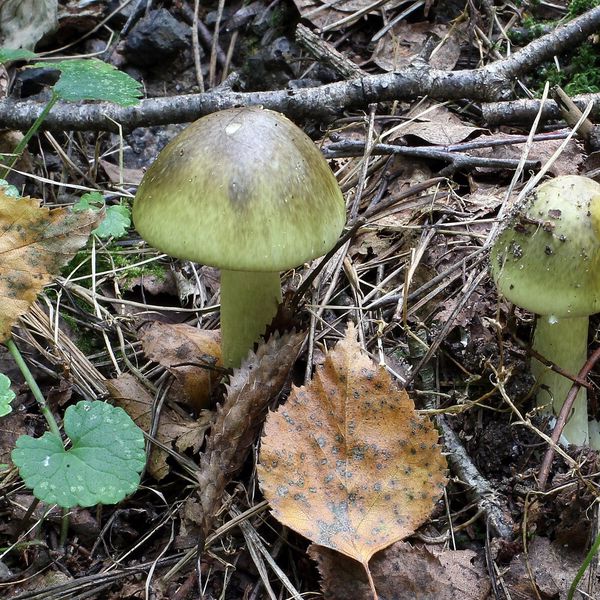
Cap is brown, not red; bulb at the base with a distinct collar; also poisonous.
Protection and rules
Not protected. It is not advisable to destroy mushrooms in the forest: they are needed by the forest and animals.
FAQ
Can you eat the Fly agaric after cooking?
No. The Fly agaric is poisonous, and no processing makes it safe.
Why is it called the Fly agaric?
Historically, pieces of this mushroom were placed in milk or water to kill flies: its substances also affect insects.
Recorded nearby
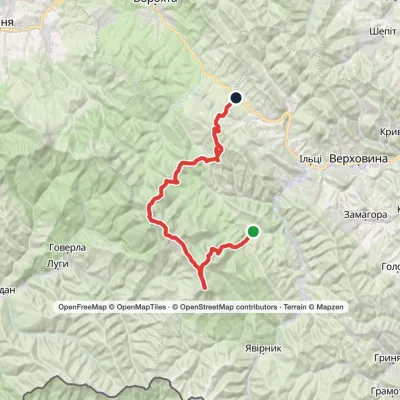
 HardMulti-dayMarkedTatariv village to Yamna villagevia Pidlisniv ridge, Yavirnyk polonynaElevation profile586–1 248 m25.4 kmascent 1 227 m≈ 9 h walking
 HardMulti-dayDzembronia village to Kryvopillia villagevia Mount Pip Ivan Chornohirskyi, Mount ShpytsiElevation profile822–2 028 m44 kmascent 2 162 m
 ModerateOne-dayMarkedDzembronia village Mount Pip Ivan ChornohirskyiElevation profile819–2 028 m10.2 kmascent 1 243 m≈ 5 h walking
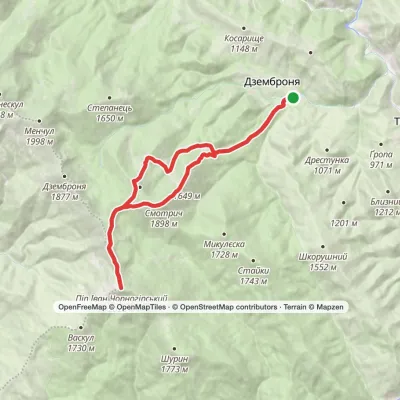 HardTwo-dayMarkedDzembronia village to Mount Pip Ivan Chornohirskyivia Mount SmotrychElevation profile808–2 028 m19.5 kmascent 1 399 m≈ 7.5 h walking
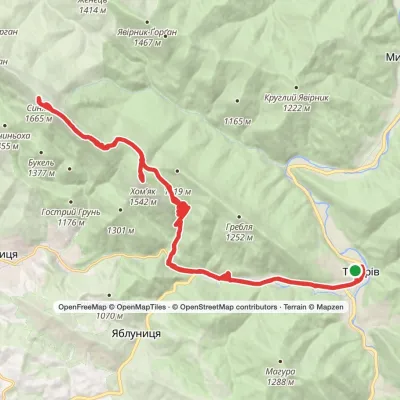 HardMulti-dayTatariv village loopvia Mount Khomiak, Mount SyniakElevation profile678–1 665 m37.2 kmascent 1 309 m≈ 12 h walking
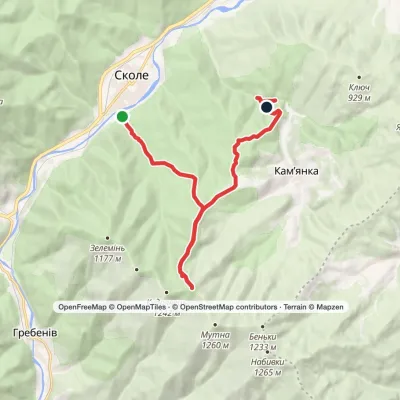 ModerateTwo-daySkole to Kamianka Waterfallvia Mount LopataElevation profile447–1 211 m18 kmascent 823 m≈ 6 h walking
Trails and peaks near which naturalists recorded the species (GBIF, iNaturalist), matched by altitude and habitat. Sightings are not guaranteed.
Similar species
Sources
- Вікіпедія: Мухомор червоний
- Wikipedia (en): Amanita muscaria
- МОЗ України: отруєння грибами — профілактика та перша допомога
GBIF · iNaturalist · Wikidata · Distribution data: GBIF.org (CC0 and CC BY records), iNaturalist; names and identifiers: Wikidata (CC0). Text: Karpaty.rocks, checked 09.11.2026.
