Panther cap
Never identify a mushroom from a photo alone. If in doubt, leave it. In case of poisoning call 112 (103 in Ukraine) at once.
About
The Panther cap is a less conspicuous relative of the red fly agaric. It contains the same substances, ibotenic acid and muscimol, which affect the nervous system and cause severe poisoning, even leading to loss of consciousness. The mushroom grows in deciduous and coniferous forests, with beech, oak, spruce, or pine, often on sandy soils, and occurs from July to October.
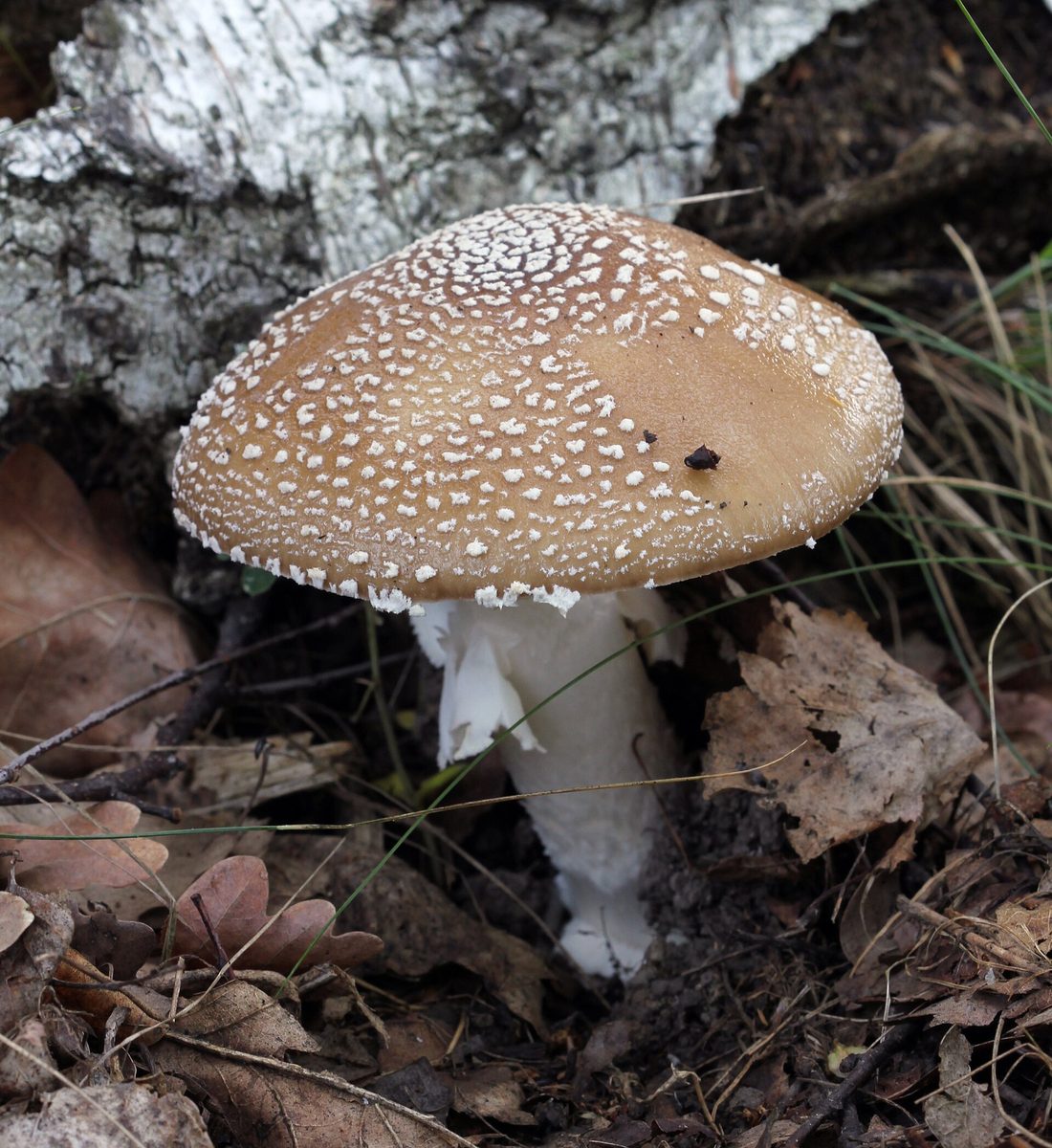
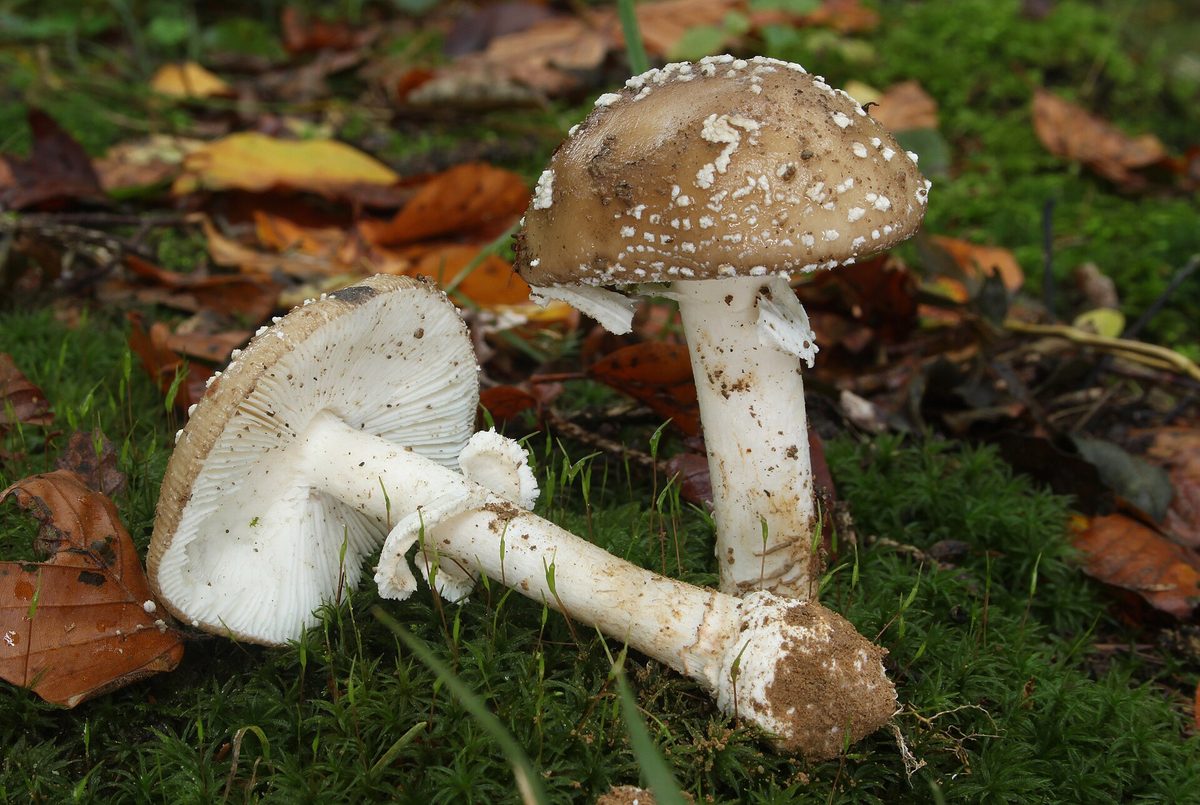
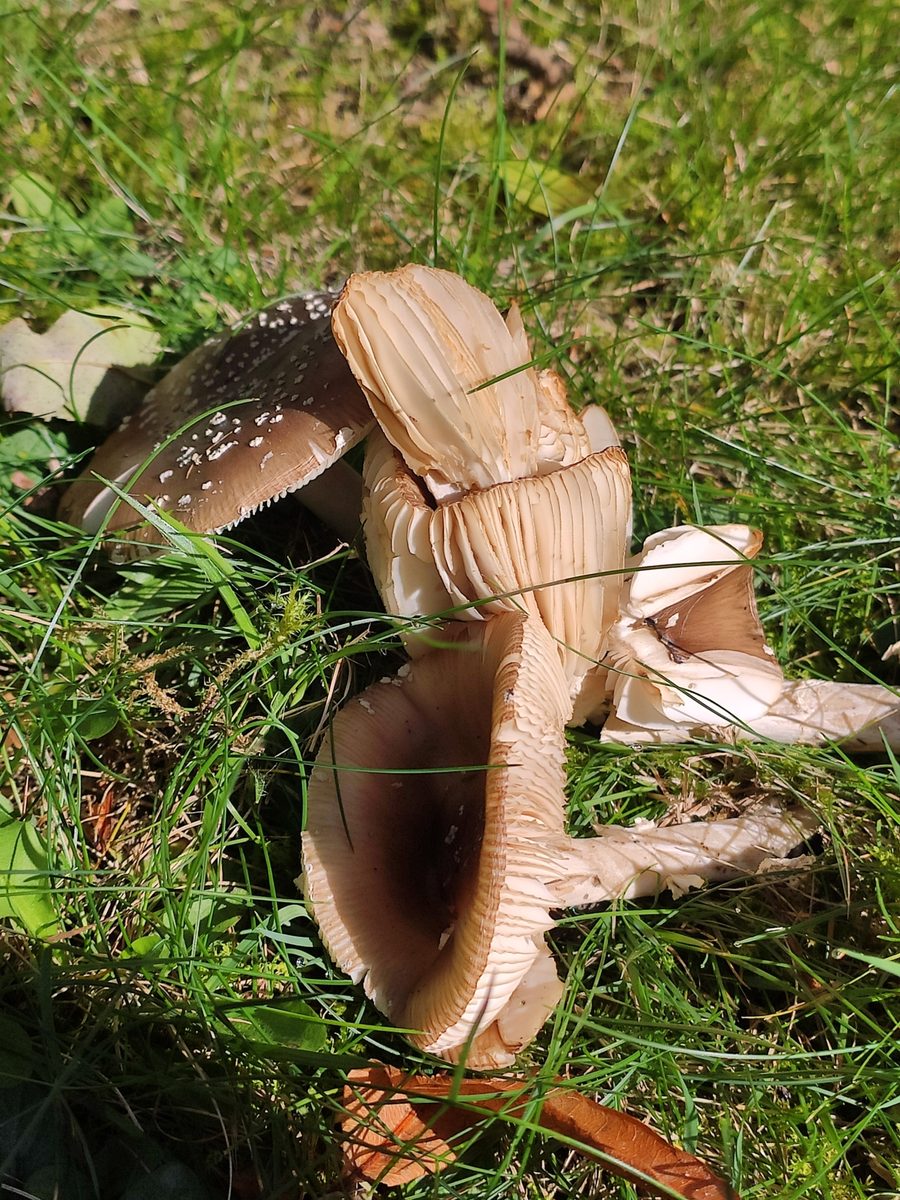
The cap measures 5–12 cm, ranging from light brown to dark brown, with small white flakes evenly scattered like spots on a panther's skin. The edge of the cap is often finely ribbed. The gills are white and free. The ring on the stem is thin, smooth, and without ribs. The most reliable feature is the base of the stem: it ends in a bulb, which distinctly shows a narrow collar, resembling the edge of a glass.
The Panther cap is dangerous because it can be confused with edible mushrooms. Most often, it is mistaken for the grey-pink fly agaric, which some mushroom pickers eat, and for young parasols. In the grey-pink fly agaric, the flesh turns pink at the break and in damaged areas, and the ring is ribbed; in the Panther cap, the flesh is white and does not change. Due to this similarity, beginners are better off not collecting any mushrooms with flakes on the cap.
The first signs of poisoning — dizziness, agitation, confusion, nausea — usually appear one to three hours after eating. In case of any suspicion, call 103.
Where in the Carpathians

The map shows where naturalists recorded the species (GBIF, CC0 and CC BY records), not every place it lives. The Ukrainian Carpathians are less studied, so a blank area does not mean the species is absent.
- Countries
- Romania · Slovakia · Czechia · Poland · Austria · Hungary · Ukraine
- Mountain ranges
- Poiana Ruscă Mountains, Buzău Mountains, Semenic Mountains, Low Tatras, Little Carpathians
- Altitude belts
- Foothills (below 600 m)
When to see it
| Jan | Feb | Mar | Apr | May | Jun | Jul | Aug | Sep | Oct | Nov | Dec | |
|---|---|---|---|---|---|---|---|---|---|---|---|---|
| Sightings |
From naturalists’ observations in the Carpathians (iNaturalist, research grade): the darker the cell, the more often the species is seen that month.
Safety
Poisonous, affects the nervous system. Do not collect mushrooms with white flakes on the cap and a bulb at the base of the stem. In case of poisoning, call 103 (or 112) and keep the remains of the mushrooms.
Look-alikes — how to tell them apart
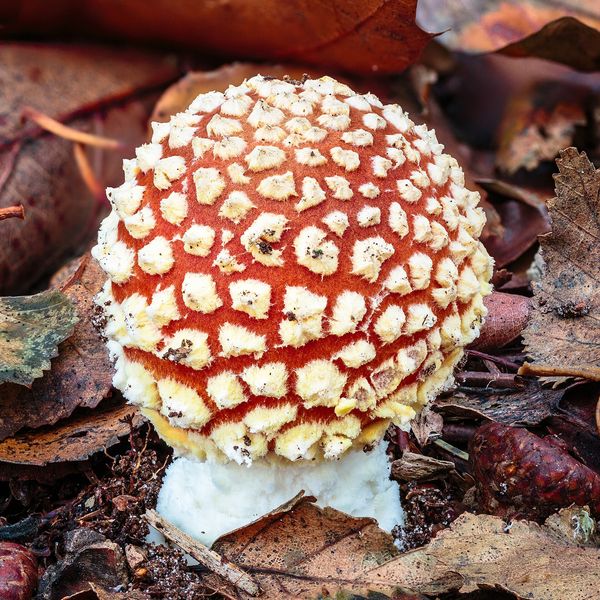
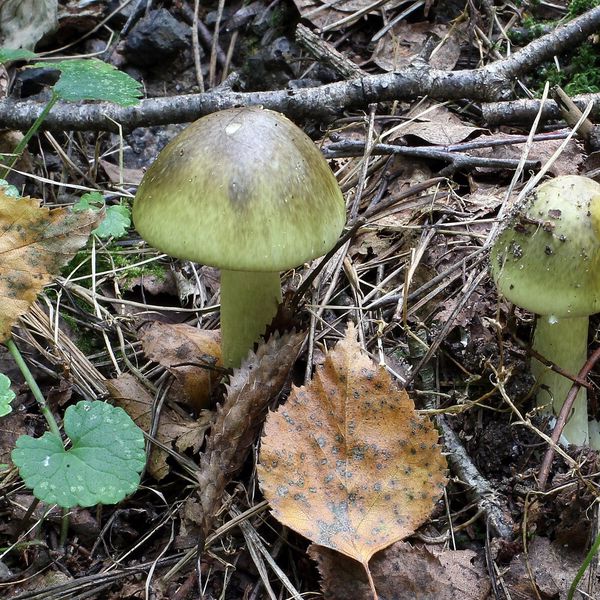
The flesh turns pink at the break and in damaged areas, the ring is ribbed, and the bulb lacks a distinct collar. Due to the risk of confusion, beginners are advised not to collect any of these mushrooms.
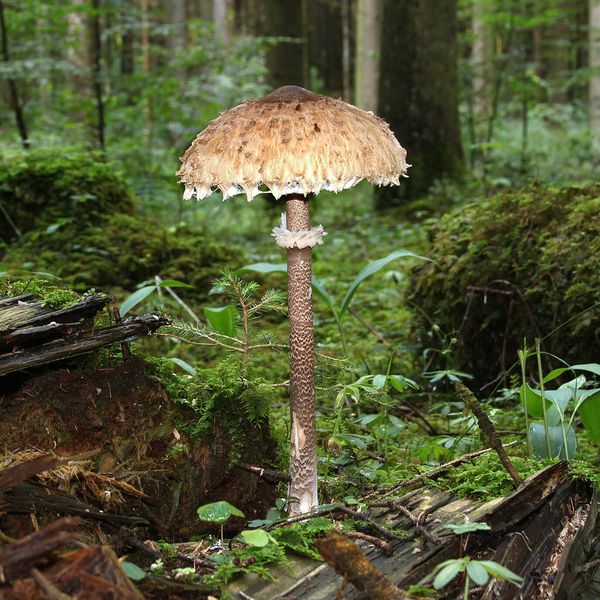
Significantly larger, with brown scales on the cap, the stem has a snake-like pattern, the ring is thick and movable, and there is no bulb with a collar at the base.
Protection and rules
Not protected. It is not advisable to destroy mushrooms in the forest: they are needed by the forest and animals.
FAQ
How does the Panther cap differ from the grey-pink fly agaric?
In the Panther cap, the flesh is white and does not change color, the ring is smooth, and the bulb has a distinct collar. In the grey-pink fly agaric, the flesh turns pink, and the ring is ribbed.
Is the Panther cap dangerous?
Yes, it is poisonous. Nausea, vomiting, agitation, or loss of consciousness usually occur one to three hours after eating.
Similar species
Where to meet it
Mountain ranges: In other countries: 🇷🇴 Poiana Ruscă Mountains, 🇷🇴 Buzău Mountains, 🇷🇴 Semenic Mountains, 🇸🇰 Low Tatras, 🇸🇰 Little Carpathians
Trails and peaks near which naturalists recorded the species (GBIF, iNaturalist), matched by altitude and habitat. Sightings are not guaranteed.
Sources
- Вікіпедія: Мухомор пантерний
- Wikipedia (en): Amanita pantherina
- МОЗ України: отруєння грибами — профілактика та перша допомога
GBIF · iNaturalist · Wikidata · Distribution data: GBIF.org (CC0 and CC BY records), iNaturalist; names and identifiers: Wikidata (CC0). Text: Karpaty.rocks, checked 09.11.2026.
