Sulphur tuft
Never identify a mushroom from a photo alone. If in doubt, leave it. In case of poisoning call 112 (103 in Ukraine) at once.
About
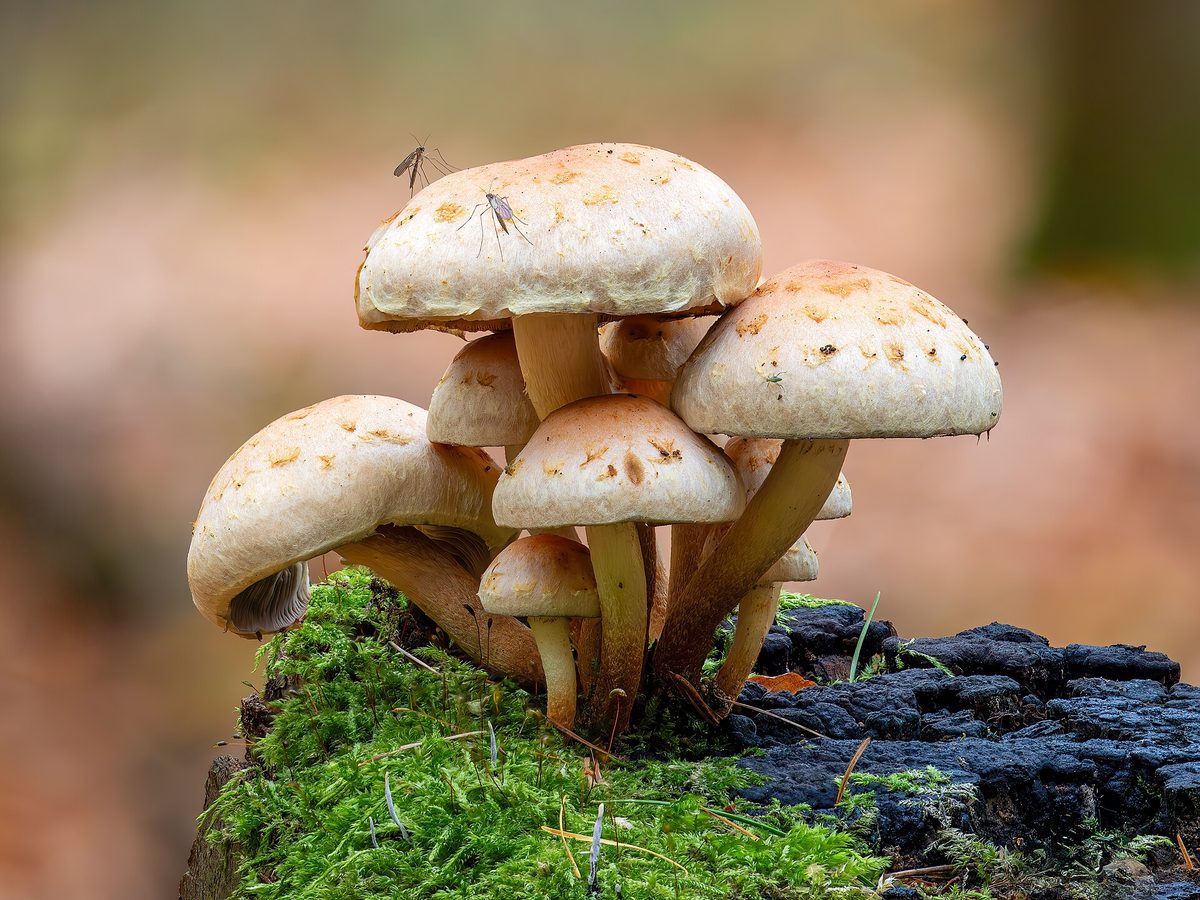
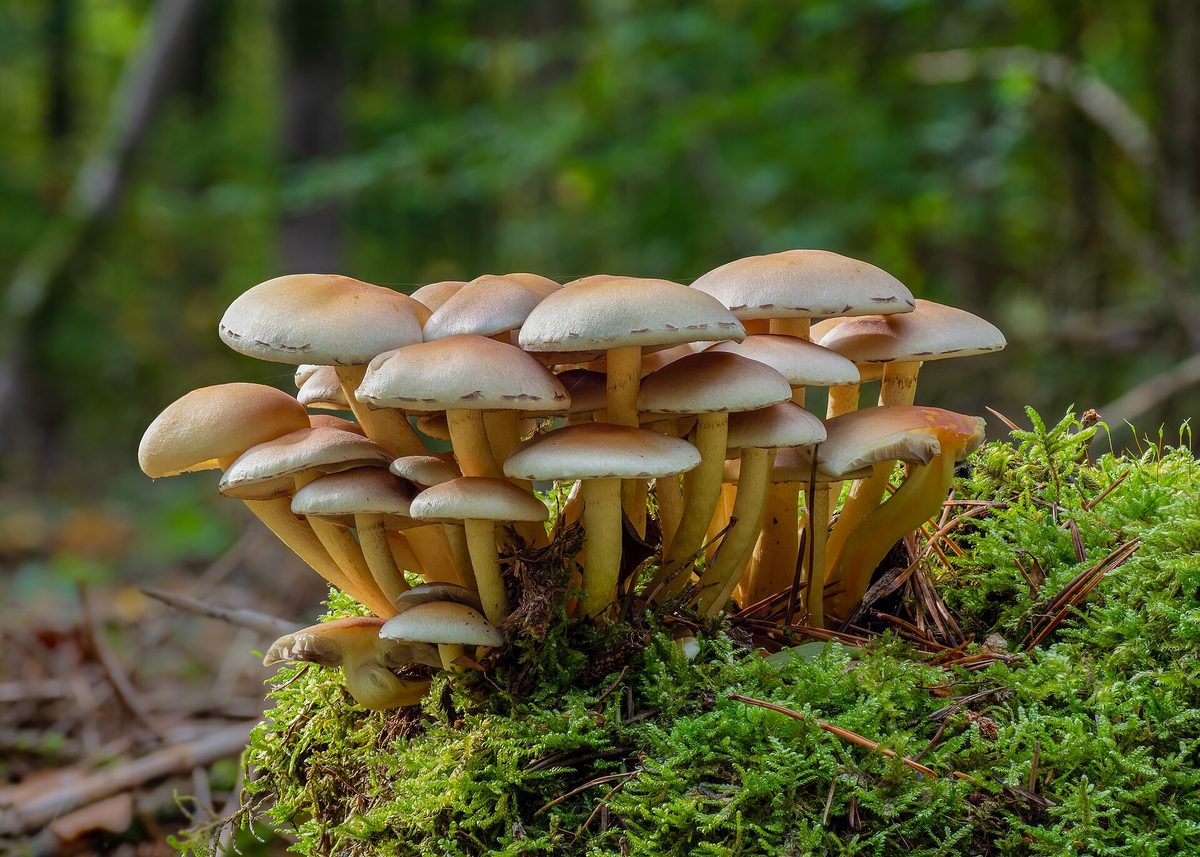
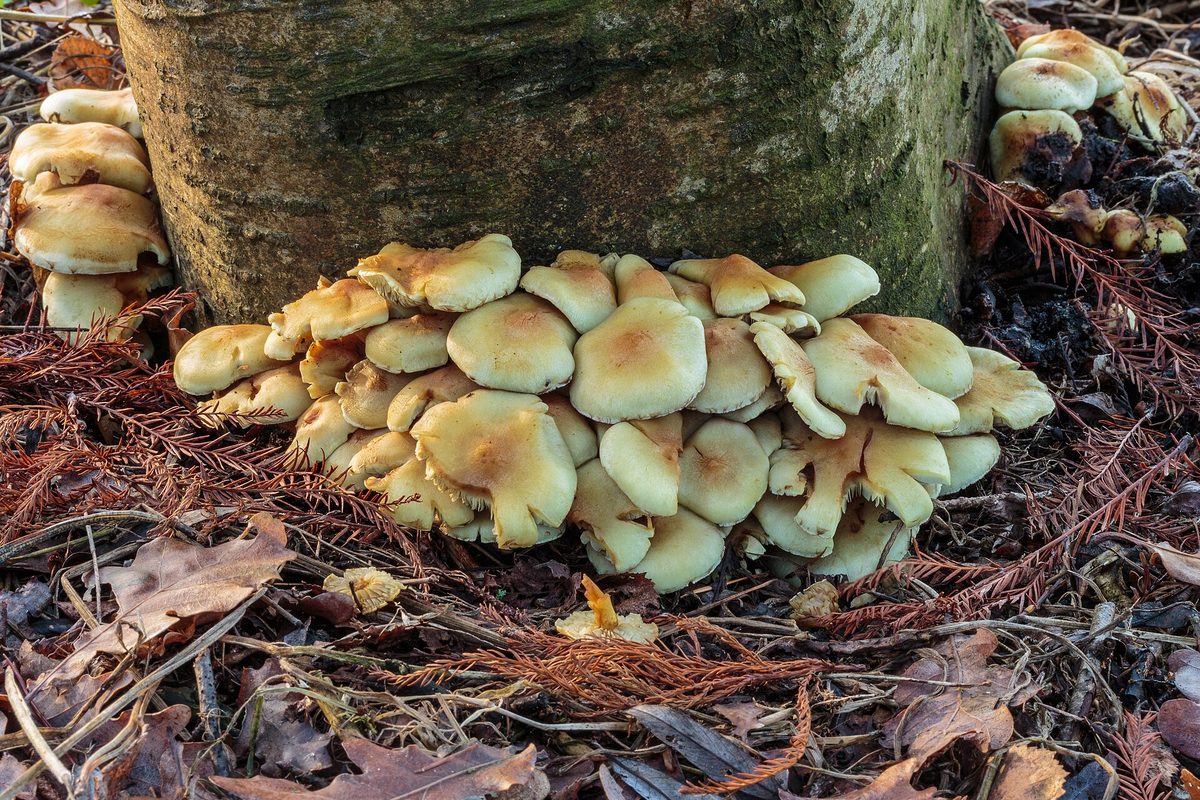
The false Sulphur tuft (Hypholoma fasciculare) is one of the most common causes of mistakes during the mushroom season. It grows in large clusters on old stumps, roots, and fallen wood of both deciduous and coniferous trees throughout Ukraine, including the Carpathian forests. Fruiting bodies appear from August to November, which is the same time as true Sulphur tufts.
The caps are small, 2–7 cm, initially hemispherical, then expanded, bright sulfur-yellow, darker in the center, reddish-orange. The edges of young mushrooms often show remnants of the veil, but there is no true membranous ring on the stem. The gills are dense, initially sulfur-yellow, but with age become characteristically greenish, later olive-brown. The stem is thin, yellow, and darkens towards the base. The flesh is yellow and very bitter.
The mushroom is poisonous. Steroidal compounds called fasciculol are considered responsible for this. Symptoms of poisoning may appear within a few hours: nausea, vomiting, diarrhea, and in severe cases—collapse, vision impairment, and paralysis. Ukrainian guides also mention fatal cases.
To avoid mistakes, inspect each cluster carefully. True Sulphur tufts have a honey-brown cap with small scales, white or cream gills, and a noticeable membranous ring on the stem. The sulfur-yellow color, greenish gills, and bitter taste are signals to leave the mushroom in the forest. Do not collect mixed clusters and do not put mushrooms you are unsure about into your basket: one poisonous specimen spoils the entire catch.
Where in the Carpathians

The map shows where naturalists recorded the species (GBIF, CC0 and CC BY records), not every place it lives. The Ukrainian Carpathians are less studied, so a blank area does not mean the species is absent.
- Countries
- Austria · Ukraine · Slovakia · Romania · Poland · Hungary · Czechia
- Mountain ranges
- Low Tatras, Gorgany, Polonynian Ridge, Skole Beskids, Silesian Beskids, Chornohora
- Altitude belts
- Foothills (below 600 m) · Beech forests (600–1200 m)
When to see it
| Jan | Feb | Mar | Apr | May | Jun | Jul | Aug | Sep | Oct | Nov | Dec | |
|---|---|---|---|---|---|---|---|---|---|---|---|---|
| Sightings |
From naturalists’ observations in the Carpathians (iNaturalist, research grade): the darker the cell, the more often the species is seen that month.
Safety
Poisonous. When collecting Sulphur tufts, check each cluster: sulfur-yellow cap, greenish gills, and absence of a ring indicate a false Sulphur tuft. Do not taste raw mushrooms. Mushroom dishes are not recommended for children under 12 years. In case of suspected poisoning, call 103 (or 112).
Look-alikes — how to tell them apart
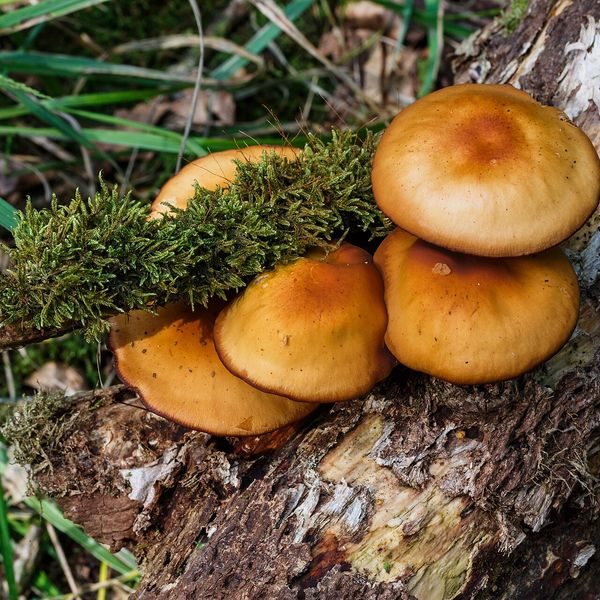
Cap honey-brown with small dark scales, gills white or cream, a noticeable membranous ring on the stem. The false Sulphur tuft has a bare, sulfur-yellow cap, greenish gills, no ring, and a bitter taste.
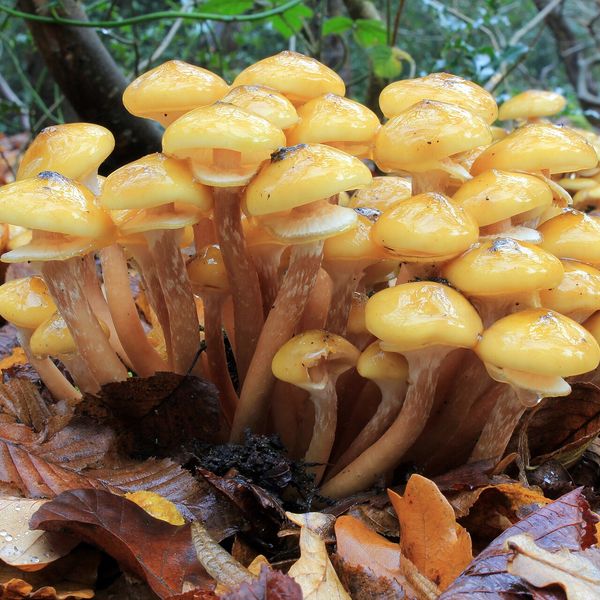
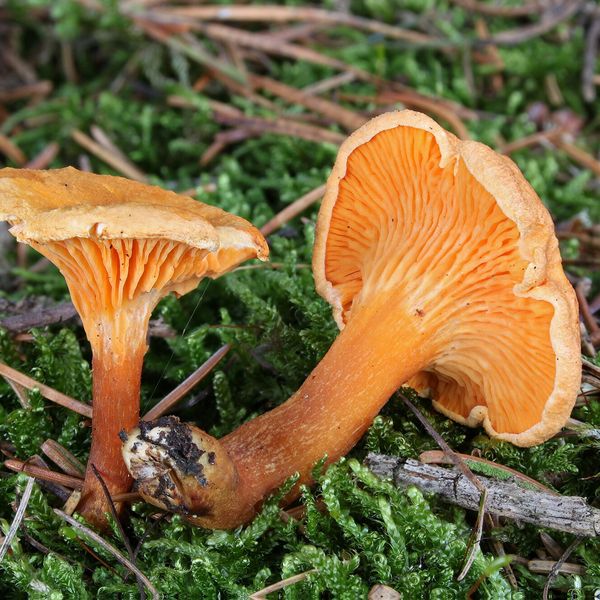
Another dangerous 'tuft' on wood: small ochre-brown caps, rusty-brown gills, and a thin ring. Contains amatoxins. Do not collect any small yellow-brown mushrooms from stumps.
Protection and rules
Not protected.
FAQ
How to distinguish false Sulphur tuft from true Sulphur tuft?
Look at the gills and stem. True Sulphur tuft has white gills and a ring on the stem. False Sulphur tuft has sulfur-yellow or greenish gills, no ring, and a bright yellow smooth cap.
Is false Sulphur tuft poisonous?
Yes. It causes severe poisoning with vomiting and diarrhea, and in some cases—collapse and vision impairment. It is not eaten raw or cooked.
Similar species
Where to meet it
Trails
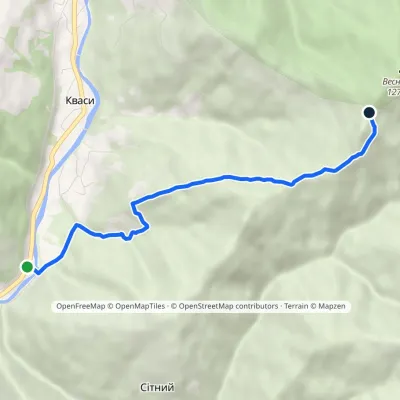 EasyOne-dayMarkedSitnyi Menchul (Kvasy village)Elevation profile509–1 216 m4.8 kmascent 707 m≈ 2.5 h walking
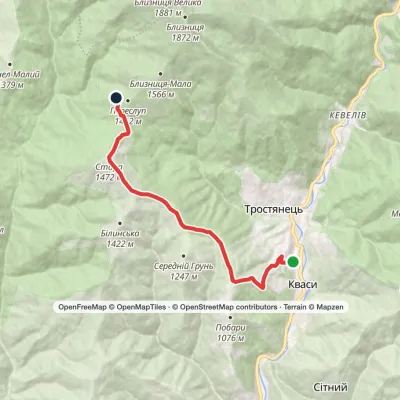 ModerateOne-dayMarkedKvasy village Mount PereslipElevation profile572–1 472 m10.2 kmascent 966 m≈ 4.5 h walking
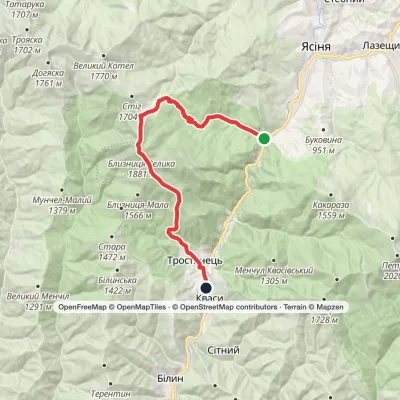 HardTwo-dayMarkedYasinia to Kvasy villagevia Dragobrat, Mount BlyznytsiaElevation profile544–1 883 m21.6 kmascent 1 356 m≈ 8 h walking
 HardMulti-dayMarkedKvasy village to Yasiniavia Mount Blyznytsia, Mount Stih +4Elevation profile556–1 883 m41 kmascent 2 390 m
 HardMulti-dayKvasy village to Yasiniavia Mount Blyznytsia, Mount Stih +2Elevation profile558–1 883 m51.7 kmascent 2 810 m
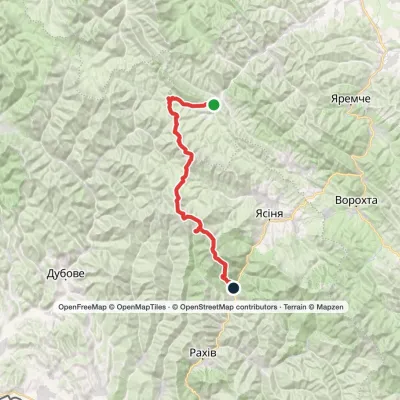 HardMulti-dayBystrytsia village to Kvasy villagevia Mount Durnia, Mount Bratkivska +2Elevation profile540–1 883 m64.5 kmascent 2 984 m
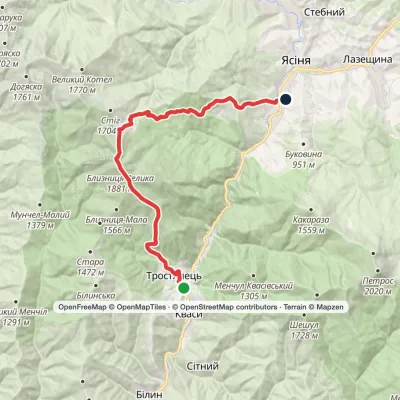 HardMulti-dayMarkedKvasy village to Yasiniavia Mount Blyznytsia, DragobratElevation profile541–1 883 m26.1 kmascent 1 470 m≈ 9.5 h walking
 HardMulti-dayKvasy village to Yasiniavia Mount Blyznytsia, Lake Ivor +1Elevation profile540–1 883 m32.4 kmascent 1 442 m≈ 11 h walking
 HardMulti-dayChorna Tysa village to Kvasy villagevia Mount Tataruka, Mount Dohiaska +1Elevation profile554–1 883 m48.8 kmascent 2 431 m
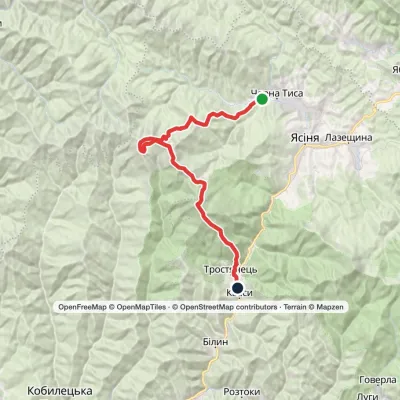 HardMulti-dayChorna Tysa village to Kvasy villagevia Mount Dohiaska, Mount Velykyi Kotel +1Elevation profile546–1 883 m36.8 kmascent 2 056 m≈ 13.5 h walking
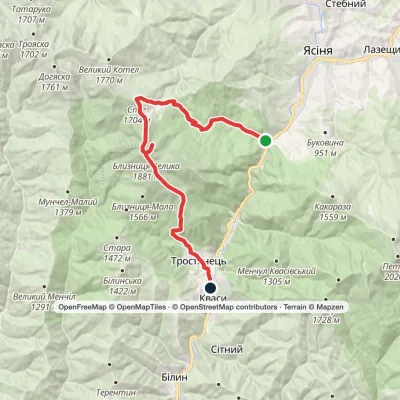 HardMulti-dayMarkedYasinia to Kvasy villagevia Dragobrat, Mount Blyznytsia +1Elevation profile540–1 883 m24.3 kmascent 1 688 m≈ 9.5 h walking
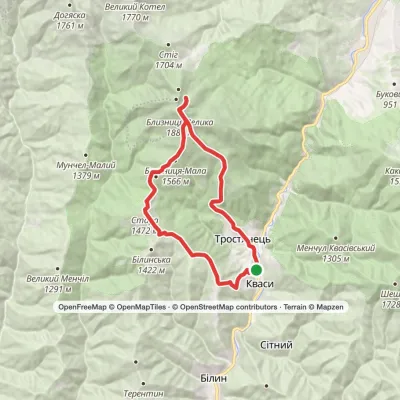 HardMulti-dayMarkedKvasy village loopvia Mount Stara, Mount Blyznytsia +1Elevation profile539–1 883 m25.8 kmascent 1 858 m≈ 10 h walking
Mountain ranges: Gorgany, Polonynian Ridge, Skole Beskids, Chornohora. In other countries: 🇸🇰 Low Tatras, 🇵🇱 Silesian Beskids
Trails and peaks near which naturalists recorded the species (GBIF, iNaturalist), matched by altitude and habitat. Sightings are not guaranteed.
Sources
- Вікіпедія: Опеньок сірчано-жовтий несправжній
- Wikipedia (en): Hypholoma fasciculare
- Wikipedia (en): Armillaria mellea
- МОЗ України: отруєння грибами — профілактика та перша допомога
- iNaturalist: Hypholoma fasciculare (спостереження в Карпатах)
GBIF · iNaturalist · Wikidata · Distribution data: GBIF.org (CC0 and CC BY records), iNaturalist; names and identifiers: Wikidata (CC0). Text: Karpaty.rocks, checked 09.11.2026.
