False chanterelle
Never identify a mushroom from a photo alone. If in doubt, leave it. In case of poisoning call 112 (103 in Ukraine) at once.
About
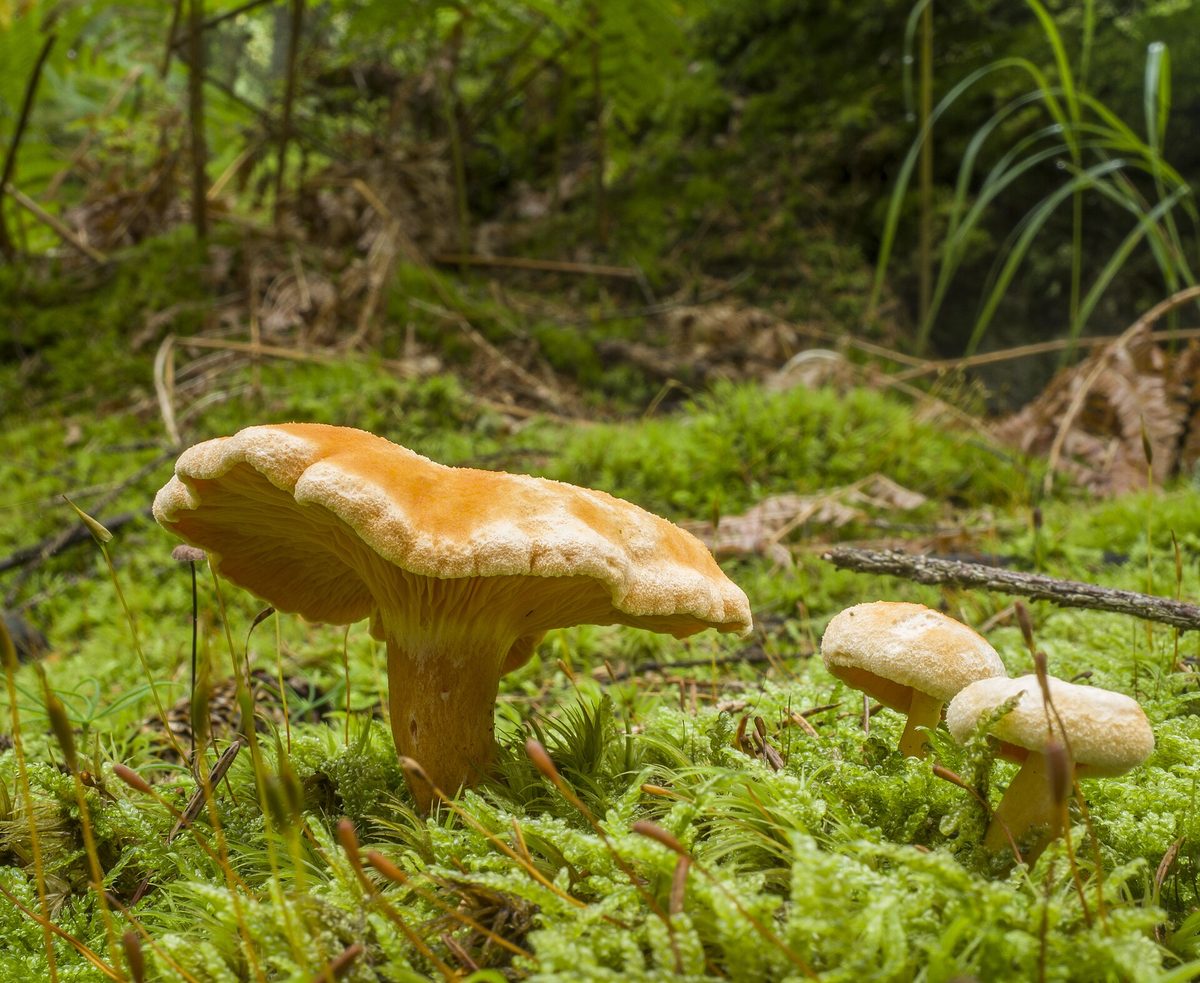
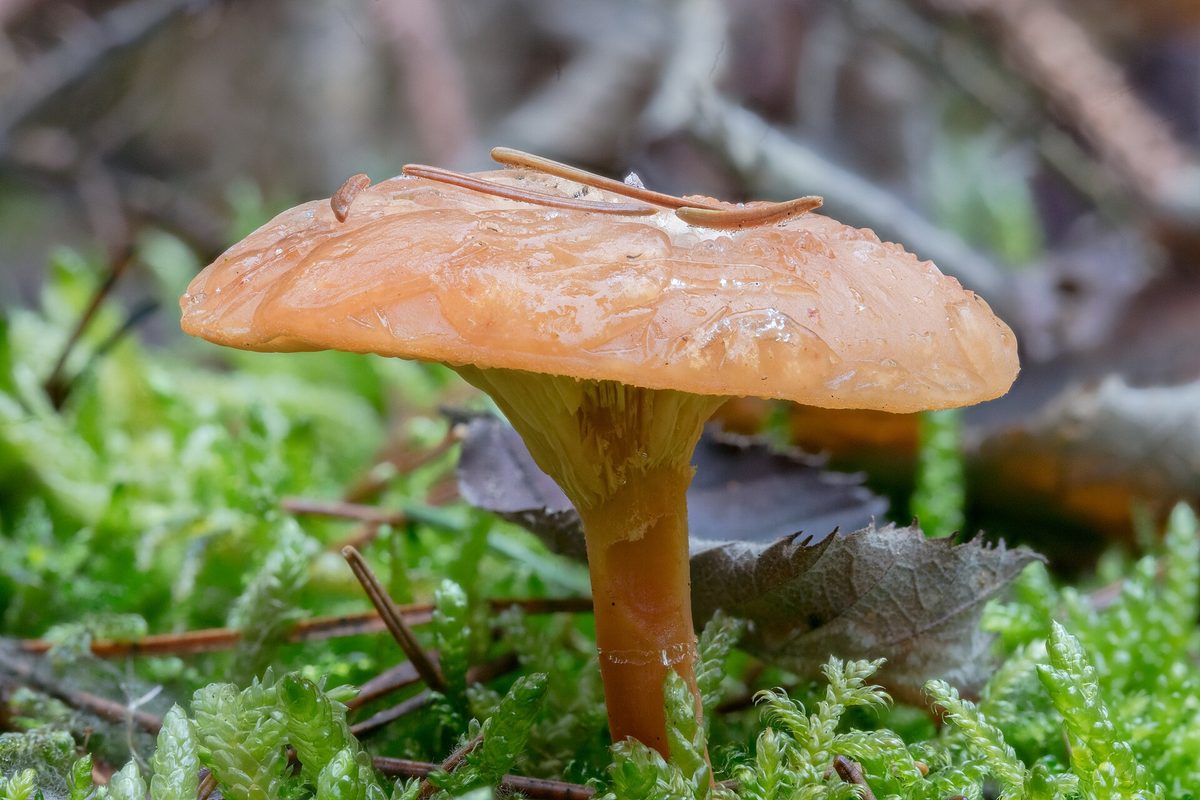
The False chanterelle is the most common lookalike of the true chanterelle in the Carpathians. It grows in coniferous and mixed forests on litter, decaying wood, stumps, and among moss, and appears mainly from late summer to mid-autumn.
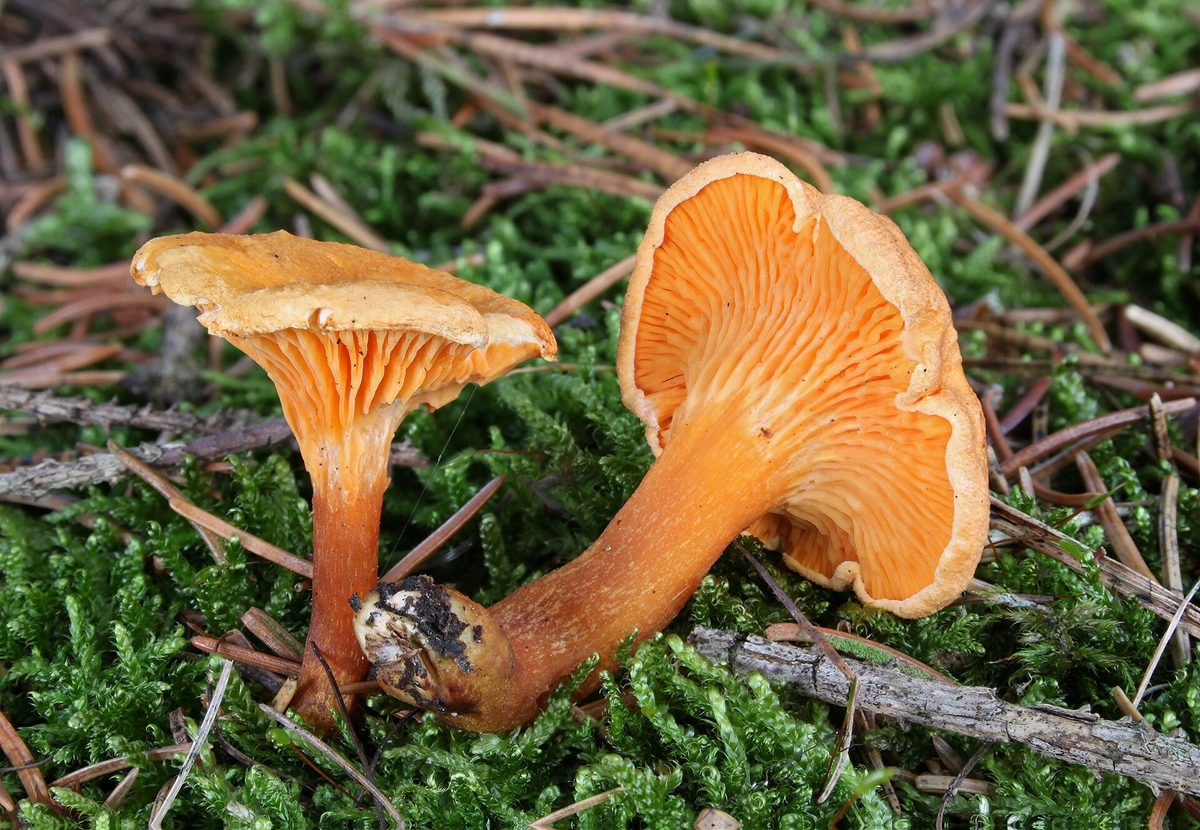
The cap is 2–8 cm, orange or yellow-orange, funnel-shaped with age, with a thin, rolled edge; often darker and brownish in the center. Under the cap, there are dense, thin, several times forked true gills of a brighter orange color than the cap. The stem is thin, often bent. The flesh is soft, yellowish, without the characteristic fruity smell of the true chanterelle.
The edibility of this mushroom has long been debated. As early as 1821, Elias Fries called it poisonous, later it was considered of little value but edible, while modern guides do not recommend eating it: cases of digestive upset have been reported. According to our safety rule, when sources diverge, we choose the stricter assessment, thus marking the mushroom as poisonous.
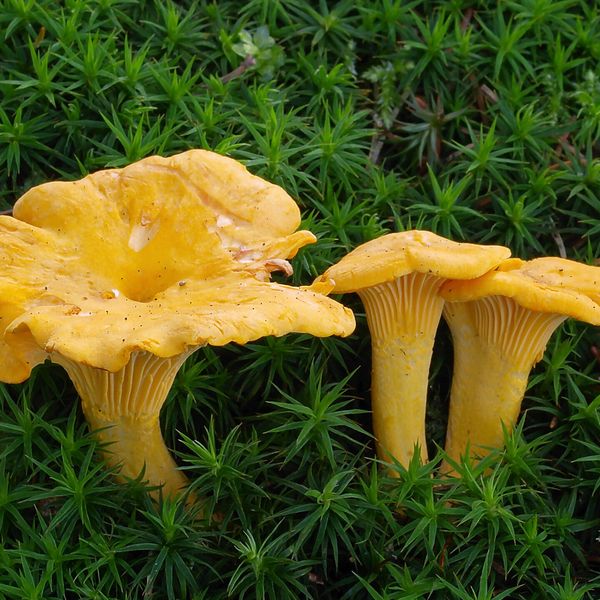
To avoid confusion, compare the hymenophore. The true chanterelle has thick, blunt, low folds instead of gills under the cap, and the entire mushroom is firm and uniformly yellow. The False chanterelle is thinner, softer, with bright orange thin gills and often grows on wood, which the true chanterelle does not.
This species does not live in the Ukrainian Carpathians today — you can see it in other Carpathian countries.
Where in the Carpathians

The map shows where naturalists recorded the species (GBIF, CC0 and CC BY records), not every place it lives. The Ukrainian Carpathians are less studied, so a blank area does not mean the species is absent.
- Countries
- Slovakia · Austria · Czechia
- Mountain ranges
- Lesser Fatra, Volovec Mountains, Little Carpathians
- Altitude belts
- Foothills (below 600 m) · Beech forests (600–1200 m)
When to see it
| Jan | Feb | Mar | Apr | May | Jun | Jul | Aug | Sep | Oct | Nov | Dec | |
|---|---|---|---|---|---|---|---|---|---|---|---|---|
| Sightings |
From naturalists’ observations in the Carpathians (iNaturalist, research grade): the darker the cell, the more often the species is seen that month.
Safety
Do not collect for food: may cause digestive upset. Check each 'chanterelle' — thin orange gills indicate a false one. In case of poisoning, call 112.
Look-alikes — how to tell them apart
Equally egg-yellow, firm; instead of gills, thick branched folds; fruity smell; does not grow on wood.
Protection and rules
Not protected. It is not advisable to destroy mushrooms in the forest: they are needed by the forest and animals.
FAQ
How to distinguish the False chanterelle from the True chanterelle?
The False chanterelle has thin dense orange gills, soft flesh, and often grows on decaying wood. The True chanterelle has thick folds instead of gills, firm flesh, and a fruity smell.
Can the False chanterelle be eaten?
It is not advisable. Guides do not recommend it: cases of digestive upset have been reported.
Similar species
Where to meet it
Mountain ranges: In other countries: 🇸🇰 Lesser Fatra, 🇸🇰 Volovec Mountains, 🇸🇰 Little Carpathians
Trails and peaks near which naturalists recorded the species (GBIF, iNaturalist), matched by altitude and habitat. Sightings are not guaranteed.
Sources
- Вікіпедія: Лисичка несправжня
- Wikipedia (en): Hygrophoropsis aurantiaca
- МОЗ України: отруєння грибами — профілактика та перша допомога
GBIF · iNaturalist · Wikidata · Distribution data: GBIF.org (CC0 and CC BY records), iNaturalist; names and identifiers: Wikidata (CC0). Text: Karpaty.rocks, checked 09.11.2026.
