Golden chanterelle
Never identify a mushroom from a photo alone. If in doubt, leave it. In case of poisoning call 112 (103 in Ukraine) at once.
About
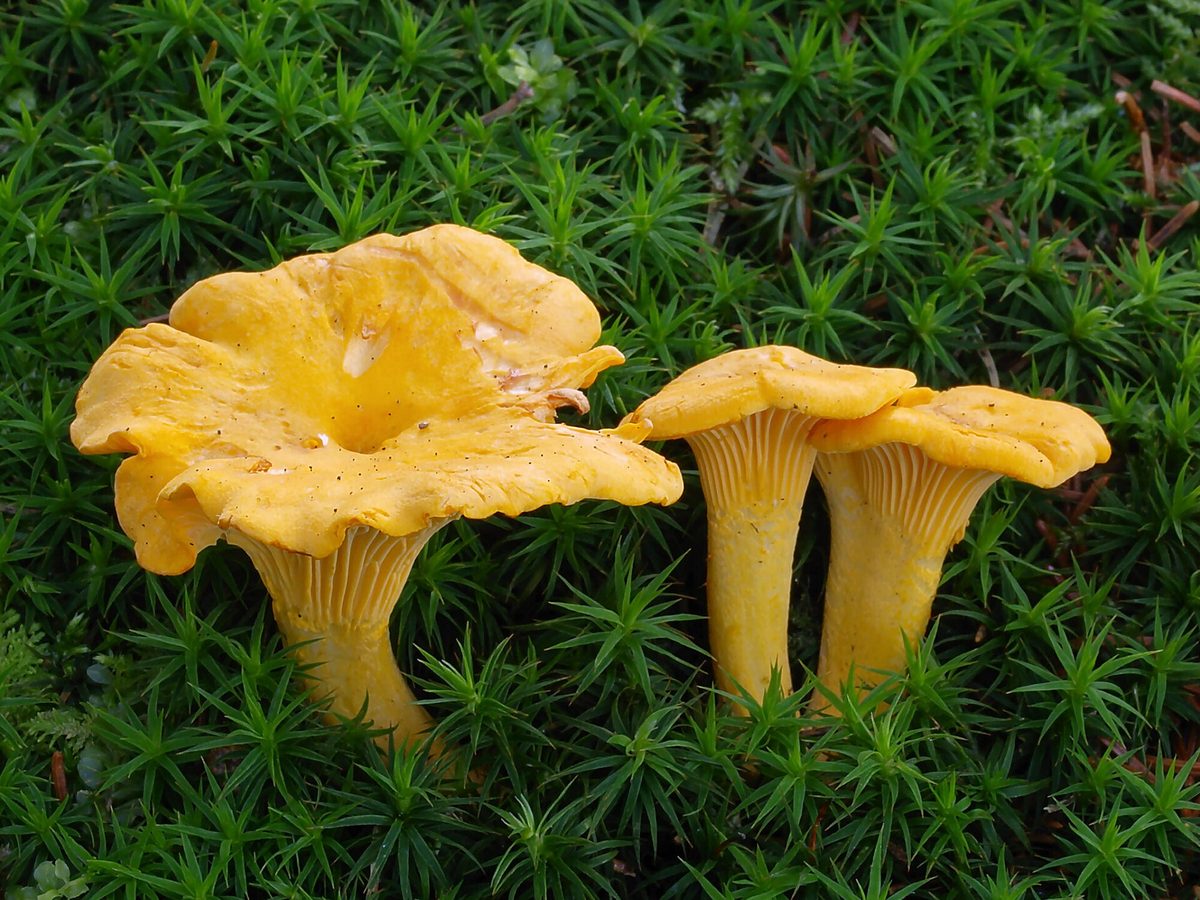
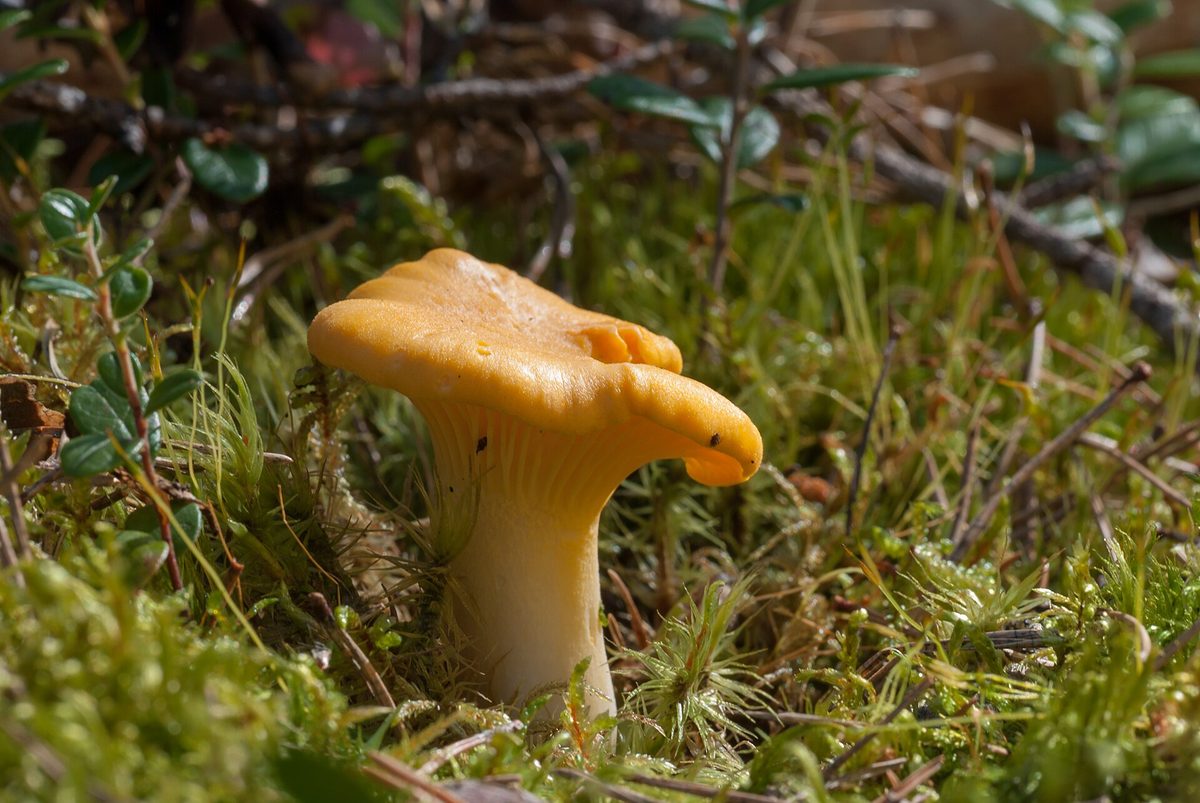
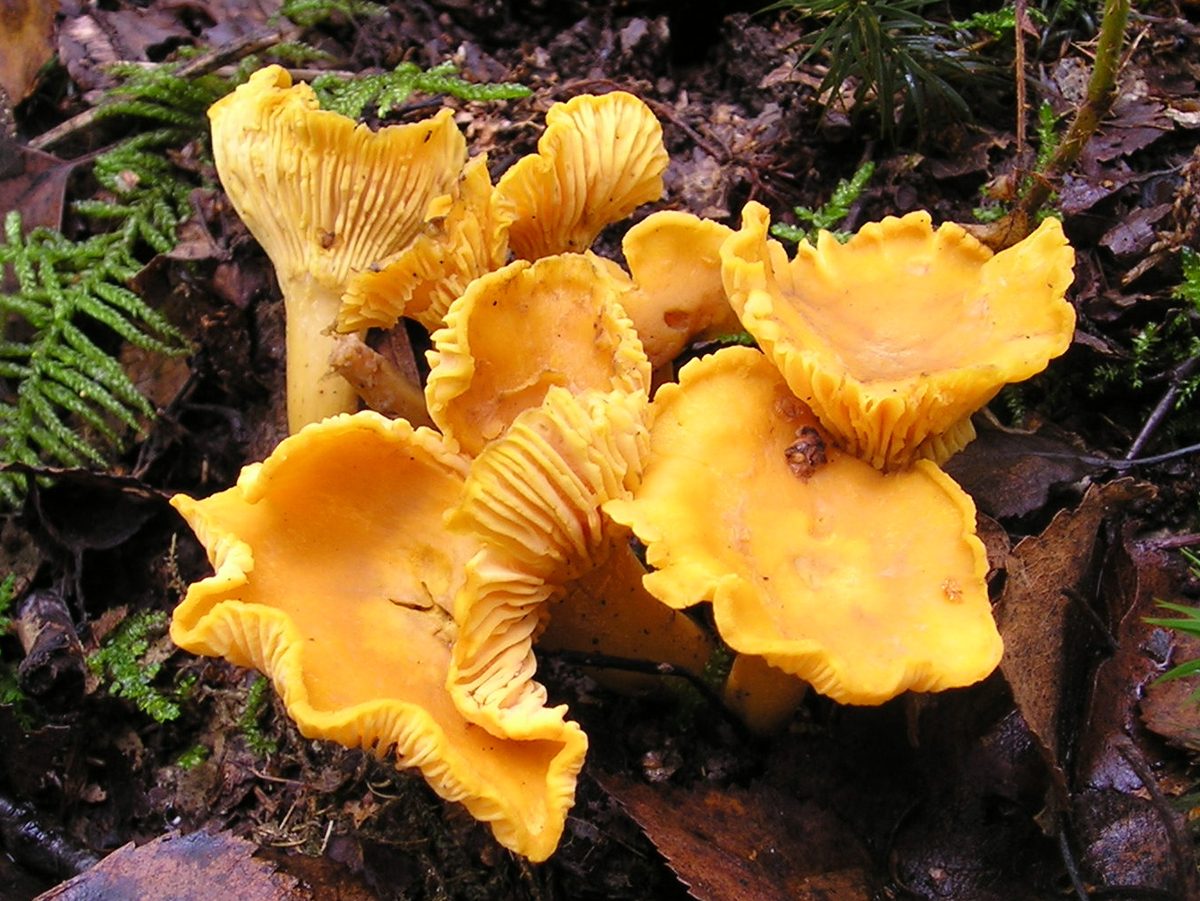
The Golden chanterelle is one of the most abundant mushrooms in the Carpathians, especially in rainy summers. It forms mycorrhiza with beech, spruce, fir, oak, and birch, so it can be found in almost all forests from the foothills to the coniferous belt. It grows in groups or in lines in moss, along the edges of forest paths, and among the litter.
The entire mushroom is uniformly yellow — from light yellow to rich egg-yellow. The cap becomes funnel-shaped with age, with wavy, rolled edges. Under the cap, there are not true gills, but thick, blunt, branched folds that smoothly descend to the stem. The flesh is dense, whitish, with a light fruity aroma reminiscent of apricot. Wormy chanterelles are rare.
The season lasts from June to October. After warm rains, chanterelles appear quickly and grow for a long time, so in one area, several waves can be found during the season.
In the Carpathians, chanterelles can be found in beech forests of the low mountains and in spruce forests higher up in the mountains. This mushroom is sensitive to trampling and soil drying, so the yield varies from year to year in the same places. Collecting chanterelles for personal use in state and communal forests is allowed without a permit, but in reserves — it is not.
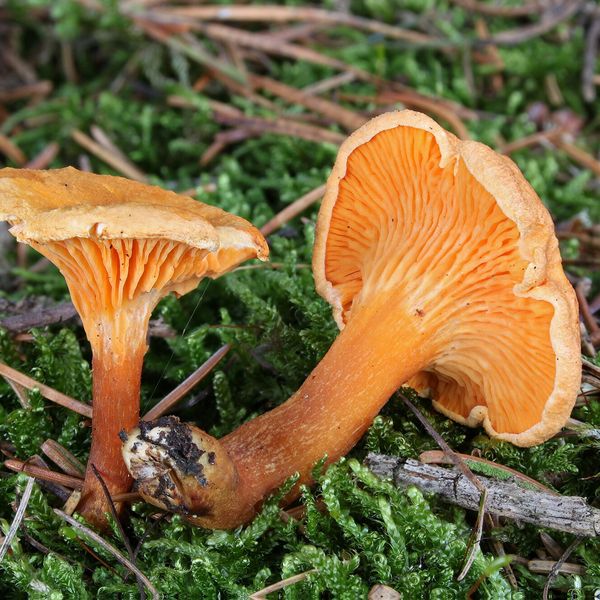
Beginners should learn to identify two lookalikes. The false chanterelle has thin true gills, a bright orange color, and a soft flesh; it can cause digestive upset. Omphalotus is a poisonous mushroom that grows in clusters on wood. The true chanterelle does not grow on wood and does not have thin gills.
Where in the Carpathians

The map shows where naturalists recorded the species (GBIF, CC0 and CC BY records), not every place it lives. The Ukrainian Carpathians are less studied, so a blank area does not mean the species is absent.
- Countries
- Slovakia · Romania · Poland · Ukraine · Czechia · Austria
- Mountain ranges
- Harghita and Gurghiu Mountains, Western Tatras, Făgăraș Mountains, Low Tatras, Piatra Craiului, Lesser Fatra, Gorgany, Skole Beskids, Gorce, Low Beskids
- Altitude belts
- Foothills (below 600 m) · Beech forests (600–1200 m)
When to see it
| Jan | Feb | Mar | Apr | May | Jun | Jul | Aug | Sep | Oct | Nov | Dec | |
|---|---|---|---|---|---|---|---|---|---|---|---|---|
| Sightings |
From naturalists’ observations in the Carpathians (iNaturalist, research grade): the darker the cell, the more often the species is seen that month.
Safety
Check the hymenophore: the Golden chanterelle has thick branched folds, not thin gills. Do not collect 'chanterelles' from wood and stumps. Mushroom dishes are not recommended for children under 12 years old. In case of poisoning, call 103.
Look-alikes — how to tell them apart
Orange, with thin dense forked gills; soft flesh, without fruity aroma; grows on coniferous litter and decayed wood.
Grows in dense clusters on wood or roots of deciduous trees; true unbranched gills; orange flesh.
Protection and rules
Not protected. Collecting mushrooms is prohibited in reserves and protected areas of national parks.
FAQ
When to collect chanterelles in the Carpathians?
From June to October. They are most abundant after warm rains in July and August.
How to distinguish true chanterelles from false ones?
True chanterelles have thick branched folds under the cap, dense flesh, and a fruity aroma. The false one has thin true gills, a brighter orange color, and often grows on decayed wood.
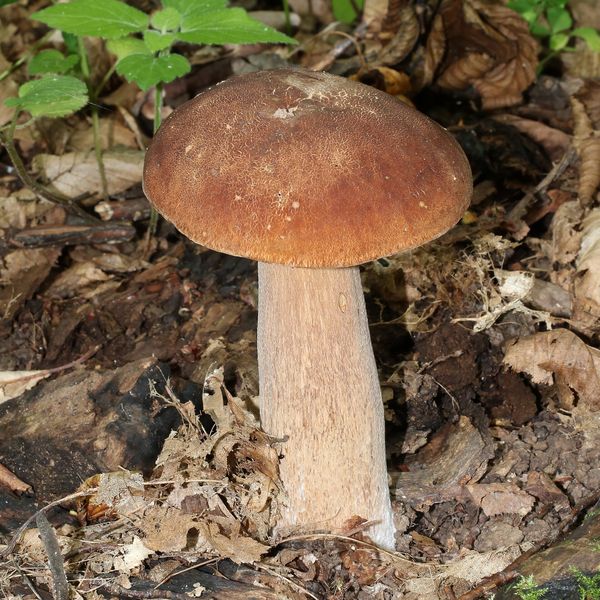
Similar species
Where to meet it
Trails
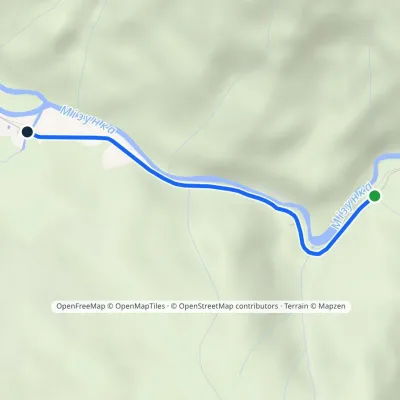 EasyOne-dayMarkedMizunskyi Waterfall Dubovyi KutElevation profile527–556 m2.8 kmascent 25 m≈ 45 min walking
 HardMulti-dayYaremche to Zelena villagevia Divochi Slozy Waterfall, Pereslip PassElevation profile523–996 m28 kmascent 538 m≈ 8 h walking
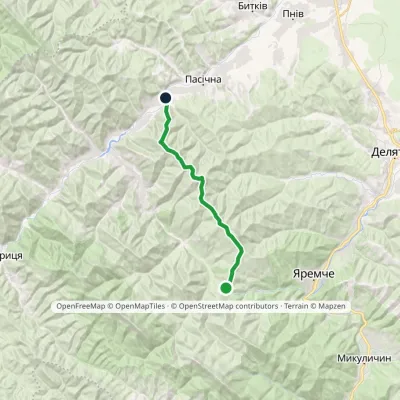 ModerateTwo-dayMarkedPasichna village Pereslop PassElevation profile548–1 324 m17.3 kmascent 1 085 m≈ 6.5 h walking
Mountain ranges: Gorgany, Skole Beskids. In other countries: 🇷🇴 Harghita and Gurghiu Mountains, 🇸🇰 Western Tatras, 🇷🇴 Făgăraș Mountains, 🇸🇰 Low Tatras, 🇷🇴 Piatra Craiului, 🇸🇰 Lesser Fatra, 🇵🇱 Gorce, 🇵🇱 Low Beskids, 🇷🇴 Bihor-Vlădeasa Mountains
Trails and peaks near which naturalists recorded the species (GBIF, iNaturalist), matched by altitude and habitat. Sightings are not guaranteed.
Sources
- Вікіпедія: Лисичка справжня
- Wikipedia (en): Cantharellus cibarius
- Wikipedia (en): Hygrophoropsis aurantiaca
- Rozporządzenie Ministra Zdrowia z 17.05.2011, t.j. Dz.U. 2023 poz. 2237: wykaz grzybów dopuszczonych do obrotu (Польща)
- МОЗ України: отруєння грибами — профілактика та перша допомога
- Лісовий кодекс України, ст. 69: загальне використання лісових ресурсів (збирання грибів і ягід для власних потреб)
GBIF · iNaturalist · Wikidata · Distribution data: GBIF.org (CC0 and CC BY records), iNaturalist; names and identifiers: Wikidata (CC0). Text: Karpaty.rocks, checked 09.11.2026.
