Dovbush Rocks in the Village of Bubnyshe
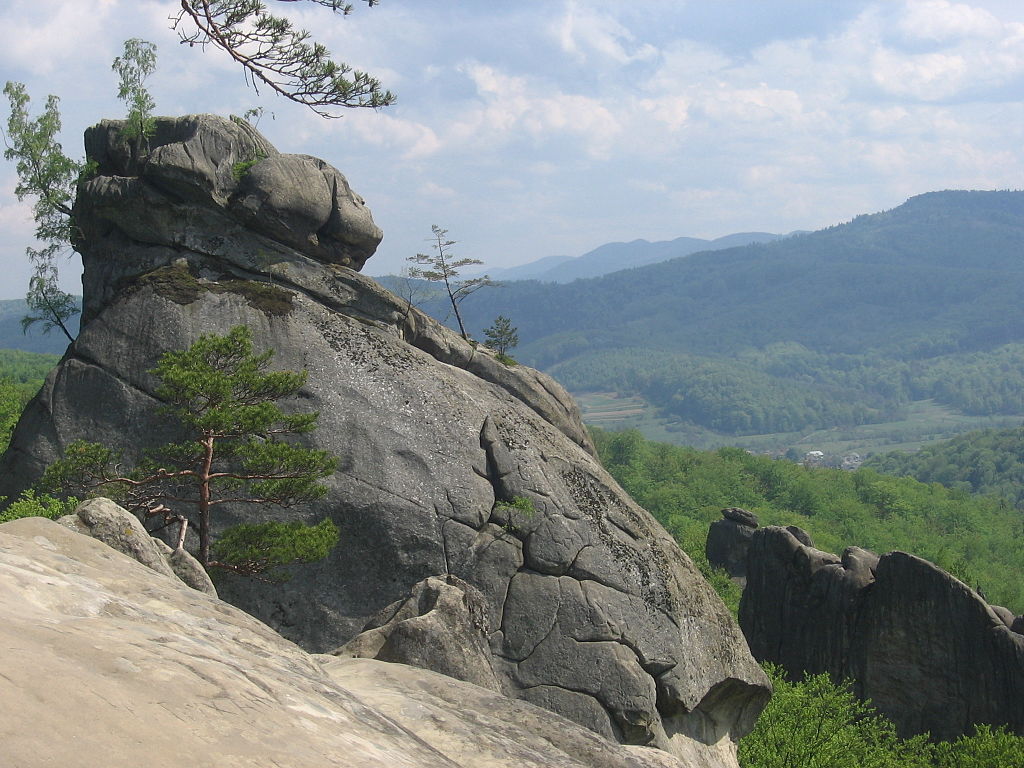
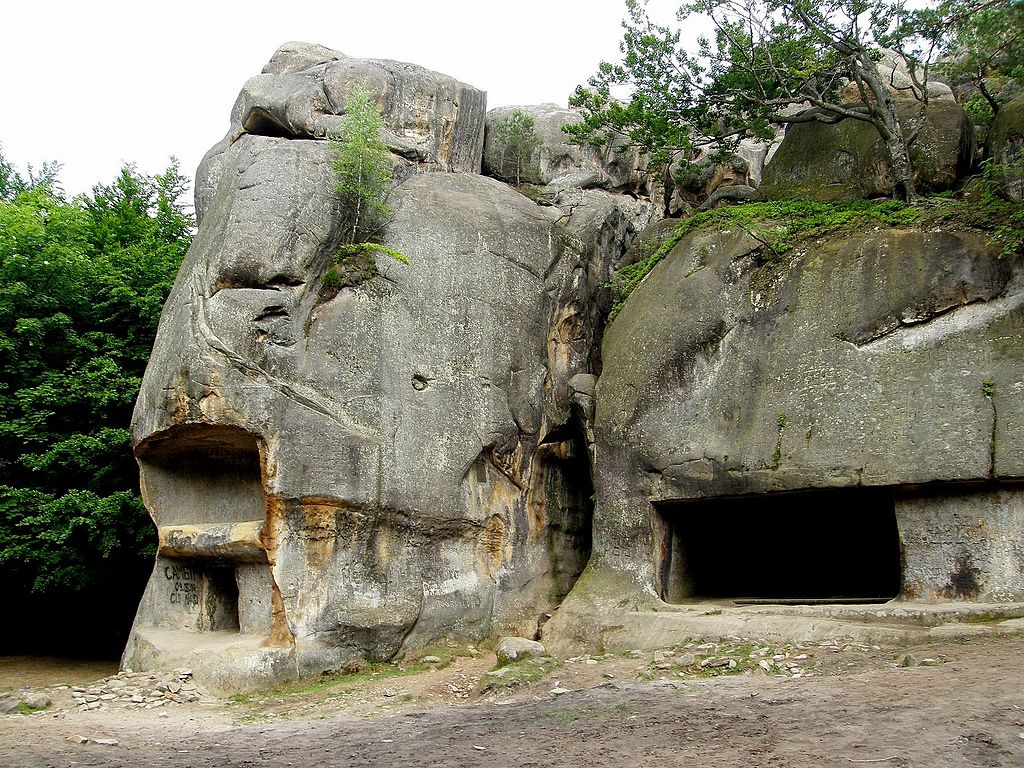

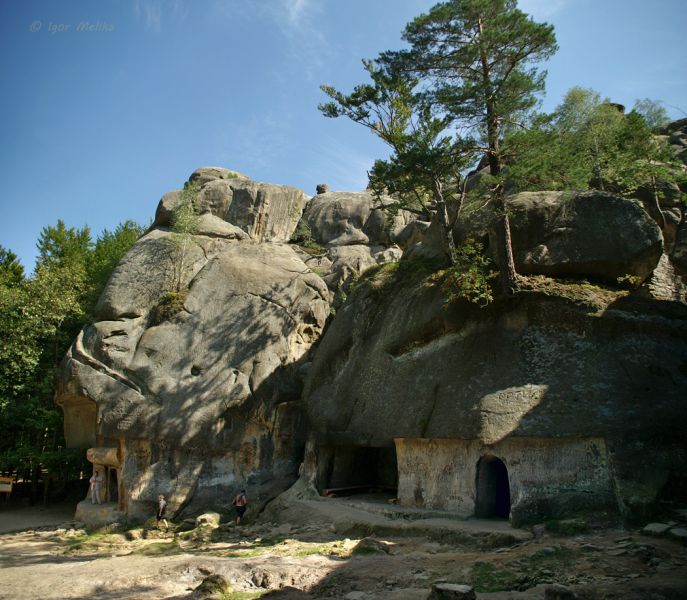
The complex "Dovbush Rocks" is a natural monument of national significance, a unique monument of history and architecture from the early Middle Ages. The rocky cave complex "Dovbush Rocks" covers an area of 100 hectares and is located southwest of the city of Bolekhiv near the village of Bubnyshe. You will be amazed by the unique shapes of the huge rocks and giant stones that resemble bizarre images of animals and various amazing creatures.
The rocky cave complex "Dovbush Rocks" is an interesting accumulation of gigantic stones, 30-50 meters high, formed thousands of years ago on the seabed. A nature-created labyrinth stretches almost a kilometer from east to west, reaching a width of 200 meters. According to archaeologists, there was a pagan shrine here, and later a Christian monastery.
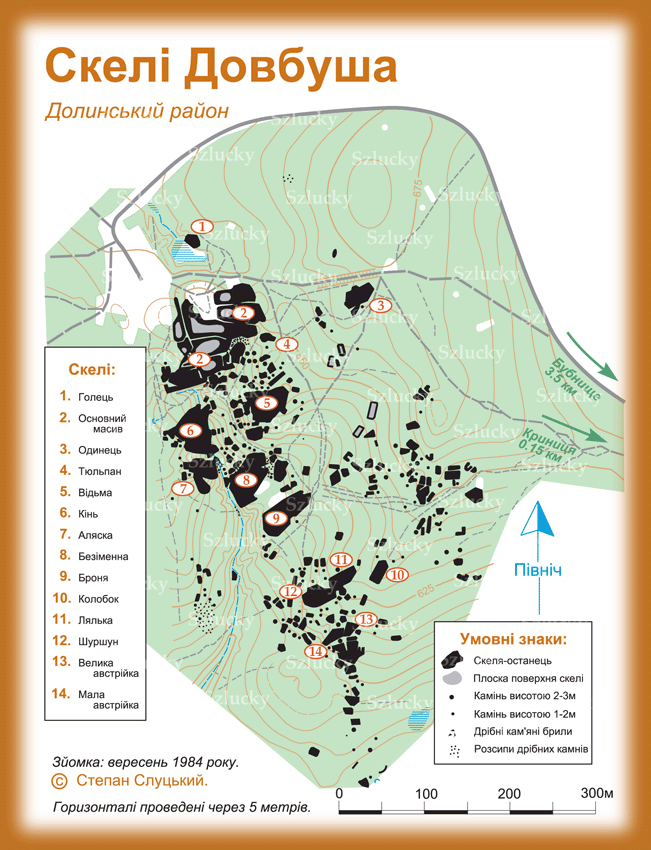
The main group of Bubnyshe rocks is located near the villages of Bubnyshe and Polyanytsia in Ivano-Frankivsk, and the village of Trukhaniv in Lviv regions, in the Zalom area on the southern slope of Mount Sokilova, within a ridge 200 m wide and 600 m long, stretching from the top (670 m above sea level) - north-northeast down (575 m above sea level) - to the south-southeast.
It is a pure truth that the rocky-cave complex Bubnyshe rocks has long been a powerful defensive stronghold. Together with the fortress "Tustan" in Urich and the rocky monastery in Rozhirche, near Striy, it formed a single system in which our distant ancestors defended their land and their faith.
The gathering place for tourists is the crescent of the main massif with:
- an inner area;
- caves characterized by clear geometric shapes;
- traces from wells; stairs carved into stone blocks;
- a ditch and remnants of a defensive rampart.
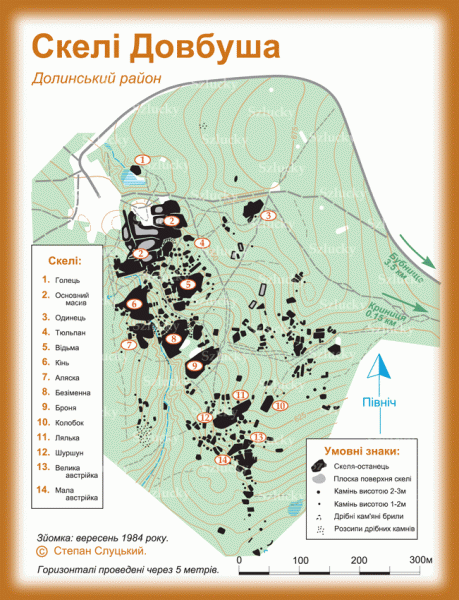
The main massif is surrounded by wonderful stone statues of natural origin. People have given them bizarre names – "Kolobok", "Tulip" (40 meters high), "Doll", "Sails", "Viy", "Witch's massif", "Armor", "Shurshun", "Dog-bear's kiss", "Salvador Dali's suitcase", "Space villains", "Jolly Roger", "Lamb's grumbling", "Bridge over eternity", "Life is beautiful", "Heartfelt relationships", etc. During your trip to Dovbush Rocks, take the opportunity to appease "the Forest Master", carved on the "Dragon's tail", decipher ancient inscriptions, take a photo against the backdrop of the heroic stone, and examine the stone ear and heart of Oleksa Dovbush.
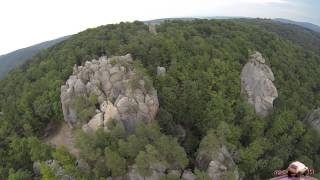
In some places, the distance between the rocks is very narrow – only 20-30 centimeters. Tourists experience conflicting feelings. In the caves between the rocks, it becomes darker, you can hear the squeaks and rustling of bat wings, as well as the echoes of dripping water. As you make your way, it may momentarily seem that there is no way out! You have to move in the twilight for a while, trying to squeeze through these thirty centimeters. Once you get to the top, a whole ensemble of rocky caves awaits you. Special attention is drawn to an unusual rock, in which you can discern the image of a lion. According to popular legend, this predator guards the buried treasures of the folk hero Oleksa Dovbush, which no one has been able to find yet. There are also stairs that allow you to climb to the mane of the lion rock and appreciate the stunning panorama of Prykarpattia. Up there, there is a "wish stone", and touching it, you should ask for the fulfillment of your most cherished dream, and it will surely come true!
Folklore closely connects Dovbush Rocks (Bubnyshe) with the name of the folk avenger Oleksa Dovbush. According to legends, he hid his treasures here. It is said that Dovbush and his companions dug caves in the rocks. The main one was located in the rock Odynets. After Dovbush's death, his comrades hid a lot of gold in the cave of this rock, which they took from innkeepers and merchants. The cave Odynets is closed by a rotating stone. When it is turned sideways, one can enter inside. To open the passage, it is necessary to say a magic word. The person who knew that word has long since died. Thus, those treasures have been lying under the rock for over a hundred years.
There are three caves in the rocks that have clear geographical shapes. One of the places where stones accumulate resembles a lion's head. Archaeologists have found traces of processing on some stones – apparently, people helped nature a bit. Dovbush Rocks, besides the complex of rocks itself, attract tourists with picturesque landscapes of the surrounding mountains, beautiful bright beech forests, and a waterfall located near the complex.
Dovbush Rocks (Bubnyshe) is a permanent training ground for climbers. It is said to be one of the best places for rock climbing in Ukraine. The height of some rocks reaches 80 meters. On one of the rocks, they installed a memorial sign and a cross in memory of fallen friends.
According to legends about Bubnyshe and Dovbush
Walk through secret paths and passages, through dark gorges, and perhaps you will see the image of a brave lion or the heart of the brave Oleksa Dovbush. If you touch the stone heart with your hand and make a wish, it will surely come true. Locals claim that each rock reflects a part of the body of the robber Dovbush. Thus, you will be able to "notice" Dovbush's fist. Each of the rocks has its own interesting and unusual name: Holets, Kolobok, Avstriika, Sail, Tulip, Bivachka, Bronenosec, and Shurshun. An interesting legend is about the Dead Lake, which is located at an altitude of 900 meters. It is said that it was here that Dovbush hid his treasures.
Ukrainian historian and political figure Mykhailo Hrushevsky suggested that the rocky-cave complex "Dovbush Rocks" (Bubnyshe) served a defensive function. Tourists are particularly attracted to the mysterious place - "Devil's Gorge". It is 20 centimeters wide. If the legend is to be believed, those who pass through it will rid themselves of sins. So, it will take a lot of effort to squeeze into this small crevice.

Be sure to climb one of the rocks. From there, you will see picturesque views of the Carpathians! At the top of the rock, there is a memorial place where tourists tie a ribbon knot as a sign that they have been here. Local guides also offer tourists to take a memorable photo with a falcon or take a horseback ride. On the territory surrounded by caves and stones, there is an ancient well. Its current depth is 5-6 meters, although in ancient times it was much deeper. You can climb to the well using stone stairs.
At the end of your walk, visit the hut nearby. Here you can warm up by the fire and taste delicious Hutsul dishes. You can also organize a picnic or relax with a tent in the forest. It is said that at night, there is a special atmosphere filled with the romance of travel and the heroism of adventures.
Most scholars believe that the Dovbush Rocks are likely the remains of a rock monastery similar to the Maniava Skit.
The botanical-geomorphological reserve "Dovbush Rocks" was approved as a natural monument of republican significance in 1981. Its area is 100 ha. The main group of rocks, up to 30 m high, forms a semicircle around the inner area from the north and east, limited on the west side by a ditch and, apparently, a defensive rampart. The height of the entrance to the main cave is 1.6 m. Above the cave, there is an open shelf carved into the rock, up to one meter deep, above which sloping ditches have been cut in the chamber, where, presumably, the roof of a wooden annex was secured. To the right is a second, somewhat larger open cave, 2.3 m high. It is called "stable". Next to it is another small cave, which may have served the inhabitants of this ancient dwelling for storing tools and food.
In addition to the main group of rocks surrounding the ancient dwelling, there are many separate rock towers in the surrounding forest. Among them in the west is "Tulip" (up to 40 m high), in the southwest - "Doll". There are many legends and tales among the population about these caves. Some believe that there were castles or watch fortifications here since the times of Rus, which warned the population of danger before an attack. Traces of annexes to the rocks have been preserved, possibly wooden walls and fortifications of some castle.
One legend says that the Tatars attacked Bolekhiv and set it on fire. "And our people heard and saw how the city burned. The peasants then began to drum on the drum to let people know to hide, for the enemy was near. Hence the name Bubnyshe." Some associate various structures in the caves and the caves themselves with the presence of leaders of the Carpathian robbers, especially with the name of Oleksa Dovbush. He indeed visited these places, but it is unlikely he could stay here long: the rocks were well known. Not to mention the legend that Dovbush, as a man of incredible strength, built all the fortifications and buildings here with his own hands.
"Dovbush also walked here. He loved to rest there. If it weren't for that Dzvinka, who betrayed him, he would have lived long. But she married Stepan Dzvinchuk and told him how to kill Dovbush."
When Dovbush said goodbye to this world, a storm broke out in the mountains, such thunder, and the winds swept that Dzvinka into the clouds and swirled around that castle. When you face those rooms in the rock, on the left side and a little behind stands a high stone pillar. That is Dzvinka petrified," one of the legends says.
What to do when you arrive at Dovbush Rocks?
- See the well carved into the rock, 4 m deep. It used to serve as a reservoir for rainwater.
- Climb to the highest rock – the view is stunning, and getting up there is not difficult. There you can also take a photo with the "Ukrainian Sphinx".
- Dare to squeeze through the narrow crevice (about 20 cm). It is said that not everyone can squeeze through, but it is worth the risk, just without "fanaticism" =) It is also said that only a person without serious sins can do this. And if you manage to squeeze through – then those who were "counted" are "cleared".
- See three caves with clear geometric shapes.
- Examine the figures of various animals and solar signs – a lion, the sun, the footprint of the Holy Mother.
Ivan Franko visited the caves in the rocks more than once. In 1881, after being here, he wrote the philosophical poem "Bubnyshe".
The radiant sun rises
From the pink bed of the mill,
And first in our Pidhirya
Its golden eyes are fixed.
The peaks, like the breasts of a maiden,
Awakened – sighed – shuddered,
Dew, like a pearl necklace,
Shook on the tender greenery.
And suddenly they blushed,
And the rivers below, like lips,
Suddenly whispered
To the bright beloved king.
But he from the purple bed
Rises, from luxurious embraces,
On the road, – the radiant messengers
Run after the darkness.
In the dark, he hides his face
In the valley and falls down
In thickets and depths and mists
Thickly covers himself.
But what a powerful giant is this,
Who proudly, like an enemy, raised
His dark forehead to the sun,
And in the ground up to the knees stuck?
Is this the lead of the night darkness,
That wants to fight with the sun?
Or is it the ancient cursed giant
Here, having become a rock, stuck?
Look at him! For centuries
His brave forehead has been plowed,
But somewhere, to cover the wrinkles,
The green has put on a mask.
Look! Here in the stone heart
The evil enemy has pierced a hole,
And a curious eye anxiously
Presses into the secret depth.
And a sunbeam brings with it
Into the dark hole,
And the giant's heart will glance
Through a fierce, deep hole.
And the giant's eternal thoughts,
And the giant's terrible actions
Read the frozen, covered
In the cold, rocky wall.
It has already been mentioned that in the summer of 1884, Ivan Franko led his first group of student travelers along the route: Boryslav-Skhidnytsia-Urich-Korchyn in Bubnyshe and further into Hutsulshchyna. Impressed by this journey, he wrote the poem "Ukrainian-Russian Student Journey" and the poem "On the Road". In the summer of 1890, Ivan Franko walked from Striy to Verkhne Synyovydne, and from there to Bubnyshe, then to the village of Lolin.
Stairs lead to the top of the rocks, from which a wonderful panorama of the Carpathian ridges opens up; in the distance to the southwest, you can see Mount Klyuch, which in October 1914 became the arena of bloody battles between the UPR and the Russian army. To the south of Mount Klyuch, on March 19, 1946, the severely wounded in the hands of the NKVD fell and was later tortured in the prison of Yaroslav-Dmytro Vitovsky ("Zmiuka", "Andriyenko"), commander of the Tactical Unit of the UPA "Makivka", son of Dmytro Vitovsky.
Dovbush Rocks are located near the village of Bubnyshe in the Carpathians, which can be reached by both private and public transport. The rocky-cave complex "Dovbush Rocks" is located 15 kilometers from the city of Bolekhiv in the Ivano-Frankivsk region. From Bolekhiv, a bus will take you to the turn for Dovbush Rocks. From there, you need to walk about 4 km. Alternatively, you can travel from Nyzhne Synyovydne (Synevydske) along the Striy - Skole highway down the valley of the Tysivnytsia River (11 km). You can also reach Dovbush Rocks from the village of Rozhirche (12 km) on the right bank of the Striy River.
Video 7
 Скелі Довбуша - Легендарні валуни над Бубнищем - Україна вражаєТуризм и путешествия



Location on the map
Comments
Places to stay nearby
All stays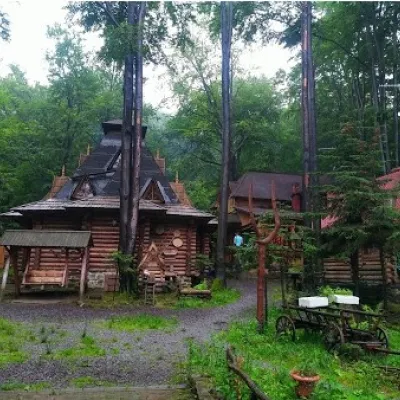 CottageTourist Complex "SKELYA" BubnyshcheBubnyshche1.2 km from Dovbush Rocks in the Village of BubnysheSaunaBBQKitchenNearby: Mountain Polyanytske Lake 5.0 kmMt Klyuch 5.9 km2 trails
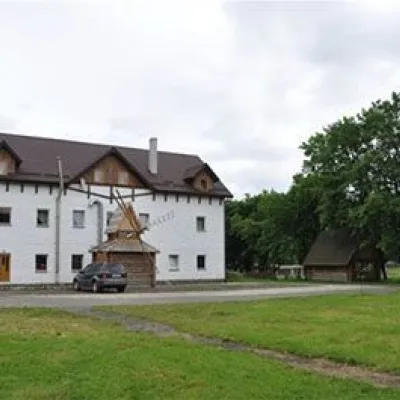 HotelTourist and Recreation Complex "U Dovbusha"Polianytsia2.7 km from Dovbush Rocks in the Village of BubnysheHot tubSaunaBBQNearby: Mountain Polyanytske Lake 5.8 kmSukil Waterfalls 7.7 km1 trail
 HotelMotel "Viking-Carpathians"Nyzhnie Synovydne7.8 km from Dovbush Rocks in the Village of BubnyshePoolSaunaNearby: Church of St. George 3.0 kmKamianka waterfall 9.1 km
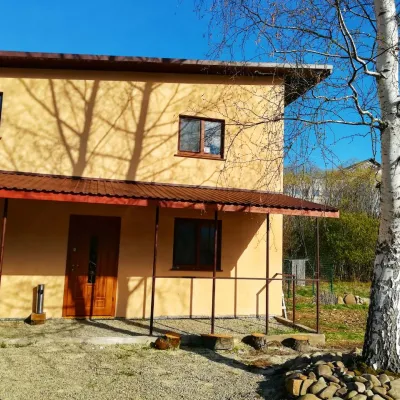 HomesteadGuest House "Pisnya Karpat" DubynaDubyna9.8 km from Dovbush Rocks in the Village of BubnysheBBQKitchenParkingNearby: Kamianka waterfall 3.5 kmLake Zhuravlyne 3.5 km25 trails
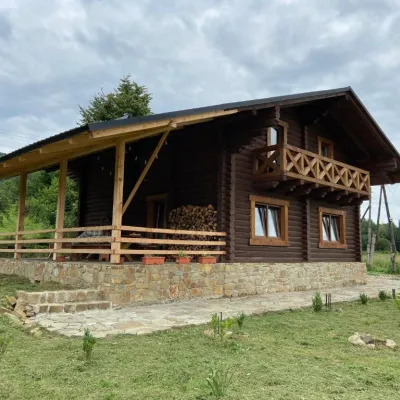 CottageCottage "Ksenija" Ksenija cottageSkole10 km from Dovbush Rocks in the Village of BubnysheHot tubBBQKitchenNearby: Kamianka waterfall 3.3 kmLake Zhuravlyne 3.4 km27 trails
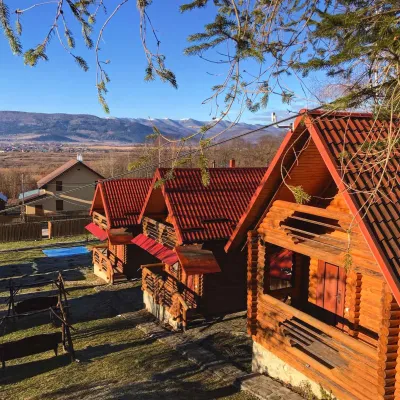 CottageEco-Cottages "Beskydy"Verkhnie Synovydne10 km from Dovbush Rocks in the Village of BubnyshePoolKitchenPetsNearby: Church of St. George 2.0 kmKamianka waterfall 9.6 km
Trails nearby
All trails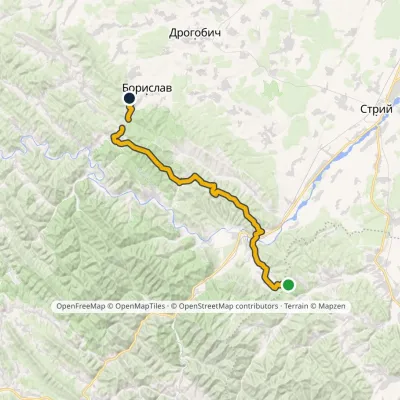 HardMulti-dayMarkedNo. 11 Boryslav Dovbush RocksElevation profile365–852 m48.2 kmascent 1 349 munder 1 km from Dovbush Rocks in the Village of Bubnyshe
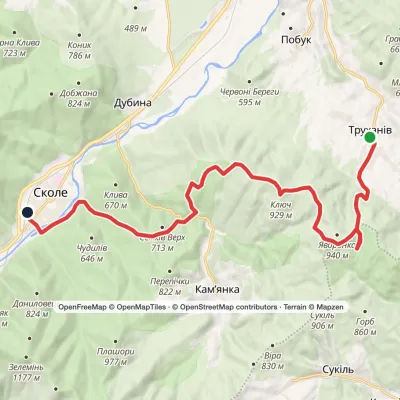 ModerateTwo-dayTrukhaniv village to Skolevia Mount Kliuch, Lake Zhuravlyne +1Elevation profile437–930 m18.8 kmascent 763 m≈ 6 h walking3.2 km from Dovbush Rocks in the Village of Bubnyshe
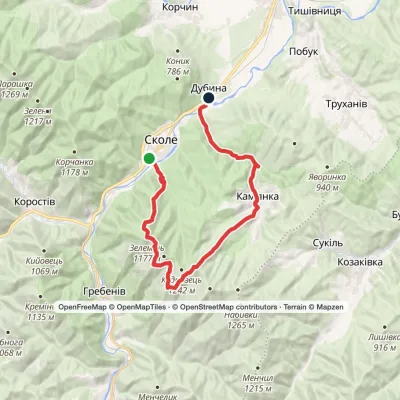 HardMulti-daySkole to Dubyna villagevia Mount Lopata, Kamianka WaterfallElevation profile418–1 210 m25.7 kmascent 953 m≈ 8.5 h walking7.6 km from Dovbush Rocks in the Village of Bubnyshe
Nearby attractions
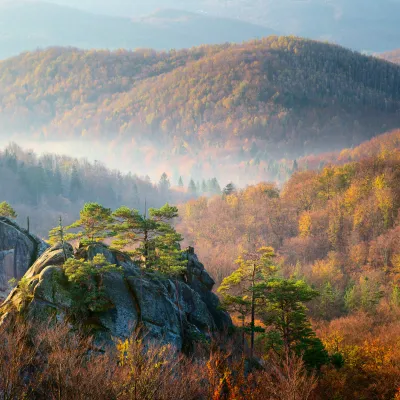 NaturePolianytsia Regional Landscape ParkPolianytsia2.5 km from Dovbush Rocks in the Village of BubnysheThe 1070-hectare Polyanets Regional Landscape Park was established in 1996 on the territory of the Polyanets Forestry of the Bolekhiv State Forestry in the eastern...
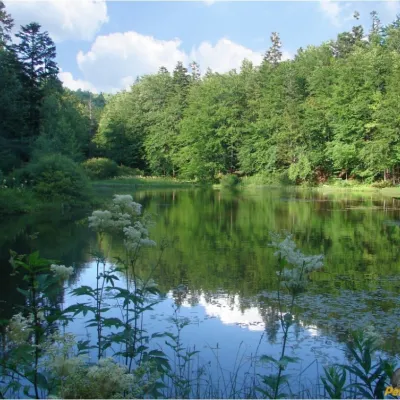 LakeMountain Polyanytske Lake (Dead Lake)Bukovets4.1 km from Dovbush Rocks in the Village of BubnysheMountain Lake (another name - Dead Lake) is a picturesque mountain lake of natural origin in the Ukrainian Carpathians (the Skole Beskids massif).
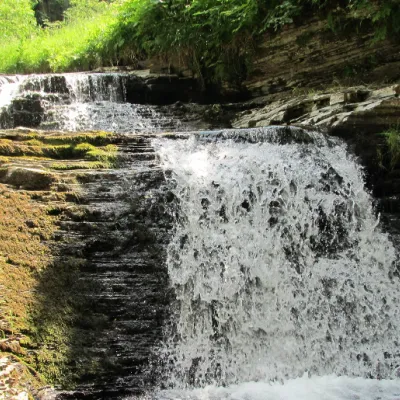 WaterfallSukil WaterfallsSukil7 km from Dovbush Rocks in the Village of BubnysheNear the village of Sukil in the Bohorodchany urban hromada, the Sukil Waterfalls are truly a paradise for tourists and guests.
Craft nearby
All craft places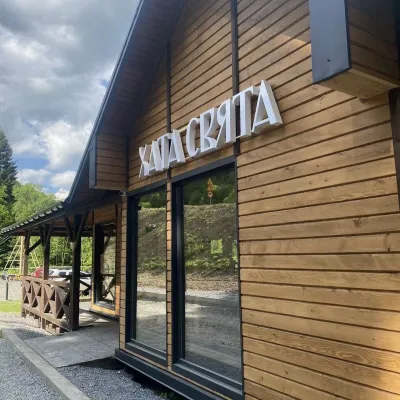 Koliby & Hutsul cuisineKhata Sviata Restaurant, HrebenivHrebeniv17 km from Dovbush Rocks in the Village of BubnysheKhata Sviata restaurant is a small timber restaurant in the village of Hrebeniv between Skole and Slavske, serving Boyko cooking in a modern way but with respect for...
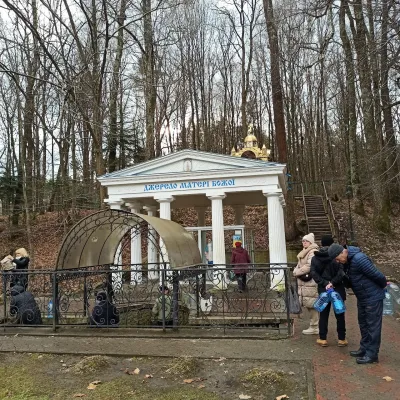 Theme parksSpring No. 4 of the Mother of God, MorshynMorshyn18 km from Dovbush Rocks in the Village of BubnysheSpring No. 4, also known as the Spring of the Mother of God, is Morshyn’s most famous mineral spring and probably the resort’s best-loved spot.
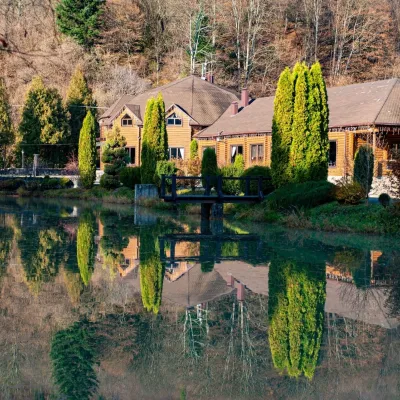 Koliby & Hutsul cuisineZolota Forel restaurant, KorostivKorostiv19 km from Dovbush Rocks in the Village of BubnysheZolota Forel (“Golden Trout”) is a restaurant and hotel complex in the village of Korostiv near Skole, right beside the Kyiv–Chop highway.
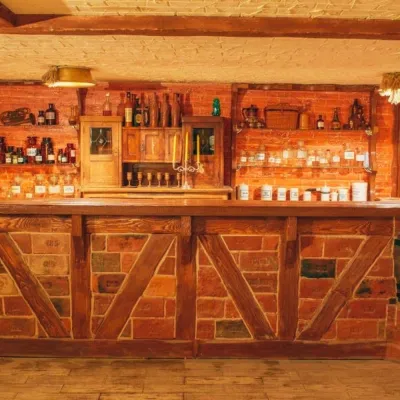 Honey & meaderiesChorna Bdzhola Meadery, VyhodaVyhoda21 km from Dovbush Rocks in the Village of BubnysheChorna Bdzhola (“Black Bee”) in Vyhoda is a small, cosy meadery in the Kalush district of the Ivano-Frankivsk region, where you can learn how drinking mead was...
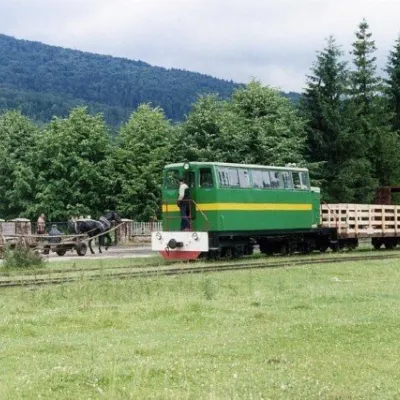 Heritage transportCarpathian TramVyhoda22 km from Dovbush Rocks in the Village of BubnysheIn 1873, Austrian entrepreneur Baron Leopold Popper von Podgari moved the headquarters of his company from Hungary to Galicia.
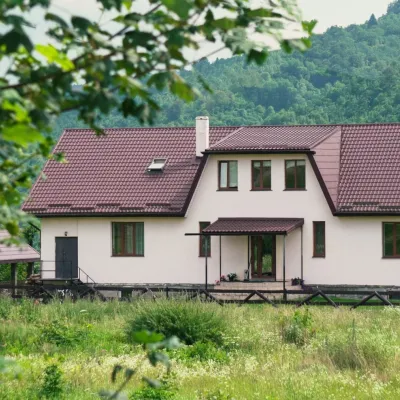 Ethno parks & homesteadsU Dvori Ethno Complex, PidhorodtsiPidhorodtsi22 km from Dovbush Rocks in the Village of BubnysheU Dvori ethno complex is a family homestead in the village of Pidhorodtsi near Skole, set on a hill above the Stryi river valley a few kilometres from the Tustan rock...